GM BCM Standalone Clone 2003-2015: Mail-In Guide 2026
Who this is for
You are in the right place if any of these fit:
- Your GM BCM failed and a blank replacement BCM will not let the truck recognize keys or start
- You installed a used BCM and the vehicle throws theft (Passlock) or option-configuration faults
- You are a shop that wants a customer's BCM data moved onto a good donor so the swap is plug-and-play
- You have your original working BCM plus a matching donor and you need them married before install
- You want mileage and VIN preserved exactly, with no relearn drama, after a BCM replacement
If your original BCM still reads but the replacement will not behave like your truck's BCM, a standalone clone is the answer. We copy your real identity, security, and coding onto the donor.
What a GM BCM stores and why a blank one fails
The Body Control Module (BCM) is one of the most identity-rich modules in a GM vehicle. It is not just a relay box. On the platforms we cover, the BCM holds:
- The VIN, which other modules cross-check
- The stored mileage, which the BCM participates in tracking
- The theft-deterrent data, most notably Passlock, the resistor-coded anti-theft system that must agree before the engine is allowed to start
- Option / configuration coding that tells the body electronics which features and equipment the vehicle actually has
That is why a brand-new blank BCM, or a used BCM that still belongs to a donor car, fails when you bolt it in. The vehicle expects its own VIN, its own Passlock security, and its own option coding. A blank module has none of that, and a donor module has the wrong values. The result is a no-start, a theft light, key-recognition failures, or feature glitches.
Passlock specifically is a security gate by design. Per the NHTSA theft-deterrent standard FMVSS 114, immobilizers are a federally mandated anti-theft layer, so the BCM's security data is not something you can ignore or wish away. It has to match, which is precisely what a clone guarantees. The reason this still works as a bench operation rather than a dealer-only flash comes down to standardized service interfaces: per SAE J2534, module data access on these vehicles follows a defined pass-through standard.
The standalone clone solution
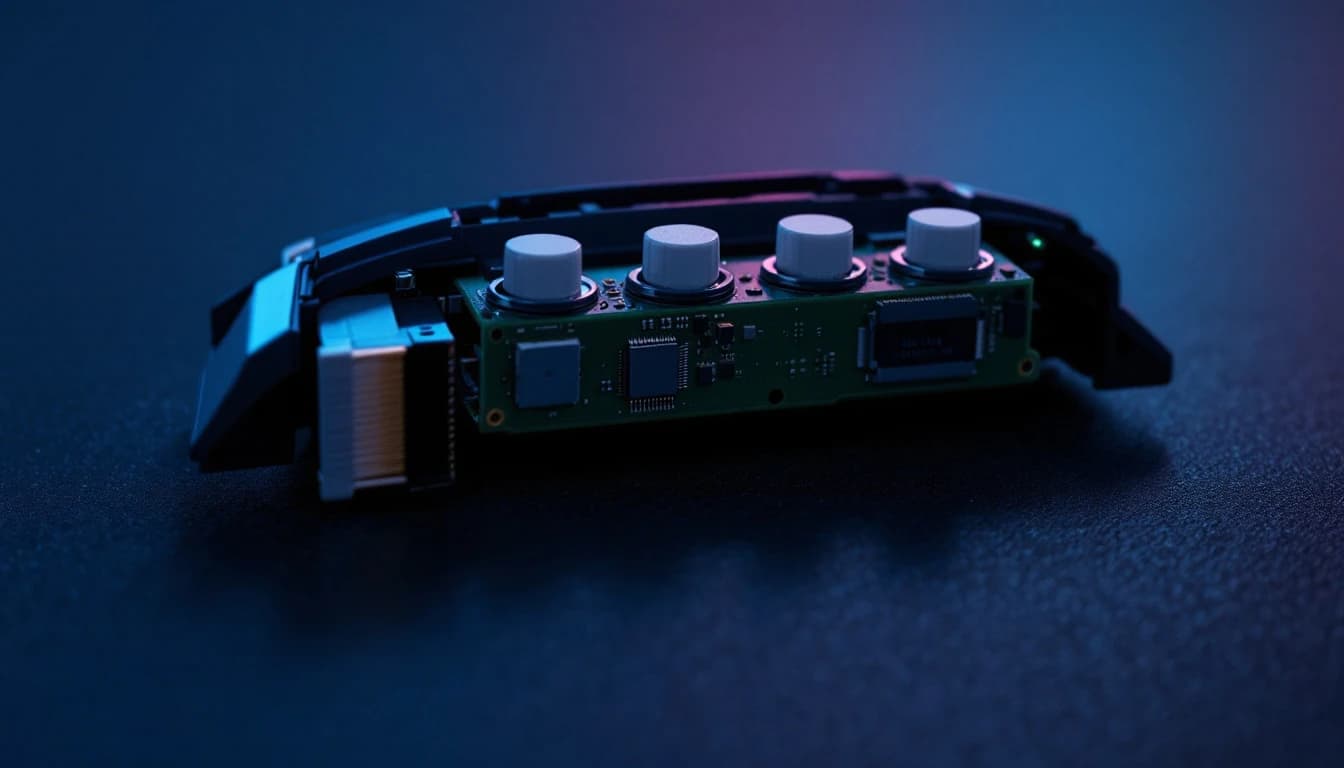
Rather than chase a relearn that may or may not stick, we copy your original BCM whole. We read the complete data image (VIN, mileage, Passlock security, and option coding) out of your original working BCM and write all of it onto a same-part-number donor BCM. The donor becomes a functional twin of your original.
Because it carries your exact VIN, mileage, security, and coding, the cloned BCM installs drop-in with no on-vehicle relearn. From the vehicle's perspective, it is the same BCM it already trusted.
Vehicles and years this covers
This service covers roughly the 2003 to 2015 GM BCM era, including:
| Segment | Representative vehicles |
|---|---|
| Full-size trucks | Silverado, Sierra |
| Full-size SUVs | Tahoe, Yukon, Suburban, Escalade |
| Cars | Impala, Malibu |
Across these, the BCM uses the Passlock-style theft architecture and carries the VIN, mileage, and option coding described above. The donor BCM must share the same part number as your original, because the cloned data image is specific to the hardware. A mismatched donor is the single most common reason a do-it-yourself BCM swap fails.
Standalone clone vs the cluster Passlock service
People sometimes confuse this with a cluster-based theft fix, so to be clear:
- This service (BCM standalone clone) copies the full BCM identity (VIN, mileage, Passlock, coding) from your original BCM onto a donor BCM. It is BCM-to-BCM. You get a drop-in replacement BCM.
- Our cluster Passlock service addresses the instrument cluster's role in the theft system and is a different module and a different workflow.
If your problem is a failed BCM and you want a ready-to-install replacement BCM with all your data on it, the standalone clone is the right pick. If you are unsure which module is at fault, send us your symptoms and part numbers and we will steer you to the correct service.
Symptoms and failure modes
The patterns that bring people to a BCM clone:
- Crank-no-start with a theft / security light after fitting a blank or donor BCM
- Keys no longer recognized, because the replacement BCM does not carry your Passlock security
- Option-configuration faults or missing features (lights, locks, accessories misbehaving) after a BCM swap, from wrong option coding
- Mileage discrepancy concerns after a BCM replacement, since the BCM participates in mileage data
- A BCM killed by water intrusion, corrosion, or a charging-system event, leaving the original failed
- A used BCM that installs electrically but acts like it belongs to another truck, because it still carries the donor's identity
A practical screen: if your original BCM still powers up and communicates, even intermittently, we can usually read it and clone its data onto a donor. If the original is completely dead with no readable memory, message us first; some failures are recoverable for reading and some are not.
The clone process, what we actually do
When your original BCM and your donor BCM arrive at the Arlington bench:
- Confirm the part numbers match. The donor must be the same BCM as your original. We verify this before any read or write.
- Read your original BCM in full. We pull the complete data image: VIN, mileage, Passlock security, and option coding. We archive that read as a recovery point.
- Write the full image to the donor. The donor receives your vehicle's complete BCM identity and coding.
- Verify the write. We read the donor back and compare against the source so the clone is exact.
- Bench-confirm and document. We confirm the cloned BCM reports the correct VIN and security status, document the job, and photograph the result.
- Return ship, flat-rate. The cloned, ready-to-install BCM goes back with tracking, via the return-shipping tier you pick at checkout (from $29.95, overnight $94.95).
Because the clone carries your VIN, mileage, Passlock, and coding, the install is drop-in with no relearn and no dealer visit.
The mail-in process, step by step
Order and pay. Choose the GM BCM standalone clone service and pay the flat $199.
Ship both units. Send your original working BCM and a same-part-number donor BCM to:
Auto Module Lab, PO Box 120241, Arlington TX 76012 if you ship USPS — or 1009 Oakwood Ln # 120241, Arlington TX 76012 if you ship UPS or FedEx (UPS and FedEx cannot deliver to a PO Box).
Include your printed order, a note with both part numbers, your VIN, and a contact number.
typical 24-hour bench turnaround. Once both units arrive, we clone and verify, then ship back within one business day.
Flat-rate return shipping, chosen at checkout. Standard (3-5 business days) is $29.95, UPS 2nd Day Air is $54.95, and UPS Next Day Air is $94.95. Tracking provided either way.
Install and drive. Bolt in the cloned BCM and start the vehicle. No on-vehicle relearn.
What to ship
- Your original working BCM — the source of the data image we are cloning. It needs to be readable.
- A same-part-number donor BCM — must match your original's part number. We can advise on sourcing if you do not have one yet.
- Both part numbers, written on the note, so we confirm the match before any read or write.
- Your VIN, for documentation.
- A contact number, in case the bench finds something unexpected.
What this service does NOT do
We keep the scope honest so you do not pay for the wrong thing:
- It cannot revive a dead donor. A faulty donor BCM will not be fixed by cloning. The donor must be healthy.
- It will not read a destroyed original. If your original BCM's memory is physically gone, there may be no data to clone; message us about your specific failure first.
- It is not a mileage change. We copy your existing stored mileage exactly. We do not alter, roll back, or roll forward odometer values. Per the federal odometer-fraud statute (49 U.S.C. Chapter 327), tampering with odometer readings is illegal, and we do not do it.
- This is not an emissions or anti-theft defeat. The clone preserves your Passlock security exactly as it was. We do not disable theft deterrence and we do not touch emissions controls.
- Part numbers must match. A mismatched donor will not produce a working clone, which is why we verify first.
- It does not fix the cluster theft path. If the fault is in the instrument cluster's role in the theft system, that is our separate cluster service.
Price vs the dealer
A dealer BCM replacement on these platforms stacks up: a new factory BCM, on-vehicle setup and theft-deterrent relearn, VIN and option programming, and sometimes a tow because a no-start vehicle cannot drive in. Owner reports and independent estimates routinely put a dealer BCM job into the several-hundred-to-four-figure range once parts, programming, and relearn labor are added.
Labor pricing drives much of that. Per the U.S. Bureau of Labor Statistics, automotive service technician labor is a real and rising cost, and franchise dealers bill at a premium. The broader pattern of locking owners into dealer service is documented in the Federal Trade Commission's report to Congress on repair restrictions, which is exactly the cost dynamic independent cloning sidesteps. A standalone clone removes the new-part purchase and the on-vehicle programming and relearn, replacing all of it with a bench operation and a used donor you source.
| Line item | GM dealer | Auto Module Lab clone |
|---|---|---|
| BCM part | New factory unit | Used same-part-number donor (you source) |
| VIN / option programming | On-vehicle, dealer labor | Included in clone |
| Passlock / theft relearn | Often required | Not needed (security cloned) |
| Tow (no-start vehicle) | Sometimes required | Not needed |
| Turnaround | Appointment-dependent | Typical 24-hour bench |
| Return shipping | n/a | Flat-rate from $29.95, chosen at checkout |
| Programming total | Several hundred to four figures | $199 |
A real-world example
An independent shop in Georgia took in a 2009 Tahoe with a water-damaged BCM after a windshield leak. The truck cranked but would not start and showed a theft light. They sourced a same-part-number used BCM from a salvage Tahoe and installed it, but now the truck would not recognize keys at all, because the used BCM carried the donor's Passlock security.
They shipped both the original (still readable) and the donor to Arlington with both part numbers and the VIN on a note. We confirmed the match, read the original's full data image (VIN, mileage, Passlock, coding), cloned it onto the donor, verified the write, and shipped it back, most of the elapsed time being transit. The shop installed the cloned BCM, the truck recognized its keys and started on the first try, and the mileage read exactly as before. No relearn, no dealer trip.
What I tell customers
The BCM is the truck's memory for who it is: its VIN, its mileage, its Passlock security, its option coding. A blank box has none of that, and a junkyard box has somebody else's. That is why people fight no-starts and theft lights after a BCM swap. We copy your real data onto good hardware so it drops right in, with the same mileage and the same security it always had. We do not change the odometer and we do not defeat the anti-theft. We just move your identity onto a healthy module. — Adrian Torres, Founder, Auto Module Lab
I have run programming benches and locksmith shops across Dallas, Houston, Austin, San Antonio, and Miami since 2012, and clone-by-mail is the cleanest way for a shop or owner anywhere in the country to replace a GM BCM without a dealer trip.
Frequently asked questions
Why won't a blank replacement BCM just work? A GM BCM stores your VIN, mileage, Passlock theft data, and option coding. A blank or donor BCM lacks your data, so the vehicle throws theft faults, will not recognize keys, or misbehaves. Cloning copies your data onto the donor so it installs drop-in.
Do you need both my original BCM and the donor? Yes. We read the full data image from your original working BCM and write it onto a same-part-number donor. Both must come to the bench.
Will I need a Passlock or theft relearn after install? No. The clone carries your Passlock security and option coding, so it is drop-in with no on-vehicle relearn.
Does the donor really have to match the part number? Yes. The cloned image is specific to the hardware. A mismatched BCM is the most common reason a DIY swap fails.
Do you change the mileage? No. We copy your existing stored mileage exactly. We do not alter odometer values; that would be illegal.
How is this different from the cluster Passlock service? This service clones the BCM itself (BCM-to-BCM). The cluster service addresses the instrument cluster's role in the theft system. If you are unsure which module is at fault, send us your symptoms.
What if my original BCM is completely dead? Some failures are recoverable for reading and some are not. Message us with your specific symptoms before shipping and we will tell you honestly whether a clone is feasible.
The bottom line
A GM BCM stores your VIN, mileage, Passlock theft security, and option coding, so a blank or donor BCM fails drop-in. We clone the full data image from your original working BCM onto a same-part-number donor so it installs with no relearn, preserving mileage and security exactly. This covers roughly 2003 to 2015 Silverado, Sierra, Tahoe, Yukon, Suburban, Escalade, Impala, and Malibu, and it is distinct from our cluster Passlock service. We do not alter mileage and we do not defeat anti-theft or emissions.
Start on the GM BCM standalone clone page, see the full mail-in process, or read about the shop on the Adrian Torres founder page. If you are unsure whether the BCM or the cluster is at fault, send us your part numbers and symptoms first and we will confirm before you ship.
Ship your module today
Flat-rate pricing, typical 24-hour bench turnaround, return speed your choice at checkout. Most jobs back on your bench within a week.