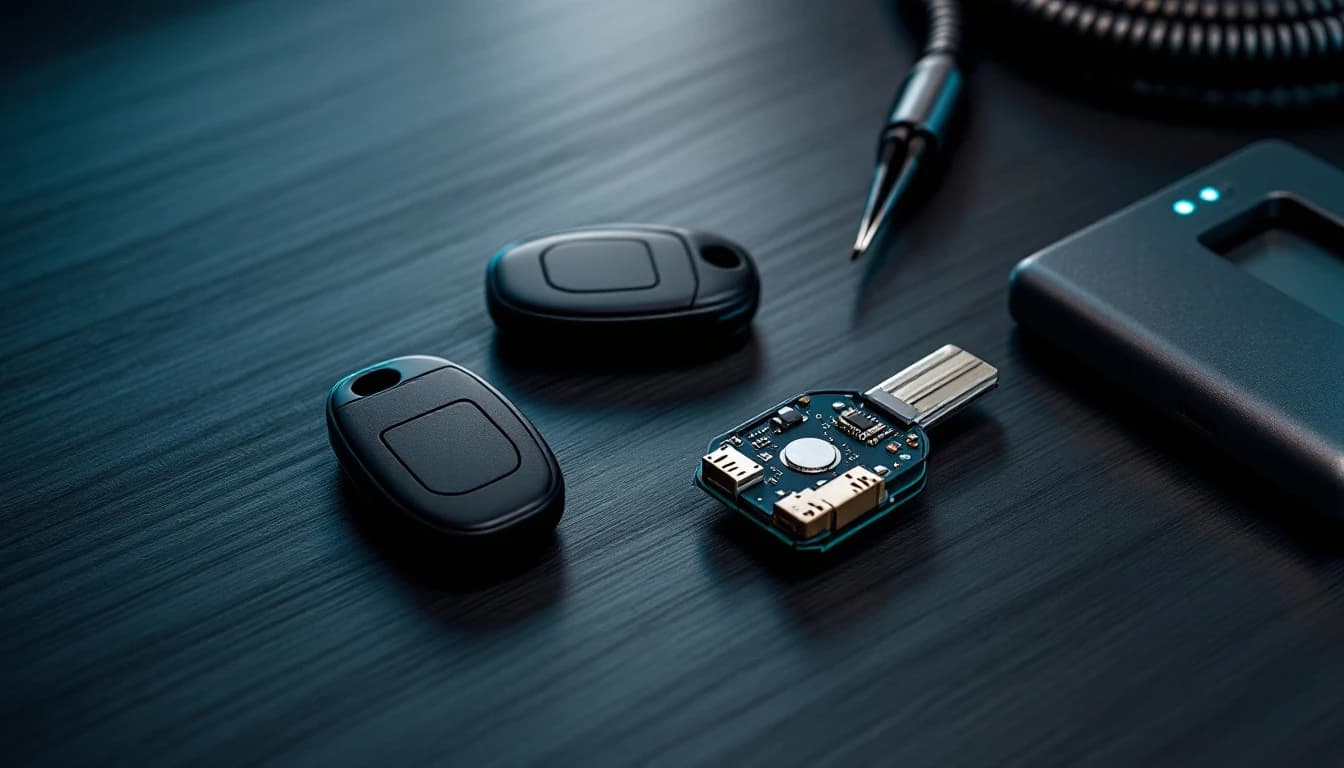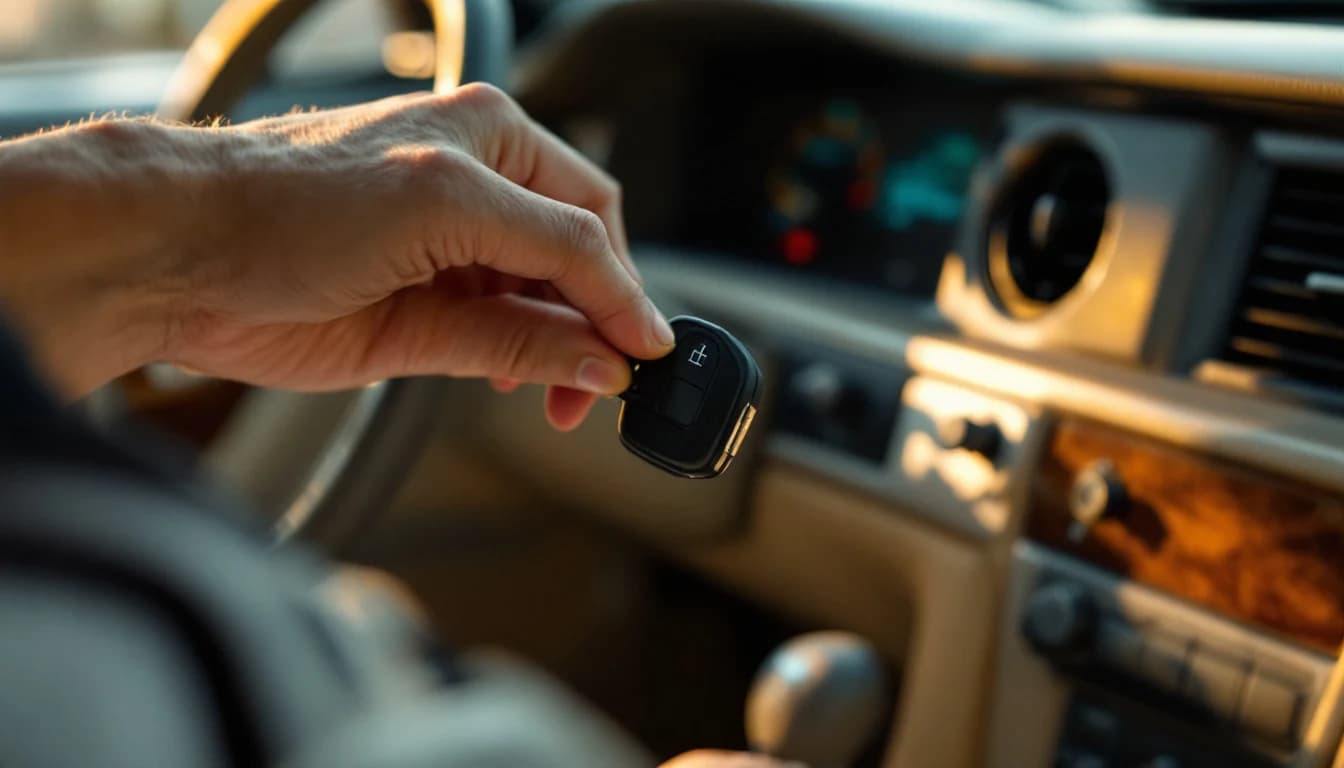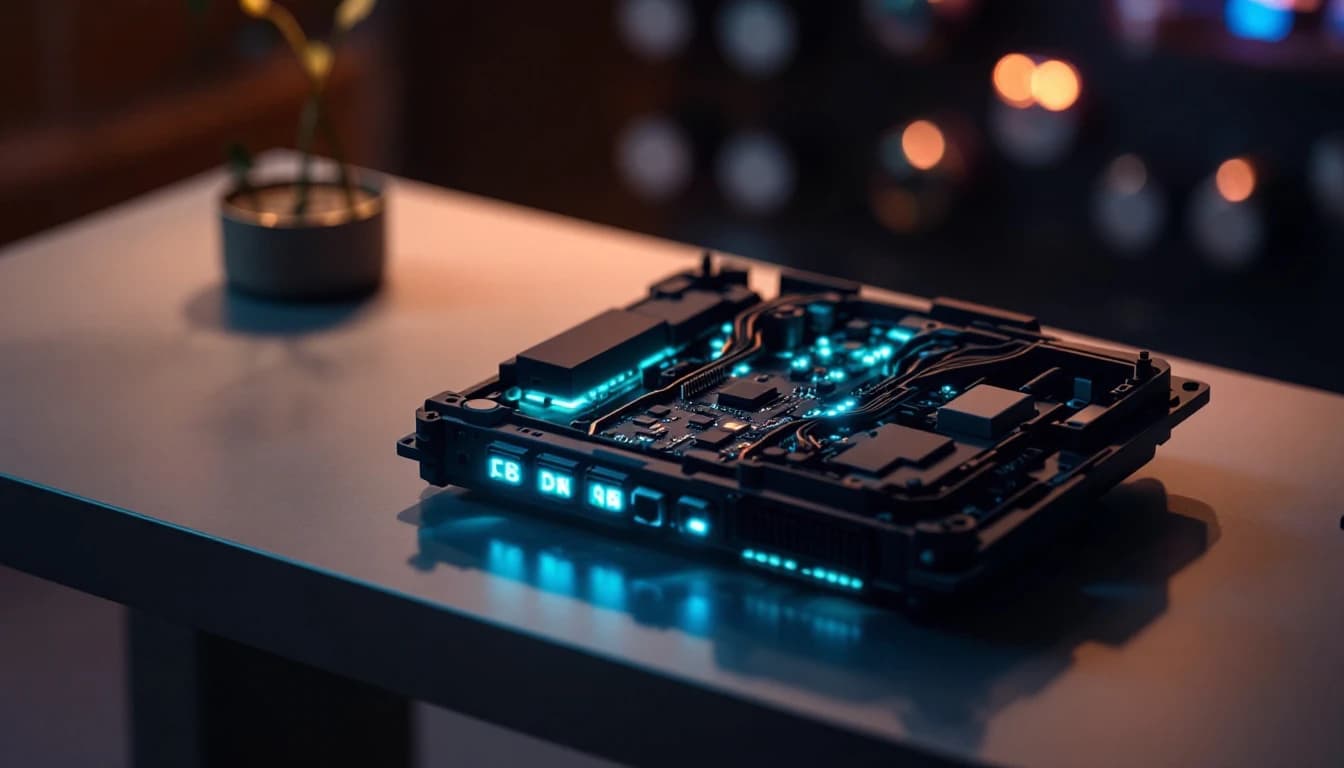
Toyota Lexus Certification ECU Clone: Smart Key Box (2026)
Who this is for
You are reading this because one of these is true:
- Your push-to-start Toyota or Lexus suddenly stopped recognizing its smart keys, throwing a key-not-detected warning, and you traced it to the Certification ECU.
- You installed a used Certification ECU (smart key ID box) from another car and now your own keys do not work.
- A dealer told you the only fix is a new ID box plus an all-keys-lost relearn, possibly with new keys, and you want a cheaper, faster path that keeps your existing keys.
- You have the original box (even a failed one) and a part-matched donor, and you want a plug-and-play clone.
If your vehicle is a roughly 2008-or-newer smart-key Toyota or Lexus and the problem is the Certification ECU not authenticating your keys, this guide is for you. Our Toyota/Lexus Certification ECU clone service was built for exactly this situation.
What the Certification ECU is
On smart-key (push-button start) Toyota and Lexus vehicles, the brand split immobilizer authority into a dedicated module commonly called the Certification ECU, or in shop slang the smart key ID box. Its part number typically begins with 89784. Internally it is built around a small serial EEPROM, usually from the S93C46, S93C56, or S93C86 family, and that chip is where the key data and immobilizer secrets are stored.
The Certification ECU is the trust anchor of the smart-key system. Here is what it coordinates every time you approach and start the car:
- The smart key broadcasts a low-frequency challenge response when you touch the door handle or press the start button.
- Antennas around the car pick up the key and pass the data to the Certification ECU.
- The Certification ECU checks the key against the registered keys stored in its EEPROM.
- On a match, it authorizes the steering lock release, the power mode, and engine start, coordinating with the engine ECU and the smart-key system.
Because the registered key data lives inside this one box, swapping the box for a used one from another car means the new box holds someone else's keys, not yours. Your keys are perfectly good; the box simply does not know them.
This centralized, encrypted approach is why smart-key immobilizers are considered strong anti-theft technology. The Insurance Institute for Highway Safety has documented how electronic immobilizers correlate with lower theft-loss frequencies across the industry, including a 53% reduction in theft-claim frequency once an immobilizer is present, and Toyota's smart-key implementation is part of that broader shift toward keys that cannot simply be copied or hot-wired.
Why a swapped box breaks your keys
The confusion many owners feel comes from a reasonable but wrong assumption: that the keys talk to the car generally, so any working box should accept them. In reality, the key and the box are cryptographically paired. The box stores a list of registered keys; a key is only valid if its identity appears in that list.
When you install a donor Certification ECU:
- The donor's EEPROM contains the donor car's registered keys.
- Your keys are not in that list.
- The car authenticates against the donor's list, fails to find your keys, and refuses to start or unlock.
Cloning fixes this by copying your original box's EEPROM data onto the donor. After the clone, the donor's registered-key list is identical to your original's, so your existing keys authenticate normally. No relearn, no new keys.
The S93C-series EEPROM, briefly
The S93C46/56/86 chips are tiny serial EEPROMs that hold the immobilizer data in non-volatile memory, meaning the data persists with the power off. The difference among 46, 56, and 86 is primarily memory size. For our purposes, the takeaway is simple: the data we need to copy lives in that chip, and reading it accurately off your original is what makes a faithful clone possible. The donor's chip must be compatible so the data writes correctly and the donor behaves as your original did.
This is why a part-number match on the 89784 box matters: it ensures the internal hardware, including the EEPROM family and the surrounding circuitry, is compatible with your data. Mismatched donors can produce a box that powers up but does not authenticate cleanly.
Models and years we cover
The smart-key Certification ECU clone applies across the broad 2008-or-newer push-to-start Toyota and Lexus range. Common candidates include:
| Brand | Models | Typical era |
|---|---|---|
| Toyota | Camry, Corolla, RAV4, Highlander, Tundra, Prius | ~2008 and newer (smart-key trims) |
| Lexus | ES, IS, RX, GS, LS, CT, NX | ~2008 and newer |
Two cautions. First, only smart-key (push-button start) trims use the Certification ECU architecture; a bladed-key trim of the same model uses a different immobilizer setup. Second, exact year boundaries and box part numbers vary by model and market. The deciding factor is the 89784-series box and a smart-key system, not the badge. The services overview lists the modules we handle, and you can send us your VIN and box part number to confirm before ordering.
Symptoms and failure modes
The symptom set is consistent and points clearly at the Certification ECU when present.
Key not detected / push-start does nothing
You press the start button and get a key-not-detected message, or nothing happens at all. The dash may show a key-shaped warning. The smart key is in your pocket and its battery is fine, but the car will not acknowledge it.
Remote and passive entry stop working
Door handles no longer unlock on touch, and the remote buttons do nothing, because the same box that authorizes start also participates in passive entry. When the box fails or is mismatched, both functions go dark.
Intermittent no-start that becomes permanent
Some Certification ECUs fail gradually. You get occasional no-detect events that clear after a few tries, then they become constant. This pattern often precedes a full failure of the box.
After installing a used box, total loss of recognition
If you swapped in a used box and lost all key recognition immediately, that is not a coincidence: the donor simply holds different keys. This is the most clear-cut case for a clone.
For context on why these systems are so common now, motor-vehicle theft remains a large category in U.S. crime data, with the FBI's Crime Data Explorer counting hundreds of thousands of incidents per year. Manufacturers responded with exactly the kind of centralized smart-key authentication the Certification ECU provides, and the National Highway Traffic Safety Administration continues to emphasize immobilizers as core theft-prevention technology.
The clone process, step by step
Cloning copies your original box's data onto the donor. It is not an all-keys-lost relearn and it is not key cutting. Because it touches registered-key and immobilizer data, it falls squarely in the security-sensitive category the National Automotive Service Task Force governs through its Secure Data Release Model, which is why we verify ownership before doing the work.
- Receive both units. You ship your original Certification ECU and your part-matched donor box.
- Read the original EEPROM. We read the immobilizer and registered-key data from your original box on the bench.
- Verify the donor. We confirm the donor's part number and EEPROM family match, then read its current state.
- Write the clone. We write your data onto the donor so it now holds your registered keys.
- Verify. We confirm the data wrote correctly and the donor is configured to recognize your keys.
- Return ship. The donor goes back ready to install. You plug it in, and your existing smart keys work.
Because the clone makes the donor recognize your current keys, there is no dealer relearn, no Techstream session required on your end, and no need to register new keys. The how it works page details the full mail-in flow.
Turnaround and shipping
We run a typical 24-hour bench turnaround once both units arrive. This is a mail-in service: you pay first, ship both boxes to our Arlington, Texas bench, we clone within a day of receipt, and return shipping is a flat-rate tier you choose at checkout (from $29.95). Ship units to:
Auto Module Lab, PO Box 120241, Arlington TX 76012 if you ship USPS — or 1009 Oakwood Ln # 120241, Arlington TX 76012 if you ship UPS or FedEx (UPS and FedEx cannot deliver to a PO Box).
We serve customers in all fifty states.
What to ship and what you need
To get a clean, plug-and-play result, send:
- Your original Certification ECU (89784-series), even if it has failed. The EEPROM data usually remains readable, and your original is the source of truth for your registered keys.
- A part-matched donor box with a compatible 89784 part number and EEPROM family.
- A note with your name, return address, phone, and the VIN.
You do not need to send keys. The clone copies the data your existing keys already use, so they keep working untouched.
What this service does NOT fix
Here is the boundary, stated plainly:
- It is not an all-keys-lost solution. Cloning requires a readable original box. If you have lost all keys and have no original box to read, that is a different procedure (an all-keys-lost key registration), not a clone. Cloning copies what already exists; it cannot invent keys you no longer have.
- It does not fix mechanical or unrelated electrical no-starts. If the car will not start for reasons unrelated to key authentication, the clone will not help. Confirm the fault is the Certification ECU first.
- It does not repair a physically destroyed donor or a donor with a dead EEPROM. The donor must be a functioning, compatible box.
- It does not add extra keys. The clone keeps your current keys working; registering additional keys is a separate service.
- It does not touch emissions or engine calibration. The Certification ECU is a security module, not the engine ECU, so this work does not affect emissions equipment in any way and we do not perform emissions defeats. Tampering with federally required emissions controls is illegal under the Clean Air Act, and per the U.S. Environmental Protection Agency, defeat-device enforcement drew $55.5 million in civil penalties across 172 cases in FY2020-2023.
Price versus the dealer
Here is the honest comparison for a smart-key authentication failure tied to the Certification ECU.
| Path | Typical cost | Keeps your keys? | Time |
|---|---|---|---|
| Auto Module Lab clone (mail-in) | $250 flat | Yes | Typical 24-hour bench + shipping |
| Dealer: new ID box + all-keys-lost relearn | $700-1,500+ | Often requires new keys | Multiple days, appointment |
| Tow + dealer diagnosis first | Add $100-250 tow | n/a | Adds days |
Dealer pricing varies widely, but a new Certification ECU plus an all-keys-lost registration and potentially new smart keys is one of the more expensive immobilizer repairs on these platforms. Per AAA's Your Driving Costs study, maintenance and repair already run thousands of dollars a year, so a four-figure ID-box-plus-relearn bill is exactly the kind of cost owners least expect. A $250 clone that keeps your existing keys and arrives plug-and-play is usually the lowest-cost outcome for a car that is otherwise healthy.
What the bench sees
"When someone swaps in a used smart-key ID box and loses all key recognition, they assume the box is bad. It isn't — it just holds another car's registered keys. We read the EEPROM on your original, write that data to a part-matched donor, and your own smart keys authenticate again with no all-keys-lost relearn."
— Master automotive locksmith, 13+ years on Toyota and Lexus smart-key systems
Frequently asked questions
Will my existing smart keys still work after the clone?
Yes. The clone copies your original box's registered-key data onto the donor, so the donor authorizes the exact smart keys you already carry. No relearn, no new keys.
Do I need a dealer or Techstream?
No. The clone is done on our bench. When you install the donor, it already recognizes your keys, so there is no dealer relearn and no scan-tool session on your end.
My original box is dead. Can you still clone it?
Usually yes. The EEPROM data commonly survives the failures that kill the box. Send it in. If the data is unreadable, we will tell you before charging and discuss your options.
What if I have lost all my keys?
Then a clone is not the right service, because cloning needs a readable original to copy from. All-keys-lost requires registering new keys, which is a different procedure. Contact us with your situation and we will point you the right direction.
How do I confirm my part number?
Read the label on the box; it begins with 89784 followed by more characters. Match your donor to it. If unsure, send us the number and your VIN and we will confirm compatibility before you buy a donor.
Does this apply to bladed-key Toyotas?
No. Bladed-key trims use a different immobilizer setup, not the smart-key Certification ECU. This service is specifically for push-to-start smart-key vehicles.
Is cloning legal?
Yes. Cloning your own immobilizer data onto a replacement module for your own vehicle is standard module-programming and locksmith work. We verify ownership and perform no emissions or safety defeats.
Ready to fix it
If your push-to-start Toyota or Lexus stopped recognizing its smart keys after a Certification ECU swap or failure, a clone is your fastest, cheapest path back to a working car that keeps your existing keys. Order the Toyota/Lexus Certification ECU clone, ship us your original box plus a part-matched donor, and we will return a plug-and-play unit within 24 hours of receipt, shipped back via the flat-rate return tier you chose at checkout (from $29.95). Unsure about part numbers or whether your car is a smart-key trim? Send your VIN and box number before buying a donor and we will confirm. You can read more about who runs the bench on the Adrian Torres page.
Ship your module today
Flat-rate pricing, typical 24-hour bench turnaround, return speed your choice at checkout. Most jobs back on your bench within a week.