
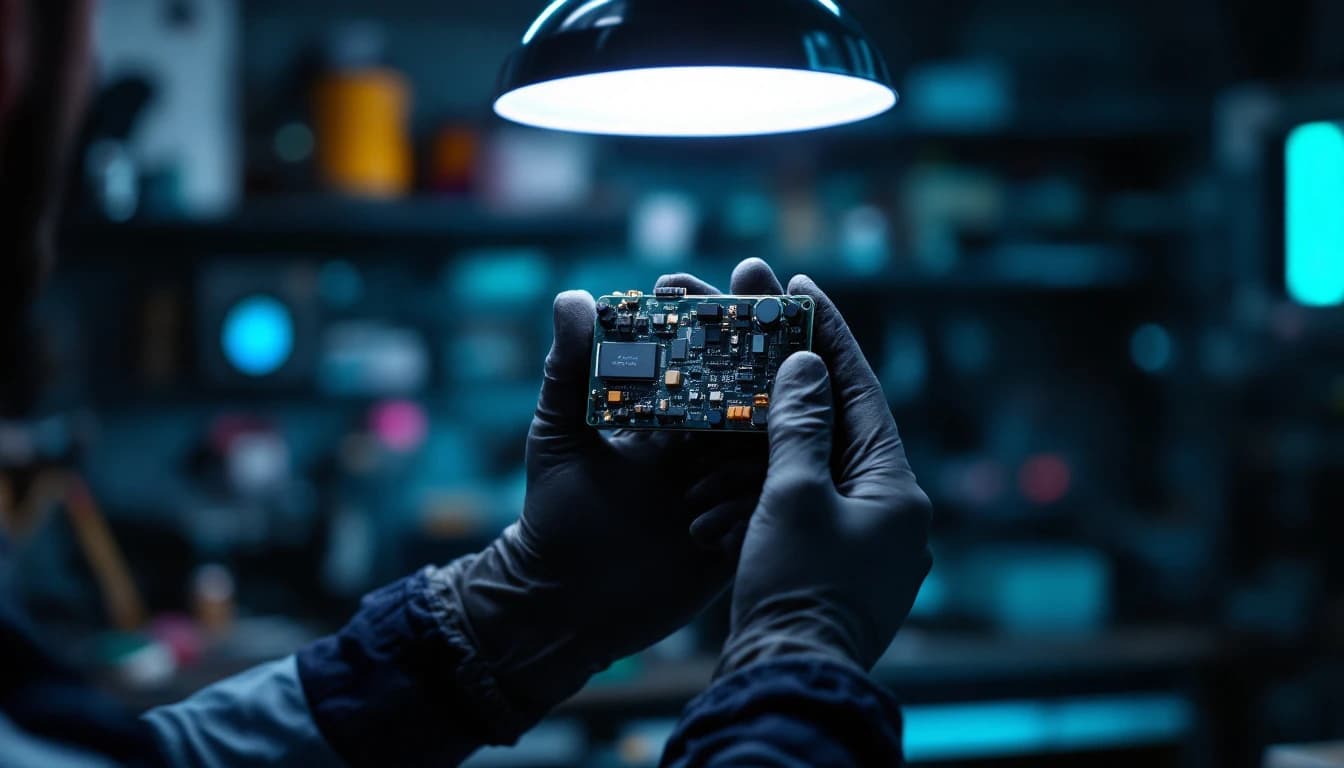
BMW EWS Key Programming Mail-In 1995-2006: Guide 2026
Who this is for
You are in the right place if any of these describe your situation:
- You bought a used BMW key online for an older E36, E39, E46, E53, E83, E85, Z3, or Z4 and the dealer wants $300 or more to program it
- You lost every key to one of these cars and need an all-keys-lost solution that does not involve towing the whole vehicle anywhere
- A previous shop tried to program a key, failed, and now the car cranks but will not start
- You are an independent shop that wants to send EWS work to a bench rather than buy five-figure tooling
- You are not sure whether your BMW even uses EWS or the newer CAS, and you want to confirm before ordering
The EWS generation drives how the job is done and which parts you need to ship. Get it wrong and you lose two or three days to a round trip of the wrong module. This guide is the reference we wish every customer had before placing an order.
What EWS actually is
EWS stands for Elektronische Wegfahrsperre, German for electronic drive-away protection. In plain English it is BMW's immobilizer. It is a small control module, separate from the engine computer, that decides whether the car is allowed to start. When you turn the key, the transponder chip in the key head answers a challenge from the EWS module. If the answer matches a key slot stored in EWS memory, the module releases the immobilizer and tells the DME (the engine control unit) that it is cleared to fire the injectors and energize the starter.
EWS replaced the earlier and much weaker systems of the early 1990s. According to the National Insurance Crime Bureau, vehicle theft trends shifted significantly once electronic immobilization spread across the fleet, because hot-wiring a properly immobilized car no longer works. EWS is one of the early mainstream examples of that technology.
There are three EWS generations you will encounter in the mail-in world:
- EWS2 — the early generation, identifiable by the common chip code 0D46J, used on much of the mid-1990s lineup
- EWS3 — the most common generation by volume, chip code 2D47J, used across the late-1990s and early-2000s cars
- EWS4 — the later revision used near the end of the EWS era, before CAS took over
Every EWS car is a blade-key car. There is no comfort access, no proximity start, and no push-button. The key is a physical metal blade with a transponder in the head. This matters later when we talk about cutting blanks.
Which BMWs use EWS
EWS covers roughly model years 1995 through 2006, depending on chassis. After that, BMW migrated newer chassis such as the E60 5-Series and the E90 3-Series to CAS (Car Access System), which is a different architecture entirely. If your car is an E60 or E90, you almost certainly have CAS, not EWS, and you want our CAS service instead.
Here is the chassis breakdown for the EWS era:
| Chassis | Years | Model | Typical EWS |
|---|---|---|---|
| E36 | 1995-1999 | 3-Series | EWS2 / EWS3 |
| E38 | 1995-2001 | 7-Series | EWS2 / EWS3 |
| E39 | 1996-2003 | 5-Series | EWS3 |
| E46 | 1999-2006 | 3-Series | EWS3 |
| E53 | 2000-2006 | X5 | EWS3 |
| E83 | 2004-2006 | X3 | EWS3 / EWS4 |
| E85 / E86 | 2003-2008 | Z4 | EWS4 |
| Z3 | 1996-2002 | Roadster / Coupe | EWS3 |
The mid-decade overlap catches people off guard. A 2005 X3 or Z4 can sit on the EWS-to-CAS boundary depending on build date. The only reliable way to know for certain is to read the module label, so when in doubt, send a clear photo of the module before shipping anything.
Symptoms that point to the immobilizer
EWS problems and key problems look similar from the driver seat. The classic signs:
- The engine cranks normally but never catches, as if it is getting no spark or no fuel
- A worn or unrecognized key produces an intermittent no-start that comes and goes
- The car started fine yesterday and today it cranks and dies after one second
- After a battery change or a jump start, the immobilizer drops back into a protected state
- Your scanner reports an EWS or DME synchronization fault, or an immobilizer mismatch
A useful diagnostic clue: if the car cranks at normal speed but will not start, the immobilizer is a prime suspect, because a dead battery or bad starter would slow the cranking. According to the U.S. National Highway Traffic Safety Administration, anti-theft immobilizer systems are designed specifically to prevent the engine from running without an authorized key, so a healthy crank with a dead refusal to fire is the textbook immobilizer symptom.
That said, plenty of crank-no-start faults are not EWS at all. Fuel pumps, crank sensors, and ignition coils cause the same complaint. We will cover what EWS work does not fix further down so you do not ship a module for a problem it cannot solve.
How the bench job works
Programming an EWS key is a memory operation. Each EWS module stores a small table of authorized key slots. To add a key, we read the module memory, write your new key serial into an open slot, and write the data back. To handle all-keys-lost, we rebuild the key data so a fresh transponder can be enrolled and so the EWS and DME agree on the rolling secret.
On the bench, the workflow looks like this:
- We open the EWS housing and identify the generation from the chip code on the board
- We read the module memory through the appropriate interface for that generation
- We archive a full backup of the original data before touching anything
- We add a key slot, or for all-keys-lost we rebuild the key table and re-sync the immobilizer secret
- We program your supplied transponder to match the new slot, or we provide the data so a local tech can enroll it
- We verify the data byte for byte against the change we intended
- We bench-test the immobilizer release where possible, then photograph and ship
Doing this on the bench rather than through the OBD port has a real advantage on these older cars. The OBD security on EWS-era BMWs is brittle, and a failed over-the-port attempt can corrupt the module. Reading and writing the memory directly is more controlled and far less likely to brick anything.
The one EWS catch: the blade cut code
This is the single most important difference between EWS and the later CAS cars, and it is the part that trips up the most orders.
On a CAS car, the mechanical blade cut code is stored in the module memory. That means for a CAS all-keys-lost, the bench can read the cut code out of the module and tell you exactly how to cut the metal blade. You do not need the door lock.
On an EWS car, the blade cut code is not stored in the EWS module. The EWS module knows the electronic transponder secret, but it has no idea what shape the metal blade is. So for an all-keys-lost EWS job where you also need a freshly cut blade, you must give us one of two things:
- A door lock cylinder (or the ignition lock, or a glovebox lock) so the cut can be decoded from the wafers, or
- The factory key code, which BMW assigned at build and which a dealer can sometimes retrieve with proof of ownership
If you already have a key that turns the lock but does not start the car, the cut is fine and you only need the electronic side, so no lock is required. The lock-or-code requirement only applies when you have lost every blade and need a new one cut from scratch.
We call this out clearly at checkout, but it is the number one reason an all-keys-lost order stalls. If you are unsure, send a photo and tell us your exact situation before shipping.
The mail-in process, step by step
The whole point of mail-in module work is that you never bring the car to us. You bring the module to us, or rather, you ship it. Here is the flow:
Order and pay for the EWS key programming service online. The flat rate is $250.
Remove the EWS module from the car. On most chassis it is tucked behind the glovebox or near the steering column. We provide location notes for your specific chassis after you order.
Ship the module to our workshop:
Auto Module Lab USPS: PO Box 120241, Arlington, TX 76012 UPS/FedEx: 1009 Oakwood Ln # 120241, Arlington, TX 76012
Bench turnaround is typically 24 hours from the time the module arrives. Most jobs received before midday ship back the same business day.
Flat-rate return shipping, chosen at checkout. We send the programmed module, and your programmed transponder if you supplied one, back to you with the data verified, via the tier you picked (from $29.95).
Reinstall and confirm. Drop the module back in, insert the programmed key, and the car starts.
We are in Arlington, Texas, between Dallas and Fort Worth, and we serve customers nationwide by mail. Our team also covers in-person work across Dallas, Houston, Austin, San Antonio, and Miami, but the EWS bench service is built for shipping, so location does not matter for this one.
What to ship
To keep your order moving, send the right parts the first time:
- The EWS module — always
- At least one transponder key if you have one, even a non-starting one, so we can match the serial directly
- For all-keys-lost with a needed blade cut: a door lock cylinder or the factory key code (see the catch above)
- A note with your order number, VIN, and a callback number
- Proof of ownership — we require it on every immobilizer job
That ownership requirement is the industry standard, not a formality. The National Automotive Service Task Force (NASTF) runs the Secure Data Release Model that credentials locksmiths and shops before they can access key and immobilizer data, and any legitimate bench applies the same gate: no verified owner, no key work.
You do not need to send the DME on a standard EWS job. EWS programming is handled in the EWS module itself. The DME only enters the picture if the immobilizer secret needs re-syncing, and we handle that from the EWS side in the normal workflow.
What this service does NOT fix
Honesty here saves you money and a wasted shipment. EWS key programming does not:
- Fix a mechanical no-start caused by a fuel pump, crank position sensor, ignition coil, or compression problem. Those are engine faults, not immobilizer faults.
- Repair a physically dead EWS board from water or crash damage. If the module itself has failed, that is a repair or replacement question, not a programming question. Send a photo first.
- Convert an EWS car to keyless or push-button start. EWS cars are blade-key only by design and cannot be retrofitted to comfort access through programming.
- Read a blade cut from the EWS module. As covered above, the cut code is simply not stored there.
- Bypass or delete the immobilizer for theft. We require proof of ownership and decline anything we cannot verify.
- Cover CAS cars. If your BMW is an E60, E90, or newer, it uses CAS, and you want our CAS service instead.
If your scanner is pointing at a mechanical engine fault rather than an immobilizer fault, an EWS programming order will not help. When in doubt, describe the symptom to us first.
Price versus the dealer
The flat $250 mail-in rate covers EWS2, EWS3, and EWS4, for add-a-key and for all-keys-lost. Here is how that compares to typical dealer pricing. Dealer figures vary by market and are drawn from common quote ranges reported by BMW owners on enthusiast communities such as the BimmerFest BMW Forum and Bimmerforums.
| Service | Typical dealer range | AML flat-rate |
|---|---|---|
| EWS add-a-key (working original) | $300 - $450 | $250 |
| EWS all-keys-lost (electronic only) | $450 - $700 | $250 |
| EWS all-keys-lost with blade cut | $550 - $800+ | $250 |
| Module pulled and bench-read | dealer rarely offers | included |
Dealer quotes usually bundle the cut blade key itself, which is part of why the spread is wide. Our $250 is bench-programming on the module you send. If you also want a cut and programmed blade delivered, ask us, because that depends on whether you can supply a lock or code for the cut.
What an experienced bench tech says
"The EWS module is forgiving as long as you respect the blade-cut rule. People lose a week because they ship the module for an all-keys-lost and forget the lock cylinder, and there is simply no cut code inside an EWS to read. Reading and writing the memory on the bench, rather than over the OBD port, is what keeps these older modules from getting bricked. Done that way, EWS is some of the most predictable immobilizer work there is."
— Master automotive locksmith, 15+ years on the bench
EWS is also a reminder of why immobilizers mattered in the first place. Research summarized by the Insurance Institute for Highway Safety / HLDI shows that vehicles fitted with electronic immobilizers carry markedly lower theft losses than comparable vehicles without them, which is precisely the protection EWS introduced on these BMWs. When the system locks out a legitimate owner after a lost key or a dead battery, the fix is to restore the authorized key data, not to defeat the immobilizer.
Frequently asked questions
How do I know if my BMW has EWS or CAS?
Model year and chassis are the fastest indicator. E36, E38, E39, E46, E53, Z3, and early Z4 cars use EWS. E60 5-Series and E90 3-Series and anything newer use CAS. If you are on the 2004 to 2006 boundary for X3 or Z4, read the module label or send us a photo to confirm.
Do I need to send the door lock?
Only for an all-keys-lost job where you also need a brand-new blade cut from scratch. If you have any key that turns the lock, the cut is already known and no lock is needed. The EWS module does not store the cut code, so it is the only way to recover an unknown cut.
Can you do this without removing the module?
For mail-in, the module has to come to the bench. We do not do on-car OBD programming by mail, and on EWS-era cars the bench approach is safer and far less likely to corrupt the module than an over-the-port attempt.
Will a key from eBay or RockAuto work?
Often yes, as long as it is the correct transponder type for your EWS generation. Send the key with the module and we will match and program it. If you buy the wrong transponder type, we will tell you before programming so you can swap it.
Is the car going to start as soon as I reinstall the module?
If the only fault was the immobilizer or key, yes. Reinstall the programmed module, insert the programmed key, and it should fire. If there is also a mechanical engine fault, that has to be fixed separately, because programming cannot resolve a fuel or spark problem.
Do you keep my data?
We archive a backup of your original module data only long enough to complete and verify the job, as a safety net in case a write needs to be rolled back. We require proof of ownership on every order.
The bottom line
EWS is the BMW immobilizer for most cars built between 1995 and 2006, and it is routine bench work for a shop with the right tooling and experience. The one rule to remember is the blade cut: the EWS module does not store it, so an all-keys-lost job that needs a fresh blade also needs a door lock cylinder or the factory key code.
Auto Module Lab programs every EWS generation at one flat rate of $250, with a typical 24-hour bench turnaround plus flat-rate return shipping chosen at checkout (from $29.95). Start at our BMW EWS Key Programming service page, review the full mail-in flow on how it works, browse the rest of our module and key services, or read more about founder Adrian Torres and the workshop. If your BMW turns out to be a CAS car instead, we cover that too, just on a different service page.
Ship your module today
Flat-rate pricing, typical 24-hour bench turnaround, return speed your choice at checkout. Most jobs back on your bench within a week.
More from the Lab
BMW EWS2 vs EWS3 vs EWS4 — Which One Do You Have?
13 min · August 31, 2026
How to Reset EWS on a BMW: DME Re-Sync Guide
13 min · September 23, 2026
All Keys Lost? Why Mail-In Programming Is Often the Fix
12 min · July 10, 2026
VW & Audi Module Cloning: Which Modules Can Be Cloned
14 min · September 11, 2026