
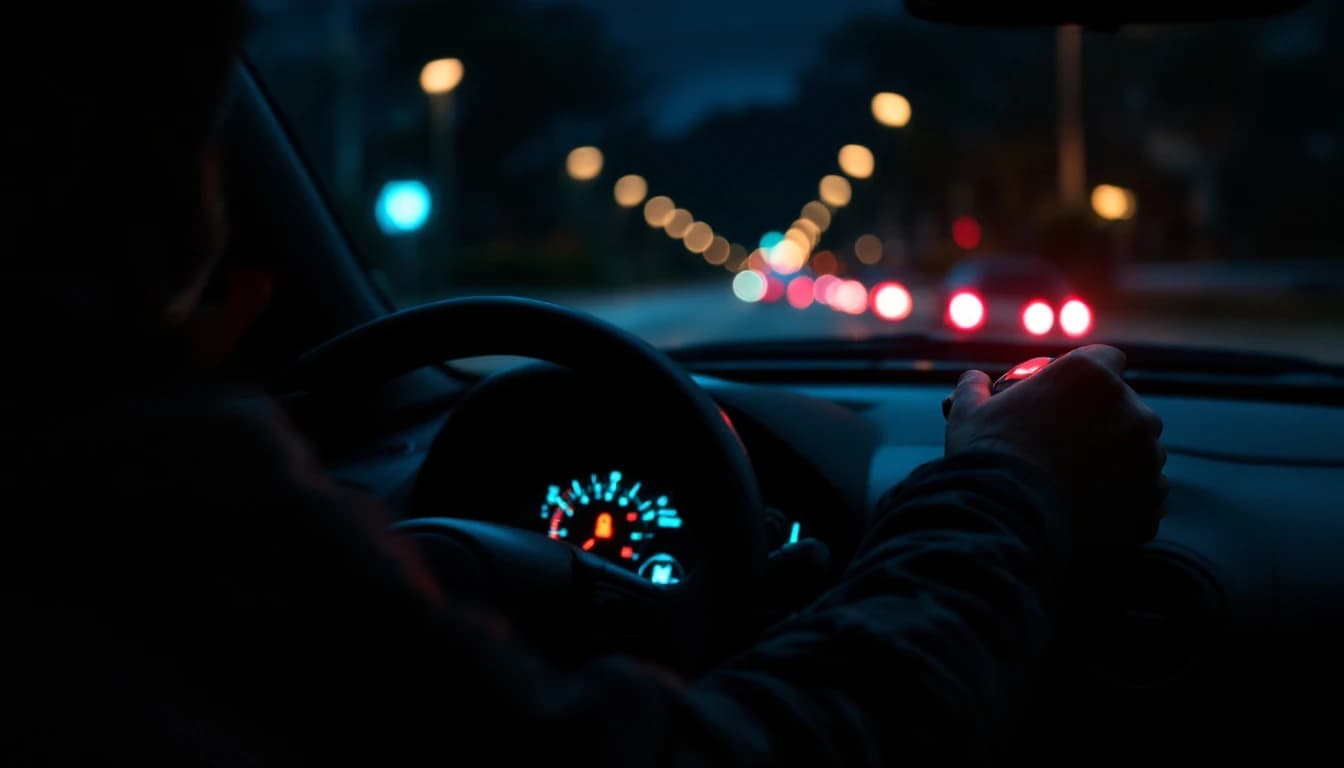
Car Won't Start? Immobilizer, Dead Module, or Key?
Start here: what a no-start is actually telling you
A no-start feels random when you are standing in a parking lot at night, but it almost never is. Modern vehicles run a tightly scripted sequence every time you turn the key or press start: the battery wakes the modules, the body control module and immobilizer verify the key, the engine control unit gets permission to inject fuel and fire spark, and the starter cranks the engine over. A failure at any one of those stages produces a different symptom — and if you learn to read the symptom, you can usually tell within a minute whether you are dealing with a dead battery, a bad starter, a locked-out immobilizer, a failed control module, or a key that stopped talking.
This guide is symptom-first. We are not going to make you memorize wiring diagrams. We are going to walk the same decision tree a bench technician walks, in plain language, so you can figure out which bucket your problem falls into — and, critically, know when the answer is a mail-in module or key job versus a job for your local mechanic.
The stakes are real. The average age of a vehicle on U.S. roads has climbed past 12.5 years, according to reporting from S&P Global Mobility summarized by outlets like Car and Driver, which means an enormous number of cars on the road are old enough for immobilizer control modules, transponder keys, and control-unit memory to start failing from age alone. Reliability and ownership coverage from outlets like Hagerty has repeatedly flagged aging electronics — modules, sensors, and keys — as a growing share of no-start complaints on older vehicles. When those electronic parts fail, a mechanically perfect engine still will not start.
The first fork: does it crank, or not?
Everything downstream depends on this one observation, so get it right.
No-crank means you turn the key or press start and the engine does not turn over. You might hear a single click, rapid clicking, or nothing at all. Dash lights may dim or go dark. This is overwhelmingly an electrical-supply or starter-circuit problem: a dead or weak battery, corroded terminals, a bad ground, a failed starter motor or solenoid, or a neutral-safety/clutch interlock. A no-crank is almost never an immobilizer, key, or module-programming problem — the immobilizer does not usually stop the starter, it stops the engine from running.
Crank-no-start means the starter spins the engine over normally — you hear that healthy rrr-rrr-rrr — but the engine never catches, or it fires for a second and dies. This is the bucket where immobilizer lockouts, key faults, and control-module failures live, right alongside genuine fuel, spark, and sensor problems. The whole rest of this article is about telling those apart.
So: no-crank sends you toward the battery and starter. Crank-no-start sends you here, into the electronics.
The immobilizer signature: start, then die in two seconds
If there is one pattern every driver should recognize, it is this: the engine fires up, runs for one to two seconds, then dies as if you switched it off. Try again, same thing. That is the textbook fingerprint of an immobilizer failing to authenticate the key.
Here is why it happens. On many vehicles the engine is allowed to start on its initial injection and ignition event before the immobilizer has finished its handshake with the key transponder. When the handshake fails — wrong key data, a dead transponder, a corrupted immobilizer memory, a broken antenna ring around the ignition — the immobilizer immediately cuts fuel and spark. The result is that brief cough of life followed by an instant shutdown. The engine proved it is mechanically fine; the security system proved it does not trust the key.
The National Insurance Crime Bureau and federal safety regulators credit electronic immobilizers with a real, measurable drop in theft of equipped vehicles — the technology has been standard on most new cars for over two decades, and the NHTSA, the NICB, and the Insurance Institute for Highway Safety have all documented how effective transponder-based anti-theft became after it went mainstream. That success is exactly why a failed immobilizer is so total: the system is designed to make the car undriveable without a valid key. When it misfires on a legitimate owner, the car is just as dead as it would be for a thief.
If you see the two-second start-then-die, especially with a flashing security light, key symbol, or car-with-a-lock icon on the dash, you are almost certainly looking at an immobilizer or key-data problem — not a fuel pump, not a starter. That distinction is the difference between a tow to a general mechanic and a mail-in bench job.
"The two-second start-and-die is the call I can almost diagnose over the phone. When the engine catches and then quits like someone flipped a switch, that is the immobilizer killing the injectors after a failed key read — it is never a fuel pump doing that. Nine times out of ten the fix is in the module data or the key, not the engine." — Independent module programming technician, 15+ years (anonymized)
The security light: your dashboard is naming the culprit
Dashboard warning lights are underused as diagnostic tools. In a no-start situation, the security/immobilizer light behaves in a way that maps almost directly to the problem.
- Solid or flashing security light with crank-no-start: the immobilizer is refusing to authorize the engine. Suspect the key, the transponder, the antenna ring, or the immobilizer/BCM data.
- Security light that flashes rapidly then the car will not even respond to the key: the anti-theft system may be in a full lockout state, common on GM Passlock and similar systems that enforce a timed lockout after failed reads.
- No security light at all, but the engine cranks and will not start: lean toward fuel, spark, crank/cam sensors, or a control-module failure that is not immobilizer-related.
Not every make uses the same icon, and some show a generic warning instead of a dedicated key symbol, so cross-check your owner's manual. But when the light is clearly a key or lock symbol and it is misbehaving during a no-start, treat it as a strong pointer toward immobilizer or key work rather than mechanical repair.
Three electronic culprits, side by side
Within crank-no-start, the three electronic causes we fix on the bench are an immobilizer lockout, a failed control module, and a key/transponder problem. They overlap in symptoms, so here is a direct comparison to separate them.
| Signal | Immobilizer lockout | Failed control module (ECU/PCM/BCM) | Key / transponder problem |
|---|---|---|---|
| Cranking | Cranks fine | Cranks fine (or intermittent) | Cranks fine |
| Start behavior | Fires, dies in 1–2 sec | No start, or erratic/rough, or dead comms | Fires, dies — or nothing on one key only |
| Security light | Flashing / solid, misbehaving | May be off, or multiple warnings lit | Flashing when the bad key is used |
| Second key test | Same failure on all keys | Same failure on all keys | Often works with a different key |
| Scan tool | May see immobilizer DTCs | No/partial communication with the module | Key not recognized / not learned |
| Typical fix | Immo-off or immobilizer reprogram | ECU clone / repair / virginize | Key programming / add or replace key |
The second-key test is the fastest home diagnostic on this table. If you have a spare key and the car starts and runs normally with it, your original key or its transponder is the problem — that is a key programming or key-replacement job, not a module failure. If every key produces the same failure, the fault is in the immobilizer or a control module, and the fix moves to the module side.
When it is the immobilizer — and what bench programming does
An immobilizer problem means the security system itself is refusing to authorize a legitimate key, or the immobilizer data has been corrupted, or the module has failed. Common triggers include a dead backup battery that wiped module memory, water intrusion, a failed component in the immobilizer or body control module, or a botched prior programming attempt.
For a large class of vehicles, the cleanest fix is an immo-off (immobilizer delete) performed on the bench, where the immobilizer function is removed from the engine control unit so the engine will start and run on the correct key without waiting for a security handshake that keeps failing. This is a legitimate repair path for an orphaned or failed immobilizer, for off-road and racing applications, and for vehicles where the original security module is no longer available. On Toyota and Lexus Denso platforms this is our Toyota/Lexus Denso immo-off service; on Honda and Acura it is the Honda/Acura ECU immo-off service — and if your dash is showing the blinking green key, start with our walkthrough of the Honda and Acura immobilizer reset options. If you want the fuller picture of when deleting the immobilizer is the right call versus reprogramming it, we cover it in depth in when immo-off is the right call.
One rule is non-negotiable: proof of ownership is required for all immobilizer and key work. Immo-off and key programming both touch the anti-theft system, and no reputable bench will perform them without documentation tying the vehicle to the person requesting the work. This protects you and it protects the industry. Immo-off is a legitimate repair, off-road, racing, or orphaned-platform service — the customer is responsible for legal compliance in their jurisdiction and intended use.
When it is a dead or failed module
Control modules — the ECU/PCM that runs the engine, the BCM that runs body electronics and often the immobilizer — are electronic assemblies with finite lifespans. Heat cycling, vibration, water, voltage spikes from a failing alternator or a jump-start gone wrong, and simple age all take modules out. When a module fails outright, you can get a hard no-start with no communication, an intermittent no-start, or bizarre multi-system symptoms.
The tell for a failed module is usually one of two things: a scan tool that cannot communicate with the module at all, or a module that communicates but behaves erratically across restarts. Because the immobilizer often lives inside a control module, a failed module can look like an immobilizer lockout — which is why the second-key test and a scan are so useful. If a fresh, correctly programmed key still will not start the car and the module is not talking, you are in module territory.
The fix depends on the platform. Sometimes a module can be repaired. Often the practical answer is to clone your failed module's data onto a known-good donor unit so the replacement is a true plug-and-play match — same VIN, same immobilizer data, same mileage where applicable — with no dealer visit. The reason a raw used module off an auction site usually will not just work is exactly this security and VIN locking; we explain the mechanics in why plug-and-play fails on used ECUs. Cloning sidesteps that by carrying your original data over.
When it is the key
Keys are the most common electronic no-start cause and the easiest to confirm. Every transponder key carries a chip that must be learned to your vehicle. If that chip dies, if the key was never properly programmed, or if the vehicle lost its stored key data, the immobilizer will reject the key and you get a crank-no-start with a flashing security light.
The second-key test settles it: if another key works, the first key is the problem. If you are down to your last working key, or an "all keys lost" situation where no key will start the car, the fix is key programming — learning a new or existing key to the vehicle. On BMW platforms this often runs through the CAS module, which is our BMW CAS key programming service; the same module that stores your key data is the one that has to learn a new key.
Key work, like immobilizer work, requires proof of ownership. An all-keys-lost job in particular is precisely the scenario anti-theft law is written around, so documentation is mandatory.
What is NOT a programming problem
It is just as important to know when not to reach for a module or key fix, because a bench job cannot fix a mechanical or supply problem. Send your money to the right place.
- No-crank / clicking / dead dash: battery, terminals, ground, or starter. Roughly a large share of roadside no-start calls trace back to a weak or dead battery — battery and charging faults are consistently among the most common breakdown causes reported by roadside-assistance and reliability data compiled by organizations tracking vehicle dependability, such as J.D. Power. Test the battery first, always.
- Cranks but no start, no security light, engine flooded or fuel-smell: fuel delivery, spark, crank/cam sensors, or ignition — general mechanical diagnosis.
- Intermittent stalling that is not the two-second immobilizer pattern: could be many things, but a slow, rough die is different from the sharp switch-off of an immobilizer cut.
- Overheating, timing, or belt symptoms: mechanical, not electronic.
Software cannot fix metal or move electrons that a dead battery is not supplying. A clean, correctly diagnosed no-start is the one where you have already ruled the battery and starter out.
Your five-minute diagnostic checklist
Run this in order the next time a car will not start:
- Lights and crank. Turn the key. Does the engine crank? No-crank → battery/starter, stop here and test the battery. Crank-no-start → continue.
- Start-then-die? If it fires and dies in one to two seconds, suspect immobilizer or key immediately.
- Watch the security light. Flashing or misbehaving key/lock icon strongly points to immobilizer or key.
- Try a second key. Works with another key → key/transponder problem. Fails on all keys → immobilizer or module.
- Scan for communication. Module not talking → failed module. Immobilizer DTCs or key-not-learned → immobilizer/key.
By step five you will know which of the four buckets you are in, and whether the fix is a battery, a mechanic, or a mail-in bench job. If you have narrowed it to immobilizer, module, or key, the services hub lists exactly which platforms we cover and how to send your part in.
Frequently asked questions
My car cranks but won't start and the security light is flashing — what is it? That combination is the classic immobilizer or key signature. The engine is mechanically able to run, but the anti-theft system is refusing to authorize it, usually because of a key/transponder fault, a corrupted immobilizer, or a failed control module. Try a spare key first; if that starts it, the original key is the culprit.
Why does my engine start and then die after two seconds? That is the immobilizer killing fuel and spark right after a failed key handshake. The engine is allowed to fire on the first injection event, then the security system shuts it down when it cannot verify the key. It is almost never a fuel-pump problem — a fuel issue produces a slow, rough die, not a sharp switch-off.
How do I tell if it's the key or the module? Use the second-key test. If the car starts and runs with a different key, your original key or its transponder is the problem, which is a key programming job. If every key produces the same failure, the fault is in the immobilizer or a control module, which moves the fix to the module side.
Is a no-crank ever an immobilizer or programming problem? Almost never. A no-crank — clicking, dim dash, or silence — is an electrical-supply or starter problem: battery, terminals, ground, or starter motor. The immobilizer generally stops the engine from running, not the starter from turning. Test the battery before anything else.
Do you need proof of ownership for this work? Yes, always, for any immobilizer or key job. Immo-off, immobilizer reprogramming, and key programming all touch the anti-theft system, so we require documentation tying the vehicle to the person requesting the work. There are no exceptions.
Can bench programming fix a car that won't start because of a bad battery? No. Bench programming fixes faults in module data or key data — a corrupted immobilizer, a locked ECU, or an unlearned key. It cannot supply power a dead battery is not providing or turn a seized starter. Rule out battery and starter first; if the problem is electronic, that is where a mail-in module or key job comes in.
The bottom line
A car that will not start is not a mystery if you read it in order. Split crank from no-crank first: no-crank is battery and starter, crank-no-start is where the electronics live. Inside crank-no-start, the two-second start-then-die and a misbehaving security light point straight at the immobilizer or key, while a module that will not communicate points at a failed control unit. The second-key test cleanly separates a key problem from a module problem in under a minute.
When the fault lives in module or key data, the fix is bench programming — immo-off on an orphaned or failed immobilizer, cloning for a dead module, or key programming for a lost or unlearned key — done by mail from a single Arlington workshop at PO Box 120241, Arlington TX 76012 if you ship USPS — or 1009 Oakwood Ln # 120241, Arlington TX 76012 if you ship UPS or FedEx (UPS and FedEx cannot deliver to a PO Box), with proof of ownership required and return shipping you choose at checkout from $29.95. Diagnose the symptom, match it to the right fix, and text us if you have narrowed it to the immobilizer, a module, or a key and want to confirm your platform before you ship anything.
Ship your module today
Flat-rate pricing, typical 24-hour bench turnaround, return speed your choice at checkout. Most jobs back on your bench within a week.
More from the Lab
BMW EWS2 vs EWS3 vs EWS4 — Which One Do You Have?
13 min · August 31, 2026
Proof of Ownership for Immobilizer and Key Module Work
14 min · August 10, 2026
Immobilizer Antenna Ring Faults That Mimic a Dead Module
16 min · August 1, 2026
Maserati BCM & Key Programming: The Mail-In Guide
15 min · July 30, 2026