Ford PATS Delete 1996+ Passive Anti-Theft: Mail-In 2026
Who this is for
You are in the right place if any of these match your situation:
- You dropped a different engine into a 1996+ Ford, Lincoln, or Mercury and now it cranks but will not start
- You bought a used PCM and have no working keys married to it, so it will not run
- You are running a standalone or simplified harness and the PATS handshake never completes
- You converted a vehicle to a swapped drivetrain where the original immobilizer hardware is gone
- Your PCM throws an immobilizer or anti-theft no-start and you do not want to chase key programming on a junkyard module
- You are building an off-road, track, or project vehicle where the passive immobilizer just gets in the way
If your no-start traces back to the PATS immobilizer check rather than fuel, spark, or a mechanical fault, a PATS delete in the PCM is the permanent answer.
What PATS actually is
PATS stands for Passive Anti-Theft System. It is Ford's transponder immobilizer, introduced in the mid-1990s and standard across Ford, Lincoln, and Mercury from the 1996 model year onward. The threat it was built to counter is still real: per the National Insurance Crime Bureau, 850,708 vehicles were stolen nationwide in 2024, even after a 17% year-over-year decline. Immobilizers are a large part of why that number keeps falling. Ford has used several internal names over the years, but the function has stayed the same: the engine will not run unless an approved key is present.
The mechanism is a radio handshake. Each key has a small transponder chip molded into the head. When you turn the ignition, a coil antenna around the lock cylinder energizes the chip, the chip answers with its coded ID, and a control module passes that ID to the PCM. The PCM compares the transponder against the keys it has stored. If they match, the PCM enables fuel and spark and the engine runs. If they do not match, or no transponder answers at all, the PCM disables the engine and you get crank-no-start, usually with a theft indicator flashing in the cluster.
That is the whole point of a passive system: you do not have to press a button or enter a code. Simply having the right key in the ignition satisfies the immobilizer. In a stock, intact vehicle that is convenient. In a swap or a used-PCM build, it is a wall, because the module is waiting on a transponder relationship that no longer exists.
Passive immobilizers became near-universal for a measurable reason. Per the Insurance Institute for Highway Safety / Highway Loss Data Institute, electronic immobilizers were standard on 92% of 2011 models across the industry, and HLDI research has tied the absence of an immobilizer to dramatically higher theft losses. The technology works, which is precisely why a system that blocks your own engine swap is so frustrating: the immobilizer is doing its job, just against the wrong target.
EEC-V and Oak-strategy PCMs
The PATS logic lives in different PCM generations depending on the year and platform:
- EEC-V is the engine-control architecture Ford ran through the late 1990s and into the early 2000s. PATS on these modules is well understood and a clean delete target.
- Later Oak-strategy PCMs carried Ford forward through the 2000s and beyond, with PATS integrated into the engine-control software.
Our delete covers EEC-V and later Oak-strategy PCMs. The reason this matters: a delete is not one universal patch. We apply the correct edit for your specific module so the immobilizer dependency comes out cleanly and the rest of the calibration stays exactly where it was. Send us the year, make, model, and engine and we confirm the strategy before we touch anything.
PATS delete vs PCM clone, do not confuse them
This is the single most important distinction on this page, because the two services solve opposite problems.
| Service | What it does to PATS | Best for |
|---|---|---|
| PATS delete | Removes the immobilizer check entirely | Swaps, standalone builds, used PCM with no keys, off-road |
| PCM clone | Copies a donor PCM's data, keeping PATS intact | Replacing a dead PCM where you still want the immobilizer and your existing keys |
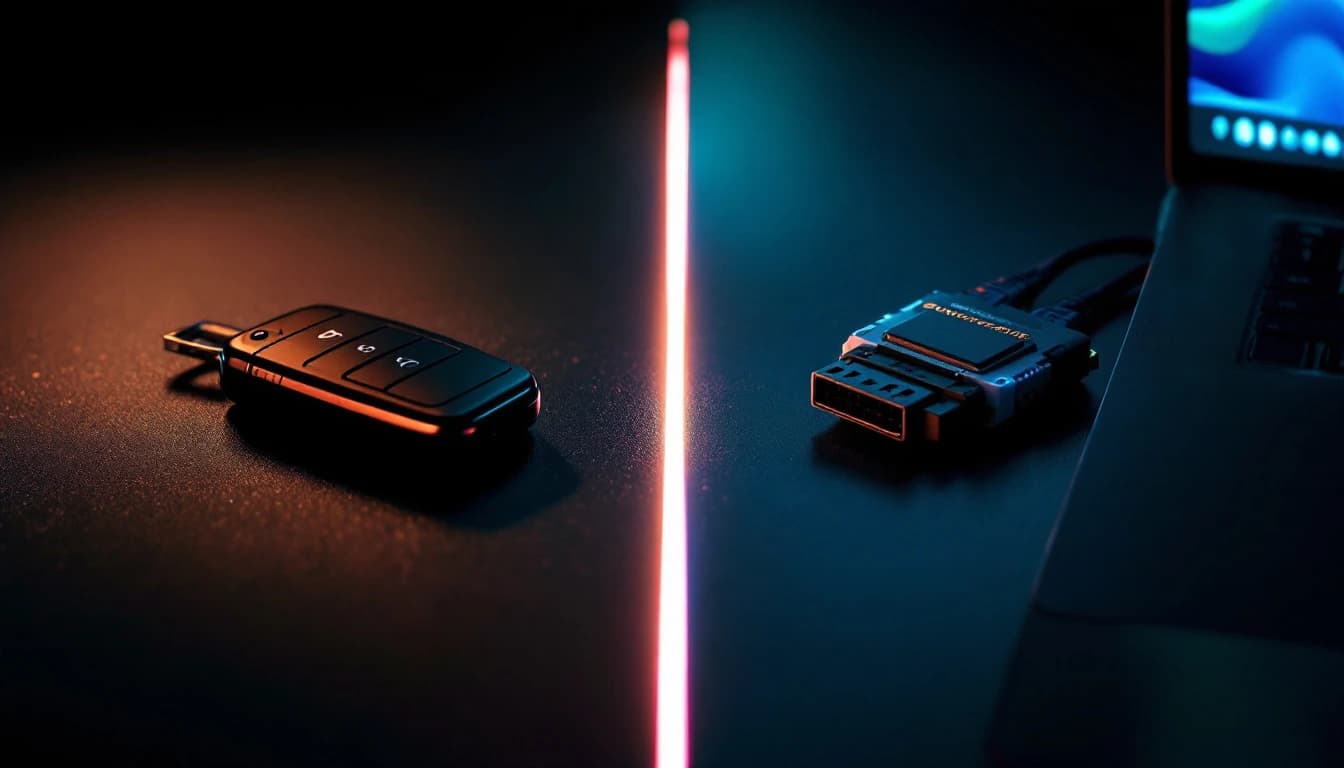
A PCM clone copies the software and tuning from a donor module onto a replacement so the car runs with your existing keys and your existing immobilizer. It preserves PATS. That is what you want when your original PCM died and you are swapping in a same-part-number replacement on an otherwise stock car.
A PATS delete does the opposite. It removes the immobilizer requirement so the engine runs without any transponder handshake at all. That is what you want when there is no key relationship to preserve, because you swapped engines, went standalone, or bought a used PCM with no married keys.
If you are not sure which one you need, the quick test is: do you have working keys you want to keep using on an otherwise stock car? Clone. Are you building, swapping, or stuck with a used module and no keys? Delete. We offer both and will point you to the right one.
It is worth being clear that legitimate immobilizer work on a vehicle you own is a recognized, credentialed trade, not a gray area. The National Automotive Service Task Force Vehicle Security Professional registry vets and monitors locksmiths and repair specialists for secure access to key, immobilizer, and PIN data through its Secure Data Release Model, with background checks and proof of owner authority built in. A bench PATS delete on a swap or standalone build sits in that same legitimate-repair lane: you own the vehicle, there are no married keys to preserve, and the immobilizer is blocking your own build.
Symptoms and failure modes
According to the NHTSA complaint and recall database, Ford owners across the PATS era report theft-system and no-start faults, and the patterns that bring people to a delete are consistent:
- Crank-no-start with a flashing theft or security light and no spark or injector pulse
- A dead start after an engine or harness swap where the new setup has no working PATS input
- A used PCM that will not run because it has no keys programmed and you cannot marry your keys to it
- No-start on a standalone build where the immobilizer hardware was never installed
- A theft no-start that appeared after PCM replacement with a junkyard or eBay module
A quick screen: if the engine cranks normally but never fires and a theft indicator is active in the cluster, the PATS immobilizer is almost certainly blocking the start. If it does not crank at all, rule out the battery, starter, and ignition switch first, because those are not PATS problems.
What the delete does
Rather than fight a transponder relationship that no longer exists, we remove the dependency. We bench-edit your PCM so the PATS immobilizer check is deleted. After the delete, the PCM no longer energizes a transponder coil expecting an answer, no longer compares a key ID, and no longer disables the engine when the handshake fails. The engine starts because the security gate that was blocking it is gone.
You still turn a mechanical key, or a push button, to power up and crank. What changes is that the PCM stops demanding a transponder match to enable fuel and spark.
The mail-in process, step by step
Order and pay. Choose the delete on the Ford PATS delete service page and pay the flat $250.
Ship your PCM to:
Auto Module Lab, PO Box 120241, Arlington TX 76012 if you ship USPS — or 1009 Oakwood Ln # 120241, Arlington TX 76012 if you ship UPS or FedEx (UPS and FedEx cannot deliver to a PO Box).
Include your printed order, a note with your year, make, model, and engine, and a contact number.
typical 24-hour bench turnaround. Once the unit arrives, we delete and verify the PATS check, then ship back within one business day.
Flat-rate return shipping, chosen at checkout. Standard (3-5 business days) is $29.95, UPS 2nd Day Air is $54.95, and UPS Next Day Air is $94.95. Tracking provided either way.
Install and start. Reinstall the PCM and start the vehicle. No key marrying, no immobilizer relearn.
What to ship
- Your PCM — the engine computer that holds the PATS logic. For most PATS-era Ford that is a single engine-control module.
- Your year, make, model, and engine, written on the note, so we apply the correct delete for EEC-V or the later Oak strategy.
- A contact number, in case we see something unexpected on the bench.
You do not need to ship keys, the transponder coil, or the lock cylinder. The delete lives in the PCM.
What this service does NOT do
We keep the scope honest so you do not pay for the wrong thing:
- This is NOT an emissions change. We do not delete, disable, or alter catalytic-converter monitors, EGR, the evaporative system, oxygen-sensor monitors, or any emissions calibration. Per the U.S. EPA's air-enforcement prohibition on defeat devices, emissions tampering is illegal, and we do not do it. Your emissions calibration is untouched. This is not a delete tune.
- It is not a performance tune. We do not change fueling, spark, rev limits, or power maps. Only the PATS immobilizer check is removed.
- It is not a PCM clone. If you want to keep PATS and your existing keys on a same-part replacement module, you need a clone, not a delete.
- It does not cut or program keys. Because the immobilizer is gone, the car no longer needs a transponder key, but you still need a mechanical key cut to your locks.
- It does not repair a dead PCM. If your module has a hardware failure unrelated to PATS, the delete will not revive it.
- It does not fix mechanical no-starts. Fuel pumps, coils, crank sensors, and timing are separate from the immobilizer check.
Price vs the dealer or a junkyard chase
The official path to a PATS no-start on a swap is awkward, because the dealer toolset assumes a stock car with married keys. On a used PCM with no key relationship, the dealer may need to program keys to the module, which requires the module to accept them in the first place, and a junkyard unit often will not cooperate. Chasing transponder programming on a swapped or standalone build is time spent solving a problem you do not actually need to solve.
Labor is the cost driver. Per the U.S. Bureau of Labor Statistics, automotive service technician labor is a significant and rising expense, and immobilizer diagnosis plus key programming stacks up hours. A bench delete removes the immobilizer from the equation entirely, so there is nothing left to program.
| Line item | Dealer / shop chase | Auto Module Lab delete |
|---|---|---|
| Diagnose immobilizer fault | Billable hours | Not needed |
| Program keys to used PCM | Required, often fails | Eliminated |
| Replacement transponder keys | Extra | Not needed |
| Standalone immobilizer hardware | If even available | Removed from build |
| Future reliability | Depends on key relationship | Immobilizer removed from equation |
| Turnaround | Appointment-dependent | Typical 24-hour bench |
| Return shipping | n/a | Flat-rate from $29.95, chosen at checkout |
| Total | Variable, often steep | $250 |
A real-world example
A builder in Texas swapped a modular V8 into an older platform and reused a PCM pulled from a donor car. The engine cranked strong, had fuel pressure, had spark at the coil packs on a bench test, and still would not fire in the car. The theft light flashed every crank. The PCM was healthy. It was simply enforcing PATS against keys it had never met.
He could have tried to program transponder keys to a used module that did not want to accept them, or he could remove the dependency. He shipped the PCM to Arlington with the year, model, and engine on a note. We deleted the PATS check, verified it, and shipped it back, most of the elapsed time being transit. The swap started on the next crank with no immobilizer hardware at all, because there was no longer a handshake for the PCM to wait on.
What I tell customers
A passive immobilizer is great on a stock car and a roadblock on a swap. If there are no keys married to your PCM, you are not going to talk a used module into accepting new ones easily, and you should not have to. The honest fix for a swap or standalone build is to delete the PATS check so the engine runs without the handshake. We do not touch your emissions and we do not tune anything, we just stop the PCM from refusing to start over an immobilizer relationship that no longer exists. — Adrian Torres, Founder, Auto Module Lab
Other bench specialists frame the swap problem the same way:
"Nine times out of ten the swapped engine is perfect, fuel and spark are there, and the only thing standing between the customer and a running car is a security handshake for keys that no longer exist. Deleting the PATS check is the honest fix because there is nothing to relearn and nothing to fake. We touch the immobilizer logic and leave the emissions calibration exactly where the factory left it." — Master automotive locksmith and PCM bench technician, 15+ years on the bench (anonymized)
I have run locksmith and module benches across Dallas, Houston, Austin, San Antonio, and Miami since 2012, and a mail-in PATS delete is the cleanest way to get a swapped or standalone Ford running from anywhere in the country.
Frequently asked questions
What is the difference between a PATS delete and a PCM clone? A clone copies a donor PCM's data and keeps PATS, so the car runs with your existing keys. A delete removes the immobilizer entirely so the engine runs with no transponder handshake. Delete is for swaps and used-PCM no-key builds. Clone is for same-part replacements where you keep the immobilizer.
Will the engine start without a transponder key after the delete? Yes. The PCM no longer reads or compares a transponder, so the immobilizer is irrelevant. You still need a mechanical key cut to your locks to turn the ignition.
Do I need to send my keys or the transponder coil? No. The PATS logic lives in the PCM. Ship the computer, not the keys, coil, or lock cylinder.
Is this legal? The delete removes an anti-theft immobilizer check on your own vehicle for swap, standalone, off-road, and repair situations where you own the vehicle. It does not touch emissions and is not an emissions defeat.
Will a delete affect emissions or how the engine runs? No. We change only the PATS security check. Fueling, spark, rev limits, and the emissions calibration are all left exactly as they were.
Does this cover EEC-V modules? Yes. We cover EEC-V and later Oak-strategy PCMs. Send your year, make, model, and engine and we confirm the strategy before we begin.
My PCM came from a junkyard with no keys, can you still delete it? Yes. A used PCM with no married keys is one of the most common reasons for the delete, because programming keys to that module is exactly the headache the delete avoids.
The bottom line
PATS reads a transponder in your key and disables the engine when the right key is not present, which is convenient on a stock car and a wall on a swap or used-PCM build. We bench-delete the PATS check in your EEC-V or later Oak-strategy PCM so the engine runs without the immobilizer handshake. This is an immobilizer-check delete, not a clone, not a tune, and not an emissions defeat.
Start on the Ford PATS delete page, see the full mail-in process, or read about the shop on the Adrian Torres founder page. If you are not sure whether you need a PATS delete or a PCM clone, tell us whether you have working keys to keep, and we will point you to the right service before you ship.
Ship your module today
Flat-rate pricing, typical 24-hour bench turnaround, return speed your choice at checkout. Most jobs back on your bench within a week.