Mercedes W164 X164 W251 EIS Repair Guide (ML GL R) 2026
Who this is for
This guide is for the Mercedes owner, independent shop or locksmith dealing with a no-start where the key will not turn or the dash says the key is not recognized. If you have a W164 ML-Class, an X164 GL-Class or a W251 R-Class from roughly 2006 to 2012, and the car intermittently or completely refuses to start, you are very likely looking at a failing EIS, the electronic ignition switch.
It is also for the technician who has already narrowed the fault to the EIS and wants the correct fix: a repaired or cloned genuine unit that stays matched to the car, not a fresh EIS plus a whole new set of keys coded at the dealer. Auto Module Lab is a nationwide mail-in shop in Arlington, Texas. EIS work is a bench job, so the vehicle can stay put in any state while the module travels to us.
What the EIS actually is
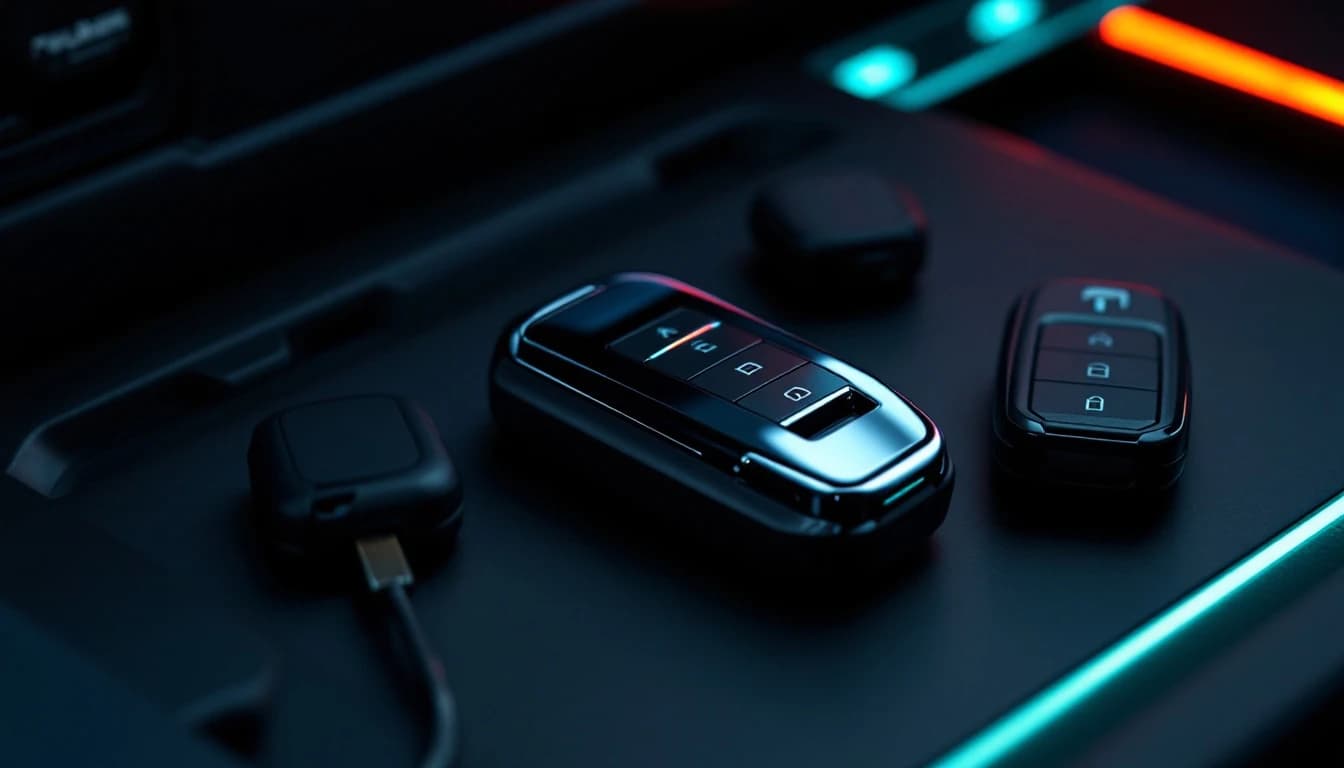
EIS stands for Electronic Ignition Switch; Mercedes also calls it the EZS, from the German Elektronisches Zundschloss. It is the module the key inserts into (or, on keyless cars, communicates with), and it is the heart of the immobilizer. On these platforms the EIS uses the FBS3 immobilizer generation, the system Mercedes used through this era before later cars moved on.
The EIS sits at the center of the start chain. When you insert the key and turn it, or press start, the key and EIS authenticate each other. The EIS then talks to the ESL (the electronic steering lock) to release the column, and to the engine ECU to authorize the start. Every one of those handshakes has to pass, and the EIS is the component that ties them together. Because it manages this, a failed EIS produces a hard no-start, not a degraded one.
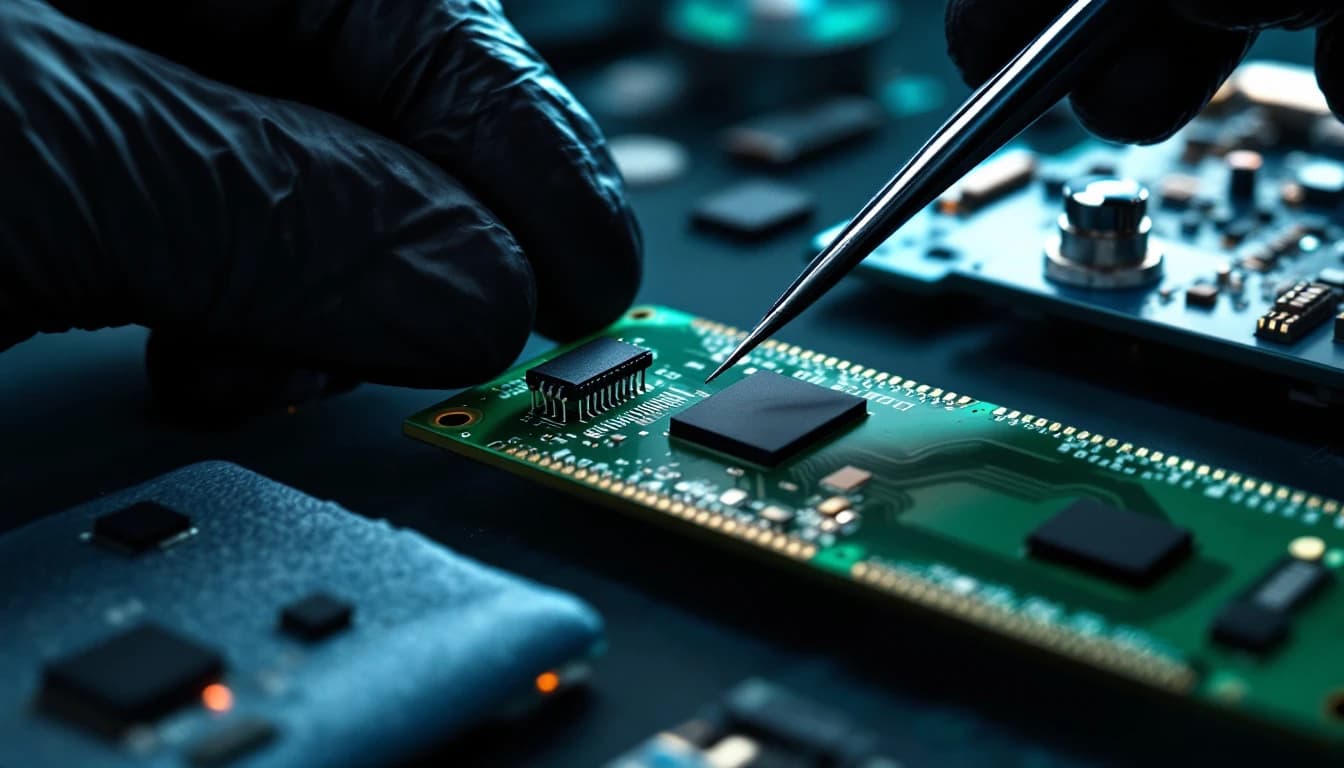
Inside the EIS is the electronics that store the immobilizer data, drive the key authentication and command the rest of the chain. Those electronics are what fail.
Where this applies
| Chassis | Model | Typical years | Immobilizer |
|---|---|---|---|
| W164 | ML-Class | 2006-2011 | FBS3 |
| X164 | GL-Class | 2006-2012 | FBS3 |
| W251 | R-Class | 2006-2012 | FBS3 |
These three platforms share the FBS3 EIS family of this era and are the focus of this service. Other Mercedes models use related but distinct ignition switches.
How the failure happens, in plain terms
The EIS is powered and active every time the car is used, and over years it suffers the wear that all electronics suffer: aging components, thermal cycling, and in many cases a worn internal contact or a corrupted data condition. As the unit degrades, the key authentication or the internal switching becomes unreliable.
From the driver's seat this shows up in a few recognizable ways. Early on it is intermittent: the car starts fine most of the time, then occasionally refuses, often when warm or after sitting. The key may become hard to turn or may not turn at all. As the fault worsens, the car shows a key-not-recognized message or simply will not crank. Because the EIS sits at the center of the immobilizer chain, once it fails completely the car is dead until the EIS is recovered or replaced.
It is important to understand that this is an electronics failure, not a key failure. The instinct is to suspect the key first, but on these platforms the EIS itself is the common culprit, which is why swapping keys rarely helps and why the right fix is on the EIS side. As the fleet ages these faults become more common; with the average U.S. vehicle now over 12 years old, at 12.6 years according to S&P Global Mobility, aging immobilizer electronics like the FBS3 EIS are an increasingly frequent no-start cause.
The rise of electronic ignition switches tracks the broader move to keyless and push-button systems, which became mainstream across the 2000s and 2010s. Electronic keyless and push-button ignition is now standard on the large majority of new vehicles, a shift documented by NHTSA's Keyless Ignition Systems guidance and analyzed in industry studies of automotive electronics architecture by firms such as McKinsey. Mercedes was an early and heavy adopter, which is part of why the FBS3 EIS is such a familiar failure point on cars of this generation. Immobilizers like this one were also a deliberate anti-theft measure; electronic immobilization is widely credited with cutting theft of older vehicle designs, an effect the Insurance Institute for Highway Safety underscored when it found that simply adding an immobilizer-style software fix cut whole-vehicle theft of affected cars by more than half.
What we do: bench repair, recover, or clone
Auto Module Lab works on the EIS itself rather than selling you a new module and a key set. There are two main paths depending on the condition of your unit:
- Repair and recover the original EIS. Where the original unit can be saved, we bench-repair and recover it so it functions correctly again while staying matched to your existing keys, the ESL and the engine ECU. Nothing about your immobilizer pairing changes.
- Clone to a donor unit. Where the original EIS hardware is too far gone to recover, we clone its immobilizer data to a donor EIS so the donor takes on your car's identity. The clone remains matched to your keys and the rest of the chain, so the car runs as before.
In both cases the goal is the same: keep your genuine, matched system working with your existing keys, and avoid the disruptive and expensive path of a brand-new EIS plus newly coded keys.
This kind of immobilizer work is exactly what the trade's access framework is built around. Per the National Automotive Service Task Force (NASTF) Vehicle Security Professional registry, security-sensitive functions like key and immobilizer programming are released through a Secure Data Release Model that verifies the legitimacy of the job first. Repairing or cloning your own matched EIS, at the owner's request, is precisely the legitimate-repair case that framework exists to serve.
Repair or clone versus dealer EIS plus key replacement
The dealer answer to a failed EIS is frequently a new EIS together with a new set of keys, all coded to the car. That is a parts-heavy and labor-heavy job, and on these FBS3 platforms it is expensive. Repairing or cloning the EIS targets the actual failed electronics, keeps your keys, and avoids re-keying the car.
EIS repair versus EIS cloning, clarified
These two terms get confused, so here is the distinction in plain language.
- EIS repair and recovery keeps your original physical EIS. We fix or recover the original unit so it works again. Your hardware, your data, restored.
- EIS cloning is used when the original hardware cannot be saved. We copy your car's immobilizer identity onto a donor EIS. Different physical hardware, same identity, still matched to your keys and chain.
Both approaches keep the car running with your existing keys and the matched ESL and ECU. The difference is simply whether your original hardware survives. We choose the path based on the actual condition of the unit you send, and we tell you which it is.
Symptoms checklist
You are likely a candidate for EIS repair or cloning if you see several of these together:
- The key will not turn in the ignition, or turns only sometimes.
- Intermittent no-start that comes and goes, often heat-related.
- A key-not-recognized or similar immobilizer message on the dash.
- Complete no-crank with the key inserted and turned.
- The problem persists across both of your keys, pointing to the EIS rather than a single bad key.
If only one of your two keys fails while the other works perfectly, the issue may be that single key rather than the EIS. Describe exactly what each key does when you contact us.
The mail-in process, step by step
A bench fix does not require the car. Here is how a Mercedes EIS job moves through our Arlington workshop.
Pay and book online. Order the W164 / X164 / W251 EIS repair on our service page and tell us your exact chassis, model year and the symptoms. Payment is up front so the bench work is queued when your parts arrive.
Ship your EIS and keys. We send removal notes for your chassis. Pull the EIS, and include your keys so we can keep everything matched. Ship to:
Auto Module Lab USPS: PO Box 120241, Arlington, TX 76012 UPS/FedEx: 1009 Oakwood Ln # 120241, Arlington, TX 76012
typical 24-hour bench turnaround. Once your EIS and keys arrive, our techs repair, recover or clone the unit on the bench, with a standard typical 24-hour turnaround from receipt, transit not included.
Flat-rate return shipping. We ship the repaired or cloned EIS and your keys back via the return tier you chose at checkout (from $29.95). You reinstall the EIS and the car starts with your existing keys.
Our team of more than 20 technicians runs Mercedes immobilizer work daily for customers across Dallas, Houston, Austin, San Antonio and Miami, and nationwide by mail.
What to ship
For a clean EIS repair or clone, send:
- The EIS module, removed from the vehicle.
- Your keys, so we can verify and keep everything matched. Send all the working keys you have.
- A note with your VIN, exact chassis and model year, a clear description of the symptoms (including which keys do what), and your return address and phone number.
Sending the keys with the EIS is important on these FBS3 platforms because it lets us confirm the match and verify the repair or clone end to end. We will tell you if anything else is needed before you ship.
What this does NOT fix
We would rather lose a sale than take your money for a fix that cannot work, so here is the boundary:
- A faulty ESL or steering-lock problem. If the actual fault is the electronic steering lock rather than the EIS, repairing the EIS will not solve it. That is a separate component. Symptoms can overlap, so accurate description matters.
- A single bad key. If one key works and the other does not, the EIS may be fine and the dead key is the issue. We will tell you if that is what we find.
- Unrelated no-start causes. A dead battery, a bad starter, a fuel-system fault or an engine ECU problem will not be solved by EIS work. Confirm the EIS is the cause.
- Physical or water damage beyond recovery. Severe physical or corrosion damage may push a unit past repair, in which case we move to cloning to a donor, or tell you honestly if neither path is viable.
When the EIS is the confirmed failure, repair, recovery or cloning brings the car back with your existing keys. When something else is wrong, we will say so.
Why FBS3 EIS units fail so predictably
These EIS modules fail in a recognizable pattern because of how they are built and how hard they work. The unit is energized and authenticating every time the car is used, and on these platforms it sits in the cabin where it sees years of thermal cycling and constant low-level electrical stress. Over time, internal components age, solder joints fatigue, and in many units a worn contact or a drift in the stored data tips the authentication or switching into unreliability.
The reason this shows up as intermittent before it becomes total is that a marginal unit can still pass authentication most of the time, especially when conditions are favorable. As the margin shrinks, you get the classic progression: occasional no-starts, then heat-related no-starts, then a key that will not turn, then a hard no-crank. By the time the car is fully dead, the EIS has usually been giving warning signs for weeks or months. Owners often recall a few odd no-starts that they shrugged off before the final failure.
Because the failure is in the EIS electronics, not in the keys, swapping keys does not help, and neither does cleaning the key or the slot. The fix has to be on the EIS side. That is also why we keep the original matched to your keys and the rest of the chain rather than replacing it wholesale; the data and the pairing are fine, it is the hardware health that needs attention.
The immobilizer chain and why matching matters
On these Mercedes platforms the EIS does not work alone. It is the hub of a chain that includes your keys, the electronic steering lock, and the engine ECU, and every link expects the others to carry consistent immobilizer data. When the dealer replaces the EIS outright, they have to introduce a new unit and re-pair that whole chain, which is why the dealer job balloons into new keys and extensive coding.
Repairing or cloning the EIS sidesteps all of that. We keep your car's existing immobilizer identity, so the keys, the steering lock and the ECU all still recognize the EIS as the same unit they were always paired with. Nothing downstream has to be re-coded, because from the rest of the chain's perspective nothing changed. This is the core advantage of working on the original data rather than swapping in a fresh module, and it is why the matched-repair path is both cheaper and less disruptive than the dealer route.
This is also why we ask you to send your keys with the EIS. Having the keys lets us confirm the match across the chain before the unit goes back to you, so you are not reinstalling something that authenticates on the bench but stumbles in the car.
That chain is also why the FBS3 immobilizer was effective at deterring theft in the first place, and why preserving it matters. National crime data from the FBI's Uniform Crime Reporting program tracks how motor-vehicle theft has moved year over year, and immobilizer-equipped vehicles like these Mercedes platforms have long been harder targets. Keeping your original matched identity intact, rather than dropping in a fresh re-coded module, keeps that protection unbroken.
What experts say
"Owners almost always blame the key first. On a W164 or a GL it is the EIS far more often than the key, and the tell is that both keys fail the same way. The data and the pairing inside that unit are usually perfect. It is the hardware health that has drifted. That is why we recover or clone the original instead of throwing a new module and a new key set at it. Keep the identity, fix the electronics, and the car starts on your existing keys." — Master automotive locksmith, 15+ years on the bench (anonymized)
Price versus the dealer
| Path | Typical cost | Keeps your keys and match | Turnaround |
|---|---|---|---|
| Auto Module Lab EIS repair or clone (mail-in) | 250 dollars | Yes | Typically 24 hours on the bench |
| Dealer new EIS plus new key set, coded | Well into four figures | No, new keys required | Days, plus appointment |
| Independent EIS replacement plus coding | Several hundred plus labor and keys | Varies | Days |
Repairing or cloning your matched EIS is a small fraction of the dealer EIS-plus-keys path, and because we keep your existing keys and the matched ESL and ECU, there is no re-keying step added to the bill. The case for repairing rather than replacing strengthens as a car ages: total annual ownership and repair costs are already a meaningful line item, with AAA's Your Driving Costs research putting yearly ownership costs well into four figures, so avoiding a large one-time dealer module-and-key bill keeps an otherwise sound vehicle economical to keep on the road.
Frequently asked questions
Will my existing keys still work after the repair or clone?
Yes. The entire point of the service is to keep the EIS matched to your keys, the steering lock and the engine ECU. Whether we repair, recover or clone, you keep your existing keys.
What is the difference between repair and cloning?
Repair keeps your original physical EIS and restores it. Cloning is used when the original hardware cannot be saved, copying your car's immobilizer identity onto a donor EIS. Both keep the car matched to your keys. We pick the path based on the condition of your unit.
Do I really need to send my keys?
Yes, send your working keys along with the EIS. On these FBS3 platforms, having the keys lets us verify the match and confirm the repair or clone end to end before we send everything back.
One of my keys works but the other does not. Is it still the EIS?
Maybe not. If one key works reliably and only the other fails, the dead key may be the problem rather than the EIS. Tell us exactly what each key does and we will advise before you ship.
My car only sometimes refuses to start. Is that the EIS?
Intermittent no-start, especially heat-related, is a classic early EIS symptom on these platforms. It often worsens over time. An intermittent fault is still worth addressing because these units rarely recover on their own.
Is this the same as EIS cloning I have read about?
It includes cloning as one path. We repair and recover the original where we can, and clone to a donor only where the original hardware cannot be saved. Both keep your keys and match.
Get your Mercedes starting again
If your W164 ML, X164 GL or W251 R-Class has a key that will not turn, an intermittent no-start, or a key-not-recognized message, the EIS is the usual cause, and repairing or cloning it is far cheaper than a dealer EIS-plus-keys replacement. See the Mercedes W164 EIS repair service for ordering details, browse the full list of mail-in services, read how the mail-in process works, or learn more about founder Adrian Torres, an automotive locksmith since 2012. Pull the EIS, pack it with your keys, ship it to Arlington, and most cars are back to a clean start within a day of the parts reaching our bench.
Ship your module today
Flat-rate pricing, typical 24-hour bench turnaround, return speed your choice at checkout. Most jobs back on your bench within a week.