Mercedes Immobilizer Systems by Generation
Start here: which system does your Mercedes use?
Almost every frustrating Mercedes key or no-start conversation comes from skipping one question: what immobilizer generation is this car? Get that right and the rest of the decision is simple. Get it wrong and you'll chase a service that either doesn't exist for your car or costs three times what it should.
Mercedes-Benz is not a small brand where one shop has seen every variant. Mercedes-Benz sold well over 300,000 vehicles in the U.S. in a single recent year, and the global installed base of W204, W211, W212, W164, W251, and later cars is measured in the millions. Reliability and ownership trackers such as J.D. Power and enthusiast outlets like Car and Driver have long documented the electronic complexity of these platforms, and the used-Mercedes market that Hagerty's media team follows keeps huge numbers of pre-2014 cars on the road past their original key sets. That scale is exactly why the immobilizer question gets muddled — there are so many cars, across so many years, running so many versions of the same core system, that generic advice is almost always wrong for a specific VIN.
This guide fixes that. It explains the three pieces of the Mercedes immobilizer — the EIS/EZS, the ELV/ESL steering lock, and the FBS security generation — and then maps them to the exact bench services that apply. If you read nothing else, read the FBS3-vs-FBS4 section, because that single divide decides what mail-in work is even possible.
The heart of it: EIS / EZS
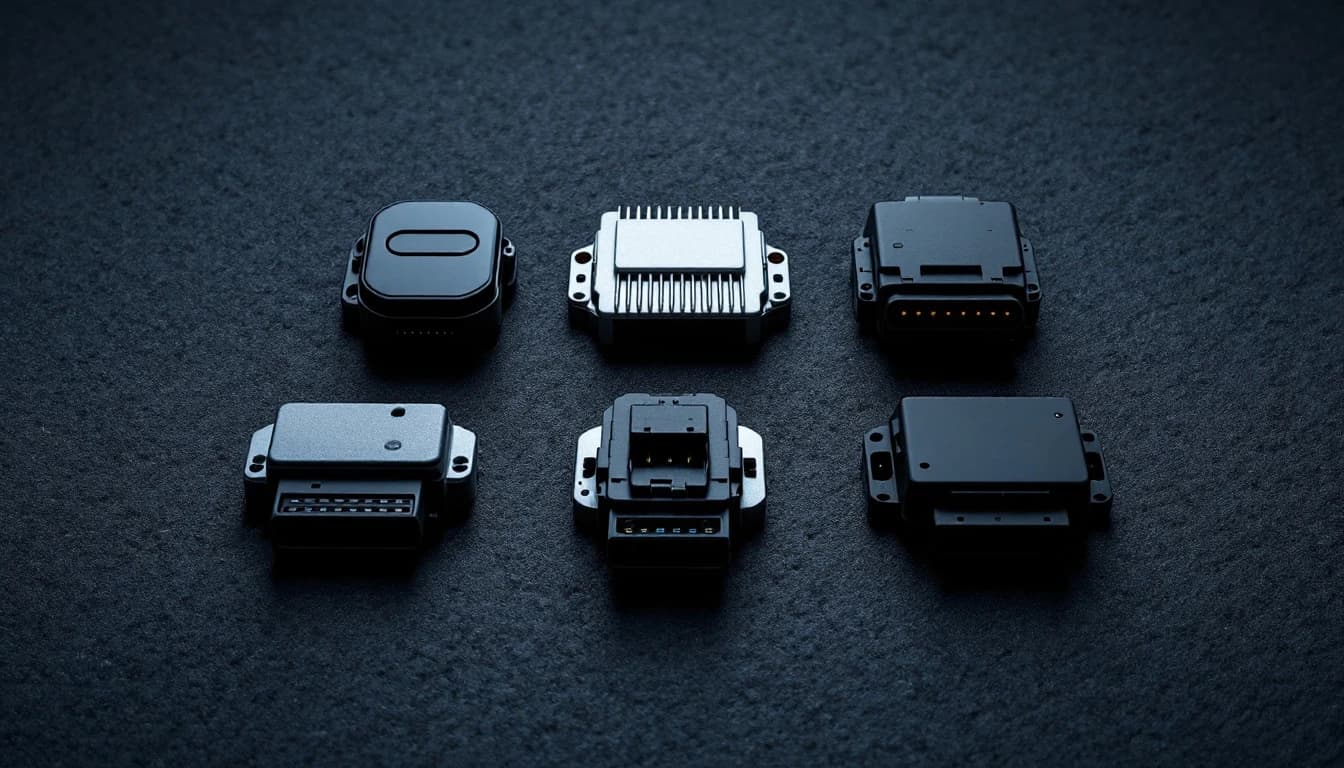
The EIS (Electronic Ignition Switch), also called the EZS (Elektronisches Zündschloss) in German, is the heart of the Mercedes immobilizer. It's the module your key talks to when you insert or bring it near the ignition. The EIS authenticates the key, releases the steering lock, and gives the engine ECU permission to start. Nothing happens without the EIS agreeing.
Because it's the center of the system, the EIS is the module involved in most Mercedes key and no-start work:
- EIS key programming — programming a spare or replacement key to a working EIS
- EIS cloning — copying a failing EIS's data onto a replacement module so the car keeps its existing keys
- EIS repair — recovering a specific EIS that has failed internally (notably the W164/X164/W251 family)
The EIS talks to the engine ECU and the steering lock, so the whole immobilizer chain flows through it. When a Mercedes won't start and the key seems dead, the EIS is the first suspect — and it's the module that ships to us on the bench.
The steering lock: ELV and ESL
The second piece is the electronic steering lock — called the ELV (Elektrische Lenkungsverriegelung) or ESL (Electronic Steering Lock). It's a small motorized unit on the steering column that physically locks and unlocks the steering, commanded by the EIS during the start sequence.
The ELV/ESL is a notorious failure point on several Mercedes chassis (the W204 C-Class is the classic example). When it fails, the symptom is a no-start with a steering-lock warning, and the car often won't crank at all because the EIS won't authorize a start against a steering lock it can't confirm. Two services address it:
- ESL motor repair/clone ($250) — repairing the failed steering-lock motor/module, or cloning its data to a replacement so it re-pairs with the EIS
- ELV emulator programming ($350) — programming an emulator that stands in for a failed ELV, a common and reliable fix when the original steering lock is beyond economical repair
Our detailed breakdown of what an ELV emulator costs and when it's the right call covers the emulator route specifically. The Mercedes ELV emulator programming service is the bench side of that fix — we program the emulator to your EIS so it pairs cleanly and the steering-lock no-start goes away.
The dividing line that decides everything: FBS3 vs FBS4
Here is the section that matters most. Mercedes immobilizer security comes in generations called FBS (Fahrberechtigungssystem, "drive authorization system"). The one your car uses decides whether bench key work is even possible.
FBS3 — roughly pre-2014 — is serviceable. On FBS3 cars, the EIS and key data can be read, copied, and programmed on the bench. This is the generation where EIS cloning, EIS key programming, ESL repair, and ELV emulator work are all real, fixed-price services. The vast majority of the Mercedes key and no-start jobs we do are FBS3 cars.
FBS4 — 2014 and newer — generally is not. FBS4 introduced stronger encryption and an online/server component tied to Mercedes' back end. On a genuinely FBS4 car, key programming typically requires dealer-level online access — it is not a bench job, and we do not offer FBS4 key programming. Our full explainer, Mercedes EIS pre-2014 vs post-2014 FBS4, goes deep on why the cutoff exists and how to tell which side of it your car is on.
Be careful here. The 2014 boundary is approximate, not absolute — some model lines transitioned earlier or later, and a few overlap years exist. That's exactly why we verify the security generation from your VIN and EIS part number before accepting any Mercedes key work. If a car is truly FBS4, we'll tell you it's a dealer/online job rather than take your money and your shipping cost for something that can't be done on the bench. Any vendor promising bench FBS4 key programming for a genuinely FBS4 car deserves real skepticism.
"The kindest thing you can do for a Mercedes owner is tell them the truth about FBS4 up front. Half the calls I get are people who were promised a cheap send-in key on a 2016 car that was never going to work that way. FBS3 we handle all day on the bench — cloning, keys, steering locks. FBS4, I send them to the dealer and save them the heartbreak. Verifying the generation first is the entire job." — Independent European-vehicle immobilizer specialist, 17+ years on Mercedes platforms (anonymized)
Compare the Mercedes services at a glance
Here's the full Mercedes bench menu mapped to the system and generation it applies to.
| Service | System involved | Generation | What it does | Price |
|---|---|---|---|---|
| EIS key programming | EIS/EZS | FBS3 | Program a spare or replacement key to a working EIS | $150 |
| EIS cloning | EIS/EZS | FBS3 | Copy a failing EIS onto a replacement, keeping existing keys | $250 |
| ESL motor repair/clone | ELV/ESL | FBS3 | Repair or clone a failed electronic steering lock | $250 |
| ELV emulator programming | ELV/ESL | FBS3 | Program an emulator to replace a failed steering lock | $350 |
| ME9.7 / MED17 ECU clone | Engine ECU | FBS3 | Clone the engine ECU to a replacement, matched to the EIS | $250 |
| W164 EIS repair | EIS/EZS | FBS3 | Recover a failed W164/X164/W251-family EIS | $399 |
| FBS4 key programming | EIS/EZS | FBS4 (2014+) | Not offered — dealer/online only | — |
The pattern is clear: every serviceable bench job here is an FBS3 job. FBS4 is the line where mail-in bench work stops.
EIS cloning vs EIS key programming — which do you need?
These two get confused constantly, and picking the wrong one wastes time. Our dedicated comparison, EIS cloning vs key programming — which service you actually need, goes through it case by case, but here's the short version.
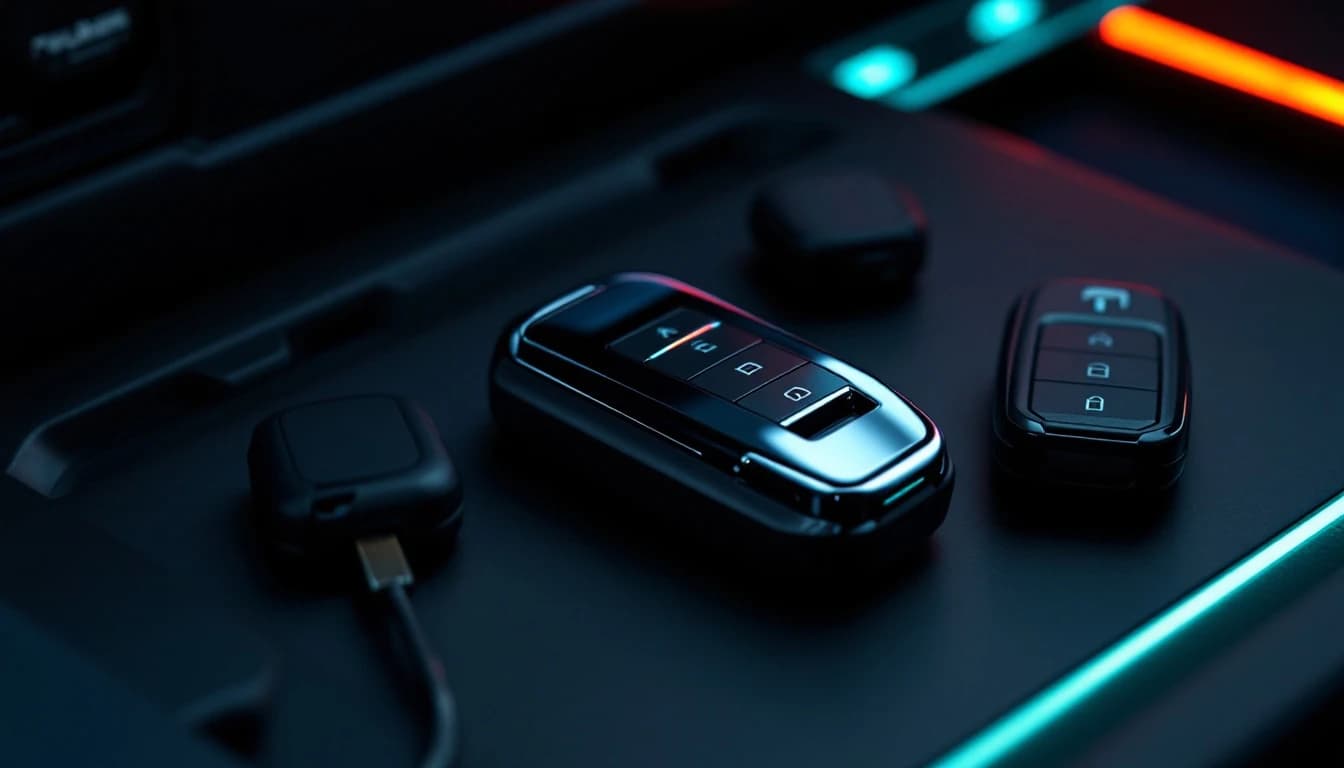
EIS key programming is for when the EIS is fine and you need a key. You have a working EIS in the car (or one that reads cleanly), and you want to add a spare key or program a replacement after losing one. The module stays; the key is the deliverable. This is the Mercedes EIS key programming service at $150.
EIS cloning is for when the EIS itself is failing. The module is dying — intermittent no-starts, communication faults — and you want to move its data (including its pairing with your existing keys and the engine ECU) onto a healthy replacement EIS so the car keeps running with the keys you already have. The module is the deliverable, and it arrives ready to drop in. This is the Mercedes EIS cloning service at $250.
A simple test: if the problem is "I need a key," you want key programming. If the problem is "the ignition module itself is failing," you want cloning. When you're not sure, tell us the symptoms and we'll point you to the right one before you ship.
The W164 EIS: a repair, not a replacement
The W164 (ML-Class) — along with its X164 (GL) and W251 (R-Class) siblings — has a well-known EIS failure pattern. These modules develop internal faults that cause intermittent or total no-starts, and a new EIS from the dealer is expensive and still needs programming.
The better path is repair. The Mercedes W164 EIS repair service recovers the failed module on the bench for $399 — the module comes back working, with its data and key pairing intact, rather than requiring a new module and a fresh programming cycle. For this specific EIS family, repair is usually the smart economic choice.
The engine ECU's role: ME9.7 and MED17 cloning
Like most modern immobilizers, the Mercedes system marries the EIS to the engine ECU. If the engine ECU fails and you replace it with a used or repaired unit, the replacement has to match what the EIS expects — otherwise the car won't start even with a perfect key and a healthy EIS.
ME9.7 and MED17 ECU cloning ($250) copies your original engine ECU's data onto a replacement, matched to your EIS, so the immobilizer chain stays intact. This is the same logic as EIS cloning, applied to the other end of the marriage. It's the difference between a used-ECU purchase that saves real money and a used-ECU purchase that leaves you with a car that cranks but won't run.
The mail-in workflow
Every serviceable Mercedes job here is bench work — you ship a module, not a car. The sequence:
- Verify the generation first. Text us your VIN, the EIS part number off the module, and a clear photo of the label. We confirm FBS3 vs FBS4 and the exact chassis. If the car is FBS4, we tell you before you ship — it's a dealer/online job, not a bench one.
- Provide proof of ownership. For all key and immobilizer work (EIS programming, EIS cloning, ESL/ELV, ECU cloning, W164 repair) we require documentation that the vehicle is yours — registration or title matching the VIN. This is firm.
- Remove and ship the module. Once verified, remove the EIS/ESL/ECU and ship it to PO Box 120241, Arlington TX 76012 if you ship USPS — or 1009 Oakwood Ln # 120241, Arlington TX 76012 if you ship UPS or FedEx (UPS and FedEx cannot deliver to a PO Box). Pack it well — anti-static bag, padded box. Include any working keys if the job needs them.
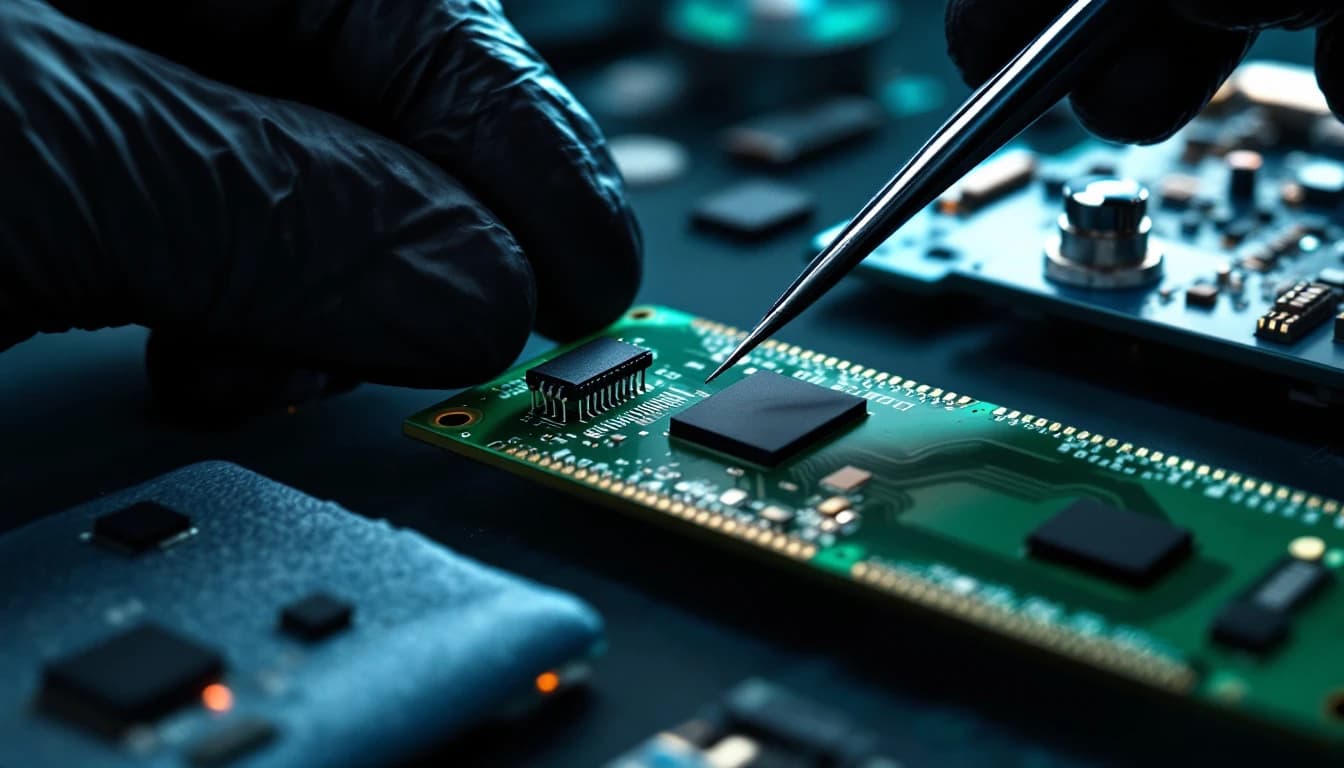
- Bench read + archive. On arrival we power the module on a regulated bench supply, read the data, and archive it before any change.
- Program, clone, or repair. We program the key, clone the EIS/ECU, repair the steering lock, or recover the W164 EIS — whatever the job requires.
- Verify communication. The module is tested on the bench before it leaves the shop.
- Return with tracking. It ships back via the flat-rate return tier you chose at checkout (from $29.95, up to overnight). You reinstall it.
The regulated bench supply matters: reading and writing a Mercedes immobilizer module in-vehicle with a weak battery risks a voltage sag mid-write that can corrupt the module. On the bench, the power is clean and the read-first discipline protects the data.
Cost, turnaround, and how it compares
The Mercedes bench menu in one place:
- EIS key programming — $150
- EIS cloning — $250
- ESL motor repair/clone — $250
- ELV emulator programming — $350
- ME9.7 / MED17 ECU clone — $250
- W164 EIS repair — $399
Each is plus customer-paid return shipping from $29.95. Against the alternatives, the value is straightforward. A dealer key or EIS job on a Mercedes runs well into the hundreds — sometimes four figures with the tow, the module, and the programming — and the dealer is often the only other option for anything security-related. Buying the specialized tooling to do one car yourself costs far more than a single send-in and carries brick risk. The bench service is one fixed price, verified for your exact car before you ship.
Compliance and proof of ownership
Two firm points.
Proof of ownership is required for all key and immobilizer work. EIS programming, cloning, steering-lock, and ECU work can be misused to defeat vehicle security, so we require documentation (registration or title matching the VIN) before performing any of it. This protects you and the platform alike. Vehicle theft is a real and persistent problem — the National Insurance Crime Bureau reports well over a million vehicle thefts annually in the U.S., and the Insurance Institute for Highway Safety has documented how strongly theft rates track the quality of a vehicle's immobilizer and anti-theft design. Legitimate immobilizer work is always done with ownership verified.
We are honest about FBS4. We do not offer bench key programming for genuinely FBS4 (2014-and-newer) cars, because it isn't a bench job — it requires dealer/online access. We'll confirm your generation from the VIN and EIS part number and tell you the truth before you spend anything on shipping.
And the scope note: bench programming, cloning, and repair fix electronic and data faults in the module. They don't repair unrelated mechanical problems, wiring damage, or issues outside the module itself. We diagnose the module, service it, and verify it — precisely, at a fixed price.
Frequently asked questions
How do I know if my Mercedes is FBS3 or FBS4? The rough cutoff is model year 2014 — pre-2014 cars are generally FBS3 (serviceable on the bench) and 2014-and-newer cars are generally FBS4 (dealer/online only). Because the boundary varies by model line, we confirm the exact generation from your VIN and EIS part number before accepting any key work, so you never ship a car we can't help.
Can you program a key for a 2016 or newer Mercedes? Generally no. Cars from roughly 2014 onward use FBS4 security, which requires dealer-level online access rather than bench programming, so we do not offer FBS4 key programming. If a vendor promises a cheap send-in key on a genuinely FBS4 car, be skeptical — that path typically does not work. We'll verify your generation first and tell you honestly.
What's the difference between EIS cloning and EIS key programming? EIS key programming is for when the ignition module is healthy and you simply need a spare or replacement key, at $150. EIS cloning is for when the EIS module itself is failing and you need its data moved onto a replacement so the car keeps your existing keys, at $250. The symptom tells you which: "I need a key" versus "the ignition module is dying."
Do you require proof of ownership? Yes — for every key and immobilizer service (EIS programming, cloning, ESL/ELV, ECU cloning, W164 repair) we require documentation that the vehicle is yours, such as a registration or title matching the VIN. This is a firm requirement on all security-related work with no exceptions.
My steering wheel won't unlock and the car won't start — what is that? That's a classic electronic steering lock (ELV/ESL) failure, common on chassis like the W204. The steering lock motor fails and the EIS won't authorize a start against a lock it can't confirm. We repair or clone the steering lock ($250) or program an emulator to replace it ($350), which resolves the no-start.
Why is the W164 EIS a repair instead of a replacement? The W164 (and its X164/W251 siblings) have a known internal EIS failure pattern, and a new dealer EIS is expensive and still needs programming. Recovering the original module on the bench at $399 keeps its data and key pairing intact, which is usually the smarter economic choice than a new module plus a fresh programming cycle.
Is bench work safer than programming in the car? Yes. A regulated bench supply removes the voltage-sag risk that can corrupt a Mercedes immobilizer module mid-write in a vehicle with a weak battery, and it lets us read the module directly and archive its data before any change. Read first, write once is the discipline that keeps send-in work reliable.
The bottom line
The Mercedes immobilizer is built around the EIS/EZS ignition switch, supported by the ELV/ESL steering lock, and gated by the FBS security generation. That last piece is the one that decides everything: FBS3 (roughly pre-2014) is fully serviceable on the bench — EIS key programming, EIS cloning, ELV emulator programming, ME9.7/MED17 ECU cloning, and W164 EIS repair are all real, fixed-price jobs — while FBS4 (2014 and newer) is dealer/online-locked and not offered as a bench service.
Everything serviceable is bench work — you ship a module, not a car — verified for your exact generation before you ship, with proof of ownership required on every key and immobilizer job. Return shipping is customer-paid from $29.95. Not sure whether your car is FBS3 or FBS4? Text us your VIN and a photo of the EIS label and we'll confirm the generation and the right service before anything leaves your hands.
Ship your module today
Flat-rate pricing, typical 24-hour bench turnaround, return speed your choice at checkout. Most jobs back on your bench within a week.