Airbag SRS Crash-Data Clear: The Complete 2026 Guide
Who this is for
You're reading this because one of these is true:
- Your vehicle deployed its airbags, inflators have been replaced, and the SRS light won't clear because the module still has "crash stored" in EEPROM
- You're a collision shop tired of paying $400-$1,200 for a new OEM SRS module when the existing one is physically fine
- You bought a salvage-title vehicle and need the airbag system restored before state inspection
- You're researching whether bench-clearing is legal, ethical, and safe before authorizing the work
The decision tree is short. If the SRS module is physically intact and your collision shop has installed correct replacement inflators, pretensioners, and impact sensors, the $75 bench clear is the cheapest correct fix. If the module case is cracked, water-damaged, or the deployment fried a driver IC, you need a replacement.
This guide explains how the process works at the silicon level, when it's the right call, when it's not, and the legal landscape in 2026. We'll be technically precise because there's misinformation online claiming the process "fakes" deployment status — it does not.
What happens to the SRS module after deployment
Every modern Supplemental Restraint System (SRS) module — sometimes called the ACM (Airbag Control Module), RCM (Restraint Control Module), or ORC (Occupant Restraint Controller) depending on manufacturer — contains three functional blocks: deployment driver FETs that fire each squib on command; sensor signal-conditioning for the accelerometer and pressure sensors; and EEPROM storing calibration, fault history, and the crash-event record.
Per NHTSA / National Highway Traffic Safety Administration regulatory guidance under FMVSS 208 (occupant crash protection) and FMVSS 214 (side impact protection), the SRS module is required to permanently log any deployment event so the system cannot be silently reset after a crash. The regulator does not want a module to deploy, be wiped, and silently re-armed without inflators actually being replaced.
When a deployment fires, three things happen in EEPROM within milliseconds:
- A crash-event flag is written to a specific protected memory address
- The deployment-cycle counter is incremented (some modules cap at 2-3 cycles)
- A timestamp and DTC trace (B0028, B1004, B1015, etc.) is logged to fault history
After this write, the module refuses to arm any subsequently installed inflators. From its perspective the inflators are spent — even if you've physically replaced them. The crash-event flag is the gatekeeper, and clearing it is the only way to restore armed/ready state.
Why "just clear the light" doesn't work mechanically
The most common DIY attempt is plugging in a generic OBD-II scanner and trying to clear the SRS DTCs. This does not work.
Per ALLDATA technical service bulletin index coverage of GM, Ford, Chrysler, Toyota, and Honda SRS systems, the crash-event flag lives in a protected memory block intentionally not addressable through standard OBD-II Mode $04 (Clear DTCs) commands. The protocol won't reach it. Even manufacturer-level scan tools (GM GDS2, Ford IDS, Toyota Techstream) typically cannot clear this flag on a deployed module — by design, per the FMVSS 208 mandate.
The DTCs you see (B0028, B1004, and platform-specific variants) are downstream symptoms of the flag being set. Clearing codes via OBD does not clear the flag. They return on the next ignition cycle because the flag is still asserted.
The only way to clear the flag is direct EEPROM access via bench tooling with the right adapter for that chip family (93C66, 24C04, 25LC640, etc.), or a manufacturer-restricted dealer tool with crash-clear permissions (rarely available). This is why bench-clearing is a service category — it is genuinely impossible to do the work in-vehicle on most platforms.
How EEPROM rewriting actually clears it (without falsifying physical state)
Here's the critical point: the bench-clear process does not falsify the physical state of the airbag inflators. Those are separate hardware. The clear resets the module's software record — and only that.
The mechanism is straightforward to anyone who has done EEPROM-level ECU work:
- The SRS module's EEPROM is read out via direct chip access (clip-on or chip-off)
- The protected memory block with the crash-event flag is located (address is platform-specific and documented in IATN / International Automotive Technicians Network member-shared references)
- The flag byte is rewritten from post-deployment (typically 0xFF, 0xAA, or a manufacturer signature) back to pre-deployment (typically 0x00)
- Related fault-trace bytes in the same block are zeroed to match
- The CRC / checksum protecting that block is recalculated so the bootloader accepts the modified data as valid
- EEPROM is written back, the module is power-cycled on the bench, and the new state is verified
In plain terms: the module now believes it is in pre-deployment state and will arm whatever inflators are physically installed. If they're new and correctly installed, the system is restored. If they're missing or out of spec, the module detects a circuit fault and refuses to arm — exactly as it would on a brand-new vehicle.
This is fundamentally different from "faking" inflator state. The module does not lie to itself about whether inflators are connected — it physically tests each squib loop on every key-on. The clear only removes the historical block on testing them.
When clearing is appropriate
The clear is the right call when ALL of the following are true:
- The vehicle was in a crash and the airbags deployed
- A qualified collision shop has physically replaced the deployed inflators, pretensioners, and any damaged impact sensors with OE or OE-equivalent parts
- The SRS module itself is physically intact (no cracked case, no burn marks, no water intrusion)
- The wiring harness to the module has been inspected and repaired where needed
Per IIHS / Insurance Institute for Highway Safety data on post-collision airbag restoration, approximately 60% of vehicles where airbags deployed in a moderate crash are repaired and returned to service rather than declared total losses. On every one of those repairs, somebody has to handle the SRS module — either replace it or clear it.
The economic argument is compelling: a new OEM SRS module for a typical late-model sedan runs $400-$1,200 at dealer pricing. Used modules from salvage yards run $150-$300 but carry their own crash-event flag and need to be cleared before installation. A bench clear of the existing module is $75 flat with no donor-vehicle history attached.
When clearing won't work
Be honest with the diagnosis before shipping. Clearing does NOT restore:
- Physically damaged modules — cracked case, bent PCB, burn marks, water or coolant intrusion. Scrap regardless of EEPROM state
- Modules with failed deployment driver ICs — the high-current FETs that fire the squibs can fail during deployment. A clear restores software state but cannot restore a blown driver
- Modules where the deployment damaged the internal microcontroller — rare but real. A severe spike during deployment can corrupt the MCU's program flash. These fail bench self-test
- Vehicles with structural deformation affecting impact sensor mounts — the module may clear cleanly, but if sensors don't report correctly in their mounts the restored system won't function
- Some 2018+ modules with secure-boot and signed firmware — a growing list (notably recent VAG, BMW, Hyundai/Kia) resist bench modification. We test before quoting
Per Mitchell1 ProDemand repair-information aggregated SRS failure mode statistics, roughly 18% of deployed SRS modules show physical damage that precludes successful clearing. The remaining 82% are good candidates. We diagnose on receipt and refund (less shipping) if yours is unrecoverable.
SRS fault code categories
Not every SRS DTC is a crash-event code. The category determines whether clearing is the right service:
| DTC pattern | Category | Clearing fixes it? |
|---|---|---|
| B0028, B1004, B1015 — "crash event stored" | Crash-event flag | Yes — primary clear target |
| B0001-B0027 — squib loop opens/shorts | Hardware fault on inflator side | No — replace inflators first, then clear |
| B0100-B0150 — sensor circuit fault | Impact sensor wiring/sensor failure | No — repair sensor circuit first |
| B1000-B1003 — module internal fault | SRS module hardware failure | No — module needs replacement |
| U-codes (U0151, U0152) | CAN-bus fault between module and gateway | No — diagnose network |
| Manufacturer-specific (GM 1740, Ford 14, Toyota 81) | Varies | Lookup required |
If your scanner reports a crash-event code AND your collision shop has confirmed inflators are replaced and sensors test good, clearing is the right next step. If you see hardware-fault codes, address those first.
The legal landscape
This is where misinformation runs heaviest online. Let's be precise.
Federal: There is no federal prohibition on bench-clearing a privately-owned vehicle's SRS module to restore the airbag system after a crash, provided new compliant inflators are installed. The FMVSS 208/214 standards referenced earlier regulate what manufacturers must build; they do not regulate post-crash repair on a privately-owned vehicle. Per SAE J2727 on airbag inflator handling, inflator replacement is a recognized repair category.
State (resale disclosure): Jurisdiction-specific. Most states require disclosure of prior deployment / salvage history at point-of-sale:
- Texas DMV — "Rebuilt Salvage" title brand for vehicles previously declared total loss, per Texas Transportation Code §501.0925. Airbag deployment alone does not trigger the brand unless the insurer declared total loss
- California DMV — "Salvage" or "Revived Salvage" brand per California Vehicle Code §11515. Airbag-replacement disclosure required on certain commercial repair invoices
- Florida DMV — "Rebuilt" or "Salvage" brand per Florida Statutes §319.14
General principle across all 50 states: the owner who authorizes the repair is acting within their rights. The misrepresentation issue arises if the vehicle is then sold without disclosing accident history the state requires at title transfer. Per the FTC Used Car Rule, dealers must disclose known material defects; properly-repaired airbag systems are generally not a defect for FTC purposes, but state-level disclosure still applies.
Bottom line: clearing your own vehicle's SRS module after a legitimate post-crash repair is legal. Selling a vehicle without disclosing its accident history when the state requires it is the legal problem — and that problem exists whether or not the module was cleared.
Insurance implications
Per Consumer Reports investigative coverage on rebuilt airbag systems (2022 series), insurance treatment of post-repair vehicles varies by carrier:
- Vehicles never declared total loss: Routine repair, no insurance flag, no premium impact
- Vehicles declared total loss and rebuilt: Salvage or Rebuilt brand attaches. Most carriers limit to liability-only or restrict comp/collision; some refuse coverage entirely
- Resale value: Per NADA / Manheim auction data referenced by IIHS, salvage-title vehicles trade at approximately 40-60% of clean-title comparable value regardless of repair quality
The key point: bench-clearing the SRS module does not affect insurance status. Status is determined by the total-loss declaration at the time of the original claim. A cleared, properly-repaired SRS is just a properly-repaired SRS.
What experts say
"We've been bench-clearing SRS modules for over a decade. The customer pushback we used to get — that it's somehow 'cheating' the system — has mostly faded as the technical reality became better understood. The crash-flag clear restores the module to where it was the day before the accident. We still test new inflators, verify impact sensors, and document the repair with photos. The clear is just a normal step in a normal post-collision rebuild." — ASE-certified collision repair technician, 22+ years body-shop experience (anonymized per shop policy)
Per NTSB / National Transportation Safety Board crash investigation reports referencing the role of the SRS module in post-crash analysis, the Event Data Recorder (EDR) data is preserved by the bench-clear process when properly performed — we read and archive the full crash-event dataset before clearing, available to the customer for 12 months.
AML's bench process
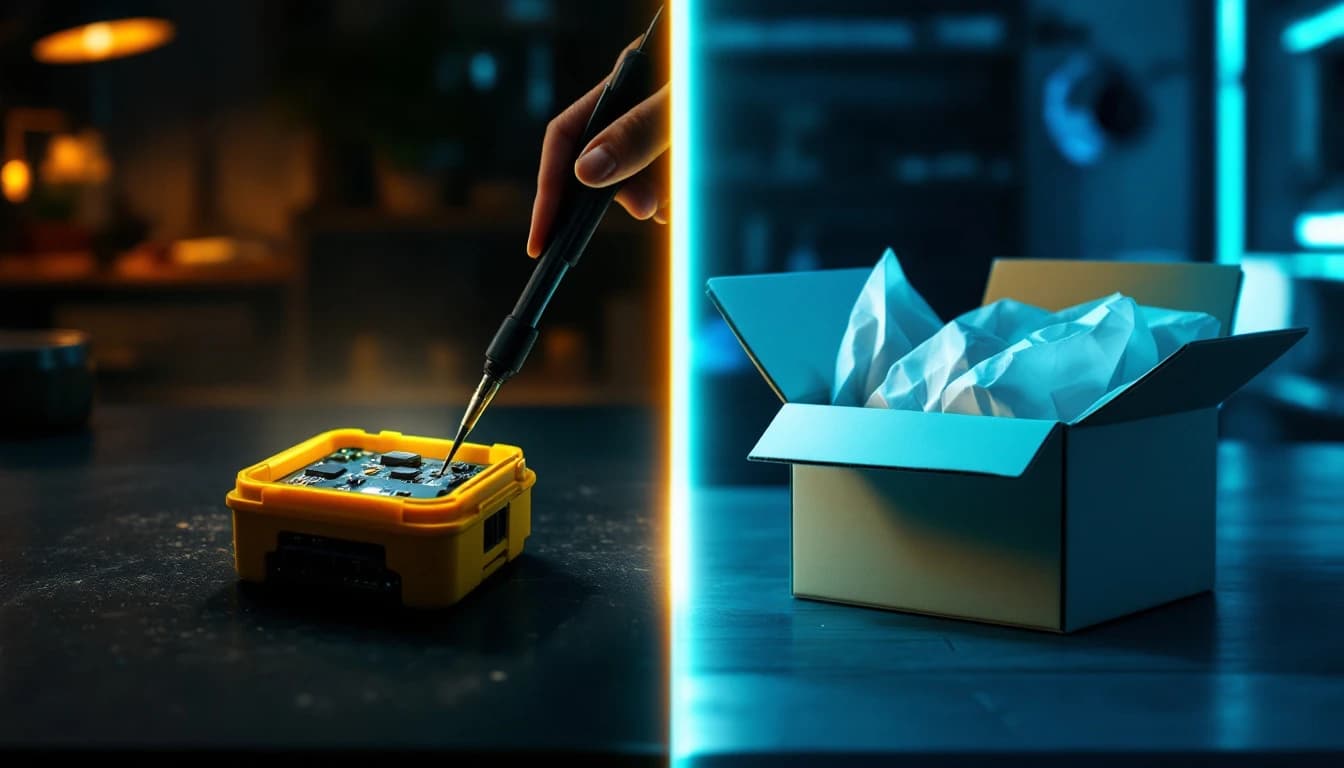
When your SRS module arrives at the Arlington workshop:
- Visual inspection — confirm part match, no shipping damage, no water or thermal damage
- Bench power-up test — confirm boot, comms with our test harness, expected firmware, passes non-crash self-tests
- EEPROM read — dump existing data including the full crash-event record (EDR data preserved)
- Crash-flag clear — rewrite the protected memory block per platform-specific procedure, recompute checksum
- Verification read — read back and compare byte-for-byte against expected post-clear signature
- Bench arm test — connect a simulated inflator load and verify the module arms squib drivers correctly
- Photo + ship — bench test photo, then USPS Priority Mail back to you with tracking
Total bench time: 30-60 minutes. The typical 24-hour turnaround commitment is hard-floor.
Important: ship the SRS module ONLY. Do NOT ship airbag inflators or pretensioners — those are pyrotechnic devices requiring hazmat shipping. We only need the electronic control module.
Comparing alternatives
| Option | Typical cost | Turnaround | Notes |
|---|---|---|---|
| New OEM SRS module from dealer | $400-$1,200 | Same-day to 2 weeks | Programming may still be required; no donor history |
| Used SRS module from salvage yard | $150-$300 | 3-7 days shipping | Carries donor crash history; still needs clearing |
| Dealer crash-clear (where available) | $200-$400 | 1-3 days | Many dealers refuse this work or lack tooling |
| DIY clear with consumer tool | $80-$300 tool cost | Same-day | Works on limited platforms; protected blocks often unreachable |
| AML bench clear | $75 flat | Typical 24-hour bench + shipping | Works across most platforms; original EDR preserved |
For a single repair, the AML bench clear is usually the cheapest path. Volume discounts available above 5 modules/month.
What to verify after clearing
When you receive the cleared module back and reinstall it, verify these items in sequence:
- Initial power-up — connect primary harness, turn ignition to RUN, watch SRS lamp. Should illuminate 4-6 seconds (bulb-check) then extinguish
- DTC scan — run a full SRS scan. Expect zero stored codes
- Inflator-arm test — most scan tools have an SRS bidirectional test confirming correct impedance on each squib loop. Run on every position
- Sensor data check — view live impact sensor data, confirm sensible values
- Static drive test — brief low-speed drive in a safe area, monitor the SRS lamp, confirm no codes set after 30+ minutes
If any check fails, do not return the vehicle to service. Diagnose first.
Frequently asked questions
Is bench-clearing the same as "deleting" the airbag? No. The airbag system remains fully functional. The clear only removes the historical crash-event flag preventing the module from arming. Future deployments still record correctly.
Can I clear my own SRS module without sending it in? With the right equipment and platform knowledge, technically yes. In practice, the bench tooling and procedure references cost more than several years of $75 service charges unless you're doing dozens per year.
Do you preserve the crash data for legal or insurance purposes? Yes. We archive the full pre-clear EEPROM dump including any Event Data Recorder (EDR) data for 12 months, available to the owner on request.
Will the cleared module pass state safety inspection? Yes. In states that inspect the SRS warning lamp, a cleared and correctly-installed module behaves identically to a never-deployed module: bulb-check on key-on, then off.
Can you clear a module that's been underwater? Generally no. Water intrusion damages the PCB and IC packaging in ways that aren't visible externally. We bench-test water-exposed modules at no charge, but most fail self-test.
Does the clear work on hybrid / EV airbag systems? Yes. SRS modules on hybrid and BEV vehicles use the same crash-flag architecture as ICE vehicles. The high-voltage disconnect logic is a separate function not affected by the clear.
Related reading: our guides to airbag module reset versus replacement cost and what the event data recorder actually stores cover the cost and legal sides of this work.
The bottom line
Bench-clearing an SRS module is the correct fix when the vehicle was in a crash, new inflators and damaged sensors have been installed, and the module itself is physically intact. It's not the right fix when the module has physical damage, when underlying hardware faults haven't been addressed, or when the goal is to disguise accident history at resale.
The mechanism is honest — an EEPROM rewrite that resets the module's software record without falsifying physical inflator state. The legal landscape is clear federally and varies by state around resale disclosure. The economic argument is straightforward: $75 to restore an existing module versus $400-$1,200 to replace it.
It's $75 flat-rate at our Airbag SRS Module Crash-Data Clear service page with typical 24-hour bench turnaround; return shipping is a flat-rate checkout option (from $29.95). We preserve original crash-event data for 12 months.
If you're not sure whether your module is recoverable, text us with the part number off the module label — we'll confirm fitment before you ship. See also our diagnostic deep-dives on B0028 Airbag Deployed and B1004 Airbag Crash Stored, or read how the mail-in process works.
Ship it for the airbag srs module crash-data clear — $75 flat
Typical 24-Hour Turnaround, return speed your choice at checkout. Prepaid inbound label by email the minute you order.