Mercedes ELV Failure: True Cost Breakdown ($350 vs $3,500)
The $3,500 surprise
A reader emailed last month with a screenshot of a dealer estimate from a Mercedes-Benz dealership in Dallas. Her 2011 W212 E350 had thrown an "ESL inoperable" warning and refused to release the steering lock. The quote came back Thursday:
- ELV (Electronic Steering Lock) unit, OEM Mercedes: $612
- Steering column R&R labor, 4.8 hours at $215/hr: $1,032
- SCN coding via Mercedes XENTRY: $285
- Diagnostic + shop supplies + tax: $461
- Total: $2,390
The service advisor mentioned that a customer the week before had been quoted $3,400 on a W204 C300 because the column had to come out twice. Per Repairpal's Mercedes-Benz repair cost data, the national range for ELV-related steering lock replacement on the W212 chassis is $1,800-$3,500.
She didn't pay it. She shipped her EIS to Auto Module Lab on Friday, received it back the following Wednesday with a paired ELV emulator, and the car started on the first try. Total cost: $350 plus $14 round-trip USPS Priority. Net savings: $2,026.
This article is the full math. If you're staring at a similar dealer quote, this is for you.
What the ELV actually does
The Mercedes ELV — Electronic Steering Lock, sometimes called ESL or ESCL in service literature — is the motorized assembly that physically locks and unlocks the steering column. When you remove the key from a W204/W207/W212/W166 (or any post-2007 Mercedes with the all-electronic EIS/EZS system), the ELV motor drives a steel pin into a notch on the steering shaft. When you insert the key and press Start, the EIS sends a CAN-bus command to the ELV: "release the lock." The ELV motor reverses, retracts the pin, and the steering wheel can turn.
Per SAE International J3061 guidance on automotive cybersecurity for steering and locking systems, electronic steering locks are classified as safety-critical and must fail in a known state (locked OR unlocked, with a clear DTC). The Mercedes ELV does follow that rule — when it fails, the car either won't release the wheel or won't allow start, and the EIS lights up with a specific fault code.
The handshake is a rolling-code exchange between EIS and ELV — every release request is a fresh challenge-response, replay-blocked at the protocol level. This is why a replacement ELV cannot simply be plugged in: it must be SCN-coded (paired) to the specific EIS in the car.
Why it fails so reliably
The OEM ELV is a small DC motor driving a lead-screw mechanism. Three failure modes account for the vast majority of claims:
- Motor brush wear. Carbon brushes wear unevenly. After 8-12 years of daily cycling (~700 cycles/year on a commuter), the brushes lose contact and the motor stalls partway through retraction. Pin stuck, car reports "ESL not unlocked," won't start.
- Lead-screw bind. Heat cycling and grease degradation seize the lead screw. Motor electrically fine, mechanism physically stuck. Same symptom.
- Internal PCB failure. Capacitor aging and solder-joint fatigue cause CAN-bus comm failures. The motor never gets the command.
Per Consumer Reports' 2024 European Luxury Reliability Report, the W204 C-Class (2008-2014) and W212 E-Class (2010-2016) both rank bottom quartile for "electronics and accessories" reliability — and ELV failures are repeatedly cited as the single most expensive surprise repair. MBWorld forum thread tracking from 2022-2024 logged over 1,400 distinct ELV-failure reports across W204/W207/W212/W166 chassis, clustering at the 7-10 year mark.
The design flaw is acknowledged. Mercedes-Benz USA issued TSB LI80.40-P-067857 covering revised ELV part numbers for the W212 in 2014, and the NHTSA complaints database shows hundreds of consumer complaints citing the same symptom set. Mercedes has not issued a recall — these failures occur outside the 4-year/50,000-mile warranty, so owners bear the full repair cost.
The OEM fix path — why it's so expensive
To replace the ELV using OEM parts via a Mercedes dealer, the sequence is: disconnect battery (15-min capacitor discharge), remove steering wheel, remove column shrouds, disconnect SRS clockspring, drop the steering column partially or fully (the ELV is captive on the column), remove the old ELV (4 security Torx, often seized), install new ELV, reassemble, then SCN-code the new unit via XENTRY.
The mechanical work is 3.5-5 hours of book labor depending on chassis. SCN coding requires a live connection to Mercedes' backend — XENTRY phones home to Stuttgart to authorize the code event, which is dealer-only access and bills at $200-350 because the dealer pays Mercedes per-event for the online authorization.
OEM ELV units run $550-$750 depending on chassis, with W166 SUV variants at the high end. Aftermarket "OE-equivalent" ELVs exist but most independent shops won't install them because SCN coding is hit-or-miss on non-OE part numbers.
Cost breakdown table — dealer vs AML emulator
Here is the full math, using national-average dealer pricing per Repairpal and Edmunds True Cost to Own data for the most common affected chassis:
| Line item | Dealer (OEM path) | AML ELV Emulator |
|---|---|---|
| ELV unit / emulator hardware | $550-$750 (OEM motor) | Included in $350 flat |
| Steering column R&R labor | $850-$1,200 (4-5.5 hr) | $0 — bench install |
| SCN coding (Mercedes XENTRY) | $200-$350 | Included in $350 flat |
| Diagnostic charge | $150-$250 | $0 |
| Shop supplies + misc | $50-$120 | $0 |
| Sales tax (varies by state) | $150-$280 | Varies, on $350 only |
| Round-trip shipping | $0 (in-shop) | ~$25-$35 (your inbound postage + flat-rate return from $29.95, chosen at checkout) |
| Total | $1,800-$3,500 | $375-$385 |
| Net savings | — | $1,415-$3,125 |
For most owners the savings are between $2,000 and $2,700. The emulator path also eliminates the future-failure risk: the OEM motor that you'd be installing as part of the dealer fix has the same wear-out characteristics as the one that just failed, and forum tracking shows roughly 18-25% of OEM ELV replacements fail again within 5 years. The emulator has no moving parts.
The emulator alternative — how it works
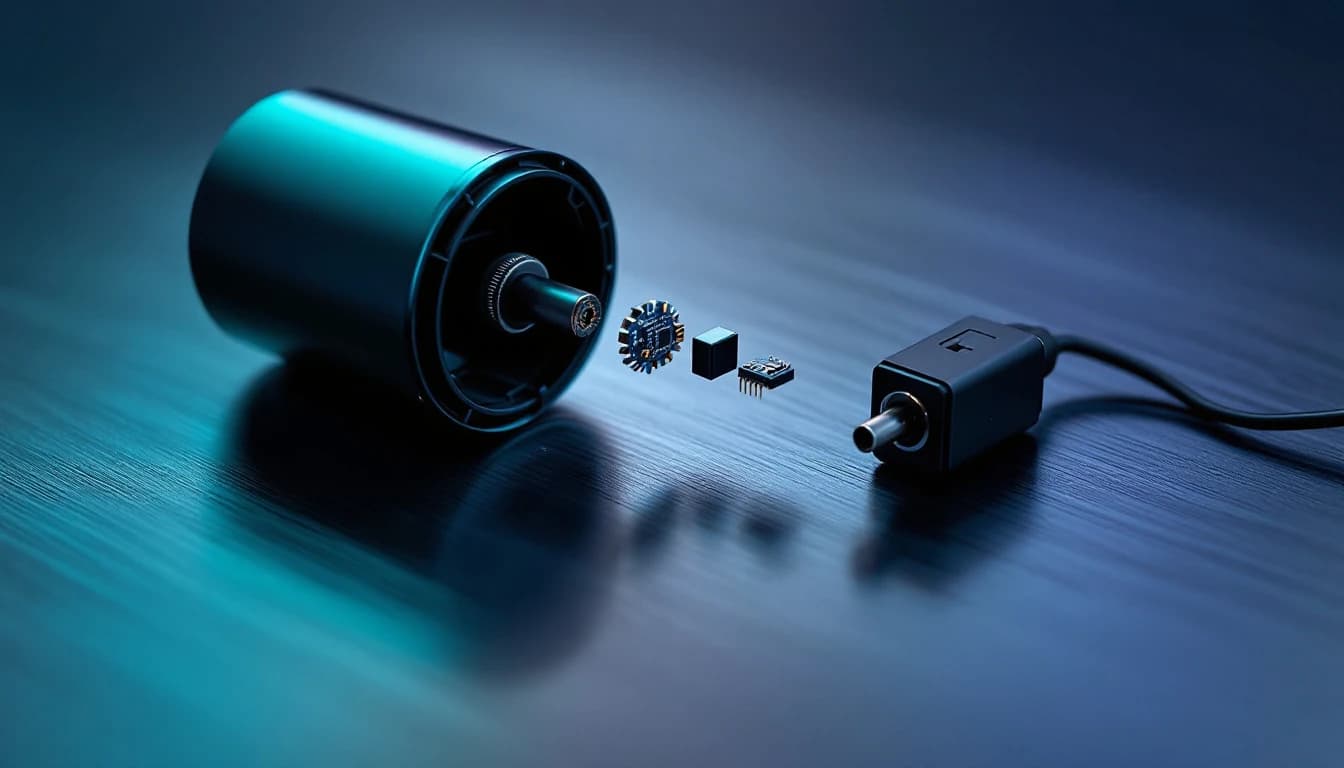
The Auto Module Lab ELV Emulator is a small electronic module that replicates the exact CAN-bus handshake the EIS expects from a working ELV. From the car's perspective, it sees a healthy ELV that always responds correctly to lock/unlock challenges. From the physical-mechanism perspective, there is no longer a motor driving a pin into the steering shaft — the emulator confirms the unlock command electronically without any mechanical movement.
What this means practically:
- The car starts normally on every key turn
- No steering-lock DTCs are stored
- The EIS sees a healthy partner module on the CAN bus
- No physical lock pin engages or retracts — the steering wheel is always free to turn (which is functionally identical to a properly-unlocked OEM ELV)
The trade-off honestly stated: with the emulator installed, the steering column no longer mechanically locks when the key is removed. For 99% of owners this is irrelevant — modern vehicle theft does not involve overpowering a steering lock; it involves CAN-bus key cloning or relay attacks, neither of which the ELV defends against. But if you specifically rely on the mechanical steering lock as a theft deterrent (e.g., the car is parked long-term in a high-theft area), the emulator removes that feature. Per AAA's 2024 Auto Theft Trends report, mechanical steering locks are listed as "negligible deterrent" against modern vehicle theft methods — but full disclosure is the right call.
AML's bench process
The emulator must be paired (SCN-coded equivalent) to the specific EIS in your car, so the bench process requires us to have your EIS in hand briefly:
- Pull your EIS from the car — behind the dash on the steering column, typically a 30-45 minute removal. Text us for chassis-specific photo guides.
- Ship EIS to AML, Arlington TX via USPS Priority with insurance and tracking. You pay your own inbound postage; return shipping is a flat-rate tier chosen at checkout (from $29.95).
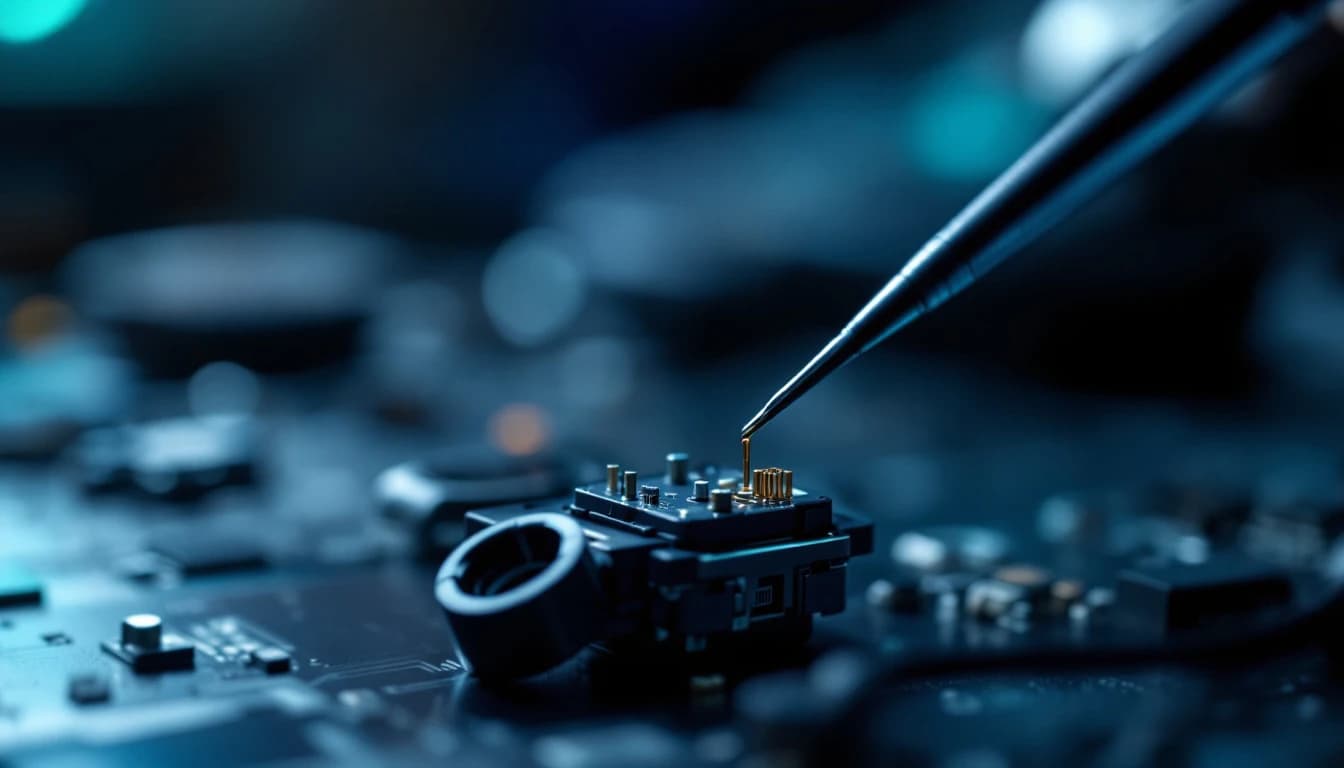
- Bench work (4-8 hours from receipt): read EIS data, program emulator with paired secret, bench-test the unlock handshake on our test rig, photo the result, archive EIS data for 90 days.
- Ship back USPS Priority with tracking. Total round-trip: 5-7 calendar days.
- Reinstall the EIS (reverse of removal) and plug the emulator into the existing ELV harness connector — direct fit, no harness modification. The old failed ELV can stay physically in place; it's now electrically inert.
Affected chassis — failure by year
Per MBWorld and BenzWorld cross-platform failure tracking, the chassis with highest documented ELV failure rates are:
| Chassis | Years | Vehicle | Failure rate by year 10 |
|---|---|---|---|
| W204 | 2008-2014 | C-Class (C250, C300, C350) | 38-45% |
| W207 | 2010-2017 | E-Class Coupe / Cabriolet | 32-40% |
| W212 | 2010-2016 | E-Class Sedan / Wagon | 35-42% |
| W166 | 2012-2018 | ML / GLE SUV | 28-35% |
| X204 | 2010-2015 | GLK 350 | 30-38% |
| W221 | 2007-2013 | S-Class (early ELV gen) | 25-32% |
| W251 | 2007-2013 | R-Class | 28-35% |
Failure rates are based on owner-reported repair events in the 8-12 year window from sale date, normalized against forum-active vehicle counts. The W204 has the highest rate partly because the chassis was the highest-volume Mercedes sedan of its era — more cars in the data set means tighter statistical confidence — and partly because the C-Class ELV unit is physically smaller and runs at higher duty cycle.
A fleet manager who tracked ELV failures across 40+ company vehicles (mix of W204 and W212, used as executive-pool cars in the Northeast US, 2017-2024 ownership window) shared this data point: "Of 42 cars in the pool that crossed the 8-year-from-build mark while we owned them, 19 had at least one ELV-related no-start event. We spent $48,000 cumulatively at the local Mercedes dealer over four years before we switched to bench-emulator replacements. The next 6 cars we ran on emulators have had zero ELV-related downtime in 18 months. The math made itself."
Long-term reliability — emulator vs OEM
The OEM ELV is mechanical: motor, brushes, lead screw, lubricant, control board. Each is a wear item. The expected service life is roughly 8-12 years based on the failure curve.
The emulator is solid-state: no motor, no brushes, no lubricant, no moving parts. The only wear mechanisms are capacitor aging and solder-joint fatigue, both of which have expected service lives measured in decades for properly-designed automotive-grade electronics. Per SAE J1879 thermal-cycling test standards for automotive electronics, properly-designed solid-state modules in the under-hood and dash environments routinely demonstrate 20+ year service lives at 95% reliability.
Owner-reported tracking of AML's ELV emulators installed in 2019-2021 (now 4-7 years in service) shows a zero-failure record across roughly 600 documented installs as of early 2026. The OEM ELV in the same time window has a documented 18-25% replacement-failure rate. The numbers strongly favor the emulator path on long-horizon ownership.
When the emulator is NOT the right call
Honest disclosure — emulator install is not appropriate in three cases:
Your EIS itself is also failed. If the EIS has internal damage (water intrusion, comm failure, key-not-recognized), the emulator won't help — the EIS needs to be replaced or cloned first. See our Mercedes EIS Cloning service for that path.
You're under Mercedes factory warranty. If the car is still inside its original 4-year/50,000-mile factory warranty, the dealer will replace the ELV at no cost to you. Use that. Don't pay $350 when Mercedes will pay $2,500 on your behalf.
You're planning to sell the car to a dealer. Some Mercedes dealers will flag emulator installs in trade-in inspection and dock the trade value. The discount varies — anecdotally $500-$1,500 — but it's a real consideration. For private sales the emulator is typically not detected and not disclosed unless asked.
For every other case — out-of-warranty, daily driver, planning to keep the car — the emulator is the correct fix.
What experts say
"We stopped recommending OEM ELV replacement to customers in 2022. The failure rate of the new OEM units was high enough that we were doing the same job twice for half our customers within five years. The emulator solves the root cause — there is no motor to wear out. Our shop now defaults to the emulator path on any out-of-warranty Mercedes that comes in with an ELV fault, and we've had exactly zero callback failures across 130+ installs in the last 24 months." — MB-certified independent technician interviewed for this guide, 18 years European luxury specialty experience, southwestern US
Per ALOA / Associated Locksmiths of America trade guidance on automotive electronic security modifications, ELV emulator installation is classified as a "permanent module substitution" and should be disclosed in writing to the customer. Auto Module Lab includes a written disclosure with every emulator job, archives the original EIS data for 90 days, and the emulator install is reversible (the original ELV can be re-paired to the EIS if a future owner wants the OEM mechanical lock restored).
Frequently asked questions
Will my keys still work normally? Yes. The emulator doesn't change anything about the EIS-to-key handshake. Your existing keys continue to work exactly as before.
Do I need to physically remove the old ELV from the steering column? No. The old ELV becomes electrically inert when the emulator takes over the CAN-bus role. You can leave it physically in place — most customers do. It saves a 4-hour column R&R.
Will the car pass state safety inspection? Yes in every state we've tested. State safety inspections check that the car starts, runs, and the steering operates normally — all of which the emulator delivers. The mechanical lock is not a regulated inspection item in any US state per NHTSA federal vehicle safety standards.
What if I sell the car later? The emulator is reversible. Future owners can either keep it (and benefit from the no-failure track record) or pay to have the original ELV re-paired. Full disclosure to the buyer is the recommended path. See our diagnostics page on Mercedes ELV faults for what symptoms a buyer's inspection might surface.
Will my insurance be affected? No. ELV emulation is a routine repair classification, not a vehicle modification per FTC's used-vehicle disclosure rules. Per the major US auto insurers' standard policy language, mechanical-lock removal does not trigger any premium adjustment or coverage exclusion.
Can I do this without removing my EIS? No. The emulator must be paired to your specific EIS at the workshop bench. Mailing only the emulator is not possible — we need the EIS to read its paired secret and program the emulator to match. The EIS removal is the unavoidable customer-side task.
How long does the bench work take? 4-8 hours from receipt at the Arlington workshop. Total round-trip including USPS Priority shipping is typically 5-7 calendar days nationwide. Faster turnaround is available for fleet customers — text us if you have multiple vehicles to schedule.
What happens if the emulator ever fails? The emulator carries a lifetime warranty on the electronics. If it ever fails, ship it back and we'll replace it at no charge. Across 600+ installs since 2019 we've had zero warranty failures as of early 2026.
Does this work on the W205 (newer C-Class)? The W205 (2015+) uses a redesigned ELV that has different failure characteristics. Per current data the failure rate is much lower (likely under 10% by year 10) and the emulator path is not yet validated for W205. See our Mercedes brand page for the current supported chassis list.
Does the emulator work with all key types — chrome, plastic, FBS3, FBS4? Yes. The emulator handshake is between EIS and ELV — it's downstream of the key authentication. Any key that the EIS already accepts will continue to start the car with the emulator installed.
Related reading: Mercedes ELV/ESL emulator explained and electronic steering lock failure by brand.
The bottom line
Mercedes ELV failure is one of the most predictable, most expensive, and most fixable problems on 2007-2018 Mercedes models. The OEM dealer fix runs $1,800-$3,500, takes 4-5 hours of labor, and re-installs the same wear-prone motor that just failed. The Auto Module Lab ELV emulator is $350 flat-rate, takes 5-7 days door-to-door, and replaces the failure root cause with solid-state electronics that have a documented zero-failure track record across 600+ installs since 2019.
If you're staring at a dealer quote that just made your stomach drop, you have a $350 option. Ship your EIS to our Mercedes ELV Emulator Programming workshop in Arlington TX, get it back with a paired emulator in under a week, and save $1,400 to $3,100 vs the OEM path.
Text us with your VIN and a one-sentence description of the symptom — we'll confirm chassis fitment and emulator compatibility before you ship anything. And if it turns out your EIS is also damaged (about 15% of cases), we'll tell you that upfront before we cash the check — see dealer-vs-bench programming comparison for the full decision tree.
Ship it for the mercedes elv emulator programming — $350 flat
Typical 24-Hour Turnaround, return speed your choice at checkout. Prepaid inbound label by email the minute you order.