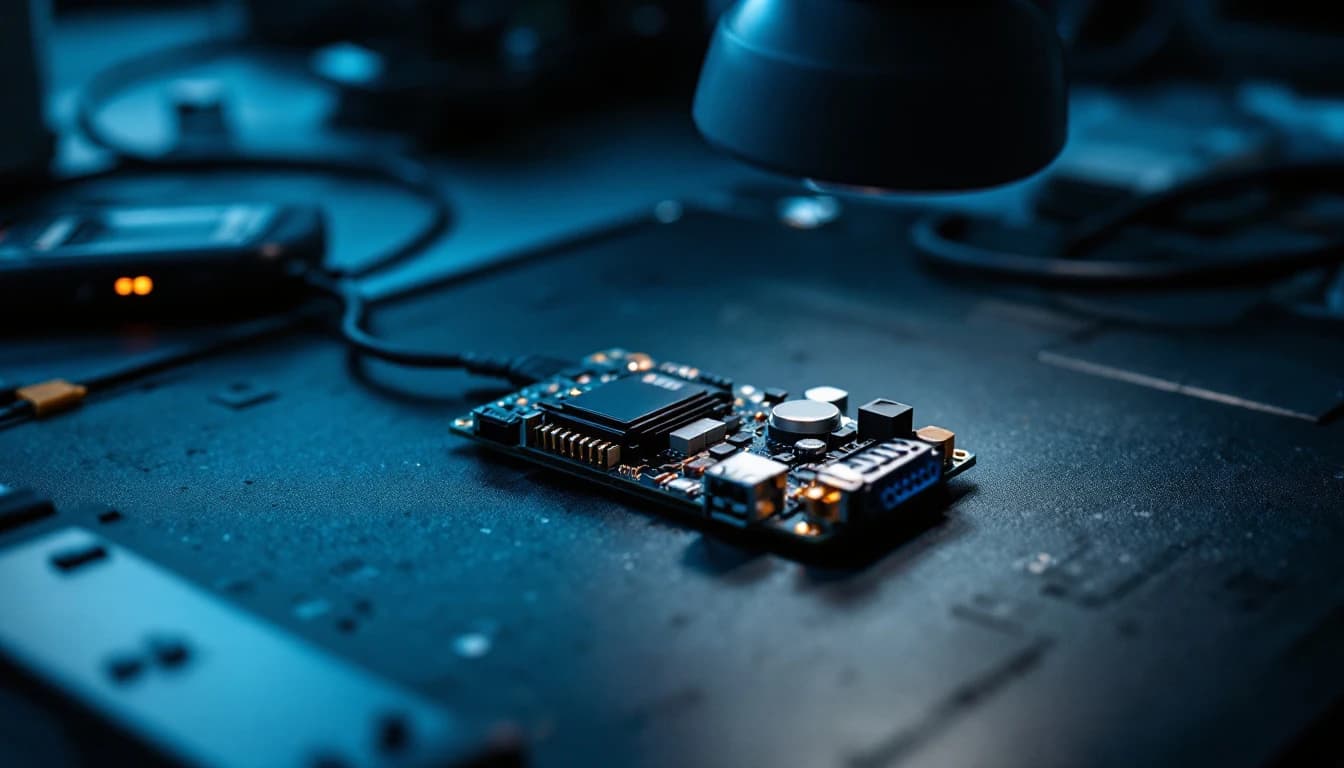
What a Bench Evaluation Finds That a Scan Tool Cannot
What a scan tool actually is
Plug a scan tool into the connector under the dash and you are joining a conversation, not performing an inspection. The tool sends a request onto the vehicle network. Modules that are powered, booted, and functional enough to run their communication stack send answers back. The tool formats those answers into fault codes, live data, freeze frames, and readiness monitors.
That architecture has been standardized in the United States for a long time. On-board diagnostics with a common connector and a defined set of protocols has been required on light-duty vehicles sold here since the mid-1990s under rules administered by the Environmental Protection Agency, and the underlying connector, message, and protocol definitions come out of standards work at SAE International. Standardization is why a two-hundred-dollar tool can pull codes from almost any car in the parking lot.
But standardization does not change the fundamental limitation. The scan tool is a listener. Every piece of information it gives you was volunteered by a module that was alive enough to volunteer it. A fault code is a module's own self-report about a circuit it monitors. Live data is a module's own report of what its sensors are reading. Even a module's identification - part number, software level, VIN - is the module telling you about itself.
None of that works if the module cannot speak.
The three questions a scan tool cannot answer
Question one: is this module actually dead, or is the car not reaching it?
When a scan tool reports no communication with a module, that message covers at least six different root causes: a blown fuse, a broken power or ground wire, a damaged CAN pair, a failed gateway that is not routing the request, a network that is being pulled down by a different shorted module, a module that has genuinely failed internally. The tool cannot distinguish them, because from where it sits they all look identical. It sent a request into the dark and nothing came back.
Owners and even some shops read no communication as a verdict. It is not a verdict. It is a description of silence.
Question two: what is physically wrong inside this housing?
A scan tool has no access to component-level condition. It cannot see a bulged electrolytic capacitor, a cold or cracked solder joint under a BGA processor, a burned driver transistor, green corrosion tracking across traces from a water leak, or a through-hole via that has fractured from thermal cycling. Those are all real, common, and physically visible failures. They live on a circuit board, and a circuit board is only visible when the housing is open.
Question three: what is stored in the module's memory?
The immobilizer keys, the VIN, the mileage, the security data, the calibration, the configuration - all of it lives in EEPROM or flash memory. A scan tool reads a small curated subset of that through the module's own diagnostic services, and only if the module cooperates. It cannot read the raw contents of the memory device. When the data is the problem - corrupted after an interrupted flash, mismatched after a used-module swap, locked by a security byte - the scan tool cannot show you what is actually written there.
What "no communication" really means, in practice
Here is the sequence that fills a mail-in bench with modules.
A car develops a symptom. A shop scans it. The tool reports no communication with, for example, the ABS module. The shop checks the fuse, checks power and ground at the connector, and finds them acceptable. The conclusion follows naturally: the module is dead, replace it.
Sometimes that is exactly right. Often something more interesting is true, and it falls into one of these categories:
The module has no internal power. Battery voltage arrives at the connector, but inside the housing the switching regulator that steps it down to the logic rails has failed. The processor never boots. From outside, the module has power. Inside, it does not. This is one of the most common findings on a bench and one of the most commonly repairable.
The transceiver is shorted. The network transceiver chip is the module's mouth and ears. It sits directly on the bus lines, which makes it the part most exposed to voltage events, jump-start mistakes, and shorted harnesses. A module with a shorted transceiver often still boots and runs internally - it simply cannot talk. Worse, a shorted transceiver can drag the whole bus down, which is why one failed module frequently makes several unrelated modules appear to go offline at once. That is a classic false trail: three modules report no communication, one of them is at fault, and only isolation tells you which.
The bootloader or application flash is corrupted. A programming session that lost power, a bad flash file, or a memory device that has degraded can leave a module unable to complete boot. The hardware is fine. The software will not start.
The board is physically damaged. Water intrusion, an impact, a crushed connector, or thermal fatigue. Corrosion in particular is progressive - a module that half-works today will fully fail in a month.
Nothing is wrong with the module at all. The vehicle-side wiring, a connector, or the gateway is the actual fault. We see this often enough that it deserves stating plainly: a meaningful share of modules that arrive described as dead come up and communicate on the first attempt under clean bench power. That result is not a disappointment. It is a diagnosis, and it saves a customer from buying a part they never needed.
Deciding whether the module or the car is the patient is exactly the question we walk through in how to know which module failed before you ship it, and it is worth working through before anything gets boxed up.
What the bench adds
Move the same module from a car to a bench and four things change.
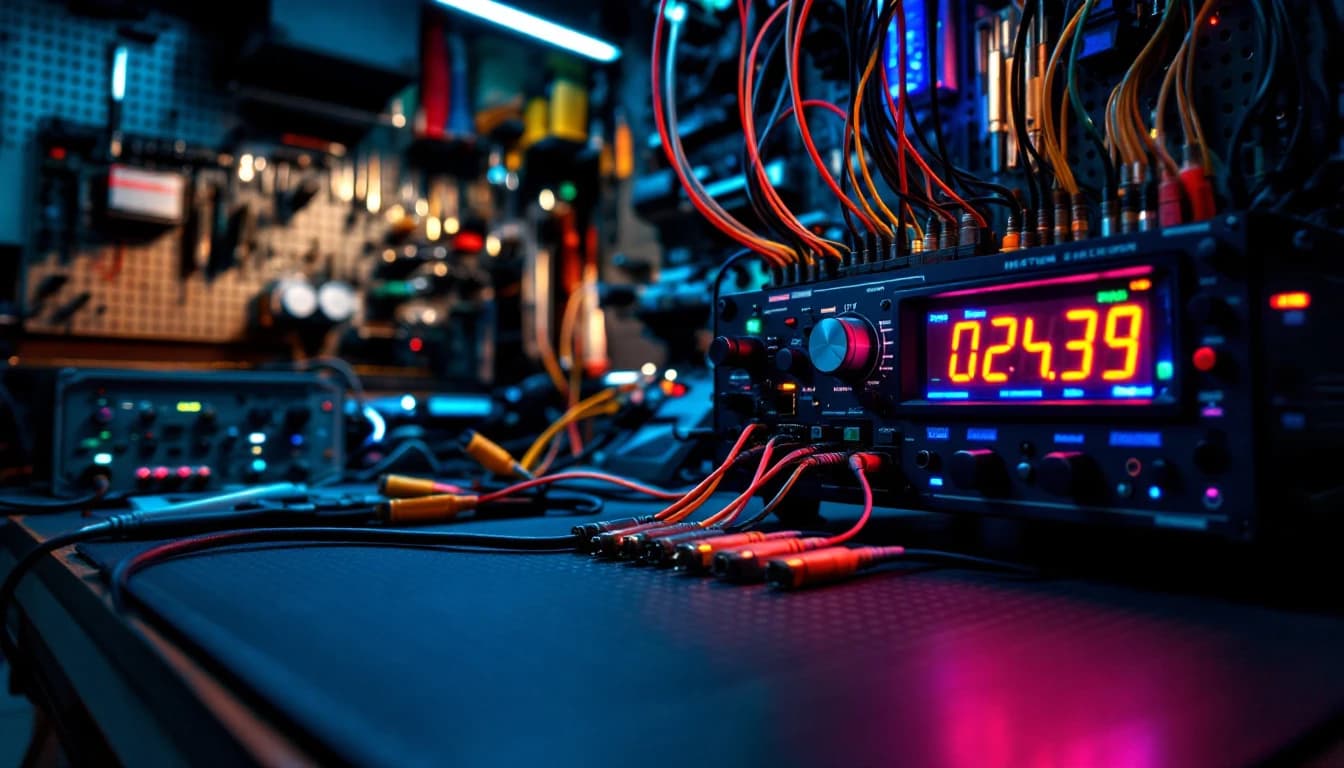
Controlled power. The bench supplies regulated voltage through a current-limited supply with a live current display. That does two jobs at once. First, it removes every vehicle-side variable - no marginal battery, no corroded ground strap, no voltage drop across forty feet of harness. Second, current draw becomes a diagnostic instrument in its own right. A module that pulls essentially nothing is not booting. A module that pulls far too much has a short. A module whose draw climbs steadily as it warms is telling you about a failing component before anything else in the diagnosis does. In the car, that entire signal is buried inside the vehicle's total load.
Isolated network. On the bench the module sits alone on a network with proper termination and nothing else attached. If it communicates here and did not in the car, the fault is on the vehicle side. If it stays silent here too, the module is genuinely at fault. That single test resolves the ambiguity that no in-car scan can resolve, and it is why the bus-drag scenario above stops being confusing the moment the module is isolated.
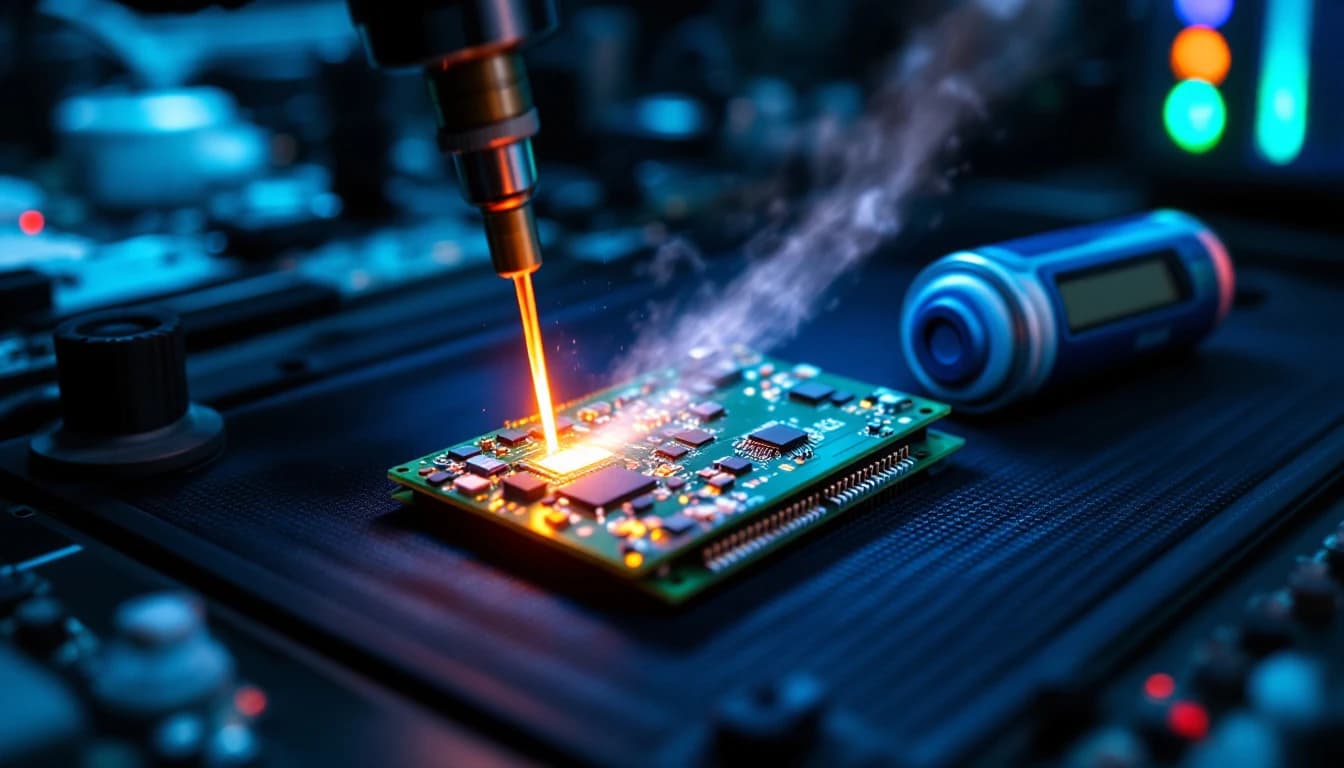
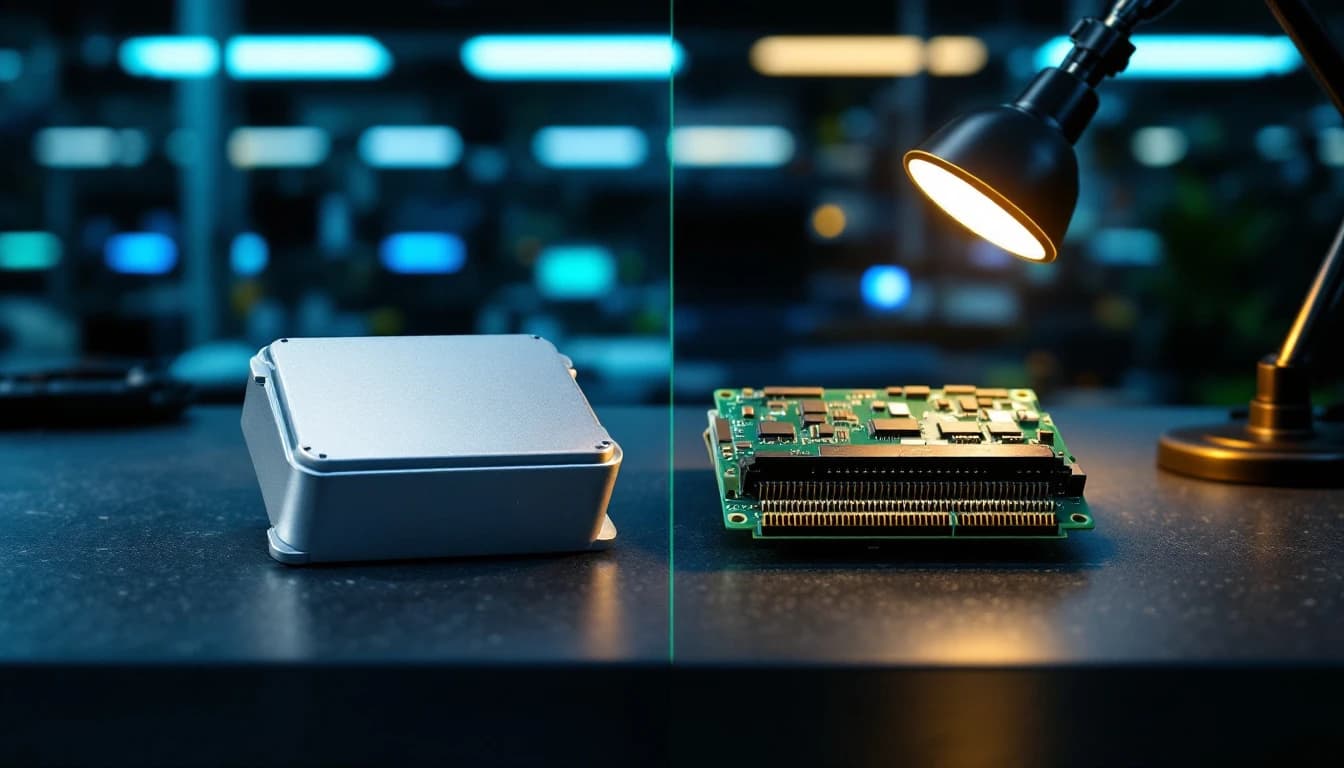
Direct access to the board. The housing comes open. The board gets inspected under magnification for corrosion, cracked joints, burned components, bulged capacitors, and physical damage. Suspect components get measured in circuit. Where it matters, an oscilloscope goes on the power rails, the clock, the reset line, and the network lines to see whether the processor is actually running and what it is putting on the bus. None of that is available through a diagnostic connector.
Direct access to memory. This is the capability that separates a bench from everything else. The EEPROM and flash devices can be read directly - through a debug interface, through in-circuit programming pads, or by reading the memory device itself - without asking the module's diagnostic software for permission. That means the stored contents can be recovered even from a module that will not communicate at all. Immobilizer data, VIN, mileage, configuration, calibration: readable when the module is, from the network's point of view, entirely dead.
That last capability is the difference between a scrapped module and a recovered car. If the data can be read off a dead module, it can be written into a good donor, and the vehicle gets its identity back without a dealer visit. The mechanics of that transfer are covered in how ECU cloning works.
Bench evaluation versus scan-tool diagnosis
| Capability | OBD-II scan tool in the car | Bench evaluation |
|---|---|---|
| Reads fault codes | Yes, if the module answers | Yes, plus reads modules that will not answer in the car |
| Distinguishes dead module from dead wiring | No - both read as no communication | Yes - isolation is the whole test |
| Sees current draw as a diagnostic signal | No - buried in total vehicle load | Yes - measured directly, including thermal drift |
| Detects a bus-dragging shorted transceiver | Only by unplugging modules one at a time | Yes - the module is alone on an isolated bus |
| Inspects the circuit board | No | Yes - under magnification, component level |
| Scopes power rails, clock, and reset | No | Yes |
| Reads raw EEPROM and flash contents | No - only what diagnostic services expose | Yes - directly, even with no bus communication |
| Recovers data from a non-communicating module | No | Yes, where the memory device is intact |
| Distinguishes hardware fault from data fault | Rarely | Yes - that is the central question it answers |
| Produces a written repairable-or-not finding | No | Yes, with board photographs |
| Diagnoses vehicle wiring and connectors | Partially, with the car present | No - the car is not there |
| Cost | Shop diagnostic time, or a tool purchase | $150, credited toward the repair if you proceed |
Repairable hardware, bad data, or scrap - how the call gets made
Every module that comes across a bench sorts into one of three outcomes. Getting the sort right is the entire value of the evaluation.
Repairable hardware fault. The failure is a component or a connection, and the component or connection can be replaced. Failed power-supply regulators, shorted network transceivers, burned output drivers, bulged capacitors, cracked solder joints, and localized corrosion that has not yet eaten through traces all live here. The tell is that the fault is discrete and the rest of the board is healthy: the memory reads clean, the processor responds once power is restored, and the damage has a boundary you can point at.
Data or programming fault. The hardware is fine. The contents are wrong. Corrupted flash from an interrupted programming session, mismatched immobilizer data after a used-module swap, a VIN that does not match the car, a security lock that blocks writing, a configuration that does not match the vehicle's options. The tell is that the module powers up normally, draws sane current, and its memory reads successfully - the values in it are simply not what this car needs. These are usually the cheapest fixes because nothing has to be soldered. Cloning identity onto a donor, unlocking a locked controller, or rewriting configuration are all in this family. PCM unlocking at $250 is a good example of a pure data-side service.
Genuinely scrap. The processor itself is dead, or the memory device is unreadable, or corrosion has destroyed traces and vias across enough of the board that a reliable repair is not achievable, or the physical damage is beyond reconstruction. Modules that have sat wet for months are the classic case - corrosion does not stop when the water dries.
Even in the scrap category the evaluation usually earns its fee, because the memory can often still be read off a board that will never work again. A dead cluster whose flash still holds the true mileage, or a dead immobilizer module whose EEPROM still holds the key data, converts a total loss into an ordinary data-transfer job onto a donor. Whether a specific cluster falls in the repairable or the transfer column is exactly the question an evaluation settles before you buy anything - and cluster repair with mileage synchronization at $200 is where many of them land afterward. Mileage is only ever synchronized to the vehicle's true, documented mileage.
"The most valuable thing I tell a customer is not that I fixed it. It is which of the three buckets their module is in, with a photo of the board so they can see why. Half of them come in convinced the part is dead when the real problem is a connector in the car, and about a third of the truly dead ones still hand over their data. Nobody gets that from a code reader in a parking lot." — Independent automotive electronics repair technician, 17+ years in board-level module diagnostics (anonymized)
What the written findings actually look like
An evaluation that ends in a verbal it is bad is not worth paying for. The output of the $150 bench evaluation is a written finding that includes:
- What the module did on controlled power - whether it booted, what it drew, whether draw was stable
- Whether it communicated on an isolated network
- A photograph of the board with the relevant areas annotated
- What was found physically - corrosion, damaged components, cracked joints, or a clean board
- Whether memory was readable and whether the contents look coherent
- Which of the three outcomes applies, and why
- An honest price for the actual repair, if there is one
That last line is the point. The purpose of the evaluation is to let you make a buy-versus-repair decision with real information instead of a guess. If the repair is worth doing, you have a number. If it is not, you know that before you spend more.
The commercial terms are straightforward and published. The evaluation is $150, with a typical 24-hour turnaround once the module arrives. If you proceed with the repair, the $150 is credited toward it, so on jobs that go forward the diagnostic effectively costs nothing. If the module proves unrepairable, $95 of the fee is refunded and $55 is retained for the bench diagnostic time that was genuinely spent. Return shipping is separate, selected and paid by you at checkout, starting at $29.95 for standard service with faster tiers available - and that applies whether or not the module turns out to be repairable.
The full terms sit on the bench evaluation service page, and the broader question of what is and is not covered after a repair is laid out in what to expect from a mail-in module programming warranty.
Be honest about the limits
A bench evaluation is a powerful tool with a defined boundary. Four limits are worth stating plainly, because the ones that get glossed over are the ones that cause disappointment.
A scrap module still costs the evaluation fee. You are buying diagnostic labor, not a guaranteed outcome. If the board is destroyed, the technician still spent the bench time to establish that, still opened it, still probed it, still attempted to read memory, and still wrote it up. That is why $95 comes back and $55 does not. Anyone who promises a full refund on every no-repair outcome is either not doing real work on the ones that fail, or is recovering the cost elsewhere.
It cannot diagnose the car. This is the largest limit and it follows directly from the format. The vehicle is in your driveway and the module is on a bench two states away. If the actual fault is a chafed wire, a corroded ground, a failed connector, a bad gateway, or a sensor, the module will test perfectly and the car will still be broken. A bench evaluation answers is this module good, not why does my car not run. Those are different questions, and only one of them can be answered by mail.
That is also the honest reason a module often comes back working with a finding that says no fault found. It is not a wasted evaluation - it has eliminated the expensive suspect and redirected the diagnosis to the wiring, where it belongs. But it means the vehicle-side work still has to happen locally.
It cannot recover data that is physically gone. If the memory device itself is destroyed - burned, cracked, or corroded through - the contents are not recoverable by any means. Most of the time they survive. Not always.
It does not cover proprietary OEM software gaps. A small number of modules require manufacturer-only software or online authorization to program, and no bench can substitute for that. Where that is the case, the finding will say so rather than sell you something that will not work.
Why this decision matters more than it used to
Two forces have made board-level module diagnosis worth paying for on cars where a decade ago the answer was simply replace it.
The first is that vehicles are older. The average age of light vehicles in operation in the United States has climbed past twelve years according to data compiled by the Bureau of Transportation Statistics. On a fourteen-year-old vehicle, a dealer module plus programming can be a meaningful fraction of what the car is worth - and figures published by valuation sources such as Kelley Blue Book make that ratio easy to check for any specific vehicle. Spending $150 to find out whether a $60 repair will do the job is rational arithmetic on a car like that.
The second is that repair costs have outrun general inflation. The motor vehicle maintenance and repair index tracked by the Bureau of Labor Statistics has risen substantially faster than the overall consumer price index over the past several years, and consumer research from organizations such as AAA has repeatedly found that a large share of American drivers would struggle to cover an unexpected four-figure repair without borrowing. Under those conditions, the worst outcome is not an expensive repair. It is an expensive repair that was not the right one.
Meanwhile the number of things that can fail keeps climbing. Modern vehicles carry dozens of networked controllers and software content measured in the tens of millions of lines of code, a trend that outlets like Car and Driver have tracked across the last two decades of vehicle development. More controllers means more no-communication faults, and more no-communication faults means more opportunities to replace the wrong one.
Not every module needs an evaluation. If your job fits a published flat-rate service - a known ABS module failure, a known cluster repair, a known clone - book that service directly, because it is cheaper and faster than an open-ended diagnostic. ABS module repair at $499 is a good example of a defined job that does not need a discovery phase. The evaluation exists for the cases where nobody yet knows what is wrong.
Frequently asked questions
What can a bench evaluation find that my scan tool cannot? It can read a module that will not communicate at all, which is precisely where a scan tool goes blind. On controlled power with an isolated network, a technician can measure current draw, scope the power rails and clock, inspect the board under magnification, and read raw EEPROM and flash contents directly - none of which requires the module's diagnostic software to cooperate. A scan tool only ever reports what a living module volunteers.
How much does a bench evaluation cost and is it refundable? It is $150, with a typical 24-hour turnaround from receipt. If you proceed with the repair, the full $150 is credited toward it, so the diagnostic costs nothing on jobs that go forward. If the module proves unrepairable, $95 is refunded and $55 is retained for the bench diagnostic time actually spent. Return shipping is separate and paid by you at checkout from $29.95 either way.
My scan tool says no communication with the module. Is the module dead? Not necessarily - that message describes silence, not a diagnosis. It is equally consistent with a blown fuse, a broken power or ground wire, a damaged network pair, a failed gateway, a different module shorting the bus, or a genuinely failed module. Isolating the module on a bench is the test that distinguishes those causes, and a meaningful share of modules described as dead communicate immediately once the vehicle wiring is out of the picture.
Can you recover my mileage, VIN, or key data from a module that will not turn on? Usually yes, provided the memory device itself is physically intact. Bench access reads EEPROM and flash directly rather than through the module's diagnostic services, so the stored contents can often be recovered from a board that will never function again and written into a good donor unit. If the memory device is burned, cracked, or corroded through, the data is genuinely gone.
When should I book a flat-rate service instead of an evaluation? Book the flat-rate service whenever you already know what the job is. If you have a documented ABS module failure, a cluster that needs repair and mileage synchronization, or a straightforward clone onto a donor, the published fixed-price service is cheaper and faster because it skips the discovery phase. The evaluation is for the cases where nobody has established what is actually wrong yet.
Will a bench evaluation tell me why my car will not start? It will tell you whether the module you sent is good, which is often the decisive piece of that puzzle but is not the same question. The vehicle is not on the bench, so faults living in wiring, connectors, grounds, gateways, or sensors cannot be found this way. A finding of no fault found is still valuable - it eliminates the expensive suspect and redirects the diagnosis to the vehicle side, where the remaining work has to be done locally.
Do I need proof of ownership for a bench evaluation? Yes, for anything touching keys, immobilizer data, or vehicle security, and it is required before that work begins. Documentation matching the VIN - a registration, title, or equivalent - along with identification is the standard across the legitimate trade. Straightforward non-security repairs do not raise the same requirement, but identity and security work always does.
The bottom line
A scan tool asks questions of modules that are well enough to answer. That covers a great deal of automotive diagnosis and it is why the tool is on every bench in the country. It does not cover the failures where the module says nothing at all - and those are precisely the failures that lead people to buy expensive parts on a guess.
A bench evaluation answers the questions the connector cannot reach. Controlled power turns current draw into evidence. An isolated network separates a dead module from dead wiring in a single test. An open housing exposes corrosion, cracked joints, and burned components that no code will ever report. Direct memory access recovers the immobilizer data, VIN, mileage, and calibration from boards that are, as far as the vehicle is concerned, completely dead.
The output is a written finding with board photographs and a straight answer about which of three things you are holding: a repairable hardware fault, a data problem, or scrap that may still surrender its contents to a donor. That costs $150, typically turns around in 24 hours from receipt, is credited in full toward the repair if you proceed, and refunds $95 if the module is beyond saving. Return shipping is chosen and paid at checkout from $29.95.
The honest caveats stand: a scrap module still costs the fee, and nothing that lives in your car's wiring can be diagnosed from a bench in Arlington. But if you are staring at a no-communication code and a dealer quote, buying a real answer for $150 before buying a part is the cheapest decision available. Start at the bench evaluation service page, and text us the VIN, the part number off the module label, and what the car is doing - we will tell you first whether a published flat-rate service already covers your job.
Ship your module today
Flat-rate pricing, typical 24-hour bench turnaround, return speed your choice at checkout. Most jobs back on your bench within a week.