BMW ME7.2 IMMO OFF Online for the E39 540i (2026)
Who this is for
You are a bench tech, a shop owner, or a hands-on builder holding a Bosch ME7.2 out of a BMW 540i (E39, M62TU V8), and you need the immobilizer out of the way. Maybe the V8 is going into a boat, a kit car, or a track-only E39 that no longer carries a working EWS module. Maybe you pulled the DME from a donor and the original key-and-EWS pairing is long gone. Whatever the reason, you have a 512 KB read sitting on your bench and you want a clean, checksum-correct file back so the engine cranks, catches, and keeps running.
This guide is written for people who already own a bench read/write tool and know how to pull a 524,288-byte external-flash image off a 7506366 DME. If that describes you, the online path is fast: you upload your read, we byte-verify it against the known ME7.2 software, patch the EWS check out, correct every ROM checksum, and hand the file back in seconds for $150. If you do not own a tool, there is an honest mail-in fallback, and we will get to that.
One boundary up front, because it matters more than anything else on this page: this is for engine swaps, standalone and off-road builds, motorsport, and legitimate repair. It is not an emissions defeat, and it is not a way to move a stolen car. Lawful ownership is required. Vehicle theft is a real and tracked problem, and public agencies such as the NHTSA treat electronic immobilizers as a genuine anti-theft measure. We are not in the business of defeating that. We are in the business of getting a legitimately owned engine running on a bench where the factory security network no longer exists.
What ME7.2 is
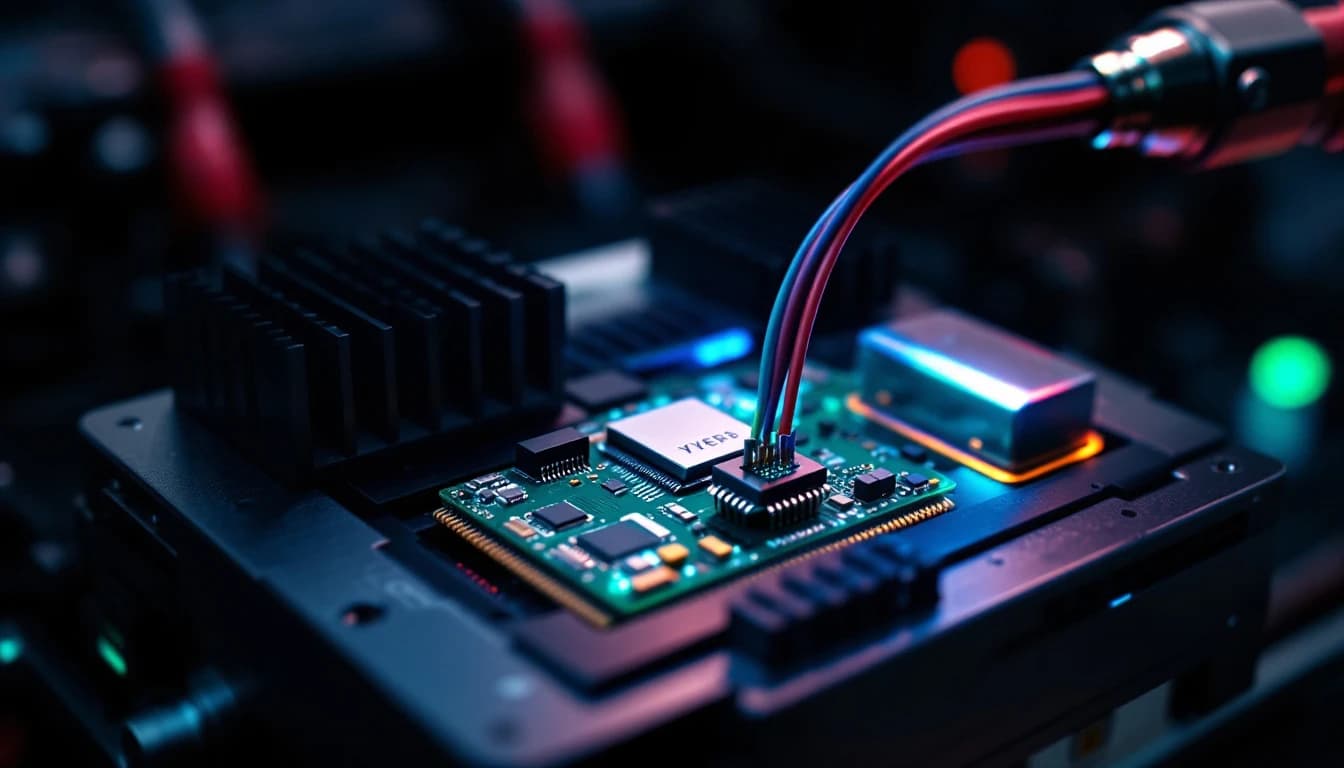
ME7.2 is a Bosch Motronic engine control unit. The "M" is Motronic, the "E" means it runs an electronic throttle (drive-by-wire), and the "7.2" is the generation and variant. On the E39 540i with the M62TU V8, the DME carries part number 7506366 and stores its calibration and program in a 512 KB external flash, which reads out as a 524,288-byte binary. That single unit manages fuel injection, ignition timing, throttle position, and the dozens of closed-loop corrections the M62TU needs to idle smoothly and stay in fuel trim.
Bosch has built engine control units in this family for decades, and the company still documents the lineage of its Bosch engine control unit platforms. The ME7 generation is significant because it consolidated throttle control into the DME itself, which is why the immobilizer handshake and the fueling logic live in the same 512 KB image. You cannot simply unplug a security module and walk away; the check is baked into the software the processor runs on every key cycle.
The broader point is that a modern engine is a software product wearing a metal jacket. Analysts have watched software content climb for twenty years. McKinsey projects the automotive software and electronics market to grow to roughly $462 billion by 2030, expanding at close to 7 percent a year, with the pure-software slice growing near 9 percent annually. The ME7.2 in your hand is an early chapter of that story: a self-contained computer whose behavior is defined entirely by the bytes in that flash. Change the wrong bytes and the engine will not run. Change the right ones and the EWS lock is gone while everything else stays intact.
Because the calibration and the security routine share the same image, editing ME7.2 is not a matter of flipping one flag. The DME validates its own program with checksums. If you patch the EWS routine and leave the checksums stale, a careful bench tool will reject the write, and a careless one may push a corrupt image that leaves you with a brick. Getting this right is byte-level work, which is exactly why an online tool that fingerprints your file before it touches anything is safer than freehand hex editing.
How the EWS lock works
EWS is BMW's factory immobilizer. On the E39 it lives as a separate control module that holds a rolling secret shared with the DME. At every key-on, the DME asks the EWS module a question, the EWS answers, and if the answer matches what the DME expects, the DME releases fuel and spark. If the handshake fails, the DME will often let the engine fire for a second or two on residual conditions and then cut fuel, producing the classic start-then-stall. The starter cranks, the engine catches, and it dies almost immediately because the security layer never gave permission to keep running.
This design exists on purpose. Immobilizers were one of the most effective anti-theft technologies of the last thirty years, and safety regulators have credited them for large drops in hot-wire theft. The NHTSA points owners toward layered protection, and the insurance-funded IIHS recently measured how much software-based immobilization matters: when Hyundai and Kia pushed an anti-theft software update to models that had shipped without an engine immobilizer, theft-claim frequency for the updated vehicles fell 53 percent. That is the value of the handshake you are looking at. Removing it is only legitimate when you own the vehicle and the factory network is gone or irrelevant.
Here is why the lock becomes a problem on a bench build. When you separate a DME from its original car, you separate it from the EWS module that knows the secret. Drop that engine into a boat, a sand rail, a race car, or an unrelated chassis, and there is no EWS module to answer the question. The DME asks, hears nothing valid, and stalls the engine. Every key cycle repeats the same failed conversation. The mechanicals are perfect; the software simply will not stay awake without a partner it can no longer find.
Immo-off resolves this by editing the DME so it stops asking. The security routine is patched so the program treats the handshake as already satisfied, then every checksum in the ME7.2 ROM is recalculated so the file is valid and flashable. Nothing about fueling, timing, or throttle response changes. The engine that used to catch and die now catches and idles, because the only thing that changed is that the DME no longer waits for a module that is not there.
Why it must be done online with byte-verification
The dangerous part of any immo-off is not the patch itself; it is writing the wrong patch to the wrong file. ME7.2 images look nearly identical across variants, but a byte offset that is a security routine in one software revision can be part of the fueling map in another. Apply a patch built for the wrong revision and you may corrupt the map, fail the checksum, or write an image the processor cannot boot. A bad write can brick an ECU, and a bricked bench ECU with no working boot loader is a far worse day than a start-then-stall.
That is why our online tool refuses to write a byte unless your uploaded read matches the known software it was built and tested against. The file is version-locked and byte-verified, or fingerprinted: before any edit, the tool compares your 524,288-byte image against the exact ME7.2 revision it understands. If it matches, the EWS check is patched and every ROM checksum is corrected, and you download a ready-to-flash file in seconds. If it does not match, the tool stops. You are not charged, and your job is routed to the mail-in path instead. We would rather send you to a human than hand you a file we cannot verify.
This is also where diagnostic standards matter. The way modern ECUs are read, written, and verified over a bench or a diagnostic bus is governed by published protocols. The Unified Diagnostic Services specification, ISO 14229, defines the request-and-response structure that flashing tools rely on, including read and write memory services and the security-access exchange. A verification-first workflow fits the spirit of that standard: identify the target, confirm you are talking to the software you think you are, then and only then perform the write. Skipping identification to save thirty seconds is how ECUs die.
The scale of software in vehicles is the backdrop for why this care is not optional. McKinsey has documented how electronics and software have grown to represent as much as half of a vehicle's development value, and how a single wrong flash can ripple through interconnected control units. A stand-alone ME7.2 is simpler than a modern domain controller, but the lesson holds: treat the binary as the product, verify before you write, and never assume two files are the same because they came off the same model. Fingerprinting is the cheap insurance that keeps a $150 job from becoming a replacement-ECU job.
What the online tool does vs mail-in
The online service is built for techs who can read and write their own DME on the bench. You handle the hardware; the tool handles the bytes. The workflow is short and deterministic, and you can see the whole process laid out on our how-it-works page and try the file check through the calculators entry point. Here is what actually happens when you use the BMW ME7.2 immo-off service.
First, you pull a complete 512 KB read from the 7506366 DME using your own bench tool and save the 524,288-byte binary. Second, you upload that read. The tool fingerprints it against the known ME7.2 software; this is the version-lock step, and it is pass or fail. Third, if your file matches, you pay $150 and download the patched file in seconds. The EWS check is removed and every ROM checksum is corrected, so the file is ready to write back with no further editing. Fourth, you flash the file to the DME with the same tool you used to read it, and the engine starts and stays running.
Mail-in exists for two situations: you do not own a bench read/write tool, or your file does not match the online fingerprint. In either case, the job moves to the physical BMW DME EWS delete service, where the unit is handled on the bench directly. Mail-in is slower by nature because a physical unit has to travel and be worked by hand, but it covers the cases the instant path cannot, including odd revisions, damaged reads, and customers without equipment. The important honesty point repeats here: if the online tool cannot match your file, you are not charged online. You only pay for a result you can actually use.
Why favor online at all? Because for a matching file it is faster, cheaper, and self-service, and because verification removes the human transcription errors that creep into any manual process. The industry has spent a decade moving toward software-defined workflows for exactly this reason; the same McKinsey research on car software architecture describes the shift from hand-tuned, one-off electronics work toward validated, repeatable software pipelines. An online immo-off that fingerprints first and edits second is a small piece of that same discipline applied to a twenty-year-old Bosch DME.
Start-then-stall vs no-crank
This distinction decides whether immo-off is even the right fix, so read it carefully before you buy anything. Immo-off cures a start-then-stall caused by a failed EWS handshake. It does not cure a dead no-crank.
A start-then-stall looks like this: you turn the key, the starter spins, the engine fires and runs for one or two seconds, then it dies. It may repeat identically every attempt. Fuel and spark arrive long enough to light off, then the DME withdraws them because the immobilizer never authorized continuous running. This is the signature of a missing or mismatched EWS partner, and it is exactly what immo-off removes. On a bench build with no EWS module present, this is the expected failure mode, and patching the DME resolves it.
A no-crank is a different animal. The starter does not turn, or the engine turns but never fires at all. That points at batteries, grounds, the starter and solenoid, the ignition switch, the crank and cam position sensors, fuel supply, or a genuinely dead DME. None of those are security problems, and none of them are fixed by editing the immobilizer routine. If your engine will not crank, immo-off is the wrong tool, and writing a patched file will not change anything except waste your time. The Bosch engine-control platform depends on those upstream inputs being present and sane; no amount of software patching substitutes for a missing crank signal or a dead ground.
The honest test is simple. Does it catch and die, or does it never catch? Catch-and-die on a bench engine with no EWS is a strong candidate for immo-off. Never-catch means diagnose the basics first. We will happily verify your file, but we will not pretend an immo-off fixes a wiring or sensor fault, because it does not. Selling you a patch for a no-crank would be dishonest, and it would leave your real problem exactly where it started.
Price and alternatives
The online ME7.2 immo-off is a flat $150, file back in seconds for a matching read, no charge if we cannot match your file. That price assumes you own a bench read/write tool. If you do not, or your file does not fingerprint, the mail-in service handles the physical unit by hand. Here is how the options compare.
| Option | What you need | Turnaround | Cost | Best for |
|---|---|---|---|---|
| Online immo-off | Your own bench read/write tool and a valid 512 KB read | Seconds after a matching upload | $150, no charge if unmatched | Techs and builders who can read/write their own DME |
| Mail-in EWS delete | Nothing; you send the physical DME | Days, hand-worked on the bench | Quoted per unit | No tool, damaged reads, or odd revisions |
| Freehand hex editing | Deep ME7.2 knowledge and full risk acceptance | Varies | Your time, plus brick risk | Not recommended for production work |
A word on the alternative nobody should choose: freehand editing without verification. It is technically possible to open a 524,288-byte image in a hex editor, find the security routine, patch it, and recompute the checksums by hand. People do it. People also brick ECUs doing it, because a single wrong offset in the wrong revision corrupts the file. The whole reason the online tool fingerprints first is to take that risk off the table for the files it recognizes.
One more boundary belongs in this section, because price should never buy the wrong thing. Immo-off is not an emissions defeat. It removes a security handshake; it does not touch catalytic-converter monitoring, oxygen-sensor readiness, or any tailpipe control, and tampering with emissions controls on a road vehicle is enforced by agencies including the EPA air-enforcement program. Off-road, motorsport, and repair are the legitimate uses. If your goal is to dodge emissions on a street car, this is not the service, and no amount of money changes that answer.
What experts say
Bench techs who do this work for a living converge on the same rule: verify before you write, every single time.
I have watched more ECUs die from a confident wrong write than from a cautious slow one. The file that looks identical is the one that bricks you. If a tool checks your read against a known-good fingerprint before it edits a byte, that is not a limitation, that is the whole job done right. I will take a tool that refuses to touch a file it does not recognize over one that writes anything you feed it, ten times out of ten.
— Master automotive locksmith, 15+ years on the bench (anonymized)
That view lines up with where the wider industry has landed. As the McKinsey work on car software and electronics architecture argues, the reliable path forward is validated, repeatable software processes rather than artisanal one-offs. Fingerprint-first immo-off is that principle at bench scale: identify the exact software, patch only what is known, correct the checksums, and refuse the write when the file does not match.
Frequently asked questions
Will this work on any BMW ME7.2, or only the 540i?
The service and file logic in this guide are described for the Bosch ME7.2 on the E39 540i with the M62TU V8 and DME part number 7506366, read as a 524,288-byte image. The online tool decides support by fingerprinting your actual upload, not by the badge on the car. If your read matches a known ME7.2 software revision, it is handled online; if not, it routes to mail-in and you are not charged online.
What happens if my file does not match your fingerprint?
The tool stops before it edits anything, and you are not charged for the online service. Your job is routed to the mail-in path at the EWS delete service, where the physical unit is worked by hand. This is deliberate: a wrong write can brick an ECU, so refusing to write an unrecognized file is the safe outcome, not a failure.
Do I need my own tool?
Yes for the online path. You need a bench read/write tool capable of pulling and flashing the 512 KB external flash on the 7506366 DME. If you do not own one, use the mail-in fallback, where you send the physical unit and it is handled directly. The flashing workflow itself follows standard diagnostic services described by the ISO 14229 UDS specification.
Is immo-off legal?
It is legitimate for engine swaps, standalone and off-road builds, motorsport, and repair, on vehicles you lawfully own. It is not a tool for vehicle theft, and immobilizers exist for good reason, as the NHTSA theft-prevention guidance makes clear. It is also not an emissions defeat; tampering with emissions controls on road vehicles is enforced by the EPA. Lawful ownership and legitimate use are required.
My engine cranks but will not start at all. Will immo-off fix it?
Probably not. Immo-off fixes a start-then-stall caused by a failed EWS handshake, where the engine catches and dies within a second or two. A no-crank or a never-catch points at batteries, grounds, the starter, sensors, or fuel, none of which are security faults. Diagnose the basics first; if the engine catches and dies on a bench build with no EWS module, that is when immo-off is the right call.
How long does the online service actually take?
For a matching read, the file comes back in seconds. You upload the 524,288-byte image, the tool fingerprints it, you pay $150, and you download the patched, checksum-corrected file ready to flash. The only slow path is mail-in, which is slow because a physical unit has to be handled by hand, not because of the software.
The bottom line
If you own a bench tool and you are holding a legitimately owned ME7.2 out of a 540i, the online immo-off is the fast, honest path: upload your 512 KB read, let the tool fingerprint it, pay $150, and flash a checksum-correct file that starts and stays running in seconds. The verification step is the point, not a hurdle. It refuses to write a byte it does not recognize, so a wrong write cannot brick your ECU, and you are never charged for a file we cannot match.
Keep the boundaries straight. This cures a start-then-stall from a missing EWS handshake, not a no-crank, and it is for swaps, off-road, motorsport, and repair on vehicles you own, never for theft and never as an emissions defeat. If any of that does not fit your situation, the mail-in fallback exists for a reason.
Ready to move? Check your read through the calculators entry point, read the full process on the how-it-works page, start the job at the BMW ME7.2 immo-off service, or learn who is behind the bench at Adrian Torres. Bring a verified file, and the rest takes seconds.
Ship your module today
Flat-rate pricing, typical 24-hour bench turnaround, return speed your choice at checkout. Most jobs back on your bench within a week.