Dead Tail Lights, Trunk, Fuel Pump? REM Failure Guide
The symptom that sends people to the wrong part
You have a car with a problem at the back. The tail lights are dead even though the bulbs are fine, or the brake lights work but the tail lamps do not. The trunk will not release from the key or the button. The rear defogger does nothing. On a Volvo, the engine cuts out as if it ran out of fuel with half a tank showing. A scan tool shows communication faults from a module you had never heard of: the REM.
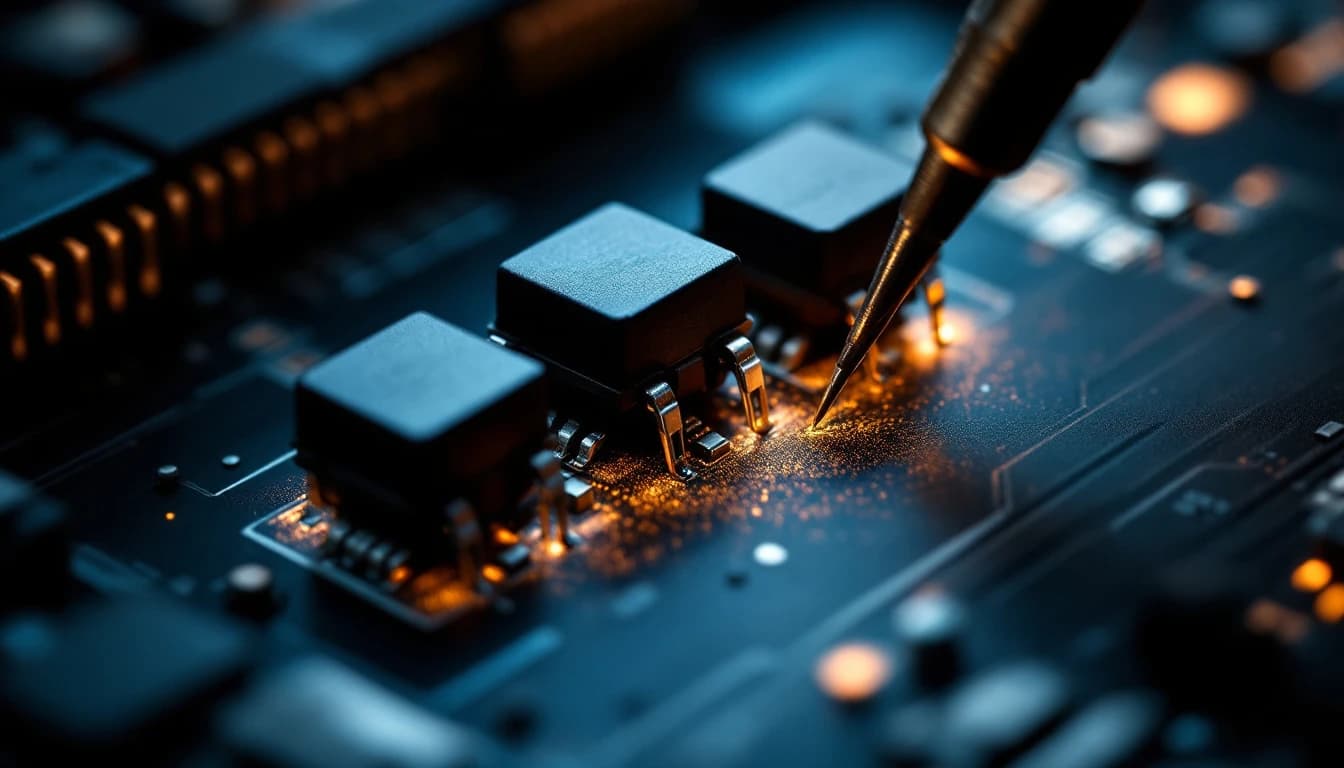
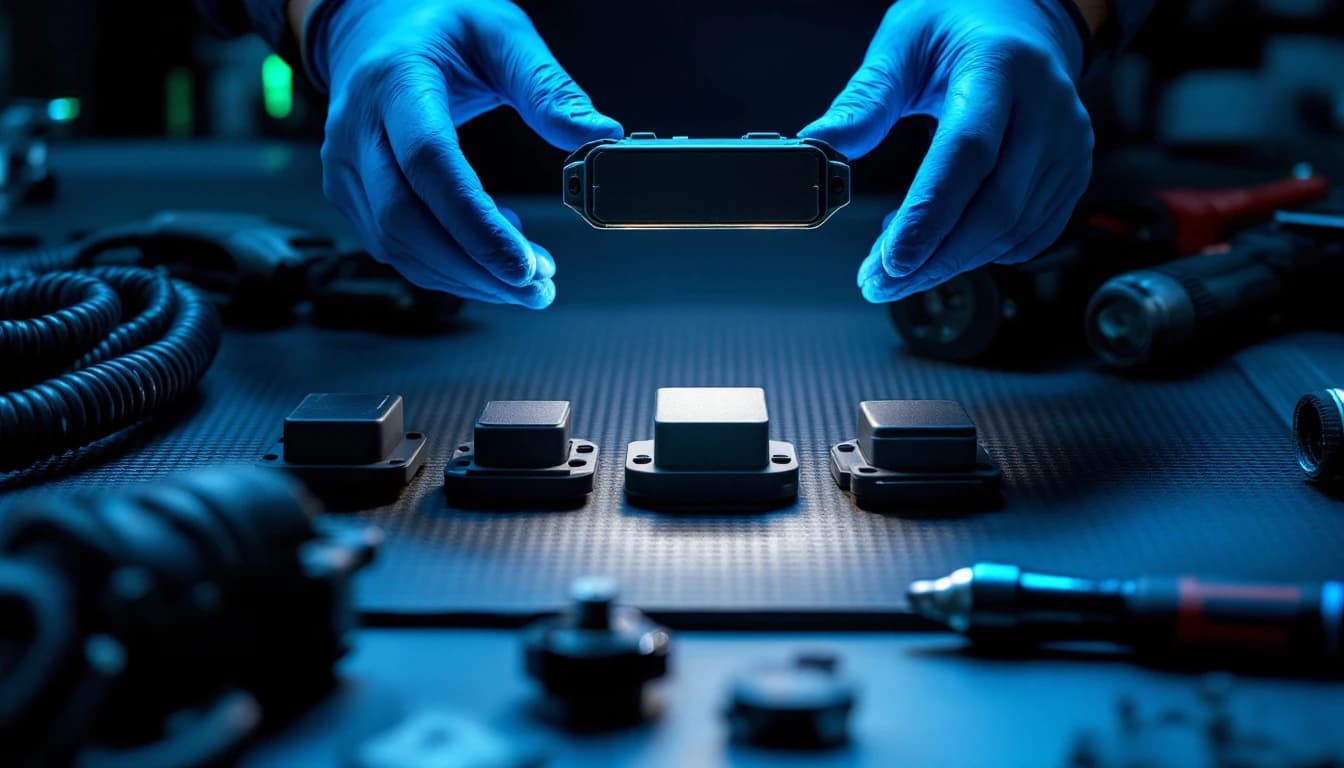
The REM is the rear electronic module, the body-control computer for the back half of the car. On BMW F-chassis cars and on Volvo P3 platform cars it drives the rear lighting outputs, handles trunk or tailgate release, feeds rear-body circuits and reports to the rest of the car over the body network. Because it lives in the rear, it is also the module most exposed to water getting into the trunk.
Here is the part most forum threads skip. Nearly every REM symptom has a cheaper, more common cause that is not the REM. We clone REMs for a living, and we would still rather you spend twenty minutes with a test light than mail us a module that was never broken. This guide is built in that order: the easy causes first, the module last.
Which cars this guide covers
This is written for two families of cars that share the same kind of rear module.
- BMW F-chassis: the F30, F31 and F34 3-Series; the F32, F33 and F36 4-Series; the F80 M3; and the F82 and F83 M4. On these cars the REM drives the tail, brake, reverse and rear fog lamp outputs, the trunk or tailgate release and latch, rear power outlets and rear-body circuits, and, where fitted to the rear module, rear window and defogger circuits. Our BMW REM clone service lists the coverage in full.
- Volvo P3: the S60 and S80, V70 and XC70, XC60 and XC90, roughly 2007 to 2016. On these cars the REM runs the rear lighting circuits, controls the fuel pump and manages the rear body electronics. Our Volvo REM clone service covers them.
Coverage is decided by the part number on the module label, not the model year. If your car is close but not listed, send us the label photo and your VIN and we will tell you.
A note for BMW owners: the REM is not the FRM. The FRM is the footwell module at the front of the car, a completely different part with its own well-known failures, covered in our BMW FRM footwell module failure guide. If your fault is headlights or front turn signals, you are reading the wrong article.
The symptoms, and what each one usually means
| Symptom | Most likely cause | Less likely cause | REM suspect when |
|---|---|---|---|
| One tail or brake lamp dead | Bulb, LED unit or lamp socket | Wire broken at that lamp | The output is dead at the module connector with the harness proven good |
| All tail lamps dead, brakes still work | Fuse or a shared ground | Harness break in a common run | Fuse and ground check out and several outputs are dead together |
| Trunk will not release | Trunk-lid harness broken at the hinge, or the latch itself | Blown fuse or switch fault | Release command is not reaching the latch even with the harness repaired |
| Rear defogger dead | Broken grid tab or connector on the glass | Relay, fuse or wiring | Circuit is fitted to the rear module and power never leaves it |
| Volvo engine stalls, fuel pump drops out | Fuel pump, pump wiring or connector | Fuse or ground | Pump and wiring test good and pump control is lost at the REM |
| Communication faults across several modules | Low battery or poor ground | Network wiring or a failing module elsewhere | The REM is the one module that stops answering on a good supply |
| Everything at the back went wrong after rain or a car wash | Water in the trunk or spare-wheel well | Water in a lamp housing | The module itself is wet or corroded |
Read the table from left to right. The left column is where the time should go first.
Likely causes, ranked honestly
1. Bulbs and LED units
It sounds too obvious to list, but it is the most common cause of a single dead rear lamp. Incandescent bulbs fail, sockets corrode, and LED tail lamps can fail internally as a whole unit rather than a replaceable bulb. A bulb that looks intact can still have a broken filament or a corroded base. Swap it with a known-good one from the other side before anything else.
Aftermarket LED conversions deserve their own warning. They draw different current, sometimes need load resistors, and can confuse a module that monitors lamp current. The BMW REM clone service explicitly does not fix lighting faults caused by LED conversions or trailer wiring, because they are not module faults.
2. Blown fuses
When several rear functions die at once, check the fuses that feed the rear before blaming the computer that controls them. A fuse that blew because a lamp socket shorted will blow again if you replace it without finding the short, so treat a blown fuse as a clue, not the fix.
3. The trunk-lid harness broken at the hinge
This is the most expensive cheap fault on this list, because it gets misdiagnosed so often. The wires that feed the trunk lid or tailgate pass through a flexible boot at the hinge. Every time the lid opens, those wires bend. After years of that, copper breaks inside insulation that still looks perfect.
The symptoms are intermittent and maddening: the trunk release works on some days, a license plate lamp flickers, the rear camera drops out, and the fault changes when you open or close the lid. Peel back the boot and flex the bundle while someone watches the lights. A fault that changes when you move the harness is a harness fault, not a module fault.
4. Water and corrosion at the connectors
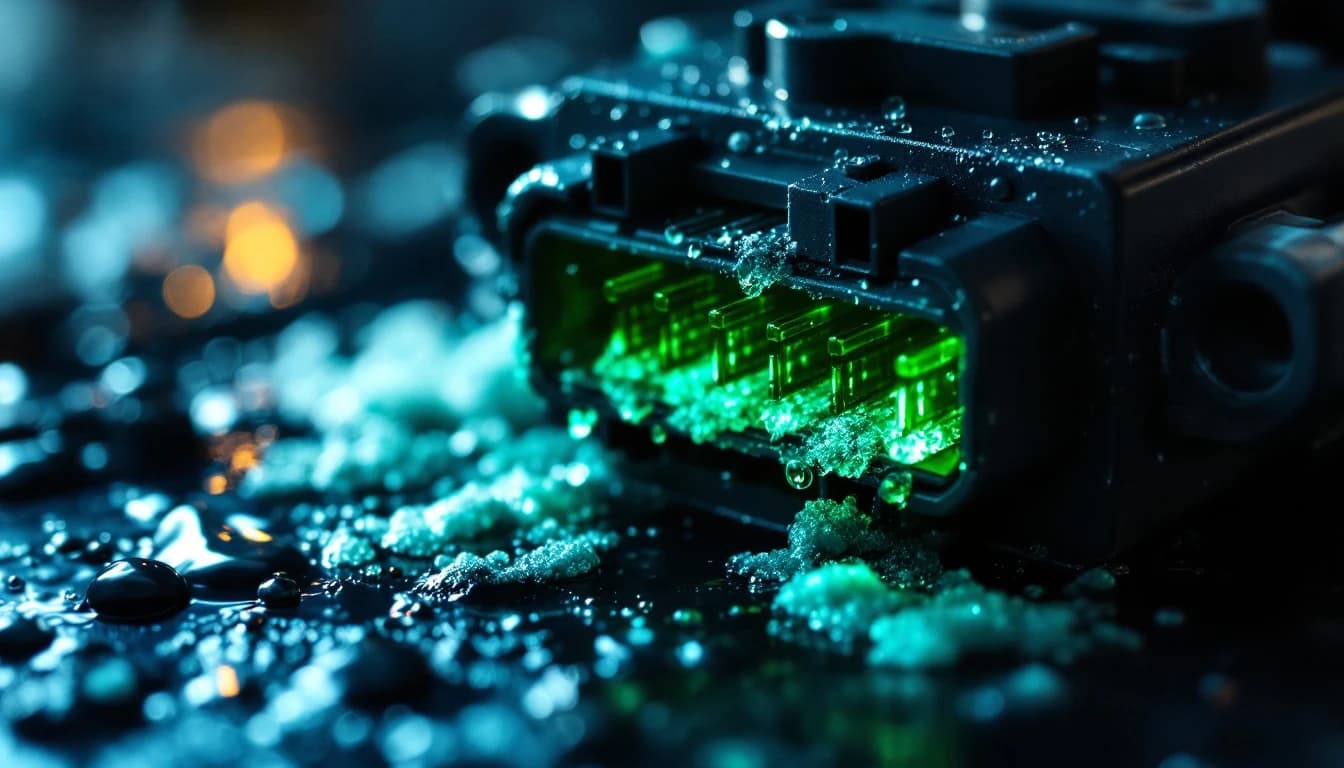
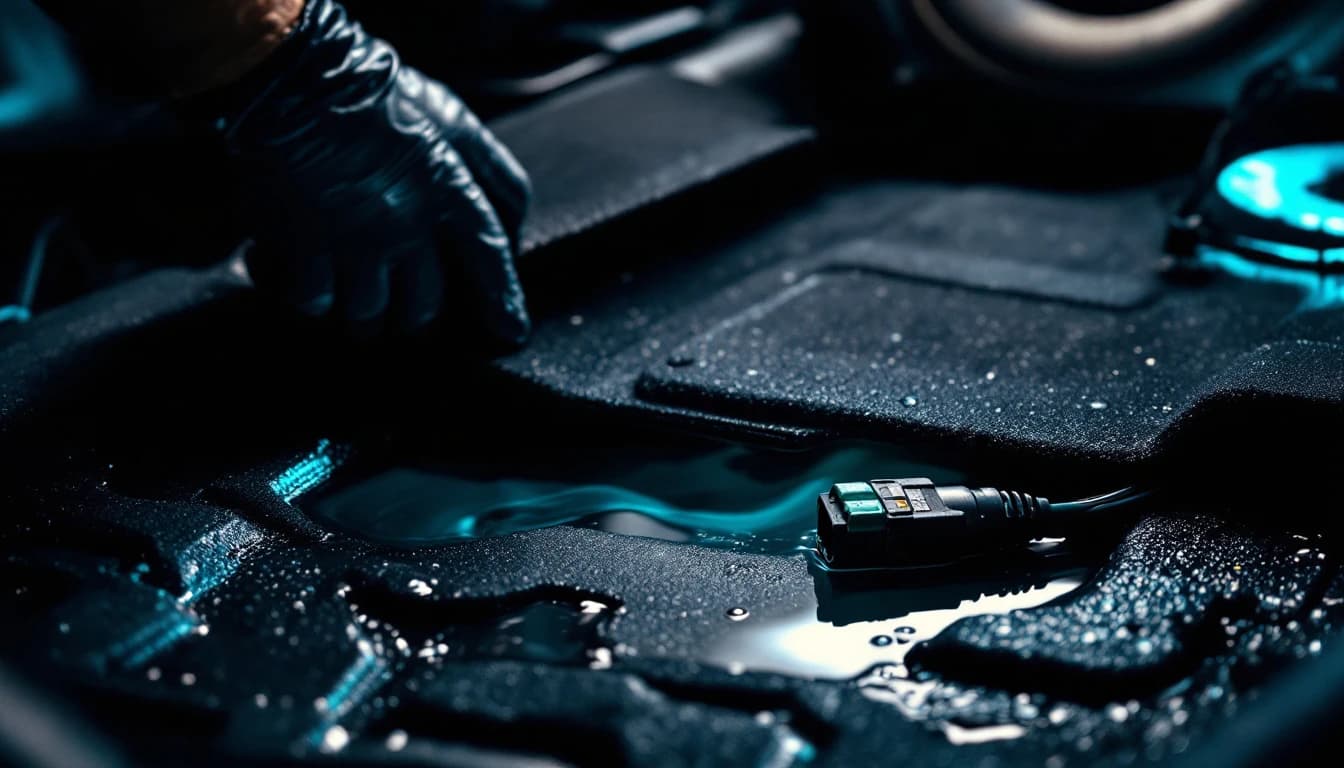
Water is the thread that runs through most REM stories. A blocked trunk drain, a perished taillight seal, or water sitting in the spare-wheel well is enough. The moisture wicks into connectors, and the pins grow green crust. The National Weather Service notes that 6 inches of water will reach the bottom of most passenger cars and 12 inches of rushing water can carry most cars away; a flooded car is an obvious case, but a slow leak into the spare-wheel well does the same damage over months.
Lift the trunk floor. If you find standing water, a tide mark, or a musty smell, that is your starting point. Fix the leak before you fix anything else, because a new module installed into a wet trunk fails the same way.
5. Ground faults
Every rear circuit returns to a ground point. When that ground corrodes, voltage drops, and electronics behave strangely: lamps glow dim, modules reset, and communication faults appear from modules that are perfectly healthy. A ground fault can make a good REM look dead. Clean and tighten the rear grounds before you condemn anything.
A weak battery produces a similar picture across the whole car. Car batteries are commonly cited by Consumer Reports as lasting roughly 3 to 5 years, so an older battery is worth testing before you chase network faults.
6. The module itself
Only after the lamps, fuses, harness, water and grounds are cleared does the REM earn the blame. When it does fail, the usual story is water reaching the board, corrosion across output drivers, an output stage damaged by a shorted lamp circuit, or damage from a jump-start or overvoltage event. On a BMW, a used REM fitted by a previous owner and never coded to the car is also on the list.
"Half the REMs I get asked about are really a broken trunk-lid harness or a spare-wheel well full of water. Lift the floor, flex the harness at the hinge, measure the ground. If the fault is still there after that, then we talk about the module." — Independent body-electrical diagnostician, 20+ years on European rear-body and lighting circuits (anonymized)
Diagnostic steps, in order
Work through these before you order anything.
- Check the battery and charging state. Test the battery at rest and with the engine running. Low voltage produces false communication faults everywhere. If the car also drains its battery overnight, read our guide on a parasitic battery drain from a module that will not sleep, because a failing rear module that stays awake is one possible cause.
- Scan the whole car, not just one module. Note every fault code and which modules report it. A REM that cannot be reached by any module points somewhere different from a REM that reports its own output faults. Our explainer on U0100 and U0140 lost-communication codes explains how to read network faults.
- Swap bulbs side to side. Move the suspect bulb or lamp to the working side. If the fault moves, it is the lamp.
- Check the fuses that feed the rear, and if one is blown, look for the short before replacing it.
- Lift the trunk floor and look for water, tide marks and corrosion on connectors and the module itself.
- Flex the trunk-lid harness at the hinge boot while watching the rear functions.
- Test for power at the lamp, then at the module connector output. Voltage present at the module but missing at the lamp is a wire. Voltage missing at the module output with the module powered, grounded and communicating is the module.
- Measure voltage drop on the rear grounds under load, not just resistance with everything off.
- On a Volvo with a fuel pump dropout, test the pump, its connector and its supply before assuming the REM has lost pump control.
If you have done all nine and the finger still points at the module, you have a real module fault. If you are not comfortable probing connectors, this is the moment to take the car to a qualified electrical diagnostician rather than guessing with parts. Our checklist on how to know which module failed before you ship it is the step we would ask you to read before mailing anything.
Door modules and other lookalikes
Some faults look rear-related but are not. Power windows, locks and mirrors on the doors are often controlled by separate door modules or body modules, not the REM. If your complaint includes front doors, dead window switches, or mirrors, our guide to dead power windows, locks and mirrors covers that separate problem, including the door harness that breaks in the jamb boot for the same flexing reason as the trunk lid.
Why a used REM does not just plug in
When the module is genuinely bad, the obvious move is a used REM from a salvage yard. It is cheap, it has the same shape connectors, and on its own it will usually not work properly.
The REM carries coding and configuration specific to the car it came from: fitted options, market variant and vehicle-specific settings. On a BMW, a used REM still thinks it belongs to the donor car, so you get wrong behavior, mismatch faults, or an outright rejection, and fixing it normally means a dealer coding session. On a Volvo, a junkyard REM will typically throw communication and configuration faults instead of running your rear lights and fuel pump.
This is the same problem people run into with engine computers. Our comparison of cloning versus fitting a used BMW DME explains why a used BMW module arrives carrying the donor car's data and why cloning your original's data onto it is usually the cleaner route. The logic for the REM is the same, without the immobilizer complication.
Cloning solves it. We read your original REM on the bench, verify the read, and write its coding and configuration onto the donor so it behaves like the module that left your car. The donor must match your part number, and on BMW the hardware index must be compatible too. A same-year, same-model car is not automatically a match.
What it realistically costs
Costs on this problem vary enormously, and most of them are not the module.
- Bulbs, fuses and grounds: usually the cheapest fixes on the list, and prices vary by car and parts source.
- Trunk-lid harness repair: varies with how many wires are broken and whether you repair or replace the section.
- Water leak repair: varies with the source, from a cleared drain to new taillight seals.
- REM cloning onto a matched donor: 250 dollars flat by mail-in on both the BMW F-chassis and the Volvo P3 services, plus one return shipping tier chosen at checkout: standard $29.95, UPS 2-day $54.95, or overnight $94.95. You source the donor, and we verify its part number before you buy it.
For Volvo owners pricing more than one module, our Volvo module cloning cost guide puts the REM next to the CEM, engine ECU and climate module in one table. If the Volvo also has key or no-start symptoms, the fault is more likely the central module than the REM; our Volvo CEM key programming and clone guide explains how the CEM immobilizer works on a P2 or P3 car.
If it really is the REM: how the mail-in works
- Verify first. Text us your VIN plus clear photos of your original REM label and the donor's label. A technician confirms the part numbers are a compatible match before you ship anything.
- Buy and receive the prepaid inbound label. After purchase, the lab emails you a prepaid inbound label.
- Ship both modules. Send the original and the donor to PO Box 120241, Arlington, TX 76012 if you use USPS, or to 1009 Oakwood Ln # 120241, Arlington, TX 76012 if you use UPS or FedEx. Couriers cannot deliver to a PO Box.
- Bench work. We read and verify both units, clone the coding and configuration onto the donor, and test communication on a regulated bench supply at our Arlington workshop.
- Return. Both modules come back with tracking on the tier you chose. Turnaround is typically fast once verified modules arrive; it is an estimate, not a guarantee.
The BMW service asks for proof of ownership before work begins. It is a sensible habit on any module job, and we will tell you up front what applies to yours.
Proof the repair worked
After installing the cloned donor, do not assume. Prove it.
- Fix the leak and dry the area before installation, and clean any corroded connector pins.
- Reconnect with a charged battery, then clear stored faults and rescan the whole car.
- Walk around the car with a helper and check every rear lamp: tail, brake, reverse, fog and license plate, including the center high-mounted stop lamp.
- Test the trunk or tailgate from the key, the interior button and the exterior switch, and open and close it several times to check the hinge harness.
- Test the rear defogger and rear outlets where fitted.
- On a Volvo, drive the car long enough to prove the fuel pump holds.
- Rescan after the drive. A clean scan after a real drive is better evidence than a clean scan in the driveway.
Brake lights matter more than they look. The National Highway Traffic Safety Administration evaluated the center high-mounted stop lamp and found it reduced rear-impact crashes by about 4 percent over the long term, and the Insurance Institute for Highway Safety has found that front crash prevention with automatic braking cuts rear-end crashes by 50 percent. A car with dead brake lights is asking the car behind it to rely on luck.
When to call a professional
Stop and get help when:
- You find burnt connectors, melted insulation or a smell of burning at the rear
- The fault involves the fuel pump and the car stalls while driving
- You have standing water in the trunk and cannot find the leak
- The rear network faults appear alongside faults from safety systems
- You have replaced parts twice and the fault is still there
Probing live circuits with the wrong tool can damage a healthy module. An independent electrical diagnostician with a scan tool, a wiring diagram and a proper meter will usually find a harness or ground fault faster than a parts-swapping approach, and the result tells you whether the module is worth sending at all.
The wider picture
These cars share a lot of rear-body design logic. The network they use follows the ISO 11898 CAN standard, with classic CAN running at data rates up to 1 Mbit/s, which is why one module falling off the bus can produce faults from several others. The diagnostic connector and data link standards come through SAE International. Manufacturer owner resources from BMW USA and Volvo Cars are worth checking for open recalls and service bulletins before any paid repair.
Frequently asked questions
How do I know if my rear electronic module is bad?
The REM is likely bad only after you have ruled out bulbs, fuses, the trunk-lid harness, water at the connectors and bad grounds, and the output is still dead at the module connector while the module is powered and grounded. Several dead rear functions at once plus REM communication faults strengthen the case.
Can a bad REM cause a Volvo fuel pump to stop working?
Yes, on Volvo P3 cars the REM controls the fuel pump, so a failed REM can cause loss of fuel-pump control and a stall or no-run. Test the pump, its connector and its supply first, because a failed pump or a corroded connector produces the same symptom more often.
Why are my tail lights dead when the bulbs are fine?
The most common causes are a blown fuse, a corroded socket or connector, a broken wire in the harness, or a bad ground. A failed rear module is possible but comes after those. Check whether power reaches the lamp and whether it leaves the module connector to tell wiring from the module.
Can I install a used REM from a salvage yard?
Not on its own. The REM carries coding and configuration from the donor car, so a used unit will usually throw mismatch or communication faults. Cloning your original's coding onto a part-number-matched donor makes it behave like your module; that is 250 dollars flat by mail-in plus return shipping.
Will water in my trunk damage the REM?
It can. Water from a blocked trunk drain, a perished taillight seal or a wet spare-wheel well is the usual cause of REM corrosion. Fix the leak and dry the area first, because a replacement or cloned module installed into the same wet trunk will fail the same way.
Can you clone an REM that is completely dead?
If the original will not power up or respond at all there is nothing to read, so a clone is not possible from that unit. Many modules that look dead in the car do read on a bench supply, which is why we test first and tell you before you pay.
Is the REM the same as the BMW FRM footwell module?
No, and it is a common mix-up. The FRM is the front lighting and footwell module, a separate part with separate failures. The REM is the rear module. Headlight or front turn signal faults point at the FRM, not the REM.
The bottom line
A dead tail light, a trunk that will not open, or a Volvo fuel pump that drops out can all come from the rear electronic module, but they usually do not. Bulbs and LED units, blown fuses, a trunk-lid harness broken at the hinge, water in the spare-wheel well and bad grounds all come first, and each of them is cheaper to find than a module is to replace.
Work through the diagnostic order: battery, full-car scan, bulb swap, fuses, trunk floor, hinge harness, power at lamp and module, grounds. If the fault survives all of it, the REM is the real problem, and a used module alone will not fix it because it carries another car's coding.
When it really is the module, cloning your original onto a matched donor is 250 dollars flat for BMW F-chassis and Volvo P3 cars, plus the return shipping tier you choose. Text us your VIN and photos of both module labels before you buy a donor, and see the BMW REM clone and Volvo REM clone service pages for full coverage.
Sources and further reading: NHTSA, IIHS, National Weather Service, Consumer Reports, ISO, SAE International, BMW USA, Volvo Cars.
Ship your module today
Flat-rate pricing, typical 24-hour bench turnaround, return speed your choice at checkout. Most jobs back on your bench within a week.