
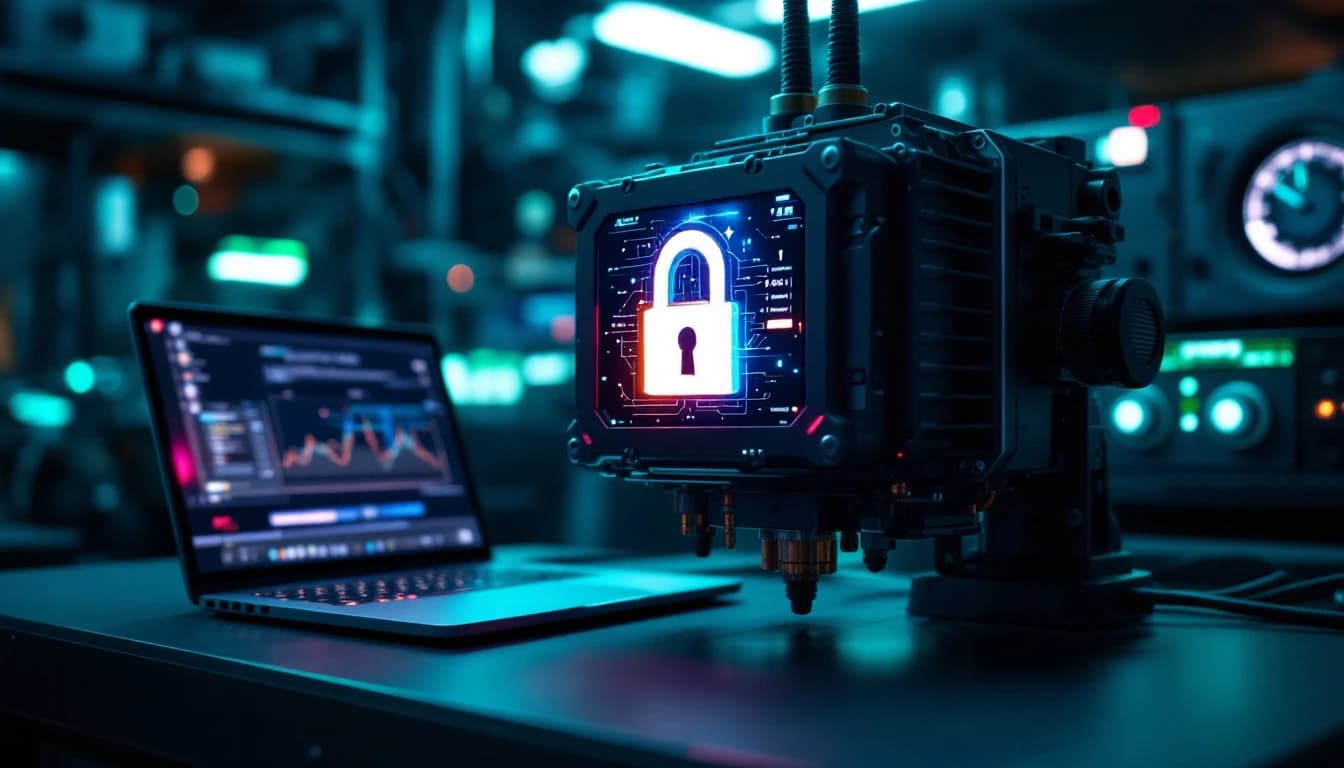
Locked Dodge & Ram Hemi PCM? GPEC2 Unlock Explained
Why "my Hemi PCM is locked" is a real problem
If you own or work on a modern Dodge, Ram, Jeep, or Chrysler with a Hemi V8 and you have tried to read or tune the PCM, you have probably hit a wall. The controller will not hand over its calibration and will not accept a modified one. That is not a fault — it is the factory read/write protection on the GPEC2 and GPEC2A generation of Powertrain Control Modules, and it is deliberate. Understanding what that lock is, and the difference between unlocking it, cloning around it, and simply buying an already-unlocked replacement, is the whole point of this guide.
The three bench services involved are a GPEC2 / GPEC2A PCM clone at $250 and a PCM unlocking service at $250, plus the option of buying a replacement that is already unlocked. They solve different problems, and confusing them is the most common mistake people make. Importantly, no specific model year or configuration is promised as supported here — a technician verifies your exact controller first. This work is offered for legitimate tuning, repair, diagnostic, and restoration purposes, and you are responsible for compliance with the law for your vehicle and use.
What GPEC2 and GPEC2A are
GPEC — Global Powertrain Engine Controller — is the PCM platform used across the Stellantis brands (Dodge, Ram, Jeep, Chrysler) on Hemi and other engines through much of the last decade-plus. GPEC2 and its later revision GPEC2A are specific generations in that family. They handle the same core job every PCM does — running fuel, spark, throttle, and transmission control — but with a hardened security model compared with the older, more open controllers that came before.
That security model is the reason enthusiasts and shops talk about these controllers so much. Stellantis, whose brands you can see across stellantis.com, locked the read and write access on GPEC2/GPEC2A so the calibration cannot be freely extracted or overwritten with off-the-shelf tools. The Hemi V8 is an enormously popular engine — it has powered millions of trucks and performance vehicles, and the full-size pickup segment that the Ram 1500 competes in is one of the highest-volume categories in the entire U.S. market, with the leading full-size trucks each selling well into the hundreds of thousands of units a year according to sales reporting from outlets like Car and Driver. When a locked controller sits on top of an engine that popular, a whole ecosystem grows up around getting it unlocked legitimately.
What "locked" actually blocks
A locked GPEC2/GPEC2A controller specifically prevents:
- Reading the calibration out for tuning, backup, or diagnosis
- Writing a modified calibration in for performance or drivability changes
- Certain replacement and cloning workflows that depend on being able to access the controller's memory
For a stock, healthy vehicle that will never be tuned, the lock is invisible — the car runs fine and you never notice it. It becomes a problem the moment you need to do legitimate work on the controller: a performance calibration, a calibration repair, or a module replacement where the data needs to move. That is when the lock stands between you and the job.
Path 1 — Unlocking the controller
Unlocking removes the factory read/write protection from your GPEC2/GPEC2A PCM so it can be read and written. After an unlock, the controller behaves like an accessible module — tuning platforms and programming tools can read its calibration and write a modified one. This is what makes performance tuning and calibration work possible on a controller that was sealed from the factory.
It is critical to understand what unlocking does and does not do:
- It does remove the read/write protection, enabling reading and writing of the calibration.
- It does not by itself change how your engine runs. An unlock is an access change, not a tune. After unlocking, a separate calibration still has to be written to actually alter performance or fix a drivability issue.
- It does not make the module into a clone of another vehicle. Unlocking works on your controller; it is not the same as copying one module's identity onto another.
The PCM unlocking service is $250 on the bench. It is the right path when you want to tune or repair the calibration on your own controller and the lock is the only thing in your way.
Path 2 — Cloning onto a suitable donor
Cloning is a different operation that solves a different problem. If your original controller has failed or needs to be replaced, cloning copies your original controller's data — including its identity and calibration — onto a suitable donor controller, so the vehicle sees the replacement as its own module. The car does not know anything changed.
Cloning is the route when the hardware is the problem — a failed or damaged controller — rather than access to a working one. It sidesteps a lot of the reprogramming that a bare replacement would otherwise need, because the donor inherits your original module's data. The GPEC2 / GPEC2A PCM clone service is $250. Whether cloning is achievable for your exact controller, and what donor it needs, is something a technician confirms after seeing your part numbers — this is where verifying the specific controller matters most.
Path 3 — Buying an already-unlocked replacement
The third option is to buy a replacement controller that has already been unlocked, rather than sending yours in to be unlocked. This can make sense if your original controller is damaged beyond reading, if you want a spare on hand, or if you are building a project and want a known-accessible starting point. The trade-off is that an already-unlocked replacement still has to be correctly matched and calibrated to your vehicle to run it properly — buying an unlocked module is not the same as buying one that is ready to drive your specific truck. The identity, VIN, and calibration side still has to be handled.
The three paths, side by side
| Unlock your controller | Clone onto a donor | Buy an already-unlocked replacement | |
|---|---|---|---|
| Problem it solves | Locked controller blocks read/write | Original hardware failed or must be replaced | Want a spare or an accessible starting point |
| What you ship | Your original controller | Your original plus a suitable donor | Nothing — you buy the module |
| Changes how the engine runs | No — access only, tune written separately | No — inherits your original data | No by itself — still needs matching and calibration |
| Keeps your controller's identity | Yes — it is your module | Yes — copied to the donor | Not automatically — must be set to your vehicle |
| Enables tuning afterward | Yes | Depends on the donor's state | Yes, if it was truly unlocked |
| Price | $250 | $250 | Cost of the module (bought elsewhere) |
The pattern is clear. If your controller works and you just need past the lock, unlock it. If your controller has failed, clone your data onto a donor. If you want a spare or an accessible base module, buy an already-unlocked replacement — and still plan for matching it to your vehicle. A technician helps you land on the right one after verifying your exact GPEC2/GPEC2A controller.
Why tuners and repairers need this
The demand for GPEC2/GPEC2A unlocking is not abstract — it comes from real, legitimate work that the factory lock stands in the way of.
Performance tuning. The Hemi is a favorite tuning platform, and calibration changes — for fuel, spark, throttle response, transmission behavior, and forced-induction or bolt-on supporting mods — require reading the stock calibration and writing a modified one. The lock blocks both, so it has to come off first. The performance-parts and calibration industry around these engines is substantial; the aftermarket as a whole is a multi-billion-dollar sector tracked by trade and enthusiast media including MotorTrend, and Hemi calibration work is a visible slice of it.
Calibration repair and drivability. Not all calibration work is about more power. Repairing a corrupted calibration, correcting drivability issues, or reloading a proper calibration onto a controller all require write access the lock denies.
Module replacement and cloning. When a controller fails, moving the vehicle's data to a replacement — or accessing a replacement to calibrate it — runs into the same protection.
Engineering-standards bodies such as SAE International document how tightly modern powertrain calibration is coupled to emissions, driveability, and diagnostics, which is exactly why controller access is controlled in the first place — and why doing this work correctly, on a regulated bench, matters. The lock exists for good reasons; unlocking it for legitimate work is a specialty that respects those reasons.
"The mistake I see constantly is someone thinking an unlock is a tune, or that it's a clone. It's neither. Unlocking just opens the door — you still have to write a calibration to change anything, and cloning is a whole separate job for when the hardware's dead. On GPEC2 and 2A especially, you have to confirm the exact controller before you promise anything. I never quote a year off the top of my head; I look at the part number first." — Independent ECU calibration specialist, 15+ years on domestic V8 controllers (anonymized)
What the bench service does and does not do
Be precise about scope, because this is where expectations go wrong.
What the bench service does: reads and archives your controller's data before any change where possible; removes the read/write protection on an unlock; copies your original data onto a suitable donor on a clone; tests communication before return; and ships back with tracking, all on a regulated bench power supply that removes the voltage-sag risk of in-vehicle flashing.
What it does not do: an unlock does not, by itself, change engine performance — a separate calibration must be written afterward. Programming of any kind does not repair mechanical engine or transmission damage; software does not fix metal. And no service here promises that a particular model year or configuration is supported sight unseen — the controller is verified first, every time.
That verification step is not a formality. The GPEC2 and GPEC2A designations cover a range of applications and revisions, and what is achievable depends on the exact controller in front of us. Sending a photo of the module label and your VIN up front is how a technician confirms your specific controller before you spend anything on shipping. If you want the deeper mechanics of the unlock itself, our GPEC2 / GPEC2A PCM unlock guide covers the bench process, and for the fastest turnaround options our instant online unlock walkthrough explains how some of this work can be handled without shipping at all.
Legitimate use and legal responsibility
This work is offered for legitimate purposes — performance tuning, calibration repair, diagnostics, restoration, and module replacement — where legally permitted. A few points are non-negotiable:
- The customer is responsible for legal compliance. Calibration and controller modifications may carry legal, warranty, and insurance implications depending on your jurisdiction and how the vehicle is used. What is appropriate for a dedicated off-road, track, or competition vehicle may differ from what is appropriate for a road-registered one. The customer is solely responsible for ensuring the work complies with applicable local, state, and federal law. This service is not framed or sold as an emissions-equipment modification.
- Proof of ownership applies to security-related work. Where a request touches vehicle security or identity, ownership must be verified, using title, registration, and matching identification.
- No specific vehicle is promised as supported. A technician verifies your exact GPEC2/GPEC2A controller before accepting the job. Fitment is confirmed first, not assumed.
- Software does not repair mechanical damage. If your problem is a mechanical engine or transmission fault, unlocking or cloning a controller will not fix it. Confirm the diagnosis first.
New-vehicle prices have climbed steeply — average transaction prices have run well past the high-$40,000 range in recent reporting from outlets such as Kelley Blue Book — so keeping a capable Hemi truck or car on the road, correctly tuned or repaired at the controller level, is an easy call against replacing the vehicle. A fixed-price bench service that unlocks or clones the right controller is modest by comparison.
The mail-in workflow
The bench model means you ship a module, not a vehicle:
- Verify the controller first. Text us your VIN and a clear photo of the PCM label with its part numbers. A technician confirms your exact GPEC2/GPEC2A controller and which path — unlock, clone, or buy-a-replacement — fits your goal. Nothing ships until it is confirmed.
- Tell us the context. Year, make, model, engine, whether the controller is healthy or failed, and what you are trying to accomplish (tune, calibration repair, replacement).
- Remove and ship. Unplug and remove the controller, pack it in an anti-static bag inside a padded box, and send it to PO Box 120241, Arlington TX 76012 if you ship USPS — or 1009 Oakwood Ln # 120241, Arlington TX 76012 if you ship UPS or FedEx (UPS and FedEx cannot deliver to a PO Box) — with a suitable donor if you are cloning.
- Bench work. The controller is read and archived on a regulated bench supply, then unlocked or cloned per your confirmed path.
- Verify and return. Communication is tested, then the module ships back with tracking via the return option you choose at checkout, from $29.95. Return shipping is paid by the customer.
Frequently asked questions
What does it mean that my GPEC2 or GPEC2A PCM is locked? It means the controller has factory read/write protection that prevents its calibration from being read out or a modified calibration from being written in. That lock is deliberate and invisible on a stock car, but it blocks legitimate tuning, calibration repair, and some replacement work until the controller is unlocked or the job is handled another way.
Is unlocking the same as tuning my Hemi? No. Unlocking only removes the read/write protection so the controller can be accessed. It does not change how your engine runs by itself — a separate calibration still has to be written after the unlock to actually alter performance or fix a drivability issue. An unlock is the access step, not the tune.
Should I unlock my controller or clone it onto a donor? Unlock your controller when it is healthy and the lock is the only thing blocking tuning or calibration work. Clone onto a donor when your original controller has failed or must be replaced, so the donor inherits your data and the vehicle sees its own module. A technician confirms which applies after verifying your exact controller.
Do you support my specific year and model? No specific model year or configuration is promised as supported without verification. GPEC2 and GPEC2A cover a range of applications and revisions, so a technician confirms your exact controller from the part-number label and VIN before accepting the job. Send a photo of the module label first and fitment is confirmed before you ship.
Is GPEC2 / GPEC2A unlocking legal? It is offered for legitimate purposes such as tuning, calibration repair, diagnostics, restoration, and module replacement, where legally permitted. It is not framed as an emissions modification, and the customer is solely responsible for ensuring the work complies with local, state, and federal law for their vehicle and intended use.
Can I just buy an already-unlocked replacement instead? Yes, that is a valid third option, useful for a spare or an accessible starting module. But an already-unlocked replacement still has to be matched and calibrated to your specific vehicle to run it properly — buying an unlocked module is not the same as buying one ready to drive your truck. The identity and calibration side still has to be handled.
Because a locked controller sits between the owner and any legitimate calibration change, the unlock is best understood as restoring access, not altering the vehicle. National vehicle-safety and compliance context published by the National Highway Traffic Safety Administration is a useful reminder that any calibration work must respect the emissions and safety rules that apply to your vehicle and its intended use, which is why this service is offered for legitimate repair, restoration, off-road, and racing applications where legally permitted.
The bottom line
Late-model Dodge, Ram, Jeep, and Chrysler Hemi vehicles run GPEC2 and GPEC2A Powertrain Control Modules that are read/write protected from the factory, and that lock stands between you and legitimate tuning, calibration repair, or module replacement. Three clean paths get you past it, and they are not interchangeable. Unlocking removes the protection on your own controller so it can be read and written — $250 through the PCM unlocking service — but an unlock is access only, not a tune. Cloning copies your failed controller's data onto a suitable donor so the vehicle sees its own module — $250 through the GPEC2 / GPEC2A PCM clone. Or you buy an already-unlocked replacement and still plan to match it to your vehicle.
All of it is bench work on a regulated supply, returned with tracking, with return shipping from $29.95 chosen at checkout. No specific model year is promised — a technician verifies your exact controller first — and the customer is responsible for legal compliance, since software does not repair mechanical damage. Text us your VIN and a photo of the PCM label and a technician confirms the right path and your exact controller before anything ships.
Ship your module today
Flat-rate pricing, typical 24-hour bench turnaround, return speed your choice at checkout. Most jobs back on your bench within a week.
More from the Lab
GPEC2 GPEC2A PCM Clone Mail-In Guide (2026) — 250 Dollars
12 min · June 18, 2026
Chrysler, Dodge, Jeep Module Programming Cost (2026)
15 min · October 2, 2026
FOBIK Key Won't Turn or No Crank? WIN Module Diagnosis
14 min · October 2, 2026
Chrysler, Dodge & Jeep BCM Failure Symptoms Guide
13 min · September 23, 2026