Maserati BCM & Key Programming: The Mail-In Guide
What actually controls a Maserati key
On a modern Maserati the key does not talk to the engine. It talks to the body control module, and the body control module decides whether the car is allowed to start. Get that one fact straight and most of the confusion around Maserati key work disappears.
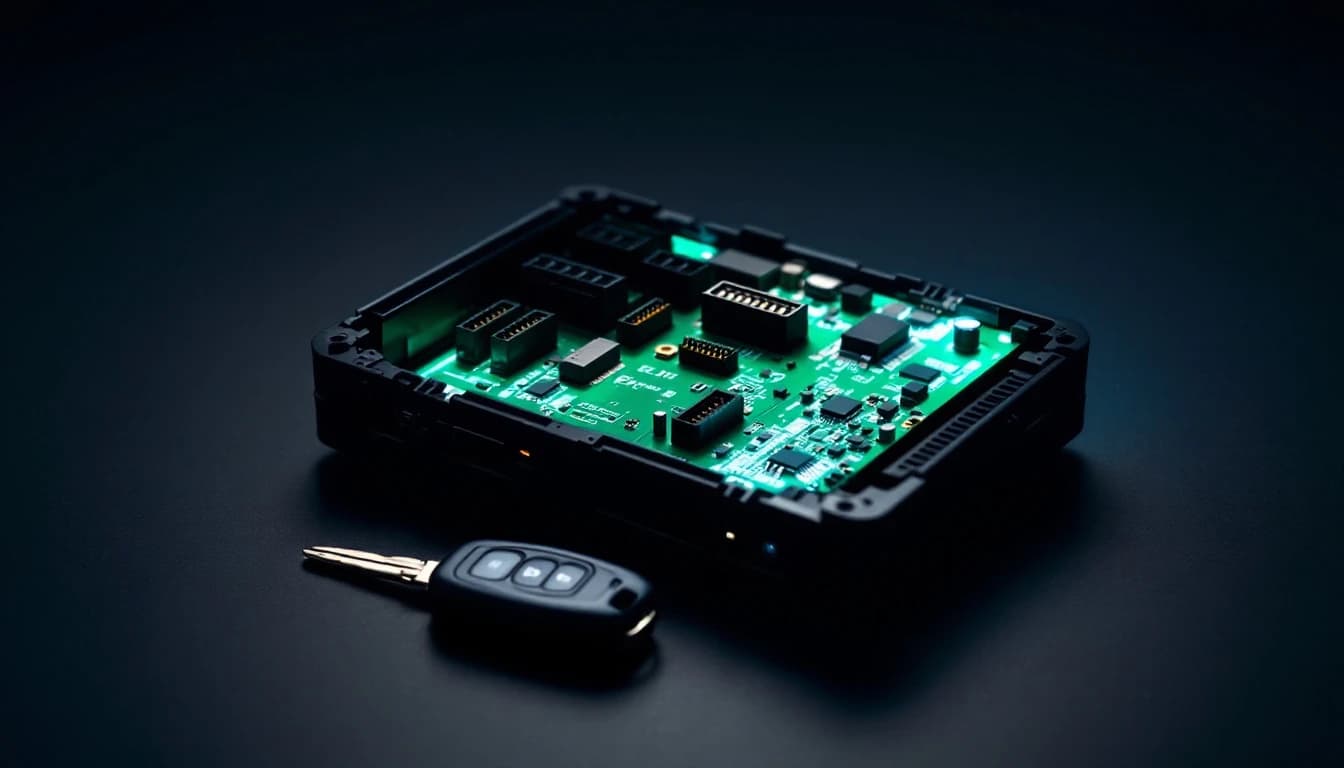
The body control module, or BCM, is the security brain on these cars. It stores the immobilizer secret, it holds the list of transponder and proximity keys the vehicle will accept, and it runs the challenge-and-response handshake that has to succeed before the engine controller is authorized to fire. The engine ECU is a participant in that conversation, but it is not the gatekeeper. The BCM is. When people describe a Maserati as needing key programming, what they almost always need is work at the BCM level.
This is the same architecture pattern you see across most modern cars, where security has moved out of the ignition switch and into a networked control unit. If you want the general version of that story before the Maserati specifics, our explainer on what a body control module does and when it needs programming lays out the fundamentals. The Maserati twist is that these are low-volume exotic cars, so the tooling, the security access, and the independent expertise are all much thinner on the ground than they are for a Toyota.
The trend that put security in the BCM is industry-wide and well documented. The National Highway Traffic Safety Administration has tracked for years how the count of networked control units in a mainstream vehicle keeps climbing, with a modern car commonly carrying well over 50 electronic control units, and security functions among them. Coverage from Car and Driver has noted that electronics and software now make up a large and rising share of a new vehicle's cost, by some estimates approaching 40% of the value of a new car. The foundation for all of it is old: the Environmental Protection Agency required standardized on-board diagnostics on light vehicles sold in the United States beginning with the 1996 model year, and every networked security module since has built on that computerized base. On a hand-built Italian car, that electronic content is expensive to touch and expensive to replace, which is exactly why owners look for a bench alternative to the dealer counter.
The four cars, and why they are not all the same
Maserati has run a couple of distinct electrical eras on the cars you are likely to own, and the difference matters enormously for what can be done.
The FCA-era cars: Ghibli, Quattroporte (M156/M157), and Levante
The Ghibli and the sixth-generation Quattroporte launched in the FCA years, and the Levante SUV followed on the same corporate architecture. These cars share a great deal of their electrical DNA with the wider Fiat Chrysler parts bin. That is not an insult to the cars; it is the practical reality that makes them serviceable at all outside a dealer. The immobilizer, the BCM behavior, the diagnostic protocols, and critically the security gateway all follow FCA-family conventions rather than something bespoke to Modena.
The upside of that shared architecture is that the immobilizer and BCM work on these cars is a known quantity with established bench procedures. The complication is the security gateway, covered in its own section below, because on the newer FCA cars it changes how the diagnostic bus can be reached at all.
GranTurismo and the earlier platform
The GranTurismo and the earlier Quattroporte generation predate the FCA integration and carry a different, older electrical architecture. Immobilizer and key handling on these cars follows the pre-FCA Maserati conventions. In practice this often means the security data and key learning live in a different structure, and the bench approach is not identical to the Ghibli-era procedure. Some of this older work is more straightforward because it predates the gateway; some of it is harder because parts and documented procedures for a low-volume car from that era are scarcer. This is one of the places where an honest shop confirms the exact approach after seeing the modules rather than quoting blind.
The single most useful thing you can do before spending money is identify which era your car belongs to, because the answer to almost every question below changes with it.
Adding a key when you still have one
This is the easy end of the spectrum, and it is worth starting here because it sets up everything harder.
If you have at least one working key and you want a spare, the BCM already holds the security identity and already knows how to authorize keys. The job is to present a new key to the system and have the BCM learn it into its accepted list. On the bench, that means the BCM is read, the new key is added to the immobilizer's key table, and the key is cut and paired to the vehicle.
Even this simplest case is a security operation, which is why it requires proof of ownership. It is not a service anyone should perform on a car they cannot document as belonging to the person requesting it. Reputable providers verify ownership before any key or immobilizer work, and the Federal Trade Commission publishes consumer guidance on vetting automotive services worth reading if you are choosing a provider for the first time.
The reason even adding a key is not a driveway job on these cars is the combination of proximity-key hardware, the security gateway on the newer platforms, and the scarcity of Maserati-capable tooling. It lands on a bench because that is where the right equipment and a controlled power supply live.
All-keys-lost: what it really takes
All-keys-lost is the job that separates a serious Maserati provider from a hopeful one. When there is no working key at all, the system has no trusted credential to authorize a new one against, so the process is fundamentally different from adding a spare.
On these cars, all-keys-lost typically means working with the BCM directly to establish or recover the security data needed to teach the system a brand-new key. Depending on the platform and the state of the modules, that can involve reading the BCM to recover the immobilizer secret, and on some cars coordinating that data with the other modules in the security chain. The dealer path for all-keys-lost on an exotic is often a long, expensive appointment that may involve ordering keys tied to the VIN and, on the newest cars, online authorization through the manufacturer's secure systems.
The bench alternative works when the security data can be read and worked from the modules you send in. It does not work by magic. If the platform requires online factory authorization to complete a key on that specific car, no bench and no tool changes that, and the honest answer is to say so before you ship. The same principle applies across every make; our general walkthrough of all-keys-lost mail-in module programming explains the recover-versus-authorize fork that decides which cars are bench-serviceable and which are not.
The practical intake for an all-keys-lost Maserati starts with the VIN, the exact model and year, whether the car is a proximity or turn-key system, and photographs of the modules. That is what tells us which era you are on and whether the security path is recoverable on the bench or requires the dealer.
Replacing a failed BCM: clone versus virginize
When the body control module itself has failed, you are no longer talking about keys. You are talking about how to get a working module onto the car without losing the security identity or bricking the immobilizer. There are two real approaches, and which one applies depends on the state of your original.
Clone the original data onto a donor
If your original BCM can still be read, even when it misbehaves in the car, its data can often be copied onto a matching donor module. The donor then carries your car's identity: the same VIN, the same immobilizer secret, the same learned keys. The car sees its own BCM, your existing keys keep working, and the security chain stays intact. This is the preferred outcome whenever it is possible, because it preserves everything.
The catch is the same one that applies to any control-unit swap: a matching part number proves hardware compatibility, not identity, and a donor module still carries the previous car's data until yours is written onto it. If you have ever wondered why a correctly numbered used module does not just work when plugged in, our guide on why used-ECU swaps fail and cloning succeeds explains the mechanism, and the same logic applies to a body computer.
Virginize and re-marry
When the original cannot be read, or when the only available module is one that has already been used in another car, the path is to virginize the module, returning it to a clean, unmarried state, and then program it to your vehicle and learn your keys. This rebuilds the security relationship from a blank slate rather than copying an existing one. It is more involved than a clone, and on some Maserati platforms whether it is possible at all is exactly the kind of question that gets answered by a bench evaluation rather than a phone quote.
The honest framing here is that the clone path is cleaner when your original still reads, and the virginize path is the fallback when it does not. A shop that leads with virginize before asking whether your original can be read is skipping the better option.
The FCA security gateway reality
Here is the part that trips up shops that have not done these cars.
Starting in the mid-2010s, FCA-family vehicles, which includes the Ghibli, the current Quattroporte, and the Levante, added a security gateway module, often called the SGW. The gateway sits between the diagnostic port and the internal vehicle networks, and its job is to block unauthorized devices from writing to the secure buses. It was a deliberate cybersecurity response, and by its own measure it works: you cannot simply plug a generic tool into the OBD port and start rewriting security data the way you could a decade earlier.
For the owner, the gateway means two things. First, a lot of the immobilizer and BCM work that used to be doable through the diagnostic port now requires either authorized gateway access or a bench approach that works with the modules directly. Second, it is one more reason this work has consolidated onto benches and specialists rather than staying a general-tool job. The bench approach sidesteps the in-car gateway limitation by working with the modules themselves, but it does not sidestep the underlying security design, and it does not turn an online-authorization car into a bench car.
The gateway was part of a broader industry hardening against theft and unauthorized access. The National Insurance Crime Bureau reports vehicle theft in the United States running into the hundreds of thousands of vehicles per year, and the Federal Bureau of Investigation tracks motor-vehicle theft as one of the more common property crimes in the country. Security gateways, longer keys, and distributed immobilizer data are all responses to that pressure, and they are why exotic key work has gotten harder, not easier, over time.
Adapt or replace — the honest comparison
Here is the side-by-side for the four situations a Maserati owner actually shows up with. Prices shown are the flat bench figures; anything not covered is quoted only after a bench evaluation.
| Situation | What the BCM work involves | Original keys survive | Requires readable original data | Bench service |
|---|---|---|---|---|
| Add a key, one still works | BCM learns the new key into its accepted list | Yes | Not applicable, one key present | Maserati BCM key programming, $350 |
| All-keys-lost | Recover or establish security data, teach a new key | No keys existed | Often yes, from the BCM | Maserati BCM key programming, $350 |
| Failed BCM, original reads | Clone original data onto a donor module | Yes | Yes | Maserati BCM key programming, $350 |
| Failed BCM, original does not read | Virginize a module, re-marry to the car, learn keys | No | No | Confirmed after bench evaluation, $150 |
The pattern is the same one that runs through all security work: preserve the original identity when you can, rebuild it when you cannot, and never promise a rebuild is possible on a specific platform until the modules are in front of you.
What to send, and why more than one part is common
Because the security data is distributed and gated, the right answer to what you send changes with the job.
- Adding a key with one in hand. Usually the BCM, plus the new key blank so it can be cut and paired. Confirm at intake.
- All-keys-lost. The BCM at minimum, and on some platforms additional modules from the security chain so their data can be aligned. This is decided from your VIN and model at intake, not guessed.
- Failed BCM, clone route. Your original BCM, so its data can be read, and the donor module it is being cloned onto if you have sourced one.
- Failed BCM, virginize route. The module to be re-married, and often a working reference from the car if one exists.
It is common on these cars to need more than one module on the bench at once. That is normal, and it is cheaper to establish before anything ships than to discover after a part has already made a round trip. If you are not sure which module has actually failed, do not start pulling parts on a guess; our checklist on how to know which module failed before you ship it is a good five-minute read first.
"The Maseratis I see are almost always somebody who already called the dealer, heard the number, and went looking for another way. The good news is the Ghibli-era cars share enough with the FCA family that the immobilizer work is real and repeatable. The bad news is people expect it to be a driveway plug-in, and on a gateway car it never is. I tell every one of them the same thing: send me the VIN and photos first, because half the job is knowing which of these platforms you actually have before anything comes apart." — Independent European exotic immobilizer technician, 16+ years (anonymized)
The honest limits
This is where a shop should tell you what it cannot promise.
Some late cars require online factory authorization. On the newest platforms, certain key and security steps are designed to be completed only through the manufacturer's secure online systems. No bench, no tool, and no workaround changes that. When a car falls in that group, the honest answer is that the job belongs with a facility that has that access, and you should be told before you ship, not after.
Feasibility on the older platform is confirmed, not assumed. The GranTurismo and earlier cars are a different architecture, and whether a specific job is bench-serviceable can depend on the exact model, year, and module state. That is precisely what a bench evaluation is for.
A read may not be possible. Cloning your original identity onto a donor assumes the original still reads. Sometimes it does not, which narrows the options to virginize-and-re-marry if the platform allows it, or the dealer if it does not.
Software cannot fix a physically dead module. If a BCM has water damage, a failed processor, or a dead communication driver, no security work makes it run. That becomes a replace decision, and then the question is clone or virginize.
Being straight about these limits is not a weakness. On an exotic where a wrong move is expensive, the shop that tells you where the edge is before you cross it is the one worth using. When the answer genuinely cannot be known from the VIN and photos alone, the bench evaluation service at $150 exists to give you a real answer from the actual hardware instead of a hopeful guess.
Legal framing and proof of ownership
Proof of ownership is required for all Maserati key, immobilizer, and BCM security work, without exception. In practice that means documentation tying your name to the vehicle, such as a registration or title. A provider that does not ask for it should worry you. This is standard practice for legitimate security work, and it protects both you and the shop.
Immobilizer and key work of this kind is offered for legitimate repair and ownership situations: a car you own that needs a spare key, a car whose keys are genuinely lost, or a car whose body computer has failed. It is not a service for gaining access to a vehicle you cannot document as yours. Where any immobilizer-delete-style approach is discussed on an orphaned platform, it applies only to legitimate repair and to cars where the original security data is genuinely unrecoverable, and you remain responsible for compliance with the laws that apply to your vehicle and use.
The mail-in workflow
The whole point of a bench service is that you ship a part instead of trailering an exotic across the country. This is a nationwide mail-in workshop, so the sequence is the same wherever you are.
- Message the lab before you remove anything. Send the VIN, the exact year and model, whether the car is proximity or turn-key, how many working keys you have, a description of the fault, and clear photos of the modules and their labels. This is where the platform era gets identified and the right path gets chosen.
- Provide proof of ownership. Nothing security-linked proceeds without it.
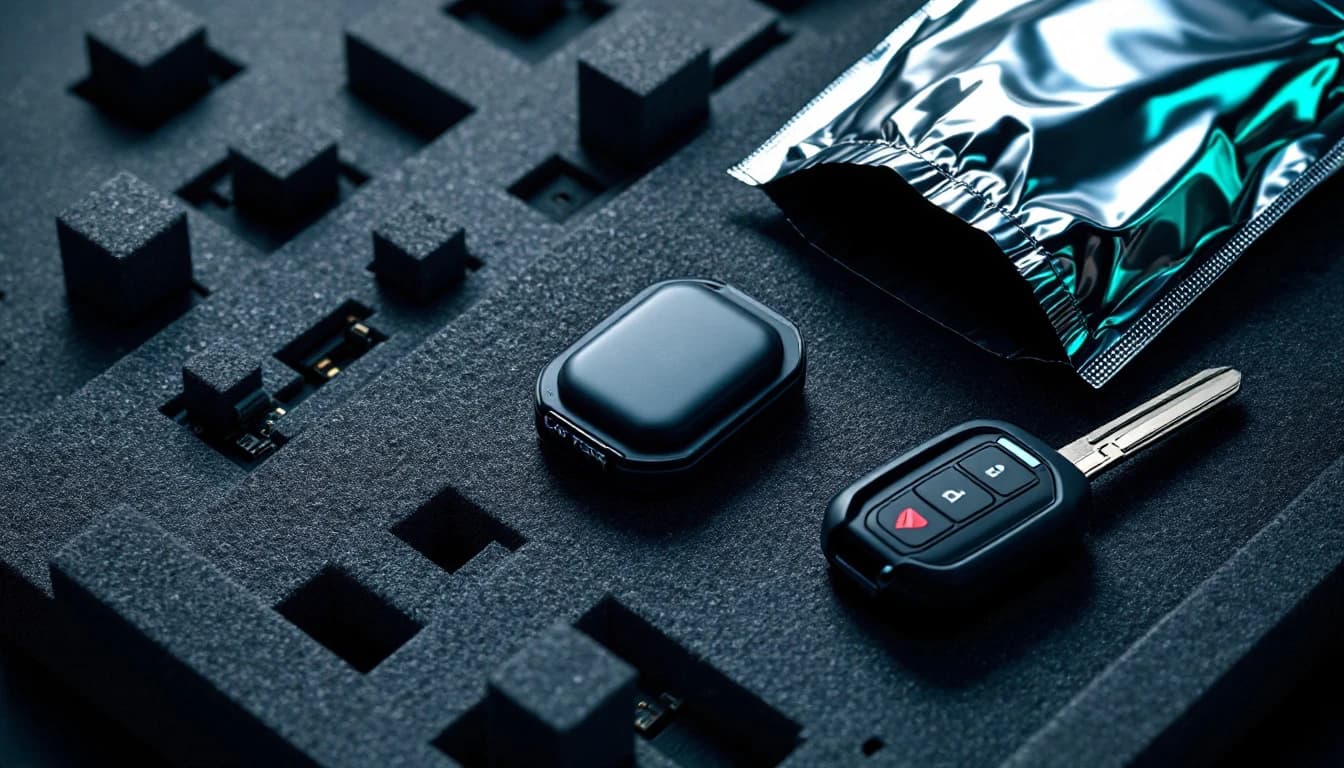
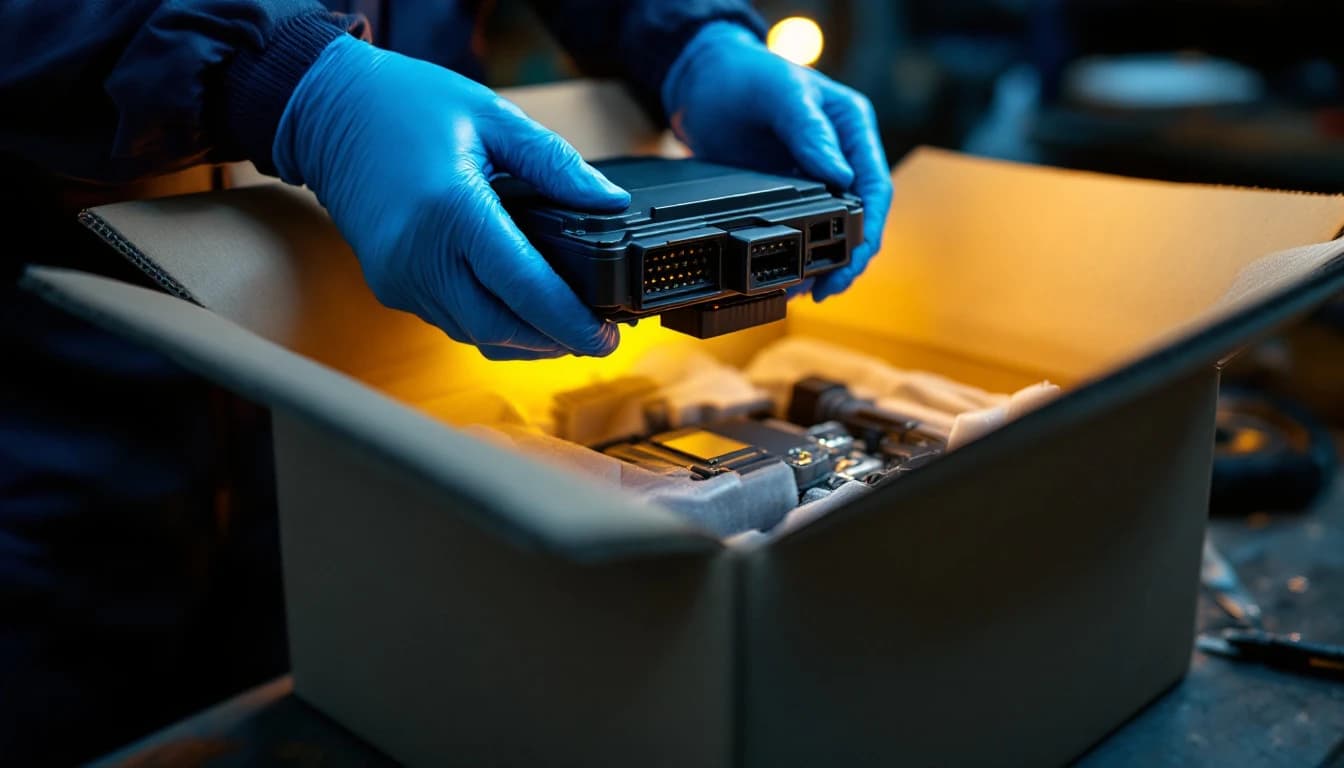
- Ship what we ask for. Sometimes just the BCM. Often the BCM plus a donor module or an additional security-chain module, and on key jobs the new key blank. Pack modules in an anti-static bag inside a padded box. Both the inbound label and your return label are arranged at checkout, so you get a prepaid, pre-addressed way to send the parts in.
- Bench read and archive. Modules are powered on a regulated bench supply, existing data is read where the unit still reads, and it is archived before any change is made.
- Clone, program, virginize, or learn keys. The path agreed at intake is carried out on the bench, where a voltage sag cannot brick a module mid-write the way a marginal battery can in the car.
- Bench verify. Communication and function are checked before anything leaves the shop.
- Return with tracking. Return shipping is a flat-rate tier you choose at checkout, from $29.95, with faster options available. You reinstall the part.
Frequently asked questions
How much does Maserati key programming cost compared to the dealer? Maserati BCM key programming is a flat $350 bench service, plus return shipping chosen at checkout from $29.95. Dealer pricing for exotic key work, especially all-keys-lost, is frequently several times that once you add the appointment, the keys, and the labor, which is why owners look for a bench alternative in the first place.
Why does my Maserati key go through the BCM instead of the engine? Because on these cars the body control module is the security brain: it stores the immobilizer secret, holds the list of accepted keys, and runs the handshake that authorizes the engine to start. The engine controller participates but does not gate the start, so key and immobilizer work happens at the BCM level.
Can you do all-keys-lost on a Ghibli or Levante? Often yes on the FCA-era cars, because their shared architecture has established bench procedures, but it is confirmed from your VIN and the module state rather than promised blind. If your specific car requires online factory authorization to complete a key, that job belongs with a dealer, and we tell you that before you ship anything.
What is the FCA security gateway and does it stop the work? The security gateway, or SGW, is a module on newer FCA-family cars that blocks unauthorized devices from writing to the secure networks through the OBD port. It does not stop bench work, which works with the modules directly, but it is one of the reasons this work moved onto benches and specialists rather than staying a general-tool driveway job.
My BCM died. Do I lose my keys? Not necessarily. If your original BCM can still be read, its data, including your learned keys, can often be cloned onto a donor module so your existing keys keep working. If the original cannot be read, the fallback is to virginize a module and re-marry it to the car, which means new key learning. Which path applies depends on whether your original still reads.
Do you work on the GranTurismo and older Quattroporte? Yes, but those cars use an older, pre-FCA architecture, so the approach differs from the Ghibli-era procedure and feasibility on a specific job is confirmed after a bench evaluation rather than quoted blind. Send the VIN and photos first so the platform can be identified.
Do I really need to prove ownership for a spare key? Yes, without exception. Proof of ownership is required for all key, immobilizer, and BCM security work, including simply adding a spare, because it is a security operation on the vehicle's anti-theft system. A provider that does not ask for ownership documentation is one to avoid.
The bottom line
Maserati key and BCM work is not a mystery, but it is not a driveway job either. On the Ghibli, the current Quattroporte, and the Levante, the body control module is the security brain, and on those FCA-era cars a security gateway now sits between the diagnostic port and the secure networks. That combination is why adding a key, recovering an all-keys-lost car, and replacing a failed body computer all land on a bench. The GranTurismo and earlier cars are a different, older architecture where the exact approach is confirmed from the hardware.
The decisions are the same ones that run through all security work. When your original module reads, clone its identity onto a donor and keep your keys. When it does not, virginize and re-marry where the platform allows it. When the car requires online factory authorization, hear that honestly before you ship rather than after. Maserati BCM key programming is a flat $350 bench job, and when the answer genuinely cannot be known from the VIN and photos, a bench evaluation at $150 gets you a real answer from the actual modules.
If you are staring at a dealer quote for a lost key or a failed body computer, stop before you accept it. Message the lab with the VIN, the model and year, and photos of the modules, and you will get a straight read on which of the Maserati BCM key programming paths your car is actually on, or a straight answer that it needs the dealer. Either way you will know before you spend a dime on shipping. And if you own a different Italian exotic with the same architecture, our companion Ferrari BCM immobilizer service guide walks the same terrain for Maranello's cars.
Ship your module today
Flat-rate pricing, typical 24-hour bench turnaround, return speed your choice at checkout. Most jobs back on your bench within a week.