
What Is a Body Control Module (BCM)
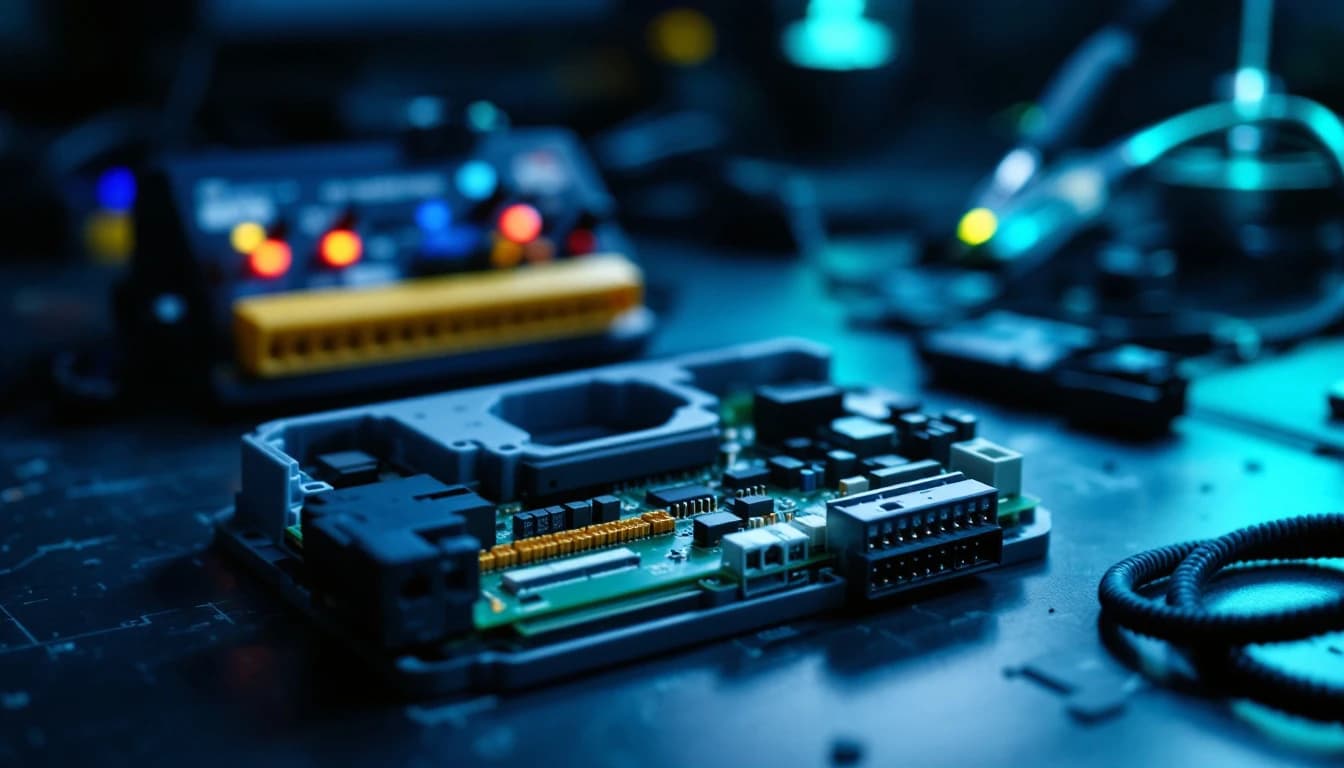
What a body control module actually is
If the engine control unit is the brain of the powertrain, the body control module (BCM) is the brain of the body — the electrical nervous system of everything that is not making the car go. It is one of the most connected computers in the vehicle, and one of the least understood, because it rarely announces itself until it misbehaves.
On a typical modern car the BCM is responsible for some combination of:
- Interior and exterior lighting — headlights, tail lights, turn signals, dome lights, courtesy lamps, and the logic that decides when each turns on
- Power locks and keyless entry — central locking, remote fob commands, and often the receiver for the rolling-code signal
- Power windows, mirrors, and wipers — including auto-up, one-touch, and rain-sensing logic where fitted
- Chimes, warnings, and the horn — seatbelt reminders, key-in-ignition alerts, door-ajar chimes
- Anti-theft and immobilizer gateway — on many platforms the BCM either stores immobilizer secrets or brokers the handshake between the key, the ignition module, and the engine computer
- Network gateway duties — relaying messages between the different data buses (CAN, LIN, and others) so the cluster, radio, engine, and comfort modules stay in sync
That last role is the one people forget. The BCM is frequently a communications hub, not just a load driver. When it goes down, modules that are individually healthy can appear broken because the messages they depend on never arrive. This is exactly why BCM faults are so confusing to diagnose — the failure shows up three rooms away from where it started.
The National Highway Traffic Safety Administration has documented for years that the number of electronic control units in a mainstream vehicle has climbed steadily, and modules like the BCM sit at the center of that growth. A modern car can carry well over 50 networked control units, and the BCM is one of the few that touches nearly all of them. Industry coverage from outlets such as Car and Driver and MotorTrend has repeatedly noted that electronics and software now account for a large and rising share of a new vehicle's cost — by some estimates roughly 40% of the value of a new car — which is exactly why a single networked module can throw a whole vehicle into confusion when it fails.
The symptoms of a failing BCM
Because the BCM manages so many unrelated systems, a failure almost never looks like a single clean problem. It looks like a pattern of small electrical gremlins that do not seem to belong together. The classic tell is: several unrelated electrical systems acting up at once, often intermittently.
Common real-world symptoms include:
- Lights doing things they should not — interior lamps that will not turn off, flickering dash lights, exterior lights on the wrong logic, or dead lighting on one circuit
- Locks and windows behaving erratically — doors that lock and unlock on their own, a key fob that works sometimes, windows that forget their auto-up calibration
- Phantom battery drain — the BCM failing to go to sleep, keeping circuits awake overnight and flattening the battery by morning
- Wipers or chimes with a mind of their own — wipers that run at the wrong speed, warning chimes that never stop or never sound
- No-start with a security or anti-theft light — when the BCM is part of the immobilizer chain and stops passing the handshake, the engine will crank but not fire
- A scan tool that cannot reach the BCM at all — "no communication" with the module, or the BCM dropping off the data bus intermittently
Water intrusion, a failed voltage regulator elsewhere on the car, a jump-start done backwards, corroded connectors, and simple age all show up as BCM faults. Reliability studies bear this out: dependability research from firms like J.D. Power has for years found that electrical and electronic gremlins are among the most-reported problem categories owners cite as their vehicles age — precisely the kind of scattered, hard-to-pin symptoms a failing BCM produces. Insurance-and-theft data underscores how central these modules have become: the National Insurance Crime Bureau reports that vehicle theft in the United States has run into the hundreds of thousands of vehicles per year, and the electronic security systems the BCM helps run are a direct response to that pressure — which is also why replacing one is not a simple swap.
Before you condemn a BCM, rule out the cheap stuff: battery health, ground straps, connector corrosion, and blown fuses. A weak battery alone can throw a car into a fit of BCM-like symptoms. But once the basics are clean and the module itself is confirmed faulty, you reach the real question — and it is not "where do I buy one."
Why a used or replacement BCM is almost never plug-and-play
Here is the single most important thing to understand, and it is the reason this whole service exists: on the vast majority of modern vehicles, you cannot simply buy a used BCM, plug it in, and drive away. The junkyard module might be physically identical, from the same year and trim, and it will still not work correctly. Three separate locks stand in the way.
1. VIN lock
Most modern BCMs store the vehicle's VIN and expect to see that VIN echoed by the rest of the network. A donor module arrives carrying someone else's VIN. Until the VIN is corrected to match your car, other modules can reject it, throw mismatch codes, or refuse to complete functions. This is the same problem we cover in depth in our guide to a VIN-locked module and what to do about it — the module is not broken, it is simply speaking with the wrong identity.
2. Component protection
Several manufacturers — the Volkswagen-Audi group and a number of European brands especially — layer a security feature usually called component protection on top of the VIN. It is an anti-theft measure: a control module cryptographically bound to a specific car will refuse to operate fully in any other car until it is authorized against that vehicle's security data, a step that traditionally requires online access to the manufacturer's secure servers. Bolt in a component-protected donor and it stays partially dead until that authorization happens.
3. Immobilizer marriage
Where the BCM participates in the immobilizer system, it holds or brokers the secret data that lets a key start the engine. A replacement BCM does not know your keys, and your keys do not know it. The two have to be re-married, and on many platforms the immobilizer data has to be transferred or re-synchronized so that your existing keys keep working. Get this wrong and you have a car that will not start even though every module is "installed."
This is the same wall that trips people up with used engine computers, and we lay out the general principle in used ECU swap versus cloning, and why plug-and-play fails. The BCM is arguably worse, because it sits at the intersection of all three locks at once: identity, component security, and the immobilizer.
"The number of cars I see towed in after someone bolted in a junkyard body module is depressing. It looks identical, same part number, and it fights the car for weeks — dead functions, security lights, sometimes a no-start. Nine times out of ten the answer was to clone the customer's original data onto that donor from the start, and it would have been a same-day fix instead of a saga." — Independent module-programming technician, 16+ years on European and domestic platforms (anonymized)
The two real fixes: clone your old data, or program a new module
Once you accept that a raw swap will not work, there are exactly two clean paths, and choosing between them comes down to whether your original module still reads.
Path 1 — Clone your original BCM onto a donor
If your old BCM still powers up enough to be read — even if a driver circuit is fried or the module is unreliable in the car — the data on its memory chip is often perfectly recoverable. Cloning copies that data (VIN, configuration, immobilizer secrets, learned values) onto a matching donor module. The result is a unit that the car sees as your original BCM, because as far as the network is concerned, it is. Your keys still work. Nothing has to be re-married. No online authorization is needed.
Cloning is the preferred route whenever it is possible, because it sidesteps VIN lock, component protection, and immobilizer marriage in one move — the donor inherits your identity rather than being forced to adopt it. This is exactly what our GM BCM standalone clone service does: read your original General Motors BCM, write its data onto a compatible donor, and send back a drop-in module. It is a $199 flat bench job.
Path 2 — Program a new (or blank) module to your car
If the original is too far gone to read, or you are starting from a fresh replacement, the module has to be programmed from scratch to your vehicle: VIN written, configuration set to match your options, and — where the BCM is part of the immobilizer — keys programmed and the module married into the security system. This is more involved than cloning and, on the brands where the BCM carries key data, it is genuinely locksmith work. Our Porsche BCM and Kessy key programming service is a $250 job that covers exactly this: programming the Porsche Kessy access-and-start system so keys and module recognize each other. On Jaguar, a locked or corrupted body-control system sometimes needs specialized recovery — the Jaguar XF BCM remote recovery service handles that at $550.
Both paths are bench jobs. You are not bringing a car anywhere — you are shipping a part to a workshop with the tooling, donor stock, and manufacturer-specific procedures to do the work correctly, then reinstalling it.
How brands differ — because the BCM is not one standard part
"BCM" is a category, not a single design. Every manufacturer implements the body-control and security functions differently, and the differences drive both the procedure and the price.
- General Motors uses discrete BCMs across trucks, SUVs, and cars, and on a great many of them the data cleanly clones onto a donor — which is why the GM clone is a fixed, affordable service. GM's own model range, documented across its brands at gm.com, spans an enormous number of BCM variants by year and trim, so confirming the exact part before cloning matters.
- Porsche integrates access and start into the Kessy (Keyless Entry and Start System). Programming here is as much about keys and the immobilizer as it is about body functions, so it lands in key-programming territory.
- Jaguar and Land Rover put a lot of security logic into their body and gateway modules; a corrupted or locked unit often needs a recovery procedure rather than a simple rewrite, which is why the Jaguar XF service is a dedicated remote-recovery job.
- Maserati and Fiat — same corporate DNA in places — both need BCM-tied key programming, and each is a $350 job on our bench.
- Ferrari BCM and immobilizer work is quote-only: the security architecture and the value of the vehicles mean every job starts with an evaluation before a price is set.
The prices reflect complexity, not markup. A GM clone is inexpensive because the data transfers cleanly; a Jaguar recovery costs more because the module has to be coaxed out of a locked state; Ferrari is quote-only because no two situations are the same. Here is how the mail-in BCM services line up:
| Service | What it addresses | Price | Ownership proof |
|---|---|---|---|
| GM BCM standalone clone | Copy your GM BCM data onto a donor — drop-in, keys unaffected | $199 flat | Required |
| Porsche BCM / Kessy key programming | Program Kessy access-and-start, keys, immobilizer | $250 | Required |
| Maserati BCM key programming | BCM-tied key programming | $350 | Required |
| Fiat BCM key programming | BCM-tied key programming | $350 | Required |
| Jaguar XF BCM remote recovery | Recover a locked or corrupted XF body-control system | $550 | Required |
| Ferrari BCM immobilizer service | Immobilizer work on Ferrari BCM | Quote-only (evaluation) | Required |
For a fuller picture of where BCM work sits against every other kind of module job, our module and ECU programming cost guide for 2026 breaks down the whole catalog, which spans roughly $75 to $550 depending on the module and the job.
Proof of ownership — required, and here is why
Any BCM work that touches keys, the immobilizer, or component security requires proof of ownership. This is not a formality and it is not us being difficult. The BCM is a core part of the anti-theft system on many vehicles, and programming keys or recovering a locked module is exactly the kind of capability that has to be gated so it cannot be misused. Reputable shops verify ownership; ones that do not should worry you.
In practice this means a match between your name, the vehicle, and documentation — a registration, title, or equivalent. Vehicle-theft pressure is real: the Federal Bureau of Investigation tracks motor-vehicle theft as one of the more common property crimes in the country, and the security systems the BCM runs exist precisely because of it. When we ask for ownership proof before doing security-linked programming, we are respecting the same system your car's engineers built to protect it.
The mail-in workflow
The reason a bench service works for something as networked as a BCM is that the data is portable even when the vehicle is not. Here is how an order runs:
- Text us first — before you remove anything or ship a part. Send your VIN, the vehicle year, make, and model, a clear photo of the module's label and part number, and a short description of the symptoms. We confirm the service fits your exact car and tell you whether cloning or programming is the right path.
- Provide proof of ownership for any key, immobilizer, or security-linked job. Nothing security-related proceeds without it.
- Remove and ship the module. Once we have confirmed fitment, pull the BCM (or the required part) and ship it to PO Box 120241, Arlington TX 76012 if you ship USPS — or 1009 Oakwood Ln # 120241, Arlington TX 76012 if you ship UPS or FedEx (UPS and FedEx cannot deliver to a PO Box). Pack it properly — anti-static bag, padded box.
- Bench read and archive. On arrival we power the module on a regulated bench supply, read the existing data where the module still reads, and archive it before any change.
- Clone or program. We either clone your original data onto a donor or program the replacement to your VIN, configuration, and — where applicable — your keys and immobilizer.
- Bench test. We verify communication and function on the bench before the unit leaves the shop.
- Return with tracking. The module ships back via the flat-rate return option you chose at checkout, priced from $29.95 for standard, with faster tiers available. You reinstall it and the car sees its own module.
Because the read-and-write happens on a clean, regulated bench supply rather than in a vehicle with a marginal battery, there is no voltage-sag risk to brick the module mid-write — a genuine hazard when this kind of work is attempted in the car.
When to clone, when to program, when to just replace and reset
A quick decision guide:
- Original module still reads? Clone it. This is the cleanest outcome — the car cannot tell the difference, and keys and immobilizer are untouched.
- Original is dead or unreadable, or you are starting from a new part? Program the replacement to your VIN and configuration, and re-marry keys and immobilizer where the BCM carries them.
- Not sure whether yours still reads? Text us the VIN and label photo. Diagnosing which path applies is part of the intake, and it costs you nothing to ask before you ship.
- Symptoms but no confirmed BCM failure? Rule out battery, grounds, connectors, and fuses first. A surprising share of "BCM problems" are power and connection problems wearing a BCM costume.
The worst outcome is buying a used BCM, installing it blind, and discovering only afterward that VIN lock, component protection, and immobilizer marriage all stand between you and a running car. Sorting the path first is faster and cheaper than unwinding a bad swap.
Frequently asked questions
Can I just buy a used BCM from a junkyard and plug it in? On most modern vehicles, no. A donor BCM carries someone else's VIN, is often component-protected, and does not know your keys, so it will throw codes or leave the car unable to start until it is cloned or programmed to your vehicle. The physical swap is the easy 10% of the job; the data is the other 90%.
What is the difference between cloning and programming a BCM? Cloning copies your original module's data — VIN, configuration, and immobilizer secrets — onto a matching donor, so the car sees it as your original module and your keys still work. Programming writes a fresh identity and configuration to a new or blank module and re-marries keys where needed. Cloning is preferred whenever your original still reads because it sidesteps VIN lock and immobilizer marriage entirely.
What are the signs my BCM is failing? Several unrelated electrical systems misbehaving at once — erratic lights, self-cycling locks, phantom battery drain, wipers or chimes acting up, or a no-start with an anti-theft light. A scan tool showing "no communication" with the BCM is a strong sign. Always rule out battery, grounds, and connectors first, since weak power mimics BCM faults.
Do you need proof of ownership to program my BCM? Yes, for any work that touches keys, the immobilizer, or component security. The BCM is part of the vehicle's anti-theft system, so security-linked programming is gated behind ownership verification — a registration, title, or equivalent that ties you to the vehicle. This protects you and keeps the capability from being misused.
How much does BCM work cost? A GM BCM clone is $199 flat, Porsche Kessy BCM key programming is $250, Maserati and Fiat BCM key programming are $350 each, and Jaguar XF BCM remote recovery is $550. Ferrari BCM immobilizer work is quote-only after an evaluation. Return shipping is chosen at checkout, from $29.95.
Will cloning my BCM keep my existing keys working? Yes. Because cloning transfers your original immobilizer data onto the donor, your existing keys still recognize the module and the module still recognizes them — nothing has to be re-married. That is the main reason cloning is the preferred route whenever your original module can still be read.
The bottom line
The body control module runs the electrical life of your car — lighting, locks, windows, wipers, chimes, anti-theft, and the data bus that ties the whole network together. When it fails, the symptoms scatter across systems that seem unrelated, and the instinct to drop in a used module is exactly the trap to avoid: VIN lock, component protection, and immobilizer marriage stand between a junkyard part and a running car.
The clean fixes are two. If your original still reads, clone it onto a donor and the car never knows the difference — a $199 flat job on GM. If it is dead or you are starting fresh, program the replacement to your VIN, configuration, and keys — $250 for Porsche Kessy, $350 for Maserati or Fiat, $550 for a Jaguar XF recovery, and quote-only for Ferrari after an evaluation. Every security-linked job requires proof of ownership, and every job runs on a clean bench with tracked return shipping you choose at checkout.
If you are staring at a bag of BCM symptoms or holding a replacement module you are not sure how to bring online, start with the GM BCM standalone clone page or text us your VIN and a photo of the module label. We will confirm the right path — clone or program — before anything ships.
Ship it for the gm bcm standalone clone (2000-2023) — $199 flat
Typical 24-Hour Turnaround, return speed your choice at checkout. Prepaid inbound label by email the minute you order.
More from the Lab

BCM Programming Cost: Dealer vs Mail-In Bench (2026)
14 min · July 28, 2026

MINI R50/R53 Body Control Module Failure: Diagnosis
15 min · October 2, 2026
VW & Audi Module Cloning: Which Modules Can Be Cloned
14 min · September 11, 2026
BMW EWS2 vs EWS3 vs EWS4 — Which One Do You Have?
13 min · August 31, 2026