Tactrix Openport 2.0 Review: Where the $170 Cable Stops
What the Openport 2.0 actually is
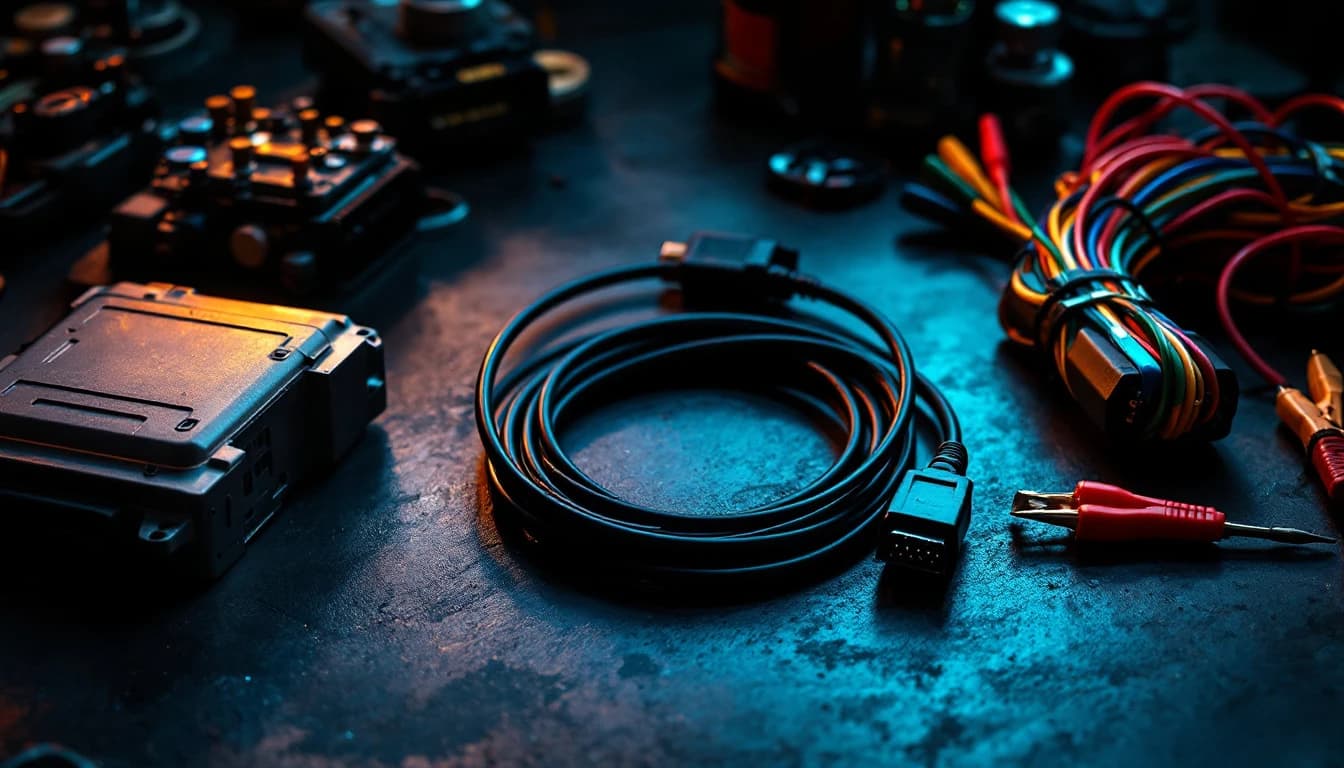
The Tactrix Openport 2.0 is a pass-thru interface: a small green-cased device that plugs into a vehicle's OBD-II port on one end and a laptop's USB port on the other, and translates between the two. It is built and sold by Tactrix, a small company that has been shipping Openport hardware to the tuning community since the mid-2000s, and it sells for on the order of 170 dollars direct.
Two things make it more than a code reader. First, it is a genuine SAE J2534 pass-thru device. J2534 is the standard published by SAE International that defines how a generic interface talks to manufacturer reflash software, so that one cable can, in principle, serve many brands. That standard exists because United States service-information rules — an outgrowth of the on-board diagnostics requirements the Environmental Protection Agency has enforced on light vehicles since the 1996 model year — obligate automakers to make emissions-related reflashing available to independent repairers, not just franchised dealers. The J2534 device is the delivery mechanism for that access.
Second, it is the native hardware for EcuFlash and the open-source RomRaider ecosystem, the community toolchain that made home reflashing of Subaru and Mitsubishi ECUs practical. The cable also has a microSD slot and can log data standalone, without a laptop attached, which sounds like a gimmick until you have left one zip-tied under a dash for a week chasing an intermittent lean condition.
So the honest one-line summary is this: the Openport 2.0 is a legitimate, well-proven window into a controller through its diagnostic port. Everything good about it, and every one of its limits, follows from that sentence.
What it does genuinely well
OEM-subscription reflashing. Most automakers sell short-term access to their own service software, and many of those applications will drive a compliant J2534 interface for module reprogramming. A shop or a determined owner can buy a few days of OEM access, connect an Openport, and load the factory's current calibration onto a supported module — the same file a dealer would load. The National Automotive Service Task Force exists in large part to keep that independent-access pathway working, and the Openport has been a fixture in it for years. For the price of a set of wiper blades and a weekend subscription, that is remarkable capability.
Subaru and Mitsubishi community tuning. This is where the cable earned its reputation. EcuFlash reads and writes the ECU images on a long list of Subaru and Mitsubishi platforms natively — no OEM subscription involved — and RomRaider provides definitions, editing, and logging on the Subaru side. Third-party Mazda tuning suites support the cable as well. The depth of community documentation is the real product here: fifteen-plus years of forum threads mean that on a supported platform, someone has already hit your exact problem.
Logging. High-rate parameter logging through a 170-dollar device, including standalone SD-card logging, is quietly one of the best diagnostic values in the hobby. Plenty of driveability problems are solved by a week of logs, not by parts.
Build quality and longevity. The hardware is reliable in a way the flood of anonymous clone cables is not. Ours have survived years of daily use. That matters more than it sounds: a reflash interrupted by a flaky cable is how healthy modules get bricked, a failure mode we describe at length in our guide to why DIY ECU and module programming fails.
The specialty automotive aftermarket that tools like this serve is not a niche — industry association SEMA has sized it at well over 50 billion dollars a year in the United States (SEMA). The Openport is one of the rare products in that market that delivers more capability than its price implies.
Where it frustrates
An honest review has to include the afternoon you will lose to drivers. The Openport itself is fine; the environment around J2534 is not. OEM reflash applications are built for dealership laptops, and several are still happiest on older Windows configurations, specific Java versions, or 32-bit library paths. Getting a given OEM application to see the Tactrix J2534 DLL is sometimes plug-and-play and sometimes an evening of registry spelunking. The community documents workarounds for most combinations, but nobody should pretend this is a consumer experience.
Second, the cable does nothing to manage power, and reflashing punishes that. A factory reflash can take many minutes, during which battery voltage must stay stable. Dealers hang a programming power supply on the car; a driveway flash rides on whatever the battery has. Voltage sag mid-write is the classic way an OBD reflash turns a working module into a paperweight.
Third — and this is the boundary people miss — the Openport only speaks to a module through its diagnostic interface, and the diagnostic interface only exposes what the manufacturer chose to expose. Fault codes, live data, and sanctioned reflash routines, yes. The immobilizer secrets, the EEPROM identity data, the protected boot areas: no. There is no menu for those because the port was designed so there never would be.
Finally, know that the market is full of counterfeit Openports. The clones are cheap, the firmware is stale, and the failure reports that tarnish the tool's name mostly trace back to them. If you buy one, buy genuine.
The hard wall: what no OBD cable can do
This section is the reason a bench that uses professional tools daily is writing a review of a hobbyist cable, so let us be precise. The following jobs are not hard over OBD. They are impossible over OBD on most platforms, for anyone, with any cable:
- Immobilizer and key data. Security data lives in protected memory, and the handshake that guards it is the whole point of an immobilizer. Where OEM applications do offer key functions through J2534, they require registered security credentials and a fully healthy module — and they still never expose the underlying data.
- Cloning. Copying one module's identity onto another means reading EEPROM or flash contents that the diagnostic session will not serve. That work happens on a bench, on the circuit board, through service pins or the chip itself — the mechanics are laid out in our explainer on how ECU cloning works at the EEPROM level.
- Locked and read-protected controllers. Many late controllers refuse to serve their calibration to anyone. Unlocking them is a bench procedure against the processor itself, which is exactly what our PCM unlocking service does for a flat 250 dollars.
- Bricked-module recovery. A module that no longer completes its boot sequence no longer runs the code that answers the diagnostic port. The cable is talking to a dead phone line. Recovery means direct access to the memory on the bench.
None of that is a criticism of the Openport. It is a statement about where the diagnostic port ends. A modern vehicle commonly carries well over 50 electronic control units networked together, a complexity trend the National Highway Traffic Safety Administration has documented for years, and industry coverage from Car and Driver has put the software content of a modern vehicle on the order of 100 million lines of code. The diagnostic port is a supervised keyhole into that system — by design.
"The Openport is the one cheap tool I tell hobbyists to buy without hedging. It flashes what it is allowed to flash and it logs like a champ. The trouble starts when someone reads a forum post and thinks it will virginize an immobilizer or wake up a dead ECU. That is not what a pass-thru is. Half my bench work arrives after somebody spent a weekend learning that the hard way." — Independent driveability and ECU technician, 20+ years on European and Japanese platforms (anonymized)
Openport 2.0 vs clones vs pro tools vs the bench
| Capability | Tactrix Openport 2.0 (~170 dollars) | Generic clone cables | Pro shop tools (Autel / CGDI class) | Mail-in bench service |
|---|---|---|---|---|
| OEM-subscription reflash | Yes, solid J2534 support | Unreliable — stale firmware, flash risk | Yes on many platforms | Yes — flat 250 dollars per module |
| Community tuning (Subaru / Mitsubishi / Mazda) | Excellent, the native tool | Hit-or-miss | Not their market | Not the right tool for iterative tuning |
| Data logging | Excellent, incl. standalone SD | Poor to none | Good | Not applicable |
| Key / immobilizer functions | No | No | Partial, platform-dependent, needs a healthy module | Yes, including repair-level work |
| EEPROM / identity / cloning | No | No | Limited, often still bench-in-disguise | Yes — core competency |
| Locked / read-protected controllers | No | No | Rarely | Yes, bench unlock |
| Bricked-module recovery | No | No | No | Yes, where the hardware survives |
| Risk of creating a brick | Moderate (voltage, drivers) | High | Low-moderate | Low — regulated bench power, data archived first |
| Cost of entry | ~170 dollars + OEM subscription | 20 to 50 dollars | Often several thousand dollars plus updates | Flat per-job pricing, no tool investment |
Read the table honestly and the pattern is clear: the columns are not competitors. They are different layers of the same stack. The Openport owns the top layer — sanctioned reflashing and logging on a healthy module — at an unbeatable price. The bench owns the bottom layer, where the diagnostic port cannot reach. The expensive pro tablets live in between, and even shops that own them send the bottom-layer work out.
The decision framework: when the cable wins
Buy an Openport 2.0 without hesitation if any of these describe you:
- You tune a supported Subaru, Mitsubishi, or Mazda. There is no better value in the hobby, and the community around EcuFlash and RomRaider is the real asset.
- You want factory-current calibrations on your own cars. A cable plus a short OEM subscription lets you load official updates on supported modules — the same TSB-driven calibration fixes a dealer would charge for. If the update itself is more than you want to manage, that exact job is our stock OEM reprogramming service at a flat 250 dollars, and our dealer versus mail-in comparison walks through when each path makes sense.
- You run a shop doing occasional reflashes. For a low-volume shop, J2534 plus per-job OEM access beats a five-figure factory tool on economics, and the Openport is the proven budget interface for it.
- You diagnose with data. As a logging tool alone it justifies its price.
Do it with discipline: genuine cable, battery maintainer on the car, laptop on mains power with sleep disabled, and never interrupt a write.
The decision framework: when the bench is the answer
Skip the cable — or set it down — when the job is any of the following, because no amount of OBD effort changes the outcome:
- The module holds security data you need moved or repaired. Keys, immobilizer alignment, identity transfer to a donor unit. Proof of ownership is required for all of it, everywhere reputable.
- The controller is locked. If the platform will not serve its data over the port, the unlock happens on the bench.
- The module is bricked. Whether a failed flash or a failed component, recovery means direct memory access.
- You are not sure what is wrong. An intermittent module fault is cheaper to characterize on a powered bench than by parts-cannon. Our bench evaluation service does exactly that at 150 dollars per hour, and the findings roll into whatever repair follows.
The mail-in mechanics are simpler than most people expect. You order the service online; both shipping labels are purchased automatically at checkout, and a prepaid, pre-addressed inbound label arrives by email, so the module goes in a padded box and straight to a carrier. On the bench it is powered from a regulated supply, its existing data is read and archived before anything is written, the work is verified, and it ships back on the return tier you chose at checkout, from 29.95 dollars. No subscriptions, no drivers, no voltage anxiety.
The verdict, scored like a review
Hardware: excellent. Proven, durable, honestly priced. Software ecosystem: very good where it is native (Subaru, Mitsubishi, Mazda suites), workable but fiddly for OEM J2534 applications. Scope: exactly what a pass-thru should be and nothing more. The Openport 2.0 loses points only when it is graded against jobs it never claimed — and much of the negative chatter online is exactly that, or clone hardware wearing its name.
If a star rating helps: for the tuner-hobbyist on a supported platform, this is a five-star purchase. For a shop adding occasional OEM reflash capability, four and a half — the half star lost to the driver circus that is not Tactrix's fault. For anyone hoping it will do immobilizer, EEPROM, unlock, or recovery work: zero stars, because that is not a product weakness, it is a category error.
Frequently asked questions
Is the Tactrix Openport 2.0 worth it in 2026? Yes — for reflashing and logging on supported platforms it remains the best value in a J2534 interface, and the EcuFlash and RomRaider ecosystem around it is still active. It is not worth buying for immobilizer, cloning, or recovery work, because no OBD pass-thru device can do those jobs on most platforms.
Can the Openport 2.0 program keys or immobilizers? No, not as a standalone tool. Key and immobilizer functions live behind manufacturer security access; where OEM software offers them over J2534 at all, it requires registered credentials and a healthy module. Anything at the data level — lost security data, donor-module identity, immobilizer repair — is bench work on the module itself.
Can it recover a bricked ECU after a failed flash? No. A module that no longer boots no longer runs the diagnostic code the cable talks to, so no OBD interface can reach it. Recovery requires reading and rewriting memory directly on the bench, and it succeeds only when the underlying hardware survived whatever interrupted the original write.
What is the difference between the Openport and a cheap clone J2534 cable? The genuine Openport has current firmware, stable drivers, and a decade-plus track record; clones typically carry old firmware and flaky USB hardware. That difference matters most mid-reflash, where a dropout can brick the module being written. A large share of the bad reviews attached to the Openport name trace back to counterfeit hardware.
Do I still need an OEM subscription to use it? For factory reflashing, yes — the Openport is the interface, and the automaker's own application supplies the calibration files and the procedure, usually sold as short-term access. Community tuning on Subaru and Mitsubishi platforms through EcuFlash is the exception, since it needs no OEM subscription at all.
When does mailing the module beat buying the cable? Whenever the job goes below the diagnostic port: locked controllers, immobilizer and identity data, cloning, bricked-module recovery, or a one-time stock reflash you would rather not tool up for. A flat 250-dollar bench job with archived data and regulated power beats a weekend of driver troubleshooting for a job you will do exactly once.
The bottom line
The Tactrix Openport 2.0 is that rare cheap tool with nothing dishonest about it. As a J2534 pass-thru for OEM-subscription reflashing and as the native cable of the Subaru and Mitsubishi tuning world, it delivers far more capability per dollar than almost anything else in automotive electronics, and this bench recommends it inside that scope without reservation.
The scope is the review. Everything through the diagnostic port — sanctioned reflashes, community tunes, logging — the Openport does well. Everything below the port — immobilizer data, EEPROM identity, cloning, locked controllers, bricked modules — it cannot touch, because the port was engineered so nothing could. When your job lives down there, the answer is a bench: evaluation at 150 dollars per hour when the fault is uncertain, a 250-dollar unlock when the controller is read-protected, a 250-dollar stock OEM reflash when you just need the factory calibration without the tooling. Checkout buys both shipping labels automatically and emails you the prepaid inbound label, with return shipping from 29.95 dollars chosen at checkout.
Buy the cable for what it is. Mail the module for what it is not. If you are unsure which side of the line your job falls on, text us the year, make, model, and module part number, and we will tell you straight — including when the honest answer is that a 170-dollar cable and a weekend will do it.
What do you need?
I don't own a J2534
Get a programming kit — configured, shipped, and yours to keep.
Get a Programming KitI already own a J2534
Connect it and have our technicians program the vehicle remotely.
Request Remote ProgrammingI'm not sure
Tell us the vehicles you see and we will say what fits — no charge.
Ask Auto Module LabBuy once. Program with us anytime.
Kits from $199 ship configured and session-ready — add your first programming session in the same checkout, and keep the interface for every job after.