Toyota & Lexus ECU Immobilizer Reset
The problem: the immobilizer is inside the engine computer
Toyota and Lexus built some of the most durable cars ever sold in America. The Camry has been the best-selling passenger car in the United States for most of the past two decades, Consumer Reports and the enthusiast press routinely put Toyota and Lexus at the top of longevity rankings, and it is completely normal to see a 2003 4Runner or a 1999 Lexus LS 400 still doing daily duty. In fact, S&P Global Mobility puts the average age of a vehicle on U.S. roads at more than 12.5 years and climbing — which means millions of these 1997–2010 Toyotas and Lexus are not "old cars," they are simply the car.
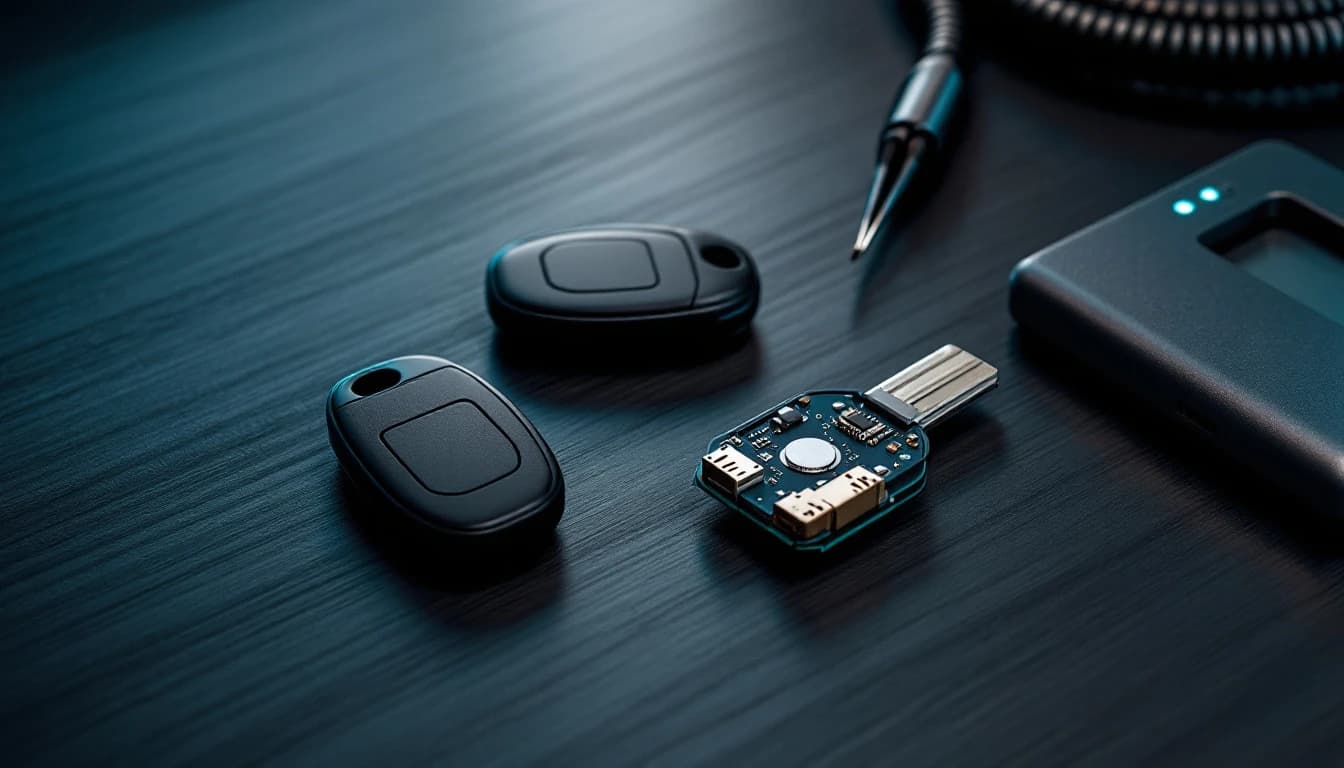
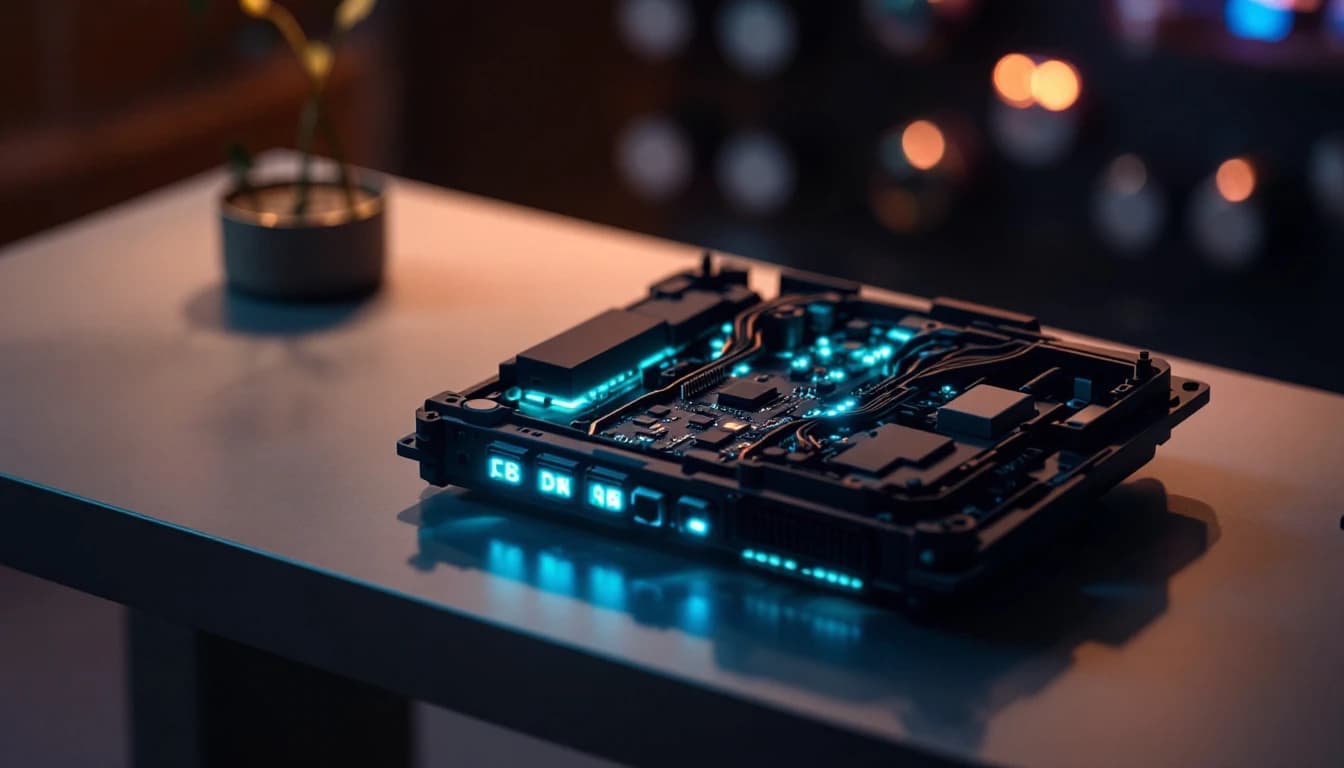
Every one of them from this era with a metal-blade ignition key has an electronic engine immobilizer, and here is the detail that surprises owners, mechanics, and even some locksmiths: on most of these models, the immobilizer is not a separate box. It lives inside the Denso engine ECU (ECM) itself. The transponder chip in the key head is read by an antenna coil around the ignition cylinder, the code is passed to the immobilizer logic, and on most models of this era that logic — and the list of authorized keys — sits in a small EEPROM on the engine computer's own circuit board.
That architecture has a hard consequence. When the authorized keys are gone, the car does not just need "a new key made." The engine computer itself has to be convinced to accept one. And Toyota designed the system so that only an existing master key can authorize adding keys through the on-car procedure. No master key, no additions — no matter what tool is plugged into the OBD port.
Immobilizers like this were spectacularly effective at their actual job. The Insurance Institute for Highway Safety has long credited engine immobilizer technology with large reductions in theft as it spread through the fleet, and the National Insurance Crime Bureau — which still logs roughly a million vehicle thefts a year in the U.S. — notes that older, pre-immobilizer vehicles remain heavily represented on most-stolen lists precisely because the electronic check works. The trade-off shows up twenty years later, when the legitimate owner is the one locked out.
Master key vs valet key: the trap that catches the most people
Toyota's turn-key immobilizer system of this era recognizes two kinds of keys:
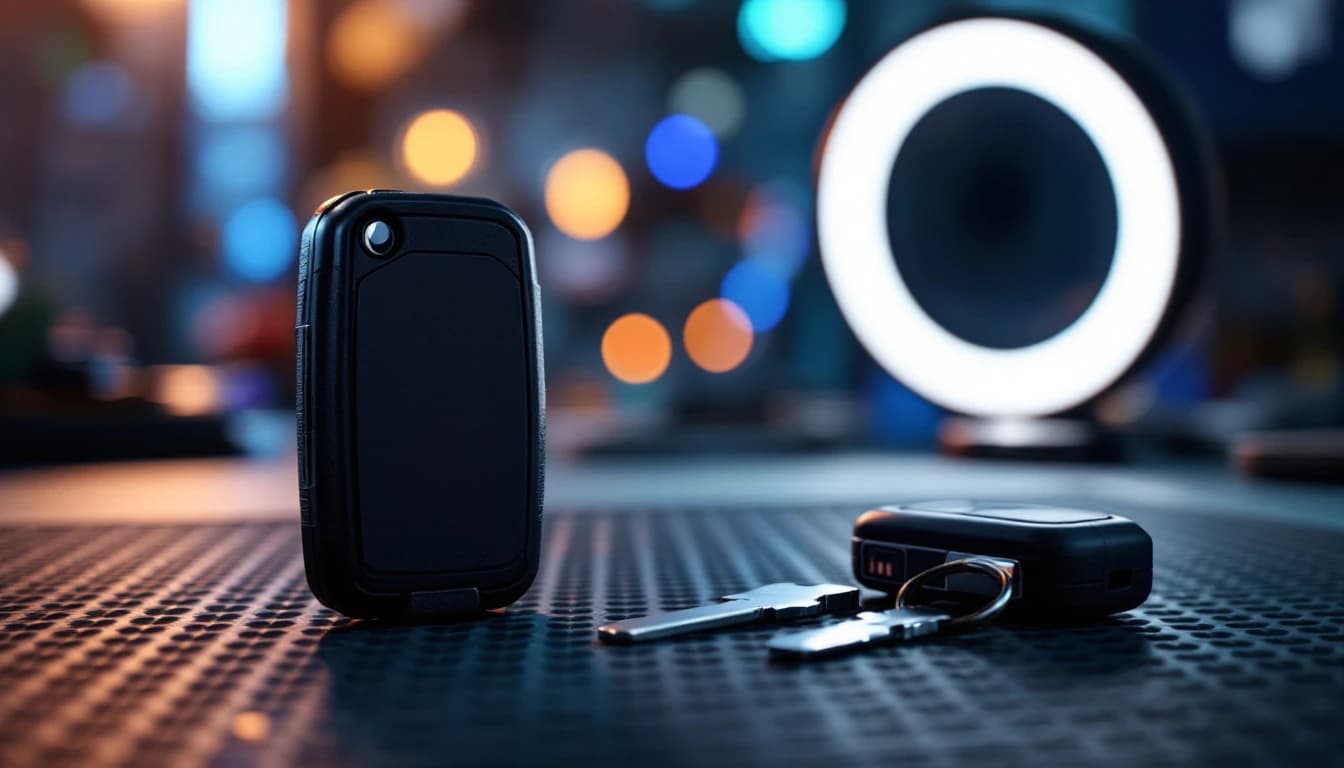
- Master keys — on many models the black-head keys. They start the car and have the authority to register additional keys through the on-car procedure.
- Valet / sub keys — often the grey-head key. They start the car and open the driver door, but they have no authority to add keys. Ever.
This creates what we call the valet-key trap, and it fills our inbox more than true all-keys-lost does. The pattern is always the same: someone buys a clean, used, one-owner Camry or Tacoma, and it comes with one grey key. The car runs perfectly. Months later they go to get a spare made, and the locksmith delivers the bad news — with only a sub key present, the system will not accept new keys, period. The owner is now one dropped key away from a car that cranks and never fires.
As one independent Toyota and Lexus specialist put it:
"The valet-key trap catches more people than genuine all-keys-lost. The car starts fine, so nobody thinks about it at purchase — then two years later they're standing in a parking lot with the only grey key they've ever had, and I have to explain that the immobilizer data is inside the engine computer and no scan tool on earth is going to add a key without a master. At that point the honest options are a dealer ECM at well over a thousand dollars, or resetting the EEPROM on the bench. The bench reset is the same car afterward — factory security and all — for a fraction of the money." — Independent Japanese-vehicle immobilizer specialist, 18+ years on Toyota/Lexus platforms (anonymized)
If your car cranks with the security light flashing and dies immediately — or will not fire at all — our Toyota and Lexus immobilizer no-start guide walks through telling an immobilizer lockout apart from a fuel or ignition fault before you spend money on parts.
Which vehicles this covers: the 4C and 4D transponder eras
The turn-key ECU-based immobilizer family spans roughly 1997 to 2010 (with model-by-model variation on both ends), across two transponder generations:
The 4C era (~1997–2003). The first generation used the fixed-code Texas Instruments 4C transponder chip. Typical applications: Camry, Corolla, Avalon, Solara, Celica, MR2 Spyder, Sienna, early RAV4 and Highlander, 4Runner, Land Cruiser, and on the Lexus side the ES 300, GS 300/400, IS 300, LS 400, RX 300, SC 300/400, and LX 470.
The 4D era (~2003–2010). The second generation moved to the encrypted 4D-67 and 4D-68 crypto transponders. Typical applications: later Camry, Corolla, Tacoma, Tundra, Sequoia, 4Runner, Sienna, Highlander, FJ Cruiser, and the Lexus ES 330, GS 300/430, IS (turn-key trims), LS 430, RX 330/350, GX 470, and LX 470.
Enthusiast outlets like Hagerty and MotorTrend have chronicled how collectible this era has become — the 100-series Land Cruiser, the first-gen Tundra, the LS 400 — and collectibility makes the key problem sharper: these are exactly the cars that get bought at auction, inherited, or pulled out of long storage with no keys at all.
Two boundaries to know. Vehicles newer than roughly 2010–2011 moved to the 80-bit "G-chip" and later "H-chip" systems, which we verify case-by-case. And push-button-start smart-key Toyota/Lexus vehicles are a completely different architecture — their key data lives in a separate certification ECU, handled by our smart-key all-keys-lost and key generation service, not this one. On a handful of turn-key models the immobilizer also sits in a separate transponder ECU behind the dash rather than in the ECM — which is why a technician confirms your exact system from the VIN and a photo of the module label before you ship anything.
What the ECU immobilizer reset actually does
The Toyota/Lexus ECU immobilizer reset is a bench service performed on the module, not the car. Here is what happens on the bench:
- The ECU is opened and the immobilizer EEPROM is read. On these Denso ECMs the key data lives in a small serial EEPROM on the board. The contents are read and backed up first — nothing is written until the original data is safe.
- The key registers are reset. The stored transponder codes — the old, lost keys — are cleared from the immobilizer data, returning it to a fresh state, the same logical condition the ECU shipped from the factory in.
- A new transponder key is programmed in as a master. We supply a new key with the correct chip for your generation — 4C or 4D — and register it directly in the EEPROM data, so the ECU already trusts it before the module ever leaves the bench.
- The blade is cut. Using the door lock or sample blade you include (more on this below), the new key's blade is cut to actually turn your ignition.
- Everything is tested and shipped back together. You get the ECU and a working, cut, programmed master key. Reinstall the module, turn the key, drive.
The crucial point: the factory immobilizer stays fully active. This is not an immo delete. After the reset, the car demands a valid transponder exactly the way it did when new — it simply trusts your new key instead of the lost ones. That matters for insurance, for resale, and for theft protection; the IIHS data on immobilizers is exactly why we recommend keeping the system alive when the goal is a driving car with keys. If you specifically want the immobilizer gone — an engine swap, a standalone harness, a dedicated track car — that is a different service: the Toyota/Lexus Denso IMMO Off, and our immo-off explainer covers when that is genuinely the right call.
Why we need your door lock (or a current blade)
A transponder key has two parts that both have to be right: the chip the immobilizer reads, and the metal blade that physically turns the ignition. The reset handles the chip side entirely on the bench. The blade side needs one thing from you, included in the box with the ECU — either:
- Your driver- or passenger-side door lock cylinder. The cuts of your key are mechanically encoded in the lock's tumblers, and we decode the key code directly from it. Most customers pull the passenger-side lock, so the driver's door keeps working normally while the car is apart. On most of these models the cylinder comes out with the interior door panel off and a single clip or screw — a technician can point you to the procedure for your model.
- Or any current key blade. It does not need a working chip — a plain non-transponder copy from a hardware store, or the worn valet key from the glovebox, gives us the cuts to duplicate.
A blade cannot be responsibly cut from the VIN alone in a mail-in workflow, so one of those two items rides along with the module. If you are in the valet-key trap, this part is easy — your grey key is the cut sample. If you have genuinely nothing, the door lock is the path, and it is a hand-tools job on a Saturday morning.
Reset vs IMMO off vs dealer ECM: the honest comparison
| Approach | What you end up with | Trade-offs |
|---|---|---|
| ECU immobilizer reset (this service) | Your original ECU, factory security active, a new cut master key in hand — $250 flat | Requires shipping the ECU + a door lock or blade; proof of ownership required |
| IMMO off (delete) | Engine runs with no key authentication at all | Right for swaps/off-road builds; removes a theft deterrent, so wrong for a normal street car with keys |
| Dealer replacement ECM | New ECM married to new keys at the dealership | Frequently $1,000–$2,500+ with parts, programming, and the tow; pricing resources like Kelley Blue Book put repair economics in context on a 15–25-year-old car |
| Used ECM from a salvage yard | A "new" no-start — the used ECM still demands the donor car's keys | The classic plug-and-play trap; our used-ECU vs cloning guide explains why this fails |
That last row deserves emphasis because it is the most common DIY attempt: an eBay ECM arrives, gets bolted in, and the car cranks exactly like before — because the replacement computer is loyal to keys that are in another state. The right move with a used ECM is the same bench reset: send it in, we clear the donor's keys and register yours. Same service, same price.
For where $250 sits in the broader landscape of module work, the 2026 module and ECU programming cost guide lays out the whole catalog side by side.
The mail-in workflow, step by step
- Verify first. Text or email your VIN, year/make/model, a photo of the engine ECU label, and proof of ownership. A technician confirms whether your immobilizer lives in the ECM or a separate transponder ECU, confirms 4C vs 4D, and tells you exactly what to pull. Nothing ships until fitment is confirmed.
- Remove the module. Disconnect the battery, unplug the connectors, and unbolt the ECM — on most of these models it is behind the glovebox, a kick panel, or in the engine bay. Fifteen to thirty minutes with hand tools on most applications.
- Pull the door lock or grab a blade. Passenger-side cylinder, or any current key blade.
- Ship it all to PO Box 120241, Arlington TX 76012 if you ship USPS — or 1009 Oakwood Ln # 120241, Arlington TX 76012 if you ship UPS or FedEx (UPS and FedEx cannot deliver to a PO Box) — module in an anti-static bag, padded box, with your name, return address, phone number, and whether this is all-keys-lost, valet-only, or a used-ECM swap.
- Bench work. EEPROM read and backup, registers reset, new key programmed and cut, everything verified on the bench.
- Return with tracking. Module and key ship back via the return option you pick at checkout — Standard $29.95, UPS 2-Day $54.95, or UPS overnight $94.95 (return shipping is paid by the customer). Reinstall, reconnect the battery, start the car.
Because everything happens on a regulated bench supply instead of in a car with a questionable battery and twenty-year-old grounds, the work is verifiable before it ships — the mail-in programming explainer covers why bench work beats parking-lot programming for jobs like this.
One legal note, stated plainly: key and immobilizer work is offered only for legitimate purposes — your own vehicle, a purchased car, a repair, or a restoration where legally permitted. Proof of ownership (title, registration, or bill of sale) is required before any work begins, and compliance context from the National Highway Traffic Safety Administration is a good reminder that the customer is responsible for meeting local, state, and federal requirements for their vehicle and its use.
Frequently asked questions
My older Toyota cranks but won't start and the security light is flashing — is it the immobilizer? Very likely, if the crank is healthy and it never fires. On 1997–2010 turn-key Toyota and Lexus models the immobilizer withholds injection and ignition when it does not recognize the key's transponder, and a flashing security lamp during cranking is the classic tell. The transponder chip in these keys is passive — there is no key battery to blame — so the usual causes are a wrong or badly cloned key, a swapped ECM still loyal to another car, or a failed OBD programming attempt, and the bench reset resolves all three.
I only have the grey valet key. Can't a locksmith just add a key with a scan tool? No — that is the valet-key trap. Only a master key can authorize adding keys through the on-car procedure on these systems, and a valet/sub key has no such authority regardless of the tool used. The fix is resetting the key registers in the ECU itself on the bench, after which the new key we supply is already registered as a master. Your grey key also serves perfectly as the cut sample, so you do not need to pull a door lock.
Do you supply the new key, or do I buy one? A new transponder key with the correct chip — 4C or 4D, matched to your generation — is included with the service, cut and programmed, ready to start the car as soon as the module is reinstalled. You do not need to source a key; you just include your door lock or a current blade so the new key's blade can be cut.
Which door lock should I send, and is it hard to remove? Either front door lock works; most customers send the passenger-side cylinder so the driver's door stays usable while the car is apart. On most of these models it comes out with the door panel off and one clip or screw — a technician can walk you through your specific model. Any current blade (even a chipless hardware-store copy) works instead.
Will this work on a used ECM I bought online? Yes, and it is one of the most common uses. A used ECM still contains the donor vehicle's key data, so your car cranks and never starts. We reset the used ECM's registers and program your new key into it, keeping the factory immobilizer active — the clean alternative to deleting it, and the reason "plug-and-play" ECMs from salvage yards are anything but.
Does this cover push-button-start or 2011+ models? Push-to-start smart-key Toyota and Lexus vehicles are a different architecture — their keys live in a separate certification ECU, handled by our smart-key AKL and key generation service. Turn-key models newer than roughly 2010–2011 use the 80-bit G/H-chip systems and are verified case-by-case from the VIN. When in doubt, send the VIN — verification is free and happens before anything ships.
How much does it cost, and is the immobilizer still active afterward? $250 flat, plus customer-paid return shipping chosen at checkout (Standard $29.95, UPS 2-Day $54.95, or UPS overnight $94.95). And yes — the factory immobilizer remains fully active. The reset changes which keys the ECU trusts; it does not remove the security check. If you want the immobilizer gone entirely for a swap or off-road build, that is the separate Denso IMMO Off service.
The bottom line
On 1997–2010 turn-key Toyota and Lexus vehicles, the keys live in the engine computer — so when the master keys are gone, or a used ECM shows up loyal to another car, no scan tool can talk its way in. The ECU immobilizer reset solves it at the source: the immobilizer EEPROM is reset on the bench, and a new transponder key — correct 4C or 4D chip, cut from your door lock or current blade, programmed as a master — is included, so the car starts the moment the module goes back in. Factory security stays on. It is $250 flat, plus customer-paid return shipping from $29.95, with proof of ownership required.
To get started, see the Toyota/Lexus ECU immobilizer reset service page and text us your VIN and a photo of the ECU label. A technician confirms your exact system — 4C or 4D, ECM-based or separate transponder ECU — before you ship a single thing.
Ship it for the toyota/lexus ecu immobilizer reset (add keys) — $250 flat
Fast Turnaround, return speed your choice at checkout. Prepaid inbound label by email the minute you order.