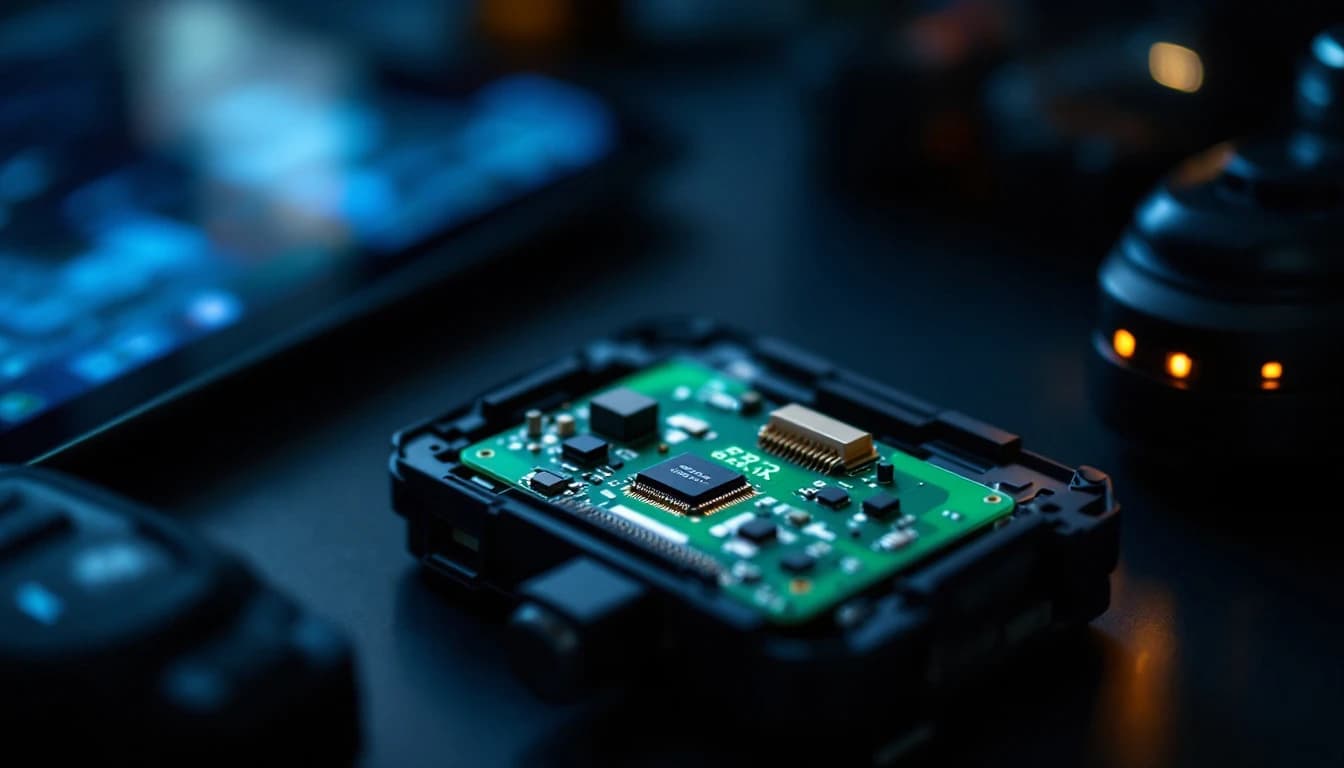
BMW FEM/BDC Bricked During Key Programming: Recovery
The five-minute key job that turns into a dead car
Here is a scene that plays out in locksmith bays and independent shops every week. A 2014 BMW 328i (F30) comes in — all keys lost, or the customer just wants a spare. The tech drops an Autel MaxiIM IM608 onto the OBD port, picks BMW → FEM/BDC → key learn, and starts the procedure. The tablet says it is reading the module. Then the screen freezes, or throws a communication error, or the shop's battery maintainer clicks off and the voltage sags for two seconds.
When the dust settles, the car is dead. Not cranks-no-start dead — dead dead. The dash is dark or lit up like a Christmas tree, the doors will not read the key, the windows might roll themselves down, and the vehicle will not communicate with any tool, factory or aftermarket. The five-minute key job just became a no-start tow.
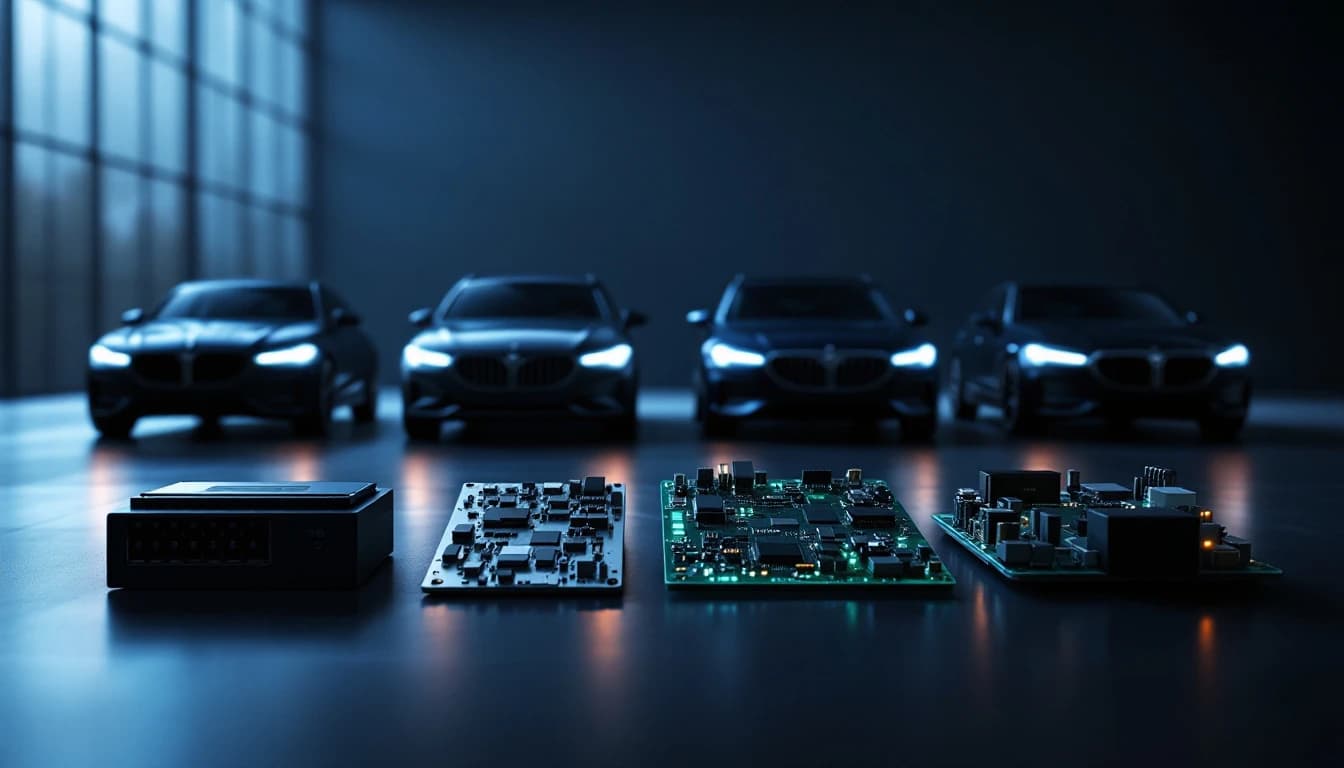
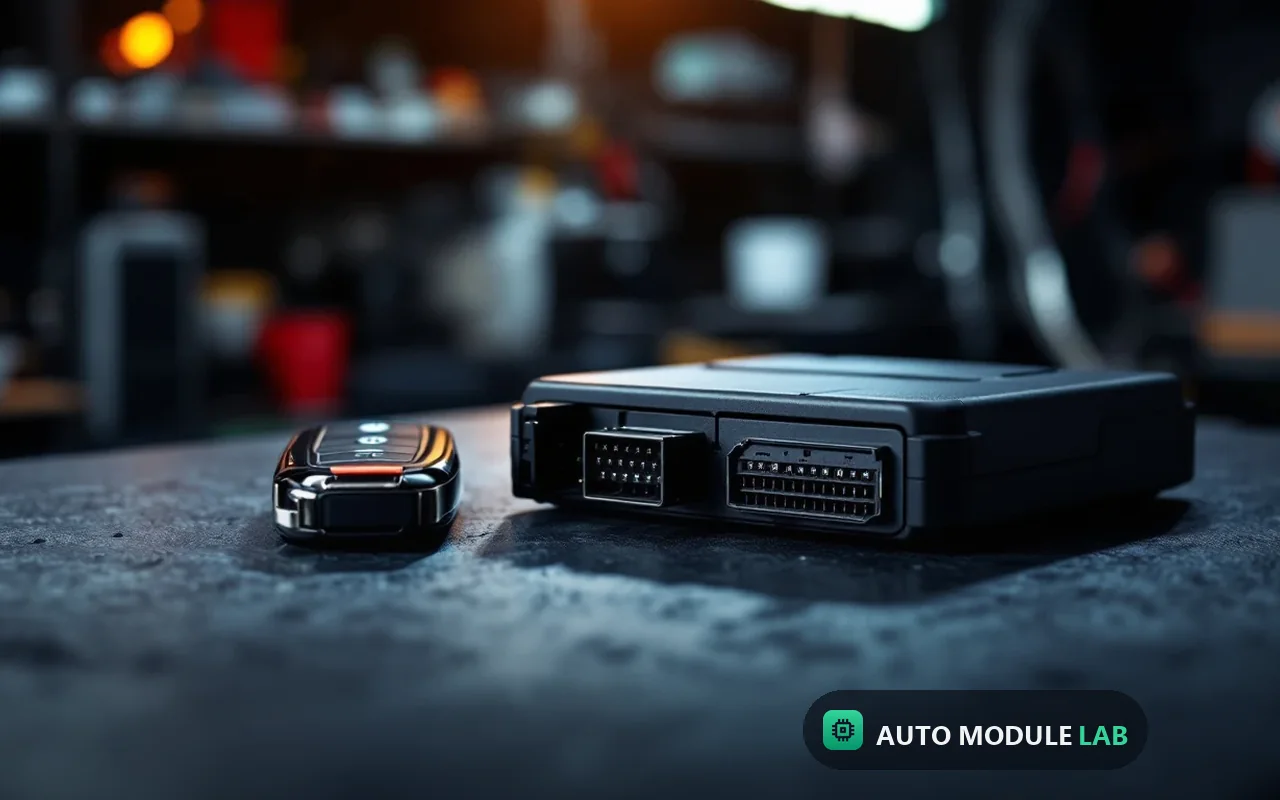
What happened is that the FEM or BDC — the module the tool was talking to — got bricked mid-flash. It is one of the most common, most misunderstood failures in modern BMW work, and it is almost always recoverable if you understand what actually broke. This guide walks through the why and the how, and where our BMW FEM/BDC bricked-module recovery service fits in.
What the FEM and BDC actually do
To understand why a failed key-learn takes down the whole car, you have to understand what these modules are. On F-chassis BMWs — the generation BMW Group rolled out with the F30 3-Series around 2012 and carried across the 1, 2, 3, 4, and X lineups through the late 2010s — the FEM (Front Electronic Module) and its close relative the BDC (Body Domain Controller) are not just another box on the network. They are the central body-electronics gateway.
The FEM/BDC controls and routes:
- The immobilizer. It stores the key data and the rolling authentication that lets the car start. No valid conversation with the FEM/BDC, no engine.
- The CAS function. On earlier BMWs a separate CAS (Car Access System) module handled access and immobilization; on F-chassis that job folded into the FEM/BDC.
- Body and comfort electronics. Central locking, windows, wipers, exterior lighting, comfort access — all gated through this module.
- Gateway routing. It is a bus gateway, so a large share of inter-module traffic passes through it.
That concentration of duties is why bricking it is so dramatic. When a body control module is corrupted, the symptoms cascade across every system it touches — which on an F-chassis BMW is nearly everything. A dead FEM does not politely limp; it takes the car's whole electrical personality with it.
Why key programming bricks the module
Here is the part most car owners — and more than a few technicians — do not realize: to learn a key, an aftermarket tool has to rewrite the module's firmware, twice.
The FEM/BDC will not simply hand a third-party tool its secret key data. So tools like the IM608 use a documented but delicate workaround:
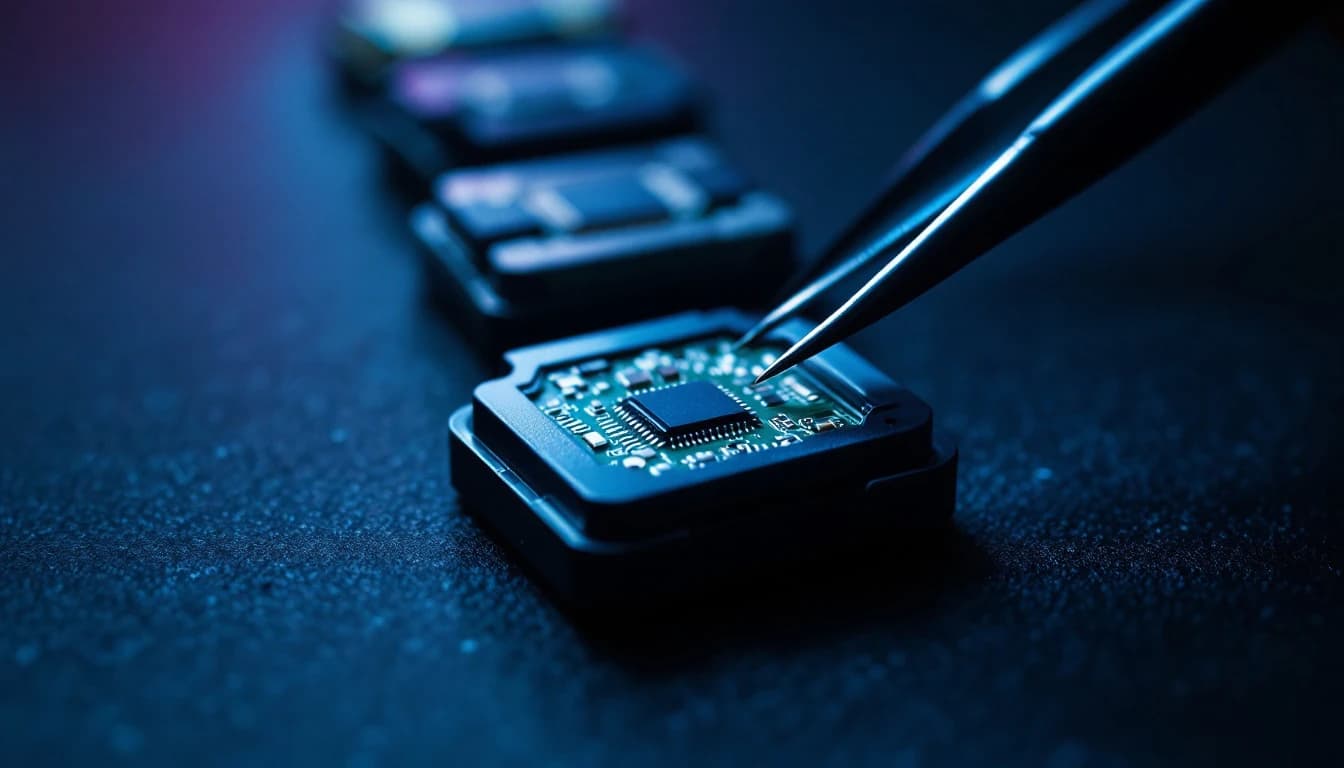
- Read and back up the module's current EEPROM (the small memory chip — commonly a 95128 or 95256 — that holds the key data, ISN reference, and coding).
- Flash the module into a temporary "service mode" — a downgraded or modified firmware state in which the protected data can be read out over the bench or OBD.
- Extract the key/ISN data, compute or write the new key, and prepare the changes.
- Flash the original firmware and data back, returning the module to normal operation with the new key now enrolled.
Every one of those steps is a write to the module. And a microcontroller being reflashed is at its most fragile precisely while it is half-erased and half-written. If anything interrupts the sequence between steps 2 and 4 — the module is stuck in service mode or in a corrupted in-between state, with no valid firmware to boot. That is a brick.
The usual triggers, in rough order of how often we see them:
- Voltage instability. A reflash demands a rock-steady supply — most tool makers specify a stable 12.5–13.5 V and a proper power supply, not a tired shop battery. A brief sag during the write corrupts it. SAE International, whose J2534 standard defines how pass-through reprogramming is supposed to work, is explicit that stable power and an uninterrupted link are preconditions for safe module flashing — guidance that applies just as much to immobilizer work as to emissions reprogramming.
- A crashed or disconnected tool. The tablet locks up, the USB/OBD cable is bumped, or the session times out mid-write.
- The wrong dump written back. On multi-module jobs it is frighteningly easy to write Car A's EEPROM dump into Car B's module, or to restore a pre-edit backup over a post-edit state. The module boots into nonsense.
- A bug or wrong procedure. An out-of-date tool version, the wrong module variant selected, or an interrupted "downgrade" step.
None of this means the tools are bad. The IM608 and its peers are legitimate, capable machines used by professionals every day. It means the FEM/BDC key-learn is an intrinsically high-risk procedure — you are firmware-flashing the single most central module in the car, on the car, often on a weak battery — and the failure rate is never zero.
"People blame the tool, but the tool did exactly what these jobs require — it flashed the module. The risk is baked into the procedure, not the brand on the tablet. A FEM key-learn is open-heart surgery on the car's nervous system, and sometimes the patient codes on the table. What matters is whether you kept the original EEPROM dump, because with that in hand we can almost always bring it back." — a master automotive locksmith (ALOA-credentialed) on our bench team
Why roughly 80% come back
When a bricked FEM/BDC lands on our bench, the first question is not "can we flash it again" — it is "what state is the memory in." A brick is almost never physical damage. The silicon is fine; the contents are corrupted. That distinction is the whole reason recovery works.
We work at the chip level, not through the OBD port that just failed. By reading the EEPROM and flash memory directly on the bench, we can:
- Rebuild the correct firmware image for that exact module variant.
- Repair or reconstruct the EEPROM — the coding, the vehicle order, the ISN reference, and the key data — from what survives on the chip, from the module's own redundant data structures, and from any backup dump the failed tool saved.
- Write it all back in the correct order and verify the module boots, communicates, and reports its keys before it ever leaves the bench.
In our experience, about 8 out of 10 bricked FEM/BDC modules are fully recoverable this way — original data intact, so the customer's existing keys keep working and nothing has to be re-enrolled. That is a first-party figure from our own bench, not a manufacturer spec, and the honest part is the other 20%: some bricks are too far gone — the memory took too many bad writes, or someone kept hammering the module with retry after retry after the first failure, each attempt overwriting a little more of what we needed.
That last point is the single most important thing a shop can control. Every additional programming attempt after the first failure lowers the odds. The instinct is to try again, try a different tool, try the "repair" function — and each of those is another write to an already-wounded module. If a FEM/BDC job fails, the right move is to stop, disconnect, and ship the module while its memory is as intact as it will ever be. Whether or not your tool saved that first backup dump often decides which side of the 80/20 line you land on — so if the Autel (or VVDI, or ACDP) tablet wrote a backup file, that file is gold. Email it with the order.
When recovery is not possible: replacement adaptation
Sometimes the data genuinely cannot be saved. That is not the end of the car — it is the second path, and on our recovery service it is covered by the same $350 flat rate.
If your original FEM/BDC is unrecoverable, we take a replacement module — new, or a used donor you supply — and adapt it to your car. "Adapt" means virginizing the replacement (clearing whatever car it was married to) and writing your vehicle's identity and immobilizer data into it so it behaves as your car's own module. For that, we need the one piece of data that lives outside the dead module: the ISN (Individual Serial Number), the cryptographic value that ties the immobilizer to the engine.
There are two ways to get the ISN, which is why we ask you to ship more than just the bricked module:
- From the DME. The engine control module stores the ISN. If you ship your DME along with the bricked FEM/BDC, we read the ISN from it and use it to marry the replacement module to the car. This is the cleanest path and the reason we strongly recommend sending the DME up front.
- From a previously working key. If a key that once started the car still exists, the ISN and key data can often be extracted from it, giving us the same information the dead module used to hold.
With the ISN in hand, the replacement FEM/BDC is adapted, your key is programmed to it, and the car starts. The catch is honesty about the tradeoff: after an adaptation, your existing spare keys may need to be re-added, and the job depends on getting a valid ISN from one of those two sources. If the data cannot be recovered and neither a readable DME nor a working key is available, there may be nothing to build from — and in that case we tell you before doing any further work rather than charging for a rescue we cannot complete. The mechanics of getting a used or replacement module to accept a car's identity are the same family of work we cover in our BMW all-keys-lost cost guide; the difference here is that we are cleaning up after a failure, not starting fresh.
This is not the same as key programming
It is worth drawing a bright line, because the two services get confused constantly and the price difference is not arbitrary.
Our standard BMW FEM/BDC key programming service ($150) programs a key on a healthy module. You ship the FEM/BDC and the DME, we read the ISN, enroll the key, done. The module works before it arrives and works after it leaves.
The bricked-module recovery service ($350) starts with a module that is already dead. The work is fundamentally different and substantially deeper: diagnosing exactly what the failed flash corrupted, rebuilding firmware, reconstructing EEPROM data, and — if the data cannot be saved — sourcing the ISN and adapting a replacement. It is bench repair and data forensics, not a key enrollment. That is what the $350 flat rate reflects, and it still comes in far below the alternative.
What the dealer alternative costs
Take the recovered module out of the equation and the numbers get ugly fast. A dealer's answer to a bricked FEM/BDC is rarely "we'll fix your module" — it is "we'll replace it," which on these cars means a new module, dealer programming tied to your VIN, and in an all-keys-lost scenario, new keys on top. Repair-cost aggregators like RepairPal routinely put body-control and immobilizer-related module replacements well into four figures once parts, dealer programming labor, and keys are stacked up — and that is before a tow, since the car does not move on its own.
There is also the matter of time. A bricked module is a car that cannot leave under its own power, and a dealer appointment plus special-order module plus programming can stretch to a week or more. A bench recovery — module out, shipped overnight, typical 24-hour turnaround, shipped back — collapses that timeline and, critically, preserves the original data so the existing keys survive. When the data is recoverable, you are not buying new hardware or new keys at all; you are un-breaking what you already own.
Why these cars are worth saving
It is fair to ask whether a decade-old BMW justifies the effort. The market answer is increasingly yes. Modern vehicles are staying on the road longer than ever — automotive research firm iSeeCars has documented how many mainstream models now routinely cross 200,000 miles, and the broader fleet keeps aging as owners hold cars well past the ten-year mark. An F30 328i, an F32 435i, an F15 X5 — these are exactly the vehicles now landing in the second- and third-owner market, out of warranty, where a $350 module recovery versus a four-figure dealer replacement decides whether the car stays on the road.
The professional-trade context matters too. Immobilizer and key work sits inside a real credentialing ecosystem — the Associated Locksmiths of America (ALOA) and allied bodies maintain standards and training precisely because this work touches vehicle security and demands both skill and accountability. A bricked FEM/BDC is not a job for guesswork; it is a job for someone who works at the memory level, verifies before shipping, and is honest about the odds.
What to ship (and what to do first)
If you are a car owner or a shop staring at a dead F-chassis BMW after a key job, here is the practical checklist:
- Stop programming. Do not retry, do not switch tools, do not run the "repair" routine. Every write lowers the recovery odds. Disconnect the tool.
- Find the backup dump. If the tool that failed saved an original EEPROM/flash backup (Autel tablets usually keep one), locate that file. Email it with your order number — it dramatically improves recovery odds.
- Pull the bricked FEM/BDC and pack it padded, connectors protected.
- Include the DME from the same car. It is the ISN source if the data proves unrecoverable, and shipping it now avoids a second round-trip.
- Include a previously working key if one exists — an alternate ISN/key-data source.
- Add your VIN, name, return address, and phone, plus a printed copy of your order confirmation.
Ship USPS to PO Box 120241, Arlington TX 76012, or UPS/FedEx to 1009 Oakwood Ln # 120241, Arlington TX 76012 (UPS and FedEx cannot deliver to a USPS PO Box). Return shipping is chosen and paid at checkout. We diagnose, tell you which path your module is on, and typically turn it around in 24 hours on the bench.
The bottom line
A FEM or BDC bricked during key programming feels catastrophic — a dead car, an angry customer, a tool throwing errors — but it is one of the most routinely fixable failures in modern BMW work. The module is not physically broken; its memory is scrambled, and memory can be rebuilt. Roughly 80% of the time we restore the original data and the car wakes up exactly as it was, existing keys and all. The rest of the time, a replacement module adapted with the DME's ISN or a working key gets it running again. Either way, the fix is a fraction of a dealer replacement — provided the module reaches the bench before it gets written to death.
If you are mid-job right now: put the tool down and start a recovery order. The odds are on your side, and they are best the moment you stop trying to fix it yourself. For the sibling case on an earlier BMW — a footwell module bricked the same way — see our BMW FRM3 bricked-recovery walkthrough.
Ship your module today
Flat-rate pricing, typical 24-hour bench turnaround, return speed your choice at checkout. Most jobs back on your bench within a week.