BMW EWS2 vs EWS3 vs EWS4 — Which One Do You Have?
Which EWS generation does my BMW have?
The short version: BMW's EWS immobilizer runs in four broad generations. EWS2 is generally mid-1990s cars, EWS3 covers the late 1990s into the early 2000s, EWS3.3 is the later refinement of that family, and EWS4 is where the immobilizer merges into the car's central access system. Chassis and year narrow it down. The part number on the module label is the only definitive answer, and that is why we ask for a photo of it before anything ships.
That caveat is not a hedge. BMW rolled changes in on build date rather than model year, ran different configurations for different markets, and overlapped generations across chassis families for years at a time. Two E39s built four months apart can carry different immobilizer hardware. Anyone who tells you a chassis code alone determines your EWS version is guessing.
What EWS actually is
EWS stands for Elektronische Wegfahrsperre — electronic drive-away protection. It is BMW's factory immobilizer, and it is a three-way conversation rather than a single part.
- The key carries a transponder. On earlier cars this is a passive chip in the head; on later cars it is a more capable device with its own rolling counter.
- The ring antenna around the ignition lock energizes the transponder and passes its response to the EWS module.
- The EWS module decides whether that key is authorized for this car, and if it is, releases the starter and passes a value to the engine controller.
- The DME — the engine controller — will not run the engine unless the value it receives matches the one it is expecting.
That last handshake is the part people trip over. The engine controller and the immobilizer share a secret. On BMW that value is usually called the ISN, and once you understand that a DME and an EWS are effectively married by a number stored in both, most of the confusing symptoms make sense. A used DME from another car cranks the engine and never fires because it is expecting a different number. A used EWS module does the same thing for the mirror-image reason.
The reason all of this exists is straightforward. Factory immobilizers are among the most effective anti-theft measures ever deployed on production cars, and research from the Insurance Institute for Highway Safety has for years associated immobilizer adoption with sharp declines in theft losses — commonly reported as reductions of roughly a third or more on equipped models. Federal anti-theft rulemaking administered by NHTSA has been pushing in the same direction since the 1980s, more than 30 years of parts-marking and theft-prevention regulation. The engine-management side of the handshake came largely from Bosch, whose Motronic family has been in production in one form or another for well over 40 years and sits behind the DME in most of the cars discussed here.
Reading the label — the only definitive method
Before the generation-by-generation walkthrough, here is the identification method that actually works.
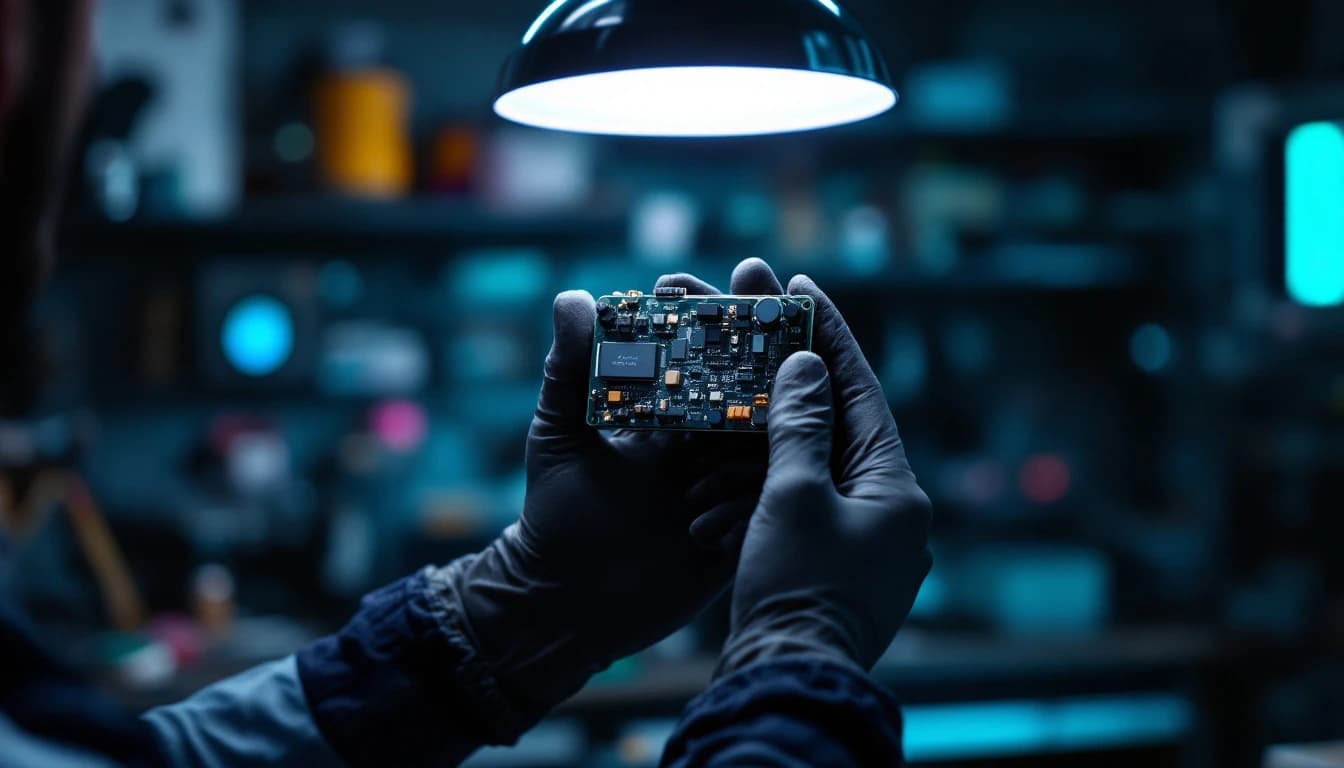
- Find and photograph the module label. Every EWS module carries a label with a BMW part number, usually an eleven-digit number, plus a supplier code and often a hardware or index revision. That number is what we check.
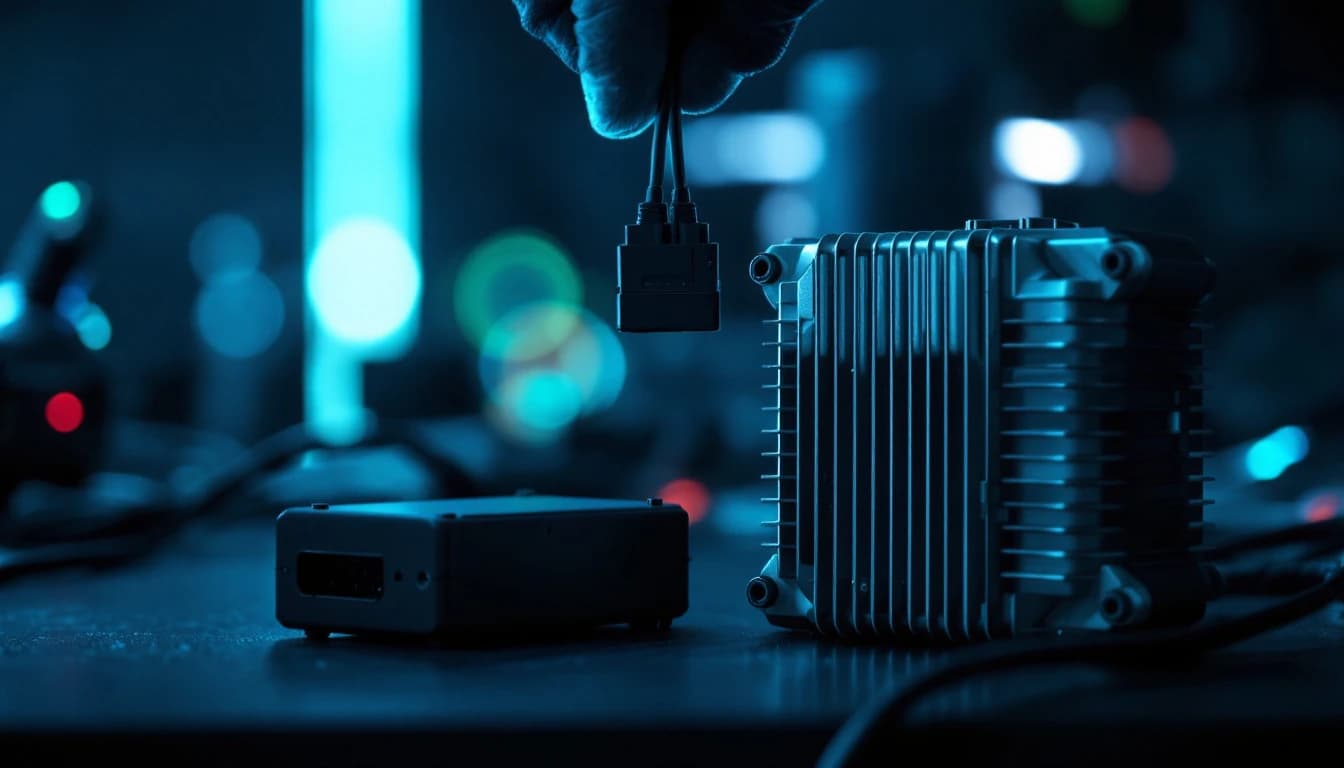
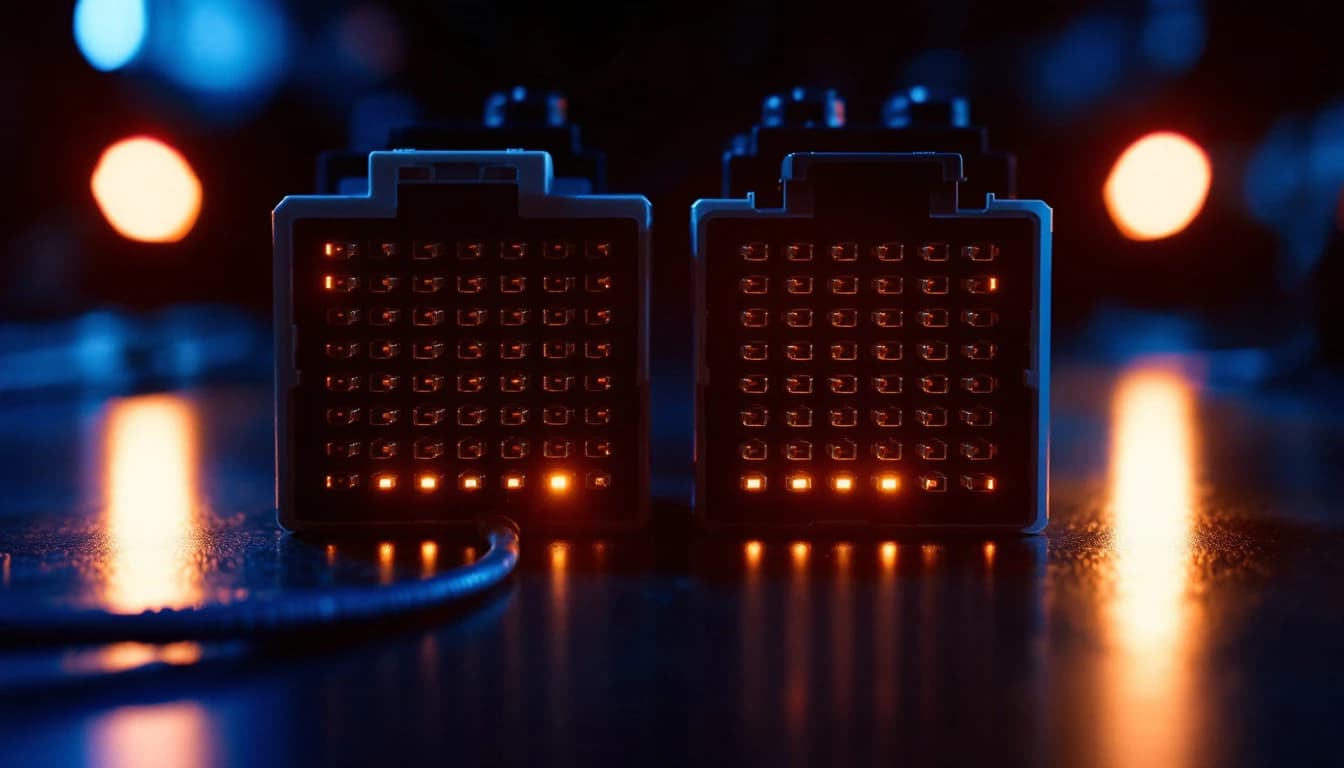
- Note the connector. Pin count and connector shape differ between generations and are a useful cross-check when a label has faded.
- Note the key. An older two-track blade with a simple black head points one direction; a diamond-shaped or later-style head with an integrated remote points another. This is a hint, not proof, because key heads get replaced.
- Check what the car does on a failed start. A car that cranks strongly but will not fire, with an immobilizer or car-and-key symbol on the cluster, is behaving like an EWS-to-DME mismatch. A car that will not crank at all is often an EWS starter-release fault instead.
Chassis and year give you a working hypothesis. The label confirms it. If you cannot read the label — corroded, painted over, or the module came to you loose in a box — a bench read will identify the hardware directly, which is one of the things the $150 bench evaluation is for.
The generations, one at a time
EWS2
EWS2 is generally the mid-1990s implementation, commonly seen across E36, E38, E39 and E31 cars of that era. The module is typically a small black box mounted under the dash, most often behind the glovebox or up under the passenger-side trim, and on some applications closer to the steering column.
From a bench perspective EWS2 is the friendliest generation. Its data lives in a serial memory device that reads reliably, key slots are straightforward, and the ISN relationship with the DME is well understood. Adding a key, recovering from all keys lost, cloning a failed module onto a donor, and matching a used DME to an existing EWS are all realistic outcomes on this generation.
EWS3
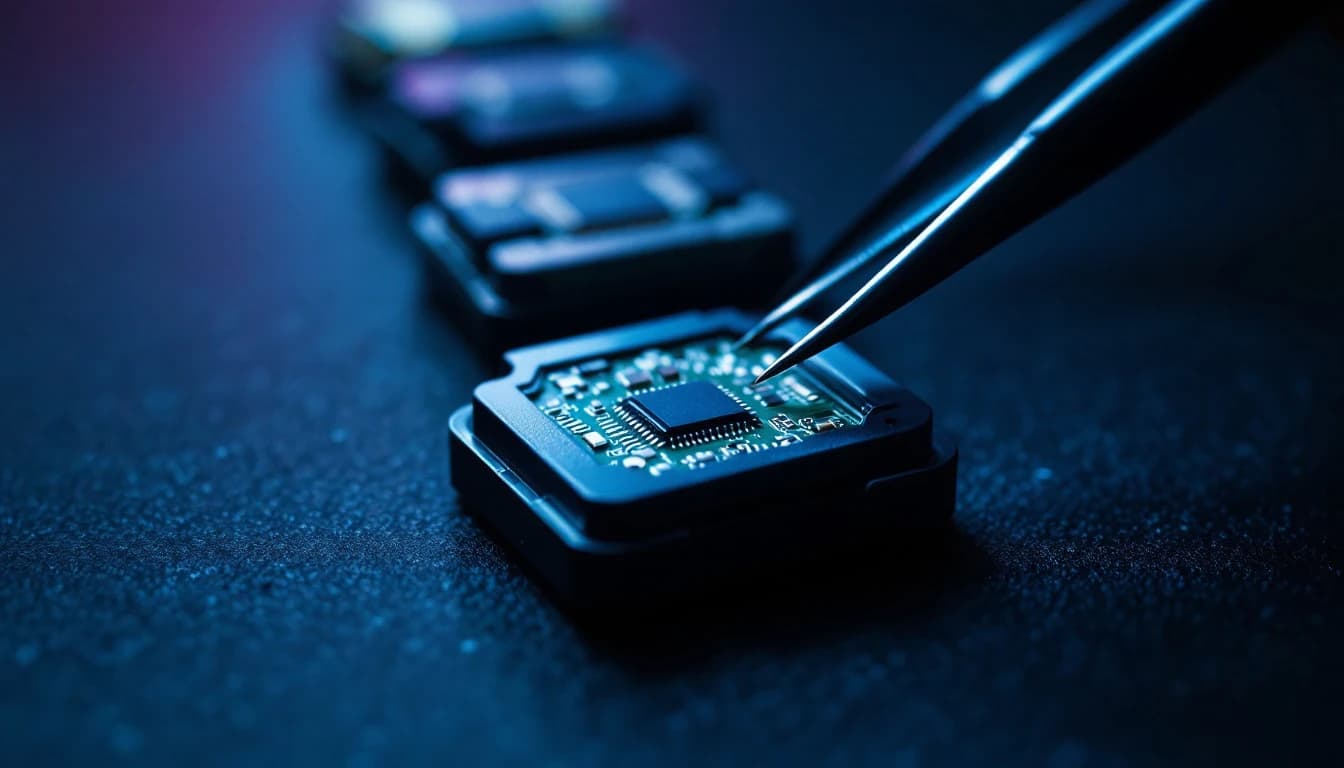
EWS3 is broadly the late-1990s into early-2000s implementation, commonly associated with later E38 and E39, E46, E53 and E52 applications. The physical module is generally similar in size and mounting to EWS2 — behind the glovebox or in a kick panel is the usual place — but internally it moved to a microcontroller with on-chip memory rather than a simple external EEPROM.
That change matters. The data is still readable on the bench with the right tooling, but it is not a two-wire read on a chip you can lift with a clip. The workflow is more involved and the module usually has to come out. In exchange, the same outcomes remain on the table: key addition, all-keys-lost recovery, cloning, and DME matching.
EWS3.3
EWS3.3 is the later refinement within the same family, generally appearing on the back end of the E46 run and across E53 and E83 X-chassis and E85 Z4 applications. Externally it is easy to mistake for an EWS3 module; the part number and index are what separate them.
The practical difference is in the detail of how key data and counters are laid out and how tightly the module guards its contents. It remains a bench-readable generation, and BMW's own model history — the kind of chassis-by-chassis record maintained by BMW of North America — is a reasonable sanity check when you are trying to work out whether a given car falls at the end of an EWS3 run or the start of EWS3.3.
EWS4
EWS4 is the generation where the immobilizer stops being a standalone box and becomes part of the car's central access system. On E60, E63, E65 and E66 applications you will hear the same hardware called EWS4 by some technicians and CAS or CAS1 by others, and the trade genuinely uses those terms interchangeably. The module typically moves to the driver's side, up under the dash near the steering column, and it takes over functions well beyond immobilizing: key recognition, start-stop authorization, and on later cars the electronic steering lock.
This is where the work changes character. The immobilizer relationship is now bound into a module that also handles vehicle access, so key work, module replacement and DME matching all become CAS-family procedures rather than classic EWS procedures. Our BMW CAS clone and repair service covers that side, and the same tooling extends to MINI CAS, FRM and DME cloning on the related platforms.
Generation comparison
Everything below is phrased as typical and general on purpose. Chassis and era boundaries overlap by market and build date, and the module label remains the definitive answer.
| Generation | Typical era | Commonly seen on | Where the module usually lives | Realistic bench outcomes |
|---|---|---|---|---|
| EWS2 | Generally mid 1990s | E36, E38, E39, E31 of that era | Under the dash, commonly behind the glovebox | Key addition, all-keys-lost recovery, clone to donor, DME ISN match, board-level repair |
| EWS3 | Generally late 1990s to early 2000s | Later E38 and E39, E46, E53, E52 | Behind the glovebox or a kick panel | Key addition, all-keys-lost recovery, clone to donor, DME ISN match, repair on many units |
| EWS3.3 | Generally early to mid 2000s | Late E46, E53, E83, E85 | Behind the glovebox or lower dash trim | Key addition, all-keys-lost recovery, clone to donor, DME ISN match |
| EWS4 (often called CAS or CAS1) | Generally mid 2000s | E60, E63, E65, E66 | Driver's side, under the dash near the column | CAS-family key work, clone or virginize a donor CAS, DME ISN read and match |
What is actually stored inside the module
Understanding what lives in the EEPROM explains why certain jobs are possible and others are not.
- The ISN. The value the DME and the immobilizer share. This is the single most important number in the system and the reason a used DME can be brought onto your car rather than scrapped.
- The VIN. Stored in the module and used for cross-checks against other controllers.
- Key slots. A fixed number of positions, each either free, occupied by an active key, or marked as used or disabled. This is why "I only have two keys, why can I not just add a third" sometimes has an unhappy answer — a slot that was burned by a previous key cannot simply be reclaimed by plugging in a new blank.
- Rolling counters. Each key carries a counter that increments as it is used. If a counter drifts too far out of the window the module expects, the module stops accepting the key. This is the mechanism behind a key that works intermittently and then stops entirely.
- Transponder identifiers. The specific chip identity for each authorized key.
- Coding and index data. Configuration bytes that describe the variant, market and options of the car the module was built for.
The first item on that list is why a bench read is worth doing even on a module you intend to replace. Once the ISN is recovered, options open up that are simply gone if the module is thrown away.
People bring me a car with a used engine computer already bolted in, convinced the seller shipped them a bad part. Nine times in ten the DME is perfectly healthy. It is holding a number from the car it came out of, and nobody has read the number out of the car's own immobilizer and put the two in agreement. — Independent European-marque diagnostic technician, 17+ years (anonymized)
What each job actually involves
Adding a key. The module is read, a free key slot is identified and written, and a transponder is programmed to match. The blade still has to be cut correctly for the locks. This is the most common EWS request and it is generally realistic across EWS2, EWS3 and EWS3.3. It is covered by our BMW EWS key programming service at $250, and the EWS key programming walkthrough goes into the process in more detail.
All keys lost. With no working key, the module has to be read directly on the bench and a key written from the recovered data. This is exactly why an in-car scan tool often cannot help — the tool needs an authorized key to establish a session in the first place, and the bench does not. The module comes out and comes to us.
Cloning to a donor. If your module is physically failing but still readable, its contents can be written onto a healthy donor of the same generation and part number. The donor then behaves as your original: same ISN, same keys, same VIN, no changes needed at the DME. This is the highest-success path available and the reason a failing module is worth shipping rather than binning.
Matching a used DME. This is the job that saves the most money and is the least understood. If you have bought a used engine controller, the ISN can be read from your car's immobilizer and written into the DME so the two agree, or the relationship established in the other direction depending on platform. That is what the DME ISN read and match service does, at $250, and it turns an apparently dead used part into a working one.
Repairing a damaged module. Water ingress from a blocked cowl drain, a leaking windscreen seal, or a soaked footwell reaches modules mounted low in the cabin. Corrosion on the board and cracked solder joints from years of heat cycling are both common. Many units are repairable at board level; some are not. Where a unit is beyond repair, the recovered data still allows a donor to be brought up as a clone, which is why the read comes first and the repair decision comes second.
Delete, briefly. On some platforms, particularly around engine swaps and orphaned applications, the immobilizer relationship can be removed from the DME side instead. That is a genuinely different job with its own considerations, it is legitimate repair and off-road territory only, and it requires documented proof of ownership like everything else here. We cover it in full in the DME and EWS delete bench programming guide, and the corresponding service page sits at $250. It is one option among several, not the default answer, and for most owners with a healthy car and a key problem it is not the right one.
Why this matters more every year
These cars are no longer disposable. Valuation coverage from Hagerty has tracked steady appreciation in 1990s and early-2000s BMW values across more than 10 years, and the enthusiast press including Car and Driver has documented the same shift in how these chassis are regarded. A twenty-five-year-old E39 that was a $3,000 car a decade ago is frequently worth several times that today in good condition, which changes the arithmetic on a $250 bench job entirely.
At the same time, dealer support for a three-decade-old immobilizer is thin. Independent bench work exists precisely in that gap. The underlying diagnostic and reprogramming protocols were standardized through SAE International across more than 30 years of specification work, which is what makes it possible for one properly equipped bench to service a span of platforms this wide.
One process note worth borrowing from another field: every read is archived before anything is written. The principle of imaging first and working only on the copy is more than 20 years old in the digital forensics guidance published by NIST, and it applies just as well to a twenty-year-old immobilizer as to a hard drive. If a write goes sideways, the original data still exists.
Ownership, and what you send
Proof of ownership is required for all key and immobilizer work. A registration, title, or equivalent documentation matching the VIN. This is not a formality, it is not negotiable, and it applies to every job on this page including a simple added key. Locksmiths and shops working on a customer's vehicle can document the chain the normal way.
What to send:
- Your VIN, the module part number, and a photo of the label — before anything ships. That is what confirms which generation you actually have and whether the job you want is realistic on it.
- The module itself, in an anti-static bag inside a rigid, well-padded box. Crushed connector pins are the most avoidable shipping failure there is; the remove, package and ship guide covers it properly.
- The DME as well, if the job involves matching or an ISN relationship, and any donor module you have sourced.
Work is typically completed within a 24-hour bench turnaround once your parts arrive and are verified, and shipping instructions arrive by email after checkout. Return shipping is chosen by you: standard at $29.95, UPS 2nd Day Air at $54.95, or UPS Next Day Air at $94.95.
Frequently asked questions
How do I tell whether my BMW has EWS2, EWS3 or EWS4? Start with chassis and build date to get a working hypothesis, then confirm with the part number printed on the module label — that number is the only definitive answer. Generally, mid-1990s E36, E38 and E39 cars run EWS2; late-1990s to early-2000s cars including E46 and E53 run EWS3 or EWS3.3; and mid-2000s E60, E63 and E65 cars run EWS4, which most technicians call CAS.
Where is the EWS module located? On EWS2, EWS3 and EWS3.3 it is generally under the dash on the passenger side, most often behind the glovebox or tucked into a kick panel or lower trim. On EWS4 and CAS cars it typically moves to the driver's side, up under the dash near the steering column, because the same module now handles vehicle access and start authorization rather than just immobilizing.
Can you add a key if I still have one working key? Yes, on most EWS generations that is a routine bench job. The module is read, a free key slot is written, and a transponder is programmed to match your car. The blade still needs to be cut for your locks. The limiting factor is slot availability — a position previously burned by a key that was disabled cannot always be reclaimed, which is something the read tells us immediately.
What happens if I have lost all my keys? All-keys-lost is recoverable on most EWS generations, but it becomes a bench job rather than an in-car one. Without an authorized key, a diagnostic tool cannot establish a session with the module, so the module has to come out and be read directly. From the recovered data a working key can be written. Proof of ownership is required before any all-keys-lost work begins.
Can a used DME from another BMW be made to work on my car? Usually yes, and this is one of the most valuable things a bench can do. The engine controller and the immobilizer share a value called the ISN, and a used DME cranks but will not fire simply because it is holding the wrong number. Reading the ISN and bringing the two into agreement is a $250 service, and it turns an apparently useless used part into a working one.
My EWS module got wet — is it repairable or do I need a new one? Many water-damaged and heat-fatigued modules are repairable at board level, and that is worth trying because a repaired original needs no reprogramming of the DME relationship at all. Where a unit is genuinely beyond repair, the data recovered from it can usually be written onto a healthy donor of the same part number, so the module still has value even when the hardware does not.
Does the module have to be removed, or can this be done in the car? It depends on the job. Adding a key to a healthy module with a working key present can often be handled in the vehicle by a properly equipped locksmith. All-keys-lost recovery, cloning to a donor, ISN recovery from a dead module, and any board-level repair all require the module on the bench, where it can be powered on a regulated supply and read directly.
The bottom line
EWS generation is not trivia — it is the variable that decides what is possible. EWS2, EWS3 and EWS3.3 are all bench-friendly generations where key addition, all-keys-lost recovery, cloning onto a donor, and matching a used DME are realistic outcomes. EWS4 and the CAS family it becomes are a different workflow with different tooling, but the same underlying logic: read first, understand the ISN relationship, then decide.
Chassis and year get you close. The part number on the label settles it. BMW changed hardware on build date rather than model year, so treat every generation-to-chassis mapping in this guide as a starting point rather than a verdict.
Bench pricing is flat: $250 for EWS key programming, $250 for CAS clone and repair, $250 for DME ISN read and match, $250 for MINI CAS, FRM and DME cloning, and $150 for a bench evaluation when nobody is certain what failed. Proof of ownership is required for every key and immobilizer job, without exception. Return shipping is yours to choose at checkout, from $29.95. Text us the VIN and a clear photo of the module label, and you will get a straight answer on which generation you have and which of those prices actually applies.
Ship it for the bmw ews key programming (mail-in) — $250 flat
Typical 24-Hour Turnaround, return speed your choice at checkout. Prepaid inbound label by email the minute you order.