Jump Start Fried Your Car Computer? What Can Be Saved
What actually happens electrically during a bad jump
A healthy 12-volt automotive electrical system is a calm place, and a bad jump start is a lightning storm inside it. To understand what got damaged and whether it can be saved, you need to know which kind of storm hit, because the four common ones destroy electronics in different ways.
Before the mechanisms, one piece of context on the stakes. A modern vehicle carries well over 50 electronic control units wired to that 12-volt system, a count the National Highway Traffic Safety Administration and industry analysts have tracked climbing for two decades, and reporting in Car and Driver has put electronics and software at a large and rising share of a new vehicle's value - by some estimates approaching 40 percent. Every one of those modules hangs on the same two wires you just connected jumper cables to. That is why a two-second mistake at the battery can generate a four-figure repair estimate at a dealership - and why knowing what is actually repairable matters so much.
Reversed polarity - the killer
Connecting the clamps backwards, even briefly, is the single most destructive jump-start mistake. The moment red touches negative and black touches positive, current flows backwards through every always-hot circuit in the car, and it flows hard - a healthy donor battery will happily push hundreds of amps into the mistake.
Automotive modules carry reverse-polarity protection at their power inputs, typically a diode arranged to block backwards current, sometimes a diode that deliberately shorts the reversed supply to blow a fuse before the electronics see it. That protection works - once, and within its ratings. A full-current reversal from a donor battery routinely exceeds them. The protection diode fails shorted or explodes off the board, the fuse blows if you are lucky, and if you are not, the reversal reaches the module's regulator and logic. On the bench, reversed-polarity boards are unmistakable: a cratered or shorted input diode, burned traces near the power input, sometimes a lifted patch of board where a component let go violently.
The triage logic is actually encouraging: if the protection did its job and died doing it, the damage is concentrated in the input section - diode, fuse, maybe the regulator - and that is a repairable board. If the reversal got past the input stage into the processor, the board is usually a write-off, but the story does not end there, as the cloning section below explains.
Load dump and clamp-slip spikes
A load dump is what happens when a charging system suddenly loses its load - classically, a clamp slipping off a battery post while the donor engine is running and the alternator is working hard. The alternator cannot stop producing instantly, and with nowhere for the energy to go, system voltage spikes violently. The transient-immunity standards work published through SAE International exists precisely because of this event: an unsuppressed load-dump transient in a 12-volt system can reach on the order of 100 volts for a substantial fraction of a second, which is an eternity to electronics designed around 14 volts.
Modern alternators clamp their own load dump and modules carry transient suppressors at their inputs, so a single small spike usually passes without harm. But a jump gone sideways can deliver repeated spikes - clamps sparking on and off the post, someone re-clamping mid-crank - and suppressors absorb energy cumulatively. Spike damage looks different from reversal damage on the bench: failed transient suppressors, a dead regulator, sometimes a processor that latches up and never wakes again. Externally the module may look perfect.
24 volts and overzealous booster packs
Trucks, buses, RVs, and much agricultural and military equipment run 24-volt systems. Jumping a 12-volt car from a 24-volt source doubles the supply to every always-hot module for as long as the cables are connected - not a microsecond transient a suppressor can eat, but sustained overvoltage that cooks regulators and anything downstream of them. This scenario shows up more than you would expect around fleets, farms, and anywhere a helpful stranger in a large truck offers a rescue.
Consumer booster packs deserve a mention here too. Modern lithium jump packs with spike protection and reverse-polarity lockout are genuinely good news - reviewers at Consumer Reports test them regularly, and the protection circuits in reputable units prevent exactly the mistakes this article is about. The caution is with no-name units and so-called override modes that defeat the safety lockout: an override that forces output onto reversed clamps does precisely what it says.
The slow cook: alternator overvoltage after the rescue
The sneakiest failure in this family is not the jump itself - it is what the jump revealed or caused. A failing voltage regulator can let the alternator push system voltage to 16, 17, 18 volts, and the car will drive apparently normally while every module on the bus slowly cooks. Batteries rarely die without a reason; Kelley Blue Book and Hagerty both publish owner guidance making the same point the bench makes daily - a battery typically lasts on the order of three to five years, and a battery that died young, or boiled dry, is frequently the victim of a charging-system fault rather than the cause of the trouble.
The pattern we see: car gets jumped, runs for days or weeks, then modules begin failing one after another - cluster first, then the radio, then a body module. Each failure looks unrelated. The common thread is a charging system running hot on voltage the whole time. After any jump start, checking charging voltage takes thirty seconds with a ten-dollar meter: mid-14s at idle is healthy; sustained readings pushing 16 volts and beyond are an emergency. If modules are already failing, have the charging system verified before installing anything repaired or replaced, or the new part joins the casualty list.
The cousins: welding and lightning
Two rarer events produce the same class of damage and the same bench triage. Welding on a vehicle without disconnecting the battery and modules injects current and spikes through the chassis and harness. Lightning - a strike to or near the vehicle - can induce damaging transients in the harness even without a direct hit. Both arrive at the lab looking like severe multi-module surge damage, and both are handled exactly like a catastrophic jump event: evaluate every suspect module, repair what is repairable, clone what is not.
Which modules die first - and why always-hot matters
The modules that die in an electrical event are overwhelmingly the ones wired to battery power at all times. This single fact organizes the whole diagnosis.
Your PCM or ECM is mostly a switched device - its main power arrives through a relay when the key comes on, with only a small keep-alive feed live at rest. During a key-off jump gone wrong, the relay is open and the PCM's main inputs are isolated from the storm. It is not immune - the keep-alive circuit and anything backfed through the harness are still exposed - but it is the best-protected computer in the car during the classic driveway mistake.
The always-hot population has no such shelter. The body control module listens for your key fob with the car off, so it is live. The Chrysler-family TIPM is the power-distribution brain itself - battery power is its whole job - which is why TIPMs are heavily represented in post-jump casualties and why TIPM repair at 299 dollars is one of the services this article maps to. The cluster, the radio, the alarm and keyless receivers, interior lighting controllers: live at rest, first in line when the storm hits.
The practical consequence: after a bad jump, the everything-dead and the strange-behavior cases usually center on the always-hot modules, and the PCM is often innocent. Owners frequently assume the opposite, buy a used PCM first, and then meet a second problem - a used PCM will not simply run the car, for immobilizer and VIN reasons covered in our PCM repair vs clone vs replacement decision guide. Diagnose before buying anything.
One sentence on a different animal, to prevent a wrong turn: if the car cranks strong but will not fire specifically after a dead battery was replaced or disconnected, and the security light is flashing, that may be an immobilizer relearn condition rather than hardware damage - a procedure problem, not a fried module, and a different article entirely.
Reading the symptoms: three damage patterns
The aftermath of a bad jump sorts into three recognizable patterns, and each points somewhere different.
Pattern one: everything is dead. No dash, no interior lights, no door locks, no crank. Check the simple layer first - main fuses, fusible links, and the battery terminals themselves, because a rescue performed in the dark loosens clamps and blows main fuses as a matter of routine. If the main feeds check good and the car is still dark, the power-distribution layer itself - the TIPM on Chrysler products, the equivalent fuse-box module elsewhere - took the hit.
Pattern two: one subsystem is dead, everything else works. The car starts and drives but the cluster is blank, or the radio never wakes, or keyless entry is gone. This is the signature of one always-hot module eating the event - very often through its own input protection doing its job. These are the most repairable cases in the whole family.
Pattern three: the car runs, but the dashboard is a Christmas tree. Multiple unrelated warnings - ABS, airbag, traction, charging - plus flaky behavior that migrates. Two candidate explanations, in order: a communication-network problem, where one damaged module is dragging down a bus that dozens of healthy modules share and confusing everything on it, or ongoing charging-system overvoltage still cooking the survivors. Pattern three is where a systematic workup pays for itself and parts-cannon spending goes to die.
Working out which module is actually guilty before anything ships is a discipline of its own - our guide on how to identify the failed module before you ship it walks the process step by step, and text-first triage with the lab is free.
What the bench sees: repairable damage vs a write-off
The difference between a 150-to-300-dollar outcome and a four-figure one usually comes down to how far past the input protection the event traveled. This is what a bench evaluation actually determines.
| Damage class | What the bench finds | Verdict |
|---|---|---|
| Input protection sacrificed | Shorted or cratered protection diode, blown internal fuse, failed suppressor; logic powers up on a current-limited supply | Repairable - protection components replaced, board verified, original identity untouched |
| Regulator stage burned | Dead or shorted regulator, heat-marked traces near the input; processor survives on injected power | Usually repairable - regulator section rebuilt where the design allows |
| Burned multilayer traces | Carbonized board material, inner-layer traces opened between layers where no iron can reach | Write-off as a board - identity data often still readable from memory |
| Processor or memory dead | No clock, no communication on any pin, dead short across the core supply | Write-off as a board - identity recovery attempted from the memory devices directly |
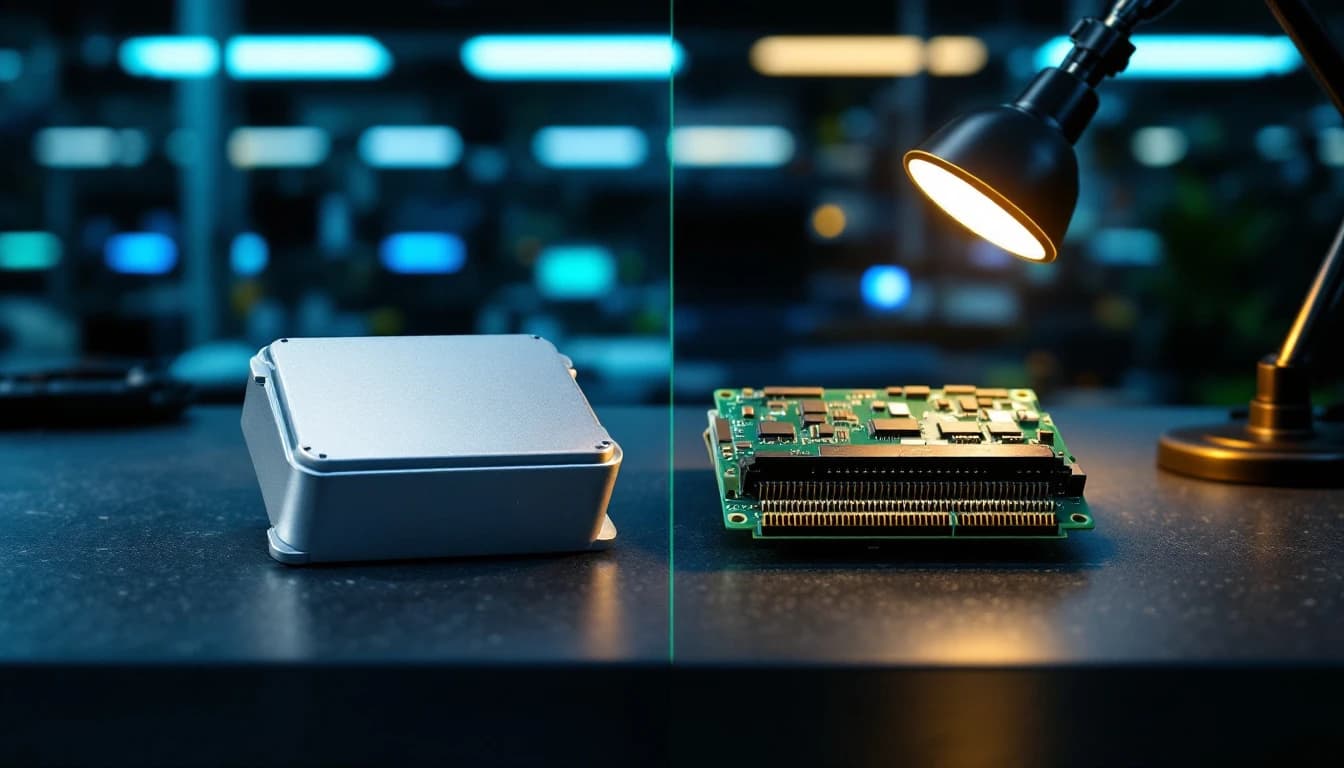
The two write-off rows carry the sentence most owners have never heard: the board being dead does not mean the data is dead. A module's identity - VIN, immobilizer and security data, feature configuration, learned adaptations - lives in small non-volatile memory devices on the board, and those frequently survive an event that killed the power stages around them. Reading those devices and writing their contents onto a healthy donor board is cloning, and it turns a used module from a paperweight-with-immobilizer-problems into a plug-in replacement that already knows your car and your keys.
That is exactly what the flat-price cloning services exist for. A GM body module's identity moves to a donor with the GM BCM standalone clone at 199 dollars. A GM E38, E67, or E92 engine controller's identity moves with the GM ECM clone at 250 dollars. Platforms not on the flat-price list are quoted case-by-case after evaluation. Proof of ownership is required for any work that touches immobilizer or security data - cloning included, no exceptions.
And when the damage does not match any flat-price service, the hourly bench evaluation at 150 dollars is the front door: the module is powered on a current-limited supply, the damage is mapped, and you get a verdict - repair, clone, or write-off - before you spend replacement money. If a vehicle still refuses to start after a module has been repaired or programmed, the fault is usually in the layer around the module, and our troubleshooting guide for a programmed module that still will not start the car covers that systematically.
"The jump-start jobs come in waves and they nearly all tell the same story - dark parking lot, borrowed cables, red on the wrong post for a second and a half. The owner has usually been quoted a new module plus dealer programming and is bracing for four figures. Then I open it up and it is the input diode, dead exactly the way the engineer intended, gave its life for the processor. Forty minutes of board work and the module goes home knowing its own VIN. The saddest ones are the guys who bought two used modules off auction sites first and neither would talk to the car." — Independent automotive electronics technician, 20+ years (anonymized)
Doing it right next time: clamp order and smart packs
The prevention section is short because the rules are short.
The correct sequence, every time: positive clamp to the dead battery's positive post first; the other positive clamp to the donor positive; negative clamp to the donor negative; and the final negative clamp to bare metal on the dead car's engine or chassis - not the dead battery's negative post - so the inevitable connection spark happens away from the battery. Removal is the exact reverse. Let the donor charge the dead battery for a few minutes before cranking rather than cranking through the cables, and keep both engines' accessories off to minimize transients. Owner guidance published by Kelley Blue Book and Hagerty walks the same sequence with pictures, and it exists because every step is protecting against one of the failure modes in this article.
A reputable smart booster pack is worth the money. The protection circuitry in a quality lithium pack - reverse-polarity lockout that refuses to deliver power on backwards clamps, spike suppression, no 24-volt confusion - is engineered specifically against the top killers here. A pack that costs less than one hour of diagnostic labor eliminates the mistake that generates four-figure module damage. Buy one from a maker that publishes its protections, keep it charged, and retire the bare cables to the emergency layer.
And after any rescue - yours or a stranger's - put a meter on the battery with the engine running. Mid-14s, relax. Pushing 16 and climbing, the rescue is not over.
If the electrical event that hit your car was not a jump at all but a theft attempt - stripped columns and punched locks produce their own module carnage - the recovery path is mapped in our theft-recovery module programming guide.
The mail-in workflow after an electrical event
- Text the lab the story first. Year, make, model, exactly what happened at the battery, and which pattern you are seeing - everything dead, one system dead, or the Christmas tree. The story usually narrows the suspect list to one or two modules before anything ships.
- Confirm charging voltage if the car runs. Sustained overvoltage must be fixed before any repaired module goes back in, or it becomes the next casualty.
- Order the matching service. Bench evaluation at 150 dollars when the damage is unmapped; the flat clone or repair services when the target is known. Both shipping labels are purchased automatically at checkout - the prepaid, pre-addressed inbound label arrives by email, and return shipping is the tier you choose, from 29.95 dollars.
- Ship the module - and the donor, if cloning. Anti-static bag, padded box. For a clone job, send your original and the donor together so the identity moves in one pass.
- Bench triage on a current-limited supply. Damage mapped, verdict delivered: repair, clone, or write-off with identity recovery. Nothing proceeds past evaluation without your say-so.
- Repair or clone, then verify. Rebuilt input stages are load-tested; clones are verified to carry the correct VIN and security data before anything leaves the bench.
- Return with tracking. You reinstall, reconnect the battery last, and the module wakes up already knowing the car.
Frequently asked questions
Can a jump start really damage my car's computer? Yes - a jump start done wrong is one of the most common causes of module damage we see on the bench. Reversed clamps drive heavy current backwards through every always-hot circuit, a slipping clamp can generate voltage spikes on the order of 100 volts, and a 24-volt donor doubles the supply to every module for as long as the cables are attached.
Which modules are most likely to be fried by a bad jump start? The always-hot modules die first: the body control module, the TIPM or fuse-box module, the instrument cluster, the radio, and the keyless entry receivers, because they are wired to battery power even with the key out. The PCM is comparatively sheltered during a key-off event since its main power feeds arrive through a relay that was open when the mistake happened.
My car was jumped weeks ago and now modules keep failing one by one. Is that related? Very likely yes - the classic cause is a failing voltage regulator letting the alternator run system voltage up toward 16 volts or more, slowly cooking every module while the car appears to drive normally. Put a meter on the battery with the engine running: mid-14 volts is healthy, and anything sustained near 16 or above needs charging-system repair before any module is replaced.
Is a module damaged by reversed jumper cables repairable? Often, yes. Reverse-polarity protection is designed to sacrifice itself - a diode and fuse die so the processor lives - and when the damage stops at that input stage, the board is repairable and keeps its original VIN, immobilizer data, and configuration. When the event traveled deeper and killed the processor, the board is a write-off, but the identity data in its memory devices frequently still reads and can be cloned to a donor.
Will a used module from a junkyard fix my fried one? Not by itself on most modern vehicles - a used module carries the donor vehicle's VIN, immobilizer data, and configuration, and the car will reject it or refuse to start. The reliable path is cloning your original module's identity onto the donor, which is a flat 199 dollars for a GM BCM and 250 dollars for a GM E38, E67, or E92 ECM, with other platforms quoted after evaluation. Proof of ownership is required for any work involving security data.
How do I jump start a car without damaging the electronics? Follow the sequence: dead positive first, donor positive, donor negative, and the final negative clamp to bare metal on the dead car away from the battery, then remove in reverse order. Let the donor charge the dead battery for a few minutes before cranking, keep accessories off, and better yet use a reputable smart booster pack with reverse-polarity lockout and spike protection, which removes the dangerous mistakes entirely.
What does it cost to find out if my module is repairable after an electrical event? Bench evaluation is a flat 150 dollars, and it produces a definitive verdict: repairable at board level, clonable to a donor, or a write-off with identity recovery attempted from the memory devices. That is a fraction of the cost of guessing with used modules, and nothing proceeds past the evaluation without your approval.
The bottom line
A bad jump start is a specific, physical event, and the damage it leaves follows rules. Reversed polarity burns input stages; clamp-slip spikes and load dump kill suppressors and regulators; a 24-volt donor cooks everything always-hot for as long as the cables touch; and a failing regulator after the rescue quietly murders modules for weeks. The always-hot population - BCM, TIPM, cluster, radio, receivers - takes the hit first, while the relay-fed PCM usually rides it out. The symptom pattern tells you where to look: everything dead points at the power-distribution layer, one dead subsystem points at one sacrificed module, and a dashboard full of unrelated warnings points at a dragged-down network or ongoing overvoltage.
The money question has a better answer than most owners are quoted. Input-stage and regulator damage is repairable at board level, keeping your original module's identity intact. Deeper damage that writes off the board usually does not write off the data - identity recovery plus cloning turns a used donor into a plug-in replacement that already knows your VIN and keys, at 199 dollars for a GM BCM clone and 250 dollars for a GM ECM clone, with TIPM repair at a flat 299 dollars and the hourly bench evaluation at 150 dollars as the front door for everything unmapped. Both shipping labels are handled automatically at checkout, with return shipping from 29.95 dollars.
Before you buy anything - especially a used module that will not know your car - text the lab the story: what happened at the battery, and what died. The story plus a 150-dollar evaluation beats a parts cannon every time it is fired.
Ship your module today
Flat-rate pricing, typical 24-hour bench turnaround, return speed your choice at checkout. Most jobs back on your bench within a week.