PCM Repair vs Clone vs Replacement
Start with what failed, not with what to buy
Before you decide between repairing your powertrain control module, cloning it onto a used one, or buying a new one, you have to know which part of it stopped working. That single question decides the whole job, and it is the one most owners skip.
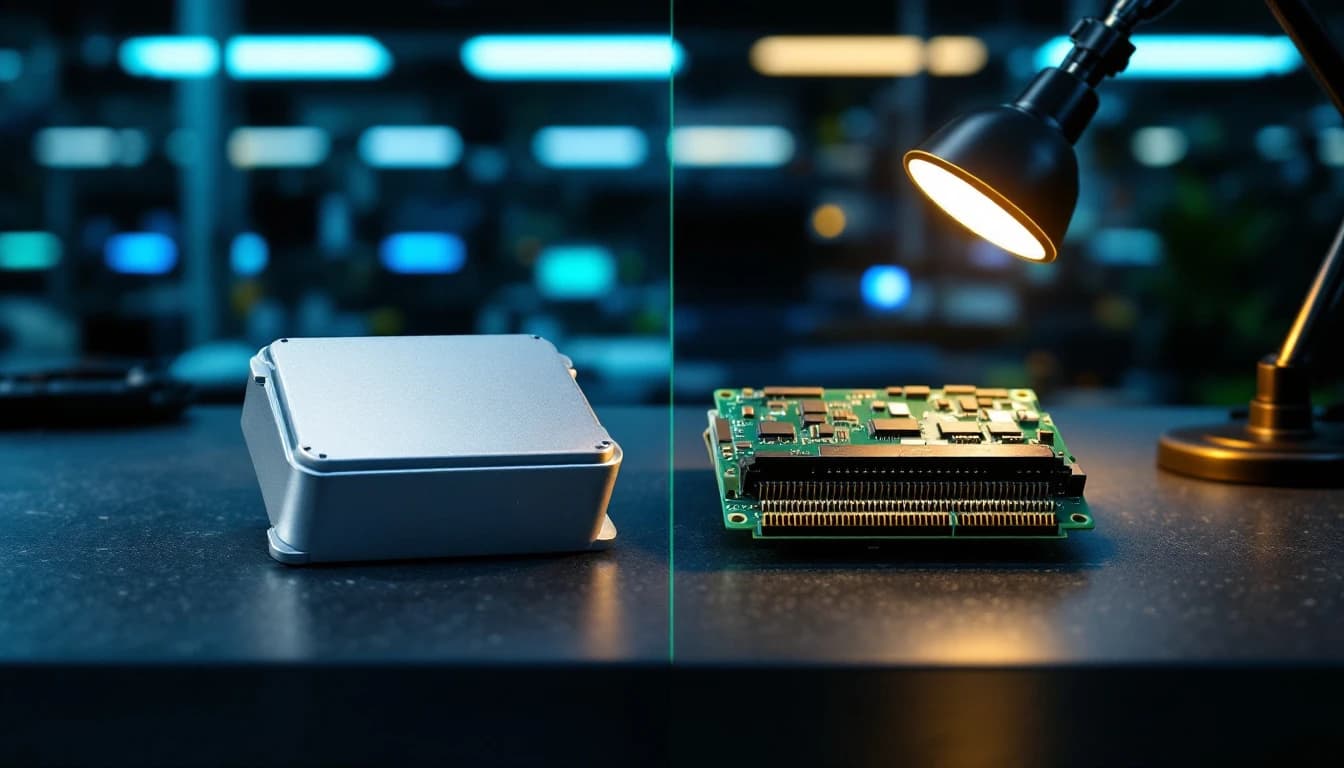
A PCM is not one thing. It is a sealed aluminium case containing a multi-layer circuit board, a microprocessor, several kinds of memory, a switched-mode power supply, and a bank of high-current output transistors that physically drive injectors, coils, solenoids, and the electronic throttle. Those sections fail in completely different ways, for completely different reasons, and each failure mode points at a different repair path.
Say "my PCM is bad" and you have told a bench technician almost nothing. Say "I have three injector circuits reading open and the module still communicates fine on the bus" and you have described a board-level repair. Say "it went silent after the alternator overcharged the system" and you have described something else entirely. The rest of this guide is a way of getting from the first sentence to the second.
This article is deliberately PCM-specific and decision-shaped. If you want the all-module version of the same argument, our repair versus replacement versus reprogramming pillar covers clusters, BCMs, ABS units, and airbag modules on the same logic. If your car is a Ford and you want a brand-specific walkthrough of symptoms and programming, the Ford PCM failure symptoms and programming guide is the companion read. And if your only evidence is a single stored code, P0606 and what it really means covers the internal-processor fault case in depth.
PCMs fail less often than they get blamed
It is worth saying plainly, because it saves people real money: the powertrain control module is one of the most over-diagnosed parts on a modern vehicle. Corroded connector pins, chafed harness sections, a failing crank sensor, a bad ground strap, and low system voltage all produce symptoms that look exactly like a dead computer from the driver's seat.
The scale of the electronics involved is part of why. The National Highway Traffic Safety Administration has documented for years that a mainstream vehicle now carries well over 50 networked electronic control units, and Car and Driver has reported that electronics and software account for a large and rising share of a new vehicle's cost, by some estimates approaching 40% of vehicle value. The Environmental Protection Agency has required standardized on-board diagnostics on every light vehicle sold in the United States since the 1996 model year, which is why every car you can buy used today has a PCM in it at all. Diagnostic trouble codes themselves follow the split defined by SAE International, where P0xxx codes are the standardized set every manufacturer shares and P1xxx codes are manufacturer-specific — which is why a cheap generic reader often shows a powertrain code with no description at all. More computers means more circuits that can be blamed for a wiring problem.
Owner-reported data points the same way. J.D. Power has found for several consecutive years that electronics, infotainment, and connectivity generate more owner-reported problems in its annual quality studies than any mechanical category, and Consumer Reports has repeatedly flagged in-car electronics as a leading reliability complaint across brands. At the same time the fleet keeps aging — the average light vehicle on U.S. roads is now older than 12 years by widely reported industry estimates — so more owners than ever are making repair-versus-replace decisions on control modules that were never designed with a 15-year service life in mind. With Kelley Blue Book reporting average new-vehicle transaction prices above $45,000, keeping a sound older vehicle alive is often the rational call, and a module decision is frequently the hinge it turns on.
So the honest first step is not a purchase. It is a real diagnosis: voltage and ground checks at the module connectors under load, a scope on the relevant drive circuits, and confirmation that the module is or is not communicating on the bus. A shop that reaches for a replacement PCM before that work is done is guessing with your money.
Once the module is genuinely the failed part, the failure sorts into one of four families.
Failure family one: driver-circuit failures
This is the most repairable category, and it is common. The PCM's output stages are power transistors that switch real current to real loads. Injector drivers switch injector coils. Ignition drivers switch coil primaries or trigger coil-on-plug modules. Throttle-actuator drivers run an H-bridge that positions the electronic throttle plate. Solenoid drivers handle purge valves, VVT oil control, and on many trucks the transmission solenoid pack.
Those output stages sit closest to the outside world, which is exactly why they die first. A shorted injector coil, a chafed harness that grounds a coil trigger wire, a seized throttle body drawing stall current, or a jump-start done backwards can all punch a hole through a driver transistor. The processor and memory sitting a few centimetres away are usually untouched.
The fingerprint of a driver failure is specific and recognizable:
- The module still communicates normally on the diagnostic bus with no lost-communication codes
- One or a small group of related circuits fail, not everything at once
- Codes point at the same functional family, for example several injector-circuit-open codes on one bank
- The dead circuit stays dead with the load disconnected, which rules out the load itself
- The failure often traces to a specific event: a jump start, a flooded road, a replaced coil, an alternator that overcharged
When the diagnosis lands here, board-level repair is genuinely the right answer. The failed output stage is identified, the damaged component is desoldered, a correct replacement is fitted, and the surrounding traces and solder joints are inspected for collateral heat damage. Crucially, the module keeps its own identity. Your VIN, your calibration, your immobilizer data, and your learned adaptations never leave the unit, so nothing has to be programmed afterward and your keys keep working.
Repair does not always win, even here. If the same short has been repeated three times because the underlying harness fault was never found, or if the transistor let go violently enough to lift traces and cook the board substrate, replacement of the whole unit is the more durable answer. A competent bench evaluation tells you which.
Failure family two: processor and memory faults
This is the category that ends board-level repair. When the microcontroller itself faults, or when the flash or EEPROM holding calibration and adaptation data becomes corrupt, the module is no longer a circuit problem. It is a data-and-silicon problem.
Typical evidence:
- Internal control-module codes, the P0600 family, with P0606 the classic internal-processor fault
- The module drops off the bus intermittently or entirely
- Random, unrelated codes appear across systems that share nothing but the PCM
- Behaviour changes with temperature, which is the signature of a marginal die or a cracked solder ball under a BGA package
- The module resets during cranking or when a heavy load switches
Two things matter here. First, an internal-fault code is not automatic proof the module is scrap. Low or noisy supply voltage, a bad ground, or a failing charging system can force a healthy processor into a fault state, so the electrical environment gets verified before the module is condemned. Second, when the processor really is failing, the practical fix is a different physical module, which puts you on the clone-or-replace fork rather than the repair fork.
Memory corruption without a hardware failure is its own sub-case and is often the best outcome available. If the silicon is healthy but the stored calibration has been damaged, typically by an interrupted flash attempt in the vehicle with a marginal battery, the correct data can frequently be rewritten on a bench supply that cannot sag. That is a reflash, not a replacement, and it is exactly the kind of work a stock OEM reprogramming service at $250 exists to do.
Failure family three: water, corrosion, and physical damage
PCMs mounted low in the engine bay, behind a wheel liner, in a footwell, or under a cowl drain live in a bad neighbourhood. Water finds them through failed case seals, blocked cowl drains, cracked windshield seals, and leaking heater cores.
This is a bigger population than most owners realize. Carfax has estimated that well over 400,000 flood-damaged vehicles remain in use on U.S. roads, and enthusiast and repair coverage from outlets such as MotorTrend has documented how flood exposure produces electrical faults that surface months or years later rather than immediately. A control module that got wet in a storm two summers ago and has been quietly corroding since is a very ordinary story.
Corrosion damage is a spectrum, not a verdict. On the good end, a small amount of moisture has greened a few connector pins and left the board dry; that cleans up, and the module lives. In the middle, electrolysis has begun eating traces and via barrels while the board is still largely intact; that is a real repair with a real success rate but no guarantee. On the bad end, water sat in the case for months, the copper is gone under the conformal coating, and the multi-layer board has corrosion between internal layers where no soldering iron can reach. That module is finished, and any shop that promises to bring it back is selling optimism.
The important thing about water damage is what it means for your data. If the module can still be powered up and read even once, its identity and calibration can usually be pulled off and preserved, which keeps the cheap path open. If it cannot be read at all, you have lost the ability to clone from it, and the job becomes a blank-replacement job with everything that implies. That is why a soaked module should go on a bench sooner rather than later, and why leaving it in the car for another six months makes the eventual repair more expensive, not less.
Physical damage follows the same logic. A cracked case from a collision, a burned connector from a melted pin, a module that was pried out with a screwdriver: read it first, decide second.
Failure family four: locks and security faults that are not failures at all
A large share of modules sent in as failed are electrically perfect. They are locked, or they are married to a different vehicle, and both conditions look like a dead car to the person turning the key.
Three common versions of this:
- A used module still carrying the donor vehicle's identity. It knows a VIN that is not yours, holds security data that will not match your immobilizer, and refuses to authorize a start. Nothing is broken. Our explainer on why used ECU swaps are not plug and play covers this in detail, and it is the single most common reason a correctly numbered scrapyard part does not work.
- A security or immobilizer mismatch after other work. Replace a cluster, a body module, or an ignition assembly on a car whose security data is distributed, and the PCM can end up out of agreement with the rest of the network.
- A manufacturer-locked controller. Some PCMs ship with read protection that prevents the calibration from being extracted or modified with normal tooling. That is a deliberate design decision, not a defect. Unlocking is a defined bench procedure, which is what the PCM unlocking service at $250 exists for.
Note that none of these are repaired. They are resolved. Buying a new PCM to solve a lock or a mismatch is the most expensive way to fix a problem that was never hardware. Proof of ownership is required for any work touching keys, immobilizer data, or vehicle security, without exception.
The three paths compared
| Board-level repair | Clone onto a donor | New or blank replacement | |
|---|---|---|---|
| What you keep | Your original module, VIN, calibration, keys | Your identity and calibration, on different hardware | Nothing — the unit starts with no identity |
| What has to be right | Processor and memory healthy, board intact | Original readable, donor hardware compatible | Correct part number and hardware revision |
| Programming needed afterward | None | None — it drops in as plug and play | VIN write, calibration load, immobilizer marriage |
| Keys and immobilizer | Untouched | Untouched | Usually must be relearned, sometimes on the vehicle |
| Typical failure fit | Injector, coil, throttle, solenoid drivers | Processor faults, corrosion, dead originals that still read | Original destroyed or unreadable, no donor available |
| Main risk | Underlying harness fault kills the repair again | Hardware revision mismatch on the donor | Dealer or online authorization requirements |
| Bench price at this lab | Evaluation from $150, then quoted | $250 on listed PCM clone services | Varies — new module cost plus programming |
Read that table as a filter rather than a menu. You do not pick a column because you like the price. You land in a column because of what the module's condition allows.
Why cloning usually wins for a mail-in customer
Cloning means copying the identity and calibration out of your original module and writing them into a matching donor unit. When it works, the donor stops being someone else's part and becomes, as far as the vehicle is concerned, your original PCM. It answers to your VIN. It holds your immobilizer data. It runs your keys. You bolt it in and start the car.
Three reasons it is usually the cheapest and fastest of the three paths:
One: it eliminates the programming step entirely. A blank replacement has to be VIN-programmed, loaded with the correct calibration for your exact build, and married to the immobilizer, and on some platforms parts of that sequence are designed to be completed only through the manufacturer's secure online systems. A clone arrives pre-married. Nothing further is required. That difference alone is often larger than the price of the donor, which is the point our ECU programming cost guide for 2026 makes in detail across platforms — the module is frequently the cheap half of an auto ECU replacement, and the programming is the expensive half.
Two: it preserves your keys. No key programming, no relearn, no trip anywhere with all the keys in hand. For an all-keys-lost-adjacent situation this is the difference between a straightforward job and a much larger one.
Three: donors are cheap and plentiful for most mainstream platforms. A used PCM with the correct part number costs a fraction of a new one. The part you were told was worthless because it "needs programming" becomes perfectly usable the moment the identity problem is solved.
"The customers who save the most money are the ones who send me their old module along with the used one, even when the old one is dead in the car. If I can get one clean read off it, the donor goes back plug and play and their keys never leave their pocket. The ones who throw the original in the bin before calling have already closed the cheapest door they had." — Independent driveability and module-repair technician, 17+ years (anonymized)
That is the practical rule worth remembering: do not scrap the original until the bench has tried to read it.
Where cloning is impossible
Being honest about the limits is the whole value of a guide like this.
The original cannot be read. Cloning copies data out of your module. If the memory is physically destroyed by fire, deep corrosion, or a processor failure severe enough to block access, there is nothing to copy. Sometimes data can still be recovered directly at chip level even when the module will not run; sometimes it cannot. A bench evaluation is what settles that question.
The controller is locked or encrypted in a way that blocks extraction. Some later controllers use security that prevents reading the calibration and identity with normal tooling. Where a documented unlock exists, that becomes a separate first step. Where it does not, cloning is off the table for that platform and the correct route is replacement with proper programming.
Hardware revision mismatch on the donor. This is the trap that catches careful people. Two modules can carry the same headline part number and still differ in internal hardware revision, memory type, bootloader, or manufacturing date range, and data from one will not run correctly on the other. This is why a donor gets verified before anything is written to it, and why our checklist for buying a used donor module asks for photographs of the full case label rather than just the headline number.
The vehicle requires an on-car step regardless. Some platforms require a network relearn, a theft-deterrent relearn, or a security handshake that can only be completed with the module installed. A bench can do everything up to that point and no further, and you should be told so before you ship rather than after.
Brand realities: GM, Ford, and Chrysler
The three-path logic is universal. The specifics are not.
GM. Modern GM powertrain controllers span the E-series generations, and the practical dividing line for bench work is how locked the controller is. Earlier E-series units are mature, well-documented territory. Newer architectures use a different security and licensing model, and unlock or upgrade work on them is treated as its own specialty rather than a routine job. On the Chrysler-derived side of the fence, the GPEC family has its own established clone path, which is why the GPEC2 and GPEC2A PCM clone service exists at $250 as a defined job rather than a case-by-case quote.
Ford. Ford splits neatly into two eras for bench purposes. The classic 104-pin EEC-V family, roughly the late 1990s through the early 2000s, is a well-mapped cloning platform covered by the Ford EEC-V PCM clone service at $250 — a true clone, a calibration clone, or replacement programming depending on what the pairing supports. Later Ford PCMs move into VIN-transfer territory, handled by the Ford PCM clone and VIN transfer service at $250, where the identity is written across so the replacement answers to your vehicle. On both eras, the PATS immobilizer is a separate layer that has to be considered alongside the powertrain data.
Chrysler, Dodge, and Jeep. These platforms tie the PCM tightly to the SKIM or Sentry Key immobilizer and, on later trucks, to the TIPM. A PCM swap that ignores the security half produces a crank-no-start every time. Mopar-specific reprogramming is its own service line at a different price precisely because the procedure and the tooling differ from GM and Ford.
For anything not on the published service list, the answer is a case-by-case quote after bench evaluation. That is not evasion; it is the only defensible thing to say about a controller nobody has put on the bench yet.
What to send in, and what an evaluation settles
If you already know the path, send the parts that path needs. If you do not, that is exactly what an evaluation is for.
For a clone, send both modules: your original, however dead it seems, and the donor you bought. Both. The original is the source of the data and the donor is the destination, and sending only one guarantees a second round of shipping.
For a repair, send the module plus a clear description of the symptom and any codes. Which circuits failed, what event preceded it, and whether the harness fault was found and fixed all change the assessment.
For an unlock or reprogram, send the module and the VIN, plus a photograph of the full case label showing every number on it, not just the headline part number.
When the diagnosis is genuinely unclear, the bench evaluation service at $150 per hour is the honest entry point. The module is powered on a regulated supply, communication is verified, memory access is attempted, and the board is inspected under magnification for corrosion, heat damage, and failed output stages. You get a real answer about which of the three paths your module qualifies for before you spend anything larger.
The mail-in workflow
This is a nationwide mail-in bench workshop, so the sequence is the same wherever you are.
- Message the lab before you remove anything. Send the VIN, year, make, model, engine, the full module label, a photo of that label, the symptom, the codes, and whether you already have a donor.
- Provide proof of ownership for anything touching keys, immobilizer data, or vehicle security.
- Ship what we ask for. USPS goes to PO Box 120241, Arlington TX 76012. UPS and FedEx go to 1009 Oakwood Ln # 120241, Arlington TX 76012, because couriers cannot deliver to a PO Box. Anti-static bag, padded box, no loose module rattling in a flat-rate envelope.
- Bench read and archive. Whatever is readable gets read and archived before any change is made. This step is what protects your ability to go back.
- Repair, clone, unlock, or program according to what the evaluation found and what you approved.
- Bench verify. Communication and function are checked before anything leaves the shop.
- Return with tracking. Return shipping is a flat-rate tier you choose at checkout, from $29.95, with faster options available.
Frequently asked questions
Can a bad PCM be repaired, or does it always have to be replaced? Many PCMs are genuinely repairable, particularly when the failure is in an output driver circuit such as an injector, coil, or throttle-actuator stage while the processor and memory remain healthy. Repair keeps your original module and its identity, so nothing has to be programmed afterward and your keys are untouched. Processor faults, deep corrosion, and destroyed memory are the cases where a different physical module is the honest answer.
Is cloning a PCM cheaper than buying a new one? For most mainstream platforms, yes, and usually by a wide margin. A used donor module costs a fraction of a new unit, and cloning eliminates the VIN programming, calibration loading, and immobilizer marriage that a blank replacement requires. The programming step is frequently the larger half of a replacement bill, so removing it is where most of the saving comes from.
Do I have to send my old PCM if I already bought a used one? Yes, if you want it cloned. Cloning copies the identity and calibration out of your original and writes them into the donor, so the original is the source of the data. Even a module that is completely dead in the vehicle can often still be read on a bench supply, so do not scrap it before it has been evaluated.
Will a cloned PCM work with my existing keys? It normally will, because a clone carries your original module's immobilizer data across to the donor, so the vehicle sees the same security identity it saw before. That is the main practical advantage of cloning over a blank replacement, which usually requires an immobilizer relearn and sometimes has to be completed with the module installed on the car.
What does P0606 mean, and does it mean the PCM is scrap? P0606 is an internal control-module processor fault, meaning the PCM's own self-checks failed rather than an external circuit. It does not automatically condemn the module, because low supply voltage, a poor ground, or a failing charging system can force a healthy processor into that state. Verify the electrical environment first, then evaluate the module.
Can you unlock a locked PCM instead of replacing it? Where a documented unlock procedure exists for that controller family, yes, and it is far cheaper than replacement because the module itself is not faulty. Locked controllers are a security design feature, not a defect. Where no documented procedure exists for a given platform, we say so up front rather than taking the job and hoping.
How long does a mail-in PCM job take? Bench work is generally quick once the module arrives, and the larger variable is transit in both directions. Return shipping is a flat-rate tier chosen at checkout starting at $29.95, with faster options available if the vehicle is down and you need it back sooner.
The bottom line
There is no universal right answer to "repair, clone, or replace." There is only the right answer for what actually failed inside your module.
Driver-circuit failures point to board-level repair, because the processor and memory are fine and your module keeps its own identity. Processor faults, corrosion, and dead originals that can still be read point to cloning, because your identity and calibration move onto healthy hardware and the replacement drops in with no programming and no key work. Only a destroyed, unreadable original with no viable donor points to a new or blank module, and that is the path that carries the VIN write, the calibration load, the immobilizer marriage, and on some platforms an authorization step that has to happen at a facility with online factory access.
The single most expensive mistake is throwing the original away before anyone has tried to read it, because that closes the cheapest door you had. Bench pricing here is flat and public: $250 for PCM unlocking, $250 for a GPEC2 or GPEC2A PCM clone, $250 for Ford PCM clone and VIN transfer, $250 for a Ford EEC-V PCM clone, and $250 for stock OEM reprogramming, with return shipping chosen at checkout from $29.95. Anything not on that list is quoted case by case after bench evaluation.
If you are holding a module right now and you are not sure which family your failure belongs to, text us the VIN, the codes, and a clear photo of the full case label before you buy anything. Half the time the cheapest fix is one nobody had suggested yet.
Ship your module today
Flat-rate pricing, typical 24-hour bench turnaround, return speed your choice at checkout. Most jobs back on your bench within a week.