
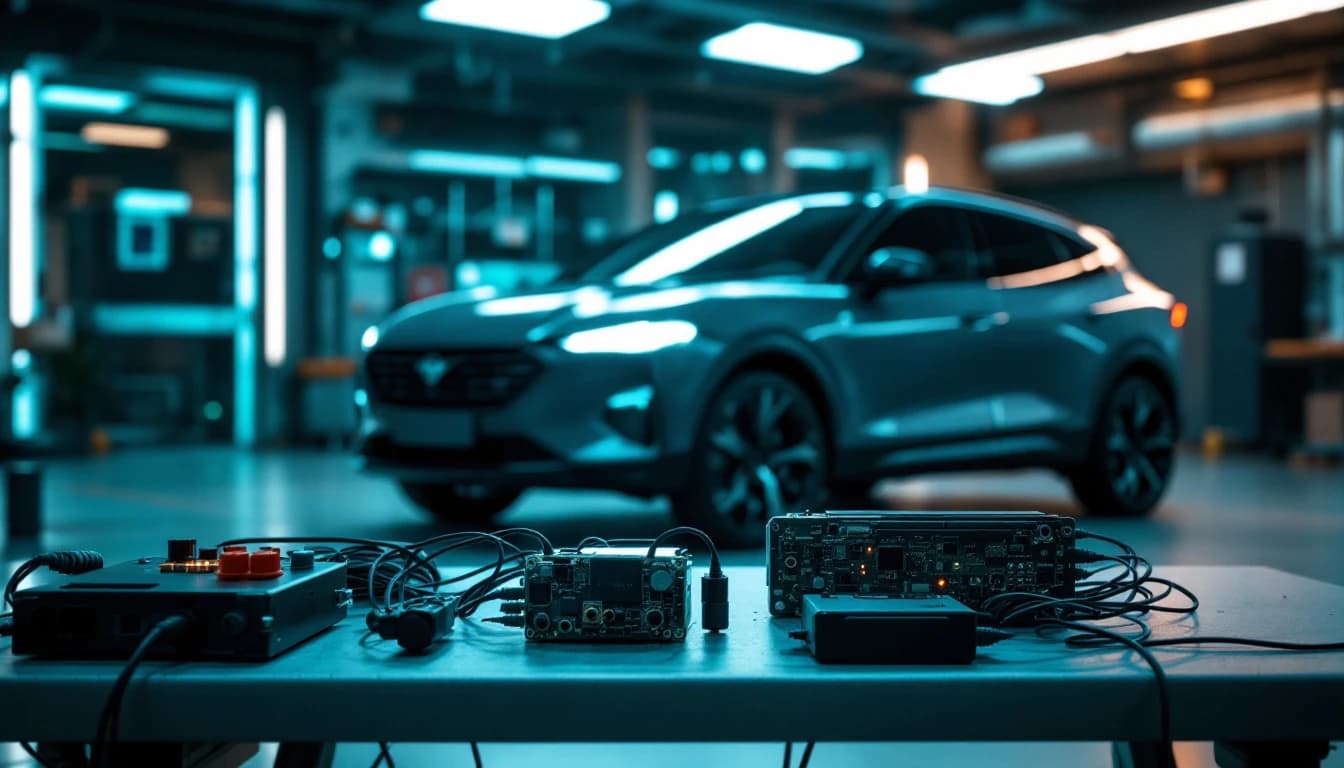
Used Nissan/Infiniti ECM Won't Start? Cloning Fixes It
The $90 fix that never starts the car
It is one of the most common no-start stories we hear, and it always has the same shape. A Nissan Altima or an Infiniti G-series throws an engine-computer fault — a dead ECM, no communication, a diagnosis that points squarely at the module. The dealer quotes a new ECM plus programming, and the number is ugly. So the owner does the sensible-seeming thing: finds the identical part, pulled from a wrecked car, on eBay for ninety bucks. Bolts it in.
The engine cranks. Strong, healthy, all day. It never fires.
Nothing is broken. That used ECM is working exactly as Nissan designed it to — it is refusing to start a car it was never married to. Every Nissan and Infiniti of this era stores immobilizer data inside the engine computer, and that data is unique to one vehicle. The security value is real and it is effective: electronic immobilizers of this kind are what the Insurance Institute for Highway Safety credits with pushing vehicle theft rates down, and the FBI's motor-vehicle-theft data shows how much harder immobilizers made casual theft. The system is doing its job. Its job just happens to include rejecting the legitimate owner who installed a second-hand module.
This guide explains why the used-ECM swap fails on Nissan and Infiniti specifically, what bench cloning actually does to fix it, and — importantly — the honest line between what we do (cloning) and what we do not (on-car immobilizer resets).
Why the immobilizer data lives in the ECM
Nissan's anti-theft system stores immobilizer credentials inside the engine control module, so the ECM participates in the start-authorization handshake every time you turn the key or press start. The key (or the intelligent-key system) presents its identity, the immobilizer logic checks it against what the ECM holds, and only then is the engine allowed to run.
Because that credential lives in the ECM, the module is not a generic part. It is an identity-bearing computer, the same way a modern engine or body controller is — a point we cover across the whole fleet in our module acronyms explainer. Swap the hardware and you swap the identity, and the car notices immediately.
That is the crux of the used-ECM failure: the donor ECM faithfully carries the donor car's immobilizer data. Your car's immobilizer asks its question, gets an answer computed from the wrong credentials, and the ECM sits there — powered, communicating, healthy, and unwilling to fire the engine. Crank, no start, no fault beyond an immobilizer or start-authorization mismatch.
What cloning does — and why it means no on-car reset
Here is the distinction that matters most on Nissan, and the one we want to be completely straight about.
Cloning copies your original ECM's data — the immobilizer relationship included — onto the donor module. If your original still reads, we image its complete contents and write them to the matched donor. The result is a module that, as far as your car can tell, is the original: same immobilizer credentials, same identity, same everything. It drops in and starts.
Because the clone carries your car's own immobilizer data, there is no on-car immobilizer procedure in this workflow. The marriage travels with the clone. That is the whole advantage over a raw swap.
And it is the honest boundary of the service. An on-car NATS immobilizer reset or intelligent-key registration — the kind of procedure done through the OBD port with the car present — is separate on-car work, and it is not something this bench service performs. If a job genuinely needs an on-car reset (for example, a completely dead original that cannot be cloned, or a key-registration situation), cloning is not the tool for it. We would rather tell you that up front than take a job that does not fit.
The one prerequisite follows directly: your original ECM has to be readable. Cloning copies from something. If the board is so far gone it will not read at all, there is nothing to copy, and the bench path cannot help. Most failed ECMs still read even when they will not run the car — but it is the first thing to establish before ordering.
A technician who has cloned a long line of Japanese ECMs summarized the customer conversation:
"The call always starts with 'I bought a used ECM and my car still won't start.' And I have to explain that the used part is fine — it's just married to a Nissan in a salvage yard three states away. The fix isn't a better used ECM, it's moving your data onto it. Once people understand the immobilizer lives in the computer, the whole thing clicks. Clone the original, the donor becomes plug-and-play, no reset on the car at all." — Independent module-cloning technician, 10+ years (anonymized)
Which Nissans and Infinitis, and where donors come from
The service covers common gasoline ECMs across the Nissan and Infiniti range — the volume cars people actually lose engine computers on:
- Altima, Sentra, Maxima — the sedan core.
- Rogue, Pathfinder, Murano — the crossovers and SUVs.
- Titan, Frontier — the trucks.
- Infiniti G, Q50/Q60, and QX models — the luxury siblings on shared electronics.
Donors are plentiful because these cars sold in huge numbers — Nissan has long been a top-five brand in the U.S. market, which means salvage yards, eBay, and parts recyclers all carry the ECMs. The one rule is that the donor must match your original's part number for a clean clone; send the part number of your candidate before you buy, and we confirm it, so you do not waste money on a mismatch.
Cloning versus the alternatives
Line the options up honestly:
A raw used ECM. Cheapest to buy, but it cranks-no-starts because of the immobilizer mismatch we have been describing. On its own it is a dead end — the exact trap documented across brands in our used ECU swap vs cloning guide.
A new ECM from the dealer, programmed. It works, but it is the expensive path — a new module plus a dealer programming session, on a car whose value may not justify it. The average age of vehicles on U.S. roads past 12.5 years is exactly why owners look for another way: the car is worth keeping, but not worth a four-figure electronics bill.
Cloning your original onto a donor. You buy a cheap matched donor; we move your data — immobilizer included — onto it; it drops in plug-and-play. $250 flat, no on-car reset, no dealer session. The only requirement is a readable original.
What it is worth
Run the arithmetic the way an owner experiences it. A used ECM that never starts the car is $90 burned, plus whatever the failed diagnosis cost. A dealer ECM-plus-programming is often several times the price of the car's remaining book value, which the NADA/used-vehicle valuation world tracks in painful detail for aging sedans. A clone is a cheap matched donor plus $250 of bench work, and it ends with a running car and the factory immobilizer fully intact.
That last point matters for more than convenience. Keeping the immobilizer active is keeping the anti-theft protection the NHTSA's immobilizer guidance exists to encourage. Cloning does not weaken the security — it restores your legitimate access to a car the security was correctly protecting.
What to ship
- Confirm your original reads, and text us the part numbers. Send the part number of your original and your donor candidate so we can confirm the match before you buy anything.
- Order online — Nissan/Infiniti ECM clone $250 — and choose return shipping at checkout (Standard $29.95, UPS 2-Day $54.95, overnight $94.95).
- Pack your original ECM and the matched donor together, with proof of ownership and your printed order confirmation. USPS: PO Box 120241, Arlington TX 76012. UPS/FedEx: 1009 Oakwood Ln # 120241, Arlington TX 76012.
- typical 24-hour bench turnaround. Your data is imaged and cloned onto the donor, verified, and both modules ship back.
- Install and start. The cloned donor drops in plug-and-play — no on-car immobilizer step.
Ruling out the cheaper causes first
Before you conclude the ECM is dead, it is worth ruling out the failures that masquerade as one, because a clone fixes an ECM problem and nothing else. A genuine ECM failure usually shows as no communication with the module on a scan tool, or a confirmed internal fault after the basics check out — not as a single sensor code or an intermittent misfire. Fuel-delivery problems, a failing crank or cam sensor, corroded grounds, and wiring faults all produce no-starts and rough running that can look like an engine-computer problem from the driver's seat. The Car and Driver guide to no-start diagnosis and similar references walk owners through the common non-ECM causes worth eliminating first.
The practical rule: if the car cranks and will not start with a used ECM installed, that is the immobilizer mismatch this service fixes. If it cranks and will not start with the original ECM and no used part has been swapped in, diagnose the ordinary causes first — because if the real fault is a sensor or a ground, a perfectly cloned ECM will start a car that still will not run for the original reason. We would rather you find that out before shipping than after.
Why cloning preserves value on an aging Nissan
There is a resale dimension worth naming. A Nissan or Infiniti with a documented, factory-immobilizer-intact ECM repair holds its standing far better than one with a bypassed or defeated anti-theft system, which insurers and buyers rightly treat as a red flag. Vehicle-history and valuation services like Carfax and Kelley Blue Book reward clean, legitimate repair histories; a clone that keeps the security system fully active is exactly that kind of repair. You are not just getting the car running — you are getting it running in a way that does not quietly subtract from what it is worth.
How the bench work actually protects your original
It is worth understanding what "readable original" buys you beyond just making the clone possible, because it changes how you should think about the risk. When your original ECM comes to the bench, the first thing that happens is that its complete contents are imaged and backed up — before anything is written to the donor. That means your car's immobilizer data exists as a saved image, not just as bits on an aging board that might fail further. For an owner whose module is on its way out, that backup is quietly valuable: even in the rare case where a donor turns out to be a poor match, your original's data is preserved and the job can be re-attempted on a better donor rather than lost.
This is the same conservative discipline that separates professional module work from parking-lot experimentation across every brand. The data is the asset; the hardware is replaceable. A clone succeeds because it treats your immobilizer credentials as something to preserve and carry forward carefully, which is exactly why it produces a plug-and-play result where a raw swap produces a no-start. Independent-repair guidance from outlets like Consumer Reports consistently favors approaches that keep original data and factory systems intact over ones that discard or defeat them, and cloning is squarely in that camp.
The mail-in advantage for an orphaned-feeling repair
One reason owners appreciate the mail-in bench path on these cars is that it does not depend on finding a local specialist who happens to know Nissan immobilizer architecture. Plenty of good independent shops can diagnose a dead ECM but do not do module-level cloning, and dealer pricing on a new ECM plus programming pushes owners toward giving up on an otherwise sound car. Mailing the module to a dedicated bench closes that gap: the specialized step travels to the specialist, and the car stays in your driveway the whole time. You pull the ECM, ship it with the donor, and get back a plug-and-play module — no hunting for a shop that both understands the problem and has the tooling to solve it. For a widely-owned brand whose cars routinely outlast their first and second owners, that accessibility is a large part of why cloning has become the default answer to the used-ECM no-start.
Frequently asked questions
Do you reset the Nissan immobilizer or register keys?
No. On-car NATS immobilizer reset and intelligent-key registration are on-car procedures we do not offer. What we do is clone — copy your original ECM's data, immobilizer relationship included, onto a donor on the bench. Because the clone carries your data, the car accepts it with no on-car reset in this workflow.
What if my original ECM is completely dead and won't read?
Then cloning is not possible — it copies from a readable source. If the board will not read at all, this bench path cannot help, and you would be looking at a dealer or on-car programming route instead. If you are not sure whether it reads, tell us the symptoms before ordering and we will give you an honest read.
Will the car start immediately after I install the clone?
When your original reads and the donor is a correct part-number match, yes — the donor carries your immobilizer data and identity, so it goes in plug-and-play. That is the entire advantage of cloning over a raw used swap.
Where do I find a donor ECM?
Salvage yards, eBay, and parts recyclers all carry them, and supply is deep because these cars sold in the millions. Send us the part number of your candidate first — it has to match your original for a clean clone, and confirming up front saves a wasted purchase.
Is my VIN or proof of ownership required?
Yes — immobilizer-related work requires proof of ownership, consistent with locksmith trade practice through organizations like the ALOA. Your VIN helps us verify the correct part.
The bottom line
A used Nissan or Infiniti ECM does not start your car for one reason: it is married to a different vehicle, and the immobilizer in the engine computer correctly refuses yours. The fix is not a better used part — it is moving your own data onto it. Cloning copies your original's contents, immobilizer relationship and all, onto the matched donor, so it drops in plug-and-play with no on-car reset, for $250 flat in a typical 24-hour bench turnaround. The only thing to confirm first is that your original still reads.
Fighting a used-ECM no-start on a Nissan or Infiniti? Start with the Nissan/Infiniti ECM clone service or read more on the Nissan/Infiniti brand page — or text us your part numbers and we will confirm the match before you buy a donor.
Ship your module today
Flat-rate pricing, typical 24-hour bench turnaround, return speed your choice at checkout. Most jobs back on your bench within a week.
More from the Lab
Fiat 500 Cranks, No Start After ECU Swap: Diagnosis
12 min · September 23, 2026
Mercedes ME2.8 ECM by Engine: M112, M111 & Crossfire
11 min · September 17, 2026
Sprinter START ERROR: What It Means and What Fixes It
14 min · August 4, 2026
Immobilizer Antenna Ring Faults That Mimic a Dead Module
16 min · August 1, 2026