Range Rover & Jaguar Won't Start? KVM / RFA Failure
When a Range Rover or Jaguar just won't start
There is a particular kind of dread that comes with a Land Rover or Jaguar that will not start. These are expensive, electronically dense vehicles, and when one refuses to fire, the dealer conversation tends to start at "we'll need to replace the module and it's on back order." But a very large share of these no-starts are not a broken engine or a fried harness — they are a security failure inside the module that holds your key and immobilizer data. Get that data healthy again and the car starts.
This guide is for the owner or independent shop looking at a Range Rover, Range Rover Sport, Velar, Evoque, Discovery, or a Jaguar XE, XF, F-Pace, or F-Type that cranks but will not start, flashes a security or smart-key message, or has simply lost all its keys. The module at the center of almost all of it is the KVM — the Keyless Vehicle Module — or on some platforms the closely related RFA (Remote Function Actuator) module. We will not promise your exact year is supported, because the platforms and their security versions vary widely; a technician confirms your specific vehicle before you ship. What follows is what actually goes wrong, why the obvious fixes fail, and what the mail-in repair options are.
The symptoms of a KVM / RFA no-start
Security-related no-starts have a consistent fingerprint. The more of these match your car, the more likely you are dealing with a KVM or RFA data problem rather than a mechanical one:
- Cranks but never fires. The starter turns the engine, but there is no sustained ignition because the engine controller never received a valid key authorization from the immobilizer.
- "Smart key not found," "Key not detected," or a security padlock message on the instrument cluster, even with a known-good key inside the car.
- Intermittent no-start that steadily worsens — starts on the second attempt, then the fourth, then not at all — a classic sign of a failing KVM or a corrupting data block.
- Keyless entry and comfort-access problems that appear alongside the no-start, because the KVM manages access as well as the immobilizer.
- A trigger event such as a flat battery, a jump-start, or a battery replacement that seemed to bring the fault on, since a deep voltage drop can corrupt the data a module is holding.
- Security or theft warnings after a break-in attempt, which on these platforms are unfortunately common.
None of these alone is a diagnosis. A true no-crank — the starter not turning at all — is usually a battery, starter, or ignition problem, a different path entirely. Electronic immobilizers are, by design, meant to stop the engine from running without a verified key; the National Highway Traffic Safety Administration classifies them as a core anti-theft technology for exactly that reason, so a crank-but-no-fire is precisely the behavior an unhappy security system produces.
What the KVM and RFA modules actually do
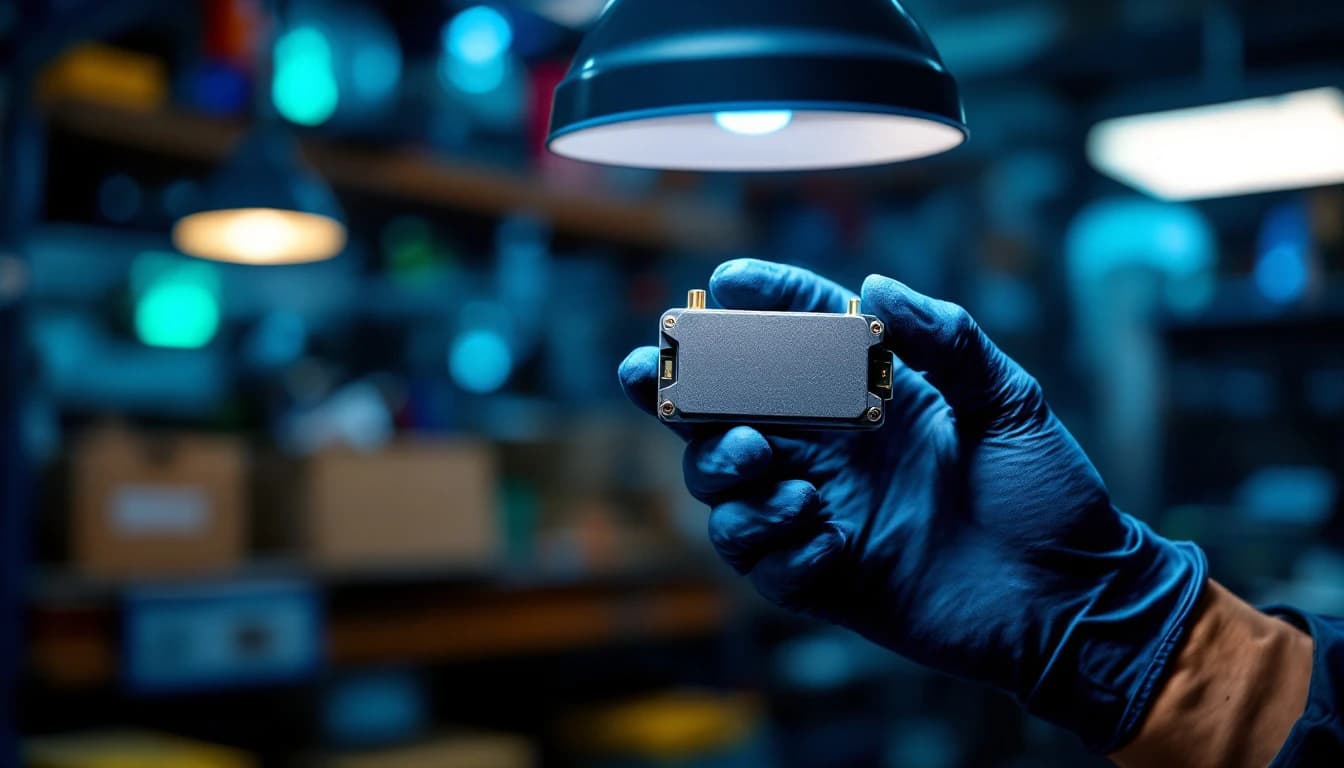
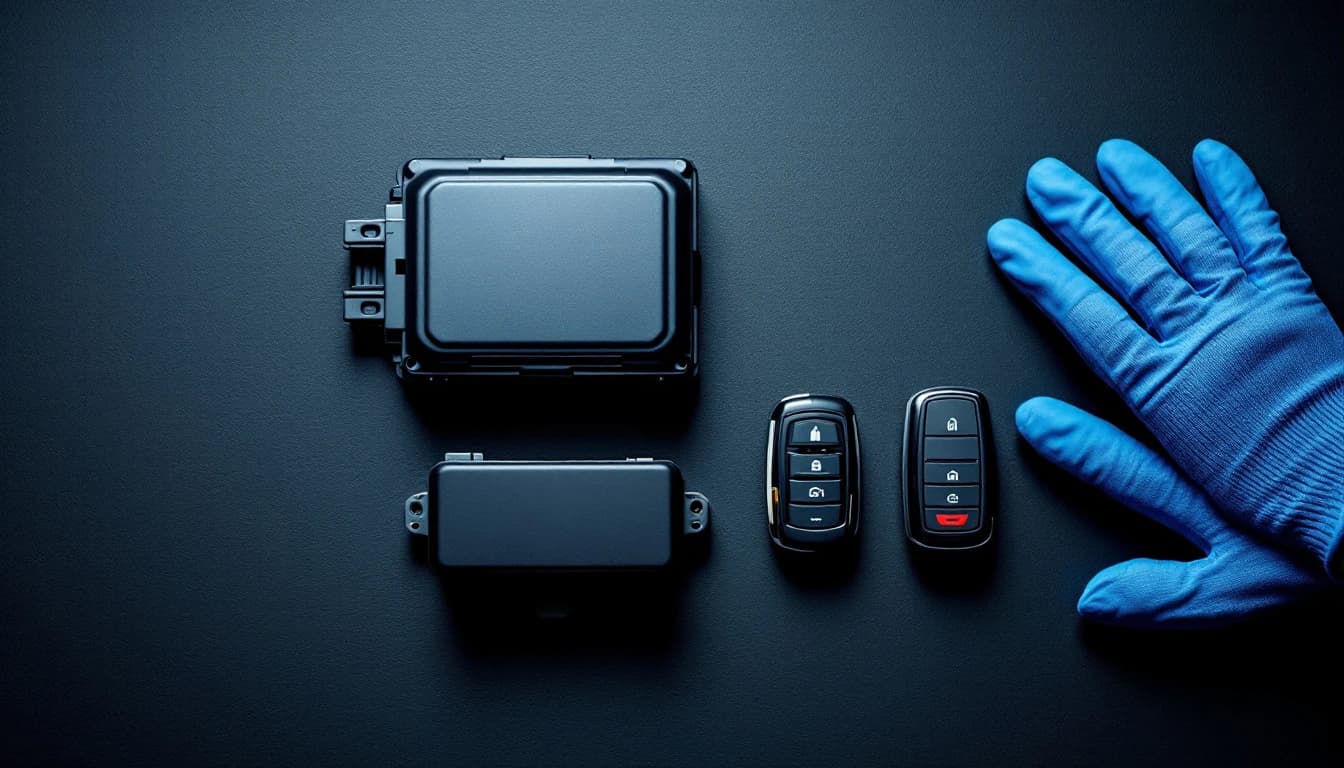
On modern Jaguar Land Rover vehicles, keyless entry and start is handled by a dedicated control module — the KVM on later platforms, the RFA on some others — that does far more than "read the fob." It authenticates the smart key, holds the list of authorized keys, stores the immobilizer secrets, coordinates with the body control and engine management systems, and enforces the security that decides whether the engine is allowed to run.
The reason these systems exist is genuine. Anti-theft electronics are widely credited with the long decline in vehicle theft over recent decades, and organizations like the Insurance Institute for Highway Safety have tracked how immobilizer technology reshaped theft patterns. The technical groundwork for how keys, transponders, and control units authenticate one another has been standardized through bodies such as SAE International. The unavoidable trade-off is that a car engineered to refuse a key it cannot verify will also refuse a legitimate owner when the module holding that verification data fails.
Range Rovers in particular have been a high-profile target. Coverage from Hagerty and Car and Driver has documented how theft pressure on these vehicles pushed both manufacturers and owners toward more aggressive security — and how that same security turns into an owner's headache when the KVM data goes bad. The National Insurance Crime Bureau reports that vehicle thefts in the United States have run near the million-a-vehicle-a-year mark in recent periods, and luxury SUVs sit disproportionately high on the most-targeted lists, which is part of why JLR key and immobilizer work has become such a specialty.
Where the key and immobilizer data actually live
This is the concept that explains why the cheap fixes so often fail, so it is worth stating plainly.
The immobilizer and key security data does not live in the fob. It lives in the car — inside the KVM or RFA module, which holds the authorized-key list, the immobilizer secrets, and the security binding that ties the module to the body control and engine management systems. The smart key is a transponder that takes part in a challenge-and-response; it is not the vault. The vault is the module.
That is why:
- A fresh fob battery fixes nothing when the fault is corrupted data inside the KVM. The key was never the problem.
- A spare key does not help when the module that authenticates every key has failed, because both keys are checked against the same bad data.
- A dealer cannot always just add a key when the module holding the key list is itself corrupted or locked — there may be no healthy list to add to.
When the module's data is intact, adding or replacing a key is a programming job. When the data is corrupted, the module is locked, or every key is gone, it becomes a recovery job — reading what can be read, repairing or resetting the immobilizer data, and re-synchronizing the modules. That distinction drives which of the three services below your car actually needs.
Why a used KVM or RFA isn't plug-and-play
The tempting shortcut is to source a used KVM or RFA from a breaker, plug it in, and hope. It rarely works, and the reason is built into the security model. A module from a donor vehicle carries that donor's key list, immobilizer secrets, and security binding. Installed in your car, it will not recognize your keys, will not match your engine controller's stored security data, and will not share the binding the rest of your car expects — usually producing a fresh crop of fault codes on top of the original no-start.
| Used donor KVM/RFA, unprocessed | Bench-processed to your car (what we do) | |
|---|---|---|
| Recognizes your existing keys | No — carries the donor's key list | Yes — after virginize and key programming |
| Matches your engine controller security | No — mismatched immobilizer secrets | Yes — synchronized to your vehicle |
| Handles a locked / corrupted module | No — often locked itself | Remote BCM recovery unlocks it |
| Fixes the no-start | Rarely — usually adds new faults | Yes — that is the goal |
| Requires proof of ownership | Should | Yes — always, before any work |
| Turnaround | Trial and error | Defined bench process, tested before return |
The clean path is not to gamble on a donor unit. Depending on your exact situation, it is to virginize the module so it will accept new keys, or recover a locked BCM remotely, and then program your keys into it. When a physical replacement genuinely is required, it still has to be processed to your vehicle's data to work — the same bench operations.
As one specialist who works these platforms daily put it:
"The number of Range Rovers I see towed in after somebody dropped in a used KVM off the internet is depressing. It never just works — the module doesn't know your keys, it doesn't match your ECU, and now you've got three new codes. Virginize the right module, recover it if it's locked, program the keys to the car, and it starts. Parts-swapping the security system is how you turn a one-line fix into a three-week nightmare." — Independent JLR immobilizer and key-programming specialist, 15+ years on European platforms (anonymized)
The three mail-in options
Because JLR no-starts come in a few distinct flavors, there are a few distinct fixes. A technician confirms which one your car needs before you ship anything.
KVM / RFA virginize — $300
Virginizing resets the KVM or RFA module back to a clean state so it will accept new keys, as if it were fresh. This is the right service when the module is functional but its data is corrupted or mismatched, or when you are fitting a used module that needs to be cleared of the donor's data before it can learn your keys. After a virginize, keys are programmed to the module and the car authenticates them. Our step-by-step KVM / RFA virginize walkthrough covers the process in detail, and the JLR KVM virginize service page is where you confirm fitment.
Jaguar XF BCM remote recovery — $550
Some units end up locked — a security state where the module refuses normal programming access, often after failed attempts, tamper events, or corrupted security data. A locked body control module cannot simply be virginized or programmed the usual way; it has to be recovered first. The Jaguar XF BCM remote recovery service unlocks and recovers these units so they can accept programming again. This is the specialist fix for the "the module is locked and the dealer says replace it" situation — see the Jaguar XF BCM remote recovery service page.
Range Rover / Jaguar key programming — $550
When the module data is healthy but you need keys authored — a lost key, a broken fob, or every key gone — this is key programming and, where required, all-keys-lost key generation. Because it can create a working key, proof of ownership is mandatory. The Range Rover / Jaguar key programming service page is the starting point, and for the all-keys-lost scenario specifically, our Range Rover all-keys-lost guide walks through what to expect.
All keys lost — what changes
"All keys lost" means no working key exists that the car will authenticate — no spare, no valet key, nothing. It is one of the most common reasons a Range Rover or Jaguar ends up on a flatbed, and it is a direct consequence of the strong anti-theft electronics these vehicles carry: the same system that stops a thief stops an owner who has lost every credential.
When all keys are lost, the job is a recovery. The immobilizer and key data is read from the KVM or RFA (and the BCM recovered first if it is locked), the security information needed to author a new key is extracted or reconstructed, and a fresh authorized key is written into the module so the car has a working credential again. Because this literally produces a key that starts the vehicle, proof of ownership is mandatory and non-negotiable before any all-keys-lost work begins.
The mail-in workflow
The bench approach solves the problem the way the security system is actually built — in a controlled environment with proper tooling and a stable power supply, rather than in a driveway with a marginal battery. The sequence:
- Confirm the platform first. Text us your VIN, the module part number off the label, the symptom, and whether you have any working key. A technician confirms your exact Range Rover or Jaguar platform and which service applies before you ship. We do not promise a specific year blind.
- Prove ownership. Because this is immobilizer and key work, we require proof the vehicle is yours before any security data is touched.
- Remove and ship the module. Once confirmed, we email a prepaid inbound label after purchase. Pull the KVM, RFA, or BCM as directed and ship it; if you send it on your own label instead, use PO Box 120241, Arlington TX 76012 if you ship USPS — or 1009 Oakwood Ln # 120241, Arlington TX 76012 if you ship UPS or FedEx (UPS and FedEx cannot deliver to a PO Box). Pack it protected — anti-static bag, padded box.
- Bench read and archive. On arrival the module is powered on a regulated bench supply and its data is read and archived before any change, so there is always a known-good baseline.
- Virginize, recover, or program. The module is virginized, the locked unit is recovered, or the keys are authored as your specific job requires, then the result is tested on the bench before anything ships back.
- Return with tracking. The module ships back via the flat-rate return option you chose at checkout, from $29.95 for standard service up to overnight if you need it fast, and you reinstall it.
Doing the recovery and programming on a bench also removes one of the classic ways these jobs go wrong — a voltage sag mid-write that corrupts the very module you are trying to save.
When the module itself has failed: clone instead of virginize
Virginizing and key programming both assume the module you send still works. When a JLR body module has failed but its memory still reads, the cheaper and cleaner path is often a clone. The JLR CEM and BCM clone at $250 copies the identity, coding and key data out of your original module onto a matching donor you supply, so the donor drops in with your existing keys still working. The same logic applies to the engine computer: a used ECM on many Land Rover and Jaguar engines needs the JLR CPLA ECM clone, also $250, before it will start the car.
The decision is simple in principle. If the module reads and the problem is keys, program keys. If the module reads and the hardware is failing, clone it onto a donor. If the module will not read at all, the recovery conversation starts on the bench, and we tell you which of those you are in before any work is charged. Our JLR module programming cost guide lays out every Land Rover and Jaguar job we price side by side.
These vehicles are reaching the age where that matters. The average light vehicle on U.S. roads was about 12.6 years old in 2024 according to S&P Global Mobility, which places the L322 and L320 Range Rovers, the LR3 and LR4 and the first XF squarely in the years where body electronics fail as a matter of course.
Software fixes data, not broken hardware
One honest boundary: bench work repairs and rewrites security data, unlocks locked modules, and authors keys. It does not repair a physically damaged circuit board, a water-corroded connector, or a mechanically failed part. If a module is genuinely dead at the hardware level, it must be replaced — and the replacement is then virginized and programmed to your car's data, the same bench operations described above. Part of the bench process on arrival is determining whether you have a recoverable data problem or a hardware failure. Either way, the path forward runs through getting your car's immobilizer data into a module that belongs to your car.
Jaguar Land Rover's own owner guidance, available through Jaguar and Land Rover, will steer a no-start to the dealer network, which is correct for a vehicle under warranty. For an out-of-warranty vehicle where the dealer answer is a back-ordered module and a four-figure estimate, the bench-programming path is the specialist alternative — the same data work, done as a mail-in service, at fixed prices.
Cost and turnaround
As of October 2026, the three services are priced flat on a confirmed-supported platform, plus flat-rate return shipping you choose at checkout starting at $29.95: KVM / RFA virginize $300, Jaguar XF BCM remote recovery $550, and Range Rover / Jaguar key programming $550 with all-keys-lost included. A technician confirms which service your car needs before you ship, so you are not guessing. You pay separately only for a physical replacement module if your unit turns out to be hardware-dead, and for any mechanical work the car may also need — bench programming is the data-and-key half of the fix.
The value, compared with the alternatives, is in avoiding two expensive traps: the dealer path that replaces modules to solve a data problem, and the driveway path that wastes money on used units that were never going to authenticate to your car.
Frequently asked questions
Why won't my Range Rover start even though it cranks and the dash lights up? A crank-but-no-fire with a security or smart-key message almost always means the immobilizer handshake between your key, the KVM or RFA module, and the engine controller is failing. The engine is being told to withhold fuel and spark because it never got a valid key authorization, so a lit dash and a spinning starter are normal — the fault is in the data layer.
Will a new fob battery or my spare key fix a "smart key not found" message? Usually not, because the key and immobilizer data live inside the car's KVM or RFA module, not in the fob. If the module data is corrupted or the module is locked, a fresh battery or a second key changes nothing, since both keys are checked against the same failing module.
What is the difference between virginizing and BCM recovery? Virginizing resets a functional module to a clean state so it will accept new keys, at $300. BCM remote recovery, at $550, unlocks a module that has entered a locked security state and refuses normal programming — it has to be recovered before it can be programmed or virginized at all. A technician confirms which one your car needs.
Can I just buy a used KVM or RFA and plug it in? No — a used module carries the donor vehicle's key list and immobilizer secrets, so it will not recognize your keys or match your engine controller, and it typically adds new fault codes. Any replacement must be virginized and programmed to your vehicle's data before the car will start.
What does all keys lost involve on a Jaguar or Range Rover? All keys lost means no working key exists that the car will authenticate, so the normal add-a-key path is blocked. We recover the immobilizer data, unlock the module if it is locked, and author a fresh authorized key so the car starts again — always after you provide proof of ownership.
Do I have to prove I own the vehicle? Yes, always, before any immobilizer or key work. Because this process can produce a key that starts the vehicle, proof of ownership is mandatory and non-negotiable — it protects you as the legitimate owner as much as it protects everyone else.
The bottom line
A Land Rover, Range Rover, or Jaguar that cranks but won't start, flashes a security or smart-key message, or has lost all its keys is rarely a broken engine — it is a security failure inside the KVM or RFA module that holds your key and immobilizer data. Because that data lives in the car rather than the fob, the usual quick fixes — a new fob battery, the spare key, a used donor module — so often do nothing. The real repair is data-level work matched to the specific fault.
That is what the three mail-in JLR services deliver: KVM / RFA virginize at $300 to reset a module to accept new keys, Jaguar XF BCM remote recovery at $550 to unlock a locked unit, and Range Rover / Jaguar key programming at $550 with all-keys-lost included. A technician confirms your exact platform before you ship, proof of ownership is required, the data is read and archived before any change, and the module is tested before it heads back with tracking. If your vehicle is stuck with a no-start you have traced to the KVM or RFA, start on the JLR KVM virginize service page or the Range Rover / Jaguar key programming service page and text us your VIN and the module part number — we will confirm what your car needs before anything ships.
Ship it for the jaguar / land rover kvm/rfa virginize — $300 flat
Typical 24-Hour Turnaround, return speed your choice at checkout. Prepaid inbound label by email the minute you order.