MINI R50/R53 Body Control Module Failure: Diagnosis
The short answer: is it really the body control module?
Usually not. On a first-generation MINI, a failed body control module shows up as several body functions misbehaving at the same time — central locking, exterior or interior lights, wipers and washers — or as a module that will not answer a scan tool at all. But a weak battery, a corroded ground, a blown fuse, water in the cabin, a broken wire in the door or boot harness, a worn window regulator and a key or immobilizer fault all produce symptoms that look the same from the driver's seat, and every one of them is more common than a dead module.
That is the reason for this guide. A used body control module is easy to buy and, on these cars, it does not work when you plug it in. Owners regularly spend money on a module they did not need and end up with two problems instead of one. The sections below go through the symptoms, rank the causes honestly, give a diagnostic order that clears the cheap faults first, and then explain what the repair involves and costs when the module really is the fault.
We are a mail-in bench workshop. Nothing here requires you to be near us, and most of the diagnosis is work you or any independent shop can do with a multimeter and a scan tool that can talk to MINI body modules.
Which MINIs this guide covers
This guide is about the first-generation BMW-built MINI, which is the range our MINI R50, R52 and R53 BCM clone service covers:
- R50 — the Cooper hatchback, roughly 2001 to 2006
- R52 — the Cooper and Cooper S convertible, roughly 2005 to 2008
- R53 — the supercharged Cooper S hatchback, roughly 2002 to 2006, including John Cooper Works builds
If your MINI is the second-generation car — the R56 hatch and its relatives — the electrical architecture is different, and most of this article does not apply to you. Skip to the section near the end on the later cars.
These are now old cars. S&P Global Mobility put the average age of light vehicles on US roads at about 12.6 years in 2024, and every first-generation MINI is well past that. Age matters for diagnosis: on a car this old, brittle wiring, tired seals and corroded connectors are the expected state, and a module is rarely the first thing to give up.
What the body control module does on these cars
The first-generation MINI was engineered by BMW, and its body control module is not a simple relay box. According to the coverage notes on our service page, it does four broad jobs:
- It stores the vehicle configuration and coding — the list of options the car believes it has.
- It drives central locking, remote entry, and door and boot lock actuation.
- It runs exterior lighting, interior lighting and courtesy-light timing, plus wipers, washers and intermittent-wipe timing.
- It takes part in the immobilizer and start-enable chain, which descends from BMW EWS, the electronic drive-away protection BMW used on its own cars of the same era.
That fourth job is the one owners do not expect, and it is why a body module fault on a MINI can look like an engine or key problem. It is also why this module cannot be swapped like a fuse.
Two things the body control module is not: it is not the engine computer, and it is not the key. A no-start with a healthy body module is common, and so is a body-electrical fault with a healthy immobilizer. Keep those separate while you diagnose.
Symptom table: what you see and what usually causes it
| Symptom | Most likely cause | Check first | Is it the BCM? |
|---|---|---|---|
| Several body functions fail or act up together | Low battery voltage, poor ground, water intrusion | Battery under load, main grounds, damp carpet | Possible, after those checks |
| Central locking dead or cycling by itself | Door lock actuator, broken wire in the door harness, fuse | Each door separately, the harness where it flexes, fuses | Possible, if every door fails at once |
| One window dead or slow | Regulator, motor or switch | Listen for the motor, test the switch | Rarely |
| Wipers park in the wrong place or run on | Wiper motor park contact, stalk switch, relay | Motor connector, stalk, fuse | Possible, less often |
| Exterior or interior lights stay on or flicker | Switch, bulb holder, water, poor ground | Lamp grounds, switch, connectors | Possible |
| Cranks but will not start, or no crank at all | Battery, key transponder, ring antenna, EWS, engine side | Second key, battery, fault codes in every module | Occasionally |
| No communication with the body module | Missing power or ground, blown fuse, corroded connector | Module fuses, grounds, connector pins | Likely, if power and ground are good |
| Used BCM fitted and the car will not start or lock | Donor identity and coding still on the module | Variant and part number of the donor | Yes — it needs cloning |
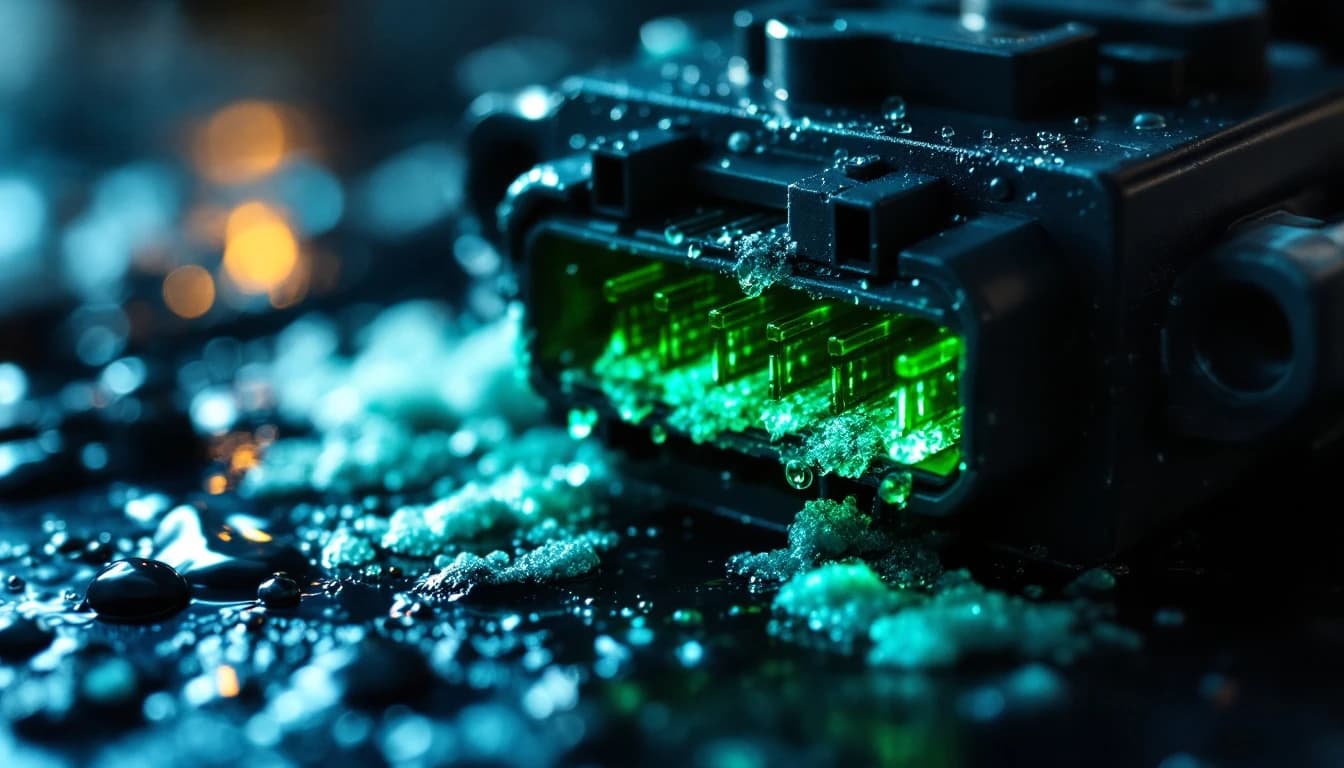
| Faults appear after rain or a car wash | Water reaching connectors or the module | Wet trim, green corrosion on pins | Possible, as a result of the water |
Likely causes, ranked honestly
The order below is the order in which these faults actually turn out to be the answer on a twenty-year-old MINI. The module is last on purpose.
1. Battery and charging. Low or unstable voltage is the most common cause of strange body-electrical behaviour on any car, and MINIs of this age are no exception. A battery that reads fine at rest can sag under load, and control modules misbehave long before the starter stops turning. AAA responds to more than 30 million roadside calls a year, and battery trouble is among the most familiar reasons. Note that the battery is not in the same place on every first-generation car — on the Cooper S it is in the boot rather than under the bonnet — so the cable run and its connections are part of the check.
2. Grounds. A corroded or loose ground strap gives a module a poor reference, and the result is flickering lights, relays that chatter and functions that work on a dry morning and fail on a wet one. Grounds are free to inspect and cheap to clean.
3. Fuses and their holders. Check the fuses that feed the body module and the affected circuits, and look at the fuse holders themselves. A fuse can test good and still sit in a holder that has gone green.
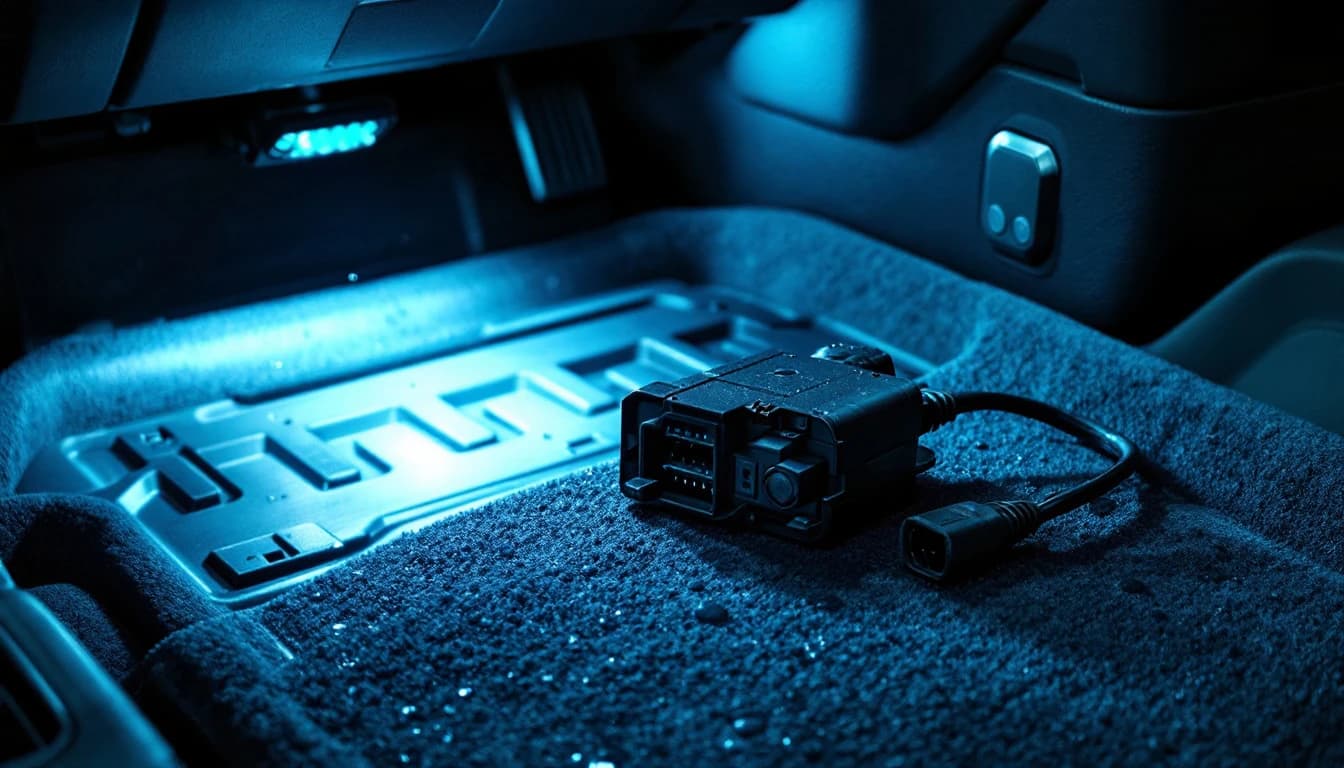
4. Water ingress. Water is the big one on these cars. Blocked drains, tired door seals, a perished door membrane or a convertible roof that no longer seals will put water where the wiring and modules live. Water usually damages connectors and wiring before it kills a module, so damp carpet and green corrosion on pins are the evidence to look for.
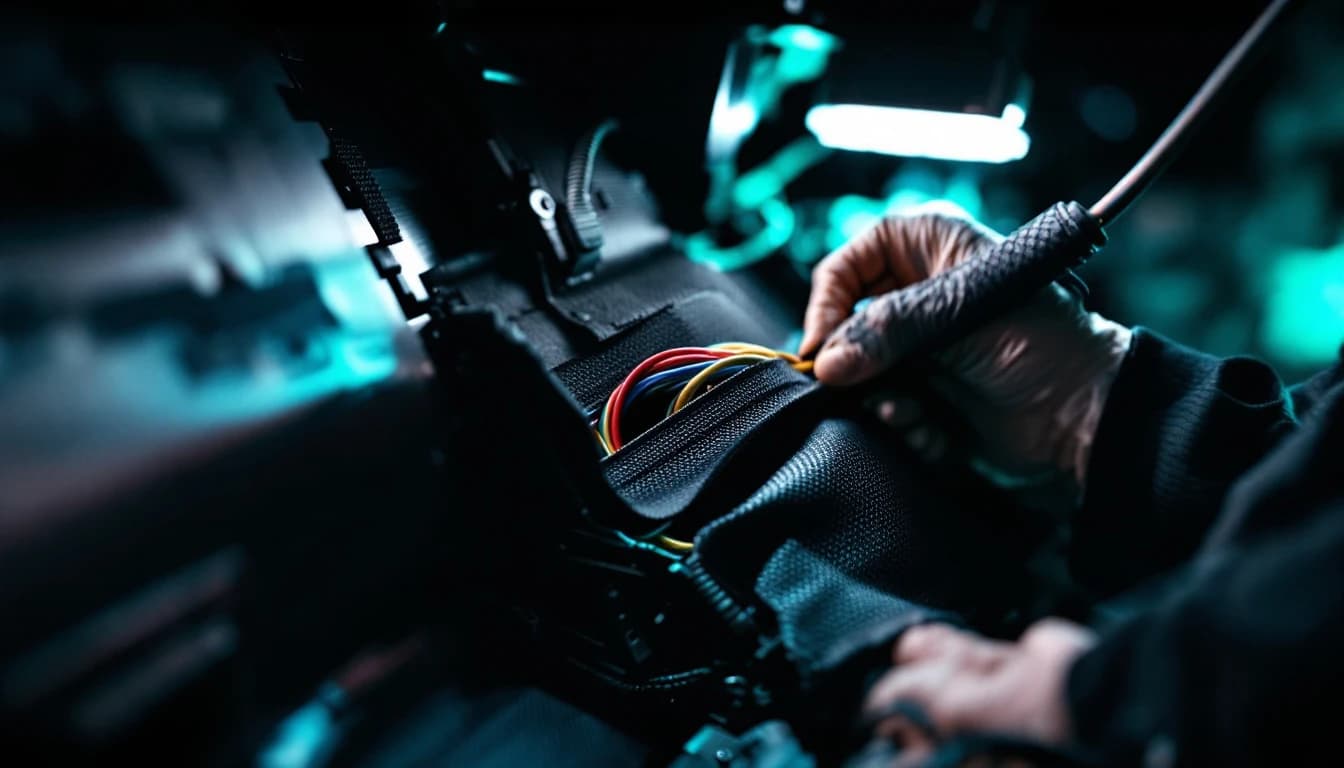
5. Door and boot harness. The wiring that passes from the body into each door and into the boot lid flexes every time the car is used. After two decades, conductors break inside insulation that still looks intact. A lock, light or number-plate lamp that works with the door or boot in one position and fails in another is a wiring fault, not a module fault. Our guide to dead windows, locks and mirrors covers how to test a door harness properly.
6. Window regulators, motors and switches. A single dead or slow window is nearly always mechanical or a switch. Regulators and motors wear, and switches fail. A body module does not usually take out one window and leave everything else working.
7. Keys and the immobilizer. An intermittent no-start with the body electrics otherwise normal points at the key transponder, the ring antenna around the ignition lock, the ignition switch or the EWS side of the system — not at the body module. Try the second key before anything else. If the engine computer or immobilizer module has been replaced or disturbed, the fault may be a lost synchronisation; our guide on how to reset EWS on a BMW explains that relationship, and the same family of system is at work in the MINI.
8. The body control module itself. Modules do fail — from water, from age, from a voltage event. But the module belongs at the end of the list, after the seven items above have been checked and cleared.
"On these cars I check the battery and where the water has been before I look at any module. Most of the body computers I am asked to condemn turn out to be fine once the supply voltage and the grounds are right." — Independent European-specialist technician, 20+ years (anonymized)
Diagnostic steps, in order
Work through these in sequence. Each step either finds the fault or rules out a cheap cause, and you do not need to remove the module for any of them.
- Test the battery properly. Measure it at rest, then under load. A healthy, fully charged battery rests at roughly 12.6 volts; one that falls sharply during cranking is suspect whatever it reads at rest. With the engine running, confirm the alternator is charging.
- Inspect and clean the grounds. Follow the main battery ground and the body grounds near the affected circuits. Clean to bare metal and retighten.
- Check every relevant fuse and its holder. Use a meter rather than your eyes, and check for voltage on both sides with the circuit switched on.
- Look for water. Lift the carpet edges, feel the underlay, and inspect the connectors and the module area for moisture or green deposits. If you find water, find the leak — a replacement module will fail the same way if the water keeps coming in.
- Read fault codes from every module, not just the engine. A generic code reader only sees the engine computer. You need a tool that reads the body module, the immobilizer and the instrument cluster. Note whether the body module communicates at all.
- Split the fault. Does it affect one door or all of them? One light circuit or several unrelated ones? One function points at a component or a wire. Several unrelated functions at once point at supply, ground, water or the module.
- Flex the harness. With the fault present, open and close the door or boot slowly and move the rubber gaiter by hand. A fault that comes and goes is a broken conductor.
- Test the component directly. Power a window motor or a lock actuator on its own before blaming what commands it.
- Try the second key. For any no-start, this takes thirty seconds and separates a key fault from everything else.
- Measure the sleep current. If the complaint is a flat battery after the car sits, measure the draw after the car has gone to sleep and pull fuses to find the circuit. Our parasitic battery drain guide walks through the method.
If, after all ten, power and ground at the module are good, the wiring and components test good, and the module either will not communicate or commands things it should not — then the body control module is a reasonable conclusion.
It is also worth checking whether the car has open safety recalls before spending money; the NHTSA recall lookup takes a VIN and costs nothing.
Why a used BCM never simply works
Here is the part that catches people. You diagnose a failed module correctly, buy a used one from a breaker or an online listing, fit it, and the car is worse than before: it will not start, will not lock, or lights the dash.
The reason is in the service data for these cars. The body control module stores the vehicle's configuration and coding, and it sits inside the EWS-derived immobilizer chain. A second-hand module still carries the identity, coding and immobilizer data of the car it came out of. Your MINI sees a stranger and rejects it — most commonly as a crank-no-start, sometimes as dead central locking or lighting instead.
That design is deliberate. Electronic immobilizers exist because cars are stolen: the National Insurance Crime Bureau reported more than 1 million vehicle thefts in the US in 2023. A security system that accepted any matching module from any car would not be a security system. The cost of that protection is that a module swap becomes a data problem as well as a parts problem.
A new module from a dealer needs configuring to the car as well, and on a car this age the price of that route is often out of proportion to the value of the vehicle. BMW Group still supports its older cars through the MINI dealer network, but for many owners a used donor with the original's data moved onto it is the practical answer.
The two BCM variants, and matching by part number
There are two body control module variants across the first-generation cars:
- the early aluminum-housing unit, typically found on the first-series R50 and R53 cars, and
- the later revision, typically found on the R52 convertible and late-build hatches.
They are not interchangeable. And within a variant, the part number on the label has to match as well. A donor from the same model and the same year is not automatically the right one — this is the single most common reason a mail-in job stalls.
The practical rule is simple. Before you buy a donor, photograph the label and the housing of your original, get the same two photos from the seller, and send both sets to us with your VIN. A technician confirms or rejects the pair before you spend anything on the part or on shipping. If the seller cannot or will not photograph the label, do not buy that module.
How cloning onto a matched donor works
Cloning solves the identity problem at its source. Rather than trying to teach the car to accept a foreign module, the donor is given your original module's data, so the car cannot tell the two apart. The job runs in this order:
- Verification — your VIN plus label photos of both modules, checked before anything ships.
- Bench read of the original, with a full backup taken before anything is written.
- Transfer of the configuration, coding and immobilizer data onto the matched donor.
- Read-back verification of the donor against the source data, not a blind write.
- Bench power-up and communication test on a regulated supply.
- Return of both modules with tracking and written install notes covering what to expect at first key-on.
Because cloning preserves the factory immobilizer relationship rather than altering it, the keys that worked before continue to work afterwards. This is not an immobilizer delete and it is not a bypass. The service does not cut or program keys, does not replace a failed ring antenna or ignition switch, and does not repair wiring.
There is one hard limit. Cloning needs a readable source. If your original powers up, even badly — corroded, water-damaged, intermittent — it can usually be read. If it is completely dead and will not respond on the bench, a straight clone is not possible, and the job moves to our advanced recovery service, which attempts a direct read of the memory from the board. That is $350 when the data is recovered, and it is evaluated first so you are told honestly whether it is worth attempting.
The corollary matters: if your original is water-damaged but still alive, have it cloned before it dies completely. A living module is a much easier job than a dead one.
Proof of ownership — a title, registration or bill of sale — is required before any of this work begins, because it touches immobilizer data. There are no exceptions. The broader principle that owners and independent shops should be able to get their own cars repaired is one the Federal Trade Commission has supported publicly; verifying ownership is how a workshop does that responsibly.
What it realistically costs
Lay the costs out in the order you would meet them.
- Diagnosis you do yourself: a multimeter, time, and possibly a battery. Most first-generation MINI body faults end here, with a battery, a ground, a repaired wire or a dried and cleaned connector.
- A component: a window regulator, lock actuator, wiper motor or switch, if that is what testing finds.
- A used donor module: prices vary with the seller and the variant. We do not supply donors; you source one and we verify the match first, which keeps your cost down.
- The clone: $250 flat for the MINI R50, R52 and R53 BCM clone as of October 2026.
- Shipping: you order, we email a prepaid inbound label, and you choose return shipping at checkout — Standard at $29.95, UPS 2-day at $54.95, or overnight at $94.95. Return shipping is paid on every order.
If you are weighing whether the car is worth it, look at what these cars are actually changing hands for. Valuation and market coverage from Hagerty is a reasonable place to start, and a clean first-generation Cooper S has a following. And if you are buying a first-generation MINI rather than repairing one, check its history as well as its electrics: NHTSA estimates that more than 450,000 vehicles are sold each year with false odometer readings, costing buyers more than 1 billion dollars annually.
When to mail it in — and when not to
Mail the module in when all of these are true:
- battery, charging, grounds and fuses have been tested and are good;
- you have looked for water and dealt with any leak;
- the door and boot harnesses and the individual components have been ruled out;
- the body module will not communicate, or misbehaves with good power and ground, or you have already fitted a used module and the car rejects it; and
- you have a donor whose variant and part number we have confirmed.
Do not mail it in when one window is dead, when one door will not lock, when the fault changes as you move a door, or when the only complaint is a no-start with normal body electrics. Those are not body module faults, and a clone will not fix them.
If you genuinely cannot tell, text us the VIN, the symptoms and the fault codes from every module. For a module that does not fit a flat-rate service, a bench evaluation at $150 gets it diagnosed on the bench before you commit to a repair.
If you have the later MINI instead
The second-generation cars — the R56 hatch and its R55 to R61 relatives — use a different architecture built around BMW's CAS access module and a footwell module, and a first-generation body control module has nothing to do with them. Dead windows and exterior lights on those cars usually point at the footwell module; our BMW footwell module guide by chassis explains how that module fails on the related BMW platforms.
For those cars the right listing is the MINI CAS, FRM and DME clone, also $250, and the MINI CAS, FRM and DME clone guide covers which of the three modules matches which symptom.
Frequently asked questions
How do I know if my MINI Cooper body control module is bad?
A failed body control module usually shows several body functions failing together — locking, lighting and wipers — or a module that will not communicate with a scan tool even though its power and ground are good. A single dead window or one door that will not lock is almost never the module. Rule out the battery, grounds, fuses, water and wiring first.
Can I fit a used body control module from another MINI?
Not by plugging it in. A used module still carries the donor car's configuration, coding and immobilizer data, so your MINI rejects it — usually as a crank-no-start, sometimes as dead locking or lighting. It needs your original module's data cloned onto it, and the donor must match both the variant and the part number on the label.
Will my keys still work after the module is cloned?
Yes. Cloning copies your original module's immobilizer data onto the donor and preserves the factory security relationship, so the keys that worked before keep working. It is not an immobilizer delete or a bypass. Proof of ownership is required before the work starts because the job touches immobilizer data.
What if my original body control module is completely dead?
A dead module that will not power up or respond on the bench cannot be cloned directly, because there is nothing to read. Those jobs go to the advanced recovery service at $350, where a direct memory read from the board is attempted. Text us the VIN and symptoms first, and we will tell you honestly whether it is worth attempting.
Do the two BCM variants really matter?
Yes, they matter more than anything else about the donor. The early aluminum-housing unit and the later revision are not interchangeable, and the part number must match within a variant as well. A same-year, same-model donor is not automatically correct. Send label and housing photos of both modules and we confirm the pair before you buy.
Why does my MINI crank but not start if the fault is in the body module?
Because the body control module takes part in the immobilizer and start-enable chain on these cars, a failed or foreign module can block starting. But a crank-no-start is much more often a key transponder, ring antenna, battery or engine-side fault, so try the second key and read codes from every module before concluding it is the body module.
How much does a MINI R50 or R53 BCM clone cost?
The clone is $250 flat at Auto Module Lab as of October 2026, plus return shipping chosen at checkout from $29.95. You supply the matched donor, and the lab emails a prepaid inbound label after purchase. Turnaround is typically quick once both modules arrive, though it is an estimate rather than a promise.
The bottom line
On a first-generation MINI, a failed body control module looks like locks, lights and wipers misbehaving together, a module that stops communicating, or a car that will not start — but so does a weak battery, a corroded ground, a wet footwell, a broken wire in a door harness or a tired key. Test the battery, clean the grounds, check the fuses, find the water, flex the harnesses and try the second key before you buy anything.
When the module really has failed and still powers up, cloning its configuration, coding and immobilizer data onto a matched donor for $250 plus return shipping gives you a replacement the car accepts, with your existing keys. The work is done at our Arlington, Texas workshop. Text us your VIN and photos of both module labels, and a technician will confirm the pair before you ship or pay.
Sources and further reading: S&P Global Mobility, AAA, National Insurance Crime Bureau, National Highway Traffic Safety Administration, Federal Trade Commission, Hagerty, MINI, SAE International.
Ship your module today
Flat-rate pricing, typical 24-hour bench turnaround, return speed your choice at checkout. Most jobs back on your bench within a week.