
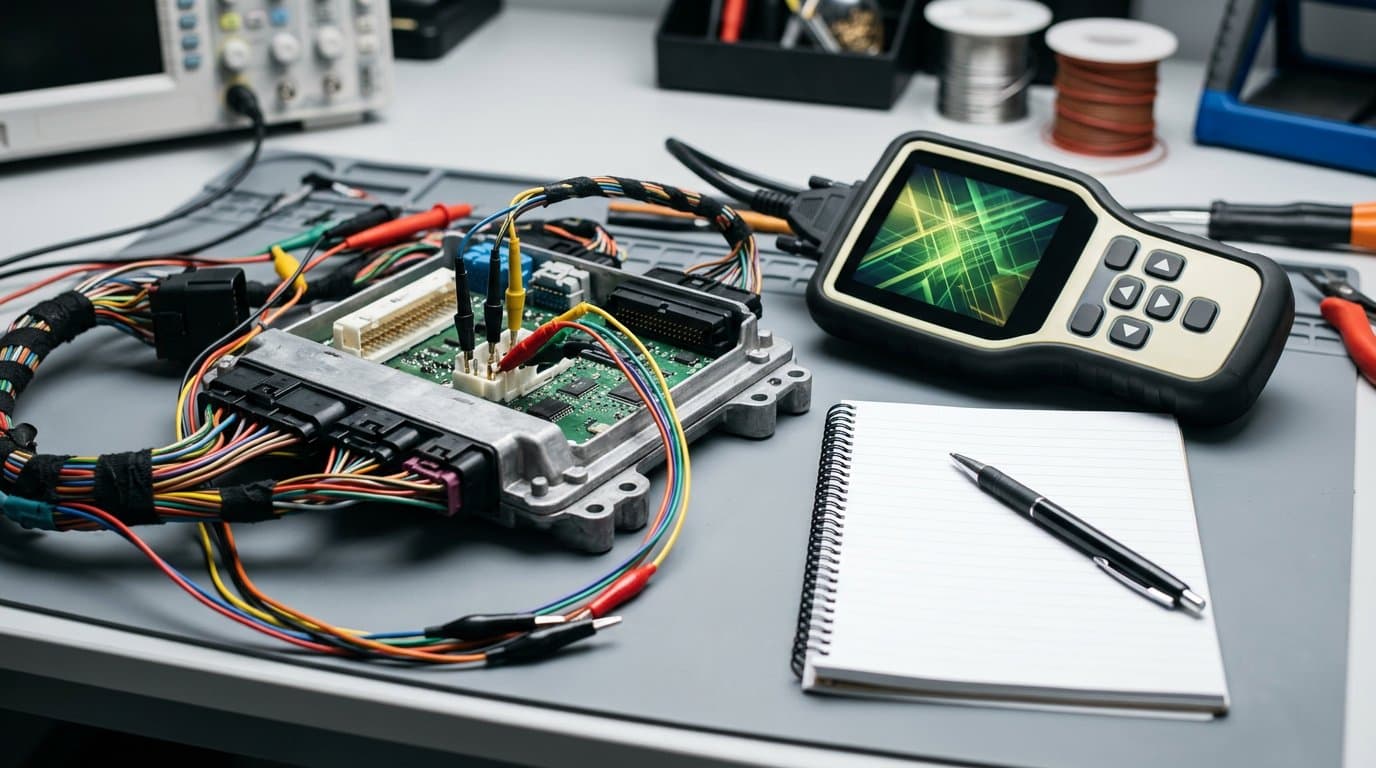
Airbag Light After Fender Bender: Cheaper Alternatives to $1,200 Module Replacement
Meta Description: Discover crash data clearing and repair alternatives when your airbag light is on after a fender bender instead of paying $1,200 for dealer module replacement.
When your airbag light stays illuminated following a fender bender and the dealer quotes $1,200 for a new airbag control module, you're facing a decision that requires understanding what actually failed. The dealer's replacement recommendation typically assumes the module itself has sustained physical damage, but in most minor collisions, the module has simply stored crash data that triggers the warning light without any electronic component failure. Two alternatives exist: crash data clearing for modules that remain electronically functional, and board-level repair for modules with actual component failures—both substantially less expensive than dealer replacement.
Automodulelab provides nationwide mail-in service for both crash data clearing and board-level module repair from our Arlington, Texas facility. The diagnostic requirement before selecting either option determines which approach addresses your specific failure mode.
Why the Airbag Light Activates After a Collision
The supplemental restraint system (SRS) control module continuously monitors inputs from crash sensors, seat position sensors, belt tensioner circuits, and airbag deployment circuits. When the module detects impact forces exceeding programmed thresholds, it stores crash data in nonvolatile memory and illuminates the airbag warning light.
This crash data storage occurs even when no airbags deploy. A low-speed collision that triggers frontal impact sensors but remains below deployment thresholds will still write crash event records into the module's memory. The module then sets a fault condition that persists until the stored crash data is cleared through the appropriate service procedure.
The warning light indicates the system has entered a fault state—not necessarily that any component has failed. The module transitions to a safe mode where it may not deploy airbags in a subsequent collision because it has already recorded a crash event and cannot determine whether the system remains intact. Understanding this distinction matters when evaluating repair options, because modules storing crash data often retain full electronic functionality.
What Dealer Module Replacement Includes and Why It Costs $1,200
The dealer replacement quote typically includes a new or remanufactured airbag control module, programming to integrate the module with your vehicle's VIN and configuration data, and labor for removal, installation, and system verification. Module prices vary by vehicle make, model, and year, with original equipment manufacturer (OEM) modules for newer vehicles commanding premium pricing.
The replacement cost includes more than the hardware. Airbag modules require vehicle-specific programming after installation to match the module's software to your vehicle's exact configuration—year, model, trim level, restraint system equipment, and communication protocols. This programming requires factory scan tools or licensed aftermarket equipment with access to manufacturer programming files.
Labor costs account for diagnostic time, module replacement, programming procedures, and post-installation verification testing. Technicians must verify proper communication between the new module and all connected sensors, confirm deployment readiness, and document that the system passes self-diagnostic checks. The dealer's pricing reflects these documented procedures and the liability associated with restraint system repairs.
Replacement makes technical sense when the module has sustained physical damage—water intrusion, impact damage to the module housing, or thermal damage from electrical faults. When the module remains electronically functional and simply stores crash data, replacement addresses the symptom rather than the actual failure mode.
Crash Data Clearing: The Lower-Cost Alternative to Module Replacement
Crash data clearing removes the stored collision records from the module's memory and resets the fault condition that triggers the warning light. This service applies specifically to modules that remain electronically functional but have entered a fault state due to stored crash data. The process addresses the exact failure mode present in most fender benders where impact forces triggered crash recording without causing electronic component damage.
Automodulelab's crash data clearing service operates through a mail-in process where the module is removed from the vehicle, shipped to our Arlington, Texas facility, cleared of crash data, tested for proper function, and returned. The service addresses the memory-level fault without replacing functional electronic components.
The clearing process differs fundamentally from replacement. Rather than installing new hardware and programming it to communicate with your vehicle, clearing preserves the existing module with its established programming and communication parameters while removing only the crash event records. The module retains its original calibration data, VIN information, and configuration settings.
This approach costs substantially less than dealer replacement because it addresses only the specific fault—stored crash data—rather than replacing the entire module assembly. The service applies when diagnostic verification confirms the module's electronic circuits remain functional and the warning light results solely from stored collision records.
Crash data clearing requires proper diagnostic confirmation before proceeding. The module must communicate properly with scan tools, respond to diagnostic commands, and show no fault codes indicating electronic circuit failures. Pre-shipment documentation requirements help identify which modules qualify for clearing versus those requiring board-level repair. Additional information on the diagnostic requirements appears in our guide to what happens during airbag module crash data clearing.
Board-Level Module Repair for Physical Electronic Failures
Board-level repair addresses actual component-level electronic failures within the module—failed capacitors, damaged voltage regulators, corroded solder joints, or failed communication circuits. This service level applies when the module has sustained physical damage or electronic component degradation that prevents normal operation, rather than simply storing crash data.
Automodulelab's Arlington, Texas facility provides component-level repair services that identify and replace failed electronic components while preserving the module's programmed calibration data. This approach costs less than dealer replacement while addressing genuine electronic failures that crash data clearing cannot resolve.
Board-level diagnosis identifies specific component failures through testing that goes beyond what standard scan tools reveal. A module with failed communication circuits may not respond to scan tool queries, appearing completely inoperative. A module with voltage regulation failures may communicate intermittently or reset randomly. These failure modes require component-level diagnosis to identify which circuits have failed.
The distinction between clearing and repair matters for cost estimation and service selection. A module storing crash data but communicating normally qualifies for clearing. A module that fails to communicate, shows internal circuit faults, or demonstrates intermittent failures requires board-level repair. Proper diagnostic documentation before shipping the module helps determine which service addresses your specific failure mode.
Diagnostic Requirements Before Selecting a Repair Option
Pre-service diagnostics determine whether your module qualifies for crash data clearing or requires board-level repair. The difference between a module we can diagnose on arrival and one that requires return contact for missing information consistently traces to what was documented before the module shipped.
Scan the vehicle with a capable scan tool that communicates with the airbag module. Record all stored fault codes from the SRS system, including hard codes and pending codes. Document whether the module responds to scan tool communication requests or fails to establish communication. Note any other symptoms beyond the illuminated warning light—intermittent airbag warnings, deployment-related warnings, or communication errors.
Check for related damage from the collision. Inspect the module's physical location for water intrusion, visible impact damage to the module housing, or damaged wiring harnesses. Water damage or physical impact damage indicates potential board-level failures beyond simple crash data storage. Document any visible damage with photos before removing the module.
Verify that only the airbag light illuminates with no other restraint system warnings. If seat belt pretensioners deployed, they require physical replacement—crash data clearing addresses only the module's stored records, not deployed physical components. Understanding which components require replacement versus which qualify for service prevents incomplete repairs. Our guide on airbag and seat belt pretensioner reset after deployment covers the distinction between module service and component replacement.
Test whether the module powers up and completes its self-test sequence. When you turn the ignition to the ON position, the airbag light should illuminate for approximately six seconds as the module runs through its startup diagnostic routine, then either extinguish or remain illuminated. A module that shows no response during this startup sequence likely has power supply failures or deeper electronic faults requiring board-level repair rather than crash data clearing.
Mail-In Module Repair Process and Documentation Requirements
The mail-in service process requires module removal, proper documentation, secure packaging, and shipment to our Arlington, Texas facility. The module location varies by vehicle make and model, typically mounted under the center console, beneath the driver's seat, or behind the dashboard near the transmission tunnel.
Remove the module following proper service procedures. Disconnect the vehicle battery before removing the module to prevent accidental airbag deployment or electrical faults. The module connects through one or more electrical connectors secured with locking tabs or bolts. Document connector orientation before disconnecting to ensure correct reinstallation.
Package the module to prevent shipping damage. Use anti-static packaging if available, though standard bubble wrap and a sturdy box provide adequate protection for most modules. Include documentation listing the vehicle year, make, model, VIN, symptoms before removal, scan tool fault codes, and any observed damage. This documentation enables diagnosis on arrival without requiring return contact for missing information.
Ship the module through a carrier that provides tracking and delivery confirmation. The module contains no hazardous materials and ships as standard electronics. Retain the tracking number to monitor shipment progress. Processing time begins when the module arrives at our facility with complete documentation.
After clearing or repair, the module returns with documentation confirming the service performed and any additional findings from physical inspection. Reinstall the module using the reverse of the removal procedure, ensuring connector orientation matches the original configuration. Reconnect the battery and verify that the airbag light completes its normal startup sequence. Most vehicles require a brief drive cycle for all systems to complete their initialization routines after module reinstallation.
Some vehicles require additional steps after module reinstallation—scan tool procedures to complete system initialization, steering angle sensor calibration, or occupant classification system verification. The returned documentation identifies when these additional steps apply based on the specific vehicle platform. For general guidance on diagnostic procedures after module service, see our article on what to do when the airbag light stays on after an accident.
Choosing Between Crash Data Clearing, Board-Level Repair, and Replacement
The decision framework starts with diagnostic confirmation of the failure mode. If scan tools communicate normally with the module, fault codes indicate only crash data storage or deployment-related faults, and physical inspection reveals no damage, crash data clearing addresses the fault at the lowest cost.
If the module fails to communicate, shows intermittent operation, displays internal circuit fault codes, or has visible physical damage, board-level repair becomes necessary. The module contains electronic failures that clearing cannot address. Component-level diagnosis identifies which circuits have failed and whether repair remains economically viable.
Dealer replacement makes sense in specific scenarios: modules with extensive water damage where corrosion has degraded multiple circuit areas, modules damaged by collision impact severe enough to crack circuit boards, or modules where board-level repair costs approach replacement pricing. The dealer's diagnostic findings should specify which components failed and why replacement is necessary rather than defaulting to replacement for all illuminated warning lights.
Cost comparison requires understanding what each service addresses. Crash data clearing removes stored collision records from a functional module—it does not repair failed electronic components. Board-level repair replaces failed components while preserving programmed calibration data. Dealer replacement installs a new module requiring complete programming. Match the service level to the diagnosed failure mode rather than selecting based solely on initial cost.
Documentation requirements vary by service level. Clearing requires confirmation that the module communicates normally and stores only crash data. Board-level repair requires symptom documentation—intermittent failures, communication faults, specific fault code numbers. The difference between these service levels matters for realistic cost estimation and service outcome expectations.
Frequently Asked Questions About Post-Collision Airbag Module Repair
Will crash data clearing work if my airbags deployed?
Crash data clearing removes stored collision records but does not reset deployed airbag circuits or replace deployed physical components. If airbags or seat belt pretensioners deployed, those components require physical replacement before the module can return to normal operation. Clearing addresses the module's stored crash data, but deployed components prevent the system from returning to readiness until replaced. The module will continue indicating faults until all deployed components are replaced and the system passes self-diagnostic verification.
How do I know if my module has physical damage versus just stored crash data?
Scan tool communication provides the primary diagnostic indicator. A module that responds to scan tool queries, displays crash-related fault codes, and completes normal communication protocols likely retains electronic functionality with stored crash data. A module that fails to communicate, shows internal error codes, or demonstrates intermittent behavior likely has component-level electronic failures. Visual inspection for water intrusion, impact damage to the module housing, or corroded connectors indicates physical damage requiring board-level repair rather than simple crash data clearing.
Can I clear crash data with my scan tool instead of sending the module for service?
Most aftermarket scan tools cannot clear crash data from airbag modules because manufacturers restrict this function to factory-level equipment. Even scan tools with "clear codes" functions typically cannot erase stored collision records from the module's nonvolatile memory. The module stores crash data in protected memory areas separate from standard diagnostic trouble codes, requiring specialized equipment and procedures to access. Attempting to clear codes without proper equipment will not resolve the underlying fault condition or extinguish the warning light.
Does the module need reprogramming after crash data clearing?
Crash data clearing preserves the module's existing calibration data, VIN information, and configuration settings. The module does not require reprogramming after clearing because the service removes only the crash event records without altering the module's operational programming. This differs from module replacement, where a new module requires complete programming to communicate with the vehicle. The preservation of existing programming data contributes to the lower cost and faster turnaround of clearing compared to replacement.
Will insurance cover crash data clearing instead of module replacement?
Insurance coverage decisions rest with individual insurance companies and policy terms. Providing documentation that crash data clearing addresses the specific diagnosed fault—stored collision records in an electronically functional module—may support coverage consideration. Some insurance policies specify OEM parts or dealer repairs, while others allow alternative repair methods that restore the vehicle to pre-loss condition. Documentation showing that clearing removes the fault condition and returns the system to operational status provides the information insurers need for coverage determination.
Conclusion
When your airbag light remains illuminated after a fender bender and the dealer quotes $1,200 for module replacement, understanding the actual failure mode determines which repair approach makes technical and economic sense. Most minor collisions trigger crash data storage without causing electronic component damage, making crash data clearing the appropriate service that addresses the fault at substantially lower cost than replacement.
Automodulelab's nationwide mail-in service provides both crash data clearing for modules storing collision records and board-level repair for modules with actual electronic failures. Our Arlington, Texas facility processes modules with complete diagnostic documentation to reduce turnaround time and ensure the service performed matches the diagnosed fault.
The difference between modules that qualify for clearing and those requiring board-level repair traces directly to pre-service diagnostic documentation. Scan tool communication status, fault code identification, and physical inspection findings determine which service level addresses your specific failure mode. The diagnostic requirements outlined in this article guide documentation that enables accurate service level determination.
Choosing between crash data clearing, board-level repair, and dealer replacement requires matching the service to the diagnosed fault rather than defaulting to the most expensive option. When diagnostic verification confirms the module retains electronic functionality and simply stores crash data, clearing addresses the exact fault that triggered the warning light.
For crash data clearing service with complete diagnostic support, contact Automodulelab to confirm your module qualifies for mail-in service. Proper diagnostic documentation before shipping ensures we can process your module on arrival without requiring return contact for missing information. Our service addresses the specific fault condition present in most post-collision airbag warning lights at a fraction of dealer replacement cost.
Related reading
Ship it for the airbag srs module crash-data clear — $75 flat
Typical 24-Hour Turnaround, return speed your choice at checkout. Prepaid inbound label by email the minute you order.
More from the Lab

Keyless Entry Module Repair Cost — Mail-In (2026)
11 min · November 23, 2026

Ford PATS Delete Cost — Mail-In Bench Programming (2026)
11 min · November 23, 2026

Water-Damaged Car Modules: What Can Be Repaired
12 min · November 23, 2026

Car Alarm or Horn Going Off By Itself: Causes and Fixes
12 min · November 23, 2026