The Dealer Said They Cannot Program Your Module
Start here: a dealer no is usually a business no, not a physics no
When a service advisor says "we cannot program that module," most owners hear "this module cannot be programmed." Those are two very different statements, and the gap between them is where a lot of good cars get scrapped or hit with a four-figure repair they never needed.
A dealer is a franchised business running on flat-rate labor, factory tooling, and parts markup. It is extremely good at one workflow: sell you a brand-new module, flash it on the car with the current factory software, collect the labor. Almost everything a dealer tells you about programming is filtered through whether a given job fits that workflow. When it does not fit, the honest short answer becomes "we cannot do that here," and for the dealer that answer is completely true. It is just not the same as the module being unfixable.
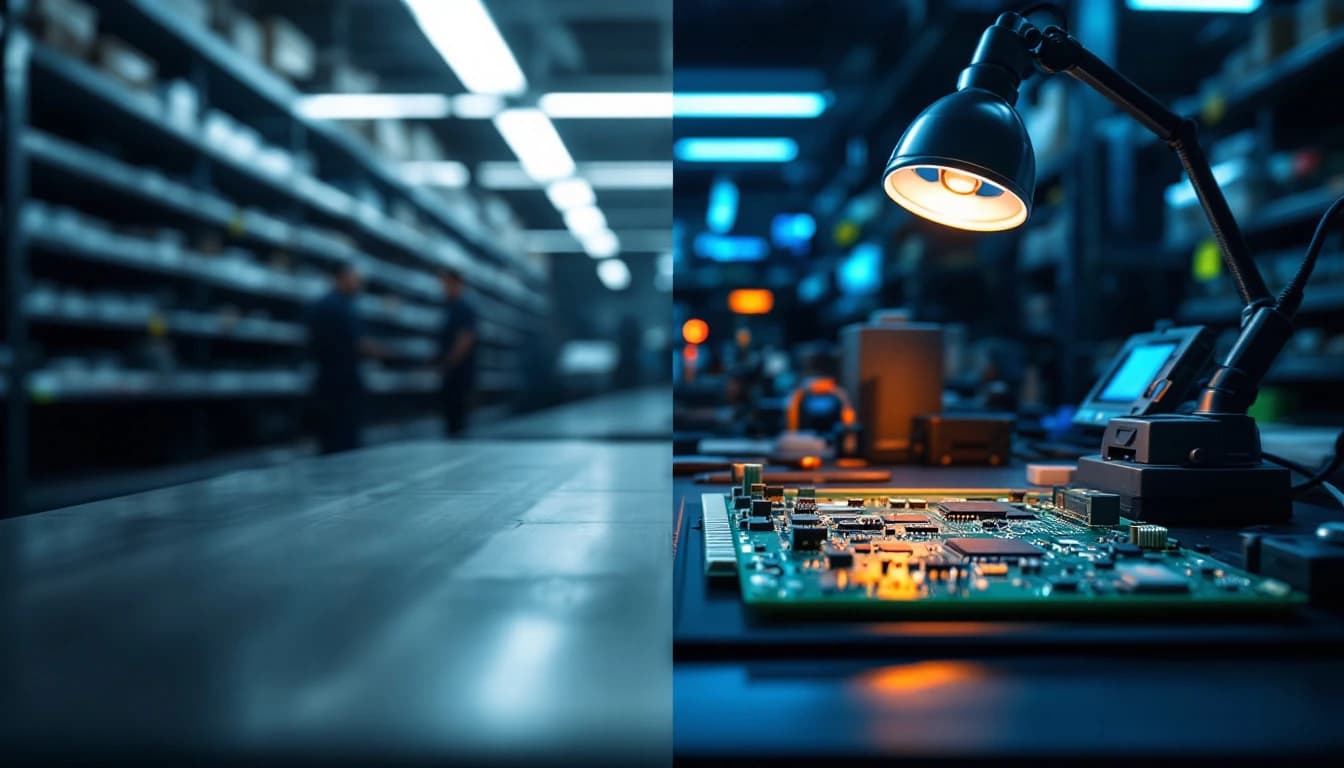
A bench specialist runs on a different economic model. The module comes off the car and ships to a workshop where it is powered on a regulated supply, opened if needed, read at the memory-chip level, repaired or cloned or unlocked, verified, and shipped back. That model can rescue things a dealer counter never will, because it is built around the removed part rather than around a live car in a bay. It also has its own honest limits, which we will get to.
Understanding which "no" you actually got is the whole game. So let us walk through the real reasons a dealer says no.
Reason one: the part is discontinued and no longer stocked
This is the single most common reason on cars roughly eight years old and up. The module has failed, the dealer looks it up, and the part number returns "NLA" — no longer available. No new part means no swap-and-flash, and swap-and-flash is the only play they have.
An NLA part number is a supply-chain fact, not a repair verdict. The Federal Trade Commission has spent years on the broader right-to-repair question precisely because parts availability, not physical repairability, is what strands most out-of-warranty owners. When the dealer cannot buy the box, the conversation ends there for them.
For a bench, an NLA part is often the easiest case in the shop. The physical module is sitting in your hand. If it can be repaired at the component level, that keeps your original identity and calibration intact and sidesteps the parts shortage entirely. If it is truly dead, a used donor of the same hardware can frequently be brought onto your car by cloning your original data onto it. Either path treats "NLA" as a starting point rather than a wall.
Reason two: your car is too old for the tools currently on their bench
Factory diagnostic platforms move forward, and older coverage quietly falls off. A dealer tech running the current-generation factory scan tool may find that a fifteen-year-old model is no longer in the software, or that the specific security routine your car needs was deprecated three tool versions ago. The tech is not lying when they say "the tool will not do it." Their tool will not.
This is a coverage gap, not an impossibility. Bench specialists deliberately keep legacy tooling, older security-data readers, and hardware programmers alive for exactly the platforms the dealer network has moved past. The Environmental Protection Agency required standardized on-board diagnostics on light vehicles beginning with the 1996 model year, which means there are now roughly three decades of OBD-II cars on the road — and a huge slice of them are older than whatever software the local dealer loaded last quarter. Old is normal at a bench. Old is a problem at a dealer counter.
The reason coverage keeps moving is the same reason modules keep multiplying. The National Highway Traffic Safety Administration has documented for years how deeply vehicle function now depends on networked electronic control units, with a mainstream car commonly carrying well over 50 of them. Industry reporting from Car and Driver has noted that electronics and software now account for a large and rising share of a new vehicle's value, by some estimates approaching 40%. And theft pressure never eases: the National Insurance Crime Bureau reports vehicle theft in the United States running into the hundreds of thousands of vehicles per year, which is precisely why security programming keeps getting locked down harder with each generation. More modules, more security, and faster-moving tooling all point the same way — toward a growing pile of cars the dealer counter has quietly aged out of.
Reason three: the on-car security data is not available
Some jobs a dealer genuinely can do only with a live connection to the vehicle and, on newer cars, a live connection to the manufacturer's secure server. When a module needs to be married to the car using security data that lives on the vehicle, and that data cannot be read — because the original module is dead, because the car will not power up the network, or because access requires credentials the shop does not have — the dealer path stalls.
A bench flips the sequence. Instead of pulling security data off a live car, the specialist reads it directly from the removed module's memory. If your original module still reads, even when it behaves unreliably in the car, its immobilizer identity and security bytes can usually be recovered off the bench and transferred. That is the core reason a mail-in service can often program a module to your VIN without the dealer: the data source is the chip, not the showroom network.
Reason four: they only swap-and-flash new parts and will not touch a used or repaired one
Ask a dealer to program a used module you bought online, or to reuse a board they suspect is repaired, and many will simply decline. It is policy as much as capability. Warranty exposure, liability, and flat-rate economics all point the same way: install a new factory part or nothing. A shop that only installs new parts is not equipped to evaluate whether a used donor is viable, so the safe answer is no.
This is the gap a bench lives in. Evaluating whether a specific used board can work, matching hardware and software revisions, and cloning identity onto a donor is the everyday job, not the exception. If the question is "will this used module I already bought work," that is a bench evaluation at $150 — a technician reads it, checks the hardware and calibration against your car, and tells you honestly whether it is a clone candidate, a repair, or a paperweight before you spend more.
Reason five: it is not profitable enough to keep a bay occupied
Dealers optimize for throughput. A tricky, low-dollar programming job that ties up a bay and a senior tech for two hours is a money-loser against the oil changes and warranty work stacked behind it. So the job gets discouraged, quoted high enough to go away, or bundled into a full-module replacement that the shop can actually bill cleanly.
None of that reflects on whether the work is doable. It reflects on what a franchise service department is built to bill. A mail-in bench has the opposite incentive: the work is the product, priced flat and public, and there is no bay competing with an oil-change queue.
What a specialist bench can do that a dealer will not
Set the reasons aside and look at the concrete capabilities that separate the two. This is not marketing; these are literally different physical procedures.
- Component-level repair. Cold-solder joints, failed voltage regulators, corroded connector pins, and blown driver stages can often be repaired on the board itself, keeping your original part, identity, and calibration. A dealer replaces the whole module; a bench can fix the actual fault.
- Reading security and identity data off the removed chip. The immobilizer secret, VIN, and adaptation bytes live in EEPROM or flash on the board. A bench can read them directly, archive them, and transfer them, without needing the car online.
- Cloning to a used donor. When your original is dead but readable, its identity is copied onto a same-hardware donor so the car sees your original module and your keys keep working.
- Unlocking locked controllers. Many powertrain controllers ship read-protected from the factory. A PCM unlocking service at $250 opens a supported, locked controller so it can be read, tuned, or cloned — something a dealer has no reason or ability to offer.
- Reflashing to correct factory software. When a controller has corrupted or mismatched software, stock OEM reprogramming at $250 writes the correct calibration back to the unit on the bench.
- Standalone module cloning for body electronics. A failed body control module on many GM platforms can be handled with a standalone BCM clone at $199, copying the original onto a donor without a dealer visit.
- Orphaned and low-volume brands. Saab is the textbook case — the franchise network is gone, but the modules still fail and still need programming. A bench that never depended on the franchise keeps servicing them.
The broader point is that a bench is not "the dealer but cheaper." It is a different discipline. If you want the full side-by-side, our dealer versus mail-in module programming comparison lays out cost, turnaround, and capability line by line.
Dealer no versus bench yes: the honest map
| Situation | Why the dealer says no | What a bench can do |
|---|---|---|
| Part is NLA / discontinued | Cannot buy a new module, and swap-and-flash is the only workflow | Repair the original board, or clone your data onto a used donor |
| Car too old for current tools | Coverage dropped from the current factory software | Keep legacy tooling and hardware programmers for older platforms |
| On-car security data unreadable | Needs live car or online access they lack | Read identity and security bytes directly off the removed chip |
| You supplied a used module | Policy is new parts only; will not evaluate a donor | Bench-evaluate the donor, then clone or program it |
| Job not profitable enough | Ties up a bay against higher-margin work | The programming itself is the product, priced flat |
| Orphaned brand (e.g. Saab) | Franchise network gone, no dealer to visit | Never depended on the franchise; still services the modules |
| Newest platform, online-only auth | Genuinely requires manufacturer server access | Usually cannot either — the dealer is right here (see below) |
When the dealer is actually right
A specialist that tells you the truth has to be willing to agree with the dealer sometimes, because on certain jobs the dealer is genuinely correct.
Some of the newest platforms require live online programming against the manufacturer server. On recent model years, certain modules can only be initialized, coded, or married to the car through the automaker's secure online system, with credentials and a live subscription the manufacturer controls. This is a real design decision, not a dealer excuse. The trend is well documented: the SAE International cybersecurity and software standards that govern modern vehicle networks have pushed authorization toward server-verified processes precisely to raise the bar against theft and tampering. When your car falls into that group, no bench, no clever tool, and no amount of wishing changes it, and the honest answer is that the job belongs with a facility that has that online access.
A physically destroyed module with no readable data is a hard case for everyone. If the board is water-damaged past recovery, or the memory will not read, then cloning your identity onto a donor is off the table because there is nothing left to copy. In that scenario the options genuinely narrow, and sometimes the dealer's "you need a new part programmed on the car" really is the path — assuming a new part still exists.
Live network faults that only appear on the car sometimes need the car. If the actual problem is wiring, grounds, or another module dragging the bus down, a bench on a single removed module will not find it. That is a diagnosis-on-the-vehicle problem, and the right first step is figuring out whether the module is even the fault. Our guide to module repair versus replacement versus reprogramming is the tool for that triage.
The rule of thumb: the newer the car and the more it depends on live server authorization, the more likely the dealer is right. The older the car, the more likely the "no" is a business or tooling limit that a bench routes around.
"I lose count of how many owners arrive convinced their module is a brick because a dealer said it could not be programmed. Nine times out of ten the dealer just meant they could not buy the part or their tool no longer covered the year. I put it on the bench, read the chip, and the original identity is sitting right there ready to move onto a donor. The dealer was not lying to them. They were answering a different question than the one the customer thought they asked." — Independent module-repair technician, 16+ years (anonymized)
How to tell which "no" you got
You do not need a scan tool to sort this out. Ask the shop, or work it out from what they already told you, using these signals.
It is probably a business or tooling no if: the part is discontinued, the car is more than about eight years old, they quoted a full module replacement rather than a repair, they refused to touch a used part you supplied, or they simply seemed uninterested in a fiddly low-dollar job. All of these are recoverable at a bench.
It might genuinely be a dealer-only job if: the car is a very recent model year, they specifically mentioned online programming, server access, or a subscription, and the module in question is a security or gateway component on a current platform. Those are the cases where the dealer's answer is the real answer.
It is an on-car diagnosis problem, not a programming problem, if: the symptom comes and goes, multiple unrelated modules throw codes, or the fault only appears while driving. Sort the diagnosis before you ship anything.
When in doubt, the cheapest way to get a real answer is a bench evaluation. Send the removed module, and a technician tells you whether it is repairable, cloneable, or genuinely a dealer-only case — before you spend a dime on a new part.
The mail-in workflow
Because this is a nationwide mail-in workshop, the sequence is the same wherever you are.
- Message the lab before you remove anything. Send the VIN, year, make, model, engine, the module part number and a photo of its label, what the dealer or shop actually told you, and whether the module is your original or a part you bought. This is where the right path gets chosen.
- Provide proof of ownership. Anything touching keys, immobilizer, or security requires documentation tying your name to the vehicle, without exception.
- Ship what we ask for. Usually the failed module. On cloning jobs, both your original and the donor. Both shipping labels — inbound to the lab and the return — are purchased for you at checkout, so you get a prepaid, pre-addressed label by email; return shipping is a flat-rate tier you choose, from $29.95.
- Bench read and archive. The module is powered on a regulated supply and its data read and archived before any change, so nothing is ever lost mid-job.
- Repair, clone, unlock, or reflash. The path agreed at intake is carried out on the bench, where a marginal car battery cannot corrupt a write halfway through.
- Bench verify. Communication and function are checked before the part leaves the shop.
- Return with tracking. You reinstall the part.
The whole model exists so a "no" at a parts counter does not become the end of the story.
Frequently asked questions
My dealer said my module cannot be programmed. Is it really unfixable? Almost never. In the large majority of cases a dealer "no" means the part is discontinued, the car is too old for their current tools, or they only install new parts, not that the module is physically impossible to program. A bench specialist reads data off the removed board directly and can often repair, clone, or unlock what a dealer counter cannot touch.
Why would a dealer refuse to program a used module I bought online? Because dealer policy and flat-rate economics are built around installing new factory parts, not evaluating used ones. Warranty exposure and liability push them to decline any part they did not sell. A bench, by contrast, evaluates used donors as a routine job, matching hardware and software revisions and cloning your identity onto the donor when it is viable.
Can a bench really fix a part the manufacturer says is no longer available? Yes, and NLA parts are often the easiest bench cases because the physical module is in hand. If the board is repairable at the component level, that keeps your original part and identity. If it is dead, a same-hardware used donor can usually be cloned to your car. Discontinuation is a supply problem, not a repair verdict.
When is the dealer actually right that only they can do the job? The dealer is genuinely right on the newest platforms that require live online programming against the manufacturer's secure server, and on modules so physically destroyed that no data can be read off them. Those jobs need dealer credentials or a new part programmed on the car. An honest bench will tell you when your car falls into that group before you ship.
How do I know whether my problem is programming or a bad module or wiring? If the symptom is intermittent, appears only while driving, or several unrelated modules throw codes at once, the problem is likely on-car diagnosis rather than programming, and shipping a single module will not solve it. If the fault is constant and tied to one module after a part change, it is far more likely a programming or identity issue that a bench can address.
Do I need proof of ownership to have my module worked on? Yes, for anything involving keys, immobilizer, or vehicle security, proof of ownership is required without exception, meaning documentation such as a registration or title tying your name to the vehicle. Reputable shops verify ownership; a shop that never asks should concern you.
What does it cost to just find out if my module can be saved? A bench evaluation is $150 and is the honest first step: a technician reads the removed module, checks it against your car, and tells you whether it is repairable, cloneable, or a genuine dealer-only case. That fee buys a real answer before you commit to a new part or a larger repair.
The bottom line
The sentence "we cannot program that module" is one of the most misread lines in the whole car-repair experience. From a dealer it usually means the part is discontinued, the car is older than their current tooling, the on-car security data is not reachable, they will not touch a used or repaired part, or the job simply does not pay in a flat-rate bay. None of those are the same as the module being unfixable. A specialist bench works from the removed part itself — reading identity data off the chip, repairing components, cloning to donors, unlocking controllers, and keeping alive the orphaned brands the franchise network abandoned.
There are real exceptions, and an honest workshop names them: the newest platforms that require live online programming against the manufacturer server, and modules destroyed past the point of a readable data recovery. On those, the dealer is right, and we will say so before you spend on shipping.
If a dealer or shop just told you no, do not assume the car is done. Message the lab with the VIN, the part number, a photo of the label, and exactly what you were told. Bench pricing is flat and public: $150 for a bench evaluation to get a real answer, $250 for PCM unlocking, $250 for stock OEM reprogramming, and $199 for a standalone BCM clone, with return shipping chosen at checkout from $29.95. The odds are good that the "no" you got was a business no — and those are the ones a bench turns into a yes.
Ship your module today
Flat-rate pricing, typical 24-hour bench turnaround, return speed your choice at checkout. Most jobs back on your bench within a week.