PCM & ECM Replacement Cost — Mail-In (2026)
What a PCM or ECM job actually costs in 2026
Here is the short answer. A powertrain or engine control module job is two stacked costs: the hardware, and the act of making that hardware talk to your specific car. Mail-in bench work separates them. Programming or cloning a module you already own is $250 on most platforms. A module we source, program to your VIN, and ship ready to install runs $379 to $449 depending on the make. Return shipping starts at $29.95.
Those bench figures are our live prices as of August 2026. They are flat rates, not estimates or ranges with a surprise at the end. Every dealer or independent-shop figure in this article is deliberately phrased as a range and labelled as typical or commonly reported, because those numbers genuinely swing by region, brand, and how a shop bills diagnostic time.
Two numbers, not one — and why estimates feel arbitrary
Nearly every confusing engine-computer quote comes from the same place. The estimate fuses a part cost and a programming cost into one figure and never tells you the split.
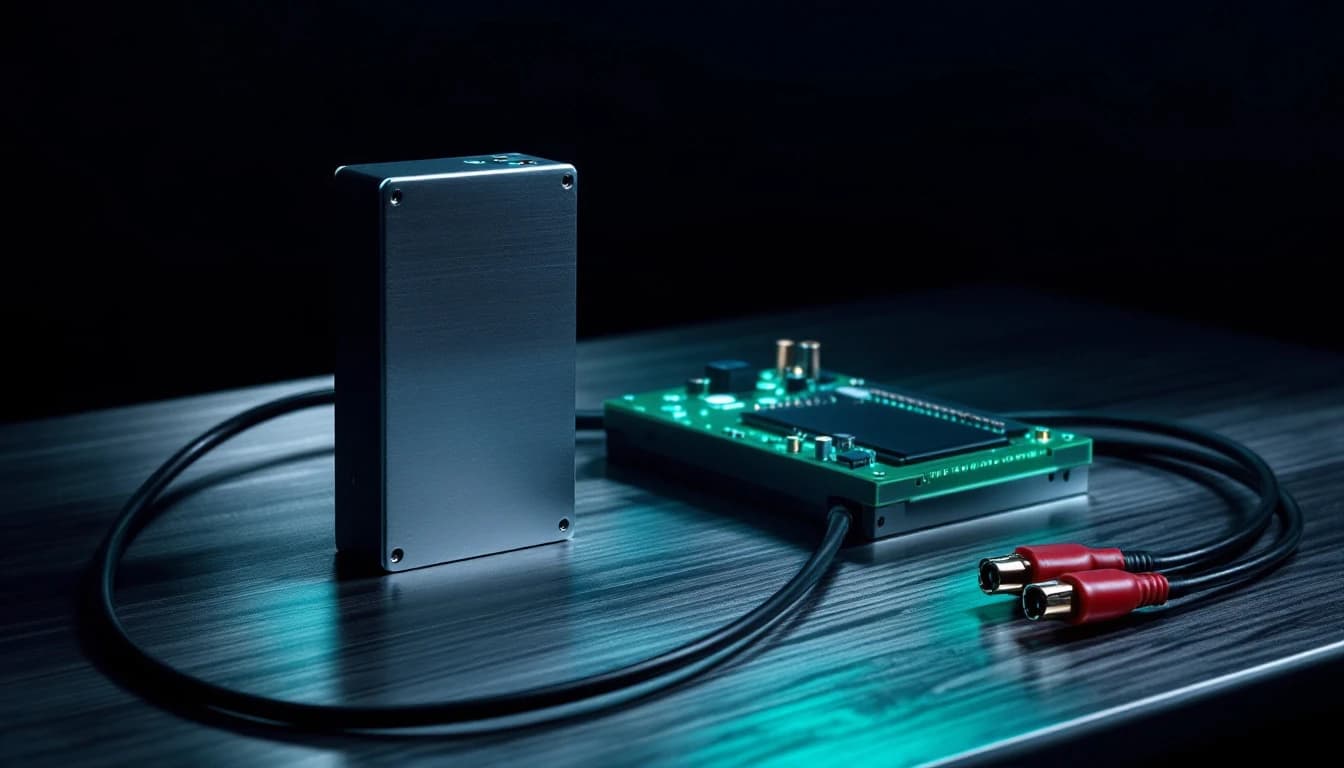
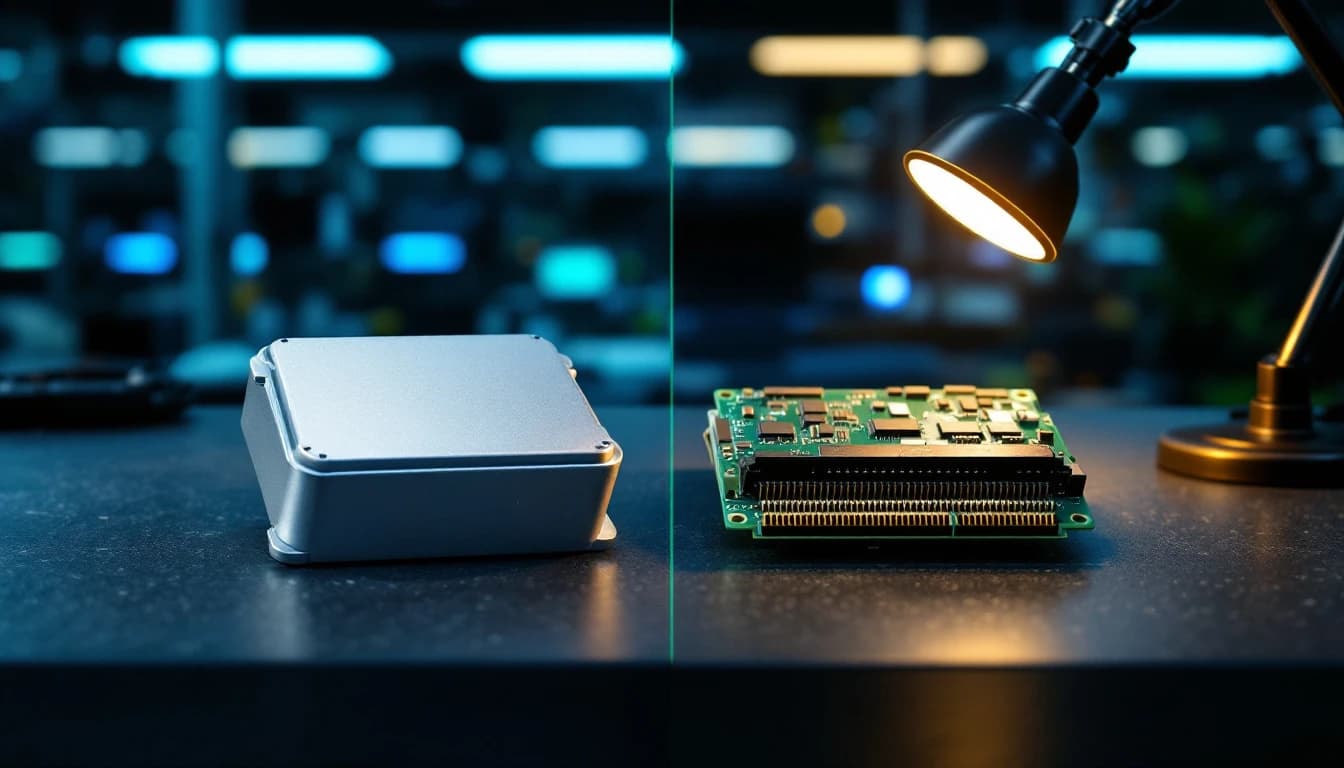
The part. PCM, ECM, ECU, and on some platforms PCU or SIM — the acronyms differ by manufacturer but the hardware is the same idea: a sealed controller running the engine, and on a great many vehicles the transmission alongside it. Depending on the platform it sits on the firewall, in the fender well, on the airbox, on the transmission bellhousing, or bolted directly to the engine where it takes the full heat cycle. New from a dealer it can run from a couple hundred dollars on a common domestic application to well past a thousand on a late-model European or Japanese platform.
The programming. A replacement module arrives knowing nothing about your car. It has to be given your VIN. It has to be matched to the correct calibration for your engine, transmission, axle ratio, and emissions family. On most platforms built in the last twenty years it also has to be brought into the vehicle's security architecture — paired with the immobilizer, given a security value, or handed a key relationship that proves it is allowed to let the engine run.
When someone quotes you one number, you cannot see whether you are paying $400 for the part and $900 for labor or the reverse. Pulling those apart is the entire reason mail-in bench programming exists. You keep control of where the hardware comes from. The specialist handles only the part that needs the tooling.
The scale of this is easy to underestimate. Standardized onboard diagnostics have been mandatory on light-duty vehicles sold in the United States since the 1996 model year — three decades of regulation administered through the U.S. Environmental Protection Agency — which means essentially every car on the road today has a powertrain controller that is legally required to self-monitor and report. The diagnostic and reprogramming protocols that make bench work possible were standardized through SAE International, whose pass-thru reprogramming standard is now more than 20 years old and underpins nearly every non-dealer flash performed in North America.
What the PCM or ECM actually does
Calling it "the engine computer" undersells it. A modern powertrain controller is running dozens of closed-loop control problems simultaneously, several hundred times per second.
- Fuel and spark. It calculates injector pulse width and ignition timing continuously from airflow, temperature, throttle position, knock sensor feedback, and oxygen sensor readings.
- Emissions compliance. It runs the readiness monitors, manages evaporative emissions purge, controls the catalyst warm-up strategy, and stores the data a state inspection reads.
- Torque arbitration. On modern platforms it negotiates with the transmission controller, stability control, and cruise system over the CAN bus about how much torque is actually delivered at any moment.
- Adaptive fuel trim. It learns and stores long-term corrections that compensate for injector wear, small vacuum leaks, and sensor drift over the life of the engine.
- Security participation. It holds or verifies an immobilizer relationship. On many platforms this is the single reason a physically identical used module refuses to start the car.
- Protection and limp strategy. When it sees something it cannot manage, it pulls timing, limits load, or drops the car into a reduced-power mode.
That security bullet is the whole ballgame. It is the reason an engine controller swap is a programming job rather than a wrenching job, and it is the reason so many people buy a used module, bolt it in, get a crank-no-start, and conclude the used part was bad.
Why powertrain modules fail — and why the failure mode moves the price
Not every failure costs the same to resolve, because not every failure leaves you the same options.
Thermal and vibration fatigue. Engine-bay modules live through relentless heat cycling and vibration. Solder joints on power-stage components develop microcracks. This is the classic intermittent fault that appears when hot and vanishes overnight, and it is the single most common cause of an ECM that works fine in the driveway and quits on the highway.
Driver-stage failure. The output stages that drive injectors, coils, and solenoids fail far more often than the logic side. A shorted injector or coil circuit can take the driver with it — which is why replacing a module without measuring the circuit sometimes kills the replacement inside a week.
Voltage events. Reversed-polarity jump starts, a failing alternator producing ripple, and low-voltage sags during cranking all damage controllers. Charging-system faults are an underrated module killer on every brand, and they are also the reason a flash performed in-vehicle on a marginal battery is one of the classic ways to brick a module mid-write.
Water and corrosion. Cowl drains that clog, connector seals that harden, a module mounted low in a fender well — moisture finds electronics, and corrosion on the connector face produces symptoms indistinguishable from an internal failure.
Nothing at all. A meaningful share of modules sent to a bench turn out to be electrically healthy. The fault was a ground, a harness chafe, a failed sensor, or a mechanical engine problem the controller was correctly reporting.
Here is why that matters to your wallet. A module that still powers up and communicates can usually be cloned — its identity, VIN, calibration, and often its learned data copied onto a healthy donor. A module that is electrically dead cannot be read, and the job becomes virgin programming plus a full relearn. Same tooling, different road.
The 2026 price picture
One table, real numbers. Bench prices are ours and live as of August 2026. Dealer and independent-shop figures are ranges and are described as typical or commonly reported; they vary substantially by market.
| Path | What it covers | 2026 cost |
|---|---|---|
| GM ECM/PCM, sourced and programmed | We source the module, program to your VIN, ship ready to install | $399 flat |
| Ford PCM, sourced and programmed | We source the module, program to your VIN, ship ready to install | $379 flat |
| Chrysler / Dodge / Jeep PCM, sourced and programmed | Sourced, programmed to VIN, SKIM immobilizer relationship handled | $399 flat |
| Toyota / Lexus ECM, sourced and programmed | We source the module, program to your VIN, ship ready to install | $449 flat |
| Honda / Acura ECM, sourced and programmed | We source the module, program to your VIN, ship ready to install | $399 flat |
| Clone your module to a donor — GM E38/E67/E92, Ford, Ford EEC-V, GPEC2/2A, Nissan/Infiniti, Hyundai/Kia | Bench read of your original, identity and calibration written to a donor you supply | $250 flat |
| PCM unlocking and GM Global A ECM unlock | Locked controller opened for bench read and write | $250 flat |
| Stock OEM reprogramming — Ford / GM | Return to factory stock calibration on the bench | $250 flat |
| Stock OEM reprogramming — Mopar | Return to factory stock calibration, Chrysler platforms | $350 flat |
| Bench evaluation | Powered bench test and read when nobody is certain the module failed | $150 |
| Return shipping | Chosen by you at checkout, standard through overnight | from $29.95 |
| Dealer: new module supplied and programmed | Part, programming, immobilizer pairing, shop labor | Commonly reported roughly $800–$2,000+ |
| Independent shop: used module plus mobile programming | Donor part, call-out, programming, relearn | Commonly reported roughly $350–$800 |
The distance between the bench rows and the last two rows is the whole argument. You are not paying an hourly rate for a technician to stand beside a laptop, and you are not paying dealer parts markup on a module that may not be your fault in the first place.
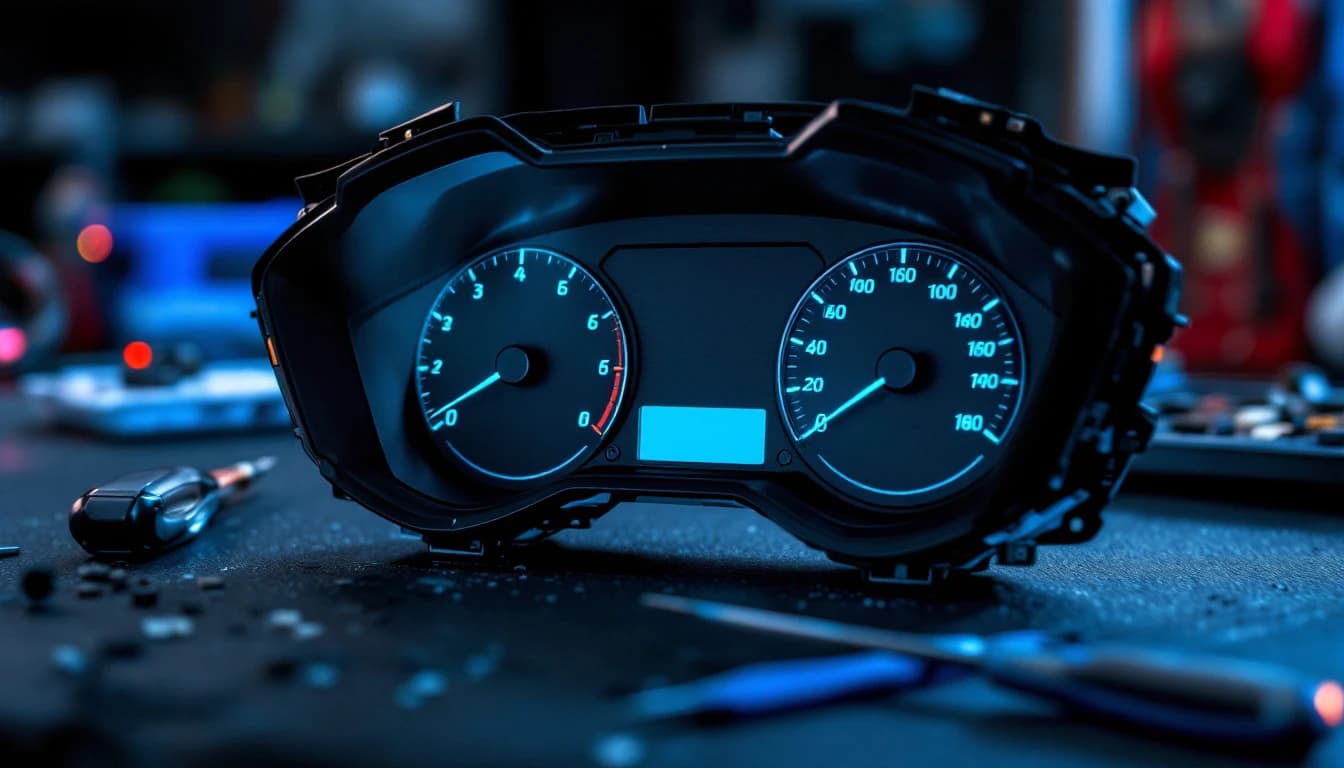
Transmission controllers follow the same two-part logic but are priced and handled separately, and the mechanics of TCM programming and cloning are worth reading before you assume an engine-side fault. Where a donor has to be written back to a blank factory state rather than cloned, the KVM virginize walkthrough shows what that process actually involves on the bench. For a cross-module view — engine, transmission, body, and ABS side by side — the transmission control module cost guide covers the same economics from the driveline side, and the arithmetic is nearly identical.
What changes the price — the variables that actually matter
If two people with the same symptom get different quotes, it is almost always one of these seven.
1. Whether your original module can be read. This is the single largest variable. A module that powers up and communicates can be cloned, which carries your VIN, your calibration, your immobilizer relationship, and often your learned fuel trims onto a donor. A dead module cannot be read, so a donor must be written virgin and taught the car from scratch.
2. The make and platform. A 1990s domestic controller with an open EEPROM is not the same job as a late-model controller behind a manufacturer security gateway. That difference is why the ready-to-install prices in the table above are not identical across brands — Toyota and Lexus sit at the top of that list for a reason.
3. Whether the immobilizer is involved. On Chrysler platforms the SKIM relationship has to be handled or the engine will crank and never fire. On many Japanese and European platforms the controller holds a value that pairs it to the body or key system. Where that relationship exists, writing a VIN alone is not enough.
4. Whether the controller is locked. Manufacturers lock controllers. GM's Global A family is the clearest example: physically ordinary, electronically locked, and requiring a specific bench workflow before anything can be written. Unlocking is a distinct step, which is why it is priced as its own service rather than folded silently into a flash.
5. Security access and seed-key. Modern controllers gate write access behind a challenge-response handshake. A properly equipped bench handles this as a matter of course, but it is real work, and it is the reason a module cannot simply be copied byte-for-byte with a generic reader on most late platforms.
6. Emissions calibration. The calibration written to a module is tied to the vehicle's certified emissions family. Writing the wrong calibration can put the car out of compliance and will usually fail an inspection even if it drives fine. We write factory calibrations matched to your VIN — nothing else.
7. Turnaround tier. Bench work is typically a 24-hour turnaround once the module is on the bench, but return shipping is chosen by you at checkout: standard at $29.95, UPS 2nd Day Air at $54.95, or UPS Next Day Air at $94.95. The service price does not change; the speed of the trip home does.
Clone, unlock, virgin, or supply-a-part
Four approaches, four different outcomes.
Cloning. We read your original and write its identity onto a healthy donor you supply. The donor comes back believing it is your original: same VIN, same calibration, same immobilizer relationship, usually the same learned data. This is the highest-success path available and the reason it is worth shipping a failing module rather than binning it. It requires that the original still reads, at least partially.
Unlocking. Some controllers are locked from the factory or by a prior tune. The module has to be opened for bench access before anything can be read or written. On GM Global A platforms this is routine and well understood; on others it is platform-specific.
Virgin programming. The donor is written to a blank or factory state, then configured for your car — VIN, calibration, immobilizer relationship. This is the path when the original is dead. It works, but the engine relearns its fuel trims from zero, so expect the first few tanks to settle in as the controller adapts.
Supply-a-part. You send nothing. We source the correct module, program it to your VIN on the bench, and ship it ready to install. This is the path for a customer who does not want to pull a module and mail it, or whose original is gone, and it is what the $379 to $449 prices in the table cover.
The mistake I see week after week is somebody buying a module off an auction site because the part number matched, bolting it in, getting a crank-no-start, and deciding the seller shipped them junk. The part is usually fine. It still thinks it belongs to a different VIN, and nobody has ever told it otherwise. — Independent driveability technician, 19+ years (anonymized)
If you are sourcing your own donor, the used module donor checklist is worth ten minutes before you bid. Part number, hardware revision, software revision, and connector count all matter, and a vehicle history report will tell you a donor car's story but nothing at all about whether the module inside it is electronically compatible with yours.
What you actually ship, and what happens on the bench
The workflow is deliberately unexciting, because unexciting is what you want when a part is in the mail.
- Verify before anything ships. Send your VIN, the part number from the module label, a clear photo of that label, and a plain description of the symptom. We confirm the platform is supported and the donor is correct. Shipping instructions and the prepaid inbound label arrive by email after checkout.
- Remove and pack properly. Anti-static bag, rigid box, real padding around it. Crushed connector pins are the most avoidable shipping failure there is.
- Bench read and archive first. The module goes on a regulated bench supply and is read before anything is changed. The original data is archived every time, without exception.
- The actual work. Clone, unlock, virgin write, VIN and calibration match, immobilizer relationship handled where the platform requires it.
- Verification. The module is powered and communication-tested on the bench before it leaves.
- Return with tracking, on the shipping tier you chose at checkout, from $29.95.
A regulated bench supply matters more than it sounds. Voltage does not sag on a bench. That single fact removes the most common cause of a module bricked partway through a write.
When it is not the PCM at all
This is the section that saves people the most money, so read it before you order anything.
Grounds and power feeds. A corroded engine-to-body ground strap produces symptoms that read exactly like a failing controller: intermittent misfires, implausible sensor values, communication dropouts. Measure voltage drop across every ground before condemning electronics.
Charging system. A failing alternator producing AC ripple, or a battery that is fine at rest and collapses under crank load, generates precisely the kind of temperature-sensitive, intermittent weirdness that gets blamed on a module. Test the charging system properly first — it is the cheapest test in this article.
Harness faults. Chafe points, rodent damage, a connector that was pried apart during a previous repair. A U-code telling you the module is not communicating points at power, ground, or the CAN bus at least as often as it points at the module itself.
Mechanical faults the module is correctly reporting. Low compression, a slipped timing chain, a failing fuel pump, a clogged injector. The controller reporting a lean bank is doing its job; it is not the fault.
Immobilizer rather than powertrain. A crank-no-start with a security light is a different problem from a crank-no-start with a dead controller. The immobilizer versus module diagnosis walkthrough separates those two paths, and getting it right saves you buying the wrong part entirely.
If you genuinely cannot tell, that is exactly what the $150 bench evaluation exists for. The module is powered, read, and tested, and you get a straight answer about whether it is the fault. The bench evaluation guide explains what that catches that a scan tool plugged into the car cannot.
The value context, stated honestly
The economics here have shifted, and they have shifted in favor of repair.
The average light vehicle on American roads is now around 12.5 years old by widely reported fleet statistics — a figure tracked in the transportation data published by the Bureau of Transportation Statistics, and one that has climbed steadily for two decades. Meanwhile used-vehicle transaction prices have remained elevated relative to the pre-2020 baseline, as valuation reporting from Kelley Blue Book has documented across recent years. Put those two trends together and you get a very large population of owners deciding whether to spend real money on a car that will not absorb a dealer-priced module.
Long-running dependability research from J.D. Power has consistently placed electronics and infotainment among the most-reported problem categories on three-year-old vehicles, with industry-average problem counts hovering in the range of roughly 190 to 200 problems per 100 vehicles across recent study years. Coverage from outlets like Car and Driver has tracked the same underlying trend from the enthusiast side: content count per vehicle keeps rising, and every added controller is another thing that can fail out of warranty.
One more free resource worth using before you spend anything: the recall and complaint database maintained by NHTSA covers the entire modern OBD-II era, roughly 30 years of light vehicles. If your platform has a known pattern of powertrain-controller complaints or an open recall, that is worth knowing before you buy a donor.
Ownership, security, and the boundaries we work inside
Powertrain controllers on most platforms are tied into vehicle security. Where a job touches keys, immobilizer data, or a security relationship between modules, proof of ownership is required — a registration, title, or equivalent documentation matching the VIN. That is not a formality and it is not negotiable.
Two more boundaries worth stating plainly. First, we write factory calibrations. We do not perform emissions-related deletes of any kind — no catalyst, EGR, DPF, or aftertreatment removals — and guidance from the Federal Trade Commission on consumer-vehicle repair representations is a reasonable reminder of why honest scope statements matter in this trade. Immobilizer-related work is undertaken for legitimate repair, off-road, or orphaned-platform reasons only, with ownership documented.
Second, we do not promise universal plug-and-play. Coverage is platform-specific and part numbers and software revisions decide what is possible. A technician verifies fitment against your VIN and the module label before you ship, and if your particular combination is not supported you hear that before you spend money on postage rather than after.
Frequently asked questions
How much does it cost to replace a PCM or ECM in 2026? Budget for two costs: the module and the programming. Mail-in bench programming, cloning, or unlocking is a flat $250 on most platforms; Mopar stock reprogramming is $350. If you would rather send nothing at all, a module we source and program to your VIN runs $379 for Ford, $399 for GM, Chrysler, and Honda/Acura, and $449 for Toyota/Lexus. Dealer replacement including the part is commonly reported in the roughly $800 to $2,000 range.
Can you program a used ECM I bought online? Yes, and it is one of the most common jobs on the bench. Ship your original module along with the donor whenever you can — if the original still reads, we clone your identity, calibration, and immobilizer relationship onto the donor, which is the highest-success path available. If the original is completely dead, we write the donor virgin and configure it for your VIN instead. Send both part numbers first so fitment is verified before anything moves.
Does a replacement engine computer have to be programmed, or can I just bolt it in? On essentially any vehicle from the last twenty-five years it has to be programmed. The module needs your VIN, the correct calibration for your engine and emissions family, and on most platforms an immobilizer relationship that proves it is allowed to let the engine run. A physically identical unlocked module will usually crank and never fire without that step.
What is the difference between cloning and virgin programming? Cloning copies your original module's identity, calibration, immobilizer relationship, and usually its learned fuel trims onto a donor, so the donor behaves like your original from the first key turn. Virgin programming writes a donor to a blank factory state and then configures it for your car, which works well but restarts adaptive learning from zero. Cloning requires that your original still reads on the bench.
How do I know it is really the module and not something else? You often cannot tell from symptoms alone, because grounds, charging faults, harness damage, and mechanical engine problems all produce the same misfires, dropouts, and no-start conditions a failing controller does. Test grounds and the charging system first, and check for a security light on crank. If it is still unclear, the $150 bench evaluation powers the module up, reads it, and gives you a definite answer before you buy any parts.
Will my car run differently after the module is replaced? Often for the first few tanks, and that is normal. A cloned module usually carries your learned fuel trims across, so the change is minimal. A virgin-programmed module relearns trims from scratch, so idle quality and part-throttle response can take a few hundred miles to settle as the controller adapts to your specific engine, injectors, and sensors.
How long does the whole process take? Bench work is typically a 24-hour turnaround once your module arrives and is verified, though complex or security-related jobs can take longer. The bigger variable is transit in both directions. Return shipping is chosen by you at checkout — standard at $29.95, UPS 2nd Day Air at $54.95, or UPS Next Day Air at $94.95 — so you control how fast it comes home.
The bottom line
A powertrain module quote is only frightening while the part cost and the programming cost are welded into one number. Pull them apart and the decision gets simple.
If your original still communicates, cloning is the best outcome available: your VIN, your calibration, your immobilizer relationship, and usually your learned data moved onto healthy hardware for a flat $250. If the controller is locked, unlocking is $250. If you want a factory calibration restored, that is $250 on Ford and GM and $350 on Mopar. If you would rather not pull anything at all, a sourced module programmed to your VIN is $379 to $449 by make. And if nobody is sure the module is even the fault, $150 buys a bench evaluation instead of a guess.
What we will not do is promise that any donor works on any car, write a calibration that does not match your emissions family, or perform security-related work without documented proof of ownership. Fitment is verified against your VIN and your module's part number before you ship, and if your platform is not supported you will hear it before you pay for postage. Text us the VIN, the part number, and a photo of the label, and you will get a straight answer on which of the prices above actually applies to your car.
Ship it for the gm ecm / pcm — programmed & ready to install — $399 flat
Ships in 1–2 Business Days, return speed your choice at checkout. Prepaid inbound label by email the minute you order.