
Electronic Steering Lock Failure by Brand: ESL and ELV
The symptom, before the theory
You press the start button and nothing happens. The dash lights up, the key is recognized, and there is no crank. The steering wheel will not turn. Sometimes there is a message — "steering column lock malfunction," "ESL," a yellow or red steering-wheel icon on the cluster — and sometimes there is nothing at all except a car that has become a very expensive piece of parking-lot furniture.
That is an electronic steering lock failure, and it is one of the few faults that can strand a perfectly healthy car with a full tank of fuel and a working engine. The lock has physically engaged and the electronics that are supposed to release it have not.
This guide covers what the mechanism actually is, the four ways it goes wrong, and — the part most owners get blindsided by — why the correct repair is completely different depending on whether you are holding a Mercedes, a VW or Audi, a BMW, or something older with no electronic lock at all.
What is inside an electronic steering lock
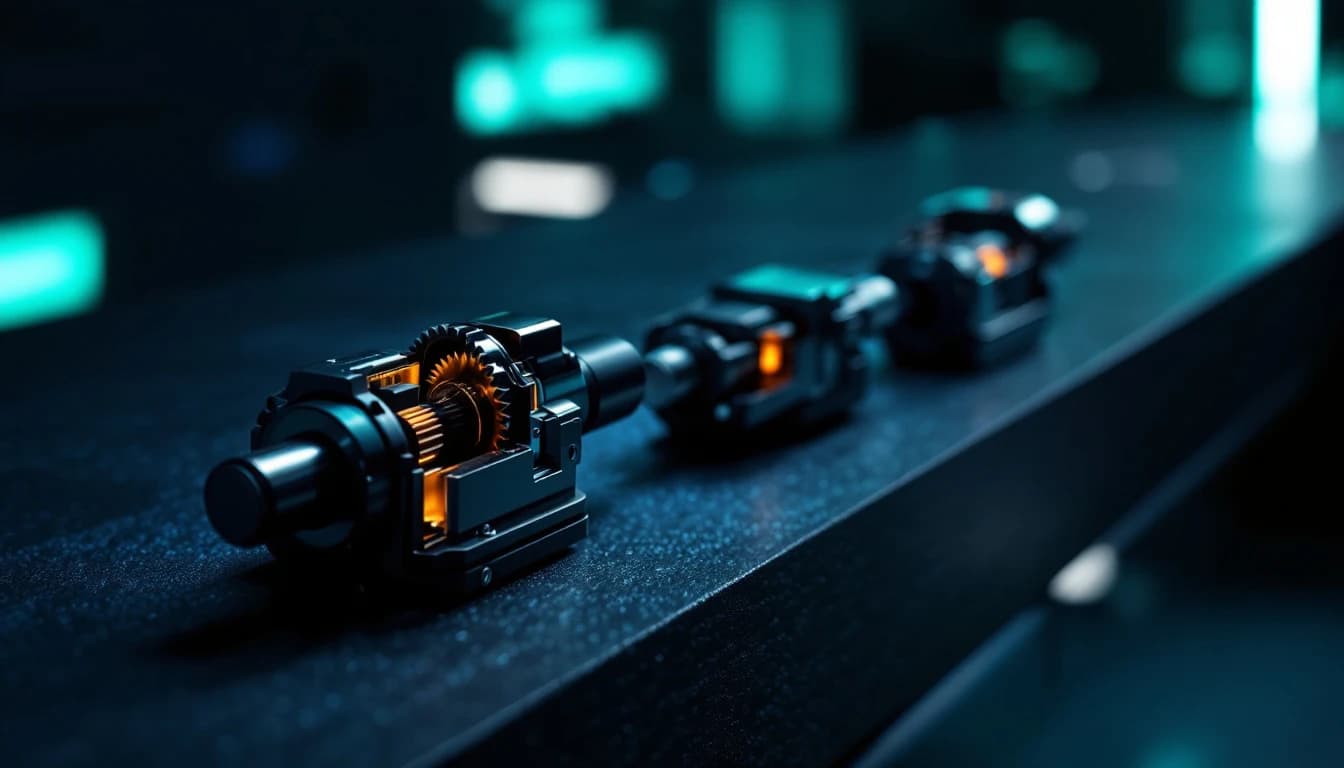
Strip the plastic off an ESL or ELV and you find four things.
A locking bolt — a hardened steel pin that slides into a notch machined in the steering shaft. When it is in, the wheel turns a few degrees and stops hard. This is the part that actually resists a thief.
A small electric motor, usually a stepper or a geared DC motor, driving a worm gear that translates rotation into the linear travel of the bolt. Worm drives are used because they are self-locking: the bolt cannot be pushed back out by force applied to the wheel. That same property is why a jammed mechanism does not simply give way.
A position sensor — commonly a Hall-effect sensor or a set of microswitches — that tells the module whether the bolt is fully home or fully retracted. If the sensor never reports the expected state, the module reports a fault and the car refuses to start, even if the bolt actually moved.
And a microcontroller with its own non-volatile memory. This is the part people underestimate. The lock is not a dumb actuator on a wire; it is a networked control unit that holds a security relationship with the immobilizer, an identity tied to the car, and an operation counter incremented on every lock and unlock cycle. That memory is the reason a replacement is not a plug-in part.
The security logic behind that is deliberate. Federal anti-theft rulemaking administered by the National Highway Traffic Safety Administration has pushed immobilizer and parts-marking requirements across designated vehicle lines for well over three decades, and the National Insurance Crime Bureau has reported United States vehicle-theft totals well above one million vehicles in a single recent year. Those systems earn their complexity: loss analyses published by the Insurance Institute for Highway Safety have credited engine immobilizers with theft-loss reductions on the order of 40 percent on equipped vehicles. A steering lock that any donor part could satisfy would be a lock in name only.
The four ways they fail
1. Seized lock pin. Grease ages, moisture gets in, and the bolt binds in its bore. The motor stalls trying to retract it, the position sensor never reports "unlocked," and the module logs a fault. This is the classic winter failure — the car that works fine in July and strands you on the first genuinely cold morning.
2. Worn or dead motor. These motors are small, they run against a self-locking worm drive, and they do it thousands of times over a car's life. Brushes wear, windings open, and eventually the mechanism gets a command it cannot execute.
3. Corrupted or maxed operation counter. Several manufacturers store a cycle counter in the lock or in the module that supervises it. When that counter reaches its designed limit — or gets corrupted by a low-voltage event — the system decides the lock is worn out and refuses to operate it, whether or not the hardware is actually tired. This failure mode is pure software, which is exactly why the fix for it is pure software.
4. Dead module, column locked. The worst case. The bolt is in, the module has stopped communicating, and there is no electronic path to retract it. The car cannot be started, cannot be steered, and often cannot be rolled onto a flatbed without dragging the front wheels.
Low system voltage causes far more of these than most owners expect. A marginal battery browns out the network mid-cycle, the lock is left in an indeterminate state, and the counter or the stored position is written incorrectly. Preventive-maintenance research summarized by outlets such as Consumer Reports has long identified battery and electrical-system faults among the most common causes of no-start events, and on a car with an electronic steering lock a weak battery is not merely a starting problem — it is a security-module problem.
"Nine times out of ten the customer describes it as a starter or a key fault, because that is what it feels like from the driver's seat. Then you get to the car and the wheel will not move. Once you have seen a few, you stop diagnosing the ignition and go straight to the column — and you check the battery before you touch anything, because half of the corrupted counters I have seen were written during a brownout."
— Independent European driveability technician, 18+ years, anonymized
Why a used steering lock is almost never plug-and-play
Here is the sentence that saves people money: the electronic steering lock is paired to the car, not just fitted to it.
The module's memory holds an identity — typically the VIN or a derived identifier — and a shared secret or rolling relationship with whatever supervises drive authorization on that platform: the EIS on a Mercedes, the immobilizer chain on a VW or Audi, the CAS on a BMW. Install a lock from another car and the supervising module asks the question it always asks, gets an answer that belongs to a different vehicle, and refuses to release. You end up in exactly the fault you started with, minus the cost of the donor part.
There is a second trap. Because these modules are theft-relevant, most are write-protected against casual re-pairing on the vehicle. A generic scan tool cannot simply adapt a used one — the Unified Diagnostic Services protocol documented through SAE International and ISO 14229 defines on the order of two dozen diagnostic services, and the security-access handshake that gates writes to a theft-relevant module is deliberately one of the hardest to satisfy. Getting a replacement to work means either transferring your original's data into it on a bench, or preparing a virgin module that the car can then legitimately adopt — and which of those two is possible depends entirely on whether your original still reads.
This is the same structural problem that makes used electric power steering racks fail after a swap, and the used EPS module VIN-mismatch guide covers that parallel case in detail. Whenever a steering-adjacent module carries a VIN, assume it needs data work, not just installation. If you are shopping for a donor at all, the general used-module donor checklist is worth reading before you bid.
Because all of this touches the immobilizer, proof of ownership is required for every job on this page. That is not a formality we can waive, and the documentation requirements for immobilizer and module work explain what we need and why.
Brand by brand — how the fix actually differs
| Platform | What fails | Correct fix | What you ship | Our flat price |
|---|---|---|---|---|
| Mercedes ELV — W204, W207, W212, W166, W246, W117 | Stepper motor wears out; column stays locked, no crank | New emulator pre-paired to your EIS — no moving parts | Your EIS only; leave the failed ELV in the car | $350 |
| Mercedes EIS itself failing alongside the lock | Ignition switch dying, not the lock | Clone the EIS to a donor so existing keys keep working | Original EIS + matching donor EIS | $250 |
| Mercedes with a dead, unreadable EIS | Nothing left to clone | Program a fresh key directly to a donor EIS | The EIS the key will be paired to | $150 |
| Audi A6 / S6 / RS6 (C6) and Q7 (4L) ELV | Internal electronics or lock motor fail; column-lock malfunction | Clone your original ELV data onto a replacement module | Original ELV + a new or donor replacement | $250 |
| BMW E60, E8x, E84, E89, E9x ELV/ESL | Lock counter reaches limit or corrupts; steering-lock warning, no start | Reset the steering-lock counter and repair ELV data in the CAS | Your CAS module (or the ELV unit) | $250 |
| BMW where the CAS itself is the fault | Key not recognized, no crank, CAS failure | CAS module key programming and repair | Your CAS module | $150 |
| Pre-2008 Mercedes and most older cars | No electronic lock at all | Mechanical ignition-lock repair at a shop — not a module job | Nothing; this is not bench work | Not applicable |
Mercedes — the emulator, not another motor
The Mercedes ELV is the most familiar version of this failure, and it is common enough on W204 C-Class, W207 and W212 E-Class, W166 ML/GLE, W246 B-Class and W117 CLA that the symptom is recognized on sight: key fob acknowledged, no crank, wheel locked, ESL or steering-lock message on the cluster.
The original mechanism uses a tiny stepper motor that wears. Fitting another original unit resets the failure clock and nothing else — a meaningful share of replaced ELVs are back with the same complaint inside a couple of years. So the correct repair is not a like-for-like replacement at all.
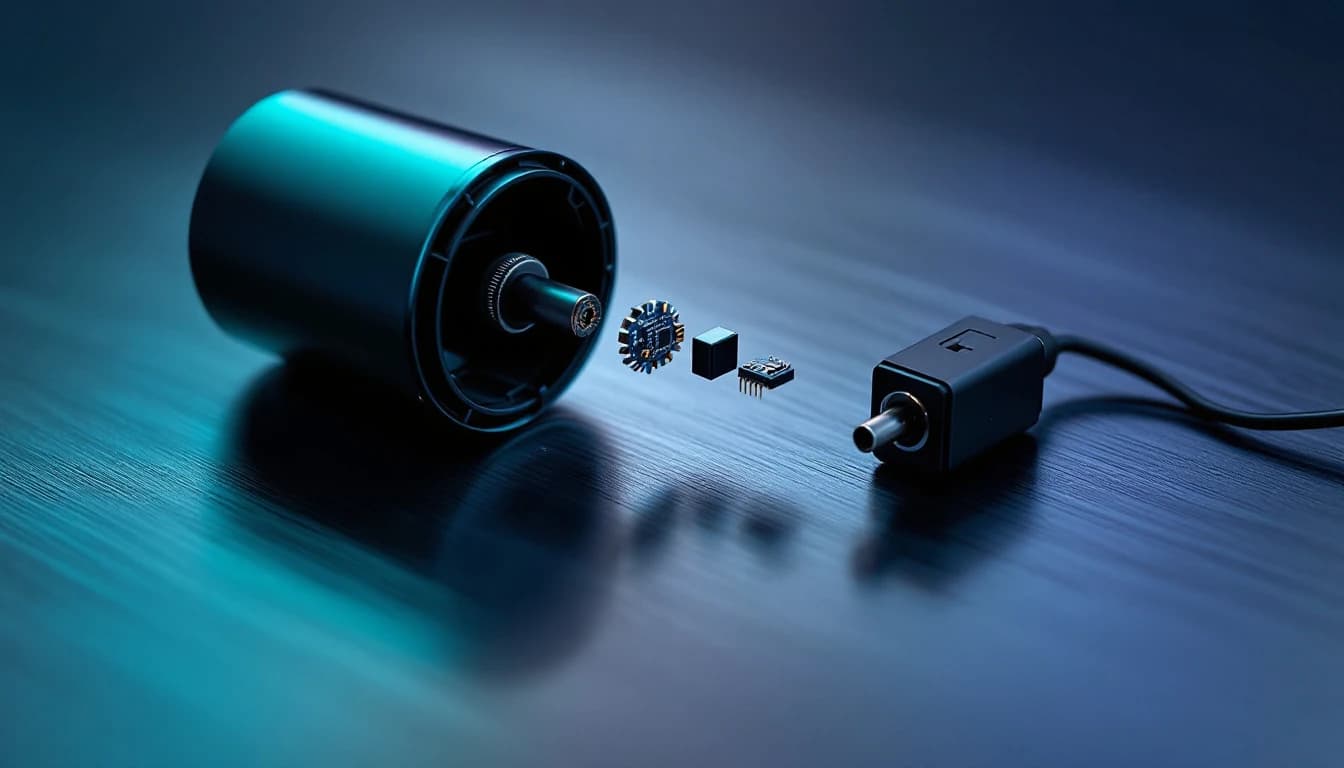
Instead, we supply a new ELV emulator and pre-pair it to your EIS on the bench. The emulator reproduces the electrical handshake the EIS expects, so the car starts and behaves normally, but it has no motor, no worm gear and no bolt to seize. You ship only the EIS, and you deliberately leave the failed ELV in the car. Your keys are untouched, because the EIS comes back exactly as you sent it — only the ELV electrical path changes.
The Mercedes ELV emulator programming service is $350 flat with a typical 24-hour bench turnaround, includes the emulator hardware and a one-year warranty on it, and ships with step-by-step install photos. For the mechanism-level explanation, the ELV emulator walkthrough covers how the handshake is reproduced, and the ESL motor repair versus clone comparison covers the cases where repairing the original is still worth considering.
One important distinction, because these two get conflated constantly: an ELV fault and an EIS fault produce similar no-start complaints and need completely different work. If the EIS itself is failing, the fix is EIS/EZS cloning at $250 — your original's data copied onto a donor so every existing key keeps working. If the EIS is dead and cannot be read, there is nothing to clone and the job becomes key replacement via the EIS at $150 on a donor unit, with all-keys-lost supported. Diagnose which module is actually at fault before you order; we would rather answer that question by text than have you ship the wrong part.
Note also that the ELV emulator path applies to the FBS3-era chassis listed above. Newer W205 C-Class and W222 S-Class steering-lock architecture is different — send the VIN first.
VW and Audi — clone the data onto the replacement
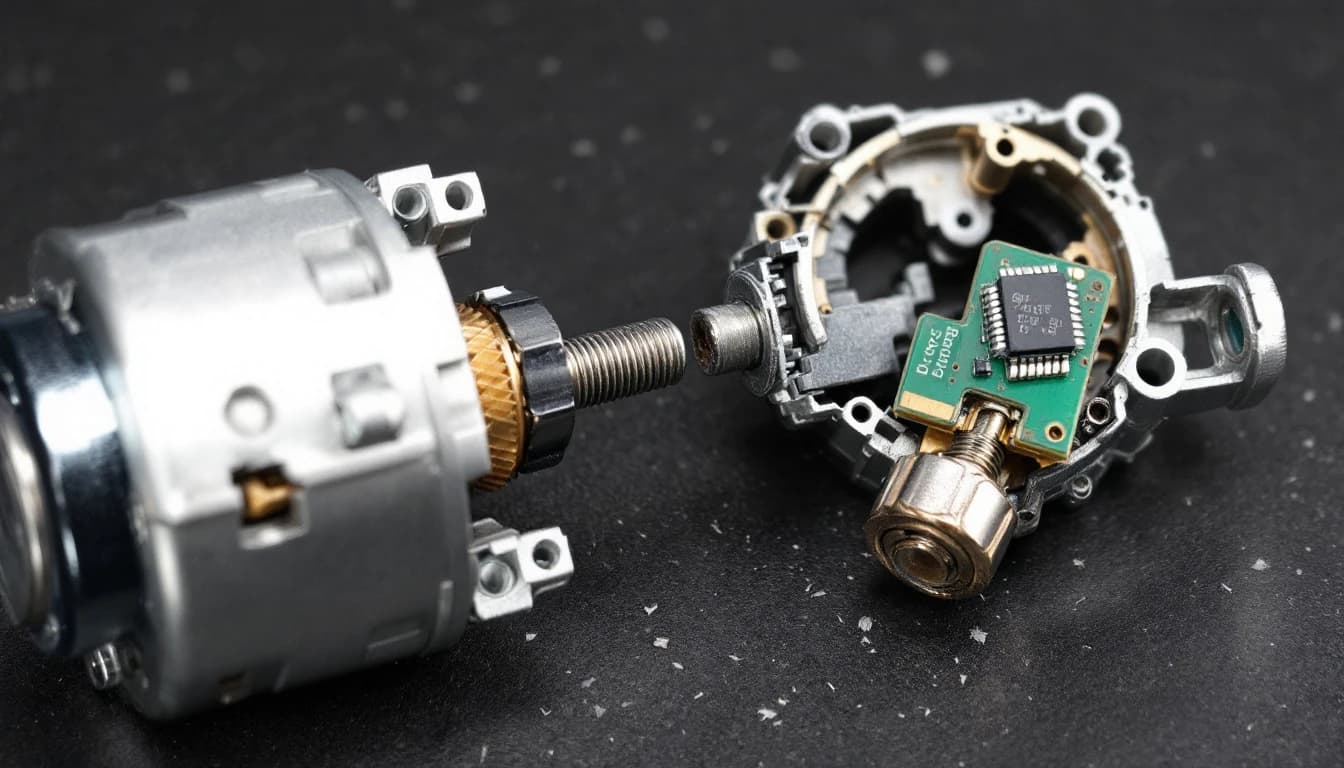
On the Audi A6, S6 and RS6 (C6, roughly 2005-2011), the Allroad, and the Q7 (4L, roughly 2007-2015), the ELV is a known failure point that announces itself as a steering column lock malfunction message, a column that will not release, an intermittent lock and unlock cycle, or a straightforward no-start.
The Audi approach is different from the Mercedes one. Here the answer is a genuine clone: your original module's data is read on the bench and written onto a new or donor replacement, so the car accepts it exactly as it accepted the original — no dealer adaptation session required. If your original is too damaged to read, the job shifts to preparing the replacement so it can be coded to your car instead, which is a slower path with more steps but still avoids the dealer.
The Audi ELV/ESL steering lock clone service is $250 flat with a typical 24-hour bench turnaround. You supply the replacement module and we verify its part number against your original before you buy — that verification step is free and it prevents the single most common wasted purchase in this category.
Volkswagen and Audi platforms of the same era also use a separate J518 electronic ignition-lock and immobilizer control module, which behaves differently from the Audi ELV described above and produces its own family of no-start and column-lock complaints. If your fault codes or your parts catalogue point at J518 rather than a discrete ELV, read the VW/Audi ELV, ESL and J518 steering-lock guide before ordering anything — the two are frequently confused, and they need different work.
Where a steering-lock complaint turns out to be an immobilizer problem in the engine ECU rather than a lock problem at all, that is separate bench work. Our VW/Audi immobilizer delete and VIN programming service exists for legitimate repair, off-road, and orphaned-platform cases with documented ownership; it is not a shortcut around a mechanical fault, and we do not perform any emissions-related edits as part of it.
BMW — reset the counter, do not replace the column
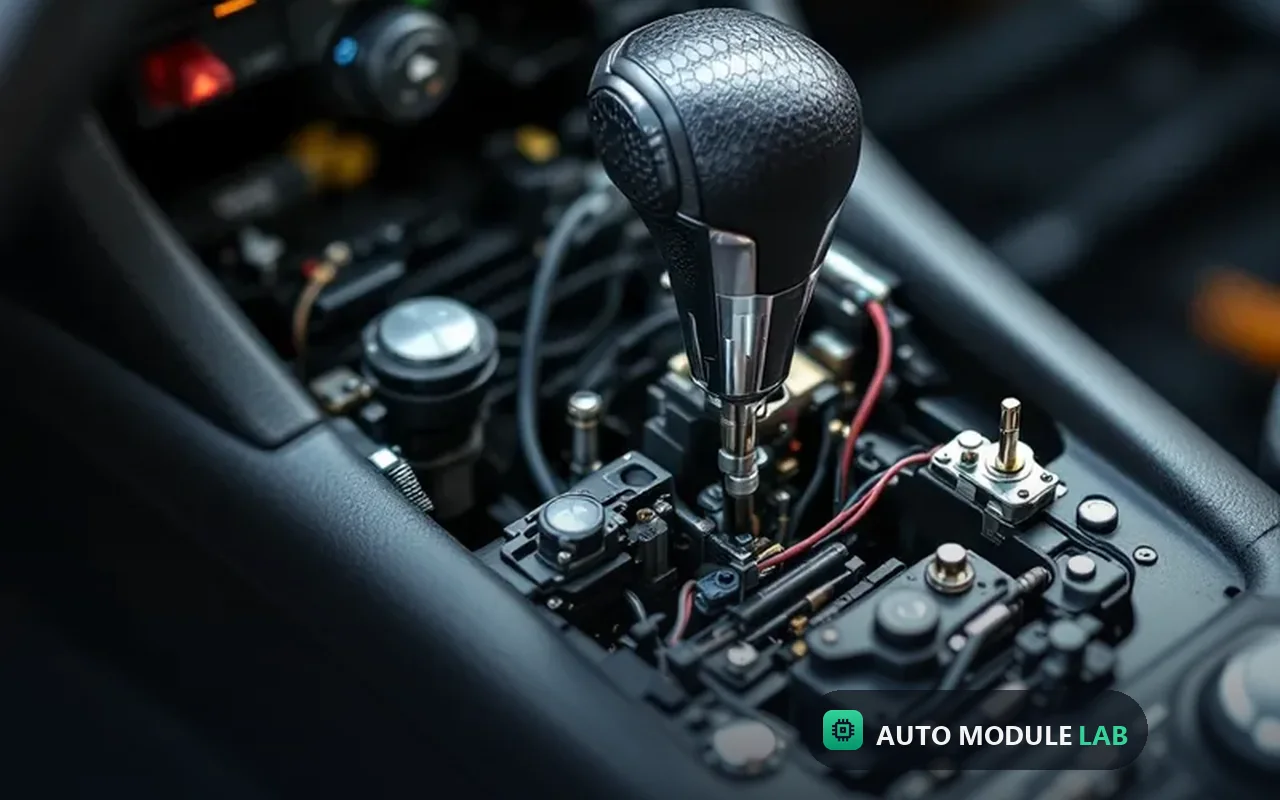
BMW's implementation is the clearest example of the software failure mode described earlier. On E60 5-Series, E81/E82/E87/E88 1-Series, E84 X1, E89 Z4 and E90-E93 3-Series cars, the system tracks a steering-lock operation counter. When that counter reaches its designed limit — or gets corrupted, very often during a low-voltage event — the system declares the lock end-of-life and stops operating it. The driver gets a yellow or red steering-lock warning and, frequently, no start.
The dealer answer to that has historically been steering-column work. The bench answer is to reset the counter and repair the ELV data held in the CAS module, which makes the system treat the lock as new and clears the fault without touching the column at all. That is $250 flat, typical 24-hour bench turnaround, and you ship the CAS module (or the ELV unit) rather than the whole column. The BMW ELV steering lock repair guide covers the chassis coverage and the diagnostic sequence in detail.
Be careful not to misattribute the fault. A CAS module that is itself failing produces overlapping symptoms — key not recognized, no crank, intermittent starting — and needs different work: BMW CAS module key programming at $150 flat covers 2006-2012 CAS applications including all-keys-lost. Codes and a voltage check separate the two cases quickly, and getting it right before you ship saves a round trip.
Older cars — there may be no electronic lock at all
Before electronic steering locks became common, the lock was purely mechanical and physically integrated into the ignition switch assembly: turning the key withdrew a bolt directly. Pre-2008 Mercedes are the obvious example, but the same is true of most vehicles built before push-button start became mainstream.
If that is your car, none of this applies. A wheel that will not unlock is a mechanical ignition-lock or lock-cylinder problem, and it is fixed at a shop with the column apart — not on a bench, and not with a module. It is worth stating plainly, because "my steering wheel is locked and the car will not start" is a symptom shared across two completely unrelated repair categories, and buying a module for a mechanical fault is a pure loss. Longstanding coverage of ignition-lock and column repairs at outlets such as MotorTrend and Hagerty treats these as bodywork-adjacent mechanical jobs precisely because that is what they are.
What to check before you order anything
Four checks, in order, and they take about twenty minutes.
Battery and charging system first. Load-test the battery and confirm charging voltage. A brownout can create the exact fault you are chasing and can also cause a repair to fail again a month later. This is the single most skipped step and the single most common reason a correctly performed lock repair does not stick.
Read the codes properly. A generic reader is not enough here. You want manufacturer-level codes from the module that supervises drive authorization — the EIS on a Mercedes, the CAS on a BMW — because the distinction between "the lock did not move" and "the lock moved but did not report" changes the repair.
Establish which module is actually at fault. Steering-lock faults, ignition-switch faults and immobilizer faults all present as no-start. The cheapest diagnostic step available is to send us your VIN, the fault codes, and a photo of the module label and let us tell you which service applies. That costs nothing and it is far cheaper than shipping the wrong part.
Get the part number before you buy a donor. For the Audi clone path especially, the replacement module must match your original's part number, not merely fit the same chassis. Send the number of the unit you are considering and we will confirm compatibility before you spend the money.
How mail-in bench service works
Everything here is bench work performed at our Arlington, Texas workshop at 1168 W Pioneer Parkway. Nothing about it is on-site — you ship a module, we work it, we ship it back.
Send parts to PO Box 120241, Arlington, TX 76012 if you are shipping USPS, or to 1009 Oakwood Ln # 120241, Arlington, TX 76012 if you are shipping UPS or FedEx, because UPS and FedEx cannot deliver to a USPS PO Box. Pack the module in an anti-static bag inside a padded box, and include your VIN, the module part numbers, proof of ownership, and a printed order confirmation.
Turnaround on all three brand paths above is typically 24 hours on the bench once the part arrives. Return shipping is selected and paid at checkout, starting at $29.95 for standard three-to-five-day service, with two-day and overnight options if the car is occupying a lift.
Frequently asked questions
Can I just unlock the steering column manually and drive the car? No, and attempting it usually makes the repair more expensive. The locking bolt runs on a self-locking worm drive specifically so that force applied to the steering wheel cannot back it out, so forcing the wheel tends to shear the bolt or damage the shaft notch rather than release anything. The bolt has to be retracted electrically, which means fixing the module that commands it.
Will a used steering lock from a salvage yard work in my car? Almost never on its own. The module carries an identity and a security relationship tied to the original vehicle, so the supervising module rejects it and you land in the same fault you started with. A used unit becomes usable only after your original's data is cloned into it on a bench, or after it is prepared as a virgin module the car can legitimately adopt.
Is the Mercedes ELV emulator a permanent fix or a temporary bypass? It is a permanent fix. The emulator reproduces the electrical handshake the EIS expects while eliminating the stepper motor, worm gear and locking bolt that actually wear out, so there is no mechanism left to seize. It carries a one-year warranty on the hardware and your keys are entirely unaffected, because the EIS returns exactly as it was sent.
Why does BMW's steering lock fail on a counter instead of a broken part? Because BMW tracks lock operations and treats the mechanism as end-of-life when that count reaches its designed limit, whether or not the hardware is genuinely worn. Corruption during a low-voltage event can also push the stored value out of range prematurely. Resetting the counter and repairing the ELV data in the CAS clears the fault without any column work.
Do I lose my keys or my mileage when the steering lock is repaired? No. None of these repairs touch key data or the odometer. On the Mercedes emulator path the EIS is returned unchanged with every key still valid; on the Audi clone path your original data is transferred intact; on the BMW counter reset only the lock-related values in the CAS are corrected. Any mileage work we do elsewhere is synchronization to true mileage only, never a rollback.
How do I tell an ELV fault from an EIS or CAS fault? Look at whether the steering wheel is physically locked. A lock fault typically leaves the column immobile with a steering-lock-specific message, while an ignition-switch or CAS fault more often gives a key-not-recognized complaint with a wheel that still turns. Manufacturer-level fault codes settle it definitively, and sending us your codes and VIN before ordering is free.
Do you need proof of ownership for this work? Yes. Electronic steering locks are theft-relevant components tied into the immobilizer, so every job on this page requires documented proof that you own the vehicle. That requirement is not negotiable and it is the reason this kind of work can be done legitimately outside a dealership at all.
The bottom line
An electronic steering lock is a motorized bolt with a microcontroller, a counter, and a security relationship with your car's immobilizer. It fails in four predictable ways — seized pin, dead motor, corrupted counter, dead module — and because it is paired to the vehicle rather than merely fitted to it, a used replacement will not simply bolt in.
The fix is brand-specific and it is not interchangeable. Mercedes gets a new emulator pre-paired to your EIS for $350, shipping the EIS only and leaving the failed ELV in the car. Audi A6 C6 and Q7 4L get the original module's data cloned onto a replacement for $250, with free part-number verification before you buy. BMW E-chassis cars get the steering-lock counter reset and the ELV data repaired inside the CAS for $250, with no column work at all. Older cars with a mechanical lock get a mechanical repair and no module.
Before ordering anything, load-test the battery, pull manufacturer-level codes, and confirm which module is actually at fault. Then text us the VIN, the codes and a photo of the module label with proof of ownership, and we will tell you which of those four paths your car is on before you ship a single part.
Ship your module today
Flat-rate pricing, typical 24-hour bench turnaround, return speed your choice at checkout. Most jobs back on your bench within a week.
More from the Lab
VW / Audi ELV / ESL Electronic Steering Lock Failure
14 min · August 10, 2026
Mercedes ELV/ESL Emulator: How the Bypass Works
11 min · July 13, 2026

Mercedes ESL ELV Repair and Clone Guide (W204 W212) 2026
12 min · June 18, 2026
BMW ELV Steering Lock Counter Reset and Repair Guide 2026
12 min · June 18, 2026