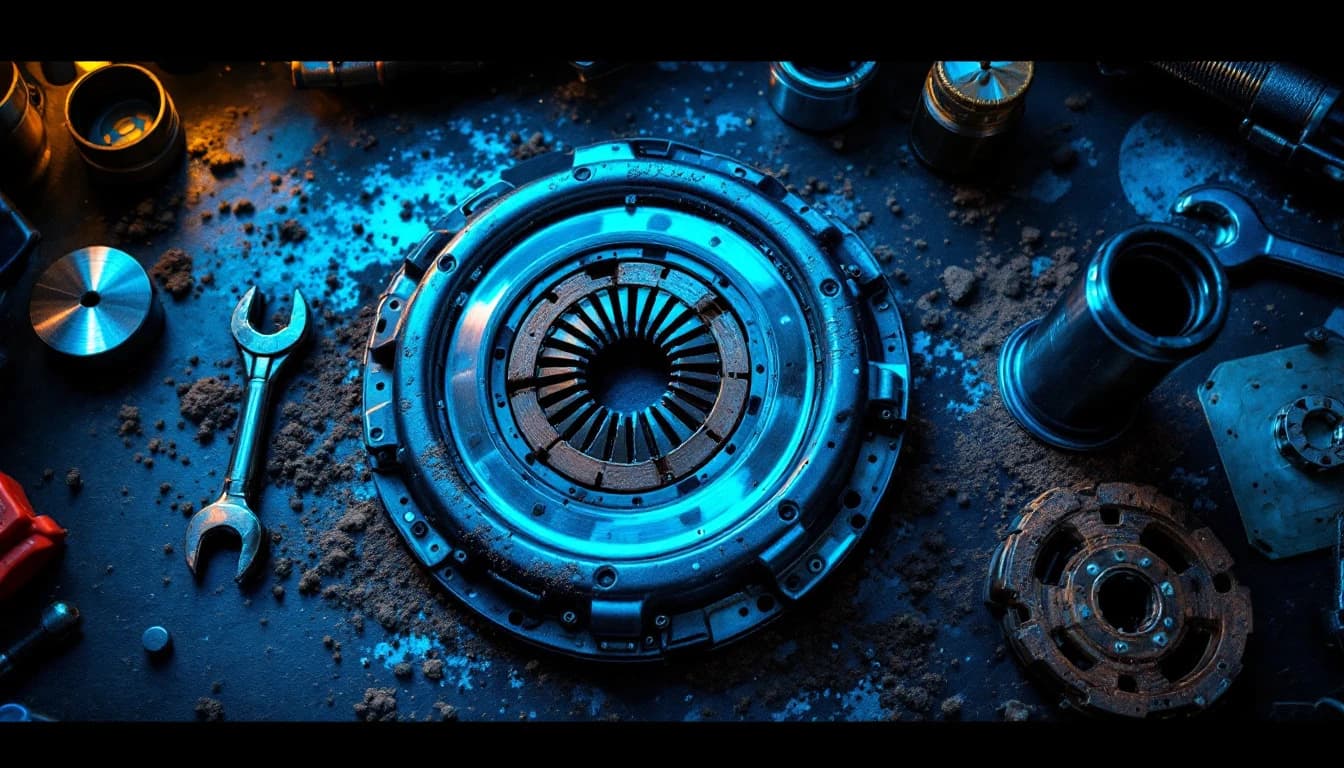
Ford PowerShift DPS6 Shudder: TCM or Clutch?
The short answer: usually the clutch, sometimes the module
If your Ford Focus or Fiesta with the PowerShift automatic shudders when you pull away, slips between gears, clunks into first or flashes "Transmission Fault Service Now", the problem is more often mechanical than electronic. The DPS6 is a dry dual-clutch gearbox, and its best-known complaints come from the clutch packs and the actuators that move them. But the transmission control module does fail, and when it does, no clutch job will fix the car.
This guide exists so you can tell the two apart before you spend money — and so you do not mail us a perfectly healthy TCM. Nobody benefits from that, least of all you.
As of September 2026, the money at stake looks like this. When the module is the fault and any manufacturer coverage has ended, our Ford DPS6 TCM clone is 250 dollars flat, plus return shipping you choose at checkout from 29.95 dollars. Clutch replacement and actuator work are shop jobs whose prices vary widely by region and parts choice, so we will not pretend to quote them. Get a written estimate from a transmission shop for those.
What the DPS6 actually is
The DPS6 — sold as PowerShift — is a six-speed automated manual transmission with two dry clutches. Ford fitted it to the 2011-2018 Focus and the 2011-2019 Fiesta in North America. Inside, it is closer to two manual gearboxes sharing a case than to a conventional torque-converter automatic: one clutch handles odd gears, the other handles even gears, and the transmission control module decides when each clutch engages and when each shift fork moves.
That design was chosen for efficiency. It avoids the losses of a torque converter and a wet hydraulic system, and in steady driving it shifts quickly and cleanly. The trade-off is low-speed behavior. A dry clutch pulling away from a stop has to slip deliberately and smoothly, the way a skilled driver feathers a manual clutch, and it has no oil bath to absorb the heat. Anything that disturbs that controlled slip — worn friction material, oil on the surfaces, an actuator that moves slowly, or a module that commands the wrong engagement — shows up as shudder.
If that architecture sounds familiar, it should. Volkswagen and Audi's DSG family is also a dual-clutch design, and many of its failure patterns rhyme with the PowerShift story even though the hardware differs. Our guide to DSG mechatronic failure symptoms is a useful comparison for anyone who has owned both.
The symptoms owners describe
The symptom list for a struggling DPS6 is long, and most items on it can come from more than one cause:
- Shudder or judder when pulling away from a stop, often worst in first gear and in slow traffic
- Hesitation or a delay before the car moves, followed by a lurch
- Slipping — engine speed rises without the car accelerating
- Harsh or banging shifts, especially one to two and two to one
- Rolling back on a hill longer than expected before engagement
- Loss of drive or the car staying in neutral
- "Transmission Fault Service Now" or a flashing gear indicator on the cluster
- A no-start, or intermittent loss of engagement with a check-engine light
- A burning smell after heavy stop-and-go driving
Shudder, hesitation, slipping, harsh shifts, roll-back and a burning smell are the classic clutch-and-actuator set. Loss of drive, the warning message and a no-start are where the module deserves a closer look, because Ford's own description of TCM failures on these cars centered on intermittent loss of transmission engagement, no-start and lack of power, usually with a check-engine light.
Likely causes, from most to least common
1. Clutch wear and oil contamination
The dry clutches are the wear item. Heavy stop-and-go use, holding the car on a hill with the throttle, and creeping in traffic all add heat and wear. Worn friction material cannot hold the controlled slip the module is trying to produce, and the result is shudder.
Oil makes it worse. A leaking transmission input shaft seal can let fluid reach the dry clutch surfaces, and contaminated friction material grabs and releases unevenly no matter how perfectly the module commands it. Ford recognized this: reporting at the time from outlets including The Detroit News and Cars.com described extended coverage on the clutch assembly and input shaft seal for certain early Focus vehicles, with coverage later expanded to more Focus and Fiesta cars. A module clone does nothing for a contaminated clutch.
2. Clutch-fork actuators
Each clutch and shift fork is moved by an electric actuator motor. An actuator that sticks, moves slowly or loses position accuracy makes engagement erratic even with healthy clutches. These faults often store their own codes, which is one reason a proper scan matters more than a guess.
3. Software and adaptation
The TCM learns clutch touch points and adapts as the clutches wear. After clutch work, or after a battery disconnection, those values need relearning. Ford also released software updates for these transmissions over the years. A car running old software, or one that has never had its clutch adaptation relearned after a repair, can shudder with every part in good condition. This is the cheapest cause on the list, so rule it out early.
4. TCM internal failure
The transmission control module on the DPS6 is mounted on the transmission itself, which exposes it to heat and vibration. Ford's extended coverage on the module followed electrical circuit failures inside the TCM. When the module fails, the pattern tends to be electrical in character: intermittent loss of engagement, a no-start, sudden neutral, communication faults, or a warning that appears and disappears with temperature. A car that drives perfectly one day and refuses to engage the next is more consistent with a module fault than with gradual clutch wear.
5. Wiring, connectors and power supply
The module can only work with the power, grounds and signals it receives. Corroded connectors, damaged harnesses and a weak battery or charging system can all imitate a failing TCM. Low system voltage in particular confuses modern control modules, so test the battery and charging system before condemning anything.
How to diagnose it: TCM fault or mechanical?
A proper diagnosis costs far less than either repair. Work through it in this order.
Step 1: check your VIN for manufacturer programs. Before you pay anyone, look your VIN up on the National Highway Traffic Safety Administration recalls page and ask a Ford dealer whether any customer satisfaction program or extended warranty still applies. Ford extended TCM coverage on certain 2011-2015 Fiesta and 2012-2016 Focus vehicles with the DPS6 to 10 years or 150,000 miles from the warranty start date, according to Ford's program communications filed with NHTSA. Coverage windows depend on build dates and mileage, and some have since closed, but checking takes minutes and could save the entire bill.
Step 2: read the codes with a transmission-capable scan tool. A generic code reader that only sees engine codes is not enough. You want the TCM's own fault memory and freeze-frame data. Codes that point to internal module circuits, lost communication with the TCM or supply-voltage problems lean electrical. Codes for clutch adaptation limits, clutch slip or actuator position lean mechanical.
Step 3: note the character of the fault. Gradual, repeatable shudder that gets worse over months, worst when hot and in first gear, is classic clutch behavior. Sudden, intermittent, all-or-nothing loss of drive — especially with a no-start or a warning that clears on a restart — leans toward the module or its wiring.
Step 4: check power and grounds. Load-test the battery, confirm charging voltage and inspect the TCM connector for corrosion or bent pins. This is cheap and routinely changes the diagnosis.
Step 5: update software and relearn adaptation. If the car has not had current software and a clutch relearn, do those before replacing hardware. A shop with Ford-capable software can do both.
Step 6: inspect for oil contamination. If shudder persists after software and relearn, a transmission shop can inspect the clutch and input shaft seal. Oil on the clutch means the clutch, and probably the seal, is the repair.
"Half the PowerShift cars that come in with a module already ordered have a clutch problem. If it shudders the same way every time you pull away, look at the clutch first. If it drives fine and then just will not go into gear, that is when I start suspecting the TCM." — Independent transmission technician, 20+ years in dual-clutch and automatic diagnosis (anonymized)
Realistic cost ranges
We will be precise where we can and honest where we cannot.
| Likely cause | Typical fix | Cost guidance |
|---|---|---|
| Old software or no clutch relearn | Software update and adaptation relearn | Varies by shop; usually the cheapest outcome |
| Battery, charging or connector fault | Battery, charging repair or connector service | Varies widely; get a written quote |
| Clutch wear or oil contamination | Clutch assembly and often input shaft seal | Varies widely by region and parts; get a written quote |
| Clutch-fork actuator failure | Actuator replacement and relearn | Varies widely; get a written quote |
| TCM internal failure, still covered by Ford | Dealer replacement under the program | Check your VIN; may be no cost |
| TCM internal failure, coverage ended | DPS6 TCM clone onto a matching donor | $250 flat plus return shipping from $29.95 |
Our 250-dollar service is a data transfer and programming job on the bench. We copy your original TCM's VIN, calibration and stored clutch adaptation onto a part-number-matched donor, or we program a used or new TCM to your car when the original is dead. The donor TCM is not included — you source it, and we verify its part number against yours from label photos before anything ships. Return shipping is chosen at checkout: standard 29.95 dollars, UPS 2-day 54.95 dollars or UPS overnight 94.95 dollars. After you order, the lab emails you a prepaid inbound label, which is not billed separately.
What that fee does not cover matters just as much. It does not repair a worn clutch, a contaminated clutch or a failed actuator. It does not replace the clutch relearn that has to be done at the car after installation. For how DPS6 pricing compares with transmission modules on other makes, see our TCM cost guide.
Why cloning beats a bare used TCM
A used DPS6 TCM from a salvage yard is cheap, and it rarely works on its own. It still carries the donor car's VIN and calibration, so the car can throw gear-selection or engagement faults the moment it is installed. It also carries the donor car's clutch adaptation — learned against a different set of clutches — which is a recipe for rough engagement even when everything else matches.
Cloning solves both. Your original TCM, as long as it still powers up and communicates, holds the identity and adaptation that belong to your car. We transfer those onto the donor so the replacement behaves as your original did before it failed. When the original is completely dead, that path is gone, and the job becomes programming the donor to your VIN and calibration, followed by a full adaptation relearn at the car. For the broader mechanics of transmission module cloning across makes, our guide on how to program a TCM goes deeper.
After installation: the relearn is not optional
Every DPS6 TCM installation — cloned, programmed or brand new — finishes at the car. The transmission has to learn clutch touch points on your specific clutches, and that requires a relearn procedure and a period of normal driving. Skip it and a perfectly good module can still shudder. We cover this step for many module types in our guide to relearns and calibrations after a mail-in module install, and we include install notes with every DPS6 return.
Wider context: why PowerShift ownership got so much attention
The DPS6 drew unusual scrutiny because of how many cars carried it and how visible the symptoms were in daily driving. Ford announced a one-time TCM replacement for owners who had exceeded the extended coverage limits, available through June 30, 2025, and follow-up reporting from Ford Authority noted that about 165,000 owners had not received an earlier software update and were contacted again. Consumer Reports also covered owner complaints about these transmissions over several years.
Age is now the bigger factor. The average light vehicle on U.S. roads reached a record 12.8 years in 2025, according to S&P Global Mobility, and passenger cars averaged 14.5 years. A 2013 Focus is squarely in that range, which means many DPS6 cars are now past every program and into repair-versus-replace territory, where a correct diagnosis protects a car that may be worth less than a dealer repair bill. Diagnostic and reprogramming standards published through SAE International are what let an independent bench do module work that once required a dealer visit.
When to call a professional
Some of this you can do yourself: checking the VIN for programs, reading codes with a capable scan tool, testing the battery and noting how the fault behaves. Call a transmission shop or a Ford-capable technician when:
- The car loses drive or refuses to engage in traffic — that is a safety issue, not a diagnostic project
- Shudder persists after a software update and adaptation relearn
- You suspect oil contamination or a leaking input shaft seal
- Actuator codes are stored
- You need the clutch relearn performed after any TCM or clutch work
Text us when a technician has pointed at the module and your coverage has ended. Send your VIN and a clear photo of the TCM part-number label, plus the donor's label if you already have one. We confirm the match before you ship. When you do ship, USPS parcels go to PO Box 120241, Arlington, TX 76012; UPS and FedEx go to 1009 Oakwood Ln # 120241, Arlington, TX 76012, because couriers cannot deliver to a PO Box. Proof of ownership is required on the order.
Frequently asked questions
Is my Ford PowerShift shudder caused by the TCM or the clutch?
Most often the clutch. Repeatable shudder when pulling away, worst in first gear and when hot, usually means worn or oil-contaminated clutches or a slow actuator, while sudden intermittent loss of engagement or a no-start points more toward the TCM or its wiring.
Did Ford extend the warranty on the DPS6 transmission control module?
Yes, for certain vehicles. Ford extended TCM coverage on many 2011-2015 Fiesta and 2012-2016 Focus cars with the DPS6 to 10 years or 150,000 miles from the warranty start date, so check your VIN with NHTSA and a Ford dealer before paying for any repair.
How much does a Ford DPS6 TCM clone cost?
Our DPS6 TCM clone is 250 dollars flat as of September 2026, plus return shipping chosen at checkout from 29.95 dollars. You supply a part-number-matched donor TCM, and we verify both labels from photos before you ship anything to the lab.
Can a used TCM just be plugged into my Focus or Fiesta?
Rarely with good results. A used TCM carries another car's VIN, calibration and clutch adaptation, so it can throw gear-selection faults or engage roughly until it is cloned from your original or programmed to your car and relearned.
Does replacing the TCM fix a slipping or shuddering clutch?
No. A TCM clone or replacement cannot repair worn friction material, oil contamination or a failed actuator, and those mechanical faults will keep causing shudder until a transmission shop repairs them directly.
Do I need a clutch relearn after installing a cloned TCM?
Yes, every time. The transmission must relearn clutch touch points on your specific clutches after any TCM installation, and skipping that step can leave even a perfect module engaging roughly, so plan for it with a Ford-capable shop.
What should I send you before shipping a DPS6 TCM?
Text us your VIN and a clear photo of your TCM part-number label, plus the donor label if you have one. We confirm compatibility first, and proof of ownership is required on the order before the bench work begins.
The bottom line
A shuddering PowerShift is usually a clutch story, not a module story. Check your VIN for Ford programs, read the transmission codes with a capable tool, rule out battery, software and adaptation problems, and have a shop inspect for oil contamination before anyone blames the TCM.
When the module genuinely has failed and coverage is behind you, cloning your original onto a matching donor is the cleanest fix: 250 dollars flat plus return shipping from 29.95 dollars, with your VIN, calibration and clutch adaptation carried across, followed by a relearn at the car. If you are pricing other Ford modules at the same time, our Ford module programming cost guide lays out every one. And if you are unsure which side of the line your car is on, text us before you pull anything — keeping a healthy TCM in the car is the best result we can give you.
Sources and further reading: National Highway Traffic Safety Administration, Ford, Ford Authority, The Detroit News, Cars.com, Consumer Reports, S&P Global Mobility, SAE International.
Ship your module today
Flat-rate pricing, typical 24-hour bench turnaround, return speed your choice at checkout. Most jobs back on your bench within a week.