Ford Module Programming Cost by Module (2026)
What a Ford module actually costs to fix by mail
Cloning a Ford PCM costs 250 dollars flat at Auto Module Lab as of September 2026, and a PCM supplied and programmed to your VIN is 379 dollars for 1996-2014 vehicles. We are a national mail-in bench workshop: you order, we email a prepaid inbound label, and you choose return shipping at checkout from 29.95 dollars. BCM, TCM, SYNC and Powerstroke modules follow below.
That is the short answer, and it is the answer most people searching this question actually need. The rest of this guide explains why the number changes from one Ford module to the next, why cloning is usually cheaper than buying a programmed replacement, and which situations are not a module problem at all — because the most expensive Ford module repair is the one you did not need.
If you are still working out whether your PCM has failed in the first place, start with our Ford PCM failure symptoms guide. If the car cranks with a flashing theft light, the Ford theft-light no-start guide walks through the PATS side first. This page is about money.
Why Ford module pricing confuses people
Ford owners get three wildly different quotes for what sounds like the same job, and none of them are necessarily wrong. A dealer quotes a new module, labor to remove and install it, and a programming session on Ford's own diagnostic software. A salvage yard quotes forty or eighty dollars for a used PCM and says nothing about the fact that it is still married to somebody else's VIN and keys. A bench shop quotes a flat data-transfer fee. Those are three different products.
The reason Ford modules are not simply plug-and-play is identity. A Ford powertrain control module stores the vehicle's VIN, its calibration and strategy, and on vehicles with the Passive Anti-Theft System, the security data that decides whether the engine is allowed to run. A body control module or Smart Junction Box stores as-built configuration: which lamps, locks, chimes and options your specific vehicle has. A transmission control module stores calibration and, on the DPS6 PowerShift, learned clutch adaptation. Pull any of those from another car and the module arrives knowing the wrong car.
The scale of the problem is not small. Ford's F-Series was America's best-selling truck for its 49th consecutive year in 2025, according to Ford, with 828,832 trucks sold that year alone. Every one of those trucks carries a stack of identity-bearing modules, and the fleet they join is aging: the average light vehicle on U.S. roads reached a record 12.8 years in 2025, per S&P Global Mobility, with passenger cars averaging 14.5 years. Older vehicles are exactly the ones where a dealer-priced module replacement stops making financial sense.
Ford module programming cost by module (September 2026)
Every price below is a flat bench fee pulled from the live service page it links to. Mail-in services add return shipping at checkout — standard 29.95 dollars, UPS 2-day 54.95 dollars, or UPS overnight 94.95 dollars — and never include it for free. Supply-a-part services ship a module to you, so there is nothing to send in.
| Ford module and job | Our flat price | You send in | Best when |
|---|---|---|---|
| PCM clone and VIN/PATS transfer (EEC-V and Visteon Oak-series, roughly 1999-2015) | $250 | Original PCM plus a part-number-matched donor | Original still reads and you have a donor |
| EEC-V PCM clone or programming (104-pin, roughly 1996-2004) | $250 | Original plus a hardware-matched donor | Older F-150, Ranger, Mustang, Crown Victoria |
| PCM supplied and programmed to your VIN | $379 (1996-2014; 2015+ quoted first) | Nothing, unless you choose the clone option | No donor, or original unreadable |
| BCM / Smart Junction Box clone (roughly 2007-2020) | $250 | Original SJB plus a part-number-matched donor | Water-damaged or failing SJB that still reads |
| BCM supplied and programmed to your VIN | $349 | Nothing | Dead BCM and no donor on hand |
| DPS6 PowerShift TCM clone (2011-2018 Focus, 2011-2019 Fiesta) | $250 | Original TCM plus a matching donor | TCM electronics failure, not worn clutches |
| SYNC APIM supplied and programmed (SYNC 2 and SYNC 3) | $349 | Nothing | Black screen, reboot loop, wrong-VIN used APIM |
| PATS delete (1996-2018, owner's own vehicle) | $199 | The PCM | Engine swaps, off-road builds, orphaned PCMs |
| 6.0 Powerstroke FICM repair (2003-2010) | $249 | Your FICM | Hard cold starts, low FICM voltage |
| 6.7 Powerstroke PCM repair (2011-2016 Super Duty) | $395 | Your PCM | Dead or no-communication 6.7 PCM |
A few notes the table cannot carry. The two PCM clone services and the BCM clone need a donor that matches your part number — we verify that from photos of both labels before you ship anything. The supply-a-part PCM, BCM and APIM require your VIN at checkout because the module is programmed to that specific vehicle. And the 6.7 Powerstroke repair is deliberately scoped to the 2011-2016 Super Duty module; later trucks are a question to ask first, not an assumption.
Clone versus supply-a-part: why the cheaper path is usually cloning
The 250-dollar clone and the 379-dollar programmed replacement solve the same problem from opposite ends, and choosing correctly is the single biggest lever on what you spend.
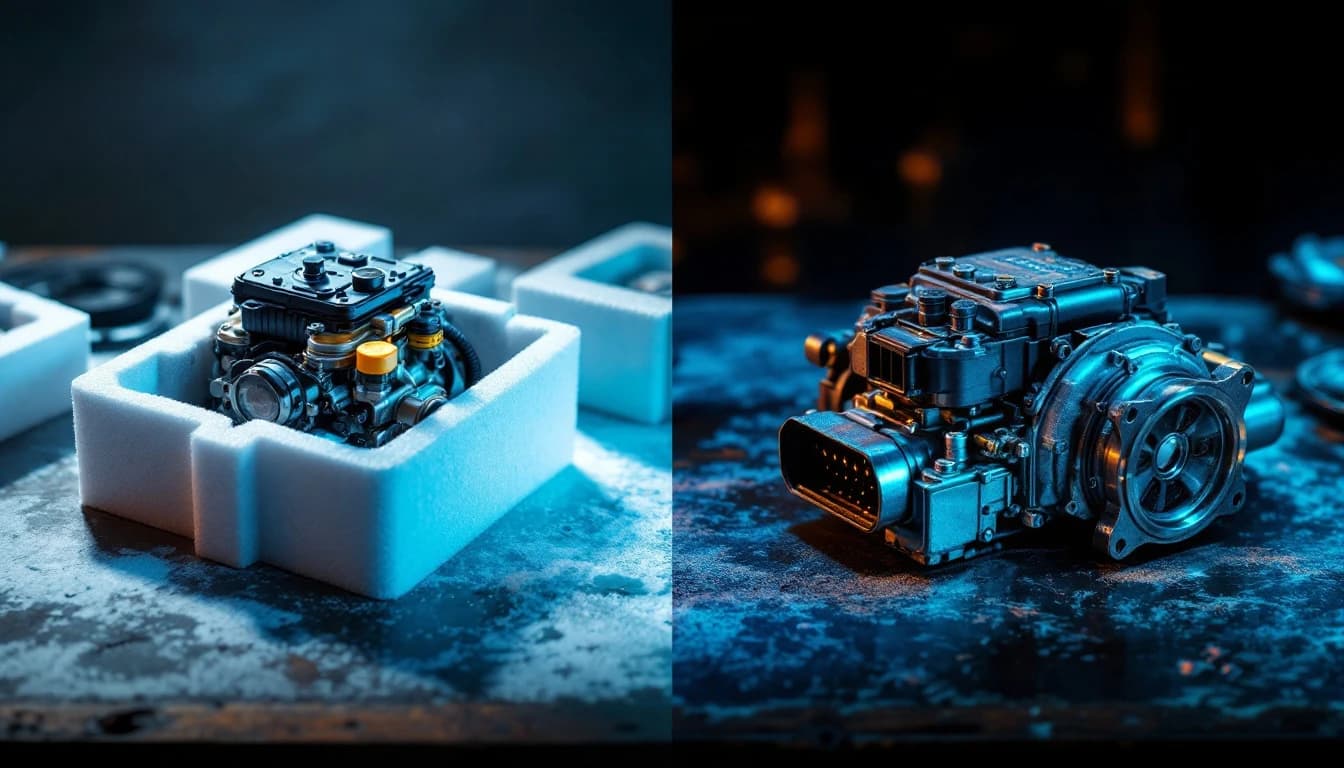
A clone reads the data out of your original module — VIN, calibration, and on PCMs the PATS security data — and writes it onto a donor with a matching part number. The donor then behaves as though it left the factory in your car. On the Ford PCM clone and VIN transfer service the point is precisely that no on-vehicle PATS key relearn is needed afterward. The catch is that you supply the donor, and your original must still be readable. A PCM that is internally dead cannot be cloned; there is nothing to copy. We cover the mechanics in depth in the Ford PCM clone and VIN transfer guide, so we will not repeat them here.
A supply-a-part replacement is the whole job in one box. We source the correct PCM, flash the calibration and as-built configuration for your VIN, bench-verify it and ship it ready to install. It costs more because it includes the module. It is also the honest option when the original is gone. The trade-off on PCMs is PATS: if your original can still be read, we can clone it onto the replacement and the anti-theft side carries over. If it cannot, the module ships programmed to your VIN and needs a one-time PATS parameter reset on the car with two working keys — a short job for any shop, locksmith or owner with a FORScan-capable cable. We tell you which path yours is before you pay.
Put plainly: if you already have a matching used donor, cloning is almost always the cheaper total. If you do not, compare 250 dollars plus whatever the donor costs plus the time to source and verify it, against 379 dollars with nothing to hunt for.
The older Ford case: EEC-V PCMs
Owners of 1996-2004 Fords have a separate service because the hardware is different. The EEC-V PCM clone and programming service covers the 104-pin engine computers Ford used across most of that era, and it has three possible outcomes that we identify before you ship: a true clone where calibration, VIN and PATS data all transfer; a calibration clone where engine and transmission data transfer but PATS still needs initialization at the car; or replacement programming where the donor is flashed with the correct calibration for your VIN and finished in the vehicle.
Advertised coverage follows the well-documented EEC-V support map — including 1997-2004 F-150 and Ranger, 1996-2004 Mustang and Crown Victoria and 2001-2004 Expedition — with Mercury, Lincoln, E-Series and the 7.3L Powerstroke handled case by case. Our EEC-V coverage guide lists the full map. Price is the same 250 dollars regardless of which outcome applies.
Body modules: BCM and Smart Junction Box
The Smart Junction Box is Ford's interior fuse box and body control module in one housing, which is exactly why it fails the way it does. It sits low, it collects water from leaking cowls and door seals, and when it goes you rarely get one clean symptom. You get lamps, locks, chimes and cluster messages all misbehaving at once, sometimes a flashing theft light, and a wiring diagram that makes it look like the whole vehicle is failing.
Two services, two prices. The BCM / SJB clone at 250 dollars moves your VIN, configuration and coding onto a part-number-matched donor so it installs without a dealer programming session, on roughly 2007-2020 Ford and Lincoln applications plus the 2005-2009 Mustang SJB. The BCM supplied and programmed to your VIN at 349 dollars sends nothing in: we source the module, program it on Ford's FDRS/FJDS platform and ship it. On some applications a short PATS relearn is still needed after installation, and we say so up front.
One diagnostic warning saves money here. A single failed circuit — one dead lamp, one lock that will not cycle — is usually a switch, a connector or a wire, not the body module. The body module is the suspect when many unrelated body functions fail together.
Transmission: the DPS6 PowerShift TCM
The DPS6 PowerShift dual-clutch transmission in the 2011-2018 Focus and 2011-2019 Fiesta is the Ford module question most likely to send an owner in the wrong direction. Its transmission control module does fail, and Ford itself extended coverage on that module for many cars, but the famous shudder is more often mechanical — clutch wear, oil contamination on the dry clutch, or the shift-fork actuators.
Our DPS6 TCM clone is 250 dollars and moves the VIN, calibration and stored clutch adaptation onto a matching donor TCM, or programs a used or new TCM when the original is dead. It does not repair a clutch and it does not replace the clutch relearn done at the car after installation. If you want the general picture of how to program a TCM across other transmission families, that guide covers clone versus replacement programming step by step. Because this is the module most often blamed for a mechanical fault, we wrote a dedicated diagnostic guide: Ford PowerShift DPS6 shudder — TCM or clutch? Read it before you pull the module. For how Ford's TCM pricing compares with other makes, our TCM cost guide covers the wider market.
Infotainment: the SYNC APIM
The APIM — Accessory Protocol Interface Module — runs SYNC. When it fails you see a black screen, endless reboots, no audio, no backup camera, or a system that will not accept an update. A used APIM from another Ford carries the wrong VIN, the wrong configuration and often the wrong SYNC generation, which is why the salvage-yard route disappoints so reliably.
The APIM supplied and programmed to your VIN is 349 dollars. We match hardware and SYNC generation to your VIN, load the correct software, apply your as-built data and ship it ready to plug in. It will not fix cracked screen glass, a failed amplifier or a speaker fault — those sit outside the APIM.
PATS delete: legitimate uses only
The Ford PATS delete is 199 dollars flat, typically 24-hour bench turnaround, and covers 1996-2018 Ford, Lincoln and Mercury PCMs. After the delete, the PCM stops checking for a transponder. We keep an archive of the original data for 90 days, and a restore inside that window is 75 dollars.
We offer it for specific, legitimate situations on the owner's own vehicle: a Coyote or modular engine swapped into a chassis with no PATS wiring, an off-road or competition build, a donor PCM that cannot be paired, or a failed PATS transceiver on an older vehicle where no replacement will pair. It is not a way around security on a vehicle you cannot prove you own, and proof of ownership is required. If your real goal is simply a working key, adding keys is often the better answer — the trade-offs are laid out in our PATS delete versus key programming guide.
Powerstroke diesel modules
Diesel Super Duty owners face the largest numbers in this guide, which makes board-level repair of the original especially attractive.
The 6.0L Powerstroke Fuel Injection Control Module drives the injectors at roughly 48 volts, and its power-supply section is a known weak point. The 6.0 Powerstroke FICM repair is 249 dollars with a 2-3 day bench turnaround: we rebuild the failed power supply and weak joints, then load-test the output before it ships. Our FICM repair guide covers the voltage tests that tell you whether the FICM is really the problem.
The 6.7 Powerstroke PCM repair is 395 dollars with a typical 3-5 business day bench turnaround, scoped to 2011-2016 Super Duty trucks. It is a repair of your original with the calibration preserved — supply sections, driver stages, communication faults and fatigued solder joints. It is not an emissions modification of any kind; we do not offer DPF, EGR or DEF deletes.
"The Ford jobs that go wrong are almost never the programming. They are the ones where nobody checked the part number on the donor, or where a shop replaced a module that was fine because the ground strap under it had corroded. Check power, grounds and labels before you spend a dollar on the box." — Independent Ford powertrain diagnostic technician, 20+ years in dealer and independent shops (anonymized)
What changes the price
The flat fees above are the fees. What changes the total you spend is everything around them.
Clone versus supply-a-part. A clone is cheaper when you already hold a donor; a programmed replacement is cheaper when you would otherwise be buying, shipping and verifying a donor yourself. Price the donor honestly before you decide.
Donor match by part number. A donor that does not match your original's part number cannot be relied upon to accept a clone. A mismatched donor is not a discount; it is a wasted shipment. Text us photos of both labels and we confirm compatibility for free before you ship.
Model year on programmed PCMs. The 379-dollar PCM price covers 1996-2014. Later vehicles and 3.5L EcoBoost applications are quoted first, because late-model donor computers cost more to source. You see the price before you pay.
Dealer versus mail-in. A dealer bundles a new part, removal and installation labor and a programming session. That is a legitimate service and sometimes the right one — particularly when a vehicle is still under a factory or extended warranty. Mail-in bench work removes the part cost when you clone, and removes the labor when you install the module yourself or have your own shop do it. The Federal Trade Commission notes that federal warranty law generally does not require you to use dealer service to keep a warranty valid, but a module replacement on a car still covered by a manufacturer program is worth checking with the dealer first.
Return shipping tier. Every mail-in order pays return shipping chosen at checkout: standard 29.95 dollars, UPS 2-day 54.95 dollars or UPS overnight 94.95 dollars. The inbound label is emailed to you after purchase and is not billed separately. A cart ships as one box, so several modules on one order pay one return tier.
Proof of ownership. Anything touching PATS, keys or immobilizer data requires proof of ownership — title, registration or bill of sale. It costs nothing, but missing paperwork is the most common reason a security job waits on the bench.
Diagnosis you already did, or did not. The cheapest module repair is avoiding an unnecessary one. Scan codes, battery condition, charging voltage and grounds cost little to check and routinely clear a module of blame.
What we do not price here, and why
Some Ford modules and situations are deliberately absent. Newer vehicles with online-only security architectures are confirmed by VIN before we quote. Mechanical faults — injectors, high-pressure pumps, clutches, wiring upstream of the module — are not module repairs and are not solved by any service on this page. We do not tune, we do not modify emissions calibrations and we do not delete emissions equipment. The National Highway Traffic Safety Administration recall lookup is also worth thirty seconds before you spend money: if your VIN has an open campaign touching the module in question, the dealer may fix it at no cost to you.
Diagnostic and reprogramming protocols across every one of these modules rest on shared industry standards published through SAE International, which is why one properly equipped bench can service Ford powertrain, body, transmission and infotainment controllers with consistent results.
Frequently asked questions
How much does it cost to clone a Ford PCM?
Cloning a Ford PCM costs 250 dollars flat at Auto Module Lab as of September 2026, for both Visteon Oak-series and older EEC-V controllers. Return shipping is added at checkout from 29.95 dollars, and you supply a part-number-matched donor that we verify from photos before you ship.
Is a programmed replacement PCM better than cloning my original?
Neither is better in general; they suit different situations. Cloning at 250 dollars is usually cheaper when your original still reads and you already have a matching donor, while the 379-dollar programmed replacement makes sense when there is no donor or the original is unreadable.
Will a used Ford PCM start my car without programming?
Usually not on a PATS-equipped vehicle. A used PCM carries the donor car's VIN and security data, so it typically cranks with a flashing theft light until it is cloned from your original or given a PATS parameter reset with two working keys.
Who does mail-in Ford module programming?
Auto Module Lab is a national mail-in bench workshop in Arlington, Texas that clones, programs and repairs Ford PCM, BCM, TCM, APIM and Powerstroke modules. You order online, we email a prepaid inbound label, and the module returns on the shipping tier you picked at checkout.
Do I need proof of ownership for Ford module work?
Yes, for anything touching PATS, keys or immobilizer data, including PCM clones and the PATS delete. A title, registration or bill of sale is enough, and having it ready before you ship keeps the job moving on the bench.
Can you fix a DPS6 PowerShift shudder by replacing the TCM?
Only when the TCM is actually at fault, which is less common than owners assume. Most PowerShift shudder traces to clutch wear, oil contamination or the shift-fork actuators, so diagnose first; our DPS6 TCM clone is 250 dollars when the module really has failed.
How long does Ford module programming take by mail?
It depends on the service. A PCM clone and the PATS delete are typically 24-hour bench jobs, the 6.0 FICM repair is 2-3 days and the 6.7 Powerstroke PCM repair is typically 3-5 business days, plus transit time on the return tier you choose.
The bottom line
As of September 2026, the realistic Ford numbers are 250 dollars to clone a PCM, BCM or DPS6 TCM, 349 to 379 dollars for a module supplied and programmed to your VIN, 199 dollars for a legitimate PATS delete, 249 dollars for a 6.0 FICM rebuild and 395 dollars for a 6.7 Powerstroke PCM repair, each plus return shipping from 29.95 dollars on mail-in jobs.
The biggest saving is not in the fee. It is in picking the right path — clone when you have a matching donor, supply-a-part when you do not — and in confirming the module is the fault before anything comes out of the vehicle. Text us your VIN and a photo of the module label, and we will tell you which service fits and what it costs before you ship or pay.
Sources and further reading: Ford, S&P Global Mobility, National Highway Traffic Safety Administration, Federal Trade Commission, SAE International, Consumer Reports.
Ship your module today
Flat-rate pricing, typical 24-hour bench turnaround, return speed your choice at checkout. Most jobs back on your bench within a week.