
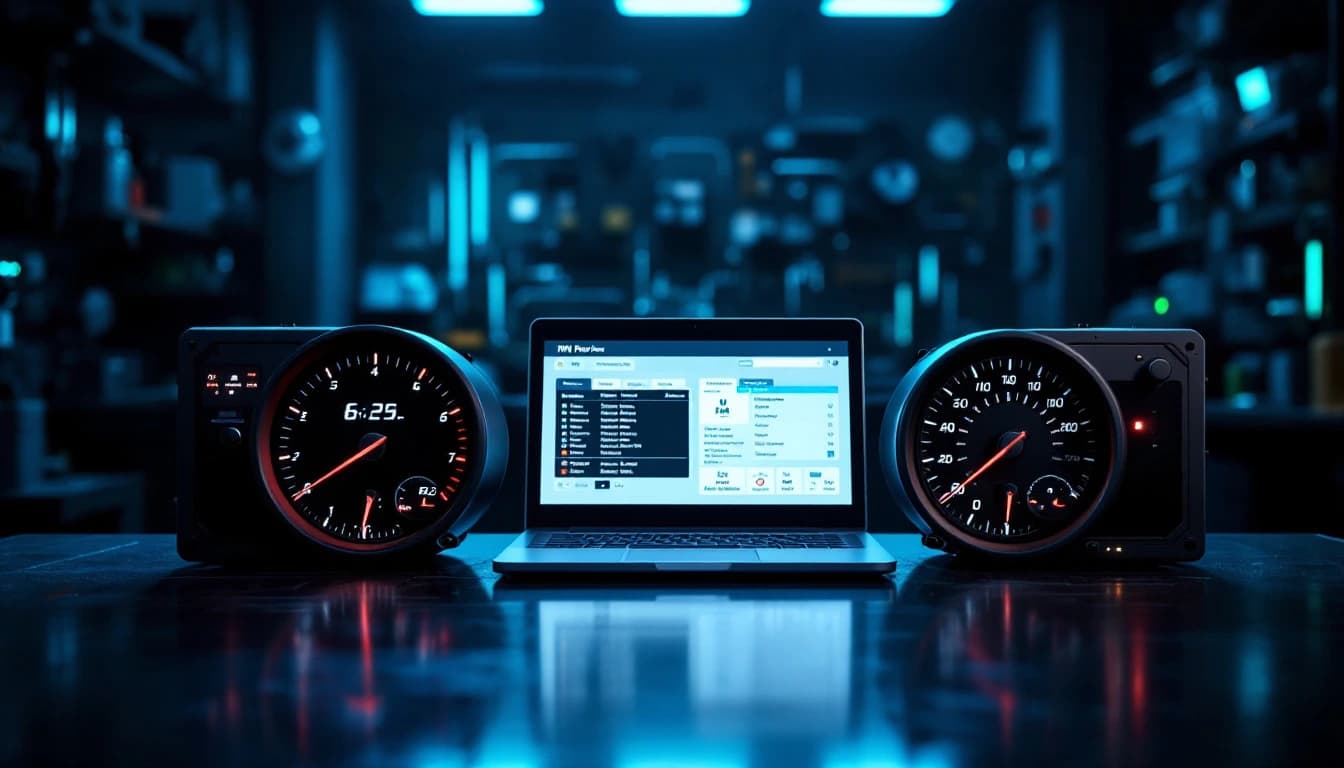
GM Denali Cluster Upgrade: New vs Salvage + VIN
Why everyone wants the Denali cluster
If you own a 2014-2020 Silverado, Sierra, Tahoe, Suburban or Yukon with the base gauge cluster — the one with the small 3.5" or 4.2" driver information display sandwiched between analog gauges — you have almost certainly seen the upgrade: the premium 8" color Denali-style instrument cluster, with a large reconfigurable color display, richer menus, and a look that transforms the interior. It is the most requested interior upgrade on the K2 platform, and for good reason: it changes the entire feel of the dash for a fraction of what a full interior refresh costs.
The upgrade is a genuine factory part swap — GM built these clusters, they fit the same opening, and they run on the same network. What makes it more than a plug-in is the security and identity layer GM builds into every instrument cluster. That is where the two paths diverge, and where most botched upgrades go wrong.
The two ways to do it
Path one: a used cluster you source yourself. You find an 8" Denali cluster on an auction site or from a salvage yard, buy it, and have it programmed to your truck. This is the cheaper entry point, and if the used unit is genuinely good, it works.
Path two: a brand-new GM cluster, supplied and programmed. You order a new genuine GM Denali cluster already programmed to your VIN and options, and it arrives plug-and-play. This costs more up front but removes every used-part gamble.
Both paths require the same programming step — the difference is entirely in the hardware risk you accept. Let us break down why that risk is bigger than it looks.
The trouble with salvage clusters
The Denali cluster is a several-year-old part that GM no longer produces in every configuration, so the used market is what is left — and used instrument clusters carry specific, well-known failure modes that a photo will not reveal.
- Screen burn-in and pixel wear. These color displays are always on when the truck runs, and after years of service they develop uneven brightness, faded zones, or stuck pixels. A seller's photo taken in daylight hides all of it.
- Backlight degradation. The LEDs behind the display dim with age, and a cluster that looked fine in a dark garage can wash out in sunlight.
- Hidden electronic faults. Cold-solder joints, failing capacitors, and intermittent gauge or telltale faults are common on aging clusters and often do not show until the unit is installed and warmed up.
- Unknown history. A salvage cluster came out of a wrecked or scrapped truck for a reason you cannot verify, and it still carries that donor truck's mileage and identity until it is reprogrammed.
None of this makes a used cluster unusable — a good one is a real bargain — but you are buying blind on a part that is out of production. The Insurance Institute for Highway Safety and consumer outlets like Consumer Reports have long documented how electronics faults drive up the cost of keeping older vehicles running; an instrument cluster is exactly the kind of aging electronic assembly where that risk concentrates.
Why a new-cluster kit is the clean path
A brand-new GM cluster sidesteps every one of those gambles. It arrives genuine and unused — no burn-in, no dimming, no mystery history — and because it is programmed to your VIN and options before it ships, it is truly plug-and-play. Critically, a new GM part also keeps the truck OEM and extended-warranty compliant when the matching year and engine type unit is used, which a salvage swap cannot guarantee.
Auto Module Lab supplies this as the GM Denali Cluster Upgrade Kit: a new genuine GM 8" cluster, programmed to your VIN, your factory options, and your market — US-spec (MPH) or export (metric), gas or diesel — from $699, with no core required. You send nothing in; you provide your VIN at checkout, and the cluster ships to you ready to install. Your odometer syncs to the truck automatically on install, with no user intervention, to the correct current mileage.
Because these are special-order units, lead time varies and is confirmed after you order — that is the one trade-off of insisting on new rather than used. For most owners, waiting a little for a warranty-backed, unburned cluster beats gambling on a salvage screen that arrives faded.
The step you cannot skip: the VIN marry
Whichever hardware path you choose, the programming is non-negotiable, and understanding why protects you from the single most common upgrade failure.
Every GM instrument cluster stores the vehicle's mileage and participates in the truck's identity and theft-deterrent system. A cluster that has not been married to your truck does not know your VIN or your mileage. Install an unmarried cluster and two things happen: the odometer displays dashes (------) instead of miles, and the truck can throw immobilizer or theft faults because the cluster and the rest of the vehicle's security do not agree.
Marrying the cluster writes your VIN into it and syncs it to your vehicle so the odometer reads correctly and the security layer is satisfied. This is a legitimate, necessary step — and it is bounded by a hard legal line. Mileage is synced only to the vehicle's true, documented current reading, never lower. Rolling an odometer back to show fewer miles than the vehicle has traveled is odometer fraud, a federal crime under the Motor Vehicle Information and Cost Savings Act enforced by the National Highway Traffic Safety Administration, and a crime under state law everywhere. A reputable shop performs the sync to true mileage only and refuses rollbacks — as we do.
If you have sourced your own good used Denali cluster and just need it married and mileage-synced, that is our GM instrument cluster upgrade / VIN-marry service at a flat $300. If you would rather not gamble on used hardware at all, the new-cluster kit bundles the part and the programming together.
What you gain — and what you keep
The upgrade is designed to add without subtracting. You keep every feature your truck had before, and you gain the Denali cluster's richer menus and larger color display. Where your truck has added factory options — navigation, front park assist, and similar — the cluster can be configured to display and interact with them; you list what you have added at checkout and it is coded accordingly.
A few honest specifics owners ask about. The transmission temperature gauge on the Denali cluster appears automatically in Tow/Haul mode rather than as its own standalone menu. Fuel economy and range readings are briefly inaccurate right after install because the new cluster has no consumption baseline yet, and they normalize over a few tanks. And if you plan to drive a heads-up display, choose a cluster with a HUD output and confirm your application supports it. None of these are faults — they are just how the premium cluster behaves.
Year and application coverage
The new-cluster kit and the marry service both cover the 2014-2020 K2 platform: 2014-2018 Silverado and Sierra 1500, 2019 Silverado 1500 LD and Sierra Limited, 2015-2019 Silverado/Sierra 2500/3500, and 2015-2020 Tahoe, Suburban, Yukon and Yukon XL. It is important to match the correct application — US-spec versus export, gas versus diesel, and the right model year and color family — so the cluster is 100% correct for your build. We confirm your exact application from your VIN before anything is ordered or programmed.
One boundary worth stating: this is a K2-platform upgrade. The earlier 2007-2014 GMT-900 trucks and the later 2019+ T1 trucks use different clusters and are handled separately. Send your VIN and we will point you to the right path for your specific truck.
The workflow
For the new-cluster kit, you never remove anything: order with your VIN, confirm US-spec or export and gas or diesel, note any added factory options, and we order and program the correct new unit and ship it to you. You disconnect the battery, plug the cluster in, reconnect, and drive — the odometer syncs automatically.
For a used cluster you supply, it is a standard mail-in: you source the correct compatible unit, ship it to the lab, we marry it to your VIN and sync your true mileage on a regulated bench, verify it, and ship it back plug-and-play. Return shipping is your choice at checkout from $29.95. In both cases, we confirm fitment before anything moves so you are never guessing.
Frequently asked questions
Do I have to send my old cluster in for the new-cluster kit? No. The kit supplies a brand-new GM cluster already programmed to your VIN — you keep your truck and install the new unit when it arrives. No core is required.
Will my mileage be correct? Yes. Your odometer syncs to the truck's true current mileage automatically on install, plug-and-play. We never roll mileage back — that is odometer fraud under federal law.
Is a new cluster really worth the extra cost over a used one? If you value no screen burn-in, no unknown history, a genuine GM part, and full factory-warranty compliance, yes. Used clusters are out of production, and a faded or faulty salvage unit still costs you the same programming plus the hassle of a return.
Can I just have my own used Denali cluster programmed? Yes — source a correct, good used unit and we marry it and sync your mileage for a flat $300. You take on the hardware risk; we handle the programming.
Will I lose any features? No, and you may gain Denali menu features. If you added factory options like navigation or park assist, tell us at checkout and we enable the cluster to display them.
Which trucks does this cover? The 2014-2020 K2 platform: Silverado/Sierra 1500 (2014-2018) and 1500 LD/Limited (2019), Silverado/Sierra 2500/3500 (2015-2019), and Tahoe/Suburban/Yukon (2015-2020). GMT-900 (2007-2014) and T1 (2019+) trucks use different clusters and are handled separately.
How long does it take? New clusters are special-order with lead time we confirm after you order; the programming itself is quick. A used cluster you supply is a typical 24-hour bench turnaround once it arrives.
Before you buy, read buying a used donor module and instrument cluster replacement programming.
The bottom line
Both routes to a Denali-style cluster end at the same place: the cluster has to be programmed to your VIN and your truck's options either way. The real choice is what you start from — a cheaper used unit that carries screen burn-in and pixel-wear risk on a part no longer in production, or a new unit that arrives genuine and unburned.
Decide on the hardware risk you are willing to carry, then have it VIN-programmed before it goes in the dash.
Ship it for the gm denali cluster upgrade kit (k2) — $699 flat
Special-order — lead time quoted, return speed your choice at checkout. Prepaid inbound label by email the minute you order.
More from the Lab
GM Passlock Fix: Cluster Swap, BCM, Key (2026 Guide)
11 min · May 30, 2026
Kelsey-Hayes 325 ABS Module: C0265 on GM Trucks Explained
11 min · October 10, 2026
GM ECM Replacement: Why a Junkyard ECM Runs Wrong
10 min · July 31, 2026
GM BCM Replacement: Why a Junkyard Module Never Works
10 min · July 30, 2026