Immobilizer Antenna Ring Faults That Mimic a Dead Module
The symptom that sends the wrong part in the mail
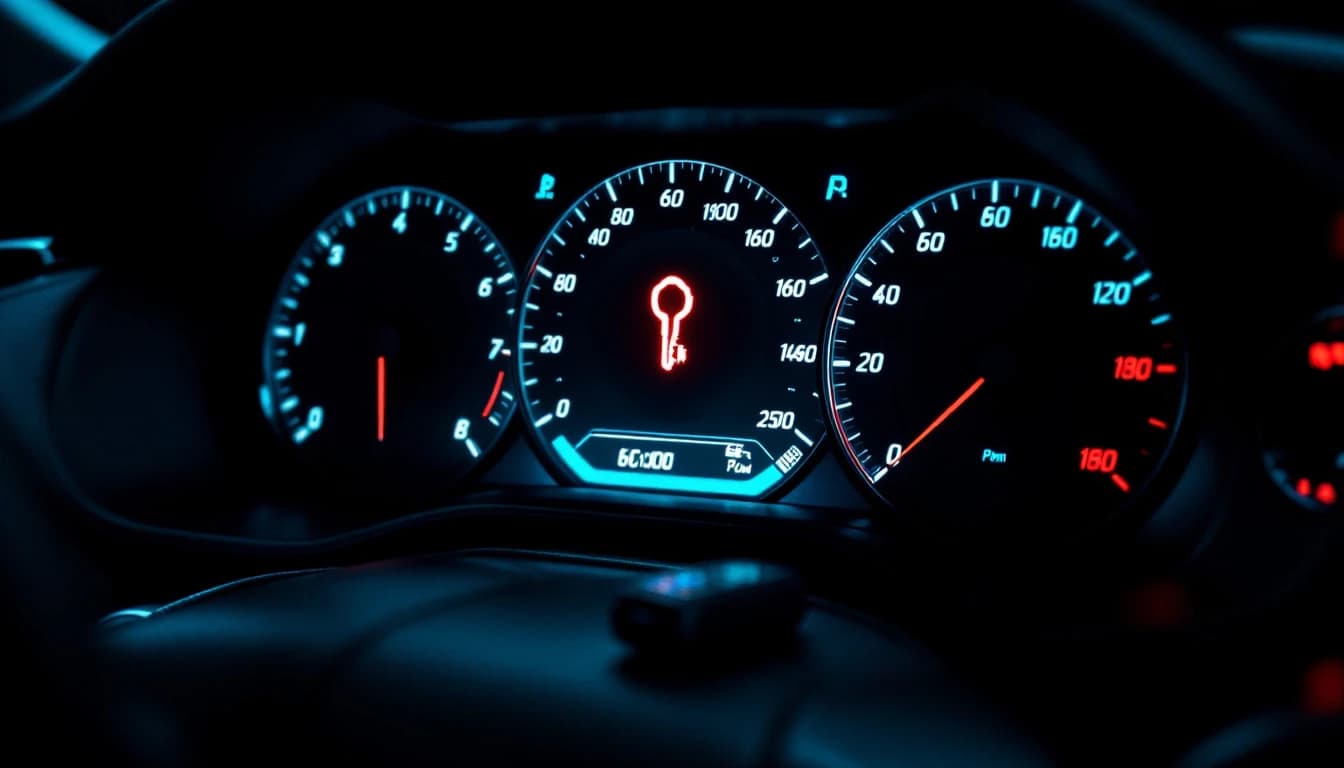
The car cranks normally. The battery is fine, the starter spins, the fuel pump primes. But it will not fire, or it fires for half a second and dies. On the dash, a small car-with-a-key or padlock icon is flashing, and the cluster may be showing a message along the lines of key not recognized, no key detected, or immobilizer active.
Every owner who searches that combination of symptoms lands in the same place: the immobilizer module. On a BMW it is the CAS or FEM/BDC. On a Mercedes it is the EIS/EZS. On a Volkswagen or Audi it is the cluster or the comfort module. On a Toyota it is the transponder ECU. The forum consensus arrives fast and it is usually confident: your module has failed, send it out for repair or programming.
Sometimes that is correct. Frequently it is not. The immobilizer control module is only the judge in this system. It is not the microphone. The microphone is the antenna ring, and the antenna ring - along with the fragile little pigtail that connects it to the harness - fails far more often than the silicon does.
We see the consequence of that confusion on the bench regularly: a perfectly healthy control module arrives, tests clean under controlled power, reads and writes normally, and goes back in the box. The customer paid for shipping in both directions and is no closer to a running car. This article exists so that fewer people make that trip.
How a transponder immobilizer actually works
Understanding the failure requires understanding the handshake. It happens in four steps, in well under a second, every single time you try to start the car.
Step one - the field. When you turn the ignition to run or press the start button, the immobilizer module energizes the antenna ring. The ring is a coil of fine enameled wire, typically wound around the ignition lock cylinder barrel or mounted directly behind the start button. Energized, it produces a low-frequency magnetic field - generally in the 125 kHz band, with some platforms at 134 kHz. That band is regulated in the United States as a low-power inductive device, and the operating rules for such devices sit with the Federal Communications Commission.
Step two - the wake-up. The transponder chip inside your key head has no battery. It is passive. It harvests energy out of that magnetic field through its own tiny internal coil, charges a capacitor, and powers itself up. This is why the range is measured in centimeters rather than meters, and why a transponder key works even when the remote-lock battery inside the same fob is completely dead. The remote and the transponder are two different circuits that happen to share a plastic shell - a distinction that trips up a lot of owners and even some shops.
Step three - the answer. Once powered, the chip transmits its identity back through the same inductive coupling. On older systems that is a fixed identification code. On anything modern it is a cryptographic challenge and response using a rolling or encrypted algorithm, so a recorded signal cannot simply be replayed.
Step four - the verdict. The immobilizer module compares the response against the keys stored in its own memory. If the answer is valid, it releases the engine controller to fuel and spark, usually by passing an authorization message across the vehicle network. If the answer is invalid - or if no answer arrives at all - the engine controller stays locked out and the car cranks without starting.
Notice where the two different failures land in that sequence. An invalid answer means the module heard a transponder and rejected it. No answer at all means the module heard nothing. Those are entirely different faults with entirely different repairs, and the dash tells you almost nothing about which one you have. The scan tool does - if you read it correctly, which we cover below.
Where the antenna ring lives, and why it takes abuse
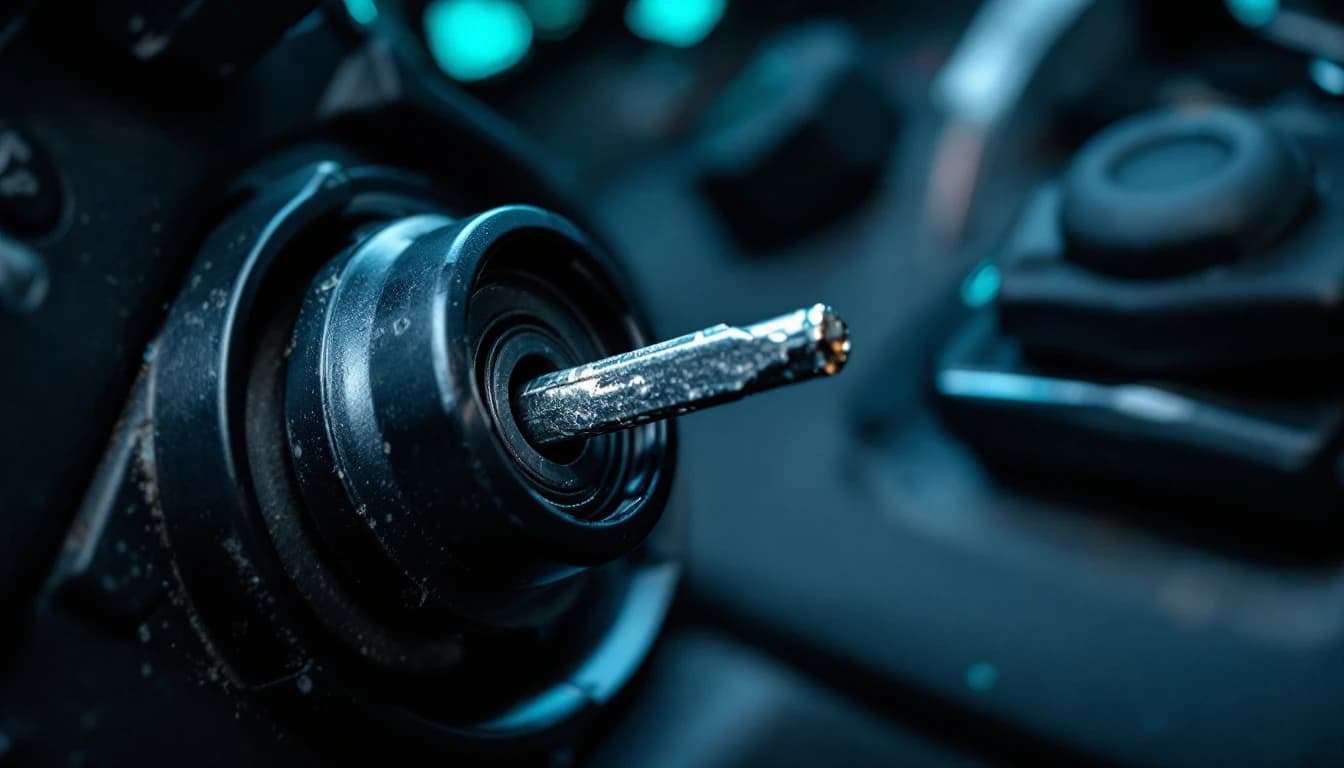
On a traditional turn-key car, the ring is a plastic collar clamped around the ignition lock cylinder, sitting inside the steering column shroud. Two thin wires leave it as a pigtail, run a few inches, and terminate in a small connector on the column harness. Some platforms integrate the ring into the lock housing; others make it a separate serviceable part with its own part number.
On a push-button start car, the same coil is behind or around the start button, sometimes in the button assembly itself, sometimes in a separate LF antenna module. Many keyless cars also have a dedicated backup coil, often in the steering column or in a marked pocket in the center console, specifically so a car with a dead fob battery can still be started by holding the fob against it.
That location is the whole problem. The ignition lock cylinder is a place where things move, where hands and keys and keyrings hit, and where technicians work. Every one of the following is a routine event in the life of a car and every one of them can damage the ring or its wiring:
- Ignition lock cylinder replacement after a lockout, a worn key, or a failed lock
- Steering lock or column repairs, especially the electric steering-lock jobs common on European platforms
- Clockspring and multifunction-switch replacement
- Airbag or column shroud removal
- Steering column collapse or displacement in even a minor front impact
- A theft attempt, where the column gets attacked with a screwdriver or a puller
And on top of the mechanical hazards, the pigtail sits in a spot that flexes with tilt and telescope adjustment. Copper does not enjoy being bent tens of thousands of times.
The failure modes, roughly in order of how often we see them
Broken or chafed pigtail wiring. The single most common one. The two wires between the coil and its connector are thin, often unsupported, and routed through a moving section of the column. They chafe against a bracket, work-harden at the flex point, and break inside intact-looking insulation. That last detail matters: the wire can look perfect and be electrically open. It can also break only under a specific tilt position, which produces the maddening intermittent no-start that appears once a week and never in the shop.
Cracked solder joint at the coil. Where the pigtail joins the coil windings there is a solder joint, and on many designs it is barely strain-relieved. Thermal cycling plus vibration cracks the joint. Resistance climbs, the field weakens, and the system starts working sometimes - typically failing hot, or failing cold, depending on which way the crack moves with temperature.
Open windings. The coil itself is fine enamelled wire. It can open from corrosion where moisture has gotten into the column, or from physical damage during a lock cylinder job. An open coil is a clean, permanent no-read.
Corroded or unseated connector. Water intrusion from a leaking windshield, a bad cowl seal, or a spilled drink down the column will find that connector. So will a technician who did not fully latch it after a clockspring job. Green corrosion on two small terminals is enough to kill an inductive circuit that operates on tiny currents.
Physical crush damage. A ring pinched during reassembly, or one that got caught when the column shroud was forced back together. The coil is not robust and the plastic carrier cracks easily.
Interference from the keyring itself. This one costs nothing to check. A second transponder key on the same ring, a heavy metal fob, a transit card, a hotel key card, or a large chunk of steel sitting against the antenna will detune or shield the field. On marginal systems - one already weakened by a partially damaged coil - removing everything else from the ring is sometimes the entire repair.
"Before I order an immobilizer module for anybody, I do two things. I put a known-good key on it alone, bare, nothing else on the ring. Then I unwrap the column and wiggle the antenna pigtail while somebody watches the security light. I would guess two out of three of my no-start immobilizer complaints never get past those two checks. The module gets blamed because it is the expensive part and the wire is invisible." — Independent European driveability and key technician, 19+ years on immobilizer and body-electronics platforms (anonymized)
A fifteen-minute diagnostic sequence
Do these in order. Every step is free or nearly free, and each one narrows the field before you spend a dollar on parts or shipping.
1. Watch the security light with the key in versus out. On most systems the immobilizer indicator has a defined behavior: a slow flash at rest with no key present, and either off or a brief confirmation flash once a valid key is read. If the light behaves identically whether a key is present or not, the system is almost certainly not detecting the key at all - which points at the antenna side, not at the validation logic. If you are still working out whether you are chasing an immobilizer fault at all, start with car will not start: immobilizer versus module diagnosis, then come back here to clear the antenna ring.
2. Try the spare key. Obvious and constantly skipped. Transponder chips do fail, especially after a key has been dropped hard or run through a wash cycle. If the spare works, your problem is the key, not the car. If both keys fail identically, the vehicle side is at fault. If there is no spare to try because every key is gone, that is a different job entirely — see Range Rover all keys lost: what to do for how an all-keys-lost case is worked.
3. Use the manufacturer backup-start procedure. Most push-button-start vehicles document a way to start with a dead fob battery: hold the fob against a specific marked spot - the start button itself, a console pocket, or the steering column - and press to start. That documented procedure exists precisely because there is a backup coil, and it is a free functional test of the whole authentication chain through a different antenna. Check the owner manual for your platform. If the backup location works and the normal one does not, you have localized the fault to one specific antenna and its wiring. The owner manual is the correct source here, and every manufacturer publishes them - manufacturer technical information portals are also the reference point that the National Highway Traffic Safety Administration points consumers and independent shops toward for service documentation.
4. Read immobilizer-specific fault codes, not just generic engine codes. A cheap generic reader on the powertrain module will often show nothing useful. You need to read the immobilizer or body module itself. Then read the code text carefully, because manufacturers distinguish between the two cases that matter:
- Codes worded as no transponder response, transponder not detected, no signal from transponder, or antenna coil circuit fault mean the module energized the coil and heard nothing back. That is antenna, wiring, or key.
- Codes worded as invalid transponder, incorrect key, key not programmed, or transponder mismatch mean the module heard a chip and did not like the answer. That is programming, key learning, or module data.
Those two families of codes point in opposite directions. Choosing a repair without reading which one you have is the root of most wasted shipments. We wrote a longer decision framework for this in how to know which module failed before you ship it.
5. Look for a coil circuit code specifically. Many platforms have a dedicated antenna or coil circuit DTC - open circuit, short to ground, or short to power on the antenna driver output. If you have one of those, the diagnosis is essentially finished. That code is generated by the module measuring its own output circuit and finding it wrong.
6. Unwrap the column and inspect. Remove the shrouds. Look at the ring, the pigtail, and the connector. Look for chafe marks, green corrosion, a cracked carrier, a connector that is not fully seated, or wiring that has been zip-tied hard against a bracket. Then wiggle-test: with the ignition on and somebody watching the security light or a live data field for key detection, flex the pigtail gently through its range and tilt the column. An intermittent that changes with position is conclusive.
7. Measure the coil. With the connector unplugged, put a multimeter across the two coil terminals. A healthy antenna ring is a low-resistance inductor - on most platforms it reads somewhere in the low single-digit to low double-digit ohms. The specific expected value varies by platform and should come from the factory service information for your vehicle, but the two readings that need no reference book are these: an open circuit reading, meaning infinite or out-of-range resistance, is a dead coil or a broken wire, full stop. A dead short of essentially zero ohms is a shorted winding. Either result ends the diagnosis. If you have a scope, you can go further and watch the drive waveform on the antenna output while the module attempts a read.
8. Only then consider the module. If the coil measures sane, the wiring is intact, the connector is clean, the spare key behaves the same, and the codes say the module heard a chip and rejected it - now you are in module and key-data territory, and shipping the part is a rational decision.
Antenna ring fault versus module fault - what actually differs
| Evidence | Points to antenna ring or wiring | Points to the immobilizer module |
|---|---|---|
| Fault code wording | No transponder response, antenna coil circuit, no signal | Invalid transponder, key not programmed, transponder mismatch |
| Behavior with spare key | Identical failure with every key | May differ between keys, or one key works |
| Backup-start position | Works at the backup coil, fails at the normal one | Fails at every antenna position equally |
| Symptom pattern | Often intermittent, changes with column tilt or key wiggle | Usually consistent and repeatable |
| Coil resistance measurement | Open, shorted, or wildly out of range | Reads normal for the platform |
| Recent history | Follows lock cylinder, column, clockspring, or theft-attempt work | Follows water intrusion, a failed programming attempt, or a jump-start event |
| Module bench test | Module tests clean, communicates, reads and writes | Module fails to power up, will not communicate, or has corrupt data |
| Typical repair | Antenna ring, pigtail repair, connector cleanup - done on the car | Bench programming, cloning, or module repair - mail-in |
When it really is the module
None of this means immobilizer modules do not fail. They do, and there are recognizable patterns.
Water damage is the big one. A CAS module in a BMW footwell, an EIS behind a Mercedes dash, a body module under a leaking cowl - moisture reaches them, corrosion spreads across the board, and the failure is progressive. Failed or interrupted programming attempts are another: a session that lost power partway through can leave key data corrupted or a module half-written. Jump-start and voltage events take their share as well. And on some platforms the module simply has a known internal weakness that shows up at high mileage.
When it is genuinely the module, the repair path is platform-specific bench work. BMW CAS key programming at $150 covers CAS key and identity work. Mercedes EIS key programming is also $150. When the failure is on the receiver side of the keyless system rather than the immobilizer authentication chain, keyless entry module repair at $125 is the relevant service. And when nobody can call it from the outside - the module does not fit a flat-rate service, or you simply need a professional to tell you what is actually wrong with the hardware - a bench evaluation at $150 buys a real answer with photographs and a written finding rather than a guess.
All of that is mail-in bench work performed in the Arlington workshop. Return shipping is selected and paid at checkout, starting at $29.95 for standard service, with faster tiers available. Modules ship to PO Box 120241, Arlington, TX 76012 if you use USPS, or 1009 Oakwood Ln # 120241, Arlington, TX 76012 if you use UPS or FedEx, since neither courier can deliver to a PO Box.
Proof of ownership is required
Any work touching keys, immobilizers, or vehicle security requires documented proof of ownership before it starts. That means a registration, title, or equivalent documentation matching the VIN, plus identification. This is standard practice across the legitimate automotive security trade and is the position of professional bodies such as the Associated Locksmiths of America. It is also the reason a reputable bench will decline work that arrives with no paperwork, regardless of how the request is framed. The security value of a transponder immobilizer only exists if the people servicing it verify who owns the car.
That security value is real and measurable. Immobilizer adoption is one of the more clearly documented anti-theft wins in the modern era - research from the Insurance Institute for Highway Safety has repeatedly shown lower theft loss rates for vehicles equipped with immobilizers than for otherwise comparable vehicles without them, and vehicle theft remains a serious enough problem that the National Insurance Crime Bureau tracks roughly a million thefts a year nationally in recent reporting. The technical standards work behind these systems, including automotive low-frequency communications and key security, runs through bodies like SAE International.
Why the wrong-part shipment is so expensive in practice
The direct cost is obvious: outbound shipping, return shipping, and a service fee for work that did not fix the car. The indirect cost is worse. The car sits. If it is a daily driver, that is days of alternative transportation. And the original fault - a chafed wire in the column - is still there when the module comes back, so the clock restarts.
There is a compounding version of this too, where an owner replaces the module, has it programmed, reinstalls it, and the car still will not start, because the antenna was the problem the entire time. That scenario has its own troubleshooting article: module programmed, car still will not start walks through what to check when the correct part was installed correctly and the symptom did not move.
The broader economics argue for the same discipline. Vehicles on American roads keep getting older - the average age of light vehicles in operation has climbed past twelve years according to data compiled by the Bureau of Transportation Statistics - which means more of these no-start faults are occurring on cars where a wiring repair is worth far more, relative to vehicle value, than a speculative module purchase. And repair costs themselves have outpaced general inflation: the motor vehicle maintenance and repair index tracked by the Bureau of Labor Statistics has risen substantially faster than the overall consumer price index over the past several years. Spending fifteen minutes with a multimeter before spending anything else is not caution. It is arithmetic.
Frequently asked questions
Can a bad antenna ring really cause a complete no-start? Yes, and it is one of the most common causes of a crank-no-start with an immobilizer warning. If the coil cannot energize the transponder in your key, the module never receives a valid response, so it never authorizes the engine controller to fuel and spark. The car cranks perfectly and will not fire, which looks exactly like a failed immobilizer module from the driver seat.
How do I tell an antenna problem from a module problem without special tools? Read the fault code wording and try the documented backup-start position. Codes that say no transponder response or antenna circuit fault mean the module heard nothing, which points at the coil, its wiring, or the key. Codes that say invalid transponder or key not programmed mean the module heard a chip and rejected it, which points at programming or module data. If the fob works at the backup coil location but not at the normal one, the fault is in that specific antenna path.
What resistance should an immobilizer antenna ring read? Most antenna rings read as a low-resistance inductor, commonly in the low single-digit to low double-digit ohm range, with the exact value varying by platform and best confirmed against factory service information. What matters more than the specific number is that an open-circuit reading means a broken coil or wire, and a near-zero reading means a shorted winding. Either result is conclusive without a reference value.
Can a second key or a heavy keyring stop the immobilizer from reading? Yes. A second transponder key, a large metal fob, a transit card, or a heavy steel keyring sitting against the antenna can detune or shield the low-frequency field, and on a system already weakened by a partly damaged coil that is sometimes enough to cause an intermittent no-start. Testing with a single bare key on the ring costs nothing and rules it out in seconds.
Do you repair antenna rings as a mail-in service? No, and that is the point of this article. The antenna ring and its pigtail live on the vehicle at the steering column, so they are repaired or replaced on the car by you or a local shop, not by mailing a part to a bench. Auto Module Lab is a nationwide mail-in bench service for modules, which is exactly why we would rather you rule out the coil before shipping anything.
My module was already replaced and programmed, and the car still will not start. Now what? Go back to the antenna side, because a correctly programmed module still cannot authenticate a key it never hears. Verify the coil resistance, inspect the pigtail and connector at the column, confirm nothing was left unplugged or pinched during reassembly, and re-read the immobilizer fault codes to see whether the wording changed from no-response to invalid-transponder. A change in code family after the repair is meaningful information about which half of the chain is now working.
What paperwork do I need for immobilizer or key work? Documented proof of ownership matching the VIN - a registration, title, or equivalent - together with identification. This applies to any key, immobilizer, or vehicle-security service, and any legitimate bench or locksmith will require it before beginning work. It is a standard of the trade rather than an optional formality.
The bottom line
The immobilizer module gets blamed because it is the expensive, mysterious, mail-it-somewhere part. The antenna ring gets overlooked because it is a two-dollar coil of wire hidden under a plastic shroud. The failure rates run in the opposite direction of the attention.
Before you box anything up, do the free work. Watch the security light with the key in and out. Try the spare. Try the documented backup-start position. Read the immobilizer module's own fault codes and pay attention to whether the wording says no response or invalid response. Pull the column shrouds, inspect the pigtail and connector, wiggle-test with the ignition on, and put a meter across the coil. An open or shorted coil, or a broken wire in a moving section of the column, ends the diagnosis right there - and it is a repair you make on the car, not one you mail out.
If all of that comes back clean and the codes are telling you the module heard a chip and rejected it, then you are looking at real module or key-data work, and the bench is the right answer. BMW CAS key programming and Mercedes EIS key programming are $150 each, keyless entry module repair is $125, and an open-ended bench evaluation is $150 when nobody can call it from the outside. Proof of ownership is required for all of it, return shipping is chosen and paid at checkout from $29.95, and everything comes back with tracking. Text us the VIN, the exact fault-code text, and your coil resistance reading, and we will tell you honestly whether shipping the module is worth your money.
Ship your module today
Flat-rate pricing, typical 24-hour bench turnaround, return speed your choice at checkout. Most jobs back on your bench within a week.