Keyless Entry Receiver Module Failure: Not the Fob
When it is not the fob
The keyless entry troubleshooting funnel is deep on the internet and shallow in practice. Search any variation of "key fob not working" and you'll drown in the same advice: replace the battery, resync the fob, buy a new fob. That advice is correct — for the transmitter half of the system. It's also where most articles stop, because most articles are written to sell fobs.
This one starts where those end. If you've already done the fob-side basics — fresh battery with correct polarity, tested a known-good second fob, confirmed programming — and the system still doesn't respond, the problem is almost certainly on the vehicle side: the radio-frequency receiver module, its antenna and wiring, or the body control module it reports to. That's module territory, not locksmith-counter territory, and it's exactly what a mail-in bench service is for. The keyless entry module repair service is a flat $125 bench repair of RKE receiver modules — but before you ship anything, it's worth understanding how the system works and how to be reasonably confident the receiver is actually the failure.
How remote keyless entry actually works
A remote keyless entry (RKE) system is a short one-way (sometimes two-way) radio link with three stations:
- The fob transmitter. Press a button and the fob wakes, computes a rolling-code packet from its cryptographic counter, and transmits a brief burst. In North America that burst is typically at 315 MHz; in Europe and much of the rest of the world, 433.92 MHz. These are unlicensed low-power bands governed in the U.S. by the Federal Communications Commission under its Part 15 rules, which strictly limit transmit power — the reason your fob's legal range is measured in tens of feet, not miles.
- The receiver module. Somewhere in the vehicle — behind a trim panel, near a window, at the top of the windshield, or in the trunk area — a small module with a tuned antenna listens continuously on that frequency. It demodulates the burst, validates the rolling code, and passes the command onward. On many platforms the receiver is a discrete box; on others it's integrated into another module or shares a housing with the antenna itself.
- The body control module (BCM). The receiver rarely drives the door locks directly. It reports "valid unlock command from fob 2" onto a vehicle network, and the BCM — the general contractor of body electronics — actually fires the lock actuators, flashes the lamps, and honks the confirmation chirp.
The engineering behind this chain is mature and standardized; SAE International has published on remote keyless entry architecture and security for decades. But maturity cuts both ways: RKE has been ubiquitous long enough that receiver modules from the 1990s, 2000s, and 2010s are now aging electronics living in a hot, damp, vibrating environment. With the average car on American roads now roughly 12 years old according to the Bureau of Transportation Statistics, an enormous population of receivers is operating well past the design life anyone imagined for them.
And the failure matters more than it used to. Owners keep cars longer partly because replacement is expensive — the average new-vehicle transaction price has been running well above 47,000 dollars per Kelley Blue Book — and electrical gremlins are a leading ownership complaint: J.D. Power vehicle dependability studies have repeatedly put the industry average at well over 180 problems per 100 three-year-old vehicles, with electronics-related categories consistently among the most reported. A dead keyless system on an otherwise good car is exactly the kind of problem worth fixing at the module level instead of living with.
The tell-tale pattern: all fobs vs one fob
If you take one diagnostic rule away from this article, take this one:
- One fob dead, others fine → the fob. Battery, contacts, cracked board, worn buttons, or lost programming. The vehicle side is proven good by the working fob.
- All fobs dead at once → the vehicle side. Two or three fobs with independent batteries do not fail simultaneously by coincidence. When every fob stops working on the same day, suspect the receiver module, its antenna, its power/ground supply, or the BCM.
- All fobs weak at once → the receiver or antenna. If every fob went from 50 feet of range to 5 feet, the transmitters didn't all get tired together — receive sensitivity collapsed. That's a receiver-side hardware problem (or, temporarily, interference; more below).
There's a quick sanity check hiding in most vehicles, too: many cars flash a lamp, chirp, or otherwise acknowledge a programmed fob even when an action fails downstream. And on vehicles where fob programming is possible via an onboard procedure or scan tool, a receiver that can't hear anything will typically fail to enter or complete programming for every fob you try — a strong hint that the ear, not the voice, is broken.
One more pattern worth knowing: keyless entry dead, but the key starts the car fine. RKE (the convenience radio link) and the immobilizer (the security handshake that authorizes starting) are separate systems, even when they share the same fob shell. A failed RKE receiver kills lock/unlock buttons but not starting; an immobilizer problem does the opposite. If your car cranks but won't authorize a start, you're in immobilizer territory, which is a different diagnosis and a different set of services.
Range degradation: the slow fade
Receivers rarely go from perfect to stone dead overnight. The common trajectory is a slow fade:
- Range shrinks from across-the-parking-lot to a few car lengths
- Then to standing beside the car
- Then to holding the fob against the door glass or handle
- Then intermittent even at contact range, worse in rain or cold
- Then dead
That trajectory is the signature of degrading receive sensitivity, and it has physical causes on the board: electrolytic capacitors drying out and drifting out of spec in the RF front end, corrosion creeping across antenna connections, and cold solder joints — solder connections that cracked microscopically from years of thermal cycling — adding resistance exactly where the circuit can least afford it. A weakening fob battery mimics the early stage, which is why fresh batteries in all fobs is the mandatory first step; but when fresh batteries change nothing and every fob shows the same shrunken range, the receiver is the suspect.
Interference vs hardware failure: rule out the environment first
Before condemning hardware, rule out radio interference, because the symptoms overlap and interference is free to fix. The 315/433 MHz bands are shared unlicensed spectrum — the whole point of the FCC's Part 15 regime is that many low-power devices coexist there, and coexistence occasionally fails. Known interference sources include LED bulbs and cheap power adapters with noisy switching supplies, weather stations and wireless sensor transmitters, baby monitors, some aftermarket electronics in the car itself, and localized strong emitters near parking structures.
The discriminator is location dependence:
- Works everywhere except one spot (your driveway, one parking garage, one side of a building) → interference at that location. There are well-documented cases of entire parking lots where no fob works because of a single misbehaving transmitter nearby.
- Fails or degrades everywhere the car goes → hardware. Interference doesn't follow you across town.
Also check what's plugged into the car: a noisy USB charger or aftermarket dash cam powered from a cigarette-lighter adapter can radiate enough hash inside the cabin to deafen a receiver mounted nearby. Unplug every accessory, retest, and you've spent zero dollars ruling out a whole failure class.
Water: the receiver's natural predator
Receiver modules are mounted where the antenna hears well — high in the cabin, near glass, or in the trunk — and those are precisely the places water goes when seals age:
- Roof-area modules (overhead console, headliner, top of windshield): sunroof drain tubes clog and overflow into the headliner; windshield seals wick water down the A-pillars. The module marinates slowly, and the first symptom is often intermittent keyless entry on rainy weeks.
- Trunk-mounted receivers: taillight gaskets, trunk lid seals, and blocked drains flood the spare-wheel well and quarter-panel cavities where receivers and their harnesses live. Wagon and hatchback tailgate harnesses add flex-fatigue on top of moisture.
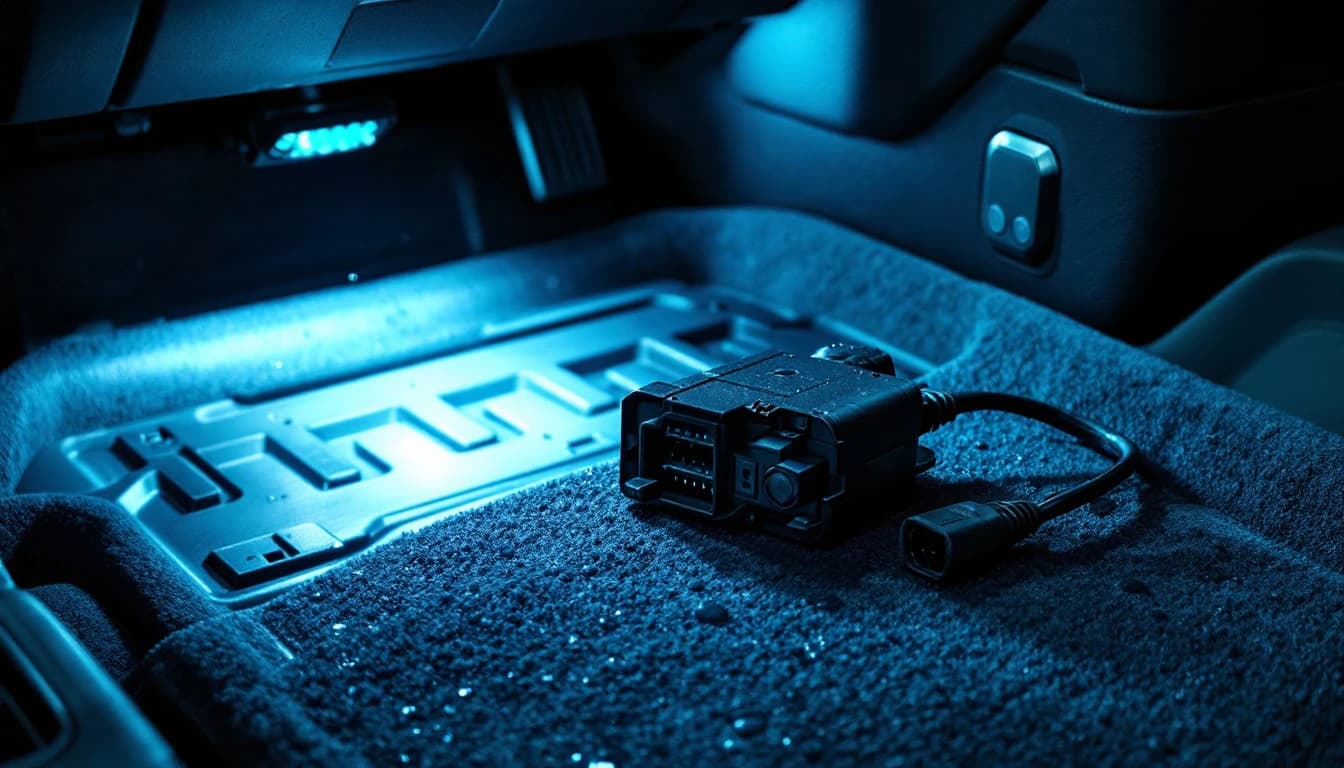
- Kick-panel and under-seat locations: plugged cowl drains and door vapor-barrier failures send water under the carpet, where it pools invisibly for months.
Water damage on a board is progressive: first leakage currents that cause intermittent behavior, then visible corrosion on traces and the antenna connector, then eaten-through copper. Caught early, it's very repairable at the bench; caught late, the evaluation may find unrecoverable trace damage. If you pull a suspect receiver and find green or white crust, note it on your order slip — and if the module is actively wet, dry it and disclose it, exactly as our universal shipping guide describes.
What bench repair of a receiver actually involves
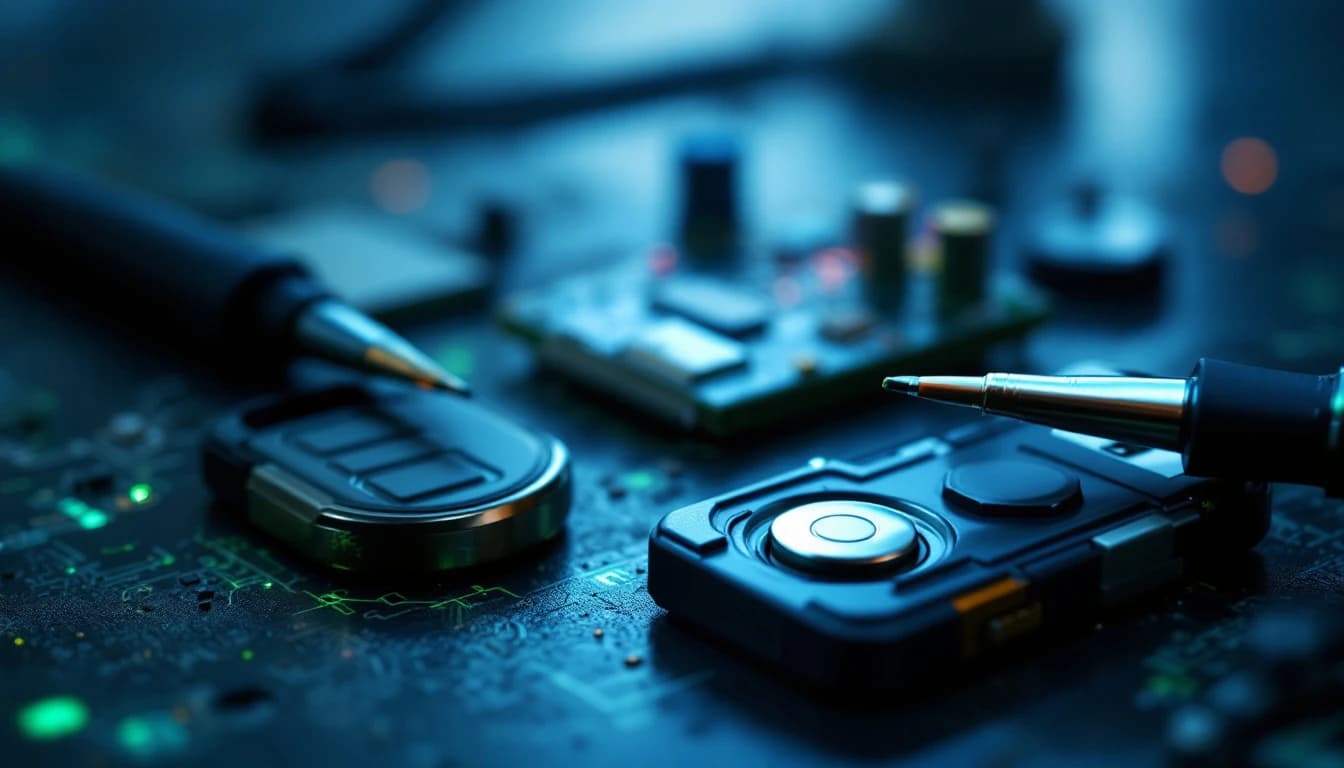
The $125 keyless entry module repair is component-level electronics work, not a swap-and-pray:
- Incoming test. The module is powered on a regulated bench supply and its receive behavior is characterized — does it hear at all, at what sensitivity, on the correct frequency.
- Board inspection under magnification. Corrosion, cracked joints, damaged traces, and suspect capacitors are identified visually before anything is touched.
- Corrosion remediation. Affected areas are cleaned ultrasonically or chemically, damaged traces are repaired with jumpers where needed, and the board is protected against recurrence.
- Cold solder joint reflow. Thermal-cycle-cracked joints — especially on connector pins, the antenna feed, and heavier components — are reflowed with fresh solder. This single fix resurrects a large share of intermittent receivers.
- Component-level RF repair. Out-of-spec capacitors and failed front-end components are replaced. The RF section of an RKE receiver is simple enough that a skilled bench can rework it economically — which is the entire reason a $125 repair can beat a several-hundred-dollar dealer module plus programming.
- Outgoing verification. The module is retested for receive function before it ships back on the return tier you chose at checkout (from $29.95 standard, with 2-day and overnight options).
Because your original module comes back to you, there's usually no reprogramming ordeal on reinstallation — your fobs are already married to it. That's a real advantage over a replacement module, which on many platforms must be configured to the vehicle and have every fob relearned.
One veteran's summary of the category:
"Nine out of ten dead receivers that cross my bench are one of three things: green corrosion at the antenna feed, a cracked joint on the connector, or a dried-out cap in the front end. Maybe an hour of real work. The part the customer never sees is that the same module, bought new from a dealer, is often discontinued — repair isn't just cheaper, on older cars it's the only option." — Automotive electronics repair technician, component-level board repair, 20+ years (anonymized)
When it is actually the BCM
Sometimes the receiver checks out and the fault lives downstream. Remember the chain: receiver hears, BCM acts. A failing body control module can present as keyless entry failure with extra symptoms attached, because the BCM runs much more than locks. Suspect the BCM instead of the receiver when keyless failure arrives with company:
- Power locks also misbehave from the interior switches (the switch path doesn't involve the receiver at all)
- Interior lights, exterior lamps, wipers, or horn act erratically
- Multiple body-network fault codes are present on a scan
- The security/theft lamp behaves abnormally
A scan tool helps enormously here: on many platforms a technician can watch live data confirming whether the BCM sees the fob command. If the receiver reports the button press and the locks still don't move, the receiver is vindicated. BCM failure is its own repair path — on GM platforms, for example, a BCM standalone clone transfers your vehicle's configuration and security data onto a replacement body module without a dealer visit. And on some European platforms the "receiver" duties live inside a comfort/convenience module rather than a discrete RF box, in which case that module is the service target. Our key fob module repair overview covers how each of those architectures is handled on the bench and what returns to you programmed.
Aftermarket alarms and remote-start systems deserve their own suspicion. Many were installed by intercepting the very wiring the factory keyless system uses, and a failing aftermarket brain or a corroded T-tap splice two owners later can kill factory keyless entry while looking exactly like a receiver fault. If your car has (or ever had) an aftermarket alarm, find its module and connections before condemning factory hardware — a surprising number of "dead receivers" are actually a dying 20-year-old alarm holding the lock wiring hostage.
The diagnosis flow, start to finish
Run the funnel in this order and you'll rarely ship the wrong module:
- Fresh batteries in all fobs, correct polarity, clean contacts.
- Test every fob. One dead → fob problem, stop here. All dead or all weak → continue.
- Rule out interference. Test at several distant locations; unplug all cabin accessories. Location-specific failure → interference, not hardware.
- Check the mechanical key path and interior switches. Interior lock switches misbehaving too → look toward the BCM.
- Scan for body codes if you have tool access; watch whether fob commands register in live data.
- Check for aftermarket alarm/remote-start hardware and its splices.
- Inspect the receiver's neighborhood for water history — headliner stains, damp trunk carpet, crusty connectors.
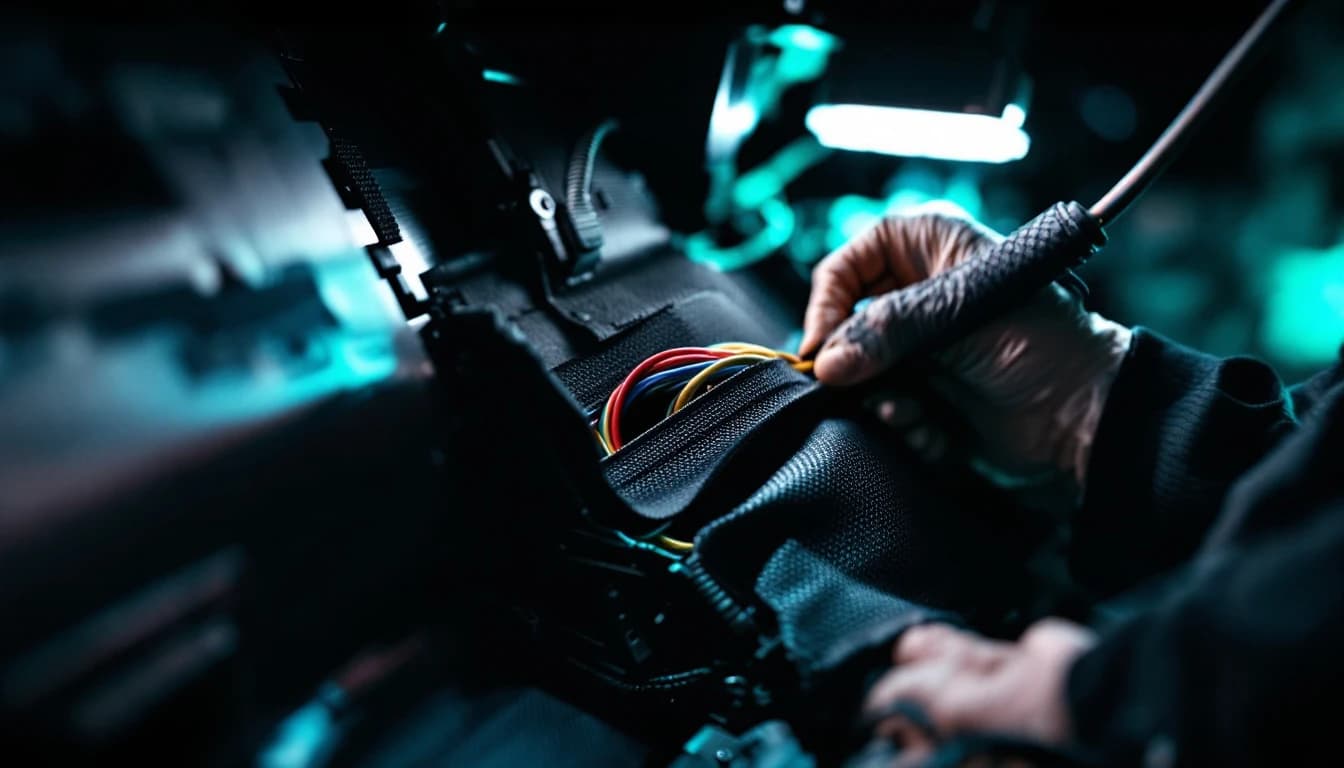
- Still pointing at the receiver? Pull it (battery disconnected first), photograph the label and connectors, and text us the photos plus your VIN to confirm the module is serviceable before you ship. If the picture is genuinely murky, the hourly bench evaluation is the honest path: we diagnose the module you send and tell you what it needs.
Fob vs receiver vs BCM: the comparison table
| Symptom | Fob (transmitter) | Receiver module | BCM |
|---|---|---|---|
| One fob dead, others work | Yes — battery, board, programming | No | No |
| All fobs dead simultaneously | Very unlikely | Yes — classic signature | Possible, with other symptoms |
| All fobs work only at close range | No | Yes — sensitivity/antenna fade | Rare |
| Fails only at one location | No | No — that's interference | No |
| Interior lock switches also faulty | No | No | Yes — switch path bypasses receiver |
| Other body systems erratic (lamps, wipers, horn) | No | No | Yes |
| Worse in rain / after car wash | Rarely (cracked fob shell) | Yes — water intrusion path | Sometimes (water reaches BCM too) |
| Car starts fine throughout | Consistent — RKE and immobilizer are separate | Consistent | Usually |
| Typical fix | Battery or replacement fob | $125 bench repair, mail-in | Repair or clone to replacement |
The mail-in workflow
The receiver repair follows the standard bench pipeline: confirm serviceability first (module label photo plus VIN, by text), then remove the module with the battery disconnected, label the connectors, and pack it properly — anti-static bag, cushioning, rigid box, order slip inside, shipped with tracking on your own carrier to PO Box 120241, Arlington TX 76012 if you ship USPS — or 1009 Oakwood Ln # 120241, Arlington TX 76012 if you ship UPS or FedEx (UPS and FedEx cannot deliver to a PO Box). The how-to-remove-package-ship guide walks every step. On the bench the module is tested, repaired at component level, verified, and returned on the shipping tier you paid at checkout, starting at $29.95 for Standard USPS Ground Advantage.
One requirement to know up front: proof of ownership is required for keyless entry, key, and immobilizer-adjacent work. Anything that touches a vehicle's entry or security systems gets that check at any legitimate shop — vehicle theft remains a large-scale problem, with well over a million vehicles stolen in the U.S. in recent peak years according to NHTSA, and responsible handling of security components is part of why mail-in module work stays trustworthy. A registration or title matching your ID covers it.
Frequently asked questions
Why do none of my key fobs work even after replacing the batteries? When every fob fails at once despite fresh batteries, the problem is on the vehicle side — most commonly the RKE receiver module, its antenna, or its wiring, and less commonly the BCM. Independent fobs with independent batteries essentially never die simultaneously, so the simultaneous failure itself is the diagnostic clue.
How do I know if it is the receiver module or the BCM? The receiver is the suspect when keyless entry is the only casualty; the BCM is the suspect when other body functions misbehave too. If your interior lock switches, lamps, wipers, or horn also act up — or a scan shows multiple body-network codes — look at the BCM, because the interior-switch path doesn't involve the receiver at all.
Why does my key fob only work when I am right next to the car? Severe range loss on all fobs at once is the classic signature of degraded receiver sensitivity — drying capacitors, corrosion at the antenna feed, or cracked solder joints in the RF front end. First rule out a weak fob battery and location-specific interference; if fresh batteries and multiple locations change nothing, the receiver module is the likely repair.
Can RF interference really block my keyless entry? Yes, genuinely — the 315/433 MHz bands are shared unlicensed spectrum under FCC Part 15, and a noisy LED supply, wireless sensor, or misbehaving nearby transmitter can deafen a receiver. The discriminator is location: interference fails at specific places and works elsewhere, while a hardware fault follows the car everywhere it goes.
How much does keyless entry receiver repair cost? The mail-in bench repair of a keyless-entry receiver module is a flat $125, plus return shipping chosen at checkout starting at $29.95. That covers incoming testing, corrosion cleanup, cold-solder-joint reflow, component-level RF repair, and outgoing verification — and because your original module returns to you, your existing fobs typically remain programmed to it.
Will my car still start if the keyless receiver is dead? Yes — remote keyless entry and the immobilizer are separate systems, even when they share the same fob. A dead receiver kills the lock/unlock buttons but not engine starting; if your car cranks but refuses to authorize a start, that's an immobilizer-side problem, which is a different diagnosis from RKE receiver failure.
Do I need to prove I own the car for this repair? Yes — proof of ownership is required for any keyless entry, key, or immobilizer-related work, exactly as it should be at any legitimate shop handling vehicle security components. A registration or title matching your government ID satisfies the requirement, and confirming it up front keeps the bench queue moving.
The bottom line
The internet's keyless-entry advice ends at the fob; real diagnosis doesn't. Memorize the pattern: one fob dead is a fob problem, all fobs dead or weak at once is a vehicle-side problem — receiver module, antenna, wiring, or BCM. Rule out interference by testing in multiple locations, rule out the BCM by checking whether other body functions misbehave, check the water-intrusion history of wherever your receiver lives, and be suspicious of any aftermarket alarm wiring in the chain.
When the funnel points at the receiver, the keyless entry module repair is a flat $125 bench job — corrosion remediation, joint reflow, component-level RF repair, verified before return — with your original module (and your already-programmed fobs) preserved. When it points at a body module instead, services like the GM BCM standalone clone cover that path, and when it points nowhere clearly, the bench evaluation buys you a real diagnosis instead of parts-cannon guessing. Text us your module label photo and VIN before shipping, have proof of ownership ready, and pack it like it matters — because on a 12-year-old car you plan to keep, it does.
Ship it for the keyless entry module repair — $125 flat
Typical 24-Hour Turnaround, return speed your choice at checkout. Prepaid inbound label by email the minute you order.