Climate Control Dead? HVAC Module Diagnosis Guide
The short answer
If your climate control is dead, frozen, or blowing one temperature no matter what you press, the odds are strongly against the control module being the fault. Blend-door and mode-door actuators fail far more often than anything electronic in this system. Blower resistors, fuses, corroded connectors, and simple loss of communication account for most of the rest. Module electronics belong at the bottom of the list, not the top.
We say that as a bench lab that gets paid to work on modules. It is still true, and it is the single most useful thing we can tell you before you pull a dash apart or put a part in the mail.
"Not responding" describes at least six different faults
The phrase people type into a search bar covers a wide spread of very different problems, and the specific wording is the first real diagnostic clue. Before anything else, work out which of these you actually have.
The display is completely dark. No backlight, no segments, nothing. That is a power, ground, or fuse problem far more often than a failed faceplate.
The display is lit but frozen. Numbers or icons are showing, but nothing changes when you press a button. That points at the control head itself, at a stuck button membrane, or at a network fault that has left the head unable to talk to whatever executes its commands.
Buttons respond on screen but nothing happens in the car. You press the temperature up, the display counts up, and the air keeps coming out at the same temperature from the same vent. That is almost always an actuator, a door, or a communication break between the head and the module that drives the actuators.
The blower runs at one fixed speed only. Usually high, sometimes low. On a vehicle with a resistor pack this is close to diagnostic on its own.
The blower does not run at all. Fuse, relay, resistor or power module, blower motor, or the ground for the blower circuit.
One zone is wrong while the other is fine. On a dual-zone system, that asymmetry is enormously informative: a single failed actuator or a single stuck door can do it, but a failed control module almost never affects one side and leaves the other perfect.
Write down which of the six you have. Half of the diagnostic work is already done.
The real causes, ranked by how often they turn out to be the fault
1. Blend-door and mode-door actuators
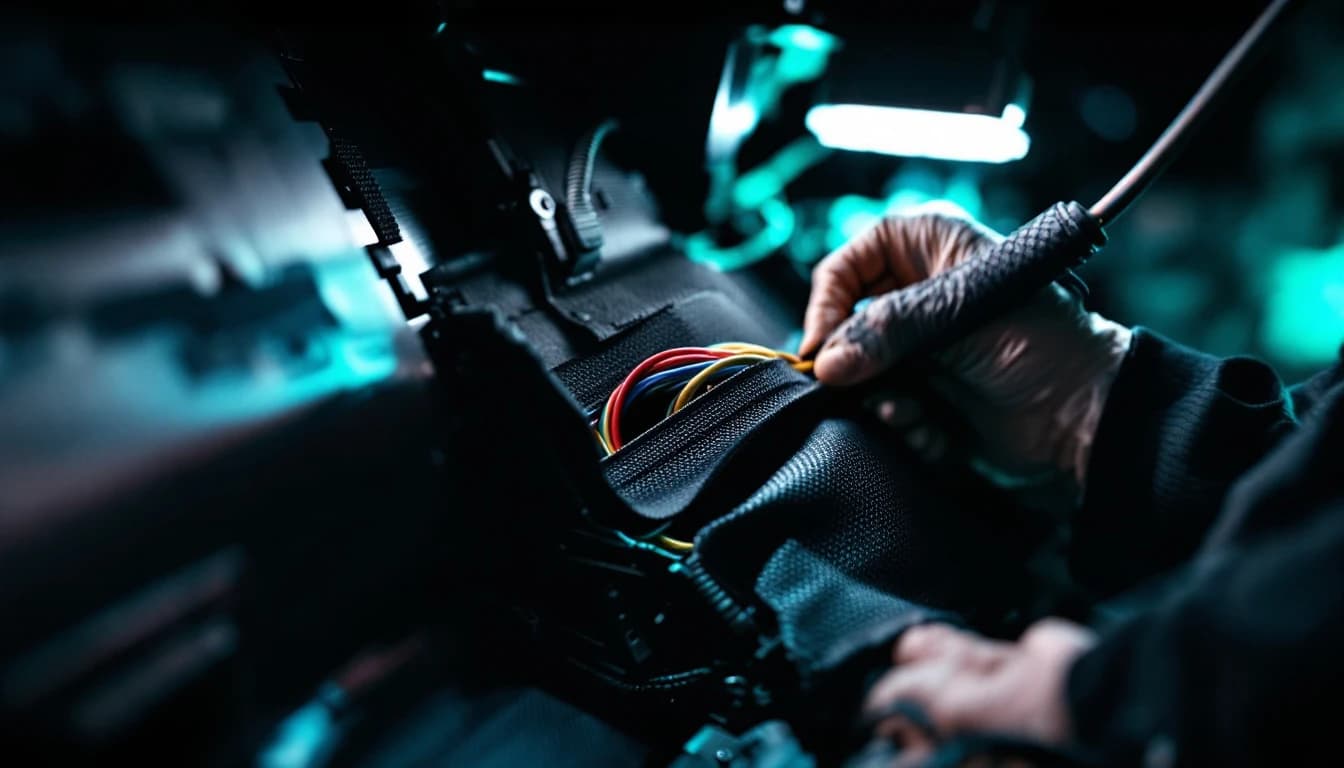
These are small plastic-geared electric motors, usually about the size of a matchbox, bolted to the HVAC case behind and under the dash. A typical modern car has between two and six of them: one or two blend doors that mix hot and cold air, a mode door that chooses defrost, dash vents, or floor, and often a recirculation door. Each one contains a tiny DC motor, a plastic gear train, and either a potentiometer or a hall-effect position sensor.
The gear teeth are the weak point. They strip, they crack, and once the motor can no longer reach its commanded position the module keeps driving it, which produces the classic ticking or clicking behind the dash that changes when you press the temperature buttons. Owners describe it as a card in bicycle spokes. It is the most recognizable HVAC failure signature there is, and it is a five-dollar plastic gear, not electronics.
Actuators also fail silently. A stripped gear that has come to rest in a fixed position gives you constant heat or constant cold with no noise at all.
2. Blower motor resistor or power module
If the blower has only one speed, look here first. Older and simpler systems use a resistor pack in the duct that drops voltage for the lower speeds; when its low-speed elements burn open you are left with high only, because high bypasses the resistor entirely. Automatic climate systems generally use a solid-state blower power module that varies speed continuously instead, and those fail into a wider range of behaviors including no blower at all.
Both parts live directly in the airflow because they need the cooling. Both are commonly killed by a clogged cabin air filter, which raises current draw and heat. Replace the filter when you replace the part, or you will do the job twice.
3. Fuses, relays, and the ignition feed
Boring, and constantly overlooked. A climate control head usually has two feeds: a constant battery feed that keeps its memory alive and a switched ignition feed that wakes it. Lose the constant feed and the head may power up but forget every setting. Lose the switched feed and it stays dark. Blower circuits almost always have their own high-current fuse and their own relay, and a relay that has welded or gone open produces a dead blower with a perfectly healthy control head.
Check the fuses with a meter or a test light, not by eye. A fuse can look perfectly intact and still be open.
4. Connector corrosion and water intrusion under the cowl
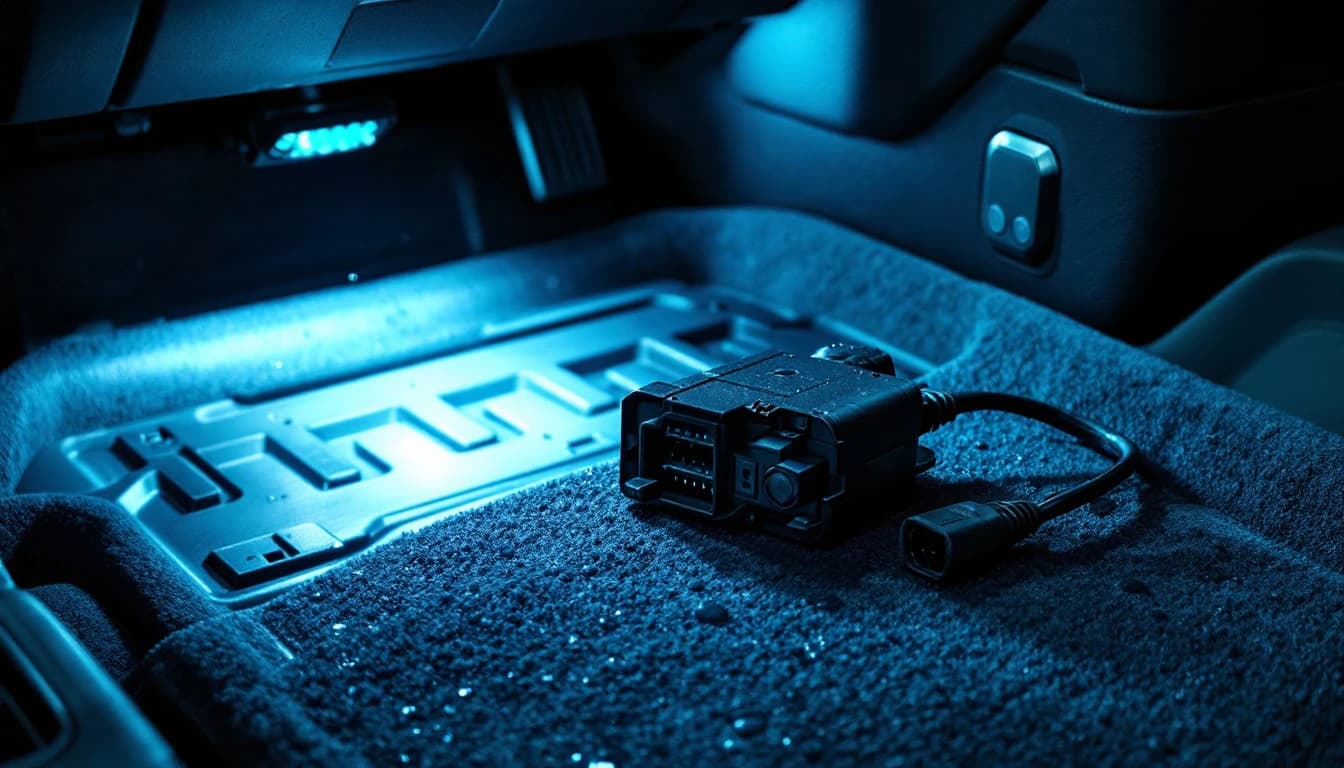
The area under the windshield cowl panel drains through channels that clog with pine needles and leaf litter. When they clog, water backs up and finds its way onto the HVAC case, the blower housing, and any connector nearby. On a lot of platforms the body control module or a junction block also lives in the footwell where that water ends up.
Green crust on a connector pin, a stiff wiring harness, or a damp carpet on the passenger side is worth far more diagnostic weight than any code. Water damage also does not stop when the water dries — corrosion keeps propagating up the wire under intact-looking insulation for months afterward.
5. The control head itself
Yes, faceplates fail. Button membranes wear out on high-use keys, backlight LEDs go dark, rotary encoders develop dead spots, and display ribbons crack. On some designs a single failed button reads as permanently pressed, which locks the whole head into one state and looks exactly like a dead module.
Two things are worth knowing. First, a control head that is physically damaged is usually a replacement, not a repair. Second, on many vehicles built in the last decade the climate controls are not a separate head at all: they are software on the infotainment screen, which changes the whole diagnostic picture. Reporting from outlets such as Car and Driver has tracked that migration from physical knobs to touchscreens across essentially every mainstream brand.
6. Refrigerant charge and pressure switches
A system that is low on refrigerant will refuse to run the compressor, because the low-pressure switch is doing its job and protecting it. The result is a car that blows warm regardless of what you set, with a climate control head that is working perfectly. Any electrical diagnosis that skips a gauge set is incomplete.
Refrigerant itself is regulated. Under the mobile air conditioning rules maintained by the U.S. Environmental Protection Agency, new light vehicles have moved to R-1234yf, which carries a global warming potential of less than 1 against a figure well above 1,000 for the R-134a it replaced. The practical consequence for an owner is that the two refrigerants are not interchangeable, the service fittings differ deliberately, and topping up the wrong one is an expensive mistake.
7. Lost communication with the body module or gateway
On most vehicles built since roughly the mid-2000s, the climate control head does not directly drive much of anything. It is a user interface that sends requests over a network, and something else, usually the body control module or a dedicated HVAC controller, drives the actuators and the blower.
That link is typically a LIN sub-bus hanging off a CAN backbone, routed through the car's central gateway — and when a gateway itself misbehaves the symptoms look exactly like several unrelated modules failing at once, which is covered in our gateway module guide. Under the network standards developed through SAE International, high-speed CAN runs up to 1 megabit per second while a LIN sub-bus runs up to about 20 kilobits per second, which is plenty for a climate panel and cheap to implement. Break that link, at a connector, a splice, or the gateway, and the head goes live but useless: the display works, the buttons count up and down, and nothing in the car reacts. This is one of the most common reasons a perfectly healthy control head gets condemned.
8. The control module electronics
Last. Genuinely last. Electronics do fail from thermal cycling, from voltage events, and from moisture, and we see all three on the bench. But by the time the previous seven have been ruled out properly, most owners have already found their fault.
The one situation where electronics move up the list is after an electrical event: a reversed jump start, a dying alternator producing ripple, or a failing battery causing sags. Charging faults are an underrated killer of every module in the car, and the charging system and ground fault guide explains why a replacement module dies in a week when nobody fixed the supply first.
The symptom-to-cause matrix
| Symptom pattern | Most likely cause | What to test | Typical cost, commonly reported |
|---|---|---|---|
| Clicking or ticking behind the dash, changes with temperature setting | Blend or mode door actuator, stripped gears | Command the actuator with a scan tool and listen; check position feedback | Roughly $150 to $600 installed, far more if the dash comes out |
| Blower runs on high only | Blower resistor pack, low-speed elements open | Voltage in and out of the resistor at each speed | Roughly $150 to $350 installed |
| Blower completely dead, panel works | Fuse, relay, blower power module, or blower motor | Fused feed, relay swap, voltage at blower connector | Roughly $100 to $600 installed |
| Panel dark, no backlight at all | Power, ground, or fuse to the head | Constant and ignition feeds at the head connector | Under $10 if it is a fuse, otherwise wiring labor |
| Panel lit but frozen, no button response | Failed head, stuck button, or network fault | Scan for U-codes; check the LIN or CAN link | Roughly $200 to $900 for a replacement head |
| One zone correct, other zone wrong | Single actuator or stuck door on the bad side | Actuator sweep test on both sides and compare | Roughly $150 to $600 installed |
| Blows warm with compressor never engaging | Low refrigerant or pressure switch | Manifold gauge reading, then switch continuity | Roughly $150 to $400 for evacuate and recharge |
| Everything dead after body work, water leak, or a jump start | Connector corrosion, damaged harness, or genuine module damage | Inspect cowl drains and footwell; check charging system | Wiring repair up to full module replacement |
Every non-bench figure in that table is a commonly reported range for independent shop work in the United States and will vary with your region, your platform, and how much of the dash has to come apart. They are not our prices.
Diagnose in order, cheapest first
Step one: read the fuses, both boxes. Interior and underhood. Test them, do not look at them. Note anything for the blower, the HVAC control, the body module, and the ignition switch circuits.
Step two: check charging and battery health. A battery below roughly 12.4 volts at rest, or an alternator with excessive AC ripple, will produce climate control behavior that makes no sense at all. Fix the supply before you diagnose anything downstream of it.
Step three: perform a battery disconnect and let the system recalibrate. More on this below, because it is the free fix that resolves a genuinely surprising number of these complaints.
Step four: listen. Engine off, key on, quiet garage, doors closed. Sweep the temperature from full cold to full hot and the mode from defrost to floor. A healthy actuator makes a soft whir and stops. A failed one clicks, ticks, or buzzes rhythmically. Have a helper press buttons while you put an ear to the passenger footwell and the center console.
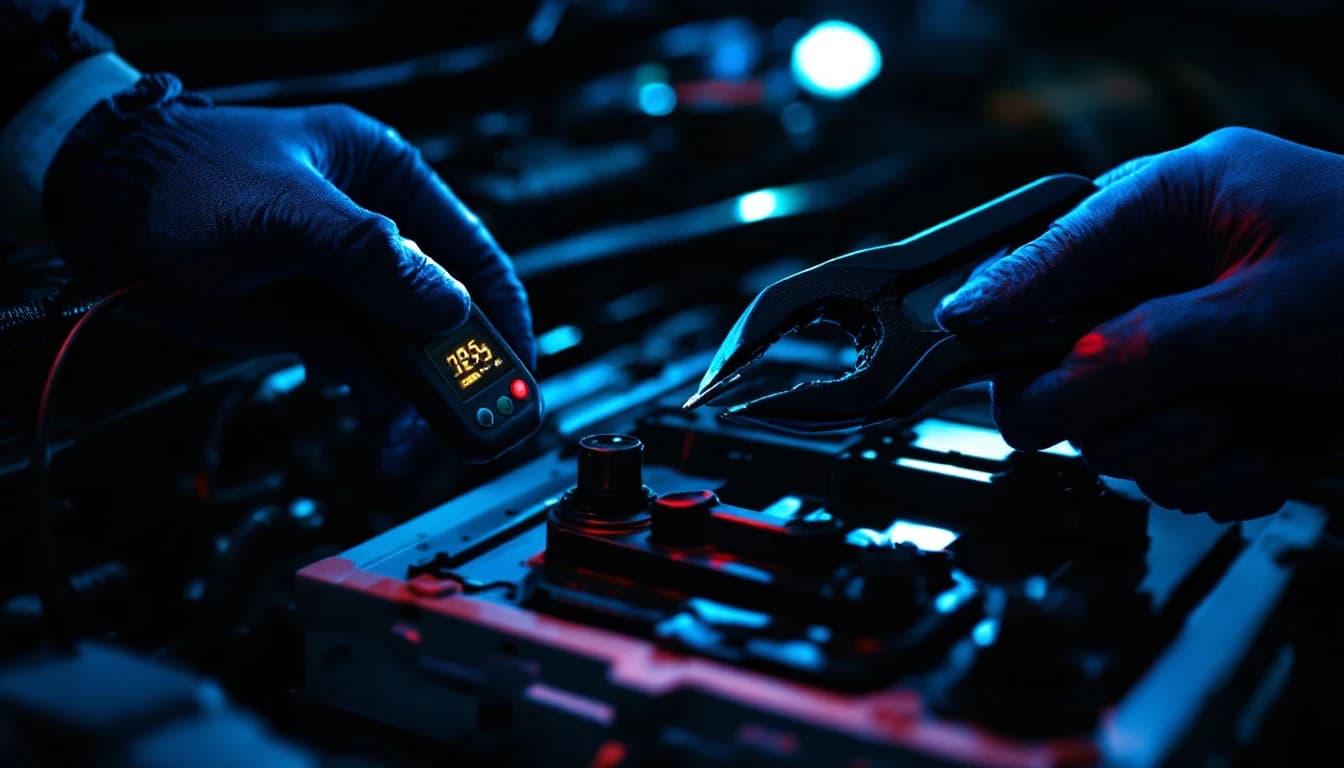
Step five: watch the feedback with a scan tool. Any tool with bidirectional HVAC control can command each actuator through its full travel and display its position sensor value. This is the single most decisive test in the whole procedure. An actuator that is commanded to 80 percent and reports 12 percent is mechanically broken. An actuator that will not move at all and reports nothing may be unplugged, open-circuit, or dead.
Step six: test the blower ladder. Run every speed and measure voltage at the blower connector for each. Missing lower speeds with a working high speed is a resistor. No voltage at any speed with a good fuse points at the relay, the module, or the switch input.
Step seven: pull codes from every module, not just the engine. B-codes and U-codes are where the HVAC story lives, and a generic code reader that only shows P-codes will show you a clean scan on a car with a broken climate system. A U-code naming the HVAC or body module means you are chasing a communication or power problem, not a faceplate.
Step eight: inspect for water. Cowl drains, passenger footwell carpet, the kick panels, and any connector you can reach. Look for green corrosion, white powder, and stiff harness sections.
Step nine: put gauges on it. If and only if the complaint includes air that never gets cold.
Only after all nine does the control module become a reasonable suspect.
The recalibration routine almost nobody runs
Here is the free repair. On a large share of vehicles, the HVAC controller performs an actuator calibration sweep when it loses and regains power, or when it is commanded to through a scan tool. It drives every door to both mechanical stops, records the position sensor values at each end, and stores the travel range.
If that stored range is wrong, and it becomes wrong after a battery replacement, a dead battery, a jump start, or an actuator swap, the module will command positions that the door cannot reach. The visible result is heat that never turns off, a mode that will not change, or a temperature that is stuck two thirds of the way to where you set it. Nothing is broken. The module simply has bad reference numbers.
The generic version of the procedure is to disconnect the negative battery terminal for several minutes, reconnect it, turn the ignition on without starting, and leave the vehicle undisturbed for two to three minutes while the actuators cycle. Do not touch the controls during that time. Many platforms have a specific factory routine instead, sometimes involving a button-hold sequence, and a scan tool with HVAC coverage can usually trigger it directly.
Run this before you condemn any part. It costs nothing and it fixes a meaningful fraction of the complaints that come to us described as a dead module.
Telling an actuator from a module in five minutes
Four questions, in order.
Does the display respond to your inputs? If the numbers change and the icons update, the head is alive and its buttons work. That eliminates a very large class of failures immediately.
Is the failure symmetric? If one zone is right and the other is wrong, you are looking at hardware on the bad side. A control module driving both sides through the same firmware does not usually fail on exactly one.
Does anything move? If the blower changes speed but the temperature never changes, the module is clearly executing some commands. A module that has failed outright does not selectively work.
Does a scan tool see the module and command the actuators? If it communicates, reports data, and drives the doors, the electronics are fundamentally working. If it will not communicate at all, check power, ground, and the network before assuming the module is dead, because a broken bus wire looks identical from the driver's seat.
The single most expensive habit I see is replacing the control head because the panel looked dead, when nobody ever checked the two feeds behind it. That connector takes ninety seconds to backprobe and it settles the question before anybody spends a dollar. — Independent automotive electrical diagnostician, 20+ years (anonymized)
When it genuinely is a module, and what we can honestly do
We need to be direct here, because it matters more than a sale.
Auto Module Lab does not offer a dedicated HVAC control head repair service. Most climate control faceplates are best replaced rather than repaired: the failure is usually a worn button membrane, a cracked display ribbon, or a physically damaged encoder, and a replacement unit is a better outcome for the customer than a board-level repair on a consumer interface part. If someone tells you a dead faceplate is a straightforward bench repair, be skeptical.
There are three situations where mail-in bench work is genuinely the right answer.
You do not know what failed and want a straight answer before buying parts. That is exactly what the bench evaluation at $150 exists for. The module is powered on a regulated bench supply, read, and tested, and you get an honest verdict. The bench evaluation guide covers what that finds that a scan tool sitting in the car cannot.
Your climate functions live inside the body control module. On many platforms the BCM drives the actuators, the blower relay, and the recirculation door, and the panel is only an interface. If the BCM is the failed part, a replacement has to be programmed to your VIN and configured for your car's option content before it will work. That is what the GM BCM programmed to your VIN and Ford BCM programmed to your VIN services are, both at $349, sourced by us and ready to install. If you are not sure what a body module even does, the body control module explainer is the place to start.
Your climate controls are built into a locked GM head unit. Where the climate interface is part of an HMI, radio, or cluster assembly that refuses a donor because it is VIN-locked, the GM HMI, radio, and cluster VIN unlock at $250 is the bench service that applies.
We are mail-in only and we work nationwide. Shipping instructions arrive by email after checkout, most bench work has a typical 24-hour turnaround once the part is on the bench, and return shipping is chosen by you at checkout starting at $29.95 for standard service, with two-day and overnight tiers available. If we look at your module and it is fine, we will tell you it is fine.
When to stop and call a professional
Stop and hand it over if the job requires the dash to come out. Deep blend-door actuators on some platforms sit behind the HVAC case, and getting to them means removing the instrument panel, which on many vehicles means disabling and handling airbag components. That is not a driveway job.
Stop if the fault involves refrigerant. Venting refrigerant to atmosphere is both illegal and expensive, and recovery equipment is not optional.
Stop if you find water damage in a harness. Corrosion repair done badly creates an intermittent that will haunt the car for years, and it is worth a professional splice with proper sealed connections.
Stop if the codes point at the gateway or at multiple modules simultaneously. Multi-module communication faults are network diagnosis, and network diagnosis needs a wiring diagram, an oscilloscope, and someone who has done it before.
Some context worth keeping in mind while you decide. Federal transportation statistics published by the Bureau of Transportation Statistics put the U.S. light vehicle fleet at well over 280 million registered vehicles with an average age that has climbed past 12 years, which means an enormous number of these repairs are being made on cars whose market value will not absorb a dealer-priced dash-out job. Long-running dependability research from J.D. Power has consistently placed the features, controls, and displays category among the most-reported problem areas on three-year-old vehicles, at an industry average that has hovered near 190 problems per 100 vehicles across recent study years. Before you spend anything, the free complaint and recall database maintained by NHTSA is worth ten minutes: hundreds of thousands of owner complaints are searchable by year, make, and model, and HVAC patterns show up there clearly. Efficiency guidance from the U.S. Department of Energy is a reminder that this system is not cosmetic either, since cabin heating and cooling loads measurably reduce fuel economy and cut electric vehicle range in extreme temperatures. On the hardware side, suppliers such as Bosch publish useful background on the actuator and control electronics used across many of these platforms.
Frequently asked questions
Why does my climate control click behind the dash? That clicking or ticking is almost always a blend-door or mode-door actuator whose plastic gear teeth have stripped. The module keeps commanding a position the door can no longer reach, so the motor cycles against the damage. It usually changes rhythm when you press the temperature or mode buttons, which is the confirmation. The part itself is inexpensive; the cost is entirely in how buried it is.
My display works but nothing happens when I press buttons. Is the module dead? Usually not. A display that responds proves the head has power and its buttons work, so the failure is downstream: a broken communication link to the module that actually drives the actuators, a failed actuator, or a stuck door. Scan for U-codes across every module, not just the engine, and check whether a scan tool can command the actuators directly before condemning anything.
Can a dead battery cause climate control problems? Yes, and it is one of the most common surprises in this whole area. Losing power clears the stored actuator calibration on many platforms, so the module ends up commanding door positions that do not correspond to reality. The fix is to run the recalibration routine: disconnect the battery for several minutes, reconnect, turn the ignition on, and leave the controls alone for two to three minutes.
Is it worth repairing a climate control head or should I replace it? Most climate control faceplates are better replaced than repaired, because the usual failures are worn button membranes, cracked display ribbons, and damaged rotary encoders rather than repairable circuit faults. We do not offer a dedicated HVAC head repair service and will not pretend otherwise. Where the climate functions live inside a body control module or a locked GM head unit, bench work does apply.
Why does only one side of my dual-zone system work? An asymmetric failure almost always means hardware on the failing side, typically a single blend-door actuator or a door that is jammed. A control module running both zones through the same firmware very rarely fails on exactly one side and leaves the other perfect. Command both actuators with a scan tool and compare their reported positions to confirm.
How do I know if the problem is refrigerant and not electrical? If the air never gets cold but the panel responds normally and the blower works through all speeds, put a manifold gauge set on the system before doing anything electrical. A low charge causes the pressure switch to correctly refuse compressor engagement, which produces warm air with a perfectly healthy control module. Refrigerant work needs recovery equipment and belongs with a shop.
What does Auto Module Lab actually charge to look at this? A bench evaluation is $150. We power the module on a regulated supply, read it, and give you a straight answer about whether it is the fault before you buy parts. Return shipping is chosen by you at checkout and starts at $29.95. If the module turns out to be healthy, we say so, because the alternative is you paying for work you did not need.
The bottom line
Climate control complaints look electronic and usually are not. Rank your suspects honestly: actuators first, then the blower resistor or power module, then fuses and relays, then connector corrosion and water intrusion, then the control head, then refrigerant, then the network, and only then the module electronics. Work down that list in order and most people find their fault before they get past step five.
Run the recalibration routine before you buy anything, because it is free and it fixes a real share of these complaints. Use a scan tool that can command actuators, because that one test separates mechanical failures from electronic ones faster than anything else. Check charging and grounds early, because a weak supply generates behavior that no amount of parts swapping will fix.
If it does turn out to be a module, be clear-eyed about what actually helps. A $150 bench evaluation buys you a verdict instead of a guess. A $349 BCM programmed to your VIN solves the case where the body module runs your climate functions. A $250 GM HMI, radio, or cluster VIN unlock solves the case where the climate interface is inside a locked head unit. Everything else on this list is a part your local shop fits, and we would rather tell you that than take your shipping money. Text us the VIN, the symptom in your own words, and a photo of anything you have already tested, and you will get an honest answer about whether mailing us a module is even the right move.
Ship it for the bench evaluation / custom job — $150 flat
Typical 24-Hour Turnaround, return speed your choice at checkout. Prepaid inbound label by email the minute you order.