
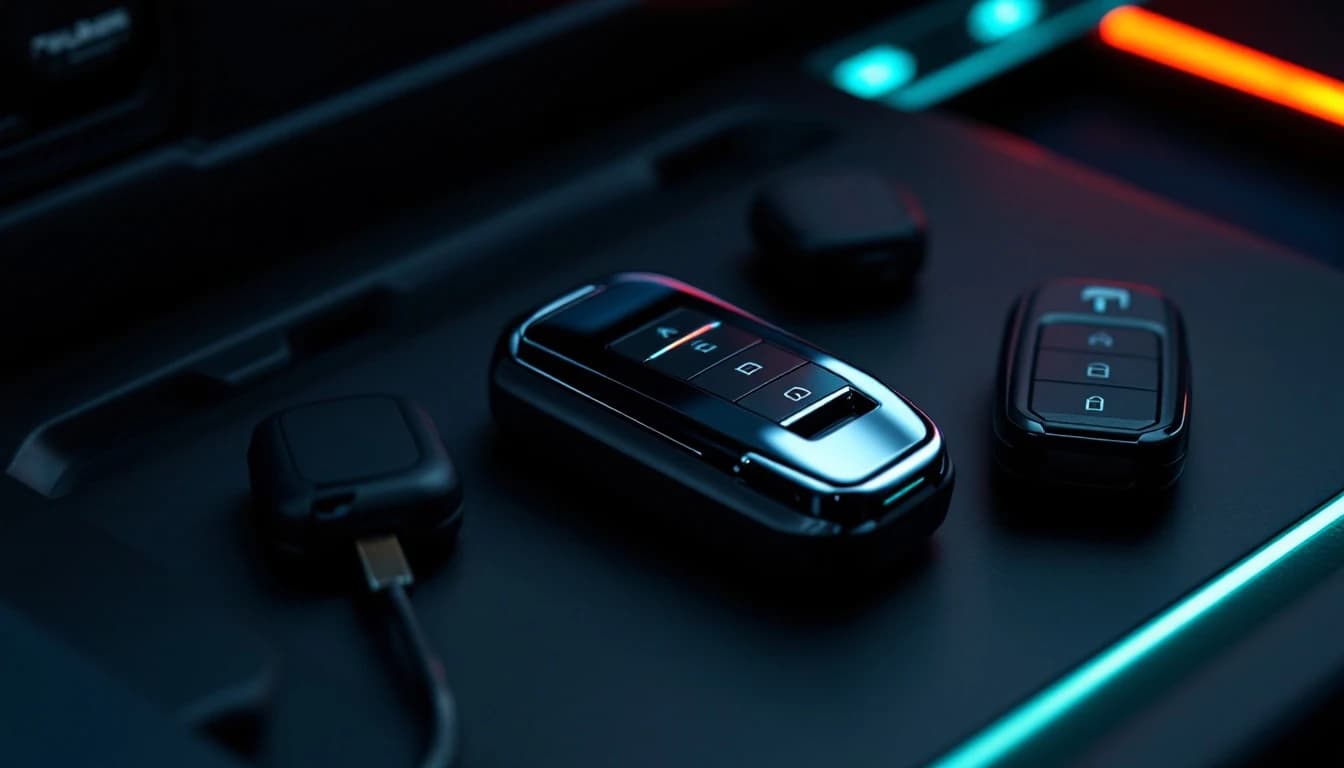
Mercedes All-Keys-Lost: EIS/EZS Cost, Options, and Turnaround by Chassis
Losing every key is a Mercedes problem, not a locksmith problem
Most cars, when you lose all the keys, are a job for a mobile locksmith in your driveway. A Mercedes is different, and understanding why saves you a lot of wasted time and money. On a Mercedes the immobilizer and key data are held inside the EIS — the Electronic Ignition Switch, sometimes written EZS in the German service literature. That module is the gatekeeper. It authenticates the key, talks to the drivetrain, and decides whether the car is allowed to start. When every key is gone, the answer is not at the lock cylinder or the engine; it is at the EIS.
That is why an all-keys-lost Mercedes so often stumps a general locksmith and ends up as a bench job. The correct fix means working the EIS directly — reading it, cloning it, programming a fresh key to it, or repairing it. This guide lays out the options, what drives the cost, the crucial security divide that changes everything after 2014, and how the mail-in process runs.
Why the EIS is the answer
The EIS sits at the center of the Mercedes authentication network. When you insert or present a valid key, the EIS runs a cryptographic exchange with the transponder in that key. If the exchange checks out, the EIS releases the start sequence and coordinates with the other control units — the engine ECU, the transmission, the steering lock — so the car starts and drives. Every one of those parts trusts the EIS's decision.
Lose all the keys and there is no valid transponder for the EIS to authenticate. The car will not start, and there is no "master key" hiding somewhere to fall back on. To get a working key again, someone has to work the EIS itself: either extract the data needed to cut and program a new key to it, clone that data onto a replacement EIS, or repair an EIS that has failed. There is no way around the module, because the module is the security.
This tight coupling is by design, and it is one of the reasons Mercedes vehicles have historically been difficult to steal without the key. Anti-theft organizations such as the National Insurance Crime Bureau and safety bodies like the Insurance Institute for Highway Safety have documented for decades how immobilizer systems drove down drive-away theft, and the National Highway Traffic Safety Administration tracks the anti-theft standards that shaped them. The system works — which is exactly why a legitimate all-keys-lost repair has to go through the front door of the EIS, with proof of ownership, rather than around it.
The three EIS options
There are three legitimate ways to resolve an all-keys-lost Mercedes, and the right one depends on the state of your EIS and your goals.
Option 1 — EIS cloning
Cloning copies the data from your existing EIS onto a replacement EIS unit, so the replacement behaves as the genuine module for your car. This is the path when the original EIS is failing or damaged but its data can still be read, or when a replacement module is the cleanest way forward. Our Mercedes EIS cloning service is a flat $250. The replacement unit ends up carrying the correct identity and key data, so the car accepts it as the original.
Cloning matters because you cannot simply buy a used EIS and install it. A used EIS is married to the vehicle it came from; drop it in and it fails authentication exactly like any mismatched module. Cloning writes your car's data onto the replacement so it is accepted.
Option 2 — EIS key programming
Key programming adds or replaces a working key on your existing EIS. When the EIS itself is healthy and the real problem is simply that no valid keys exist anymore, this is the direct fix: a new key is prepared and programmed to the EIS so the car can be started again. Our Mercedes EIS key programming service is a flat $150 — the most economical path when the module is fine and you just need a key.
Option 3 — EIS repair
Sometimes the EIS is physically damaged — water intrusion, a failed component, a corrupted unit — and the priority is to get the module itself working again before any key can be programmed. Repair addresses the hardware fault. Our Mercedes W164 EIS repair service is a flat $399 for that chassis, restoring a damaged unit so it can function and hold key data as designed. Which service applies to your car depends on the specific EIS, so a technician confirms the correct path from your details before you ship.
"The first question on any all-keys-lost Benz is not what key you want — it is what shape the EIS is in and what generation of security it uses. If the module is healthy and pre-FBS4, adding a key is straightforward. If the module is damaged, it gets repaired first. And if it is FBS4 or newer, I tell people plainly that it is a harder, costlier job and we confirm feasibility before anyone ships a part. Setting that expectation up front saves everyone grief." — Independent Mercedes EIS specialist, 15+ years on immobilizer and key systems (anonymized)
The pre-2014 vs post-2014 FBS4 divide
This is the single most important thing to understand about all-keys-lost pricing and feasibility on a Mercedes, so it gets its own section.
Mercedes has used several generations of its FBS (Fahrberechtigungssystem, or drive-authorization system) immobilizer over the years. The older generations — broadly the vehicles up to around 2014 — are mature, well-understood platforms where reading the EIS, cloning it, and programming keys is established work with predictable effort and cost. The three flat prices above apply to that world.
Around 2014, Mercedes moved to FBS4, a substantially harder security generation. FBS4 is more strongly encrypted and more resistant to the reading and key-programming methods that work on earlier cars. The practical consequences are simple: FBS4 and newer all-keys-lost work is genuinely more difficult, more time-consuming, and more expensive, and it is not a job to promise sight unseen. That is why our firm rule is that a technician confirms feasibility for FBS4 and newer vehicles before you ship anything. We would rather tell you honestly where your car stands than take a part and discover the job is not viable.
The rough dividing line — pre-2014 versus post-2014 — is a guide, not a guarantee, because model transitions vary. The reliable way to know is to send the details and let a technician place your car. If you are researching feasibility broadly, our all-keys-lost mail-in module programming guide covers the cross-brand picture, and our Mercedes EIS cloning versus key programming guide digs into which of the two services fits which situation.
Cost and options by chassis
Here is the whole picture in one place. Every price is a flat rate on a verified, feasible job, plus the return shipping tier you choose at checkout (from $14.95). Turnaround is bench time once the module arrives, not counting transit.
| Situation | Service | Flat price | Notes |
|---|---|---|---|
| Healthy EIS, need a key | EIS key programming | $150 | Most economical path |
| Failing or replacement EIS | EIS cloning | $250 | Data copied to replacement unit |
| Physically damaged W164 EIS | W164 EIS repair | $399 | Hardware fault fixed first |
| FBS4 / post-2014 vehicle | Confirm feasibility | Quoted after verification | Harder, costlier generation |
Read a few things out of that. The pre-FBS4 world is covered by three clean flat prices — key programming when the module is fine, cloning when you need a replacement carrying the right data, and repair when the hardware itself has failed. The FBS4 line is intentionally not a flat number, because feasibility and cost legitimately vary on the newer security generation and a blanket price would mislead you.
The population affected is large. Mercedes-Benz has sold in the hundreds of thousands per year in the U.S. — the Mercedes-Benz USA lineup has topped a quarter-million units in strong years — and the C-Class, E-Class, and SUV families that fill our all-keys-lost intake are among the highest-volume models the brand builds. With that many cars on the road, and keys being lost the way keys always are, EIS work is one of the most consistent bench services a Mercedes module specialist runs. Broader industry reporting from outlets like Motor Trend has repeatedly noted how much more involved key and immobilizer service has become as luxury brands tightened security — the Mercedes EIS is a textbook example.
What EIS work does NOT do
Clear scope again, because all-keys-lost is stressful and unrealistic expectations make it worse.
- It does not bypass proof of ownership. Every all-keys-lost, EIS, and immobilizer job requires documentation that the vehicle is yours before we begin. There are no exceptions.
- It does not guarantee any specific FBS4 or newer vehicle is feasible. Those are confirmed case by case before you ship, precisely because the newer generation is not universally workable the way older cars are.
- It does not repair mechanical ignition or steering-lock damage. A seized column or a broken lock cylinder is a separate mechanical problem; the electronic steering lock, if that is failing too, is its own service.
- It does not magically make a used donor EIS work. A used unit is married to its original car and must be cloned with your data to be accepted.
- It does not authorize anything unlawful. This work is offered for legitimate repair and restoration where legally permitted, and the customer is responsible for compliance with all applicable local, state, and federal law.
The proof-of-ownership point deserves emphasis. All-keys-lost service is, by definition, giving someone the ability to start a car without an existing key — so verifying that the person is the rightful owner is not bureaucracy, it is the entire ethical foundation of the service. We require it every time, and that is a good thing.
The mail-in workflow
Bench service means you send a module, not the car. The sequence:
- Text us first. Send your VIN, the EIS/EZS part number off the module, a photo of the unit and its label, the year and model, and a description of the situation — all keys lost, EIS damaged, or replacement planned. Tell us if you already know the car is post-2014.
- Get feasibility and the right service confirmed. A technician confirms whether the job is key programming, cloning, or repair, and — critically for post-2014 cars — whether an FBS4 job is feasible and what it costs. Nothing ships until this is settled.
- Provide proof of ownership. Documentation that the vehicle is yours is required before we begin any all-keys-lost or EIS work.
- Remove and ship the EIS. Send the module (and any related parts we request, such as a key or replacement EIS) to PO Box 120241, Arlington TX 76012 if you ship USPS — or 1168 W Pioneer Parkway, Arlington TX 76013 if you ship UPS or FedEx (UPS and FedEx cannot deliver to a PO Box), packed in an anti-static bag and padded box.
- Bench work. On a regulated bench supply we read the EIS data, then program a key, clone to a replacement, or repair the unit as the job requires.
- Verify and return. The work is tested on the bench before the module ships back with tracking, via the return shipping tier you chose at checkout (from $14.95).
Frequently asked questions
Where is all-keys-lost solved on a Mercedes? At the EIS — the Electronic Ignition Switch, also written EZS — because that module holds the immobilizer and key data and gates the start sequence. All-keys-lost is not solved at the door lock or the engine; a working key has to be programmed to, cloned from, or restored via the EIS itself.
How much does Mercedes all-keys-lost cost? On pre-FBS4 cars it is a flat rate by situation: EIS key programming is $150 when the module is healthy, EIS cloning is $250 when you need a replacement carrying the right data, and W164 EIS repair is $399 for a physically damaged unit. Post-2014 FBS4 vehicles are quoted after a technician confirms feasibility.
What changed in 2014 with FBS4? Around 2014 Mercedes moved to FBS4, a much stronger immobilizer security generation that is harder, slower, and more expensive to work than earlier cars. Feasibility on FBS4 and newer vehicles is not guaranteed, which is why a technician confirms your specific car before you ship anything rather than promising it sight unseen.
Can I just buy a used EIS and install it? No. A used EIS is married to the car it came from and will fail authentication in your vehicle exactly like any mismatched module. It has to be cloned with your car's data to be accepted, which is precisely what the EIS cloning service does — copying the correct identity onto the replacement unit.
Do I need proof of ownership? Yes, always, with no exceptions. All-keys-lost service gives the ability to start a car without an existing key, so verifying rightful ownership is the ethical foundation of the work, not a formality. Documentation that the vehicle is yours is required before any EIS or immobilizer job begins.
How long does the work take? Turnaround is bench time once your EIS arrives, with key programming and cloning on healthy pre-FBS4 modules being the quickest. Repairs and FBS4 jobs take longer. Plan for shipping in both directions plus bench time, and choose your return shipping tier at checkout based on how fast you need the module back.
What if my EIS is water-damaged or physically failed? Then the module has to be repaired before any key can be programmed to it, because a damaged unit cannot reliably hold or process key data. The W164 EIS repair service addresses that hardware fault at a flat $399; for other chassis, a technician confirms the right repair path from your details before you ship.
What drives the cost differences
The reason EIS/EZS all-keys-lost pricing varies so much from car to car is the security generation. Pre-2014 systems are comparatively open to bench work, while post-2014 FBS4 cars use tighter protection that takes more time and, in some cases, cannot be completed without additional steps. National crime reporting from the Federal Bureau of Investigation helps explain why manufacturers kept hardening these systems: every generation of immobilizer made the car harder to steal, and the same protection that deters a thief is what makes a legitimate all-keys-lost recovery a specialized job rather than a quick key cut. Proof of ownership is required before any EIS work, and a technician confirms whether your exact chassis is FBS3 or FBS4 before you ship, so you know the scope and price up front instead of after the module is already in the mail.
The bottom line
An all-keys-lost Mercedes is solved at the EIS, not at the door or the engine, because the Electronic Ignition Switch is where the immobilizer and key data live. Three legitimate paths cover it on pre-FBS4 cars: EIS key programming at a flat $150 when the module is healthy, EIS cloning at a flat $250 when you need a replacement carrying the right data, and W164 EIS repair at a flat $399 when the hardware itself has failed. The one rule that changes everything is the FBS4 divide around 2014 — newer cars are harder and costlier, and feasibility is confirmed before you ship.
Every one of these jobs requires proof of ownership, none of them bypasses mechanical damage, and all of it is offered for lawful repair and restoration where permitted, with the customer responsible for compliance with local, state, and federal law.
To get started, see the Mercedes EIS cloning, Mercedes EIS key programming, and Mercedes W164 EIS repair service pages, then text us your VIN, the EIS part number, and a photo of the module. A technician confirms feasibility — especially for FBS4 and newer cars — and the correct service before anything ships.
Ship your module today
Flat-rate pricing, 24-hour bench turnaround, return speed your choice at checkout. Most jobs back on your bench within a week.
More from the Lab
Mercedes Immobilizer & Key Systems by Generation: EIS/EZS, ELV, ESL, FBS3 vs FBS4
11 min · July 10, 2026
Mercedes W164 X164 W251 EIS Repair Guide (ML GL R) 2026
16 min · June 18, 2026
Toyota and Lexus All Keys Lost: What Push-to-Start Smart Key Recovery Really Costs (Mail-In Bench Guide)
12 min · July 20, 2026
Toyota & Lexus ECU Immobilizer Reset: Adding New Keys to Older Turn-Key Models Without a Dealer ECM
13 min · July 13, 2026