VW & Audi Instrument Cluster Cloning
The dash swap that fights back
It looks like the easiest repair in the world. Your VW or Audi cluster has a dead pixel row, a failed backlight, a stuck gauge, or it has simply died — and the identical cluster is sitting on eBay, pulled from a wrecked car, for a fraction of a dealer's price. You order it, plug it in, and expect to drive away.
Instead the car fights you. The immobilizer light stays on. The engine cranks and will not start, or starts and throws warnings. The dash shows the wrong mileage, or a mismatch fault, or refuses to talk to the rest of the car properly. Nothing is physically wrong with the used cluster — it is doing exactly what a VW or Audi cluster is built to do, which is refuse to be a generic part.
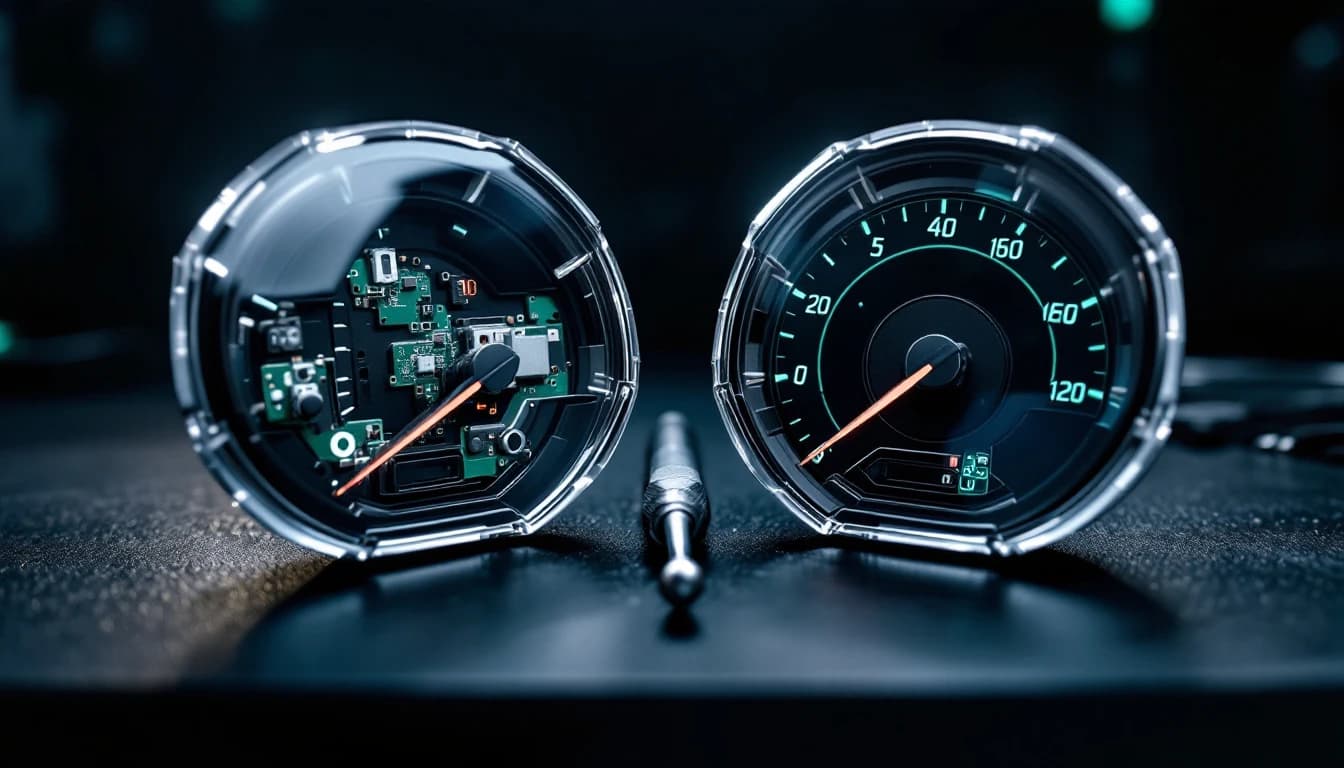
That refusal catches a lot of people, because on most of the car's history the cluster was just a gauge pack. On modern VAG vehicles it is something else entirely: one of the immobilizer's trusted members, the keeper of the car's VIN and coding, and the home of the odometer. Swap the hardware and you swap all of that, and the car notices immediately. This guide explains why, and how cluster cloning turns that used donor into a legitimate plug-and-play replacement — with the true mileage carried over, never altered.
What a modern VW/Audi cluster actually stores
The instrument cluster on VW and Audi vehicles of this era is a small computer with four jobs beyond showing you gauges, and each one is why a raw swap fails:
- Immobilizer participation. The cluster is part of the anti-theft handshake. On VAG's immo4 and later architectures, the cluster holds component-security data and takes part in authorizing the engine to start. Electronic immobilizers of exactly this kind are what the Insurance Institute for Highway Safety credits with driving vehicle theft rates down as they spread through the fleet — the cluster is one of the modules doing that work.
- The VIN. The cluster stores the vehicle identification number and expects to agree with the other modules about which car it is in.
- Coding and configuration. Which features the car has, how the cluster behaves, market and equipment settings — all coded into the module.
- The odometer. The mileage lives in the cluster's memory, in the NEC processor and its EEPROM.
A used donor cluster arrives carrying the donor car's version of every one of those. Install it and your car sees a stranger: wrong immobilizer credentials, wrong VIN, wrong coding, wrong mileage. The result is the mismatch-and-no-start people run into, and it is the same identity problem that catches used-module swappers across every system, which we cover in our used ECU swap vs cloning explainer. The cluster is simply one of the most identity-loaded modules in the car.
What cloning does — and how the mileage is handled honestly
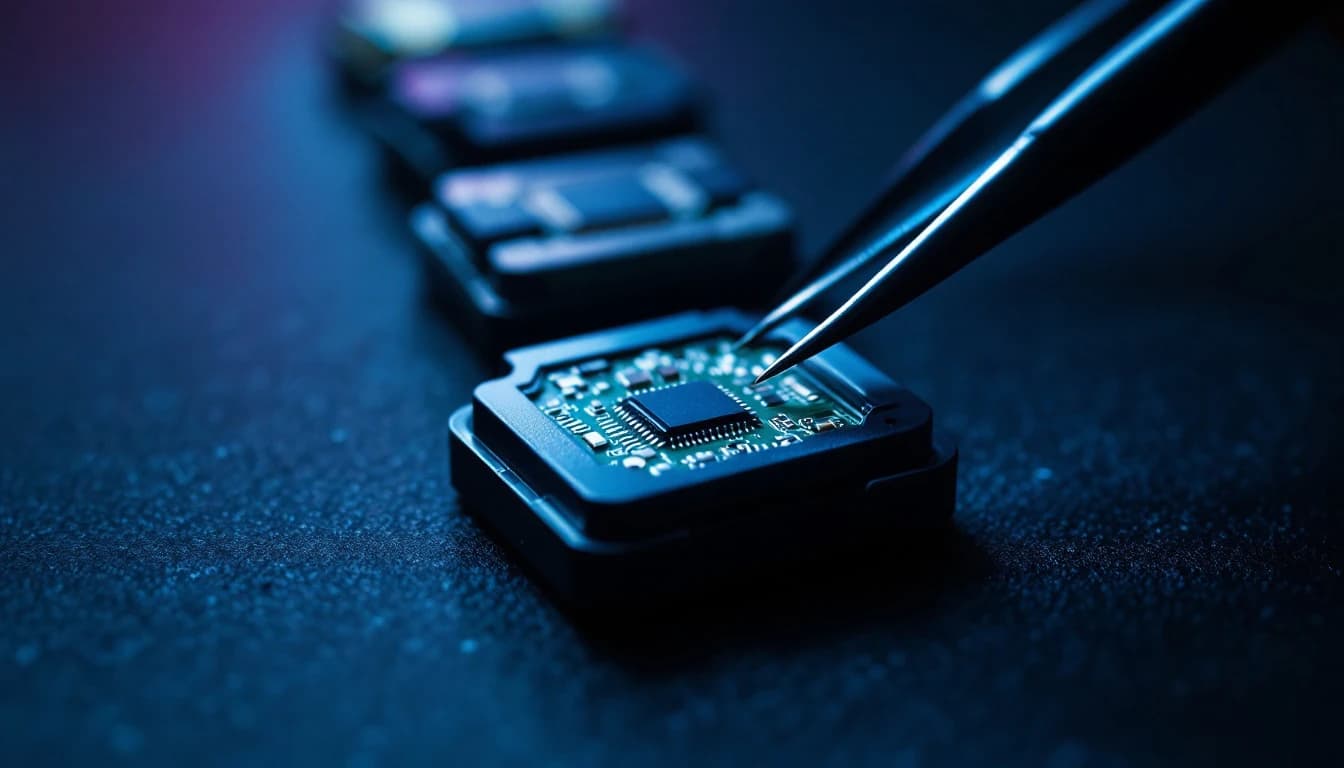
Cloning copies your original cluster's complete dataset onto the matched donor. If your original still reads — and most do, even with a failed gauge or backlight — its VIN, immobilizer/component-security data, coding, and odometer value are read on the bench (from the NEC processor and the 24C32/24C64 EEPROM) and written to the donor. The result is a cluster that carries your car's own identity: same immobilizer relationship, same VIN, same coding, and the same, true mileage. It drops in exactly like the original, with no dealer adaptation session required.
The mileage deserves a direct, honest word, because "cluster cloning" is a phrase that sometimes gets used to mean something it should never mean. We transfer your vehicle's genuine original mileage. When a cluster is cloned for a legitimate dash swap or a failed-cluster replacement, the whole point is that the odometer keeps reading the car's real, accumulated mileage after the swap — the number that was in your original cluster moves to the donor unchanged. We do not alter, roll back, or falsify odometer values, and that is not just policy, it is the law: odometer fraud is a federal offense, a line we lay out plainly in our guide to odometer correction legality. A clone done right preserves the truth; it does not manufacture a new one.
A bench technician who clones a steady stream of VAG clusters put the customer conversation this way:
"The call is almost always 'I put a used cluster in my Audi and now it won't start.' And I explain that the used cluster is fine — it just thinks it's still in the car it came from. My job is to move your car's data onto it: the VIN, the coding, the immo, and your real mileage. When people hear 'mileage,' some of them ask if I can make it read lower, and the answer is no, and it's not a gray area. I copy the true mileage. A clone puts your car's honest identity onto the new hardware. That's the whole service, and the honesty is part of it." — Independent VAG cluster-cloning technician, 12+ years (anonymized)
The one prerequisite follows from all this: your original cluster has to be readable. Cloning copies from a source, so a cluster whose memory is physically destroyed has nothing to copy. A dead backlight or a failed stepper motor does not usually stop the memory from reading — but a cluster that has been shattered, burned, or water-destroyed might, and that is the first thing to establish before ordering.
Which clusters, and which cars
The service covers the two cluster generations that account for the bulk of dash swaps and cluster failures on the era's VW and Audi models:
- immo4 CAN clusters (roughly 2006-2010) — the "older" generation, on cars like the B7/B8 A4, the 8P A3, the Mk5 Golf/Jetta, and their siblings.
- UDS clusters (~2010-2017) — the newer generation, on the B8.5 A4, 8V A3, Mk6/Mk7 Golf/GTI, and related models.
Under the covers these are the common NEC processor plus 24C32/24C64 EEPROM families, which is what makes them a clean bench read. Donor clusters are widely available — VW and Audi sold these cars in enormous numbers, so salvage yards, eBay, and recyclers all carry them. The rule is the same as every clone job: the donor must match your original's part number. Send your VIN and both part numbers before you buy, and we confirm the match, so you do not spend money on a cluster that will not clone cleanly.
For the newest MQB-generation clusters that fall outside these families, the architecture may differ — send the part number and we will tell you honestly whether a given cluster is in scope before you ship anything.
Cloning versus programming keys — two different cluster jobs
It is worth drawing a clear line between this service and its cousin, because both involve reading a VW/Audi cluster and people mix them up.
Cluster cloning (this service) copies a whole cluster onto a donor for a dash swap or a failed cluster — VIN, mileage, immobilizer, coding, all of it. The output is a working replacement cluster.
Cluster key programming reads the same cluster but for a different purpose: to extract the immobilizer data needed to program a key — add-a-key or all-keys-lost. The output is a working key, and your original cluster goes back unchanged.
If your cluster is fine and you have lost your keys, that is the key programming service. If your cluster has failed or you are swapping a dash, that is cloning. When in doubt, tell us the actual problem — a dead cluster versus a lost key — and we point you at the right one.
What it is worth
Line the numbers up. A dealer cluster replacement means a new cluster plus a programming and adaptation session, and on an out-of-warranty VW or Audi that bill is routinely painful — the kind of number that makes people question keeping an otherwise sound car, even as the average vehicle on U.S. roads passes 12.5 years old and staying in older cars becomes the norm. A used cluster on its own is cheap but does not work, for every reason above — money spent on a part that leaves you exactly as stuck, plus the labor rates the Bureau of Labor Statistics tracks if you pay someone to discover it does not accept the car.
Against that, cloning is a cheap matched donor plus $250 of bench work, and it ends with a cluster that drops in plug-and-play, carries your car's true identity and mileage, and keeps the factory immobilizer fully intact — the anti-theft protection the NHTSA's immobilizer guidance exists to encourage. It is the difference between a repair that works and a used part that does not.
What to ship
- Confirm your original reads, and send both part numbers. Text us your VIN and the part numbers of your original and your donor candidate so we can confirm the match before you buy anything.
- Order online — VW/Audi cluster clone $250 — and choose return shipping at checkout (Standard $29.95, UPS 2-Day $54.95, overnight $94.95).
- Pack your original cluster and the matched donor together, with proof of ownership and your printed order confirmation. USPS: PO Box 120241, Arlington TX 76012. UPS/FedEx: 1009 Oakwood Ln # 120241, Arlington TX 76012.
- typical 24-hour bench turnaround. Your original is read, its full dataset — VIN, true mileage, immobilizer, coding — cloned onto the donor, verified, and both clusters ship back.
- Install and drive. The cloned donor drops in plug-and-play, reading your car's real mileage, with no dealer adaptation.
Why honest mileage matters beyond the law
Transferring true mileage is not only a legal obligation — it protects the value and history of your own car. Vehicle-history services like Carfax record odometer readings from inspections, service visits, and title events, and they flag discrepancies. A cluster swap that suddenly reports a lower mileage than the car's own history throws exactly that flag, and it can turn a clean vehicle into one that looks tampered with — tanking its resale value and its buyers' trust even if nothing dishonest was intended. A clone that carries your genuine mileage keeps your car's recorded history consistent, which is worth real money the day you sell.
There is a consumer-protection dimension too. The Federal Trade Commission's guidance on odometer fraud treats mileage as one of the most consequential facts about a used vehicle, and enforcement around it is serious precisely because a false reading defrauds every future owner. When we clone a cluster, keeping the mileage true is not a limitation on the service — it is the feature that makes the repair legitimate and keeps you on the right side of both the law and the market.
Removing the cluster and getting the donor right
The mechanical side of a cluster job is well within reach of a careful owner or any shop. On most VW and Audi models of this era the cluster comes out after removing a trim surround and a couple of screws, then unclipping the connectors behind it — a job that general repair references from outlets like Car and Driver put squarely in the DIY-with-care category rather than specialist territory. Photograph the connectors before you unplug them, and keep the trim clips together.
The part that actually decides whether the job succeeds is the donor. It must match your original's part number closely enough to clone cleanly — the same hardware family and generally the matching part-number range. This is where a minute of diligence saves a wasted purchase: before you buy a donor, send us the part number of your candidate along with your VIN, and we confirm the match. Sourcing the wrong donor is the single most common reason a cluster job stalls, and it is entirely avoidable by checking first. Because these cars sold in such volume, a correct donor is almost always available once you know exactly which one to look for.
Frequently asked questions
Why won't a used cluster just work in my VW or Audi?
Because the cluster stores the VIN, immobilizer data, coding, and odometer — it is tied to the car. A used donor carries the donor car's version of all of that, so your car sees a mismatch: an immobilizer fault, a no-start, or wrong data on the dash. Cloning transfers your original's data onto the donor so the car accepts it, which is what makes it plug-and-play.
What happens to the mileage — can you make it read lower?
No. We transfer your vehicle's genuine original mileage from your cluster onto the donor, so the dash reads the correct, true mileage after the swap. We do not alter, roll back, or falsify odometer values — that is odometer fraud and a federal offense. A legitimate clone preserves the real mileage; it does not change it.
Is this the same as the cluster key programming service?
No. Key programming reads the cluster to make keys (add-a-key or all-keys-lost) and returns your original unchanged. Cloning copies the whole cluster onto a donor for a dash swap or failed cluster. Different jobs — tell us whether you have a dead cluster or a lost key and we route you.
What if my original cluster is completely dead?
Cloning copies from a readable source. A failed backlight or gauge usually does not stop the memory from reading, but a physically destroyed cluster might. If yours is shattered, burned, or water-destroyed, tell us the symptoms before ordering so we can set honest expectations.
Which cars and clusters are covered?
The immo4 CAN clusters (roughly 2006-2010) and the newer UDS clusters (~2010-2017), across the common NEC + 24C32/24C64 EEPROM families — a large share of Golf, Jetta, Passat, Tiguan, A3, A4, A5, and Q5. Send your VIN and both part numbers and we confirm the donor match before you ship.
The bottom line
A VW or Audi cluster is not a gauge pack you can swap — it carries the VIN, the immobilizer, the coding, and the odometer, which is why a used donor fights your car instead of fixing it. Cloning moves your original's complete identity, true mileage included, onto the donor so it drops in plug-and-play with no dealer adaptation, for $250 in a typical 24-hour bench turnaround. The mileage transferred is your car's real mileage, never altered — and the one requirement is that your original still reads.
Swapping a dash or replacing a failed VW/Audi cluster? Start with the VW/Audi cluster clone service — or if you have actually lost your keys, the cluster key programming service instead. Text us your VIN and both part numbers and we will confirm the donor match before you buy, so the only cluster you pay to ship is one we already know will clone cleanly onto your car.
Ship your module today
Flat-rate pricing, typical 24-hour bench turnaround, return speed your choice at checkout. Most jobs back on your bench within a week.