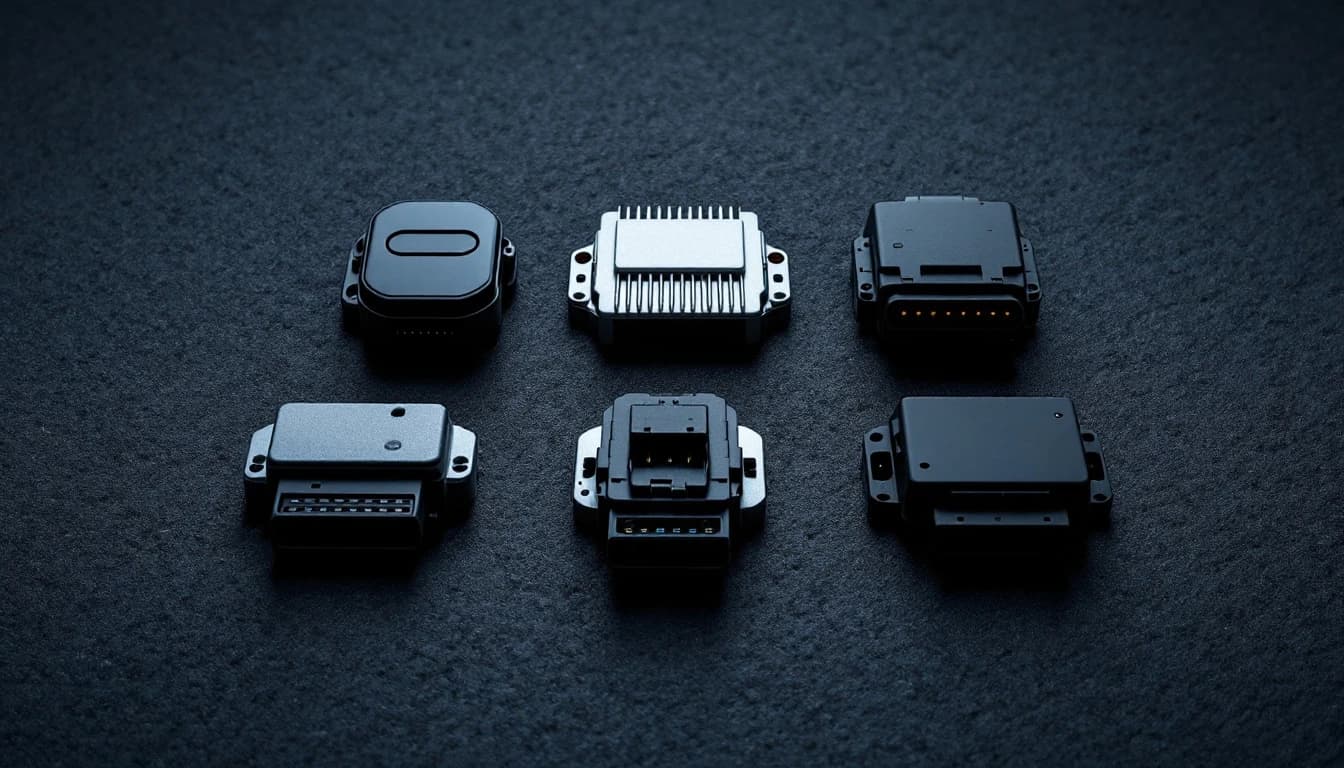
Mercedes Module Cloning: What Can and Cannot Be Cloned
What "cloning" actually means on a Mercedes
You have a dead module, you found a used one on eBay for a fraction of dealer price, and you have been told it will not work unless somebody "clones" it. That word gets used loosely, so here is the precise version.
A Mercedes control module is not just a computer running software. It carries an identity: a VIN, a serial number, a set of drive-authorization secrets shared with the ignition switch and the engine ECU, adaptation values learned over years of driving, and in most cases a Software Calibration Number that the factory issued for that specific car. Cloning reads that identity out of your original module and writes it into a donor, so the donor stops being somebody else's part and becomes yours.
The alternative is renewing — resetting a module to a virgin, never-married state so it can be freshly adapted to your car at install. Both are legitimate. They solve different problems, and which one you get is decided by whether your original module still communicates.
The third path, and the one people forget, is coding. Even a perfectly cloned or virginized module may still need online SCN coding to the VIN before the car accepts it. That is a separate operation with its own requirement, and skipping it is why plenty of "the clone did not work" stories are really "nobody coded it" stories.
Everything in this guide assumes proof of ownership. Any work touching keys, the immobilizer, or drive authorization on a Mercedes requires it, without exception — the documentation requirements for immobilizer and module work apply to every job below.
FBS3 vs FBS4 — the split that decides everything
Mercedes calls its drive-authorization architecture FBS, and the generation break is the single most useful fact in this entire article.
FBS3 covers roughly 1999 through 2014 depending on chassis. The EIS/EZS ignition switch holds the immobilizer relationship, the engine ECU holds a matching half of it, and the whole conversation is readable with the right bench tooling. Practically everything on an FBS3 car has a bench path.
FBS4 arrived around 2013 on the W205 C-Class and rolled out across the range. It uses stronger cryptography, and the practical result is blunt: the EIS and the keys became a closed system with no aftermarket equivalent, while a handful of other FBS4 modules — notably the shifter and servo units — remained clonable because cloning transfers the whole secret rather than trying to derive it.
If you are not sure which side of the line your car falls on, the pre-2014 versus post-2014 FBS4 breakdown walks through it by chassis. Get this right before you buy a donor, because a donor bought for the wrong generation is money gone.
The stakes behind that cryptographic tightening are not academic. The National Insurance Crime Bureau has reported vehicle-theft totals well above one million vehicles in a single year in the United States, and the parts-marking rules that the National Highway Traffic Safety Administration administers under the Federal Motor Vehicle Theft Prevention Standard have applied to designated high-theft vehicle lines for well over three decades. FBS4 is what that pressure looks like from a bench technician's side of the workbench: a system that is genuinely hard to defeat, which also makes it genuinely hard to service.
Module by module — the clone-feasibility matrix
This is the table people come here for. Prices are our flat bench rates; return shipping is chosen and paid at checkout, from $29.95.
| Module | Generation | Clone possible? | What you ship | Our flat price |
|---|---|---|---|---|
| EIS / EZS ignition switch | FBS3, pre-2014 | Yes — original must read | Original EIS + matching donor EIS | $250 |
| EIS / EZS, dead original | FBS3, pre-2014 | No clone — key programmed to a donor instead | The EIS you want the key paired to | $150 |
| EIS, W164 / X164 / W251 DAS3 | FBS3, 2008-2012 | Repair instead of clone — no donor needed | Your original EIS + a working key | $399 |
| ME9.7 engine ECU | FBS3, ~2004-2013 | Yes — or unlock, VIN write, SCN | Your ECU, plus a donor if cloning | $275 |
| SIM271DE2.0 engine ECU | FBS3, ~2009-2015 | Yes — clone, or renew to virgin | Original + matching donor ECU | $250 |
| 722.9 conductor plate (VGS1/2/3) | FBS3, ~2004-2015 | Yes if it reads — else virginize a donor | Original plate + donor plate | $299 |
| 722.9 plate, dead original | FBS3 | No — new plate ordered by VIN via NASTF | Nothing physical; paperwork only | $999 |
| DSM / ISM shifter + servo | FBS4, ~2013-2023 | Yes — cloning is the only path | Original + donor + EIS + working key | $450 |
| FBS4 EIS | FBS4, ~2013+ | No — dealer only, no aftermarket tool | Not offered | Not offered |
| FBS4 keys | FBS4, ~2013+ | No — dealer only, no aftermarket tool | Not offered | Not offered |
| ELV / ESL steering lock | FBS3 era | Emulator paired to your EIS, not a clone | Your EIS only | $350 |
| Any module needing coding only | ~2004+ | Not a clone — online SCN coding to VIN | The module you already own | $199 |
The EIS/EZS — the module everything else revolves around
The Electronic Ignition Switch, called the EZS in Mercedes documentation, is the heart of FBS3 drive authorization. It knows your keys, it talks to the engine ECU, and on later cars it talks to the steering lock. When it dies, the car does not start and no amount of key work fixes it.
If the original still reads, cloning is the clean answer. We copy the original's data onto a donor of the same variant and your existing keys keep working in the new unit — no re-keying, no dealer all-keys-lost session. That is the Mercedes EIS/EZS cloning service at $250 flat, covering W204, W207, W212, W221, W164, W166, W251, W639 and W463 with NEC v51/v57, Motorola and Renesas variants. A deeper walkthrough of exactly what data transfers in an EZS clone and why clones fail covers the failure cases in detail — mismatched part numbers, partially corrupted dumps, and donors from the wrong EIS generation.
If the original does not read, there is nothing to copy. The job changes shape: instead of cloning, we program a fresh key directly to whatever EIS you send, which is the Mercedes key replacement via EIS service at $150. All-keys-lost is supported. You lose the ability to keep old keys, because the old keys were only ever known to the module that died.
There is a third case worth knowing about. On 2008-2012 ML, GL and R-Class cars — W164, X164 and W251 running the DAS3 infrared system — the common failure is repairable at component level, so a donor is not needed at all. The W164 / X164 / W251 EIS repair fixes the original unit for $399 and returns it with your VIN binding and key pairing intact. When a repair is possible it is almost always the better outcome: no donor sourcing, no cloning risk, and no chance of the part-number mismatch that ruins otherwise-good jobs.
The engine ECUs — ME9.7, SIM271, and what "matched" means
An engine ECU pulled from another Mercedes will crank and do nothing useful, because it does not share the drive-authorization secret your EIS is expecting and it is not carrying your VIN or your calibration.
The ME9.7 is the gasoline controller across an enormous slice of the M272 V6 and M273 V8 range, roughly 2004 to 2013 in C, E, S, CLS, ML, GL, R, SLK and SL. All four of the operations it might need live on one bench station: unlock it, write your VIN, SCN-code it, or clone your original data onto a replacement so keys and immobilizer carry over untouched. The ME9.7 ECU service is $275 flat and we decide which operation applies from your VIN and the A272 or A273 part number before anything ships.
The SIM271DE2.0 is the Continental controller on the M271 EVO 1.8 turbo CGI four-cylinder — W204 C180/C200/C250, W212 and C207 E200/E250, R172 SLK200/SLK250, roughly 2009 to 2015. It gets both paths: clone your original's identity and drive-authorization data onto a used donor for plug-and-play, or renew a unit to virgin so it can be married to your EIS at install. That is the SIM271DE2.0 ECU clone and renew service at $250 flat. On a dead-original renew we may need the EIS and a working key in the box as well, because the marriage has to be verified somewhere.
Nobody should be surprised that engine electronics dominate this kind of work. Long-running dependability research from J.D. Power has put industry-wide three-year problem rates on the order of 190 problems per 100 vehicles in recent studies, with electronics and infotainment consistently among the highest-complaint categories, and Consumer Reports reliability surveys have flagged in-car electronics as a persistent trouble area across brands. On a fifteen-year-old German luxury car carrying dozens of networked controllers, module failure is a maintenance category, not an anomaly.
The 722.9 conductor plate — where the TCU lives
Mercedes put the transmission control unit on the conductor plate inside the 7G-Tronic 722.9 gearbox, which means a replacement plate arrives as an unmatched computer, not a mechanical part. Symptoms of a failing plate are unmistakable once you know them, and the 722.9 limp mode and no-reverse symptom guide is the diagnostic companion to this section.
Two bench paths, one flat price. If your original plate still communicates, we clone its data onto a donor and it drops in with no coding — roughly a plug-and-play result in the large majority of cases. If the original is dead, we virginize a donor and SCN-code it to your VIN, which means shipping the EIS and a working key along with the plates. Either way the 722.9 conductor plate clone or renew service is $299 flat across VGS1, VGS2 and VGS3, roughly 2004 to 2015.
When the original is genuinely dead with no communication at all, there is no data anywhere to recover, and honest practice is to say so. The correct fix then is a brand-new plate — and a new plate is a Theft-Related Part that Mercedes releases only through the NASTF secure parts channel to a credentialed professional, for a US-registered vehicle whose owner can prove ownership. The NASTF-ordered new conductor plate service is $999, ships programmed and SCN-coded plug-and-play, and is refunded in full if NASTF cannot release a part for your VIN.
FBS4 — DSM and ISM clone, EIS and keys do not
On FBS4 cars the Direct Select Module and the Intelligent Servo Module are drive-authorization parts. A used one cannot simply be adapted; the only viable route is a complete clone of the internal boot, EEPROM and flash from your original onto a matching donor. Do that properly and the donor behaves as your original — it shifts, it starts, and your keys stay valid.
That is the FBS4 DSM/ISM cloning service at $450 flat, covering roughly 2013-2023 W205, W213, W222, W223 and related GLC, GLE and CLS. You ship the original, a matching donor, your EIS and one working key, because drive authorization has to be verified on the bench before the module leaves. The FBS4 DSM and ISM cloning walkthrough covers donor matching in more depth.
Now the boundary, stated plainly because the industry is not always honest about it: there is currently no aftermarket tool that programs an FBS4 EIS or cuts and programs an FBS4 key. That work is dealer-only. We do not offer it, we will not quote it, and if somebody tells you they can do it on a 2018 W213 for a few hundred dollars, be extremely careful about what you are actually buying.
"Half the FBS4 calls I take start with a customer who already paid somebody for an EIS job that could never have worked. The tell is always the same — nobody asked for proof of ownership, and nobody asked whether the original module still read. Those two questions decide the entire job, and a shop that skips them is guessing with your car."
— Independent Mercedes drive-authorization technician, 16+ years, anonymized
SCN coding — the step that finishes the job
SCN coding is Mercedes's online calibration process. Modules — EIS, engine ECUs, instrument clusters, conductor plates and others — carry a Software Calibration Number tied to the vehicle, and a new or transplanted module often will not function correctly until it is SCN-coded to that VIN with factory online access. Plenty of capable independent shops can bolt the part in and cannot complete this step, which is why a mechanically perfect repair sometimes still leaves a car faulting.
Our online SCN coding service is $199 flat for a module you already own — new from the dealer or used from a donor. If the module also needs unlocking, a VIN write, or a clone first, that gets rolled into the same job. The SCN coding explainer covers the concept in more detail, including which modules typically require it.
One clarification that saves arguments: a clean clone of a readable original usually does not need SCN coding, because the cloned module already carries your car's calibration identity. A virginized or brand-new module almost always does. That is the practical difference between the two paths, expressed as a bill.
The right to have this work done outside a dealership is well established. The Federal Trade Commission has warned manufacturers — roughly half a dozen of them in a single 2018 enforcement round — that conditioning a warranty on dealer-only parts or service generally violates the Magnuson-Moss Warranty Act. Diagnostic communication itself runs on published standards: the Unified Diagnostic Services protocol documented through SAE International and ISO 14229 defines on the order of two dozen distinct diagnostic services, and every legitimate bench tool speaks them. Independent module work is not a loophole; it is the intended state of the repair market.
The steering lock is not a clone job
The ELV, the electronic steering lock, is the one Mercedes module in this guide that we deliberately do not clone. Its original mechanism uses a small stepper motor that wears out, and replacing it with another original unit simply restarts the failure clock.
Instead we supply a new emulator, pre-paired to your EIS, that reproduces the electrical handshake without the failure-prone moving parts. Ship the EIS only — keep the failed ELV in the car. The ELV emulator programming service is $350 flat and covers W204, W207, W212, W166, W246 and W117 applications, with your keys untouched because the EIS returns exactly as you sent it.
Donor sourcing — the part number is the job
More cloning jobs fail on the donor than on the bench. The rule is boring and absolute: the donor must match your original's part number and variant, not merely fit the same chassis. Two W204 EIS units from the same model year can use different processor generations, and a Motorola donor will not accept a Renesas dump.
Send the part number before you buy. We verify it against your VIN, tell you yes or no, and that five-minute exchange has saved more customers a wasted purchase than any other single thing we do. The general used-module donor checklist applies here in full — condition, corrosion, water intrusion history, and above all the label.
How to ship, and where
Everything here is mail-in bench work performed at our Arlington, Texas workshop at 1168 W Pioneer Parkway. Send modules to PO Box 120241, Arlington, TX 76012 if you are shipping USPS, or to 1009 Oakwood Ln # 120241, Arlington, TX 76012 if you are shipping UPS or FedEx — UPS and FedEx cannot deliver to a USPS PO Box, so pick the line that matches your carrier.
Pack modules in an anti-static bag inside a padded box. Include your VIN, the module part numbers, proof of ownership for any immobilizer-related work, and a printed order confirmation. Return shipping is chosen and paid at checkout, from $29.95 standard, with two-day and overnight options.
Frequently asked questions
Will my existing Mercedes keys still work after a module clone? Yes, on a clone of a readable original. The whole point of cloning an EIS, ME9.7, SIM271 or FBS4 DSM/ISM is that your immobilizer relationship transfers intact, so every key that worked before still works afterward. Only the virginize and renew paths, where a module is reset and freshly married to the car, can change your key situation — and we tell you which path you are on before any work starts.
Can you clone an FBS4 EIS or make me an FBS4 key? No. There is currently no aftermarket tool that does either, and any shop claiming otherwise is not being straight with you. FBS4 EIS and key work is dealer-only. We do clone FBS4 DSM and ISM modules, which is the part of that system that genuinely is serviceable on a bench, and we are upfront about where the line sits.
What happens if my original module is completely dead? Then there is nothing to clone, and the job becomes a renew, a repair, or a new part. A dead EIS moves to key-programming on a donor at $150 or a component-level repair at $399 on DAS3 ML/GL/R cars; a dead 722.9 conductor plate moves to a new plate ordered by VIN through NASTF at $999. We identify which case you are in before you ship anything.
Does a cloned module need SCN coding afterward? Usually not. A clean clone already carries your car's calibration identity, so it goes in without an online coding session. A virginized module, a brand-new dealer part, or a donor prepared for adaptation almost always does need SCN coding — that is the $199 service, and we roll it into the job when your module needs it.
Why do you need my VIN and the part number before I ship? Because those two pieces of information decide whether the job is possible at all. The VIN tells us your immobilizer generation and calibration, and the part number tells us whether your donor is actually compatible rather than merely similar. Confirming both before you spend money on a donor or on shipping is the cheapest step in the entire process.
Do you require proof of ownership? Yes, for anything touching keys, the immobilizer, or drive authorization — which covers most of what is on this page. It is not a formality. Theft-related parts ordered through NASTF additionally require a US-registered vehicle and documented ownership, and we do not process those orders without it.
Is cloning legal? Yes, when it is done on a vehicle you own and can document. Cloning restores a car's own data onto a replacement part; it is a repair operation, not a circumvention of anything. What makes it legitimate is the ownership documentation, and that is precisely why we insist on it rather than treating it as paperwork.
The bottom line
Mercedes cloning is not one capability, it is a map. On FBS3 cars — roughly pre-2014 — almost everything has a bench path: the EIS/EZS clones at $250, the ME9.7 covers unlock, VIN write, SCN and clone at $275, the SIM271DE2.0 clones or renews at $250, and the 722.9 conductor plate clones or virginizes at $299, with a NASTF-ordered new plate at $999 when the original is beyond reading. Add the ELV emulator at $350 for steering-lock failures and standalone online SCN coding at $199 when a module only needs finishing.
On FBS4 cars — roughly 2013 and newer — the map narrows honestly. DSM and ISM modules clone at $450, and the FBS4 EIS and FBS4 keys have no aftermarket path at all. That is the single most important sentence in this guide, and any quote that contradicts it deserves scrutiny.
Two questions decide your job before anything ships: does your original module still read, and does your donor part number actually match. Text us your VIN and the part number off the module label and we will answer both before you spend a dollar on shipping or a donor.
Ship your module today
Flat-rate pricing, typical 24-hour bench turnaround, return speed your choice at checkout. Most jobs back on your bench within a week.