BMW Windows, Lights & Wipers Dead
The symptom pattern that points straight at the FRM
Most electrical faults on a car are narrow. One window stops working, or one light burns out, and you chase a fuse or a switch. The FRM (Footwell Module) failure is different, and that difference is the biggest clue you have. When an FRM3 corrupts, a whole cluster of unrelated-seeming systems go dark at the same moment, usually right after the battery died, got disconnected, or took a rough jump start.
The classic complaint sounds like this: the driver turns the key, the engine runs fine, but nothing in the body electrics responds. The power windows are dead at every switch. The exterior lights, headlights, tail lights, and often the interior dome lights, will not come on. The windshield wipers do not move. The turn signals and hazards are gone. And the instrument cluster throws a storm of warning symbols, sometimes a dozen at once, because the modules that normally report in over the car network suddenly cannot hear from the footwell module.
If you are seeing several of those at the same time on an E-chassis BMW or Mini, you are almost certainly looking at an FRM fault rather than a coincidence of separate failures. Cars simply do not lose windows, lights, and wipers independently on the same afternoon. One module controls all of them, and that module is the FRM.
What the FRM actually is and what it runs
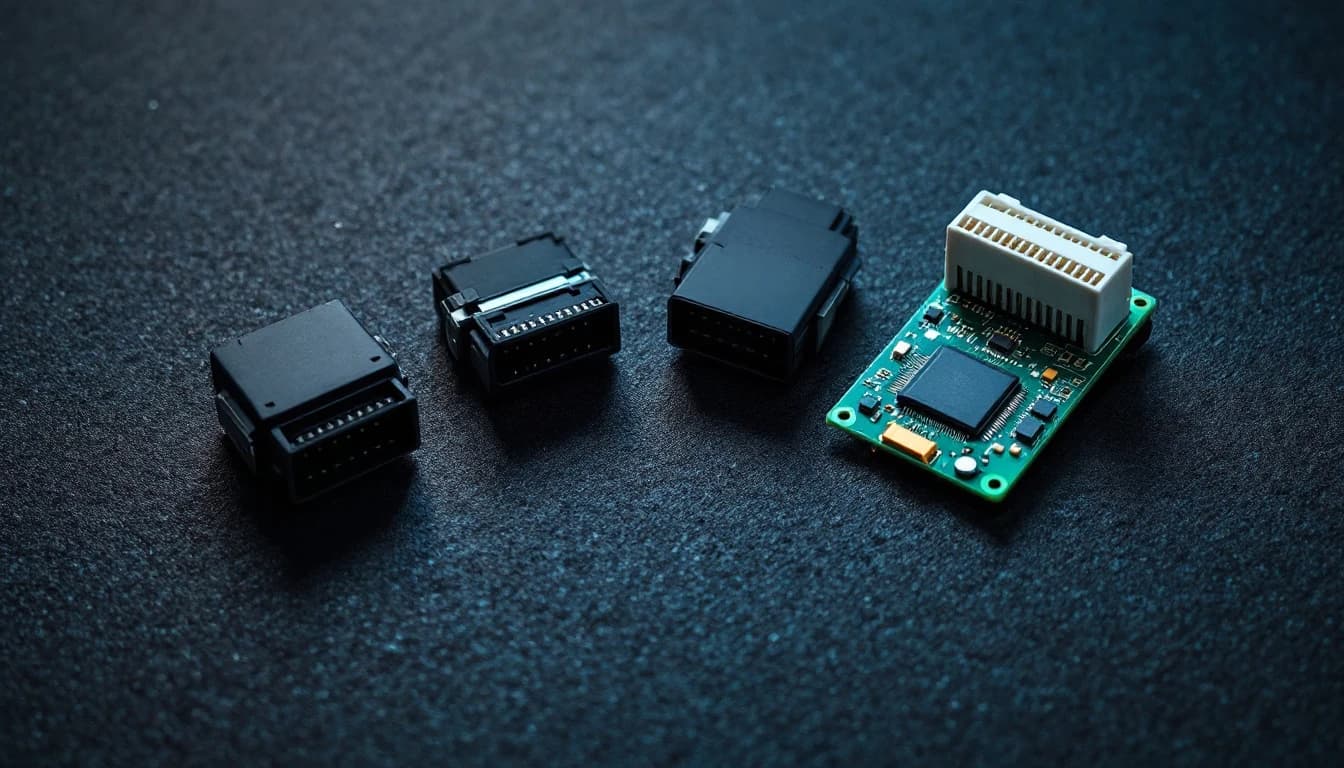
FRM stands for Footwell Module, named for its physical location tucked up in the footwell area near the kick panel, typically on the driver side. Despite the modest name, it is a central body-electrical controller. On the E-series cars it is one of the busiest modules in the whole vehicle.
The FRM manages, depending on the exact variant and options:
- Power window motors and the one-touch up/down logic, including anti-pinch
- Exterior lighting: low and high beams, parking lights, tail lights, brake lights on some variants
- Turn signals and hazard flashers
- Interior lighting and, on many cars, the wiper control interface
- Mirror functions and, on equipped cars, mirror folding and heating
- Various body comfort and convenience circuits that ride on the same controller
Because so many everyday functions funnel through this one box, a corrupted FRM produces that unmistakable everything-at-once failure. It is not that ten parts broke. It is that one brain stopped issuing commands to ten circuits.
BMW built these systems as a distributed network of control units talking over the car bus, an architecture the company describes across its consumer and owner materials at BMW USA. That networked design is elegant when it works and dramatic when a hub module like the FRM goes silent, because every other module that expected to hear from it starts reporting a fault.
The E-chassis cars this affects
The FRM3 generation of the module lives in the E-series platform, roughly the mid-2000s through early-2010s BMW and Mini range. The commonly affected chassis include the E82 and E88 1 Series, the E90, E91, E92, and E93 3 Series, the E70 X5, the E71 X6, and the related Mini variants of that era, among others.
That is a very large population of vehicles. BMW is one of the highest-volume premium automakers in the United States; the brand has for years sold well over 300,000 vehicles annually in the U.S. market, according to sales reporting compiled by outlets like Car and Driver. The 3 Series family alone, which spans several of the FRM3-equipped chassis, is one of the best-selling luxury cars of its generation, a point MotorTrend has made repeatedly in its long-term coverage of the model line. When a known failure mode sits inside a module fitted to that many cars, it becomes a defining ownership issue for the platform.
A technician confirms your exact chassis and FRM part variant before you ship, because the E-series range includes several module revisions and the fitment and recovery method depend on the precise one you have.
Why the FRM3 corrupts itself — the low-voltage trigger
Here is the part that surprises most owners: the FRM usually is not physically damaged when it fails. The circuit board, the connectors, and the power stages are typically fine. What fails is the module's memory.
Inside the FRM is a microcontroller with onboard flash and EEPROM memory that holds both the module's operating program and the car-specific coding and rolling data it needs to function. The FRM3 has a known vulnerability: during a low-voltage or unstable-voltage event, a write operation to that memory can be interrupted or corrupted. The result is a module whose firmware is scrambled. It powers up, but it can no longer run its program, so it stops driving the window, light, and wiper circuits, and it drops off the car network.
The triggering events are ordinary automotive life:
- A battery that has run flat and been recharged or jump started
- A battery replacement where voltage sagged or spiked during the swap
- A weak battery that browns out during cranking on a cold morning
- Any electrical work that put the module through an unstable-voltage moment
None of these should brick a controller in a well-designed system, and on most modules they do not. The FRM3 is simply more susceptible than it should be, which is why the failure is so strongly associated with battery events. If your windows and lights died the same week you dealt with a dead or replaced battery, that timeline is the signature of the fault.
Low battery voltage is a broader cause of intermittent electronic gremlins than most drivers realize; automotive electrical-system guidance from organizations that study vehicle reliability, including the consumer and safety material published by the U.S. National Highway Traffic Safety Administration, consistently points to battery and charging health as a root cause of module misbehavior. The FRM3 is the extreme case, where a voltage event does not just cause a temporary glitch but permanently corrupts stored memory until the module is recovered.
As one independent European-marque module specialist described the pattern:
"Nine out of ten FRM cars that come in dead started with a battery. The customer jump started it, or replaced the battery, and by the time they got home the windows and lights were gone. People assume the module is fried and want to throw a used one at it. It is almost never fried. The flash is scrambled, and once you recover it and preserve the original data, the same physical module goes back in and works. Swapping in a coded-to-another-car unit just trades one problem for a worse one." — Independent European-marque module specialist, 16+ years on BMW body electronics (anonymized)
That last point is the one that saves people the most money and grief, so it deserves its own section.
Why a used FRM is not plug-and-play
The instinct when a module dies is to buy a used one off a parts car and bolt it in. With the FRM, that instinct leads straight into a second problem, because the module is not a generic part. It is coded to your specific vehicle.
An FRM from another BMW carries that other car's VIN, coding, and stored adaptation data. Drop it into your car and several things go wrong. The module and the vehicle disagree about identity, so the car network flags a mismatch. Functions that depend on car-specific coding, one-touch window travel, anti-pinch calibration, lighting configuration for your market and options, may behave incorrectly or not at all. And you have simply moved the risk around, because a used FRM3 is subject to the exact same memory-corruption failure that killed your original.
To make a used module work, it has to be brought to a virgin state and then recoded to your VIN, which requires the same specialized bench work as recovering your own module, plus it throws away the advantage of keeping your original data. This is why the diagnostic path for a no-start or an immobilizer-adjacent electrical fault matters so much; understanding whether you are dealing with a data-corruption problem or a genuine hardware failure changes the whole repair, a distinction covered in our guide on telling an immobilizer fault from a module fault.
The far better path for an FRM3 is to recover the original module. The original already belongs to your car. Recover its firmware, preserve its coding and EEPROM data, and it goes back in as itself, working correctly, no re-marriage to the VIN required.
The bench fix: recover the original, preserve the data
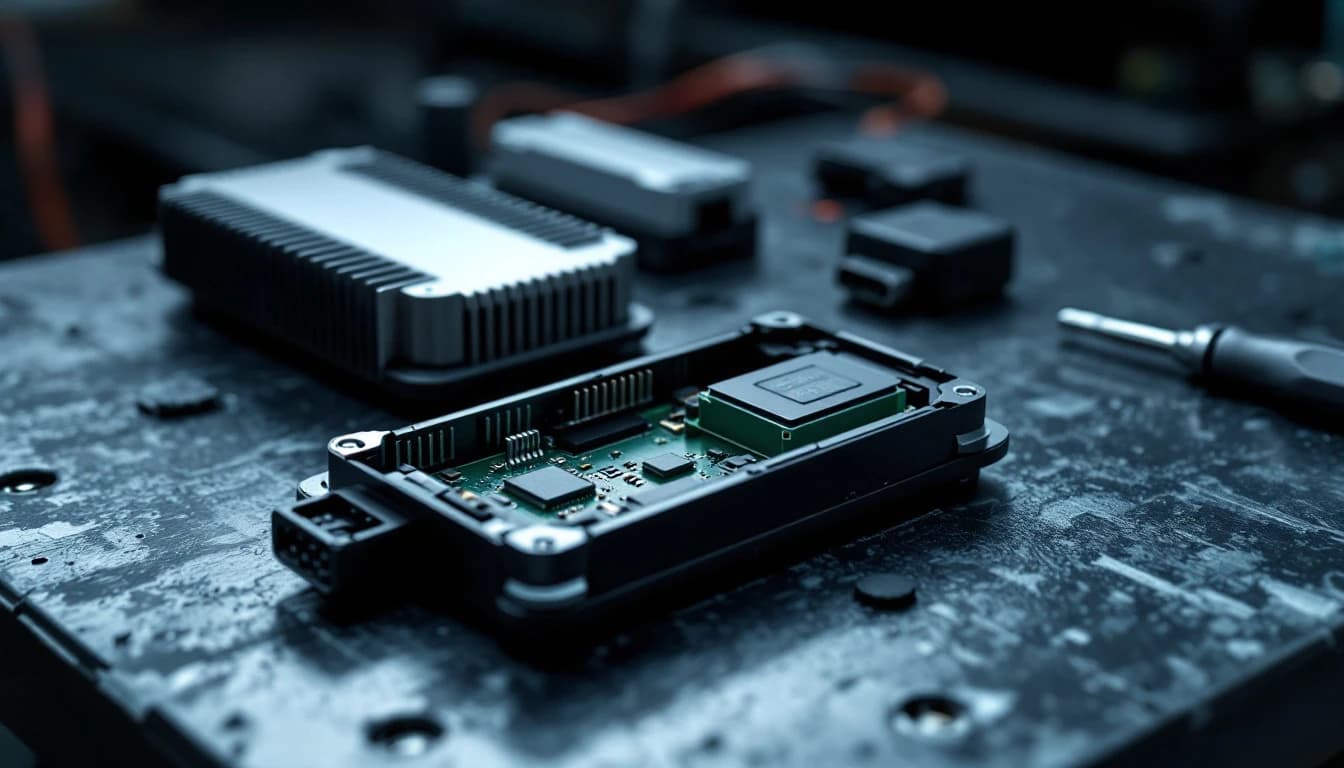
The reliable repair for a corrupted FRM3 is a bench recovery. The module comes out of the car and comes to the workbench, where it can be powered on a clean, regulated supply and worked on directly, rather than being flashed in the car with a battery of uncertain health, which is how a lot of these got bricked in the first place.
On the bench the workflow is straightforward and, critically, data-preserving. Our BMW FRM footwell module repair service is a flat $175 bench job that recovers the module and returns it coded to your car. The sequence is:
- Verify first. A technician confirms your chassis, the FRM part variant, and the symptom pattern from your VIN and a photo of the module label, before anything ships. Nothing goes to the bench until fitment and approach are confirmed.
- Read what remains. The module is powered on a regulated bench supply and its memory is read. Even a corrupted FRM usually still holds recoverable coding and EEPROM data.
- Repair the corrupted firmware. The scrambled flash is rebuilt to a correct, working image, and the module's own coding and adaptation data are preserved rather than wiped.
- Verify on the bench. The recovered module is tested for correct communication before it leaves the shop, so it is confirmed working before you ever reinstall it.
- Return with tracking. The module ships back via the flat-rate return option you chose at checkout, from $29.95, and you reinstall it in the same spot it came out of.
Because your original module is recovered and its data preserved, the repaired FRM is your FRM. It already matches your VIN, so there is no coding-mismatch aftermath to chase. If in a specific case a module is genuinely beyond firmware recovery, that is exactly what the up-front verification step exists to catch, so you are not shipping a part on a false hope.
For the deeper technical account of exactly how a bricked FRM3 is brought back, including what recovery does and does not touch, see our companion piece on FRM3 bricked-module recovery on the bench.
What software recovery does and does not fix
Set expectations clearly, because this is where people get frustrated. Recovering an FRM fixes a data problem. It does not fix a hardware problem, and it does not fix problems that live outside the module.
What the recovery does:
- Rebuilds the corrupted firmware so the module runs its program again
- Restores control of windows, lights, wipers, and the other FRM-managed circuits
- Preserves your car-specific coding so the module goes back as itself
- Clears the network-mismatch warning storm that came from the module being silent
What it does not do:
- It does not repair a physically damaged circuit board, burned power stage, or broken connector, though those failures are far rarer than corruption
- It does not fix a window regulator, a motor, a bulb, a wiper linkage, or wiring downstream of the module
- It does not fix a bad battery or a charging-system fault, and if you reinstall a recovered module and leave a dying battery in the car, you are inviting the same corruption again
- It does not address faults in other modules that happened to show up in the same warning storm
That battery point is worth repeating. The single best thing you can do to keep a recovered FRM healthy is to run a good battery and a healthy charging system, so the module never sees the low-voltage events that corrupt it. Battery health is one of the most cost-effective reliability investments on any modern car, a theme reflected in ownership-cost analysis from sources like Kelley Blue Book.
How to tell it is the FRM before you spend anything
You can build strong confidence before committing to a repair, using the symptom pattern plus a couple of simple checks.
- Multiple systems dead at once. Windows, lights, and wipers all gone together points to the FRM, not to a coincidence of separate faults.
- A recent battery event. A dead battery, a jump start, or a battery replacement in the days before the failure is the classic trigger and strongly supports an FRM3 corruption diagnosis.
- A warning-light storm in the cluster. When one hub module drops off the network, the other modules that expected to hear from it report faults, so the dash lights up broadly rather than with one specific warning.
- Engine and drivetrain unaffected. The car typically starts and runs normally, because the FRM controls body electrics, not the engine. If the car will not start or run at all, you may be dealing with a different module, and the immobilizer-versus-module diagnosis guide will help you sort it out.
Because the E-series uses so many networked control units, it is genuinely worth confirming which module is at fault before ordering anything, which is exactly why a technician reviews your VIN, chassis, and symptom description first. For a broader map of how BMW key and body modules differ across the various chassis generations, our BMW module programming by chassis overview lays out which controller does what across the range.
Comparison: recover your original FRM vs install a used one
| Consideration | Recover your original FRM (bench) | Install a used FRM from another car |
|---|---|---|
| Coded to your VIN | Yes, already matches, preserved in recovery | No, coded to the donor car, must be re-virginized and recoded |
| Keeps your adaptation data | Yes, one-touch, anti-pinch, lighting config preserved | No, donor data is wrong for your car |
| Vulnerable to the same failure | No more than any FRM3, but yours is now known-good | Yes, and its failure history is unknown |
| Network-mismatch aftermath | None, module returns as itself | Likely, until fully recoded to your VIN |
| Specialized bench work required | Yes, recovery and verification | Yes, virginize plus recode, more steps |
| Physical part | Your own, reinstalled where it came out | Unknown-history part from a parts car |
| Our service | This, $175 flat bench recovery | Not the recommended path |
The table makes the case on its own. Recovering your original module keeps your data, keeps your VIN match, and avoids the coding aftermath that comes with a donor unit, all for a flat bench fee rather than the cost and uncertainty of a used part plus the recoding it still needs.
Proof of ownership
Because the FRM sits close to body-security and comfort systems and holds car-specific coding data, proof of ownership is required for this work. A technician will ask you to confirm ownership of the vehicle before the module is recovered and returned. This protects you and keeps the workshop compliant, and it is standard for any module that carries vehicle-specific coding.
The mail-in workflow at a glance
You do not bring a car anywhere. You ship a part.
- Text us your VIN, your chassis, and a photo of the FRM part label. A technician confirms fitment and the recovery approach.
- Once confirmed, remove the FRM from the footwell and ship it, well packed in an anti-static bag and padded box, to PO Box 120241, Arlington TX 76012 if you ship USPS — or 1009 Oakwood Ln # 120241, Arlington TX 76012 if you ship UPS or FedEx (UPS and FedEx cannot deliver to a PO Box).
- On the bench the module is read, its firmware recovered, and its coding preserved, then verified for correct communication.
- It ships back to you with tracking via the return option you chose at checkout, from $29.95, and you reinstall it.
The whole point of a bench service is that a corrupted module gets recovered on clean, regulated power by someone who does this specific repair regularly, instead of gambling on an in-car flash with a questionable battery.
Frequently asked questions
Why did all my windows, lights, and wipers stop working at the same time? Because one module, the FRM footwell module, controls all of them, so when it corrupts they fail together rather than one at a time. That simultaneous, everything-at-once failure is the clearest sign the FRM is the culprit rather than a coincidence of separate electrical problems.
Did my FRM break because of my dead battery or jump start? Very likely yes. The FRM3 is known to corrupt its own flash memory during low-voltage or unstable-voltage events, so a dead battery, a jump start, or a battery replacement in the days before the failure is the classic trigger and strongly supports an FRM diagnosis.
Can I just buy a used FRM and plug it in? Not reliably, because the FRM is coded to your VIN, so a donor module from another car brings the wrong identity and adaptation data and must be re-virginized and recoded anyway. Recovering your original module preserves your data and avoids the coding-mismatch aftermath entirely.
Is my FRM physically broken or is it a software problem? In the large majority of cases the hardware is fine and only the stored firmware is corrupted, which is why bench recovery works so well. A technician verifies this from your module before any repair, and if a unit is genuinely beyond recovery that is caught during the up-front check.
How much does the FRM repair cost and how long does it take? The BMW FRM footwell module repair is a flat $175 bench job on a confirmed module, plus the flat-rate return shipping tier you choose at checkout starting at $29.95, with a fast turnaround once the module arrives. A technician confirms your exact chassis and variant before you ship anything.
Will the recovered module keep my one-touch windows and lighting settings? Yes. The bench recovery preserves the module's own coding and adaptation data, so features like one-touch up and down, anti-pinch, and your market and option lighting configuration come back exactly as they were, because your original module returns as itself.
What can I do to keep it from happening again? Run a healthy battery and a sound charging system, since low and unstable voltage is what corrupts the FRM3 in the first place. Keeping the module on clean voltage is the single most effective way to prevent a repeat failure after your original is recovered and reinstalled.
Owner-reported reliability data compiled by J.D. Power consistently places electrical and electronic faults among the more common complaints on complex European vehicles, and a module like the FRM that controls lighting, windows, mirrors, and comfort functions is a textbook example of why one failed controller can produce a whole dashboard of unrelated-looking symptoms.
The bottom line
If your E-chassis BMW or Mini lost its power windows, lights, and wipers all at once and lit up the dash with warnings, especially right after a dead battery or a jump start, the FRM footwell module is the overwhelming favorite. The module is rarely physically broken; its FRM3 memory corrupts during a low-voltage event and stops driving the circuits it controls.
A used module is not the answer, because the FRM is coded to your VIN and a donor unit brings the wrong data and the same failure risk. The reliable fix is a bench recovery of your original module that rebuilds the corrupted firmware while preserving your coding, so the same physical part goes back in working correctly. That is a flat $175 BMW FRM footwell module repair, verified for your exact chassis first, done on clean regulated power, and returned with tracking. Proof of ownership is required. Text us your VIN and a photo of the module label and a technician will confirm your fitment before anything ships.
Ship it for the bmw frm footwell module repair — $175 flat
Typical 24-Hour Turnaround, return speed your choice at checkout. Prepaid inbound label by email the minute you order.