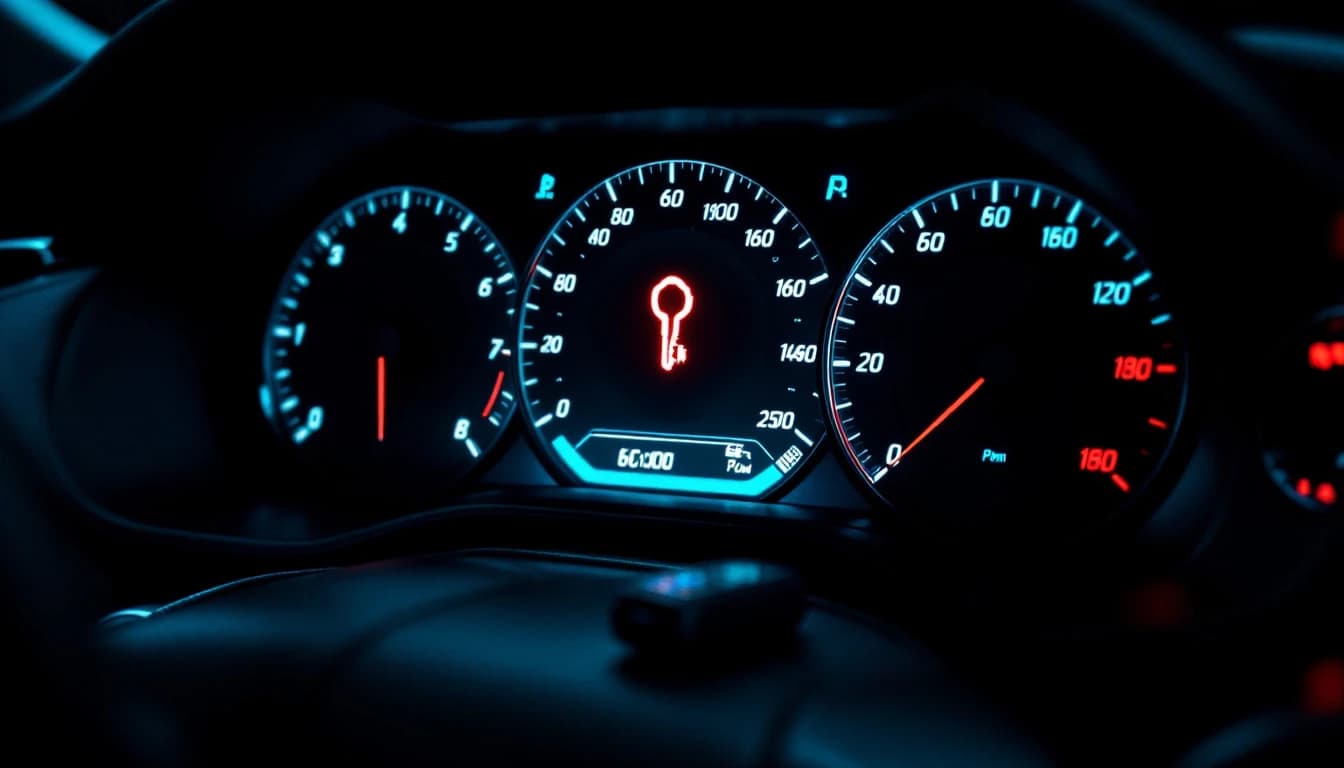
BMW Key Not Detected, No Crank
The failure ladder, and why the order matters
A CAS-era BMW that says key not detected and refuses to crank is walking a known ladder: key recognition, then steering lock release, then start enable — and the fix depends entirely on which rung actually failed. The Car Access System (CAS) sits at the center of all three. It authenticates the key, commands the electric steering lock (ELV) to release, and only then allows the start request through to the starter circuit and tells the engine computer (DME) it is authorized to run.
That chain is why the same three dash complaints — a key symbol, a steering lock warning, a start button that clicks and does nothing — can be caused by a two-dollar fob battery, a worn steering lock motor, a corroded relay path, a failing CAS, or a DME that lost its security handshake. They present almost identically from the driver's seat. Replacing parts in the wrong order on this platform is expensive precisely because the security architecture was designed so that modules cannot be casually swapped: the CAS is cryptographically tied to the VIN, to your keys, and to the DME's Individual Serial Number (ISN).
That design is not BMW being difficult. Electronic immobilizers are one of the most effective anti-theft technologies ever fitted to cars — analyses associated with the Insurance Institute for Highway Safety have linked immobilizer adoption to theft-rate reductions on the order of 40 percent for equipped models, in an era when the National Insurance Crime Bureau still counts United States vehicle thefts in the hundreds of thousands per year and the Federal Bureau of Investigation tracks motor-vehicle theft among the country's most common property crimes. Federal rules under the National Highway Traffic Safety Administration have long required vehicles to prevent normal activation without the key. The CAS is how BMW implemented that mandate in the 2000s — and the E60, E70, and E9x cars that carry it are now old enough that the weak points are well mapped. With the average American vehicle now well past 12 years old, per fleet-age reporting covered by Car and Driver, these cars are squarely in independent-repair territory.
This guide covers that CAS2 / CAS3 / CAS3+ era primarily. If yours is a generation question — which CAS you have and how they differ — our CAS3+ versus CAS4 guide handles it in depth.
Rung one: prove the key before you blame the car
Start with the free tests, because a meaningful share of key-not-detected complaints end here.
The emergency slot test. On most E60, E70, and E9x cars — including comfort-access cars where you normally leave the fob in your pocket — there is a key slot beside the steering column. Push the fob fully into the slot, hold the brake (or clutch), and press start. The slot powers the key's transponder inductively, so a fob with a dead battery can still authenticate through it. If the car starts from the slot but not from your pocket, you have a fob battery or comfort-access antenna problem, not a CAS problem. Change the battery first; it is the cheapest fix in this article.
The second key test. Every diagnosis on this platform should include the other key. If key A fails and key B starts the car, the problem is key A — worn, water-damaged, or desynchronized — and the fix is key work, not module work. Adding or replacing a key against a healthy module is exactly the BMW CAS key programming service, a flat 150-dollar bench job on the CAS with a key. If both keys fail identically, stop buying keys: two keys do not fail on the same day. The fault is in the module chain, and the rest of this ladder applies.
All keys lost is its own topic. If there is no working key at all, the decision tree changes shape entirely — costs, what ships, and what is possible per generation are laid out in our BMW all-keys-lost cost guide.
Rung two: the ELV branch — steering lock fault
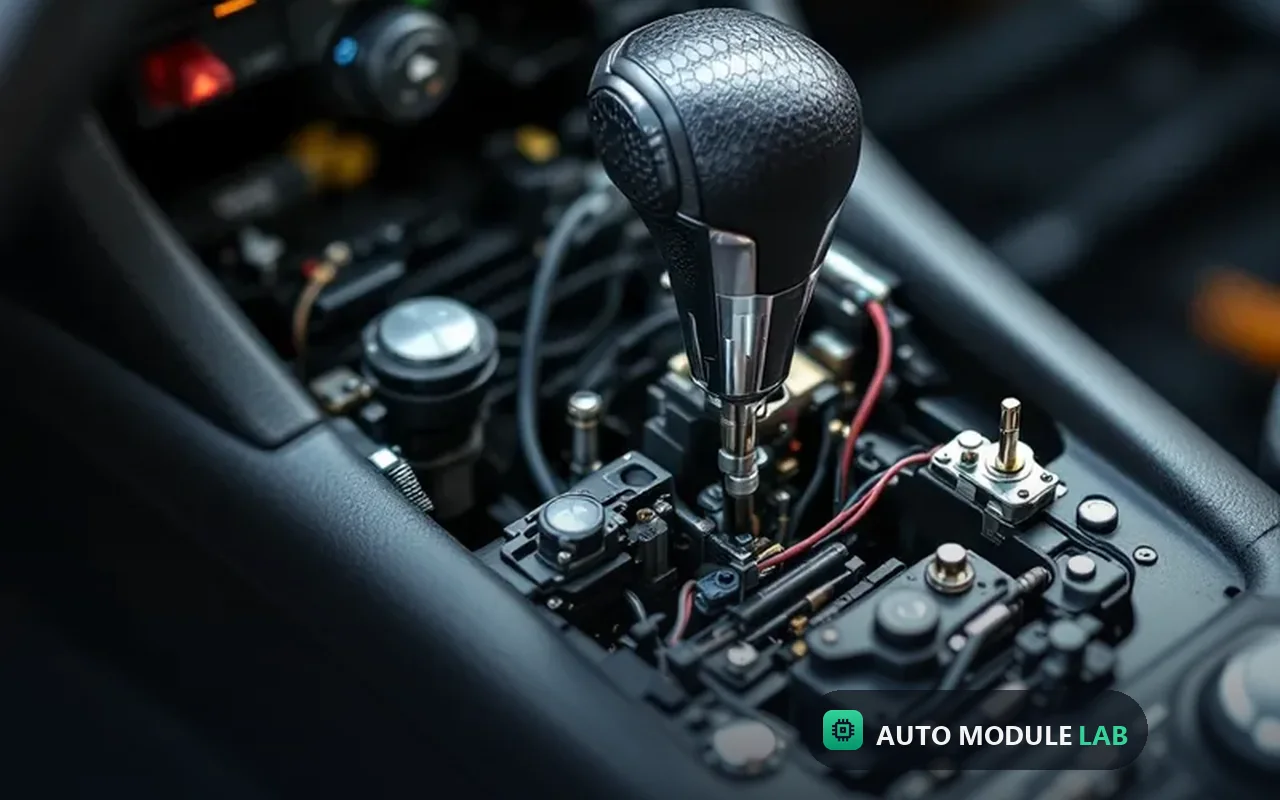
If the cluster shows a steering lock warning — the red steering wheel with a padlock — the ladder has told you where it stopped. The ELV (electric steering lock) on the lower column must physically release before the CAS will allow a start, and on the E9x-family cars it is a famous weak point. The motor and its position sensing wear, the lock hesitates, and the CAS eventually records the failures.
Here is the part that catches even good shops: the CAS keeps a tamper and fault counter against the ELV. Once that counter locks out, fitting a replacement steering lock does not fix the car — the CAS goes on refusing the release because its stored counter still says the lock is compromised. That is why a second-hand ELV so often changes nothing. Clearing the condition means resetting the counter data itself, which is bench work on the security modules: the BMW ELV counter reset service at a flat 250 dollars.
Practical tells for the ELV branch: the steering lock warning appears before or with the no-crank; you may hear the lock motor buzz or click when opening the door or pressing start; the wheel may stay locked or free unexpectedly. If the dash shows a plain key-not-detected message with no steering lock warning, keep climbing the ladder instead.
Rung three: no-crank versus crank-no-start — CAS or DME
This single observation does more diagnostic work than any scan tool menu, so get it exactly right.
No crank: you press start and the starter never spins the engine. The authorization chain upstream of the starter did not complete — key recognition, ELV release, the CAS's start-enable output, or the relay path it drives. This is the CAS side of the wall.
Crank, no start: the starter spins the engine normally, but it never fires. The CAS did its job — it recognized the key, released the lock, and enabled the starter. The failure is downstream: fuel, spark, sensors, or the security handshake between CAS and DME. On this platform the CAS and DME share a secret — the ISN — and if they disagree, the DME cranks forever and never injects. The textbook cause is a replacement DME that still carries its donor car's ISN. Matching a replacement engine computer to your car's CAS is the BMW DME ISN read and match service, 250 dollars flat.
If you are not sure your no-start is even immobilizer-related — plenty are fuel pumps wearing a security costume — our general immobilizer-versus-module no-start diagnosis guide walks that discrimination for any brand. The standardized diagnostics that make any of this readable from the port trace back to the OBD frameworks documented by SAE International; a CAS-era BMW will happily hand a decent scan tool the fault memory of the CAS, DME, and ELV, and those codes should be read and written down before any part is purchased.
The look-alikes: E9x gotchas that mimic a dead CAS
Two cheap failures on E9x-family cars produce a convincing dead-CAS impression and have sent countless good modules to eBay.
The start-relay path in the junction box. The CAS does not switch the starter's heavy current itself; it commands a relay path through the junction box electronics behind the glovebox. A worn relay or corroded junction box connector produces exactly the classic complaint — key recognized, lock releases, press start, silence. Before condemning a CAS on an E9x, the junction box, its relay path, and its fuses deserve ten minutes of attention. A module that authenticates keys and communicates on the bus but "will not start the car" is frequently sitting behind a ten-dollar relay problem.
Water where electronics live. These cars drain rainwater through paths that clog with age — cowl and sunroof drains chief among them — and the overflow finds footwell electronics. Water in the passenger footwell can corrode the junction box and its connectors; water on the driver's side famously kills the footwell module. The tell is history: symptoms that appeared after heavy rain or a windshield replacement, corrosion on connector pins, dampness under the carpet. A water-damaged junction box mimics CAS failure; actual water damage to the CAS itself (it lives up under the column) is rarer but real, and it is a repair-or-clone conversation, not a used-module conversation.
"Half the 'dead CAS' cars towed to me over the years started fine once I cleaned up the junction box or reset an ELV counter. And half of the rest had a used CAS in the glovebox that the owner bought online before calling anyone — a 300-dollar part that can never work as a plug-in on this platform. The order you test things in is the whole game on these cars." — Independent BMW electrical technician, 15+ years on E-chassis platforms (anonymized)
Why a used CAS usually makes it worse
The forum advice to "just get a CAS off eBay" fails for a specific, mechanical reason: the CAS is not a generic part, it is one-third of a married set. It stores your VIN, your key data, and the ISN partnership with your DME, and it cross-checks mileage with the cluster. A donor CAS carries all of those values for a different car. Install it and the best case is a car that still does not start; the worse case is a mismatch tangle — keys that work in no module, a mileage discrepancy flag, and a second module purchase to unwind the first.
The honest paths, in order of preference:
- Your CAS is healthy, a key is the problem: program a key to your module — CAS key programming, 150 dollars.
- Your CAS is failing: repair it, or clone its identity onto a sound donor so the car never knows the difference — the CAS clone and repair service, 250 dollars. The full method is documented in our CAS clone and repair guide.
- Your ELV counter is locked out: reset the counter — 250 dollars, as above.
- Your DME was replaced: read and match the ISN — 250 dollars, as above.
Every one of these is security work, and proof of ownership is required, without exception, before any of it proceeds.
What ships for each outcome
Because the CAS, keys, and DME hold interlocking data, the correct box contents change with the diagnosis. This is the single most useful table on this page:
| Outcome on the ladder | Likely faulty layer | What you ship to the bench | Service and flat price |
|---|---|---|---|
| Starts from the emergency slot | Fob battery / antenna | Nothing — replace the fob battery | No service needed |
| One key dead, other key works | The key itself | CAS module plus the working key | CAS key programming — 150 dollars |
| Steering lock fault, replacement ELV changed nothing | ELV counter locked in CAS | CAS (and ELV where asked at intake) | ELV counter reset — 250 dollars |
| Both keys dead, CAS erratic or damaged | CAS module | CAS alone | CAS clone / repair — 250 dollars |
| Cranks, never fires, after DME replacement | ISN mismatch | CAS plus DME plus a working key | DME ISN read and match — 250 dollars |
When in doubt about box contents, packaging, or anti-static handling, our what-to-ship-by-job-type guide covers every case — sending the right set the first time saves a full shipping round trip, and intake confirms it before anything moves. Shipping itself is handled for you: both labels are purchased automatically at checkout, and a prepaid, pre-addressed inbound label arrives by email; return shipping is the tier you choose at checkout, from 29.95 dollars.
If your BMW is F-chassis: different module, same logic
From roughly 2011 onward BMW began moving away from CAS: larger F-chassis cars ran CAS4 and CAS4+, and the F30-era platforms handed the job to the FEM and later the BDC — a combined body gateway and immobilizer. The diagnosis ladder above still rhymes (key, lock, start enable), but the module, the data layout, and the bench procedures are different, and the emergency start method changes too (fob against a marked spot rather than a physical slot on many cars). If your car has a FEM or BDC, start with our FEM/BDC key programming guide instead — and if the car died mid key-programming session, stop pressing buttons and read that guide's bricked-module section before anything else.
Frequently asked questions
Why does my BMW say key not detected when the key is in my hand? Most often the fob battery is too weak for remote detection, and the car proves it: insert the fob into the emergency key slot beside the column and press start — the slot powers the transponder without a battery. If it starts from the slot, replace the fob battery; if it fails there too with both keys, suspect the CAS chain.
My BMW shows a steering lock fault and will not crank. Is that the CAS? It is the ELV branch of the CAS system. The electric steering lock on E9x-era cars wears out, and the CAS records a fault counter against it — once that counter locks out, even a replacement lock will not clear the no-crank. The fix is a bench reset of the counter data, a flat 250-dollar service, not another used steering lock.
What is the difference between no-crank and crank-no-start on these cars? No-crank means the starter never spins: the CAS side — key recognition, ELV release, start enable, or the relay path — did not complete. Crank-no-start means the CAS finished its job and the failure is downstream, most often fuel, spark, or an ISN mismatch between CAS and DME after an engine-computer swap. This one observation splits the diagnosis in half.
Can I just install a used CAS module from eBay? No — a used CAS is married to its donor car's VIN, keys, DME ISN, and mileage data, so plugged into your car it will not authenticate anything. The workable paths are repairing your CAS, cloning your data onto a donor on the bench, or programming keys to your original module. All of it requires proof of ownership.
What do I ship for BMW CAS key programming? Ship the CAS module and a working key together for key programming — the two are programmed to each other on the bench and returned as a matched set. For CAS repair or cloning the CAS alone is usually enough, and for an ISN match after a DME swap the bench needs CAS, DME, and a key. Intake confirms your exact set before you ship.
Does this guide apply to my 2014 F30? Partially — the logic of the ladder applies, but most F30-era cars use a FEM or BDC rather than a CAS, and those modules have their own procedures and their own failure modes, including a well-known bricking risk during DIY key programming. Start with the FEM/BDC guide linked above so you are working on the module your car actually has.
The bottom line
The CAS-era no-crank is a ladder, and the ladder is the diagnosis: prove the key with the slot test and the second key, take the steering lock warning seriously as its own branch, and let no-crank versus crank-no-start split the CAS side from the DME side before any part is bought. Check the ten-dollar look-alikes — the junction box relay path and water ingress — before condemning a security module, and never buy a used CAS expecting plug-and-play, because the platform was built to refuse exactly that.
Every honest outcome maps to a flat bench price: key programming at 150 dollars, CAS repair or clone at 250, ELV counter reset at 250, and DME ISN read and match at 250 — proof of ownership required for all of it, both shipping labels bought automatically at checkout with the prepaid inbound label emailed to you, and return shipping from 29.95 dollars. If you have walked the ladder and are still unsure which rung failed, text us the year, model, the exact dash messages, and whether it cranks — that is usually enough for us to name the module before you touch a screwdriver.
Ship your module today
Flat-rate pricing, typical 24-hour bench turnaround, return speed your choice at checkout. Most jobs back on your bench within a week.