Classic Mercedes All Keys Lost
"That key is no longer available"
There is a specific moment when a classic Mercedes stops being a used car and starts being an orphan, and it usually happens at a parts counter. The car still drives beautifully — a W140 S-Class built like a bank vault, an SLK roadster with the folding hardtop, an ML that has hauled three generations of dogs, a G-Wagen that will outlive us all. But the key is worn, or lost, or there is only one left, and the dealer's answer has quietly changed from a price to an apology: no longer available.
This is not a Mercedes-specific failure; it is what happens to every manufacturer's security-hardware pipeline two decades on. The average car on U.S. roads is now more than 12.5 years old per S&P Global Mobility, and enthusiast-era cars live far longer than that — Hagerty has built an entire valuation industry on 90s and 2000s cars aging into collectibles. The W140, R129, and G-Wagen are exactly that trajectory. The hardware outlived the support.
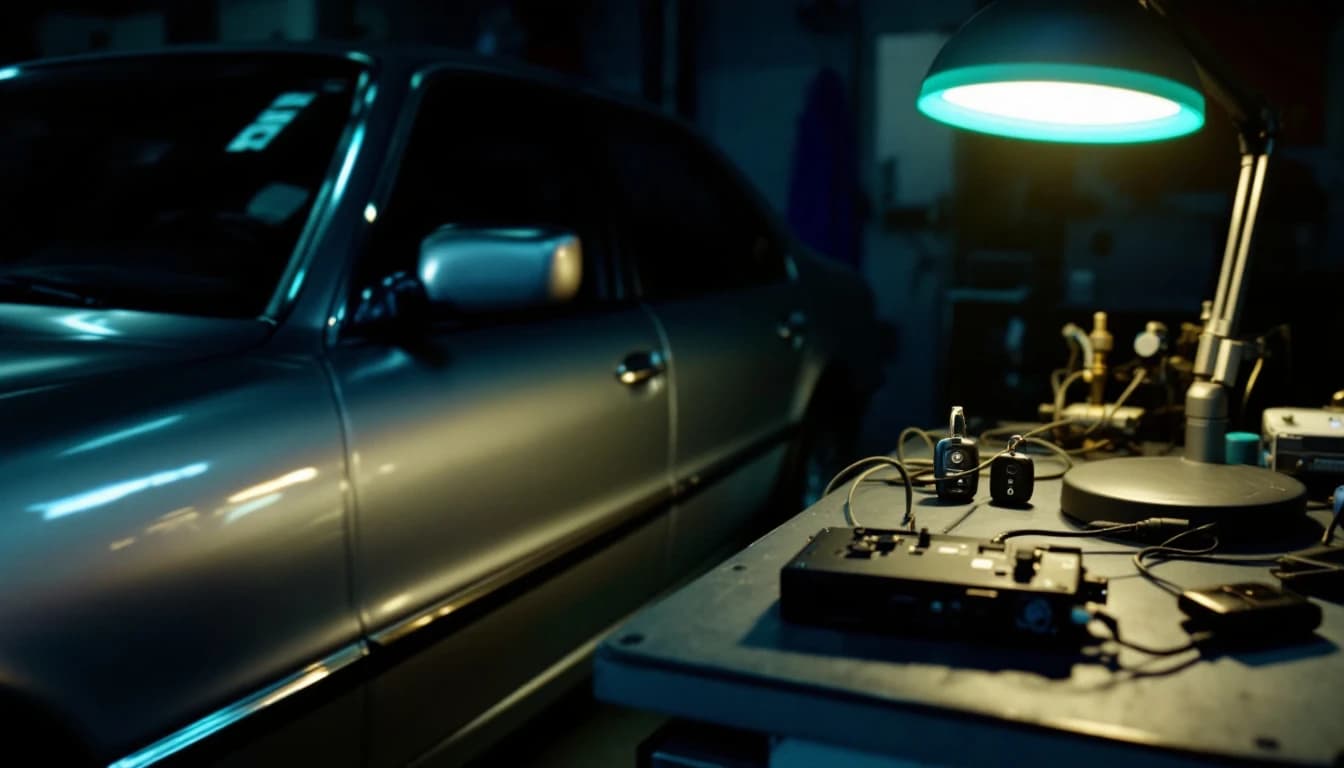
The good news: the dealer was never the real keeper of your car's keys. Your car is. Every key these Mercedes have ever trusted is recorded in one module riding around inside the vehicle, and that module can be read on a bench. This guide explains the AAM and DAS systems, which cars have which, what the $250 valet key, $375 remote key, and $299 module repair each solve, and the one trick every owner of these cars should know before their last key dies.
DAS and the AAM: where these Mercedes actually keep their keys
Mercedes calls its immobilizer architecture DAS — the Drive Authorization System (FBS in factory literature). It arrived in the mid-1990s, in the same industry wave of electronic immobilization that the Insurance Institute for Highway Safety credits with collapsing theft rates wherever it spread — a trend visible from the law-enforcement side in the FBI's motor-vehicle-theft statistics and from the insurance side in NICB data. On every start, the key answers a cryptographic challenge before the engine is authorized. No valid answer, no start — forever, patiently, regardless of how legitimate the owner standing next to the car may be.
Where that authorization logic lives depends on the car:
- W163 ML-Class (ML320/ML430/ML500/ML55, 1998–2005): the AAM — the All Activity Module. True to its name, it runs central locking, the alarm, interior electrics, and drive authorization. It is the ML's key brain, and its failures produce the most famous symptom in the W163 world: cranks strong, never fires, key suddenly "not recognized."
- SLK R170 (1996–2004), SL R129 (Jun 1997–2001), S-Class W140 (Jun 1997–1999), G-Class W461 (Jun 1997–2001), plus the Euro-market A-Class W168 and Vaneo W414: the DAS/SKREEM immobilizer unit. Same architecture family the Chrysler Crossfire inherited, since the Crossfire is an R170 underneath.
Two facts follow from this design, and they drive everything else in this guide:
- The module is the single source of truth. No dealer database can conjure a key for these cars anymore — but none is needed. The module's own EEPROM memory holds the key records, and reading it on the bench allows a fresh key to be generated that the module already trusts.
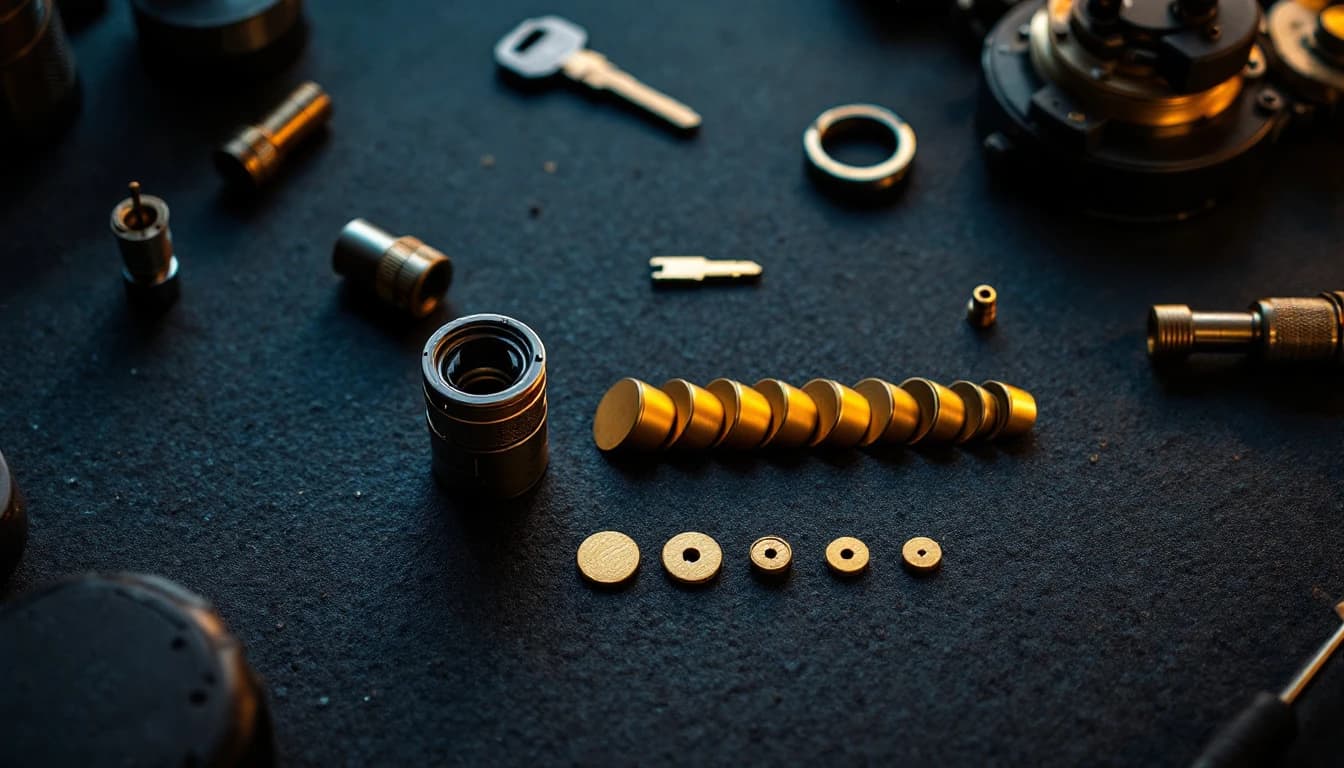
- There is no key code to cut a blade from. On cars this age the mechanical cut exists only in the locks themselves. All-keys-lost jobs therefore ship the driver's door lock too; it is decoded wafer-by-wafer and the new blade is cut to match.
The three services, and which problem each one solves
Valet key — $250. A start-only transponder key with a cut blade. It starts the engine and works the door; it has no remote buttons. This is the budget path back to a running car and the classic all-keys-lost rescue: ship the AAM (ML) or DAS unit (classics) plus the driver's door lock, get back a working key and your reinstall-ready modules.
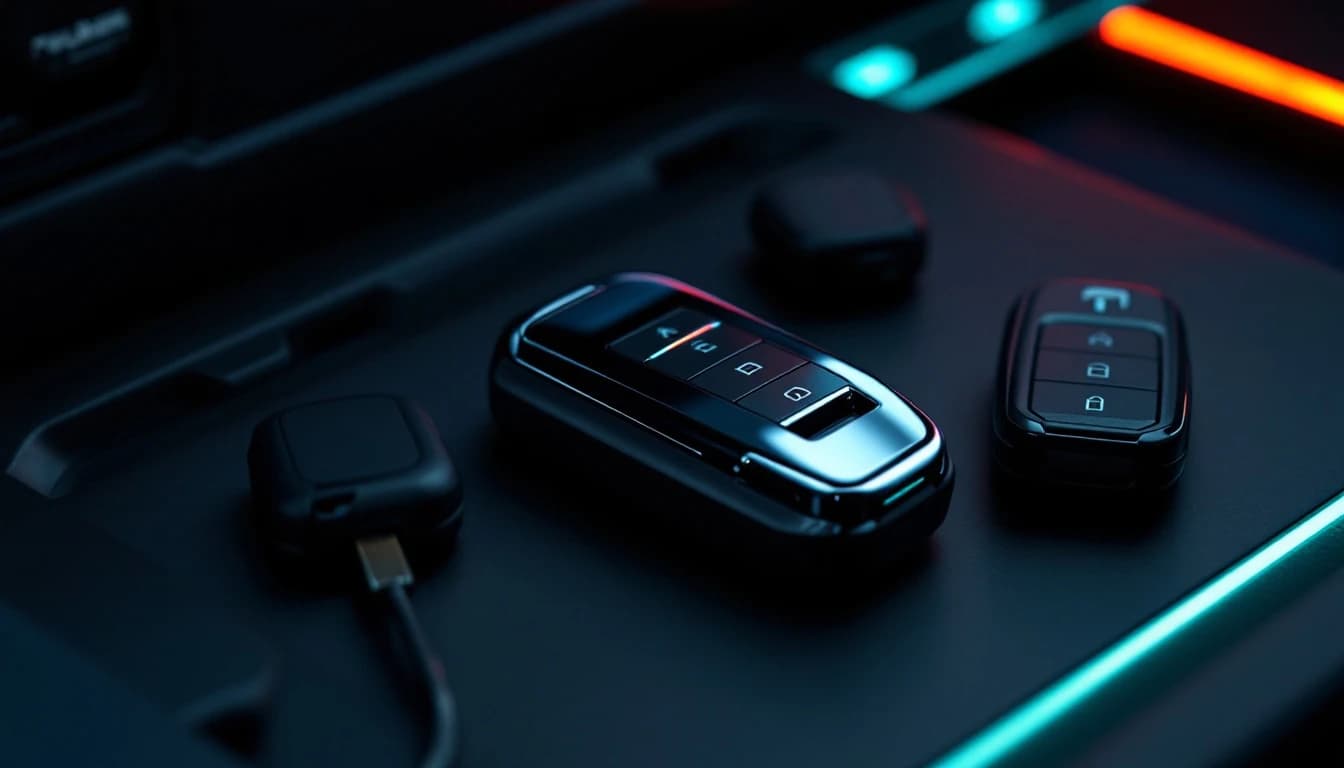
Full remote key — $375. Transponder start plus working remote lock/unlock — the complete factory experience, for cars whose original remotes the dealer network abandoned years ago. Same shipment for all-keys-lost; but note the add-a-key shortcut below, because this is where it shines.
AAM/DAS repair — $299. For when the module is the casualty, not the keys. The signature case is the W163 ML no-start: strong crank, no fire, no fuel/spark fault, often with central-locking or interior-electric quirks alongside — because the AAM owns those circuits too. The module is bench-tested, the immobilizer section repaired, key data restored or resynchronized, and it returns plug-and-play with your existing keys still working. Repairing your module beats replacing it for a structural reason: a used replacement module arrives married to a stranger's keys, turning one problem into two. Your module, repaired, keeps your car's identity intact.
Sorting rule: lost or worn keys → key service. Good key, dead car → repair service. Text the VIN and symptoms if the line is blurry; routing you correctly costs nothing and mis-orders help nobody.
The one-working-key trick every owner should know
Here is the best-kept secret of this generation, straight from how the bench tooling actually works: if you still have one working remote key, a new remote key can be built from it directly — no module removal at all. The working key goes in a padded envelope; the car never gets taken apart; the new key comes back programmed alongside your original.
The moment the last key dies, the same job requires pulling the immobilizer module and the door lock, shipping a bigger box, and having the car apart for the round trip. Same $375 price — several times the hassle.
The conclusion writes itself, and it is the single most valuable sentence in this article: if your classic Mercedes is down to one key, buy the spare now. Not after the winter it spends in storage. Now, while the job is an envelope.
A longtime independent Mercedes specialist put the general rule this way:
"I keep a list of cars I call 'one key from a flatbed' — every W163 and R170 that rolls through with a single worn remote on a shoestring. The owners all say the same thing: the dealer wanted a fortune years ago, so they never got a spare, and now the dealer says unavailable. What they don't know is that the one surviving key is the whole job. Mail that key while it still works and you've bought insurance for a few hundred bucks. Wait until it dies and you're taking dash panels off." — Independent Mercedes-Benz service specialist, 25+ years, DFW metroplex (anonymized)
Why this beats every alternative the internet will suggest
Owners of orphaned Mercedes get offered a lot of bad ideas. Against each of them, the bench path holds up simply:
- "Find a used AAM/EIS on eBay and swap it." It arrives married to the donor car's keys and starts nothing — the same identity problem covered in our VIN-locked module explainer. Worse, on these cars a module swap without matching keys can strand the car entirely. Used hardware is only useful after bench work marries it to your car.
- "Bypass the immobilizer." Setting aside that defeating anti-theft equipment is somewhere between unwise and unlawful depending on execution — the NHTSA's anti-theft and immobilizer guidance exists because these systems demonstrably protect the vehicle — a bypassed DAS car fails in new and creative ways and becomes worthless to insure or sell. The security system is an asset. Keep it.
- "Any locksmith can do it." Many excellent locksmiths — the ALOA trains thousands — will tell you themselves that DAS-era Mercedes EEPROM work belongs on a bench, not a driveway. The module holds the only copy of your car's key data; the professional move is imaging its memory before writing anything, which is precisely what a bench workflow does and a parking-lot session cannot.
- "Tow it to the dealer anyway." For the FBS3 SmartKey era (roughly 2000s-onward passenger cars with the chrome fob) the dealer path still exists and our EIS key service covers the bench side. For the AAM/DAS generation, the honest dealer answer is the one you already got: unavailable.
What it costs in context
Run the numbers the way an owner actually experiences them. A W163 ML that will not start is a $150–200 tow before anyone has diagnosed anything. A dealer visit that ends in "unavailable" still bills diagnostic time. A used AAM that can never start your car is $80–150 burned. Meanwhile the Bureau of Labor Statistics prices locksmith and technician labor at rates that make multi-visit experiments expensive fast.
Against that: $250 flat for a valet key that ends an all-keys-lost, $375 flat for the full remote experience, $299 flat to repair the module the whole car depends on — each with a typical 24-hour bench turnaround, each including the all-keys-lost case, each returning your original hardware. On cars whose values Hagerty tracks climbing steadily into collector territory, the bench fix is not the cheap option. It is the correct option that happens to also be the cheap one.
What to ship, step by step
- Text the lab your VIN and situation first. Which module your car uses (AAM vs DAS unit) and where it lives varies by chassis; one message gets you exact pull instructions before you touch a trim panel. Have a working key and want a spare remote? You will be told to ship just the key.
- Order online — valet $250, remote $375, or repair $299 — choosing return speed at checkout (Standard $29.95, UPS 2-Day $54.95, overnight $94.95).
- Pack per your case. All-keys-lost: the immobilizer module + driver's door lock + any dead keys. Add-a-key: your working remote. Repair: the module + one key so the repaired pairing can be verified on the bench. Always include the printed order confirmation. USPS: PO Box 120241, Arlington TX 76012. UPS/FedEx: 1009 Oakwood Ln # 120241, Arlington TX 76012.
- typical 24-hour bench turnaround. Memory imaged before anything is written, key generated and tested against your module, blade cut from the lock decode, remotes verified, everything shipped back together.
- Reinstall and drive. No in-car pairing exists on these platforms — the key returns already trusted by your module.
Which key era is in your hand? A field guide
Because the sorting question — DAS-era or later EIS-era — decides which service you need, the fastest test is the key itself:
- Early metal-blade keys with a separate or integrated button remote, on cars from the mid-90s through the early 2000s: DAS territory, this article's world.
- The chrome "SmartKey" fob with the pull-out valet blade, standard as the 2000s progressed: EIS/FBS3 territory — the EIS key programming service instead.
- The W163 ML muddies this on later years, which is why the AAM — not the key style — is the deciding organ for that truck. When the ML misbehaves, it is an AAM conversation regardless of what the fob looks like.
Text a photo of your key alongside the VIN and the routing takes one reply. It is the single most useful thing an unsure owner can send.
When the module cannot be saved
Honesty requires covering the unhappy branch: a minority of AAM and DAS units arrive genuinely dead — water-damaged, burnt supply rails, corrupted beyond recovery. The repair service leads with assessment for exactly this reason, and you are never billed for a repair that cannot be delivered.
The path forward from an unrecoverable module is a donor unit prepared on the bench and married to your car — the same class of work, built through the valet key service, with new keys generated against the donor so the car and its new brain agree from the first turn. What separates this from the notorious eBay-swap failure is precisely the bench step: raw used modules carry a stranger's keys and start nothing, while a bench-married donor is indistinguishable from original equipment by the time it ships back. Either way the car survives; the only question is whether its original module does.
Frequently asked questions
Which cars exactly does this cover?
The ML W163 (ML320/ML430/ML500/ML55 AMG, 1998–2005) via its AAM; and the DAS classics — SLK R170 (1996–2004, all types), SL R129 (June 1997–2001), S-Class W140 (June 1997–1999), G-Class W461 (June 1997–2001) — plus the European-market A-Class W168 and Vaneo W414 for grey imports. The Crossfire and Sprinter share this architecture but have their own dedicated services — see the Sprinter lost key replacement guide for the van side.
My ML cranks fine with its normal key and just will not fire. Key or repair?
Repair — that is the textbook AAM failure, especially if door locks or interior electrics have been glitchy too. A new key cannot fix a failed module. The $299 repair tests and fixes your module with your keys preserved.
Why does all-keys-lost need my door lock?
The blade. No key code survives for cars this age — the mechanical cut exists only in your locks, so the driver's door lock is decoded on the bench and the new blade cut to match. If you still have any working key, that key's blade can be copied instead and the lock stays in the car.
Is all-keys-lost priced extra?
No — $250 valet / $375 remote, flat, whether you are adding a spare or starting from zero. Losing every key is the normal case this service exists for.
Will my existing keys still work after a new one is added?
Yes. New keys are added against the module's own records; nothing existing is erased. After a module repair, likewise — preserving your keys is the point of repairing rather than replacing.
My car is a 2004 SLK but has the chrome flip SmartKey. Which service?
The chrome SmartKey means the later FBS3/EIS architecture — see the Mercedes EIS key programming service instead. The quickest sorting test is the key itself: DAS-era cars use the earlier remote styles; the chrome fob generation is EIS territory. Text a photo of your key with the VIN and you will be routed in one reply.
Is generating a key like this legal?
Yes — making keys for your own vehicle through its own module is standard repair practice. Proof of ownership rides along with every immobilizer-related order, the same requirement any reputable ALOA locksmith applies, and the factory immobilizer stays fully active. Nothing here weakens the protection; it restores your access to it.
The bottom line
The dealer's "no longer available" is the end of a supply chain, not the end of your car. Every key your classic Mercedes has ever trusted lives in a module you can hold in one hand — the AAM behind the ML's dash, the DAS unit in the classics — and a bench that reads it can hand you back a $250 valet key, a $375 full remote, or a $299 repair that saves the module itself. All-keys-lost included. Keys preserved. Typically 24 hours on the bench.
And if you take exactly one thing from this article: the owner with one working key left has the easiest, cheapest version of this job available — today. Mail the key before it becomes a module-and-door-lock job.
Ready? Start with the valet key, the full remote key, or the AAM/DAS repair — or text the lab your VIN and a photo of what is left on your keyring, and a technician will point you at the right one.
Ship your module today
Flat-rate pricing, typical 24-hour bench turnaround, return speed your choice at checkout. Most jobs back on your bench within a week.