Can You Clone a Dead ECU? Module Data Recovery
The short answer, before the ladder
A module that no longer communicates is not the same thing as a module whose data is gone - and in bench practice, the data survives far more often than the module does. The question behind half the clone orders that reach this lab is some version of "my ECU is dead, is the data lost?" The answer is usually no, because of how these boards fail.
An engine or transmission controller is several distinct circuits sharing one housing: a power supply section, a microprocessor, communication transceivers, output driver stages that fire injectors and coils and solenoids, and one or more non-volatile memory devices - EEPROM or flash - holding the calibration, the VIN, the immobilizer secret, and the adaptation history. The parts that do the hot, high-current work are the parts that die: regulators, drivers, transceivers. The memory just sits there. It draws almost nothing, switches nothing, and on most boards it will still read perfectly years after the rest of the module quit.
That asymmetry is the entire basis of dead-module data recovery. If the memory reads, its contents can be moved to a healthy donor board, and the vehicle starts and runs on its original identity - existing keys included. If you want the underlying mechanics of what that identity is and where it physically lives, our explainer on how ECU cloning works at the EEPROM and immobilizer level covers the data side in depth. This article owns the other half: what a bench can pull out of a module that will not talk, and how.
Step one: is it actually dead, or just not talking?
Before anything ships anywhere, separate "dead module" from "unreachable module" - because a healthy computer behind a broken gateway, a blown fuse, or a chewed harness looks identical on a scan tool. "No communication with ECM" on a code reader is a symptom of the network path, not a verdict on the module. Quick discriminators, in the order a competent diagnosis runs them:
- Is one module missing, or many? If the scan tool has lost the ECM, the ABS, the cluster, and the body module all at once, suspect the bus or the gateway, not four simultaneous failures. One missing module with everything else answering is a much stronger case against the module itself.
- Power and ground at the connector. A module with a dead main feed - blown fuse, corroded splice, rodent-opened wire - is electrically absent and scans exactly like a failed unit. Verify battery voltage on the supply pins and clean continuity on the grounds before condemning anything.
- Does the car show secondary signs of life from the module? A tachometer that twitches during cranking, injectors that click, a main relay that pulls in - each one is evidence the processor is alive even if the diagnostic link is not.
- Did communication die with an event, or gradually? A module that vanished the moment the battery was jumped backwards, the moment the pressure washer hit the engine bay, or the moment a flash update failed tells you what kind of failure to expect on the bench. Intermittent, heat-dependent dropout points at cracked solder or a failing supply instead.
Since the 1996 model year, when the Environmental Protection Agency requirement for standardized OBD-II diagnostics took effect for light vehicles sold in the United States, every car on the road has had a common diagnostic doorway - which is precisely why "no communication" at that doorway carries so little information by itself. The network standards defined through SAE International give a scan tool one path in; the bench's advantage is that it does not depend on that path.
If you are still at the stage of deciding which box is actually at fault, our pre-shipping checklist on how to know which module failed before you ship it exists to keep the wrong part out of the mail.
The bench triage ladder
When a suspect module arrives, the recovery attempt runs as an escalation. Each rung is less invasive than the next, and the unit only moves down the ladder when the rung above fails.
- Regulated bench power-up and current signature. The module goes on a bench harness with a current-limited supply. What it draws is the first diagnosis: zero draw suggests an open supply path inside; a hard short pinned at the limit means a failed regulator or a burned board; a normal quiescent draw means the supply section survived and the odds just improved.
- Normal-protocol communication attempt. The bench speaks to the module over its diagnostic protocol exactly as a scan tool would - but with clean power, perfect grounds, and no vehicle network in the way. A meaningful share of "dead in the car" modules answer immediately on the bench, which converts the job from data recovery back to ordinary diagnosis: the module was never dead, and the car's wiring or gateway is the patient. This is exactly what a bench evaluation at $150 per bench hour is for when the failure is unknown.
- Service-mode and boot-mode access. If the module powers but will not answer normally, the next rung goes underneath the operating software. Most automotive microprocessors expose a low-level access mode - boot mode, service mode, or a debug interface - reached by specific pins on the board rather than the vehicle connector. From there the memory contents can frequently be read out even when the module's own firmware is corrupted or the communication transceiver is destroyed. A controller that bricked mid-flash-update is the textbook case: the programming that made it "dead" never touched the identity data, and a boot-mode read recovers it cleanly.
- In-circuit memory read. If the processor itself will not cooperate, the memory device can often be read directly on the board through its own pins, with the processor held quiet.
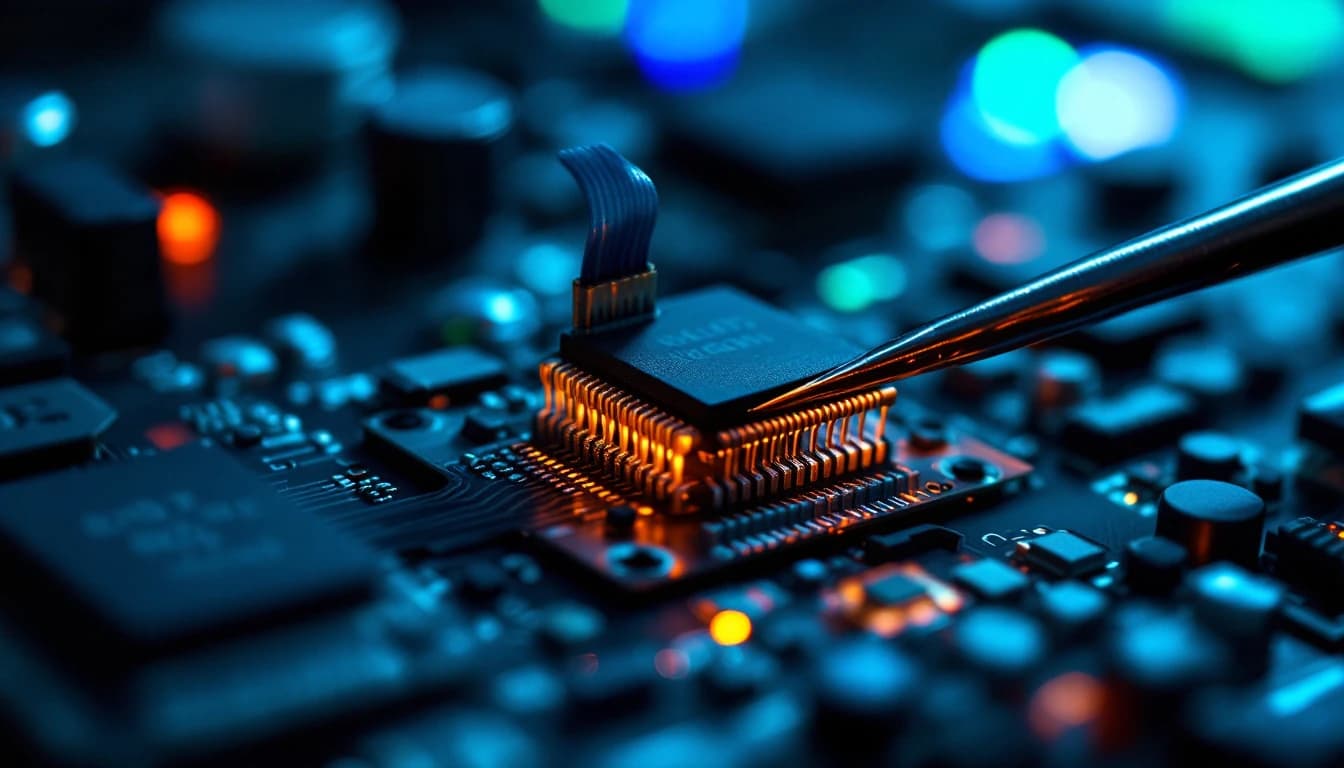
- Chip-off recovery. The last rung: the EEPROM or flash device is desoldered from the board with hot air, read in a programmer socket, and the contents verified. This is the rung that rescues fire-singed boards, water-damaged boards with dead processors, and units where previous repair attempts destroyed everything except the memory itself. It is routine bench work, not heroics - but it is one-way, so it comes last.
Whatever rung produces a clean read, the result is the same asset: an archive of the module's identity and calibration, safe on disk before anything else is attempted. The archive-first habit matters because recovery attempts on marginal hardware can be one-shot.
The most common "dead" module: power section down, memory fine
If there is one profile to remember, it is this: a shorted supply or a burned driver stage kills the module's ability to run, while the EEPROM two centimeters away holds every byte it ever held. Reverse-polarity jump starts, load dumps from failing alternators, coolant and rainwater intrusion, and plain component aging all concentrate their damage in the power path. The memory device is electrically remote from all of it.
This profile is why the standard outcome for a dead controller is a clone to a donor: recover the data from the original, buy a used module with the matching part number, and write the original's identity onto it. The car cannot tell the difference; the keys never know anything happened. The economics are hard to argue with - dealer-new controllers commonly run high hundreds to over a thousand dollars plus programming, while a used unit plus a flat $250 bench clone lands at a fraction of that. On an aging vehicle whose whole used-market value, per valuation data of the kind tracked by J.D. Power, may itself be only a few thousand dollars, that difference is frequently the difference between fixing the car and giving up on it. And a bare used module without the clone step generally will not run the car at all, for reasons our companion piece on why plug-and-play used ECU swaps fail explains at length: the donor arrives married to its previous vehicle, and matching part numbers transfer nothing about identity.
The platform families we run this recovery-and-clone sequence on daily are the ones with dedicated flat-rate services: Ford PCM cloning and VIN transfer at $250, GM E38 / E67 / E92 ECM cloning at $250, Honda and Acura ECU cloning at $250, and Mercedes ME9.7 / MED17 ECU cloning at $250. Platforms not on the published list are quoted case-by-case after bench evaluation - which is the honest answer, because recoverability on an unlisted platform is established on the bench, not promised in advance.
"People hear 'dead ECU' and assume the car's identity died with it. Nine times out of ten the thing that actually failed is a two-dollar regulator or a driver transistor, and the eight-pin EEPROM next to it reads on the first try. The jobs that break my heart are the ones where somebody threw the dead original away and kept only the used replacement - they discarded the one part that still held everything." — Independent ECU repair technician, 15+ years of board-level automotive electronics (anonymized)
That last point deserves its own sentence: never discard a dead module before the data question is settled. The dead original is not scrap; it is the vault.
Locked processors and where the security data hides
Some recoveries are harder not because the hardware is more damaged but because the platform protects its data more aggressively. Modern controllers increasingly store the immobilizer secret inside the microprocessor itself rather than in a separate, socketable EEPROM - and processors can be read-protected.
The workable paths, platform by platform, look like this:
- Secured but documented platforms. Many widely-serviced controller families have well-established bench procedures for reading protected data through service mode. Slower, more careful, still routine.
- Platforms where the counterpart holds a copy. Vehicle security is a handshake, which means the secret exists on both ends. When the engine controller is unrecoverable, the data can sometimes be reconstructed from the other participant - the cluster, the body module, or the immobilizer box. BMW is the canonical example: the DME and the CAS/FEM module share the ISN secret, and an ISN read and match at $250 aligns a replacement DME to the car when the original's data cannot come out of the original.
- Late encrypted platforms. The newest generations of controllers use hardware security modules and manufacturer-server authorization by design. On some of those, no independent bench - ours or anyone's - recovers the data, and the honest answer is that the job belongs on a factory-authorized path. We say so at intake, before you spend on shipping.
The industry direction explains the tightening. The National Highway Traffic Safety Administration has documented the steady climb in vehicle computerization, with a modern mainstream vehicle commonly carrying well over 50 networked control units, and industry coverage in Car and Driver has put electronics and software at a large and rising share of new-vehicle value - by some estimates approaching 40 percent. Meanwhile outlets like MotorTrend have chronicled the growth of vehicle software into systems measured in the tens of millions of lines of code. More computers holding more valuable data means more protection around that data. The bench keeps up where the platform allows it, and tells you plainly where it does not.
What survives what: failure mode versus recoverability
| Failure mode | Data outlook | Typical recovery rung | Usual outcome |
|---|---|---|---|
| No-comm in car, answers on bench | Data never at risk | Rung 2 - normal read | Module is fine; fix the vehicle wiring or gateway |
| Failed flash update / bricked firmware | Very good - identity data untouched | Rung 3 - boot mode | Restore firmware or clone to donor, original keys kept |
| Power or driver stage burned | Very good - memory unpowered and intact | Rung 3 or 4 | Clone to donor at flat bench rate |
| Water intrusion, corrosion spreading | Good if caught early, degrades with time | Rung 4 or 5 - chip-off | Clone to donor; act before corrosion reaches the memory |
| Fire or severe overheat | Case-by-case - depends what the heat reached | Rung 5 - chip-off | Recoverable surprisingly often; silicon tolerates more than plastic looks like it did |
| Processor physically destroyed, secret inside MCU | Narrow - depends on platform | Counterpart-module path | Reconstruct from cluster / CAS / immobilizer counterpart where the platform allows |
| Memory die itself destroyed | Not recoverable | None | Replacement plus new-setup path, or immobilizer-service path with proof of ownership |
Two practical notes on that table. Water-damaged modules are a race: corrosion keeps eating traces and pads after the car has dried out, so a wet module that reads today may not read next season - ship it sooner rather than later, and do not power it in the car "to check" repeatedly, because each powered minute on a wet board does new damage. And fire-adjacent modules deserve an attempt before they are written off; memory devices routinely survive heat that destroyed every connector on the housing.
What this costs, in plain numbers
- Known platform, straightforward clone (dead original plus your donor): flat $250 on the published Ford, GM, Honda/Acura, and Mercedes services linked above. The recovery read is part of the job, not an extra.
- BMW DME replacement needing security alignment: ISN read and match at $250.
- Unknown failure, unlisted platform, or "just tell me if it is dead": bench evaluation at $150 per bench hour, with a written finding of what tested functional, what did not, and what the recovery path costs before you commit to it.
- Not recoverable: you are told so, with what we found. We do not charge flat-rate clone prices for data we could not deliver.
Where the module involved is a security participant - and an engine controller holding an immobilizer secret is one - proof of ownership is required, without exception. For the decision logic between repairing the original, cloning to a donor, and buying new outright, the PCM repair versus clone versus replacement decision guide walks the full tree.
Shipping a dead module - and its donor - the right way
The mail-in workflow for a recovery job has one rule the ordinary clone job does not: send the dead original and the donor together whenever you already have both. The recovery read and the donor write are one bench session when the parts travel as a pair, and two round-trips when they do not.
- Text the lab first with the VIN, year, make, model, engine, the module part number off the label, what the module did when it failed, and any history - jump start, water event, failed update, previous repair attempt. That conversation establishes the likely rung on the ladder and whether your platform is flat-rate or evaluation-first.
- Provide proof of ownership for anything security-linked.
- Pack both units in anti-static bags inside a padded box. No loose rattling, no foam peanuts inside the case openings. Both shipping labels are purchased automatically at checkout - a prepaid, pre-addressed inbound label arrives by email, and return shipping is the tier you chose, from $29.95. The full packing procedure is in our module removal, packaging, and shipping guide.
- Bench triage, archive, then work. The ladder runs, the first clean read is archived before anything else happens, and the agreed job proceeds on the bench where a marginal battery or a voltage sag cannot interrupt a write the way it can in a car.
- Verification and return. The donor is bench-verified as carrying the recovered identity before anything ships back, with tracking.
Frequently asked questions
Can a dead ECU really be cloned? Yes, in the majority of real-world failures - because the circuits that kill a module (regulators, driver stages, transceivers) are physically separate from the EEPROM or flash memory that holds the VIN, immobilizer secret, and calibration. A bench reads that memory through boot mode, in-circuit access, or chip-off removal and writes it to a healthy donor, so the car runs on its original identity with its original keys.
My scan tool says "no communication with ECM." Does that mean the ECU is dead? Not by itself - no-communication is a symptom of the network path, and a healthy module behind a blown fuse, a chewed harness, or a failed gateway scans exactly like a dead one. Check whether other modules also dropped off, verify power and ground at the connector, and look for signs of life like a twitching tach before condemning the unit; a meaningful share of "dead" modules answer immediately on a bench with clean power.
What data can be recovered from a dead engine computer? Everything the module stored, if the memory device survives: the VIN, the immobilizer security data that lets your existing keys work, the factory calibration, and the learned adaptations. Recovery gets the entire memory image, not selected fields - which is why the standard outcome is a full clone onto a donor rather than a partial reconstruction.
Should I throw away my dead ECU after buying a used replacement? No - keep the dead original until the data question is settled, because it is the only part that holds your car's identity. A used replacement without that data generally will not start the vehicle at all, since it arrives married to its previous car; the dead original plus a $250 bench clone is what makes the cheap used module work.
Can data be recovered from a water-damaged or fire-damaged module? Often, yes - memory chips regularly survive water and heat that destroyed the rest of the board, and chip-off reading recovers them after the surrounding electronics are beyond saving. Water damage is time-sensitive because corrosion keeps spreading after the event, so ship a wet module promptly and stop powering it in the car; every powered minute on a wet board does fresh damage.
What if the security data is stored inside the processor and the processor is destroyed? The handshake design means the secret usually exists on both ends, so it can sometimes be reconstructed from the counterpart module - the cluster, body module, or immobilizer unit - depending on platform. BMW is the clear example, where the ISN shared between DME and CAS/FEM lets a bench align a replacement DME for $250 when the original is unrecoverable; on late encrypted platforms with no counterpart path, the honest answer is a factory-authorized route, and we say so before you ship.
How much does dead-module data recovery cost? On published platforms the recovery read is built into the flat $250 clone price - Ford, GM E38/E67/E92, Honda/Acura, and Mercedes ME9.7/MED17 services all include it. Unknown failures and unlisted platforms start with a $150-per-hour bench evaluation that produces a written finding first, and if the data proves unrecoverable you are told exactly that rather than being charged for a clone that never happened.
The bottom line
"Dead" is a statement about a module's ability to run a car, not about the survival of its data - and the two come apart constantly, because the hot, hard-working circuits that fail are not the quiet memory that holds the identity. The bench sequence is unglamorous and reliable: prove the module is actually dead rather than unreachable, try the front door, drop to boot mode, read the chip in circuit, and lift it as the last resort. Archive first, then clone to a donor, and the car starts on the keys already in your pocket.
The practical rules fit in four lines. Never discard a dead module before its data is recovered. Never expect a bare used module to run your car - that is what cloning is for. Ship water-damaged units promptly, because corrosion does not wait. And when you do not know what failed, buy the $150 written answer from a bench evaluation before you buy anything else. If you are holding a controller that will not talk, text the lab the VIN and the part-number label - we will tell you which rung of the ladder your module is standing on before you spend a dollar on parts.
Ship your module today
Flat-rate pricing, typical 24-hour bench turnaround, return speed your choice at checkout. Most jobs back on your bench within a week.