Jeep Grand Cherokee WK2 ABS Module: C2200 Repair
Who this is for
- Your Jeep Grand Cherokee WK2 (2014-2016) has the ABS, traction-control and ESP/stability lights on together, often with a Service Electronic Stability Control message
- A scan tool pulled C2200 and a shop told you the ABS unit needs replacing
- You got a replacement quote near $800 to $870 and want to know whether a repair is possible instead
- You run a shop or wrench on your own Jeep and want the straight version: codes, new-part cost, repair cost, warranty, and process
If you are not yet sure the module is the problem, start with the ABS and traction-light symptom guide. On a vehicle this common, the single most expensive mistake is buying a module before proving the module is actually what failed.
The warning-light cluster on a WK2 Grand Cherokee
The failure almost always shows up the same way: you start the Jeep, drive a short distance, and after about fifty feet the ABS light, the traction-control light and the ESP/stability light all come on at once - frequently alongside the brake warning and a "Service Electronic Stability Control" message in the cluster. The systems behind those lights switch off. You keep normal hydraulic braking - the pedal is fine - but anti-lock, stability control and traction assistance are gone.
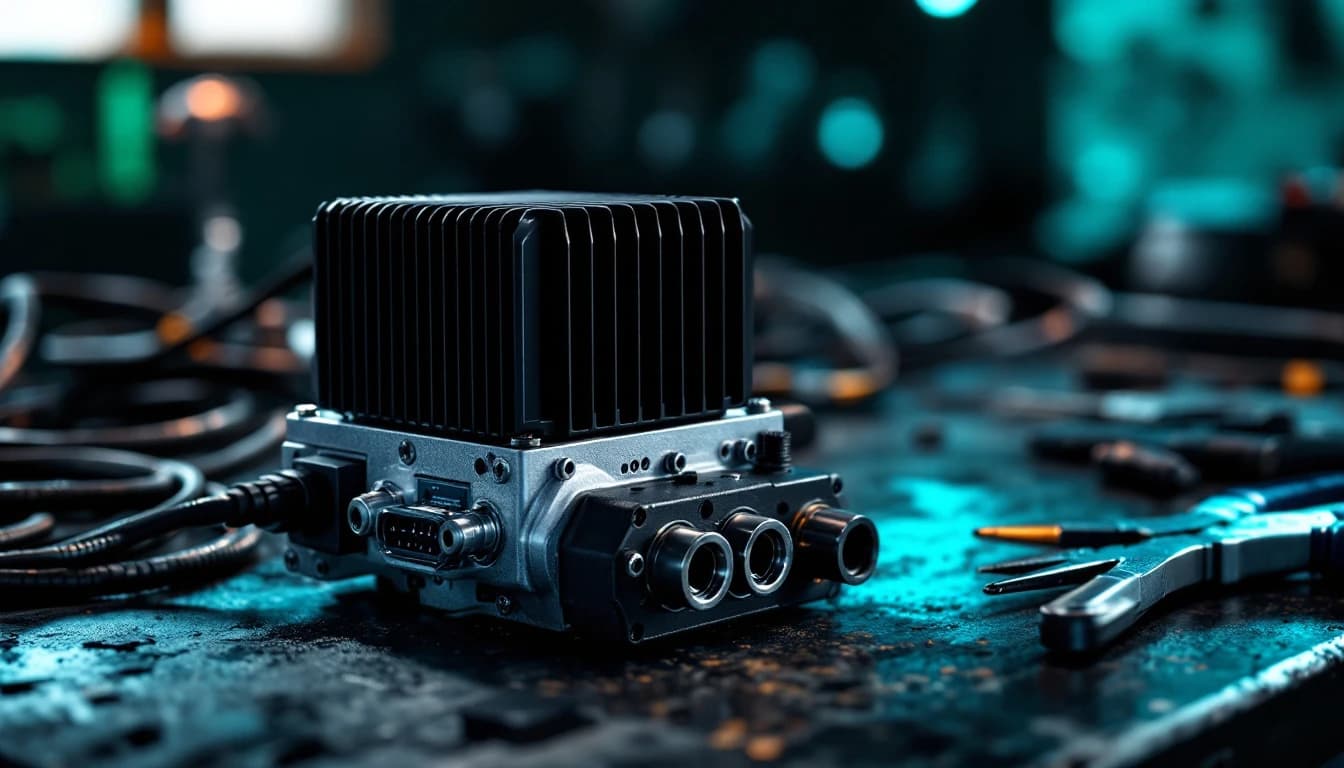
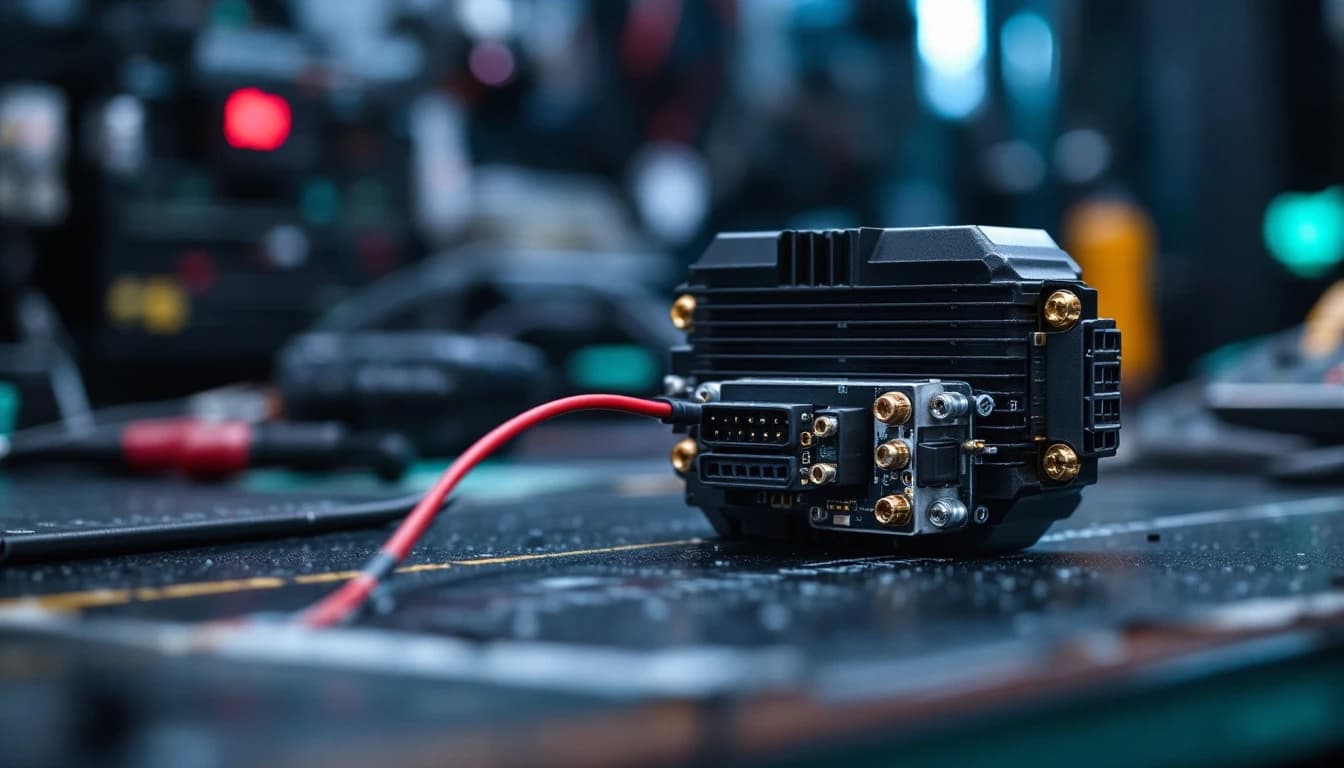
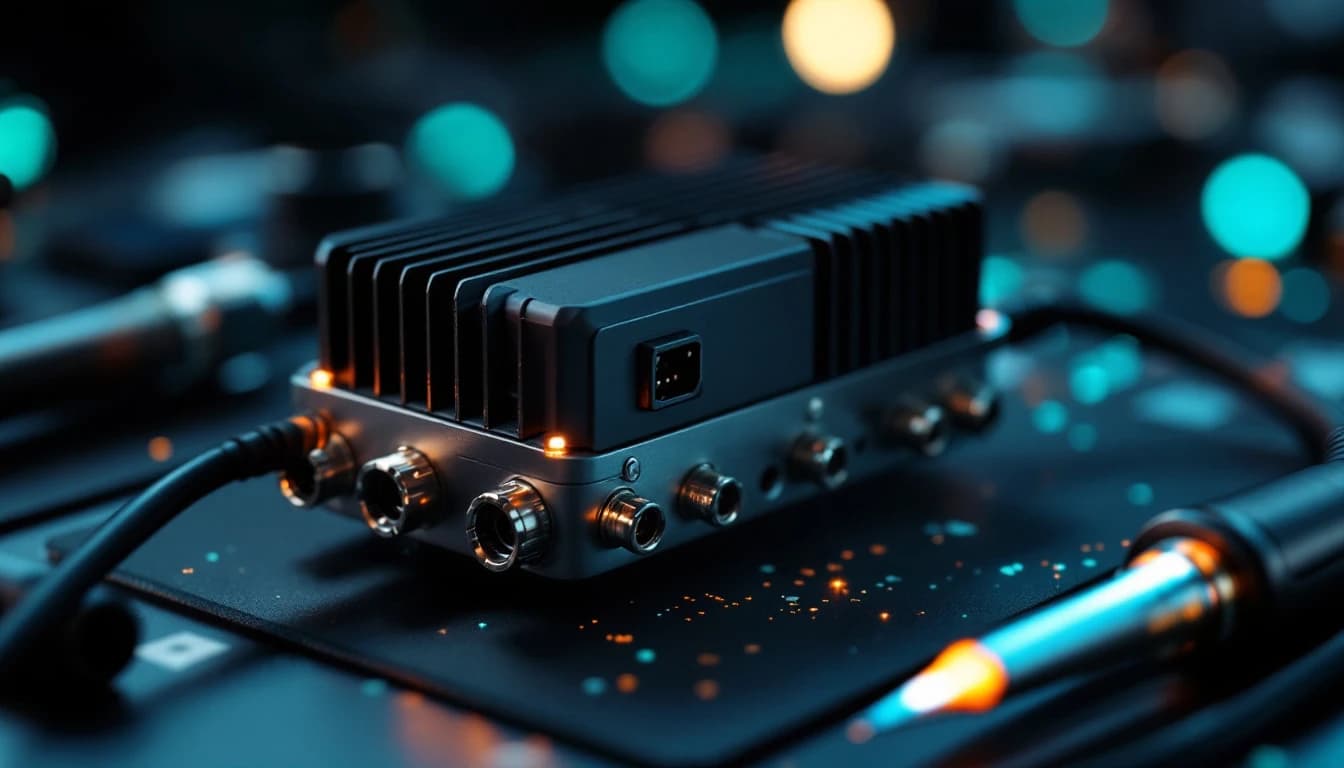
They go together because they share one controller. The ABS module on a WK2 Grand Cherokee is an ATE MK26 electro-hydraulic assembly: an electronic control unit mounted to a hydraulic control unit with the pump and the solenoid valve block, sitting in the engine bay. The electronics run anti-lock, stability, brake assist and traction off one processor and one set of wheel-speed inputs, so an internal fault takes all of them down in the same moment. That is the exact pattern Grand Cherokee owners describe on the Jeep community forums, and the ABS remanufacturing specialists at Actronics name the ATE MK26 directly as the unit that sets these Chrysler, Dodge and Jeep codes.
What makes a WK2 failure feel so abrupt is that it is binary. A wheel-speed sensor fault usually names a specific corner and the lights can flicker with road speed; an internal MK26 fault just drops everything at once and relights within a few seconds of driving, every key cycle, forever. These units live a hard life - underhood heat, vibration, voltage spikes and moisture working into the connector and the electronics over time - which is why the failures cluster on higher-mileage trucks that are eight to twelve years old rather than appearing at random. The pattern is common enough that it shows up in owner-reported brake complaints for the Grand Cherokee.
One scoping note before you read on: this guide is about the WK2 Grand Cherokee (2011-2021, with a focus on 2014-2016) and the closely related Dodge Durango that shares the platform and the MK26 unit. Jeep used more than one hardware revision across the WK2 run, so confirm your year and the part number printed on the module before matching anything here to your Jeep. The code and the repair path are the same idea across the generation, but the exact part number is not - and on these cars the part number has to match.
"On a WK2 Grand Cherokee the C2200 is almost always an internal electronic failure in the ATE MK26 - a driver stage or the module's own memory, not a sensor out at a wheel. A dealer answers that by selling a whole new hydraulic-and-electronic assembly, initializing it and matching it to the car. If the fault is internal, that same controller repairs on the bench and goes back in with its original coding, so there is nothing to reprogram and nothing to match." — Auto Module Lab bench team
The fault codes that point at the module
Read the ABS controller's own codes - a basic code reader that only sees powertrain (P) codes will not show them. On a WK2 Grand Cherokee two codes do most of the work, and Actronics documents both as classic MK26 failures.
| Code | What it means | What it usually is on a WK2 Grand Cherokee |
|---|---|---|
| C2200 | ABS module internal electronic failure | An internal driver stage or memory fault - the MK26's self-test has failed |
| C2116 | ABS pump-motor supply voltage fault | Internal pump-motor driver or supply circuit inside the controller |
| C2100 | Controller supply voltage out of range | Battery, charging or a module ground - check these before condemning the unit |
C2200 is the headline. The module continuously monitors its own microprocessors, and when it finds an internal fault it cannot work around, it sets C2200 and shuts the systems down. Because the fault is inside the controller, clearing the code does nothing - it comes right back within a few seconds of driving. C2116 is the other MK26 classic and points at the pump-motor supply circuit inside the unit. When either of those is the stored code and the wiring checks out, the controller is the suspect - not a wheel-speed sensor, which would name a specific wheel instead.
C2100 is the useful counter-example. It is a supply-voltage code, and it does not automatically mean the module is bad - a weak battery, a tired alternator or a corroded ground can set it. That is exactly why the honest first move on any WK2 ABS complaint is to confirm the battery and the module's grounds and connector are clean before anyone buys a controller. Some owners even get a temporary reprieve by cleaning the harness connector - which tells you how often a bad connection, not the silicon, is the real story on the first pass.
New ABS module versus repairing yours - the real cost
Here are the real numbers, because a replacement quote on a WK2 catches people off guard.
| Option | Typical cost | Programming needed? |
|---|---|---|
| New module at a dealer (average) | ~$821 to $872 installed | Yes - initialized and matched by year/part number |
| New module on a 2015-2016 Grand Cherokee | ~$690 to $864 installed | Yes - dealer software |
| Our bench repair of your module | $499 flat | No - keeps your VIN coding |
Those dealer figures come straight from RepairPal's Grand Cherokee estimate: an ABS control-module replacement averages about $821 to $872, with the part itself near $712 and labor from roughly $109 to $161. Drill into a specific year and it moves around - the 2015 Grand Cherokee estimate lands around $819 to $864, and the 2016 nearer $690 to $735 - but the part is the bulk of the bill every time. And that sticker hides the catch: a new module is not plug-and-play. It has to be initialized with dealer-level software, and the part number and year have to match your truck or it will not take. A used module from a salvage yard looks cheaper until you learn it is VIN-locked to the vehicle it came out of and still needs to be married to yours with the right tool.
We repair the MK26 controller you already own for $499 flat. Because it is your original unit, it keeps its original VIN coding - there is nothing to initialize, nothing to match, and nothing a scan tool has to bless before the Jeep drives. The only time the price changes is if the bench diagnosis finds the main processor itself has failed - more parts and more bench time - which adds $100 (total $599), and we contact you before doing that work, so it is never a surprise. Put plainly: the part alone at a dealer is around 712 dollars, labor adds roughly 109 to 161 dollars, and initialization is on top of that - a repair of your own unit is a fraction of it with nothing to program.
How to be sure it is the module, not a sensor or a ground
The repair is only the right answer when the module is actually the failed part. Three checks keep people from mailing a healthy unit:
- Read the ABS codes, not just the engine codes. A solid C2200 (or C2116) is the internal-failure fingerprint of an ATE MK26. A wheel-speed code that names a specific wheel points at a sensor or its wiring, not the controller.
- Confirm power, ground and the connector first. A C2100 supply code, a dim no-crank, or a battery that keeps dying can mimic or trigger ABS faults. Load-test the battery, check the charging system, and inspect the module's grounds and harness connector before condemning the unit - a corroded connector is a real-world WK2 cause, and cleaning it has given some owners a temporary fix. It is also worth confirming your Jeep has no open brake-related work outstanding: a quick check of NHTSA recalls by VIN rules out a safety campaign before you spend anything on parts.
- Watch the behaviour. If every ABS/traction/ESP light came on at once about fifty feet into the drive and stays on through key cycles, that is the all-at-once signature of an internal controller fault. Lights that come and go with road speed point more toward a sensor.
If the codes and the behaviour both say internal module, the repair is the economical path. If a wheel-speed sensor or a ground is really the cause, a new or repaired module will not fix anything - and we would rather tell you that than take a module that was never the problem.
What actually fails inside the MK26 - and why a repair holds
The ATE MK26 is an electro-hydraulic unit, and the part that fails is almost always the electronics, not the hydraulics. The controller drives the pump motor and the solenoid valves through power output stages; those output stages, the pump-motor driver and the module's memory are the usual failure points. Years of heat cycling and vibration fatigue the solder joints and stress the power transistors until a driver stage or a memory cell gives out, and the self-test flags C2200 or C2116. The failure is rarely dramatic to look at - a hairline crack in a solder joint or one tired output transistor is enough to set a hard code and shut four systems off.
A proper bench repair addresses the actual failure: the board comes out, the failed driver stages or memory are replaced with correct components, cold or cracked solder joints are reworked, and the unit is function-tested before it ships back. Because the repair restores your original controller rather than swapping in a stranger's, the Jeep's coding is untouched - that is the whole reason a repaired module reinstalls with no programming while a replacement does not. For the deeper electronics version of this - how ATE/Teves and Bosch internal failures are diagnosed and repaired at the component level - see our ABS module internal-failure repair guide.
Our repair: price, warranty, and what you get
- $499 flat to repair your WK2 Grand Cherokee ATE MK26 ABS controller (a failed main processor adds $100, and we ask before doing it)
- No programming on your end - it keeps your original VIN coding and goes back in plug-and-play
- 1-year warranty on the repair, extendable at checkout to 2, 3 or 5 years
- About a week on the bench after your module arrives, or 2-3 business days with rush repair
- Function-tested before it ships back, not just reflowed and returned
- Mail-in nationwide - you send the electronic module, we repair and return it
A replacement at a dealer means the part, the labor, and the initialization, and a used unit means a VIN-lock headache. Repairing the one you have skips all three.
The mail-in process, step by step
- Confirm the codes. Pull the ABS module's codes and look for C2200 or C2116. If you are not sure, text us a photo of the scan and the module label and we will tell you honestly whether it is a repair candidate.
- Remove the module. On a WK2 the ATE MK26 unit sits in the engine bay. You send the electronic control module - we will tell you if we need the hydraulic block too, but most repairs are the electronics only, which also means you may not have to open the brake hydraulics at all.
- Pay and ship. Checkout is $499 (the $100 main-processor add-on is only charged if the bench finds that failure and you approve it). You pay return shipping - every order does - and we send the exact packing and address details after checkout.
- We repair and test. The board is repaired at the component level and function-tested on the bench.
- It goes back plug-and-play. Reinstall your repaired module. Because it kept its original coding, there is nothing to initialize - clear the codes, and the ABS, traction and ESP systems come back online.
Most modules go back out quickly once they reach the bench, and the whole job is done by mail - there is no dealer appointment and no initialization bill.
Frequently asked questions
Will a C2200 clear if I just disconnect the battery or clear codes? No. C2200 is a hard internal-failure code - the MK26's self-test has found an electronic fault inside itself, so clearing it (or pulling the battery) only turns the lights off for a moment before they come right back a few seconds into the next drive. The fault has to be repaired inside the controller.
Is my Grand Cherokee still safe to drive with the ABS light on? Your normal hydraulic brakes still work - the pedal stops the Jeep. What you lose is anti-lock, stability control and traction control, so hard or slippery-surface stops are riskier and the vehicle will not catch a slide for you. Drive gently and get it fixed; do not treat it as a permanent state.
Can I just buy a used module from a salvage yard? You can, but a used WK2 ABS module is VIN-locked to the vehicle it came from and still needs dealer-level software to initialize it and match the part number and year to yours - so you pay for the used part and the programming, and it may not take at all. Repairing your original MK26 avoids both problems.
Do you program or initialize the module to my VIN? We do not need to. A repair restores your own controller, which already carries your VIN coding, so it reinstalls plug-and-play. Initialization is only a concern when you replace the module with a different one - which is exactly the cost we help you skip.
Does this apply to the Dodge Durango too? Yes. The Durango shares the WK2 platform and the same ATE MK26 ABS controller, so the C2200 story, the failure mode and the bench repair are the same - send us the part number on the unit and we will confirm your exact vehicle.
What if cleaning the connector made the lights go away? Then you may have a connection problem rather than a dead module, and that is good news - clean and protect the harness connector and grounds first. If the C2200 returns after a proper cleaning, the fault is internal to the MK26 and the module needs repair.
The bottom line
A Jeep Grand Cherokee WK2 with the ABS, traction and ESP lights on - often with a Service Electronic Stability Control message - and a solid C2200 code almost always has an internal fault in its ATE MK26 controller, a hard code that will not clear because the failure is inside the module. A replacement is a real bill: roughly $821 to $872 installed per RepairPal, plus initialization, and a used unit brings a VIN-lock headache. We repair the MK26 you already own for $499 flat, it keeps its original coding so there is nothing to reprogram, and it carries a 1-year warranty. Confirm the code is C2200, and that your battery, grounds and connector are clean, then send us your ABS module and skip the dealer-initialization bill entirely.
Ship your module today
Flat-rate pricing, typical 24-hour bench turnaround, return speed your choice at checkout. Most jobs back on your bench within a week.