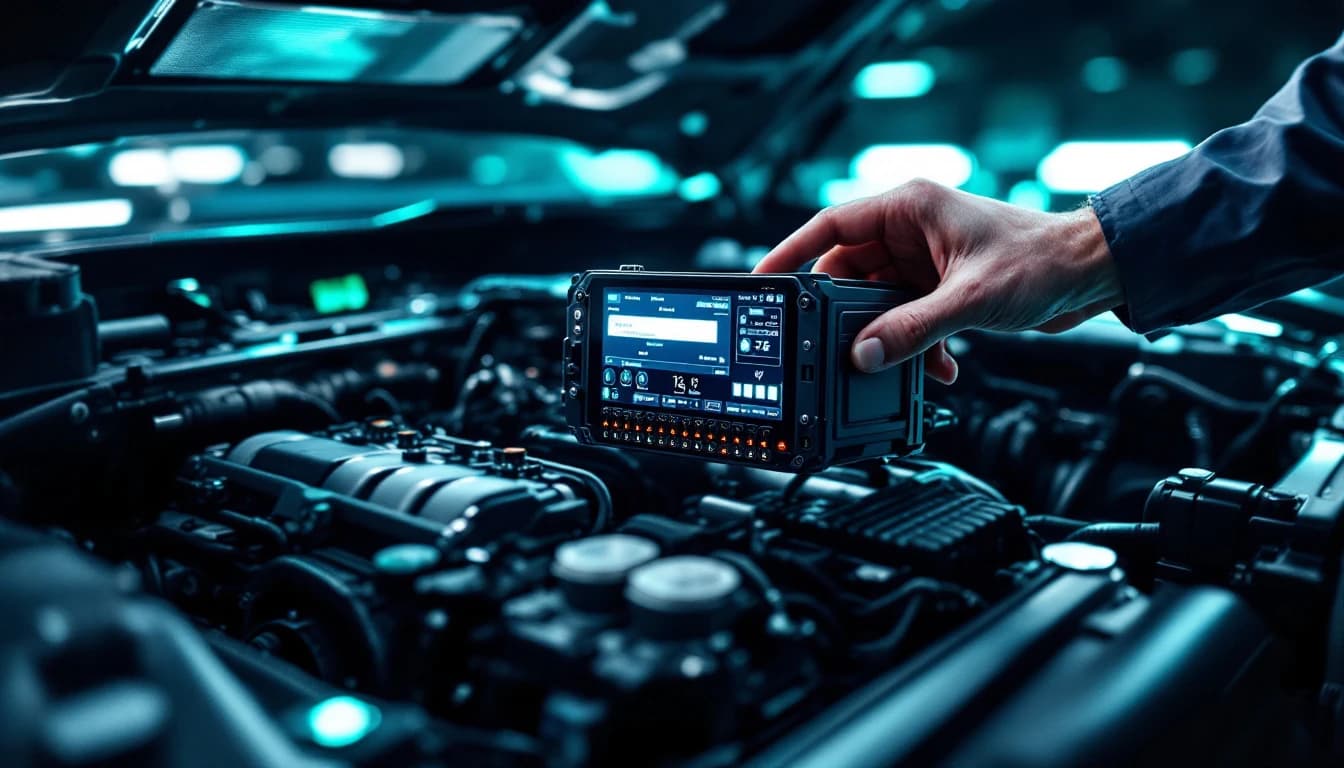
Mercedes ME9.7 ECU: Unlock, VIN Write, SCN Code or Clone
The engine computer behind half the Mercedes fleet
If you own a Mercedes with the M272 V6 or M273 V8 — and between roughly 2004 and 2013 that is an enormous number of cars — your engine computer is almost certainly an ME9.7. It sits behind the C-Class, E-Class, S-Class, CLS, ML, GL, R-Class, SLK and SL of that era, which makes it one of the most commonly replaced Mercedes modules in independent shops.
It is also one of the most commonly replaced incorrectly, because the module that bolts in is not the module that runs the car. A used ME9.7 from a matching vehicle will crank the engine and refuse to start it, or start and stall, or run with a fault list that makes no sense — because it still belongs to the car it came from.
Why a replacement does not simply work
Mercedes ties the engine controller to the vehicle in two ways, and both have to be addressed.
The VIN. The module carries it and the rest of the network expects agreement.
Drive authorization. The engine computer participates in the immobilizer relationship with the EIS and the keys. A module that does not agree with your ignition switch will not allow the engine to run, regardless of how mechanically healthy everything is.
On top of both sits SCN coding — Mercedes's Software Calibration Number process, which tells a module which software configuration to run for this specific vehicle. SCN is done online against Mercedes systems, which is why so many independent shops can physically install a Mercedes module but cannot finish the job.
Four operations, and picking the right one
This is where money gets wasted, because the four are frequently conflated.
Unlocking. Opening a locked ECU so it can be read from and written to. This is what you need when you already own the module and it must be opened for further work. It is not, by itself, a fix for a car that will not start.
VIN writing. Changing the vehicle identity stored in the module so it matches your car. Necessary on any donor unit.
SCN coding. Matching the module's software configuration to your vehicle online. Necessary on new and used modules alike before the car will behave correctly.
Cloning. Copying the complete data from your original ECU onto a replacement, so the replacement inherits everything — VIN, configuration, and critically the immobilizer relationship. Your existing keys keep working with no re-keying.
The rule that saves the most money: if your original ECU still reads, clone it. You skip the immobilizer work entirely, your keys carry across untouched, and the job is faster. Our ME9.7 service covers all four operations at one flat price precisely so nobody has to guess which line item to buy.
The M272 and M273 context
Worth knowing because it affects the decision to repair at all.
These engines had a well-documented balance shaft gear issue on early M272 units and a timing chain concern on some M273s, and cars carrying those problems are often worth less than the repairs. Before spending on engine-computer work, it is worth knowing whether the engine underneath is healthy.
Conversely, a sorted M272 or M273 car is a genuinely good vehicle, and these are now inexpensive enough on the used market that an ECU problem is frequently the difference between keeping it and scrapping it. Automotive research firm iSeeCars has documented how routinely modern vehicles cross 200,000 miles, and this generation of Mercedes is deep into third-owner territory where a dealer bill decides the car's fate.
"Half the ME9.7 calls we get don't need a module at all — the customer already has one sitting on the bench and just needs it matched to the car. The other half already own the car's original and don't realize cloning it is cheaper than everything else on the menu. Ask which situation you're in before you buy hardware." — a master automotive locksmith (ALOA-credentialed) on our bench team
What it costs
Dealer. Module at Mercedes parts pricing, plus SCN coding, plus labor, with the car in the bay. Comfortably four figures on most applications.
Specialist bench work. The market for ME9.7 unlock, VIN write, SCN coding and cloning sits in the $250-300 range for the service, with the customer supplying the hardware. Our service is $275 flat covering whichever operation your car needs.
Used ME9.7 hardware. Widely available — used Mercedes ECUs of this family trade on eBay at modest prices because most buyers discover they do not work in another car and stop bidding. That gap between cheap hardware and the capability to match it is the entire specialist market.
The important consequence: if you already own a used ECU, do not buy another one. Send in the one you have. And if your original still communicates, send that too, because cloning from it is the cleanest outcome available.
What to send, and why it matters
For a straightforward VIN write and SCN coding job, the ECU alone is usually enough.
For a clone, send both your original and the replacement — the whole point is copying one to the other.
Where it gets more involved is when keys are part of the picture. If the immobilizer relationship has to be established rather than carried across, your EIS and a working key may be needed so the drive-authorization side can be verified on the bench. Tell your shop up front whether you have working keys, because all-keys-lost is a different scope of work than matching a module to keys you already hold — and on Mercedes that difference is significant. Our EIS cloning service covers the ignition-switch side when that is what the car actually needs.
Why the bench matters
Writing to an engine controller's memory is when it is most fragile, and an interrupted write destroys the module rather than merely failing.
SAE International, whose J2534 standard governs pass-through reprogramming, treats stable voltage and an uninterrupted communication link as preconditions for module programming. A bench with a regulated supply guarantees both, and lets the result be verified before it ships. A car with a marginal battery — and Mercedes of this era are notably sensitive to low voltage — guarantees neither.
That verification step is what separates a module that is confirmed working from one that merely finished its flash without an error message.
When the ECU is not your problem
Rule these out before spending, because they imitate ECU failure convincingly:
Battery and charging. Mercedes of this generation produce spectacular, unrelated-looking fault lists at low voltage. This is the single most common false alarm.
The EIS or keys. A no-start with drive-authorization symptoms may be the ignition switch or the key rather than the engine computer. The Mercedes immobilizer by generation guide maps which component owns which symptom.
Wiring and grounds. These cars are old enough that harness and ground issues are common, and they produce module-failure impressions without the module being bad.
Mechanical engine faults. Balance shaft and timing chain issues on these engines produce running complaints that are not electronic at all.
A scan tool that can still reach the ECU is telling you something important: the module is alive, which usually means cloning is available and you are on the cheaper path.
A worked example: the W211 that would not start
Following one job through makes the four operations concrete.
A 2007 E350 with the M272 came in after a used ECU swap. The owner had bought a correct-part-number module from a matching car, installed it carefully, and got a crank with no start. He assumed the used module was faulty and was about to buy a second.
Diagnosis took ten minutes. The module was alive and communicating — it was simply reporting a VIN that was not his, and drive authorization was refusing. More usefully, his original ECU was also still readable.
That made the decision easy. Rather than VIN-writing and SCN-coding the donor and then sorting out the immobilizer relationship, his original was cloned onto the replacement. Everything carried across — VIN, configuration, and the key relationship — and the car started with his existing keys and no re-keying at all.
What he nearly did instead was spend another few hundred dollars on hardware he did not need. The question that saved him was whether his original still read, and it costs nothing to ask.
Where these modules physically live and why they fail
Worth knowing because it affects whether a replacement lasts.
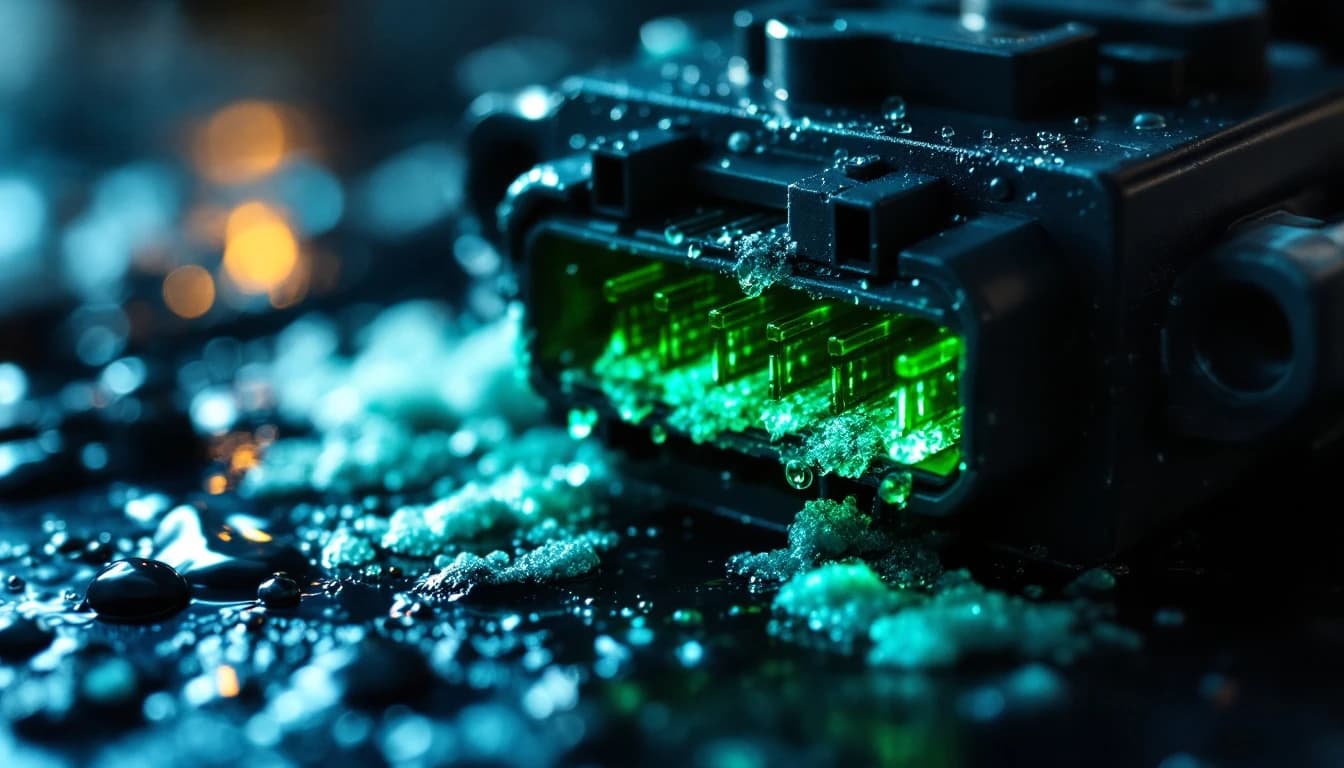
The ME9.7 typically sits in the engine bay electrical box, which means heat cycling and, on cars with blocked drains or aged seals, moisture. Water intrusion is a genuine failure mode on these, and the symptoms build gradually: intermittent running faults, sensor codes that come and go with weather, eventually a module that will not communicate.
The practical implication is the same as on any water-related module failure — find out why the first one died before installing the second. Check the drains and the box seal. A programmed replacement installed into a wet location produces a repeat failure and a very reasonable complaint.
The market for used hardware
The economics of this repair rest on inexpensive donor modules being widely available, and they are: used Mercedes ECUs of this family trade freely through dismantlers and marketplaces, and specialist Mercedes electronics shops operate in exactly the gap between cheap hardware and the capability to match it to a car.
Prices stay low precisely because most buyers discover the modules do not work in another vehicle. That is the whole arbitrage: the part is not the product, the matching is.
One caution that applies across the used-module market — a donor from a flood car may program successfully and fail later as corrosion advances under the conformal coating. Ask whether cores are tested before programming rather than only after.
Why these cars are worth repairing
A fair question on a fifteen-year-old Mercedes. The answer is usually arithmetic.
Circuit Board Medics and similar specialist rebuilders exist because there is a large population of aging German cars whose owners will spend a few hundred dollars but not a few thousand. A sorted M272 or M273 car is genuinely pleasant transport available cheaply, and an ECU issue is frequently the single thing standing between it and the scrapyard.
That is the gap the bench market fills, and it is why the honest advice — clone if you can, do not buy hardware twice — matters more here than on a newer car.
Reading the symptom before buying anything
Because four different operations exist, the symptom is what routes you, and a short guide saves money.
Cranks, will not start, no fault codes accessible — the module may be dead or not communicating. If a scan tool cannot reach it at all, cloning from it is off the table and you are on the donor path.
Cranks, will not start, module communicates — the module is alive and reporting a mismatch. This is the good case: your original is readable and cloning is available.
Starts and stalls immediately — drive authorization refusing. Same family of problem, same set of solutions.
Runs but poorly, with sensible codes — frequently not the computer at all. Investigate the mechanical and sensor side before spending on module work.
Intermittent, weather-related — suspect moisture in the electrical box before anything else.
That single distinction — does a scan tool still reach the module — decides more of this than any other fact, which is why any shop worth using asks it first. Independent Mercedes specialists such as The ECU Pro and the wider bench-repair community organise their intake around exactly that question.
What a fair quote looks like
Because this category has real price variation, it helps to know what a reasonable quote contains.
A specialist quoting bench work should tell you which operation they are performing, not just a number. "SCN coding" and "clone" and "unlock" are different jobs with different prerequisites, and a quote that does not name one has not been thought through.
They should tell you what you need to send — module only, module plus original, or module plus EIS and key — before you pay, because a second shipping cycle costs more than the difference between most shops.
And they should tell you what happens if it does not work. On a readable original, cloning is very reliable. On a dead original, the honest answer is that some outcomes are not achievable and you should not be charged for those.
Cost comparisons across the aging German-car market — the kind of arithmetic RepairPal estimates make visible — are what push owners toward independent bench work in the first place. A shop that respects that is transparent about scope rather than quoting a single opaque number.
Frequently asked questions
Why will my replacement ME9.7 not start the car? It carries the donor vehicle's VIN and immobilizer relationship. It needs a VIN write and SCN coding to your car — or, better, your original cloned onto it.
What is SCN coding? Mercedes's Software Calibration Number coding, done online against Mercedes systems, which matches a module's software configuration to your specific vehicle. It is required on new and used modules alike, and it is the step most independent shops cannot perform.
Should I clone or VIN-write? Clone if your original still reads — your keys and immobilizer relationship carry across untouched and no re-keying is needed. VIN-write and SCN-code when the original is dead or missing.
Which engines does ME9.7 cover? The M272 V6 and M273 V8, roughly 2004 to 2013, across C, E, S, CLS, ML, GL, R, SLK and SL models.
I already bought a used ECU. Do I need to buy another? No. Send in the one you have for bench work. It costs less than buying hardware twice, and any shop suggesting otherwise is selling parts rather than solving your problem.
Do you need my keys? Sometimes. If the immobilizer side has to be established rather than carried across, your EIS and a working key may be needed. Say up front whether you have working keys — all-keys-lost is a different job.
Can I put a performance tune on afterward? That is a separate discipline from replacement programming. The bench work here restores factory function; what you do after is your call.
The bottom line
An ME9.7 is not a bolt-in part. It holds your VIN, participates in drive authorization, and needs SCN coding to run the correct software for your car — which is why a correct-part-number donor cranks and refuses to start.
Four operations exist and only one is right for your situation. If your original still communicates, clone it: your keys carry across, the immobilizer work disappears, and it is the cheapest path. If it does not, a donor gets a VIN write and SCN coding. If you already own a locked unit that simply needs opening for work, that is unlocking and nothing more.
Before spending anything, establish two facts: does your original ECU still read, and do you have working keys? Those two answers pick your path, set your price, and prevent the most common expensive mistake in this category — buying hardware you already had, or paying for immobilizer work you could have skipped entirely.
Ship your module today
Flat-rate pricing, typical 24-hour bench turnaround, return speed your choice at checkout. Most jobs back on your bench within a week.