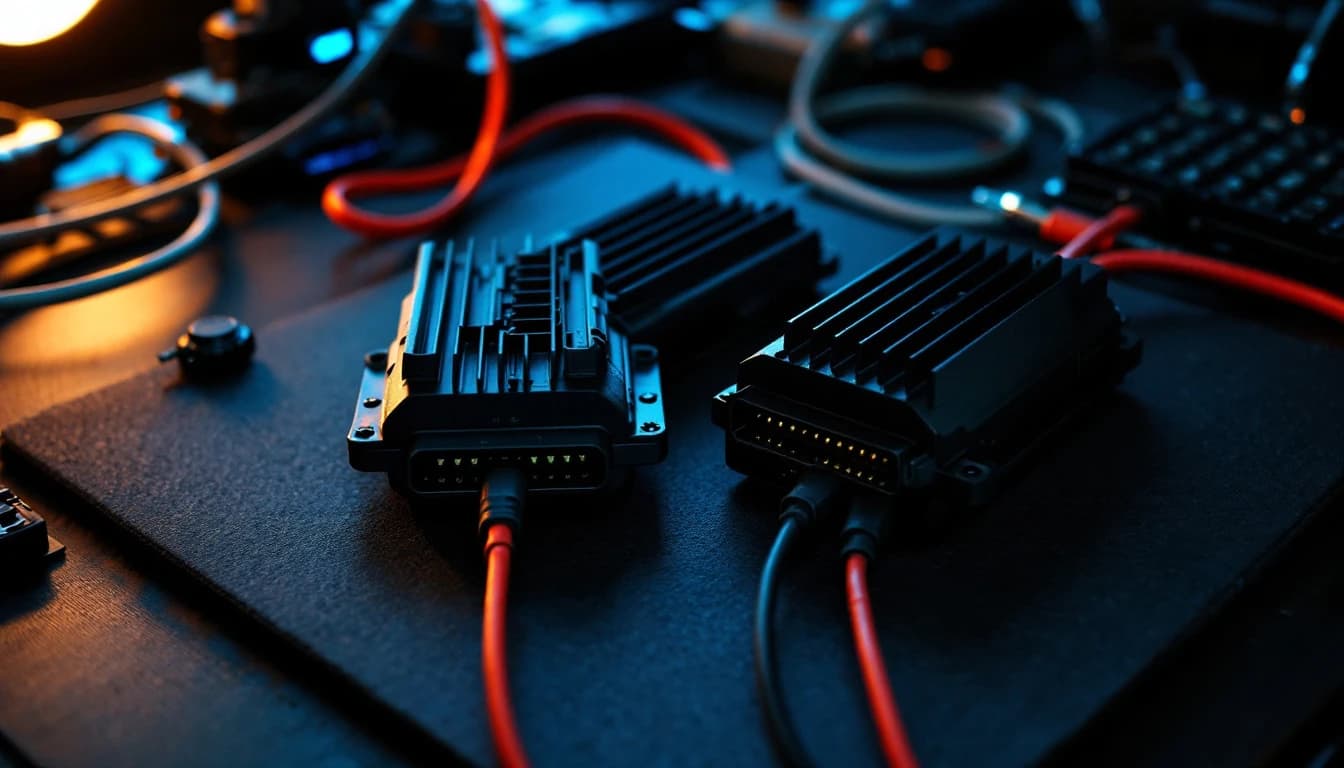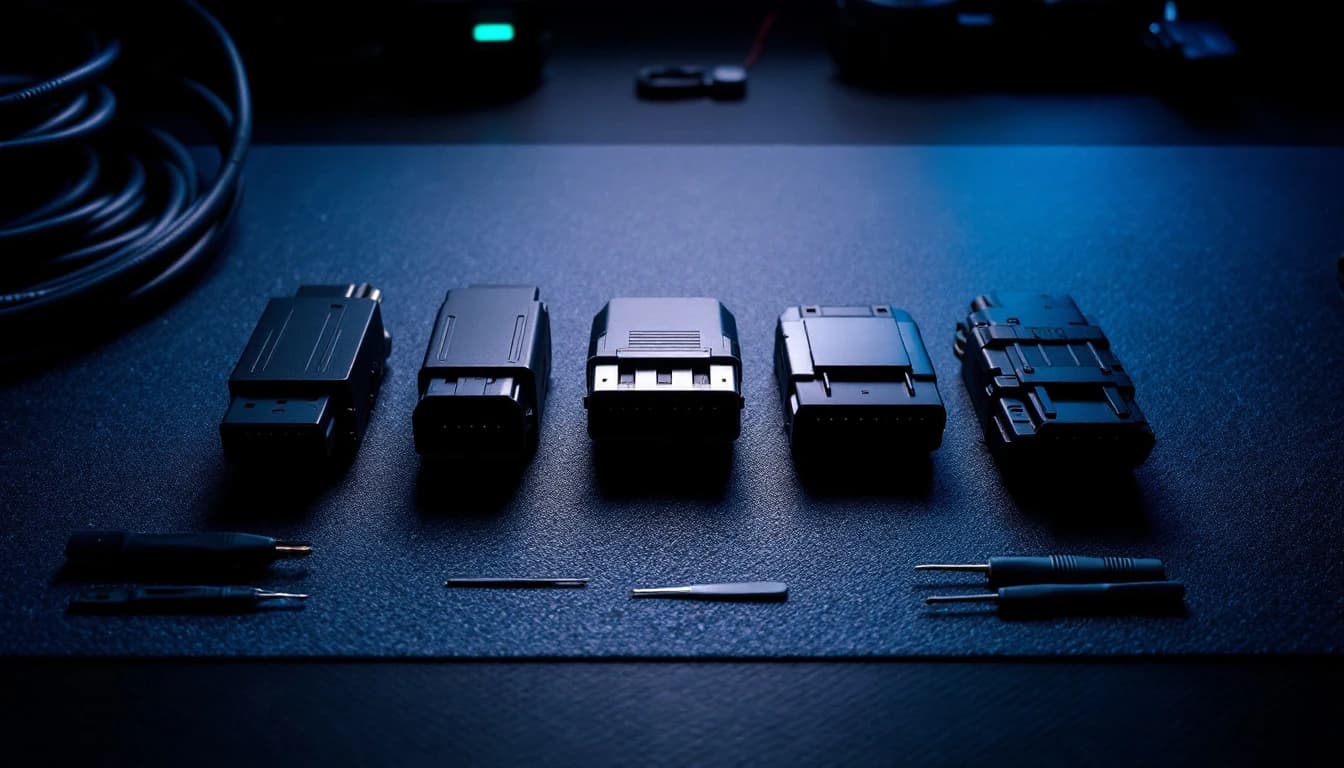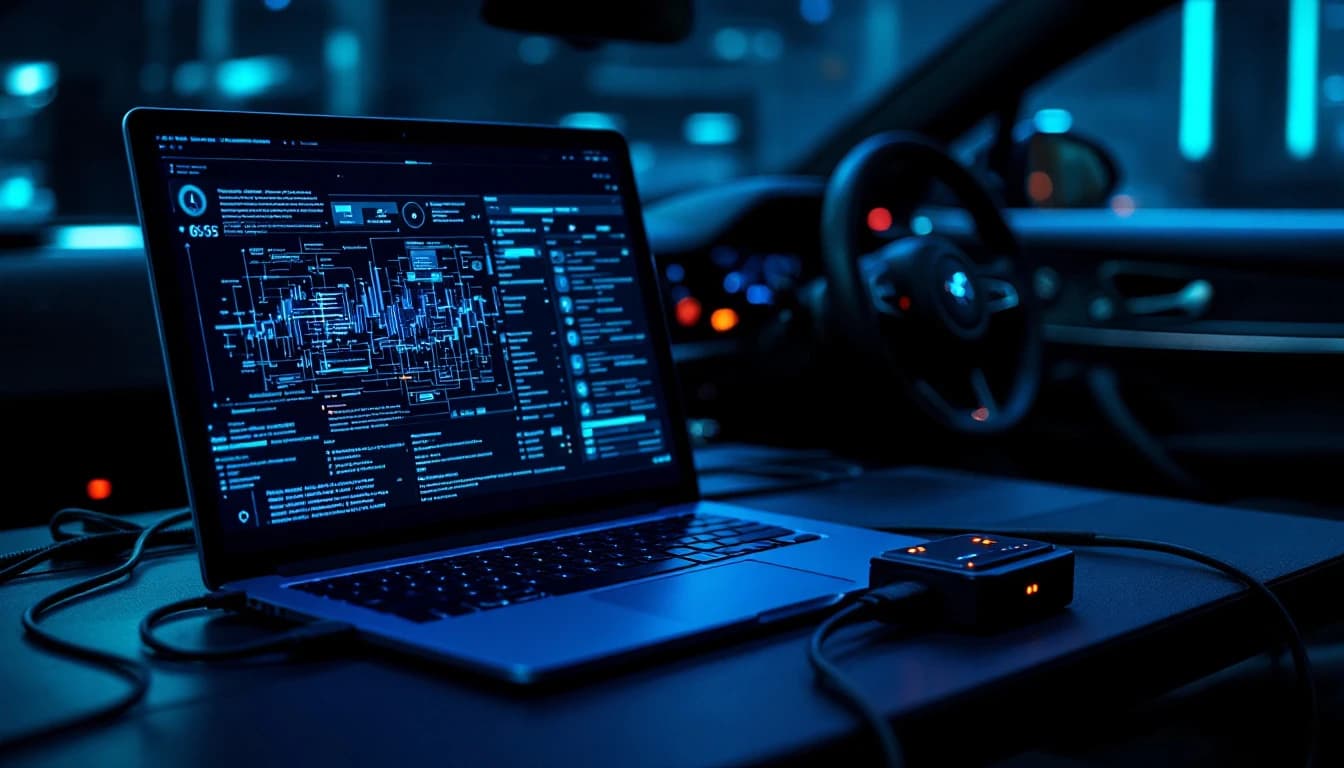
Mercedes Module Programming Cost by Module (2026)
What Mercedes module programming costs
As of October 2026, mail-in Mercedes module work at Auto Module Lab runs from $150 for a key programmed through your EIS to $999 for a brand-new 722.9 conductor plate ordered through NASTF and programmed to your VIN. Most engine computer, gateway and transmission-controller clones are $250 flat, SCN coding is $199, and return shipping is chosen and paid at checkout from $29.95.
Those are national mail-in bench prices. You order online, we email a prepaid inbound label, you ship the module, and the work is performed at our Arlington, Texas workshop. The one exception to the send-it-in pattern is the new conductor plate, which is ordered against your VIN and shipped to you.
This guide puts every Mercedes module job we price into one table, explains what moves the number, and states plainly what cannot be done by anyone outside the dealer network. If you are still deciding whether cloning is even possible for your module, start with which Mercedes modules can be cloned.
Why a used Mercedes module will not simply plug in
Mercedes ties most of its control units together through drive authorization, the system that lets the ignition switch, the keys, the engine computer, the transmission controller and the steering lock prove to each other that they belong to the same car. The electronic ignition switch, called the EIS or EZS, sits at the centre of that relationship.
That design has two consequences for price. First, a used engine computer or transmission controller carries the previous car's drive-authorization data, so it cranks without firing or stays in limp mode until that data is replaced. Second, many modules also need SCN coding, the online Software Calibration Number process that matches a module to a specific VIN, before they function at all.
So the price of a Mercedes module job is rarely the price of hardware. It is the price of moving identity from one unit to another, or of writing it fresh. Which generation of drive authorization your car uses decides what is possible, and the Mercedes immobilizer and key systems by generation guide explains how to tell them apart.
The cars themselves are old enough for this to be routine. The average light vehicle on U.S. roads was about 12.6 years old in 2024, according to S&P Global Mobility, and a Mercedes of that age is exactly where a failed ignition switch, a flooded rear SAM or a tired conductor plate becomes a normal repair.
Mercedes module programming cost by module (October 2026)
Every price below is the flat bench fee from the live service page it links to. Mail-in services add return shipping at checkout: standard $29.95, UPS 2-day $54.95 or UPS overnight $94.95.
| Module and job | Flat price | You send in | Best when |
|---|---|---|---|
| Key programmed through your EIS (pre-2014) | $150 | Your EIS | All keys lost or a spare on an FBS3 car |
| EIS clone (pre-2014) | $250 | Original EIS plus a matching donor | EIS is failing but still reads; existing keys keep working |
| W164, X164 and W251 EIS repair (2008-2012) | $399 | Your EIS and at least one working key | You want the original repaired instead of a donor and clone |
| ELV emulator paired to your EIS | $350 | Your EIS (the failed lock stays in the car) | Steering lock failed on W204, W207, W212 or W166 |
| ESL motor repair or clone | $250 | Your ESL, plus a donor for a clone | You want to keep the genuine steering lock |
| ME9.7 unlock, VIN write, SCN or clone | $275 | Your ME9.7, plus a replacement if cloning | M272 or M273 engine computer that needs matching to the car |
| ME9.7 and MED17 ECU clone | $250 | Original ECU plus a matching donor | Straight one-to-one clone onto a donor |
| ME2.8 ECM clone (roughly 1998-2008) | $250 | Original ECM plus a matching donor | M112 V6 and late M111 cars, including the Crossfire |
| SIM271DE2.0 ECU clone or renew | $250 | Original ECU plus a donor, or the donor alone to renew | M271 EVO 1.8 turbo cars, roughly 2009-2015 |
| CDI diesel ECM clone | $250 | Original ECM plus a matched donor | Sprinter or passenger CDI that cranks and will not fire on a used ECM |
| EGS transmission controller clone (722.6) | $250 | Original EGS plus a matching donor | Limp mode traced to the EGS52 or EGS53 |
| 722.9 conductor plate clone or renew | $299 | Original plate plus a matching donor (VIN required) | 7G-Tronic plate fault where the original or a donor is usable |
| New 722.9 plate ordered through NASTF | $999 | Signed paperwork, proof of ownership, US registration | Original plate is dead and cannot be cloned |
| FBS4 DSM or ISM clone (roughly 2013-2023) | $450 | Original module, a donor, your EIS and one working key | Shifter or servo module replacement on an FBS4 car |
| SAM module clone | $350 | Original SAM plus a matching donor | Water-damaged front or rear SAM that still responds |
| Central gateway clone (ZGW, CGW) | $250 | Original gateway plus a matching donor | Several modules lose communication at once |
| SCN coding | $199 | The module to be coded | You already have the part and only need it coded to the VIN |
| AAM and DAS repair | $299 | The module and a key | W163 ML cranks and never fires with a known-good key |
| AAM and DAS valet key | $250 | The module, plus the door lock if all keys are lost | Start-only key for a classic DAS-era car |
| Classic remote key | $375 | One working remote, or the module plus door lock | Full remote key for SLK R170, SL R129, W140, G W461 or ML W163 |
| Sprinter remote key and all keys lost | $375 | The EIS or immobilizer module and the driver door lock | T1N or W906 Sprinter with no working key |
| Sprinter valet key | $250 | The EIS or immobilizer module and the driver door lock | The van only needs to start and lock |
| Sprinter start error repair (T1N) | $299 | The modules we specify, plus your keys | T1N van shows a start error and cranks without running |
Three notes the table cannot carry. First, every clone needs a donor whose Mercedes part number matches your original, and a technician confirms that from photos of both labels and your VIN before you buy or ship anything. Second, a clone only works when the original can still be read; a module that is internally dead has nothing to copy. Third, the donor is yours to source on every clone row, so the table shows our fee and not the cost of the used part.
What changes the price
Six things decide which row you land on and what the total comes to.
Clone, repair, renew or new. A clone copies your original onto a used donor, and it is the cheapest route when the original still responds. A repair fixes your own unit, as with the 399-dollar EIS repair or the ESL motor rebuild, and keeps the original part in the car. A renew, sometimes called virginizing, resets a used module to an unmarried state so it can be coded to your car, which is the path when the original is dead. A new part is the last resort and the most expensive, as the 999-dollar conductor plate shows.
Who sources the donor. On every clone, the donor is yours to buy, and used prices vary by chassis and part number. That is why most clone rows sit at $250: the fee is for the bench work on parts you supply.
Whether the EIS and a working key have to travel. Some jobs need more than the failed module in the box. The FBS4 DSM and ISM clone needs your EIS and one working key. A conductor plate that has to be renewed rather than cloned needs your EIS and a key as well. A dead-original SIM271 job may too. A car that is your only transport is immobile while its ignition switch is in the mail, so plan for that.
SCN coding. Coding a module to the VIN is a separate 199-dollar service when you bring your own part. When a module also needs unlocking, a VIN write or a clone first, that work is quoted before anything beyond the flat rate is charged.
The drive-authorization generation. FBS3 cars have the widest range of bench options. FBS4 cars have very few, as the next section explains. The generation, not the model name, is what limits the job.
The return-shipping tier. Return shipping is a separate line that you pick at checkout: $29.95 standard, $54.95 for UPS 2-day or $94.95 for UPS overnight. One order is one box, so an EIS and a donor ECU shipped together pay a single tier.
The FBS4 boundary: what no aftermarket service can do
This needs to be stated plainly, because it saves people money. On FBS4 cars, the EIS and the keys are dealer-only. No aftermarket tool can program an FBS4 EIS or an FBS4 key, we do not offer either, and any service that claims otherwise is claiming something the technology does not allow.
Mercedes phased FBS4 in on its newer platforms, the W205 C-Class and later designs, from roughly the 2013 to 2015 model years depending on the chassis. Our EIS key programming and EIS cloning services are for pre-2014 FBS3 cars only. If you are not sure which system your car uses, text us your VIN before you order anything.
The single FBS4 item we sell is the DSM and ISM clone at $450. The Direct Select Module and the Intelligent Servo Module are drive-authorization parts, and a used one cannot be adapted, so cloning the original onto a matching donor is the only path. It needs your original module, the donor, your EIS and one working key, and it has a typical bench turnaround of 1 to 2 business days.
For anything else on an FBS4 car that involves the ignition switch or the keys, the dealer is the correct answer. Mercedes-Benz USA lists its dealer network, and a dealer will ask for the same proof of ownership we do.
Ignition, keys and the steering lock
On FBS3 cars, the cheapest row in the table is often the right one. A key programmed through your EIS is $150: you send the ignition switch, a new key is cut and programmed to it, and both come back. That covers all keys lost and spare keys on pre-2014 cars.
If the ignition switch itself is failing but still reads, the EIS clone at $250 copies it onto a donor so your existing keys keep working. On the 2008-2012 W164 ML, X164 GL and W251 R-Class, the EIS repair at $399 fixes your original unit instead, which avoids sourcing a donor at all. It needs at least one working key for bench testing, so it is not an all-keys-lost service.
The steering lock is a separate failure. When it dies on a W204, W207, W212 or W166, the key is recognized but the wheel stays locked and the car will not start. There are two ways to fix it. The ELV emulator at $350 is supplied and paired to your EIS, and you send only the EIS; the failed lock stays in the car. The ESL motor repair or clone at $250 rebuilds the original lock or clones it to a donor, for owners who want to keep the genuine part.
All of this is security work, and proof of ownership is required. The National Insurance Crime Bureau reported more than 1 million vehicle thefts in the United States in 2023, and a workshop that makes keys without asking whose car it is would be part of that problem.
Engine computers
Mercedes engine computers are priced by family, and the label on the unit decides the family.
The Bosch ME9.7 on M272 V6 and M273 V8 engines has two rows. The ME9.7 service at $275 is the broad one: unlock, VIN write, SCN coding or a clone, and it can program a replacement so your keys and immobilizer carry over. The ME9.7 and MED17 clone at $250 is the narrow one, a like-for-like copy of your original onto a matching donor, and it also covers the MED17 on the turbocharged M276, M278 and M157.
The ME2.8 clone at $250 covers the M112 V6 and late M111 four-cylinder cars from roughly 1998 to 2008. The ME2.8 by engine guide lists which engine codes belong to it. The SIM271DE2.0 clone or renew at $250 covers the M271 EVO 1.8 turbo in roughly 2009-2015 C-Class, E-Class and SLK models.
Diesel has its own row. The CDI ECM clone at $250 covers the Bosch CDI controllers on the T1N and W906 Sprinter and on passenger diesels such as the E320 CDI. It is an identity and immobilizer clone only. We do not perform DPF, EGR or AdBlue deletes, emissions edits or performance tuning on any vehicle, and the Environmental Protection Agency treats emissions defeat devices as a Clean Air Act matter.
None of these services removes the immobilizer. Drive authorization stays intact on every clone.
Transmission controllers
Two different transmissions, two different parts, and they are confused constantly.
The older 722.6 five-speed uses a standalone controller called the EGS. The EGS clone at $250 moves the learned adaptation, VIN, coding and drive-authorization data from your original EGS52 or EGS53 onto a matching donor. Some installs still want a short adaptation drive afterward.
The 722.9 seven-speed has no separate box. Its controller sits on the conductor plate inside the transmission. The conductor plate clone or renew at $299 covers both bench paths at one price: if your original plate still reads, its data is cloned onto a donor; if it does not, a donor is renewed and SCN-coded to your VIN, which needs your EIS and a working key. Your VIN is required at checkout.
When the original plate is completely dead, the correct fix is a new one, and a new plate is a theft-related part that Mercedes releases only to registered professionals. The new 722.9 plate ordered through NASTF at $999 is ordered against your VIN, then programmed and SCN-coded so no coding is needed at install. Two conditions apply and they are not negotiable: the vehicle must be registered in the United States, and you must supply proof of ownership with a signed service request. The National Automotive Service Task Force runs the credentialing behind that process, and its processing typically adds about 5 business days before the plate ships. If your original plate still reads, the 299-dollar clone is cheaper and faster.
Body and network modules
SAM. The Signal Acquisition and Actuation Modules live in the front and rear fuse boxes and run lighting, wipers and power distribution. The rear unit sits low in the trunk or cargo floor, where water finds it. The SAM clone at $350 copies your original's coding and configuration onto a part-number-matched donor. It is a bench data clone, not on-car SCN coding, and it cannot fix a corroded connector or a chafed harness. The SAM failure symptoms guide covers how to confirm the module before you buy a donor.
Gateway. The central gateway, labelled ZGW or CGW, routes messages between the networks in the car and usually stores the VIN and variant coding. When it fails, several modules stop communicating at once. The gateway clone at $250 copies the original onto a matching donor. It is a data clone, not a security bypass, and the very newest gateways may still need dealer tools, so verify first.
SCN coding. If you already bought the right part, new or used, SCN coding at $199 codes it to your VIN. It covers the EIS, engine computers, instrument clusters and the 722.9 controller on cars from roughly 2004 onward, with the FBS4 EIS and keys excluded as above.
"On a Mercedes, I price the job only after I know three things: which drive-authorization generation the car is, whether the original module still reads, and what the part number on the donor says. Skip any one of those and the estimate is a guess." — Independent Mercedes-Benz diagnostic technician, 20+ years (anonymized)
Classic cars and Sprinter vans
The late-1990s and early-2000s cars use the DAS-era immobilizer, with the AAM module on the W163 ML. The AAM and DAS repair at $299 fixes the classic ML no-start where the engine cranks strongly and never fires with a known-good key. The valet key at $250 is a start-only key, and the classic remote key at $375 adds working remote buttons. If you still have one working remote, that key is all you ship for a second one. With all keys lost, the module and the driver door lock go in the box so the blade can be cut by decoding the lock.
Sprinter vans follow the same pattern. The Sprinter remote key is $375 and the Sprinter valet key is $250, on the T1N from 2001-2006 and the W906 from 2007-2018, including Dodge and Freightliner badges. The 2019 and newer VS30 is a different system, so send your VIN before ordering. The Sprinter start error repair at $299 is specific to the T1N, where the key, the immobilizer and the engine computer lose synchronization.
Dealer path versus mail-in
A dealer repair is not the wrong choice by default. It is a bundle: a new module at list price, labor, online coding, and often a tow, because a Mercedes with a failed ignition switch or steering lock does not drive in. Under warranty or an open recall, that bundle may cost you nothing, and you can check recalls by VIN at the National Highway Traffic Safety Administration before spending anything.
Out of warranty, the question becomes whether the car is worth the repair, and it usually is. Average new-vehicle transaction prices have run roughly $48,000 according to Kelley Blue Book, so a module job measured in hundreds of dollars is normally the rational way to keep a sound car on the road.
The trade-off is labor and time. You or a local shop remove and reinstall the module, and the car waits while it travels. Removal help is easy to find: the Bureau of Labor Statistics counts more than 700,000 automotive service technicians and mechanics in the United States. What is scarce locally is the bench capability to clone drive-authorization data or SCN-code a module.
When the cheapest Mercedes module repair is no module at all
No row in the table beats a correct diagnosis. Before you buy a donor, rule out the battery and the main grounds, because low voltage produces communication faults and no-starts that look exactly like a failed controller. Check the fuses and connectors that feed the module, look for water in the trunk and footwells, and scan every module rather than only the one you suspect. A lost-communication code names the module that went quiet, not necessarily the one that failed. Scan tools read those codes through diagnostic standards published by SAE International, which is why a full-vehicle scan is a trustworthy first step.
Then match the symptom to the part. A key that is recognized with a locked steering wheel is the steering lock, not the ignition switch. Limp mode on a five-speed is the EGS or the transmission itself; on a seven-speed it is the conductor plate or the valve body. Random lighting faults after rain point at a SAM before they point at anything else.
How the mail-in process works
Order the service online and the lab emails a prepaid inbound label. Before you ship a clone job, send your VIN and photos of both module labels so the part-number match is confirmed. Pack each module in anti-static protection with padding, and include your VIN, a short description of the fault, and proof of ownership for any key, immobilizer or drive-authorization work.
On the bench, the original is read and backed up, the work is done, and the result is powered and checked before it leaves. Most clones and key jobs have a typical 24-hour bench turnaround after the parts arrive; the FBS4 DSM and ISM clone is typically 1 to 2 business days, and a new conductor plate ships after NASTF processing. The box returns on the shipping tier you chose at checkout.
Frequently asked questions
How much does it cost to program a Mercedes key by mail?
On a pre-2014 FBS3 car, a key programmed through your EIS is $150 flat at Auto Module Lab as of October 2026, plus return shipping from $29.95. You send the ignition switch, and it comes back with a cut and programmed key. FBS4 keys are dealer-only.
How much does it cost to clone a Mercedes ECU?
Most Mercedes engine computer clones are $250 flat, covering ME9.7, MED17, ME2.8, SIM271DE2.0 and CDI diesel controllers. You supply a part-number-matched donor. The broader ME9.7 service, which adds unlocking, VIN writing and SCN coding, is $275.
Can you program an FBS4 EIS or an FBS4 key?
No. FBS4 EIS and key programming is dealer-only, no aftermarket tool exists for it, and we do not offer it. The only FBS4 item we sell is the DSM and ISM clone at $450, which needs your original module, a donor, your EIS and one working key.
What does a Mercedes 722.9 conductor plate cost to replace?
A conductor plate clone or renew is $299 when your original or a donor plate is usable. If the original is dead and cannot be cloned, a brand-new plate ordered through NASTF and programmed to your VIN is $999, and it requires US registration and proof of ownership.
Is the ELV emulator or the ESL repair the better fix?
Both solve a failed steering lock. The emulator at $350 is paired to your EIS and you send only the ignition switch, leaving the failed lock in the car. The ESL motor repair or clone at $250 keeps the genuine steering lock, and you send the lock itself.
Do I need proof of ownership for Mercedes module work?
Yes, for anything involving keys, the EIS, the steering lock or drive-authorization data, which covers most engine and transmission controller clones as well. A title, registration or bill of sale is enough, and sending it with the module keeps the job moving.
Does the price include return shipping?
No. Return shipping is a separate charge selected at checkout: $29.95 standard, $54.95 for UPS 2-day or $94.95 for UPS overnight. The inbound label is emailed to you prepaid after you order.
The bottom line
As of October 2026, the realistic Mercedes numbers are $150 for a key through your EIS, $250 for most engine computer, EGS, gateway and EIS clones, $275 for the full ME9.7 service, $299 for a 722.9 conductor plate clone, an AAM repair or a Sprinter start error repair, $350 for a SAM clone or a steering-lock emulator, $399 for a W164 EIS repair, $450 for an FBS4 DSM or ISM clone, and $999 for a new conductor plate through NASTF. Mail-in jobs add return shipping from $29.95.
The limits matter as much as the prices. FBS4 EIS and key work is dealer-only, a dead original cannot be cloned, and a donor has to match by part number. Text us your VIN and a photo of the module label, and we will tell you which generation your car is and which row of the table applies before you buy a donor or ship anything.
Sources and further reading: S&P Global Mobility, Mercedes-Benz USA, National Insurance Crime Bureau, Environmental Protection Agency, National Automotive Service Task Force, National Highway Traffic Safety Administration, Kelley Blue Book, Bureau of Labor Statistics, SAE International.
Ship your module today
Flat-rate pricing, typical 24-hour bench turnaround, return speed your choice at checkout. Most jobs back on your bench within a week.