Reduced Engine Power Light: Throttle Body or ECM?
What "reduced engine power" actually means
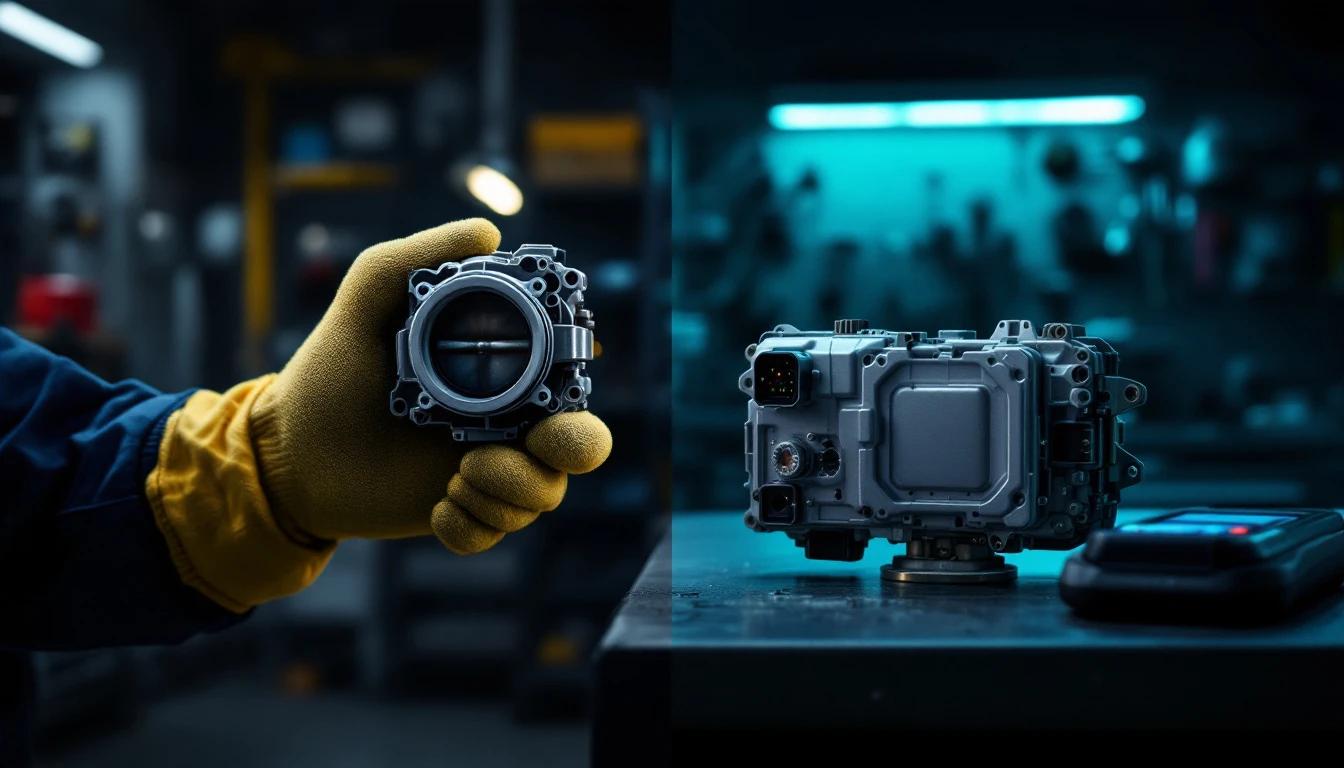
Most modern gasoline engines have no cable between the accelerator pedal and the throttle plate. The pedal contains sensors, the engine computer reads them, and the computer drives a motor on the throttle body that opens the plate. This arrangement is called drive-by-wire or electronic throttle control. Because the driver is no longer mechanically connected to the engine, the computer runs constant plausibility checks: do the two pedal sensor signals agree, do the two throttle position signals agree, and does the plate move to where it was commanded?
When any of those checks fail, the computer cannot be sure what the engine is doing. So it enters a protective mode. It limits throttle opening, often to a small fraction, caps engine speed, and lights a warning. Depending on the brand you will see a "Reduced Engine Power" message, a wrench icon, a lightning-bolt throttle icon, or simply a check engine light with weak, hesitant acceleration. The car will usually still drive, but slowly, and sometimes it will stall or idle roughly.
The important point is that this mode is a symptom of a trust failure, not a diagnosis. Something in the throttle chain disagrees with something else. Your job is to find out which part of the chain is lying. This guide takes the cheapest and most likely suspects first, and ends with the control module, which is the least likely cause but the one that benefits most from the bench when it is truly at fault.
Why limp mode is so common now
Vehicles are older and more electronic than ever. S&P Global Mobility's 2025 analysis put the average US light vehicle at 12.8 years old, with passenger cars about 14.5 years and some 289 million vehicles in operation. A throttle body on a car that old has typically accumulated carbon, its internal return spring and motor brushes have worn, and the connector has seen thousands of heat cycles. A pedal sensor has been pressed by a shoe for hundreds of thousands of actuations. Every part in the drive-by-wire chain is a wear item, which is why reduced power is such a frequent fault. The SAE Mobilus library at SAE International covers the engineering behind electronic throttle control for readers who want depth on why the redundant sensors exist.
The suspects, from most likely to least likely
1. The throttle body
The most common cause by far. Carbon and varnish build up around the throttle plate, so at idle the plate cannot settle where the computer expects. The motor must work against sticky deposits, and the position signal wanders. The computer notices the plate is not where it was commanded and sets a throttle performance or throttle position code, then limits power.
Typical signs: rough or surging idle, a dip in rpm when the air conditioning engages, and reduced power that appears more at low speed or after the engine has warmed. Cleaning is sometimes enough. A throttle body that has worn internally needs replacement. After cleaning or replacing it, most vehicles need a throttle relearn so the computer relearns the closed position, often done with a scan tool or a defined key-cycle procedure.
2. The accelerator pedal position sensor
The pedal has two or three sensors with deliberately different signal curves. The computer compares them. If one drifts, the plausibility check fails and limp mode starts. Wear on the sensor track is the usual cause, and it can be intermittent: the fault appears at a specific pedal angle, then vanishes. Watching pedal sensor values on live data while pressing the pedal slowly will show a dropout or a mismatch. A pedal assembly is often a plug-in part, and a mismatch between its two channels in live data is strong evidence.
3. Wiring and connector faults
The throttle body and pedal both depend on a reference voltage, a ground, and signal wires. A chafed wire, a spread connector terminal, or corrosion in a harness can create an intermittent open or short. These faults produce the most frustrating cases: limp mode that appears after hitting a bump or in wet weather. Wiggle-testing the harness while watching live data is the standard approach. Look especially at the connector at the throttle body, where heat and vibration concentrate.
4. Airflow and pressure sensors (MAF and MAP)
The computer compares the commanded throttle angle with measured airflow or manifold pressure. If a MAF or MAP sensor reads implausibly, or there is a vacuum leak, the airflow model no longer matches the throttle model, and some vehicles respond by limiting power. A dirty MAF sensor, a cracked intake boot or a leaking hose can all do this. These are cheap to rule out: check the codes, look at the intake path, and compare readings against expected values at idle.
5. Power, ground and battery condition
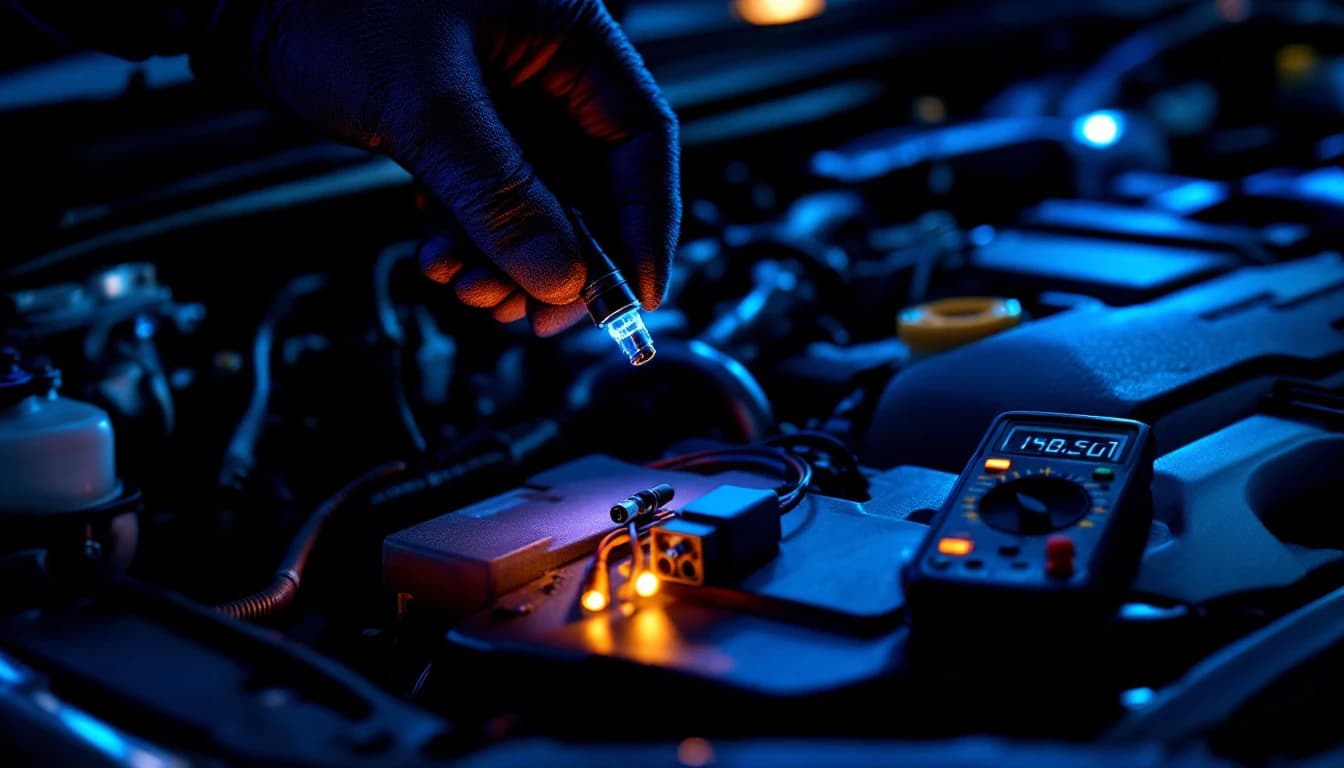
Control modules require a clean supply and solid grounds. A weak battery, a loose terminal, a failing alternator or a corroded ground strap can cause the throttle motor to move sluggishly or the reference voltage to sag, which trips the same plausibility codes. Reduced engine power that appears alongside low-voltage behavior elsewhere (dim lights at idle, a slow crank, random warning lights) points here. Measure battery voltage with the engine running, then measure voltage drop across the main ground path while the throttle is working. The same logic is the first step in our scan tool won't connect to ECU guide, and it applies equally when the symptom is limp mode.
6. The ECM or PCM throttle driver
At the bottom of the list is the control module itself. The throttle motor is driven by an H-bridge output stage inside the ECM or PCM. Heat, vibration and age can damage that stage, and a failure often looks exactly like a bad throttle body: the plate does not move as commanded, the position codes set, and power is reduced. The distinguishing feature is that a known-good throttle body, a good pedal, clean wiring and good power and ground produce no improvement.
The module can also fail in other ways that cause limp mode: a corrupted calibration, an internal processor fault, or an internal monitoring fault. These often set more specific codes. Our P0606 PCM processor fault guide covers the internal-monitoring family in detail.
Diagnostic steps you can do in a driveway
You need a scan tool that reads live data, a digital multimeter, and a way to take photos of the screen. About an hour is realistic for the first pass.
Step 1: read and record every code
Pull all codes, including pending ones, and write them down in order with the freeze-frame data. Codes about throttle position, throttle actuator control, pedal position and throttle performance all belong to this symptom. Codes from other systems matter too, because a communication or power fault can create secondary throttle codes. Do not clear codes before recording them, since the pattern is evidence.
Step 2: check for TSBs and recalls
Manufacturers often publish service bulletins for throttle body and software issues, and recalls sometimes apply. Search your VIN at NHTSA for open recalls before spending money. A throttle or software recall repair is free at a dealer for covered vehicles, and it can save an entire diagnosis.
Step 3: look at the throttle body visually
With the engine off and the intake boot removed, look at the plate and bore. Heavy black deposits around the edge, or a plate that does not return smoothly to rest by hand pressure (do not force it on a motorized throttle), suggest cleaning or replacement. Be gentle; pushing the plate against the motor can damage the gears on some designs. Use a cleaner recommended for electronic throttle bodies, and avoid soaking the motor.
Step 4: compare commanded and actual throttle position on live data
With the key on and engine off, watch the commanded and actual throttle angle while a helper presses the pedal slowly. They should track closely. A lag, a stuck reading, or a sudden jump indicates a throttle or sensor issue. Also watch both pedal sensor channels. They should rise smoothly and in proportion. A glitch at one pedal angle identifies a worn sensor track.
Step 5: wiggle test the harness
While watching live data, gently move the harness and connector at the throttle body and at the pedal. If the numbers jump, you have found a connection fault. Inspect the terminals for spread pins or green corrosion.
Step 6: check battery, charging and grounds
Measure battery voltage at rest and with the engine running. Check ground strap condition between engine and body. A voltage drop of more than a few tenths of a volt on a ground path under load indicates resistance that can upset a sensitive control module.
Step 7: test the sensor reference and ground at the throttle connector
With the connector unplugged and the key on, check for the reference voltage (typically 5 volts) and a good ground. If either is missing or low, the fault is in the harness or the module's reference supply. A missing or low reference on several unrelated sensors at once is a strong hint that the module's internal regulator is failing, which is the point where bench evaluation makes sense.
Step 8: swap or substitute the suspect part
If everything tests plausible and the throttle body is the leading suspect, try a known-good throttle body or a clean-and-relearn. Pedal assemblies are also usually straightforward to substitute. Substitution testing is legitimate when the part is inexpensive, but think about relearn requirements before changing it.
How the symptoms point to a cause
| Pattern | Most likely cause | Next step |
|---|---|---|
| Rough idle, sticky feel, worse after warm-up | Dirty or worn throttle body | Clean, replace if needed, relearn |
| Cuts out at a specific pedal angle | Worn pedal sensor track | Compare pedal channels, replace pedal |
| Appears after bumps or in rain | Harness or connector fault | Wiggle test and inspect terminals |
| Low voltage signs elsewhere | Battery, charging or ground | Test and repair the power supply |
| Airflow or fuel trim codes with it | MAF, MAP or vacuum leak | Inspect intake path and sensors |
| Everything tests good, throttle motor not responding | ECM or PCM throttle driver | Bench evaluation of the module |
| Multiple unrelated sensor references low | Module regulator fault | Bench evaluation of the module |
| P0606 or processor-related codes | Internal module fault | Repair or replace per the P0606 guide |
When the module really is the problem
Replacing a throttle body or pedal that is not the cause is expensive, and replacing a module with one that is not set up correctly can introduce new problems. A new or used ECM or PCM typically needs to be matched to the vehicle: VIN programming, calibration, and in many cases immobilizer pairing. Our PCM/ECM replacement cost guide explains the paths and what drives the price.
Sometimes the module does not have to be replaced at all. An output stage or a regulator component on the circuit board can be repaired at the bench, preserving the original VIN, calibration and security data. That approach avoids the matching problem entirely, and the vehicle returns to service with its own module.
The other situation is a module whose calibration is damaged or that has been modified. A stock OEM calibration restored to the module can resolve strange limp-mode behavior that started after an aftermarket flash or a failed update. That is where stock OEM reprogramming comes in.
What the bench can and cannot do
We evaluate and repair control modules on the bench. We do not tune for power, and we do not offer emissions-related edits of any kind. We cannot fix a failed throttle body, a worn pedal or a broken wire, because those are vehicle parts, not the module. If your diagnosis points to a vehicle part, fix that first. If it points to the module, or if you cannot isolate it, the bench evaluation service exists to answer exactly that question.
Realistic costs
Costs for throttle bodies, pedal assemblies, sensors and shop labor vary enormously by vehicle, so we do not quote numbers for those. A parts store or local shop can quote them for your exact car. What we can state exactly is our own posted prices for module-level work.
| Situation | Our service | Starting price |
|---|---|---|
| Unclear fault, need the module tested to find out | Bench evaluation | $150 |
| Restore a stock OEM calibration after a bad flash or failed update | Stock OEM reprogramming | $250 |
| Chrysler-family stock calibration restore | Stock OEM reprogramming, Mopar | $350 |
| PCM locked to the vehicle and needing to be freed for use | PCM unlocking service | $250 |
Those are service prices only. Return shipping is paid by the customer and chosen at checkout, starting from $29.95 for the standard tier, and we email a prepaid inbound label. Because the vehicle-side parts are the most common cause, a sensible budget plan is to finish the cheap tests first, so that a module is only mailed when the evidence supports it.
The limp-mode pitfalls that cost people money
Clearing the code and driving on. The light may go out, but the fault is still there, and the computer will return to limp mode. Worse, you lose the data.
Replacing the throttle body without a relearn. On many vehicles a new throttle body installed without the relearn procedure will idle poorly and may return to reduced power. Look up the procedure for your model.
Spraying cleaner into a running electronic throttle. Forcing the plate open by hand while the key is on can damage the motor or gear train. Use the manufacturer's method.
Chasing the throttle when the fault is power. Low system voltage creates many strange codes. Always check the battery and grounds first.
Buying a used module without a plan. A used ECM plugged in without matching can leave the car cranking and not starting. See our post on module-programmed cars that still will not start for why.
Ignoring safety. Limp mode can happen in traffic. If the vehicle loses power at an intersection or on an on-ramp, get out of the travel lane when you can and do not rely on it for highway driving until fixed. IIHS and Car and Driver both publish consumer guidance on handling vehicle faults safely.
Related patterns to rule out
Reduced power is sometimes confused with other faults that feel similar.
- Stalling at random: if the car shuts off while driving instead of merely losing power, read our car stalls while driving guide, which separates the module and sensor causes.
- Misfire on several cylinders: a shared power, ground or injector-driver issue can mimic limp mode, and our multiple cylinders misfire at once guide covers it.
- Heat-related faults: if the problem appears only when hot or cold, the intermittent start fault guide explains how to catch it.
- No communication at all: if your scan tool cannot talk to the ECM, the fault is a power, ground or network problem, not a throttle one.
Preparing a module for mail-in
If the evidence points at the module, removal is usually simple, but write down a few things before you pull it. Photograph the module label and connector orientation. Record the VIN, engine, transmission and part number. Write one line describing the symptom and note every code you recorded in step one. Disconnect the battery first and follow the vehicle's procedure for removal.
Proof of ownership is required for any key or immobilizer-related work, and we do not use any service to defeat a security system on a vehicle that is not yours. Where a module is matched to a vehicle's immobilizer, say so in your note so we can handle the security side correctly. Standards and recall information for the underlying systems are published by NHTSA, and MotorTrend and Hagerty often explain platform-specific throttle issues for particular models. If you are tempted to reflash the controller yourself with a budget interface first, read our Tactrix OpenPort 2.0 review for what that route can and cannot do.
"Nine times out of ten the reduced-power light is a dirty throttle body, a tired pedal or a bad ground. The tenth time is the driver stage in the computer. You only get to the tenth time honestly by ruling out the first nine with a scan tool and a meter." — Independent automotive driveability technician, 15+ years diagnosing electronic throttle faults (anonymized)
A worked example
Consider a mid-2000s sedan with a reduced-power message that appears at idle and clears after a restart. Codes show throttle position correlation. The owner cleans the throttle body; the idle improves for two weeks and the fault returns. Live data shows commanded and actual throttle angle diverging at the closed position, and a new throttle body does not change the result. Battery and grounds measure well, the wiring wiggles clean, and the reference voltage at the throttle connector is correct. Everything outside the module has been tested, and the plate still does not follow the command. That is the point where the module's throttle driver is the leading suspect. Evaluating the module at the bench costs the posted $150 for bench time, and if the driver stage can be repaired, the original module returns with its data intact.
A second example: a truck begins limping after an aftermarket flash. The throttle and pedal test fine. Restoring the stock calibration to the module resolves it, and the service is the posted $250 stock OEM reprogramming. Same symptom, different answer, and both found by testing outward from the module first rather than guessing.
Frequently asked questions
What causes the reduced engine power warning?
The engine computer has detected a fault it cannot trust, most often in the electronic throttle system, and has limited throttle opening to protect the engine and you. The usual causes are a dirty or worn throttle body, a worn accelerator pedal sensor, a wiring fault or a power or ground problem. A failing ECM is the least common cause.
Is it safe to drive with reduced engine power?
It can be driven carefully to a safe place, but it is not suited to highway driving or merging, because acceleration is limited and the engine may stall. Get the codes read soon. If the vehicle loses power in traffic, move out of the travel lane when it is safe and avoid relying on it until repaired.
Can a bad ECM cause reduced engine power?
Yes, but only after the throttle body, pedal sensor, wiring, airflow sensors, battery and grounds have been ruled out. A failed throttle motor driver or a failing internal regulator in the module can create the same symptoms as a bad throttle body. A bench evaluation confirms whether the module is at fault.
Will cleaning the throttle body fix limp mode?
Sometimes. If carbon buildup is the cause, cleaning followed by the correct relearn can restore normal operation. If the fault returns within days or weeks, or the throttle body is worn or the motor is weak, replacement or a deeper diagnosis is needed. Always use a cleaner and method suitable for electronic throttle bodies.
How much does it cost to have my ECM tested or repaired?
Our bench evaluation is $150, stock OEM reprogramming is $250, Chrysler-family stock reprogramming is $350 and PCM unlocking is $250. Return shipping is paid by you at checkout, from $29.95. Throttle body, pedal and shop labor costs vary by vehicle, so quote those locally before deciding.
Do I need to program a replacement ECM or PCM?
Usually yes. A replacement module generally must be programmed to your vehicle's VIN and calibration, and many also require immobilizer matching. Skipping this can leave the car cranking with no start. Repairing the original module avoids the matching step because it keeps the vehicle's own data.
What should I do before mailing a module?
Record every trouble code, photograph the label and connectors, note the VIN and a one-line symptom, and confirm the battery and grounds are good. We provide a prepaid inbound label by email, and you choose and pay for return shipping at checkout. Proof of ownership is required for immobilizer-related work.
The bottom line
Reduced engine power is a protective mode, and in the great majority of cases the cause sits in the throttle body, the pedal sensor, the wiring or the power supply rather than in the computer. Read and record every code, check recalls, compare commanded and actual throttle position on live data, and test battery, ground and sensor references before buying parts. Only when everything outside the module tests good does the throttle driver or the module itself become the answer. At that point a bench evaluation tells you for $150 whether the original module can be repaired and kept, which is usually a better path than a replacement that has to be matched to your vehicle. Send us the VIN, the codes and your notes, and we will tell you which service fits before you ship.
Ship it for the stock oem re-programming (ford / gm) — $250 flat
Typical 24-Hour Turnaround, return speed your choice at checkout. Prepaid inbound label by email the minute you order.