
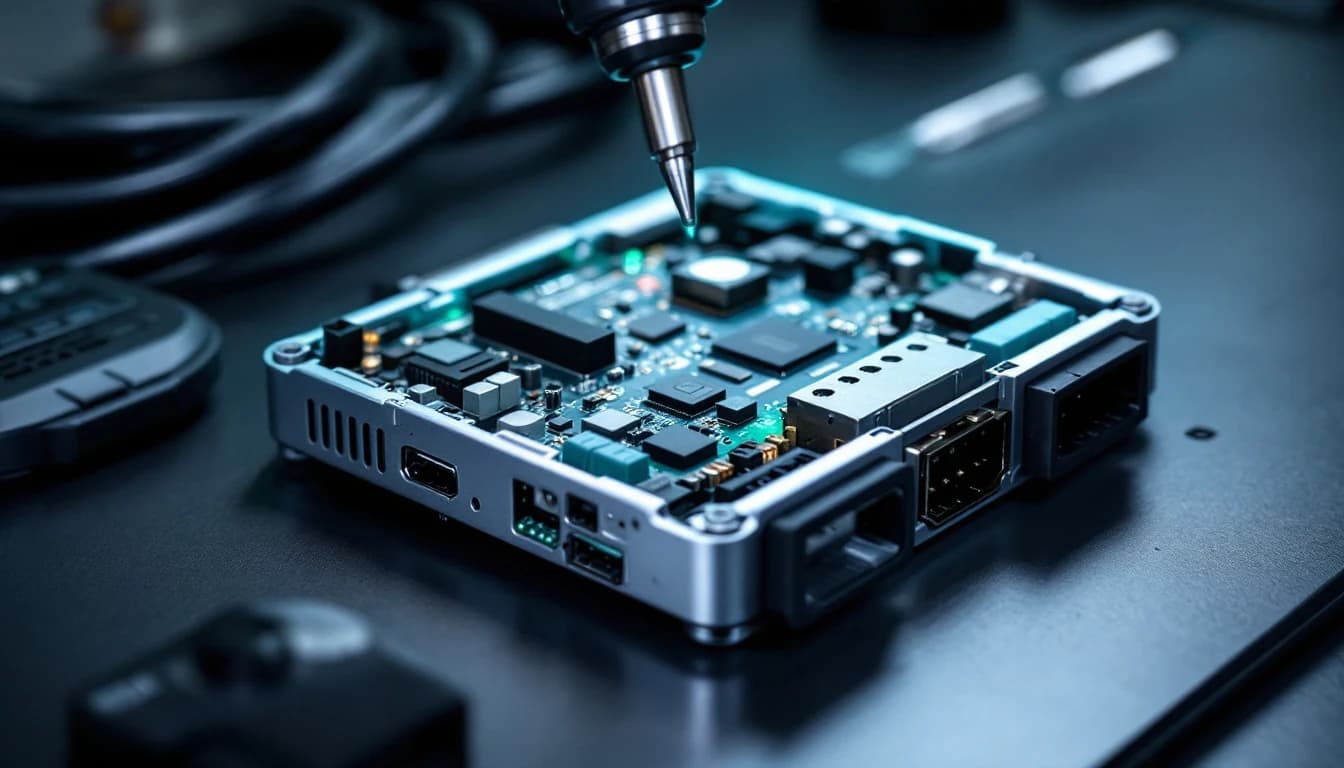
BMW MSD80 DME Injector Driver Repair — N54 Misfire & Injector Activation Faults
Misfire on a fixed group of cylinders and a 30BA or 30BB stored in the DME? If the injector driver inside your MSD80 has failed, we repair that stage on the bench — your original DME, your original data.
Sending several modules? Add them all — one box, one return-shipping charge.
BMW MSD80 DME — N54 twin-turbo inline-six applications. Confirm your exact DME by label before shipping.
BMW MSD80 Injector Driver Repair: the short answer
BMW MSD80 injector driver repair is a mail-in, board-level repair of the injector output stages inside the MSD80 DME used on N54-engined BMWs. It addresses misfires confined to a fixed group of cylinders and injector-activation faults such as 30BA and 30BB where the fault follows the DME rather than the injectors. Auto Module Lab repairs your original DME at our Arlington, Texas bench for $295 flat, typically in 3-5 business days, so your VIN, ISN and key data stay intact and no replacement DME has to be coded to the car.
How It Works
Three simple steps. Hundreds of mail-in jobs completed for shops, locksmiths, and DIY pros.
Pay & Get Address
Click "Order Now", pay securely online. We email shipping address + instructions within minutes.
Ship Your Module
Pack per the instructions and ship to Arlington. USPS goes to our PO Box; UPS and FedEx must use the street address. Your prepaid inbound label arrives by email — shipping to us costs you nothing.
Get It Back
The bench work typically takes 3–5 business days after your module arrives. Ships back at the return speed you chose at checkout — standard to overnight. Tracking emailed.
What You Get
- Your original MSD80 opened, inspected and bench-tested
- Board-level repair of the failed injector output stage
- Your VIN, ISN and key data untouched — nothing to code, nothing to re-marry
- Driver outputs verified on the bench before it ships back
- A written note of what we found and what we repaired
- An honest assessment first if the board cannot be economically recovered
Compatibility
Confirm your part matches one of the variants below before ordering. Not sure? Text us a photo and we'll verify.
We verify your DME from its own label instead of publishing an MSD80/MSD81 interchange table, because the wrong number on a page like this costs you a shipment and possibly a car. Text us a photo of the DME label with your VIN and we confirm what you have — free, usually within minutes. That check also tells you whether you are looking at an MSD80 or the later MSD81, which is a different conversation entirely.
Engine
What we repair
Typical faults
Confirm first
Will This Fix My Problem?
Honest answer: here's exactly what this service fixes — and what it doesn't.
Fixes:
- Misfire confined to a fixed group of cylinders that does not move when injectors are swapped
- 30BA or 30BB stored in the DME where the injectors themselves test good
- Cylinders that receive no injector activation at all
- A misfire pattern that returns immediately after new injectors are fitted
- Intermittent injector-activation faults that appear once the engine bay is hot
Won't fix:
- Failed or shorted injectors — the most common cause of these codes, and not a DME fault
- High-pressure fuel pump failure, a known N54 issue that also causes misfires and rough running
- Ignition coils, spark plugs and their wiring
- Wastegate rattle, boost leaks and turbocharger faults
- Wiring and connector faults between the DME and the injectors
- Carbon build-up on the intake valves, which produces its own misfire pattern
- A board damaged beyond economical repair — assessed and reported before any charge
Before you order
You diagnose, we service the module.
We don't have your car and we don't diagnose it. Order once you or your mechanic have confirmed this module is the cause. If the work is completed and the car still has the same symptom because of another fault, the work is still done — a bench re-test under warranty is free.
A clone copies what is in your module.
We transfer the data as we read it. If another shop or tool already worked on the module — an unfinished clone, a tune, a delete — that data can come across too. Tell us before you ship.
What "plug-and-play" means.
No dealer programming should be needed when your original data is intact, the donor matches your module (same type, hardware and software family) and the rest of the car works. It isn't a promise that the car will start or run.
What we repair on this module
Board-level faults, not symptoms. These are the specific failures our bench process targets.
Codes that commonly lead here
What each code means, and what it does not prove on its own.
A stored code is evidence, not a verdict. Every code below can also be set by wiring, connectors, grounds, power supply, or the component the module is trying to drive. Rule those out before you ship anything — or text us the codes and freeze-frame and we will tell you honestly whether the module is even a suspect.
| Code | Meaning | What it does not prove |
|---|---|---|
| 30BA | Injector activation fault reported by the DME for a cylinder group. | Does NOT on its own mean the DME failed. A shorted or failing injector on that group loads the driver and sets the same code with healthy hardware. Swap the suspect injectors to another cylinder group first: if the fault moves with the injectors, it is the injectors. |
| 30BB | Injector activation fault reported by the DME for the other cylinder group. | Same qualification as 30BA. The evidence that points at the DME is a fault that stays on the same cylinders after the injectors have been moved or replaced. |
| P0301-P0306 | Misfire detected, cylinders 1 through 6. | Generic misfire codes have many causes on an N54 — coils, plugs, injectors, the high-pressure fuel pump, carbon build-up, boost leaks. On their own they say nothing about the DME. |
| P0300 | Random or multiple-cylinder misfire. | A random misfire spread across all cylinders points away from a single driver stage and towards fuel supply, ignition or air-side faults. |
Injector activation fault reported by the DME for a cylinder group.
Does not prove: Does NOT on its own mean the DME failed. A shorted or failing injector on that group loads the driver and sets the same code with healthy hardware. Swap the suspect injectors to another cylinder group first: if the fault moves with the injectors, it is the injectors.
Injector activation fault reported by the DME for the other cylinder group.
Does not prove: Same qualification as 30BA. The evidence that points at the DME is a fault that stays on the same cylinders after the injectors have been moved or replaced.
Misfire detected, cylinders 1 through 6.
Does not prove: Generic misfire codes have many causes on an N54 — coils, plugs, injectors, the high-pressure fuel pump, carbon build-up, boost leaks. On their own they say nothing about the DME.
Random or multiple-cylinder misfire.
Does not prove: A random misfire spread across all cylinders points away from a single driver stage and towards fuel supply, ignition or air-side faults.
Our bench process
What happens between your module arriving and it going back in the box.
- 1
Intake and visual inspection
Intake and visual inspection
The module is logged against your order, photographed as received, and opened. We look for what decides whether repair is sensible at all: liquid ingress, corrosion, prior repair attempts, physical damage, and burnt or lifted components.
- 2
Power-up and communication test
Power-up and communication test
The module is powered on a bench harness to establish whether it comes up and communicates. A silent module and a module that talks but misbehaves are different faults with different causes, and this separates them before any rework starts.
- 3
Fault localisation under load
Fault localisation under load
We test the sections that actually fail on this module — supply rails, output stages, and the circuits feeding them — with the module doing work rather than idling. Intermittent faults get thermal cycling, because a joint that measures fine cold is precisely the joint that opens hot.
- 4
Component-level repair
Component-level repair
Failed components are replaced and weak or cracked joints reworked, on the board you sent us. If a fault traces to damage beyond economical repair, work stops here and you hear about it before anything is charged.
- 5
Data preservation
Data preservation
Where the repair touches memory or needs a programming step, your existing configuration is read first and restored afterwards, so the module returns set up for your vehicle rather than blank.
- 6
Bench verification and return
Bench verification and return
The repaired module is retested — including the specific function that failed — thermally cycled again, then packed with protection and shipped back with tracking at the return speed you chose.
Why repair your original?
The case for keeping the module that is already married to your vehicle.
No coding, no ISN mismatch, no key problems
A BMW DME is tied to the car through its ISN and the immobilizer relationship. Fitting a different DME means aligning all of that — a job in its own right, with real potential to leave you with a car that cranks and will not start. Repairing your original sidesteps the entire question: the car already knows this module.
Your data and adaptations stay put
Your VIN, your calibration and everything the DME has learned over its life remain exactly where they are. Nothing to restore, nothing to re-adapt, no unexplained driveability quirks in the first few hundred miles after the swap.
A used MSD80 is the same age as yours
The realistic alternative is a fifteen-year-old DME out of another N54, with the same output stages, the same service history you cannot see, and the same failure ahead of it. Repairing yours fixes the part that actually failed.
You find out before you commit
We test before repairing. If the driver stages test good — which happens, because the injectors are the more common culprit — we tell you rather than doing work you did not need. You are never charged for a repair we cannot deliver.
Repair vs used vs replacement
Four ways out of this failure, compared honestly.
| Path | What you actually pay for | Programming needed | Your data & config | Main risk |
|---|---|---|---|---|
| Repair your original (this service) | Bench diagnosis and board-level repair of the module you already own, at one flat price. | Usually none — it is still your module, still matched to your vehicle. | Retained. VIN, coding and learned values stay put. | A board damaged beyond economical repair. Assessed and reported before you are charged. |
| Used / salvage module | A cheaper part up front, plus whatever it takes to make it work with your car. | Usually yes — a donor module carries another VIN and configuration. | Lost. You inherit the donor vehicle's setup. | An unknown module of the same age and mileage, capable of failing the same way. |
| Remanufactured unit | A rebuilt exchange unit, typically with a core charge against your original. | Usually yes, depending on how it was prepared. | Depends on the supplier — ask before buying. | Quality varies between remanufacturers, and your original is gone once the core ships. |
| New module through a dealer | A new part plus dealer programming labour, and a tow if the car is not driveable. | Yes — dealer setup and coding to your VIN. | Configured fresh to your VIN by the dealer. | Highest-cost path, and dealer scheduling controls your downtime. |
- What you actually pay for
- Bench diagnosis and board-level repair of the module you already own, at one flat price.
- Programming needed
- Usually none — it is still your module, still matched to your vehicle.
- Your data & config
- Retained. VIN, coding and learned values stay put.
- Main risk
- A board damaged beyond economical repair. Assessed and reported before you are charged.
- What you actually pay for
- A cheaper part up front, plus whatever it takes to make it work with your car.
- Programming needed
- Usually yes — a donor module carries another VIN and configuration.
- Your data & config
- Lost. You inherit the donor vehicle's setup.
- Main risk
- An unknown module of the same age and mileage, capable of failing the same way.
- What you actually pay for
- A rebuilt exchange unit, typically with a core charge against your original.
- Programming needed
- Usually yes, depending on how it was prepared.
- Your data & config
- Depends on the supplier — ask before buying.
- Main risk
- Quality varies between remanufacturers, and your original is gone once the core ships.
- What you actually pay for
- A new part plus dealer programming labour, and a tow if the car is not driveable.
- Programming needed
- Yes — dealer setup and coding to your VIN.
- Your data & config
- Configured fresh to your VIN by the dealer.
- Main risk
- Highest-cost path, and dealer scheduling controls your downtime.
No dealer or reman dollar figures are published here on purpose — they move constantly and vary by region, and an invented number would be worse than none. Get a current quote from your dealer and compare it against the flat price above.
Do this test before you send us anything
The single most useful thing you can do costs nothing: move the injectors from the affected cylinder group to the other group and see where the fault goes. If the misfire and the code follow the injectors, you have an injector problem and the DME is fine — do not mail it. If the fault stays on the same cylinders with different injectors fitted, the driver stage inside the DME becomes the prime suspect and this is your service. We say this on the page rather than in the small print because it is the difference between a repair you needed and a shipment you did not. Text us the codes and what the swap did, and we will give you a straight read on it before you order.
Need a DME clone instead?Shipping Instructions
These details are also emailed to you the moment your payment clears.
Ship the DME only — no harness, no bracket, no airbox parts. Tell us which cylinders misfire, what codes are stored, and crucially whether you have already swapped or replaced the injectors and what happened. Return shipping is selected and paid at checkout — Standard $29.95, UPS 2-Day $54.95, or UPS overnight $94.95. Ship to PO Box 120241, Arlington TX 76012 (USPS) or 1009 Oakwood Ln # 120241, Arlington TX 76012 (UPS/FedEx).
What to include in your box
- Your MSD80 DME (module only)
- A note listing the affected cylinders, stored codes, and the result of any injector swap or replacement
- Your VIN and model year
- A printed order confirmation
- Your name, return address, and a phone number we can text
Ship to
Auto Module Lab
If shipping USPS
PO Box 120241
Arlington, TX 76012
If shipping UPS or FedEx
1009 Oakwood Ln # 120241
Arlington, TX 76012
Your prepaid inbound label (already addressed) arrives by email the moment you order; the return label is bought when your module reaches the bench and ships on the speed you chose at checkout.
Frequently Asked
Still have a question? Text us — replies in minutes.
Does 30BA or 30BB always mean the DME is bad?
Which cars use the MSD80?
What is the difference between MSD80 and MSD81?
Will I need coding or key programming afterwards?
My misfire is random across all cylinders. Is this my service?
I already replaced the injectors and the misfire came straight back on the same cylinders. What now?
Could this be the high-pressure fuel pump instead?
How long does the repair take?
What if the DME tests good?
Is there a warranty?
Do you work with independent BMW shops?
Where is the work carried out?
Related Services
Other bench services for the same brand or use case.
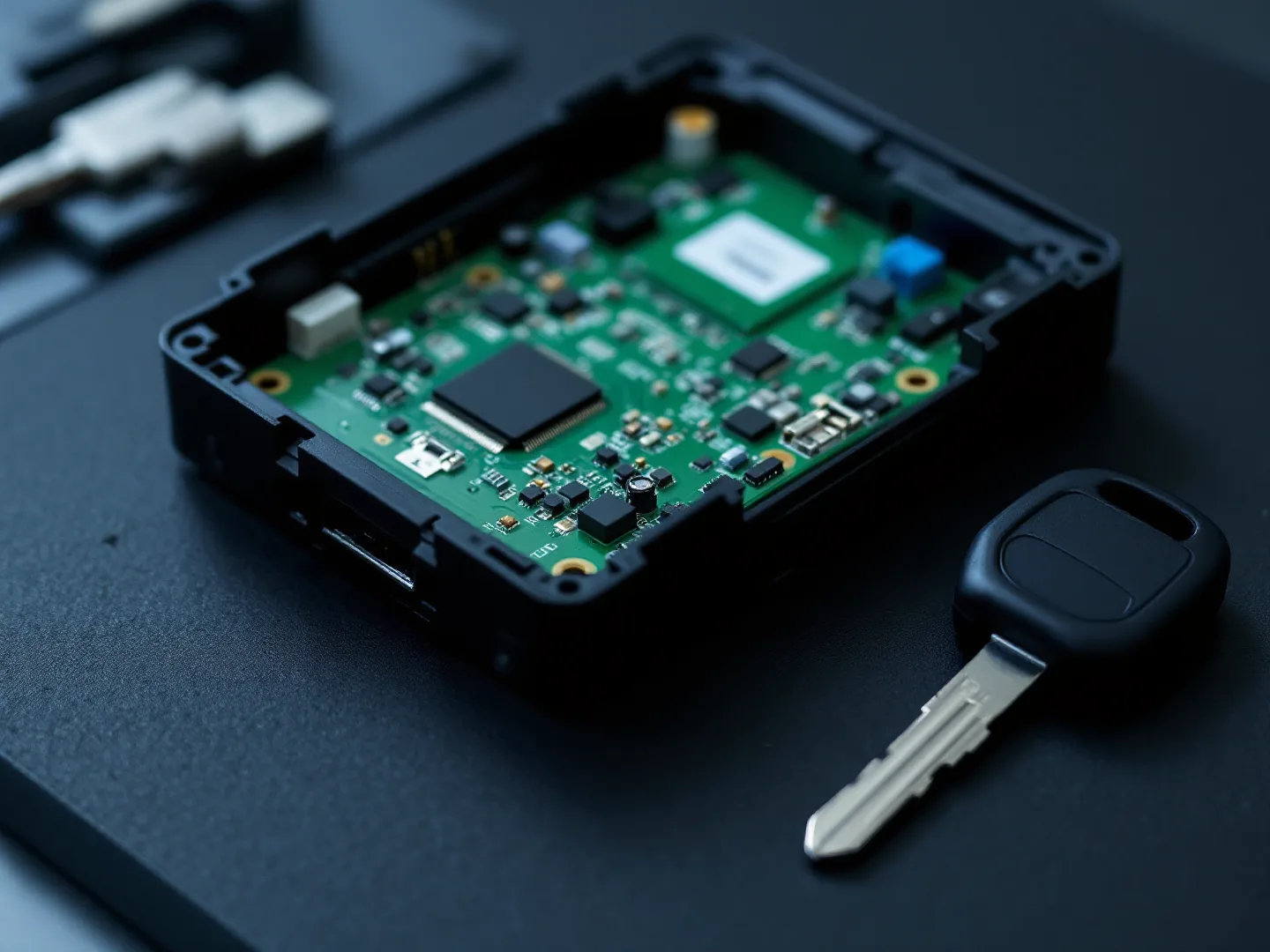
BMW CAS Module Key Programming (2006-2012)
Lost every BMW key, or the car stopped recognizing the one you have? Ship your CAS module — we program a new working key. Covers CAS2, CAS3, CAS3+, CAS4, CAS4+ — on CAS3+ and CAS4+ ship the DME with the CAS, the new key's ISN is read from it.
BMW FEM/BDC Key Programming
Lost the keys to your F-chassis BMW? Ship your FEM/BDC module AND DME — we program a new working key.
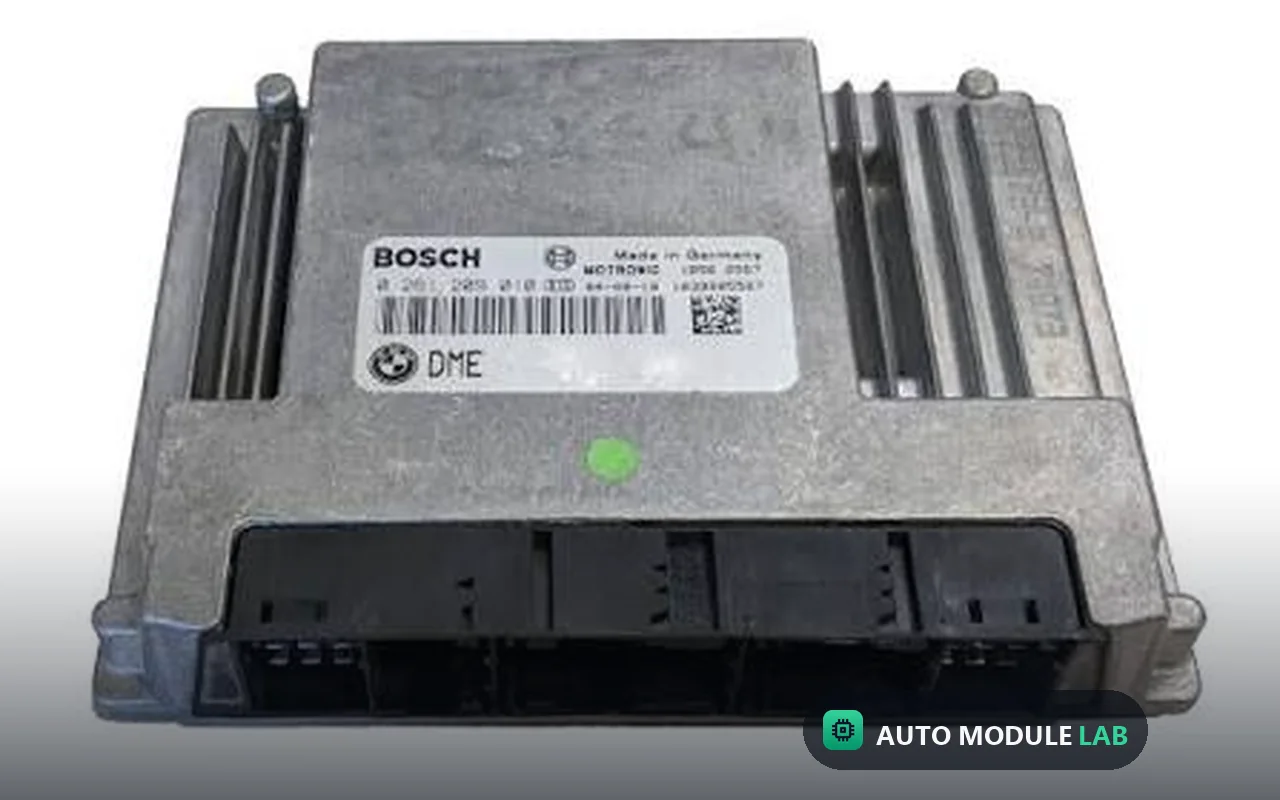
BMW DME EWS Delete (MS41/42/43/45, MSS50-70)
Swapped DME cranking but never firing? Plug-and-play EWS delete for BMW M52/M54/S54/S62/S65 DMEs — ship your DME, get it back IMMO-off with the EWS check removed.
Where we serve BMW MSD80 Injector Driver Repair
Mail-in means nationwide — we accept modules from all 50 states and DC from our Arlington, Texas lab. These states have their own shipping-and-transit page for this service:
10 state guides
Ready to ship?
$295 flat, typical 3-5 business day bench turnaround. Pay now, get the shipping address by email, drop it in the mail. Your module is typically back on your bench in one to two weeks.