Chrysler Crossfire Key Replacement
The day the parts counter said "discontinued"
Every Crossfire owner eventually has this conversation. You call the Chrysler dealer — or what used to be a Chrysler dealer, since the brand's own dealer network has been reshuffled more than once since the Crossfire era — and ask for a replacement key. The parts person types, pauses, and reads you the answer: discontinued, no longer available, no supersession. Not expensive. Not backordered. Gone.
That answer surprises people because the Crossfire is not an exotic. Chrysler built roughly 76,000 of them between 2003 and 2008 according to production histories compiled by Wikipedia's Crossfire reference, and thousands are still registered and driven. The average vehicle on American roads is now more than 12.5 years old, per S&P Global Mobility — which means an enormous number of perfectly serviceable cars have outlived their manufacturer's willingness to stock their security hardware. The Crossfire just got there faster than most, because its parts pipeline was strange from the start.
This guide explains why the Crossfire's key situation is uniquely awkward, why the usual locksmith answers half-work at best, and exactly how the mail-in remote key ($375) and valet key ($250) services put a Crossfire back on the road — including in a true all-keys-lost.
A Chrysler badge on a Mercedes immobilizer
The Crossfire exists because of the DaimlerChrysler merger. Underneath the retro bodywork sits the platform, drivetrain, and electrical architecture of the Mercedes-Benz SLK (R170) — the 3.2-liter M112 V6, the 5-speed automatic, the switchgear, and critically for our purposes, the security system.
That security system is Mercedes DAS — the Drive Authorization System. The immobilizer brain in a Crossfire is a module Chrysler documentation calls the SKREEM (Skim Key Remote Entry Entry Module), and it lives behind the instrument cluster, not in the steering column like the SKIM unit on ordinary Chryslers of the era. When you turn the key, the transponder chip answers a cryptographic challenge from the SKREEM before the engine is allowed to run. Electronic immobilizers of exactly this type are the technology the Insurance Institute for Highway Safety credits with collapsing vehicle-theft rates as they spread through the fleet — the NICB's theft data tells the same story from the insurance side. The system works. It just has no idea the manufacturer stopped supporting it.
The practical consequences for key replacement:
- A generic Chrysler locksmith tool often can't talk to it. The Crossfire speaks Mercedes, not Pentastar. Plenty of capable automotive locksmiths connect a programmer that handles every PT Cruiser and Ram on the block, and get nowhere.
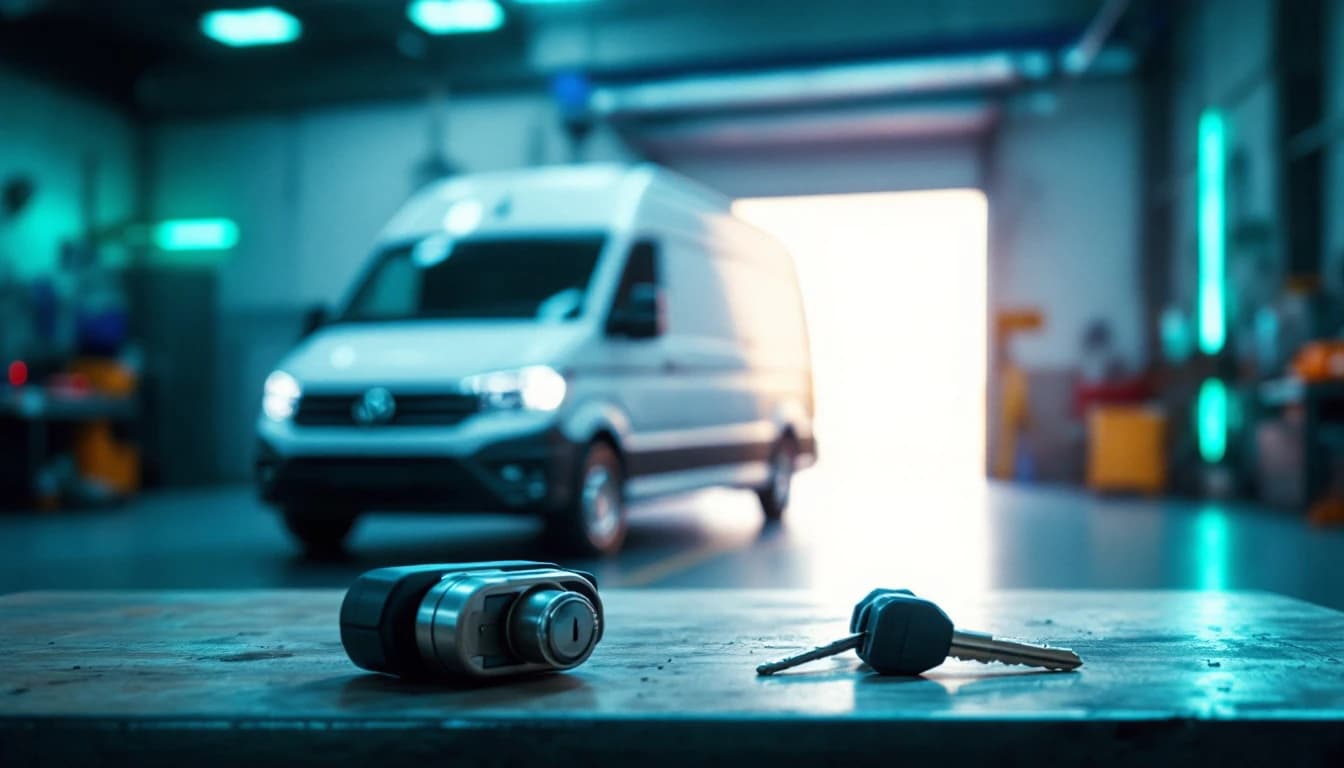
- The key hardware itself is the discontinued part. The Crossfire flip key was a Mercedes-style unit, and the OEM supply dried up. There is no dealer shelf to order from.
- There is no key code on file. On many cars a locksmith can pull a factory code and cut a blade by number. For these cars that path is dead — the cut lives in your locks and nowhere else.
Why "just tow it to the dealer" fails, and what actually works
For most modern cars, the worst-case answer to all-keys-lost is a tow to the dealer and an unpleasant invoice. For the Crossfire, the dealer cannot help even if they want to: no key stock, no supported programming path, and on a 20-year-old orphan platform, often no institutional memory of the car at all. The Bureau of Labor Statistics counts hundreds of thousands of automotive service technicians in the U.S., but almost none of them were trained on a car that was orphaned before many of them started their careers.
What actually works is going underneath the branding to the Mercedes architecture — the same bench approach used for classic Mercedes DAS keys on the SLK, SL, W140, and G-Wagen of the same era:
- The SKREEM ships to the bench. With the module out of the car (behind the instrument cluster — a screwdriver job, not surgery), its EEPROM memory is read directly. That memory contains the car's key data: which keys exist, and the cryptographic secrets a new key must carry.
- A new key is generated against the module's own data. Not a clone of a dead key — a new key the module already trusts, written on the bench using the same class of tooling Mercedes specialists use for DAS-era cars. Remote functions are programmed the same way for the flip key.
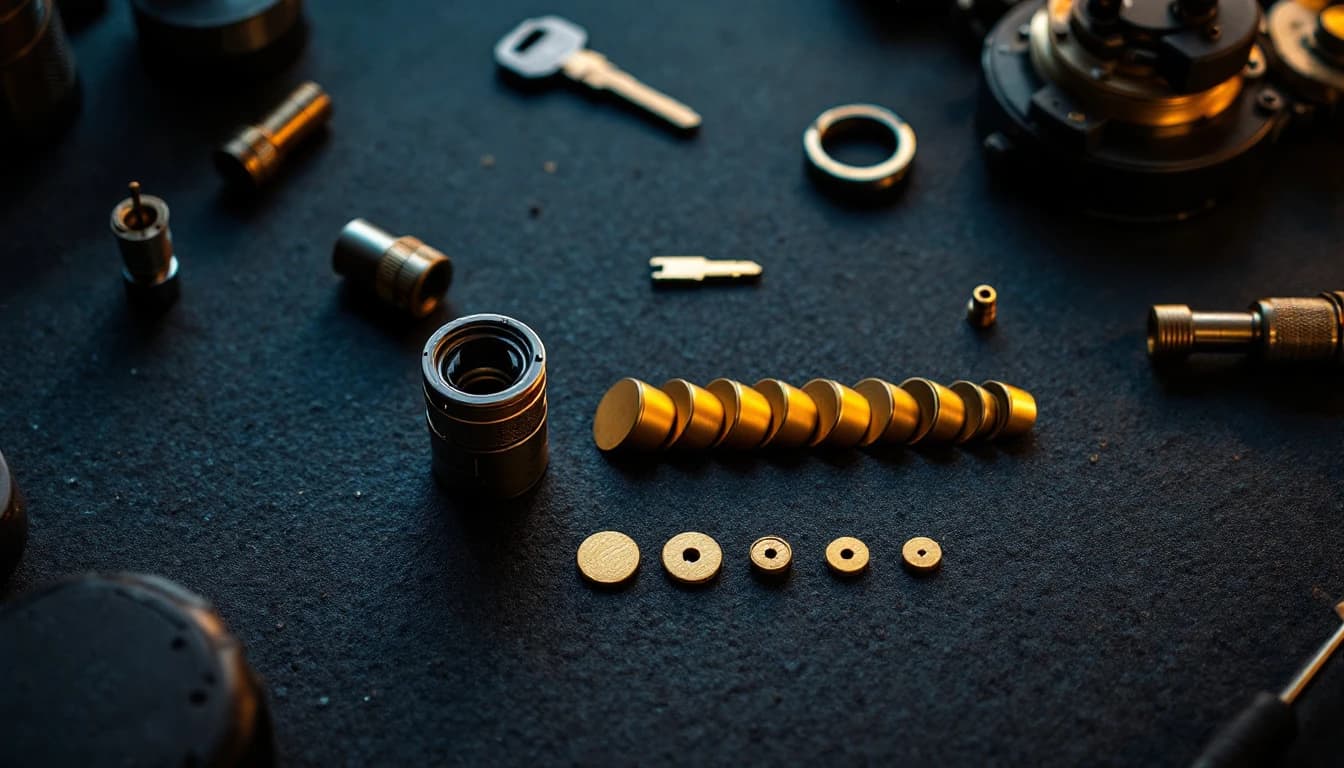
- The blade is cut by decoding your door lock. Since no key code exists, you ship the driver's door lock along with the SKREEM. On the bench the lock is disassembled and read wafer by wafer, and the new blade is cut to match it — which is why the finished key both starts the car and opens the door.
- Everything returns ready to install. SKREEM back behind the cluster, lock back in the door, key in the ignition. No dealer visit, no programming session in the car, nothing left to pair.
An independent locksmith who sends this exact class of work to the bench put it bluntly:
"Orphan cars are where mobile key work goes to die. I can make keys for a 2004 Town & Country in my sleep, but a Crossfire is a Mercedes wearing a costume — my Chrysler software won't touch it and the key blank isn't on my truck. The honest answer is EEPROM work on the module itself, and that's bench work. I'd rather hand the customer a mail-in box than experiment on the only immobilizer the car has." — Independent automotive locksmith, ALOA member, 15+ years in the trade (anonymized)
That last point deserves emphasis. The SKREEM is the only copy of your car's key data in existence. The Associated Locksmiths of America has warned for years about untrained "key cloning" attempts on immobilizer modules; on a discontinued platform, a corrupted module is not an inconvenience, it is potentially the end of the car. Bench work with proper backups — the memory is imaged before anything is written — is the conservative path, not the risky one.
Remote key or valet key: which one does your Crossfire need?
Two services cover the Crossfire, built from the same shipment of parts:
The remote flip key, $375. This is the full factory experience: transponder start plus working remote lock/unlock buttons on a flip-style key. If the Crossfire is your driver, or its only key is showing its age, this is the one to get. All-keys-lost and add-a-spare are the same flat price.
The valet key, $250. A start-only transponder key with a cut blade — it starts the engine and works the door lock, no remote buttons. It is the budget path back to a running car, and a sensible glovebox spare for a weekend cruiser that lives in a garage. (At $250 versus $375 it is $125 less; what you give up is purely the remote functions.)
Both need the same two parts shipped: the SKREEM and the driver's door lock. If you still have a working key and only want a spare, the job is easier still — and if your situation is genuinely ambiguous, text the lab a photo of what you have before ordering anything.
What it costs in context
Crossfire values have been climbing out of their bargain-basement years — clean roadsters and especially the supercharged SRT-6 get real collector attention now, a pattern Hagerty has documented across 2000s two-seaters as they age into enthusiast territory. Meanwhile AAA puts average new-car ownership costs above $12,000 a year — the whole reason people keep good paid-off cars like these on the road.
Against that backdrop the math is short. A $375 key on a car worth five figures — or a $250 valet key to get a $6,000 driver moving again — is not the expensive path. The expensive path is the one owners stumble into by accident: a tow to a dealer that cannot help ($150–200 wasted), a mobile locksmith attempt that ends at "my tool won't communicate" (often a service-call fee anyway), a used SKREEM off eBay that arrives married to a different car's keys and starts nothing. The NHTSA's guidance on immobilizers is written for exactly this reason: the security system is doing its job when it refuses hardware from another vehicle.
What to ship, step by step
- Text the lab first with your VIN and situation — all keys lost, worn key, or adding a spare. You get exact pull instructions for the SKREEM (behind the instrument cluster) and the driver's door lock before you touch a screwdriver.
- Order online — remote key $375 or valet key $250 — and choose your return shipping speed at checkout (Standard $29.95, UPS 2-Day $54.95, overnight $94.95).
- Pack the SKREEM, the door lock, and any old keys (working or not, even broken ones) with your printed order confirmation. USPS ships to PO Box 120241, Arlington TX 76012; UPS/FedEx to 1009 Oakwood Ln # 120241, Arlington TX 76012.
- typical 24-hour bench turnaround. Module memory is imaged, the key is generated and tested against your SKREEM on the bench, the blade is cut from your lock's decode, and everything ships back together.
- Reinstall and drive. Cluster back in, lock back in the door, key in the ignition. There is no in-car pairing step — the key was born already married to your module.
Dead key or dead transponder? A two-minute diagnosis before you order
Not every misbehaving Crossfire key is a lost-key problem, and sorting this out before ordering saves a round of shipping. Three distinct failures look similar from the driver's seat:
The remote buttons die but the car still starts. That is the key's battery or its remote circuitry aging out — the transponder that authorizes starting is a separate, unpowered component and often outlives the buttons by years. If this is your situation you do not have an emergency; you have a deadline. The car still runs, which means the bench has everything it needs to verify the work when you order a replacement remote key at your convenience.
The car cranks but will not start, intermittently, with the key you have always used. Wiggling and reinserting sometimes helps. This is the classic aging-transponder-coupling symptom — and sometimes an early SKREEM fault rather than a key fault at all. Either way the fix flows through the same bench: the module's memory tells the truth about what it can and cannot read.
No keys at all. The full program: SKREEM + door lock shipped, new key generated and cut. This is the situation the flat all-keys-lost pricing exists for.
One more scenario worth naming because Crossfire ownership is full of it: the auction or estate purchase that comes with one strange key or none. These cars changed hands cheap for years, and paperwork-light sales are common. The bench path does not care how many previous owners lost how many keys — but proof of ownership rides with every immobilizer order, so have your title or bill of sale ready when you ship.
If the SKREEM itself is dead
A small number of Crossfires arrive at the key conversation with a deeper problem: a SKREEM that has failed outright — water intrusion behind the cluster, a fried supply circuit, age. If your car stopped recognizing a known-good key before the keys were ever lost, suspect the module, not the keyring.
The triage is the same as for the classic Mercedes cousins: the module is bench-tested first, repaired where repairable, and when it is truly unrecoverable a donor unit can be prepared and married to your car so your new keys and your engine agree on their secrets. The classic DAS bench services share this exact toolchain. The one thing that never works is the raw eBay swap — a used SKREEM without bench work is a stranger's immobilizer that will faithfully refuse your car forever.
Frequently asked questions
Chrysler really can't sell me a key?
Really. The Crossfire key was discontinued and never superseded, and because the car is Mercedes R170 architecture underneath, ordinary Chrysler dealer tooling has no path into its immobilizer either. This is not a dealer being unhelpful — the factory support genuinely ended.
Why do you need the module out of the car? Other locksmiths program through the plug.
On supported platforms, OBD programming is exactly right. The Crossfire's DAS-era system predates the security-access conventions that make that safe and possible — later standardized in SAE J2186 diagnostic data-link security and its successors. For this generation the key data lives in the SKREEM's EEPROM, and reading it directly on the bench is the reliable, non-destructive route.
Is my one surviving key useful, or do I ship parts anyway?
Ship it along with everything else. A working key can speed up verification on the bench, and even broken keys can carry useful data. But the SKREEM and door lock are what the job is built from — the surviving key alone is not enough on this platform, because the blade still has to be cut from a decode and the new transponder still has to be written against the module.
Does all-keys-lost cost extra?
No. $375 for the remote key or $250 for the valet key, flat, whether you are adding a spare or starting from zero keys. Losing every key is the normal case for this service, not a surcharge event.
How long is the car apart?
The car sits with its cluster loose and one door lock out for the shipping round-trip plus one bench day. Most owners are back together in under a week with standard shipping, or a couple of days with 2-day service each way. The car is garage-bound either way — it cannot start without the SKREEM installed.
Will this work on my SRT-6?
Yes — coupe and roadster, 2004 through 2008, including the SRT-6. It is the same SKREEM architecture across the run.
I have a 2005 SLK, not a Crossfire. Same deal?
Same era, same DAS family, its own service: see the classic Mercedes remote key service for the R170 SLK, R129 SL, W140 S-Class, and G-Wagen — or the Mercedes EIS key service for the later FBS3 SmartKey cars.
The bottom line
The Crossfire outlived its own parts pipeline, but it did not outlive its fixability. The key data never left your car — it is sitting in the SKREEM behind the instrument cluster, and the blade cut is sitting in your door lock. Ship those two parts, and a bench that speaks Mercedes DAS can hand you back a working remote key for $375 or a valet key for $250, all-keys-lost included, in a typical 24-hour turnaround.
Locked out of a Crossfire? Start with the remote key service or the valet key service — or text the lab your VIN first and a technician will walk you through exactly what to pull and ship.
Ship your module today
Flat-rate pricing, typical 24-hour bench turnaround, return speed your choice at checkout. Most jobs back on your bench within a week.