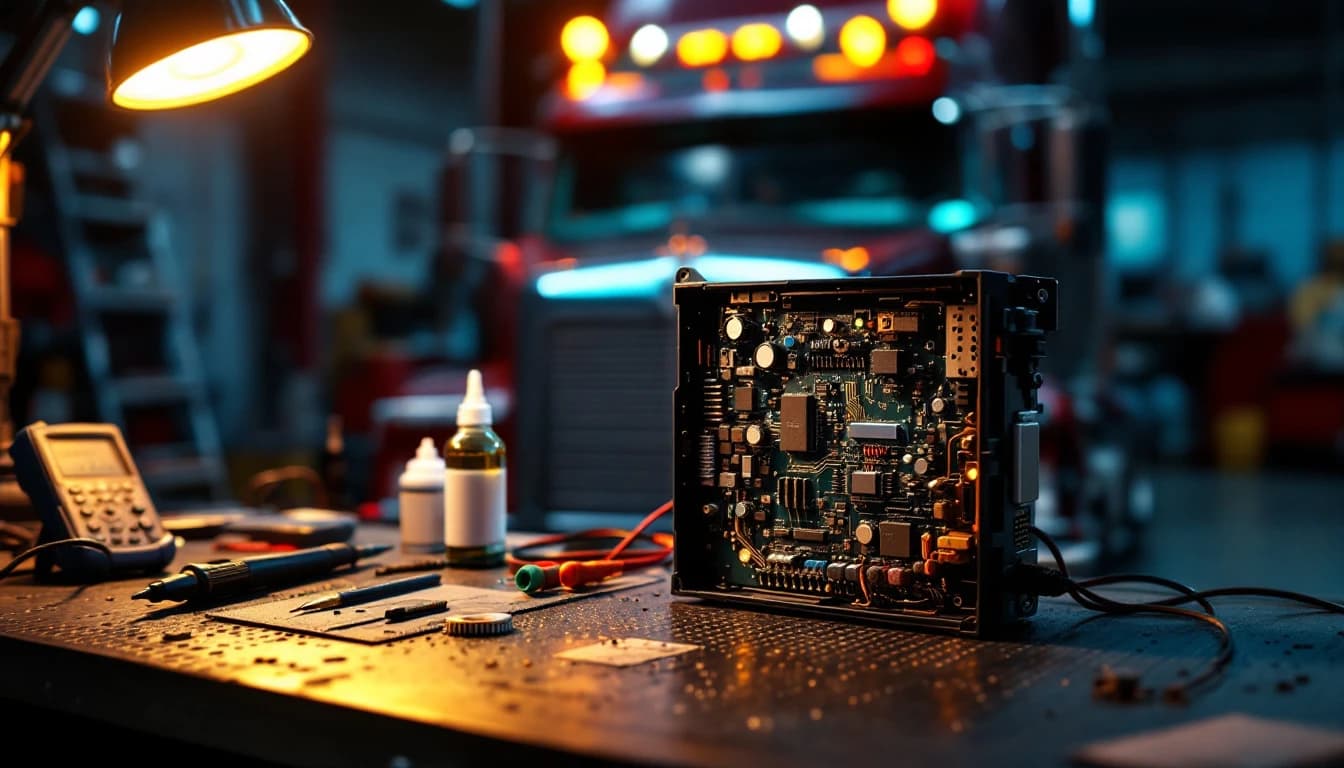
Ford 6.0 Powerstroke FICM Repair: Hard Start, No-Start
The 6.0's most famous electrical failure
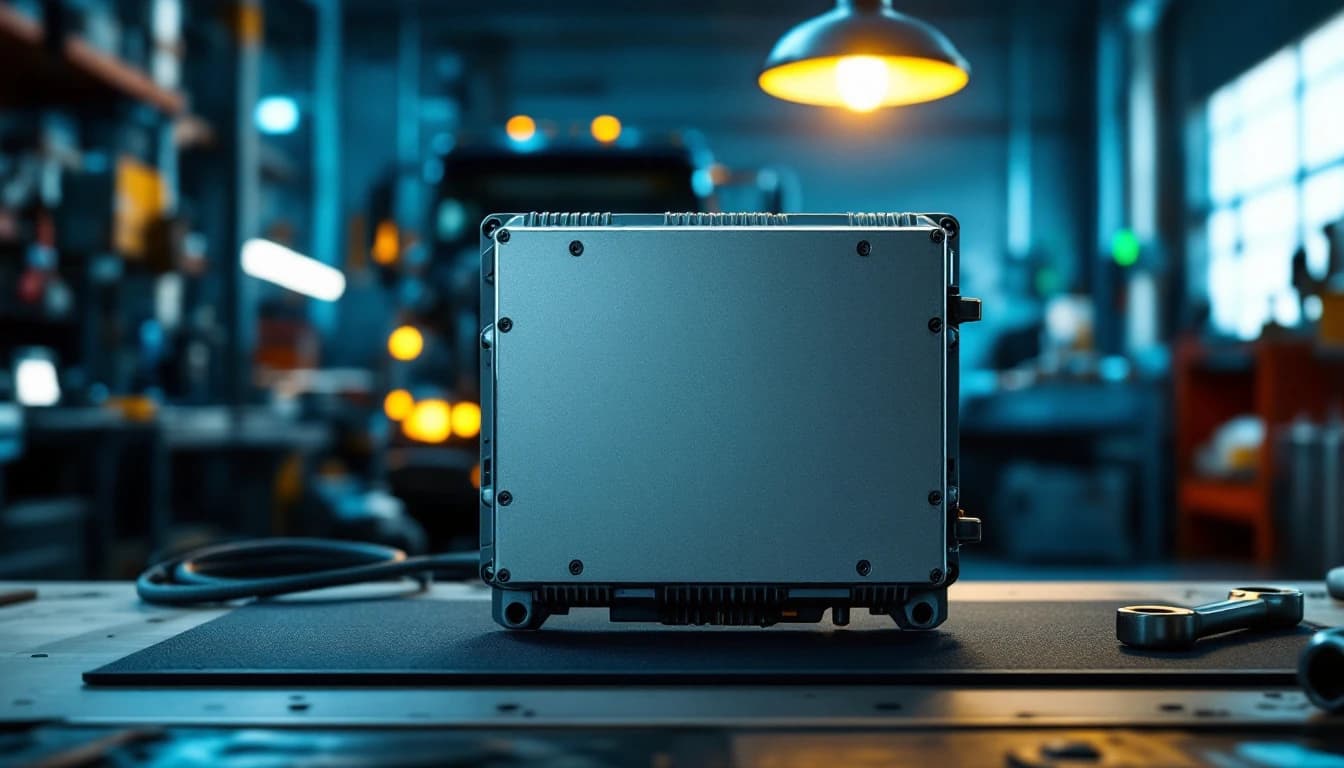
Ask around any diesel forum or truck-stop parking lot about the Ford 6.0 Powerstroke and the conversation eventually lands on the same three letters: FICM. The Fuel Injection Control Module is, alongside a short list of usual suspects, the single most common electronic failure on these trucks — and it produces symptoms distinctive enough that experienced 6.0 owners often diagnose it from the driver's seat.
The 6.0L Powerstroke powered the Super Duty and E-Series from 2003 to 2010, and there are a great many of them still working for a living. Diesel trucks live long, hard lives — the EPA's regulatory history of heavy-duty diesel engines reflects how long these platforms stay in service — and with the average U.S. vehicle now over 12.5 years old, a huge share of 6.0s are deep into the age where the FICM's power supply starts to give up. When it does, the truck tells you in a very particular way.
This guide covers what the FICM does, how to recognize its failure, why a board-level repair of your original beats a used-module gamble, and what actually happens on the bench. It is diesel-specific but it is the same discipline behind all our board-level module repair work — targeting the component that failed rather than replacing the whole computer.
What the FICM actually does — and why 48 volts is the magic number
The 6.0's injectors are not simple solenoids. They are hydraulically actuated, electronically controlled units that need a substantial, precisely timed high-voltage pulse to fire. Supplying that is the FICM's job: it takes battery voltage and boosts it, driving the injectors at roughly 48 volts. That number is the whole story of FICM health. A strong FICM holds a stable 48V; a failing one sags below it, and the injectors no longer get the clean, powerful pulse they need.
The failure is concentrated in the FICM's power-supply section — the part that generates and regulates that 48V. Heat cycling, vibration, and years of use crack solder joints and degrade power components, and the output starts to droop, especially when everything is cold and the demand is highest. This is the same solder-fatigue mechanism that kills modules across the vehicle, which we cover in our summer-heat solder-fatigue explainer; the FICM is simply one of the most famous victims of it, because the 6.0 leans on it so hard.
How to know it is the FICM
The symptom set is recognizable, and it tends to track the FICM's voltage sag:
- Hard cold starts that improve once warm. The signature. Cold morning, long crank, reluctant start — then it runs fine once it warms up, because the power supply performs better warm than cold. This is the tell that sends more 6.0 owners to the FICM than any other.
- Rough running, misfire, or a persistent dead-miss cylinder. Weak injector drive shows up as combustion that is uneven or missing on one or more cylinders.
- Loss of power under load. Climbing a grade or towing, the truck falls flat because the injectors are not getting the drive they need.
- No-start, often with FICM/injector-driver codes. In the worst case the power supply has sagged far enough that the truck will not start at all, frequently with codes in the P061x range pointing at the module.
- A measured FICM voltage below spec. If you can read the FICM's power reading and it sits under the ~48V it should hold, that is a strong, direct confirmation.
If your 6.0 matches this pattern, the FICM is the leading suspect — and unlike a lot of diesel diagnostics, it is a suspect you can address decisively.
Why board-level repair beats a used FICM
The tempting shortcut is a used FICM from a yard truck. It is the wrong move, for a simple reason: you are buying another truck's aging power supply and hoping it outlasts yours. The failure is a wear-and-heat-cycle mechanism, and a used unit of the same vintage is somewhere on the same degradation curve. You might get lucky. You might be back to hard starts in a season.
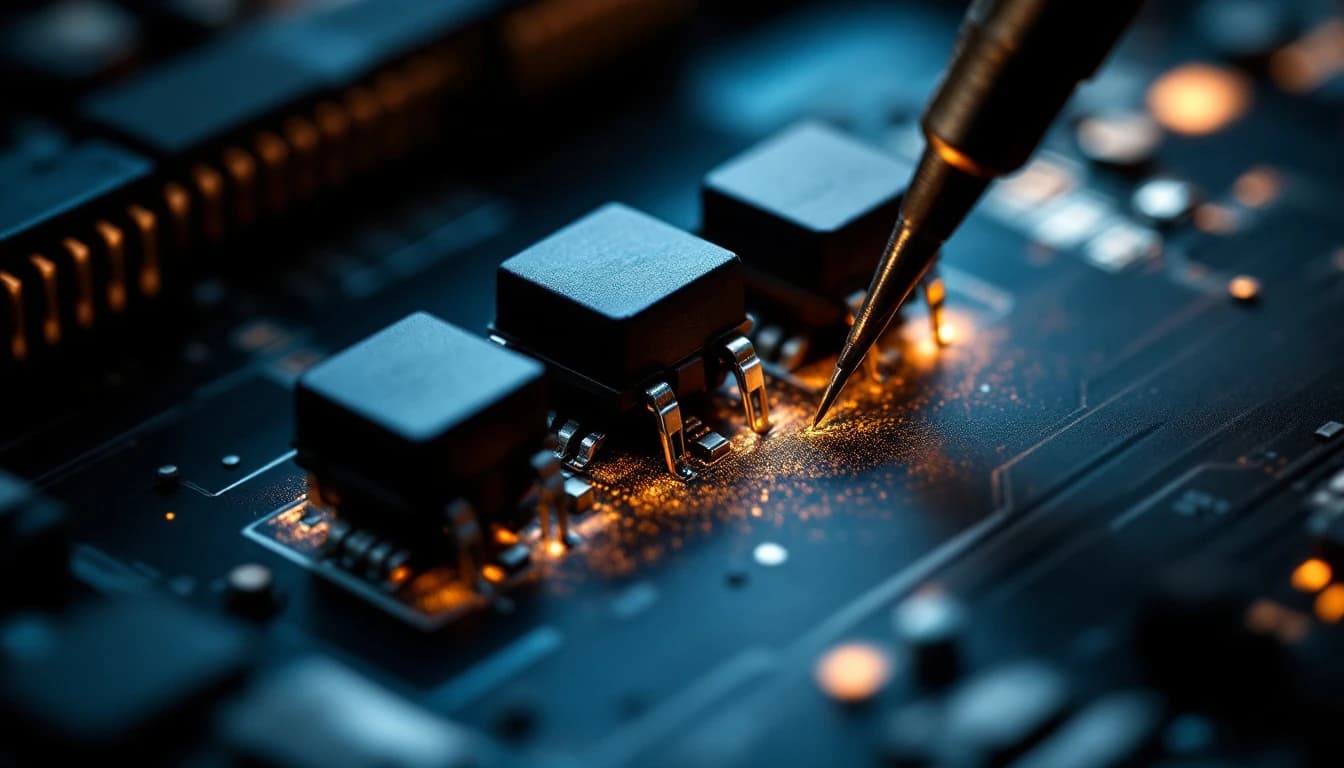
A board-level repair targets the actual failure on your module: the power-supply section and its cracked solder joints are rebuilt, the weak components replaced, and — critically — the repaired output is load-tested to a stable 48 volts before the module ships back. You get your own FICM returned, fixed at the point where it broke, verified under load rather than just powered up and eyeballed. That is $249 flat.
A diesel electronics technician who has rebuilt a long line of these described the choice:
"Guys want to throw a used FICM at it because it's the fast fix. I get it. But a used FICM is a coin flip — it's the same failure waiting to happen, from a truck you know nothing about. When I rebuild the power supply on your original and load-test it to 48 volts, I'm fixing the thing that actually failed and proving it holds up before it leaves the bench. One is a gamble, the other is a repair. On a truck you depend on, that difference is the whole game." — Independent diesel module-repair technician, 6.0/6.4 focus (anonymized)
What happens on the bench
The repair is genuine electronics work, which is why it is a 2-3 day job rather than a same-day reflash:
- The module is opened and the power-supply section inspected for the known failure points — cracked solder joints, degraded power components, heat-stressed areas.
- The failed components and joints are rebuilt — not masked, replaced and re-soldered properly so the section can do its job again.
- The output is load-tested to a stable 48 volts — the module is exercised under load and its power reading confirmed, because a FICM that reads 48V at idle but sags under demand is not actually fixed.
- An honest assessment if it is beyond repair. A minority of FICMs arrive too far gone — severe corrosion, board damage — to rebuild economically. When that is the case we tell you before doing further work; you are never charged for a repair we cannot deliver.
The result is your original module, returned holding a strong, stable output, ready to install.
Which trucks, and what this does not cover
The service is specific to the 2003-2010 Ford 6.0L Powerstroke FICM — the F-250/350/450/550 Super Duty, the E-Series vans, and the 6.0 Excursion. It does not cover the 6.4L or 6.7L Powerstroke, which use different fuel-control electronics; if you are unsure which engine you have, send the VIN and we confirm before you ship.
It is also, by nature, a fix for the FICM's electronic failure. It does not address mechanical injector faults, high-pressure oil system (HPOP) problems, or wiring and connector issues upstream of the FICM. Those are separate diagnostics — and if your no-start turns out to be the PCM rather than the FICM, that is a different module and our Ford PCM programmed-replacement service covers that side. The FICM repair is for the specific, recognizable power-supply failure this guide describes.
What it is worth
Diesel owners understand downtime costs, and the FICM math is favorable. There are four ways out of a failing FICM, and they are not equal:
| Option | What you actually get | Programming needed | The catch |
|---|---|---|---|
| Used FICM from a salvage truck | Another 15-to-20-year-old power supply, typically $150-300 | Sometimes, the calibration has to suit your injectors and model year | The same failure, already in progress, with no load test |
| New or remanufactured replacement | A different module in place of yours | Yes, it has to carry the correct calibration for the truck | The largest parts bill of the four |
| Aftermarket higher-output unit | More voltage than the factory design calls for | Depends on the unit | Solves a problem a stock truck does not have |
| Board-level repair of your original, $249 | Your own module with the power supply rebuilt and load-tested to 48V | None, your calibration never leaves the module | 2-3 bench days plus shipping each way |
A used FICM is a coin flip that may hard-start again by winter. A new FICM from Ford is a substantial parts bill. The Bureau of Labor Statistics occupational data shows what diesel-technician time costs when a truck bounces between shortcuts. Against all of that, a $249 board-level repair fixes your original at the failure point and proves it under load. Turnaround is typically 2-3 days on the bench plus shipping each way.
The row that surprises people is the programming column. The FICM is not a dumb power brick: it carries a calibration matched to the engine and injectors, which is why two modules that look identical on the shelf do not always behave identically on the truck. Repairing your own unit sidesteps the question completely, because nothing about the logic side of the module changes. That is the same reason we steer most module owners toward repairing an original before sourcing a donor, and it is laid out for every module family in our guide to repair versus replacement versus reprogramming.
What to ship
- Confirm it is the FICM. The hard-cold-start-that-clears-when-warm pattern, misfire, power loss, or a no-start with P061x codes and a sagging FICM voltage all point here. Note your symptoms and any stored codes.
- Order online — Ford 6.0 Powerstroke FICM repair $249 — and choose return shipping at checkout (Standard $29.95, UPS 2-Day $54.95, overnight $94.95).
- Remove and pack the FICM. It sits on top of the engine near the driver's-side valve cover; unplug it and remove the mounting bolts. Include a note with your exact symptoms and codes. USPS: PO Box 120241, Arlington TX 76012. UPS/FedEx: 1009 Oakwood Ln # 120241, Arlington TX 76012.
- 2-3 day bench turnaround. The power supply is rebuilt and load-tested to 48V, then your module ships back.
- Reinstall and start. Your own FICM, repaired at the failure point and verified under load, goes back in.
Measuring FICM voltage yourself before you ship
If you want to confirm the diagnosis before spending anything, the 6.0 makes it unusually easy: FICM power is a readable value. Many owners check it directly — a healthy module reads close to 48 volts, and a failing one sags, especially cold and especially under crank. A reading in the low 40s or worse, or one that drops sharply while cranking, is a strong, direct confirmation that the power supply is the problem this repair addresses. General diagnostic references from outlets like MotorTrend and the broad DIY-diesel community document the FICM-voltage check as the go-to first test on these trucks, precisely because it points so cleanly at the module.
Reading the number: three checks, one conclusion
Take the reading three times, because a FICM that looks acceptable in one condition often gives itself away in another:
- Key on, engine off, cold. This is the most revealing check. A healthy power supply comes up to roughly 48 volts and stays there. A tired one starts low and climbs slowly, or never gets there.
- While cranking. Watch for the drop. Cranking pulls battery voltage down, and a marginal FICM supply follows it. A reading that falls well below the mid-40s during crank is the classic hard-start signature.
- Running, fully warm. Many failing modules look almost normal here, which is exactly why a truck that runs fine at noon and will not start at dawn confuses people. A good warm reading does not clear a module that failed the cold check.
Most service references treat about 45 volts as the floor: a supply that cannot hold that figure cold and under crank is not delivering what the injectors need. Before blaming the module, though, confirm that both batteries are charged and the truck is cranking on a healthy 12-volt system, because a FICM fed low input voltage will read low for reasons that have nothing to do with its own board. If battery voltage is sound and FICM voltage still sags, you have your answer.
Note the reading, cold and warm if you can, and include it with your shipment. It tells us where the power supply is starting from and confirms we are chasing the right fault — and it is the kind of data that turns a 2-3 day repair into a confident one rather than a hopeful one.
Reinstalling for a long life, not a repeat failure
A repaired FICM deserves a healthy electrical system around it, because the same conditions that stressed the original will stress the repair. The 6.0 is notoriously sensitive to battery and charging health — weak or mismatched batteries, corroded grounds, and voltage sag all make the FICM work harder than it should. Before reinstalling, it is worth confirming both batteries are strong and matched and the grounds are clean; a module that holds 48 volts on the bench will still struggle if it is fed a sagging supply in the truck. Basic charging-system care of the kind AAA's battery and charging guidance describes is not glamorous, but on a 6.0 it is the difference between a FICM repair that lasts years and one that gets stressed right back into trouble.
Aftermarket "upgraded" FICMs and where repair fits
A common question from 6.0 owners is whether to chase one of the aftermarket "upgraded" or higher-output FICMs instead of repairing the original, and it is worth an honest answer. Those units exist and some owners like them, particularly on heavily modified trucks, but for the ordinary case — a stock or lightly modified 6.0 with the classic power-supply failure — they are solving a problem most trucks do not have. The stock FICM design is perfectly capable when its power supply is healthy; the trouble is age and heat cycling, not an inherent shortfall. A board-level repair addresses the actual failure at a fraction of the cost of a premium aftermarket module, and it keeps your truck on the factory part it was engineered around.
The broader point is one that applies across diesel ownership: the most durable fixes target the specific failure rather than throwing more hardware at it. Diesel platforms stay in service for decades — a longevity the EPA's heavy-duty engine standards are written around and that reference outlets like Car and Driver note when they cover the used-diesel market — and a truck you intend to keep for another decade is best served by a correct repair of a proven part, not by chasing output figures it will never use. If your build genuinely needs more than stock, that is a different conversation; for the failure this guide describes, repairing your original is the right-sized answer.
Frequently asked questions
How do I know it is the FICM and not something else?
The classic signature is hard cold starts that clear once the truck warms up, often with rough running, a dead-miss, power loss, or a no-start with FICM/injector-driver codes in the P061x range. If you can read the FICM's power value and it sits below the ~48V it should hold, that is direct confirmation. Note your symptoms and codes when you ship and we work from them.
Do you repair my module or send me a different one?
We repair your original — the power-supply section and cracked solder joints are rebuilt and the output load-tested to a stable 48V. You get your own module back, which is exactly what avoids the used-FICM gamble.
Why does it take 2-3 days when other services are typically 24 hours?
Because it is a genuine board-level rebuild and load test, not a plug-in reflash. The power supply is physically repaired and then exercised under load to prove it holds 48V. That takes bench time — and it is what separates a real repair from a temporary patch.
Does this cover the 6.4 or 6.7 Powerstroke?
No — this service is specific to the 2003-2010 6.0L Powerstroke FICM. The 6.4 and 6.7 use different fuel-control electronics. Not sure which you have? Send the VIN and we confirm before you ship.
What if my FICM is too far gone to repair?
We assess before doing the work and tell you honestly if a module is beyond economical repair rather than surprising you afterward. You are never charged for a repair we cannot deliver.
The bottom line
The 6.0 Powerstroke's hard-cold-start, misfire, and no-start troubles usually trace to one place: a FICM power supply that can no longer hold 48 volts. A used module is the same failure from another truck, waiting to happen again. A board-level repair fixes your original where it actually broke and load-tests it to 48V before it ships — $249 flat, 2-3 days on the bench, and your own module back, verified under load.
Fighting a hard-starting or no-start 6.0? Start with the Ford 6.0 Powerstroke FICM repair service — or send your VIN, symptoms, and codes and we will confirm the FICM is the culprit before you ship.
Ship your module today
Flat-rate pricing, typical 24-hour bench turnaround, return speed your choice at checkout. Most jobs back on your bench within a week.