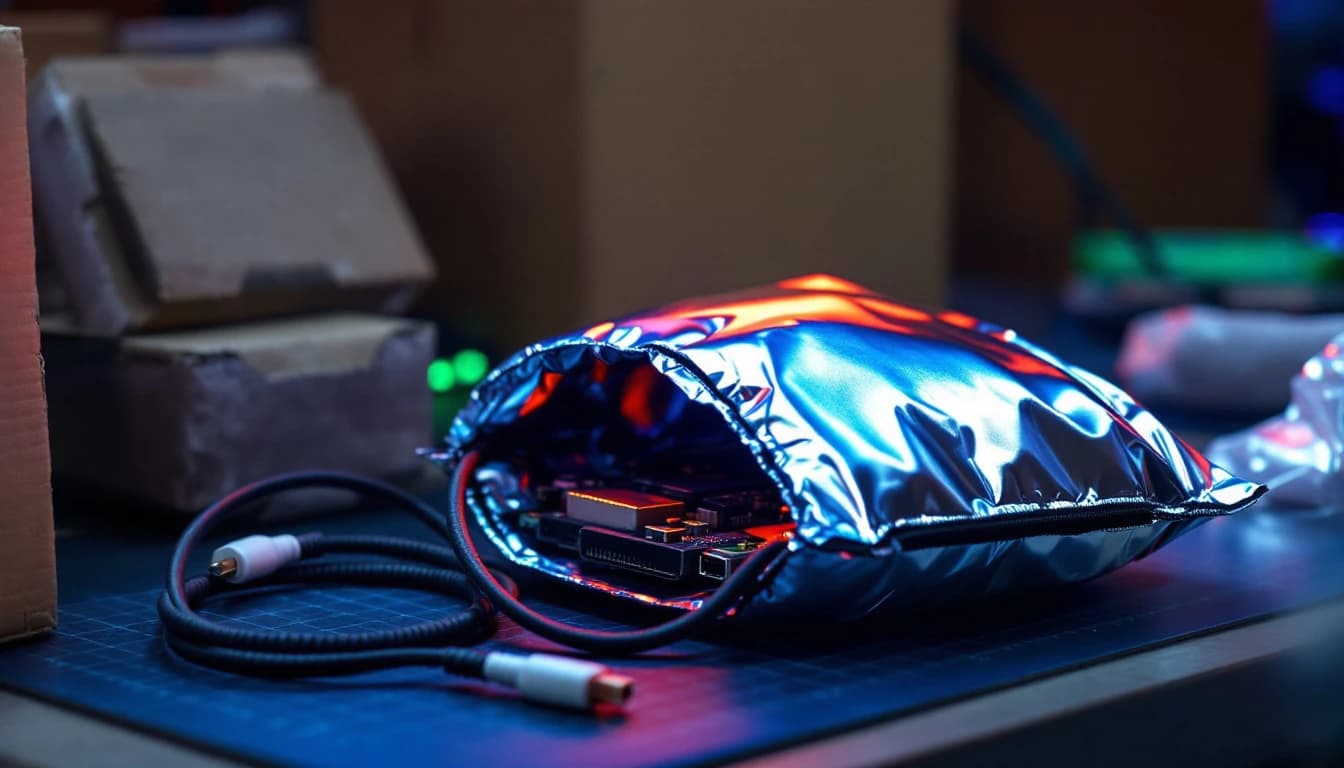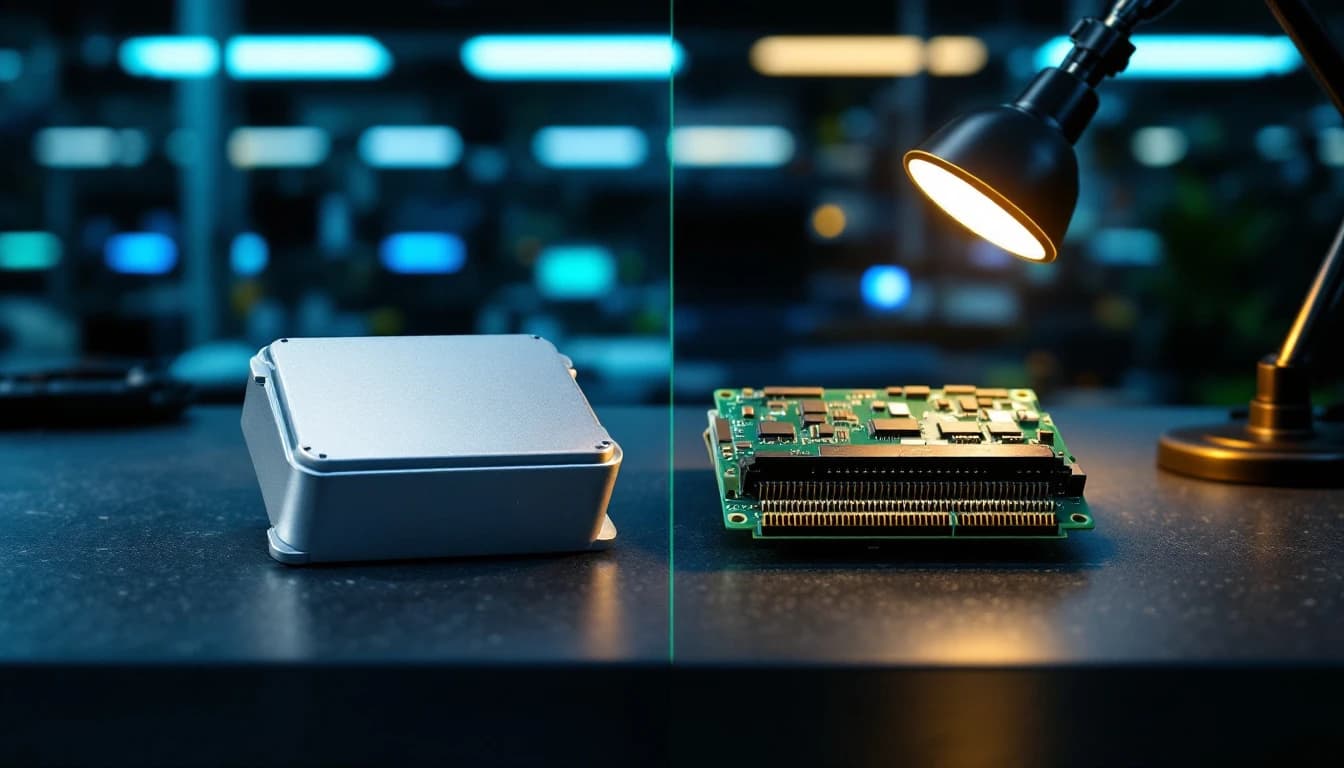
Battery Registration & Coding: A Hidden Module Killer
Why a battery belongs in a module-programming article
Nobody ships us a battery. But a surprising share of the modules that arrive at our Arlington workshop are here because of one — either because a failing battery slowly cooked the electronics around it, or because someone tried to flash a control unit while the vehicle sat at eleven and a half volts and the write died halfway through.
A modern car treats its battery as a monitored, characterized component with a service history. The charging system is not a fixed voltage regulator any more. It is a strategy that decides, moment to moment, how hard to charge based on what it believes the battery's age, chemistry, temperature and state of charge are. Replace the hardware and leave that belief untouched, and you have created a mismatch that quietly damages the new battery and the modules downstream of it.
This article is the one we wish more owners and shops read before they order a control module. Everything in it is about avoiding a bill, not creating one.
What battery registration actually is
Battery registration is a diagnostic procedure that tells the vehicle's energy-management system that the old battery has been removed and a new one installed. It does two things at once.
First, it resets the adaptive charging model. Over the life of a battery, the energy manager builds a picture of that specific cell pack — how quickly it accepts charge, how far its resting voltage sags overnight, how much capacity it appears to have lost. A three-year-old flooded battery that has been deep-cycled a few times gets a different charging profile than a fresh one: typically a higher target voltage and longer absorption, because the software is compensating for sulfation and lost capacity. That compensation is exactly right for the old battery and exactly wrong for the new one.
Second, on many platforms registration writes a new install date and a new capacity value into the energy manager's memory, so ageing algorithms restart from zero rather than continuing a curve that began years ago.
Battery coding is a related but separate step. Coding tells the vehicle what type of battery is fitted — absorbent glass mat (AGM), enhanced flooded (EFB), or conventional flooded — and often its rated capacity in amp-hours. Chemistry matters because charge acceptance and voltage limits differ. AGM cells tolerate and expect a somewhat higher charging voltage and much deeper cycling than a conventional flooded battery; a flooded battery run on an AGM profile gases and loses electrolyte, and an AGM battery run on a flooded profile never reaches full charge.
On most European platforms the rule of thumb is simple: if the capacity or the chemistry changed, you must code as well as register. If only the battery was swapped for an identical one, registration alone is usually sufficient. The manufacturers publish their own service positions on this, and vehicle makers including BMW Group, Audi and Volkswagen have fitted variations of adaptive energy management across their model ranges for more than 15 years, which means the procedure now applies to a very large share of the used cars on the road.
The intelligent battery sensor — the part everyone forgets
The component that makes all of this possible is a small module bolted directly to the negative battery post: the intelligent battery sensor, usually abbreviated IBS. It is a genuine control unit with its own microcontroller, and it is easy to damage during a battery swap.
The IBS measures three things continuously — terminal voltage, current in and out through an integrated shunt, and battery temperature — and reports a calculated state of charge and state of health to the energy manager over a serial or LIN connection. Supplier literature from Bosch and Continental describes this class of sensor as the enabling technology for start-stop systems, because the vehicle cannot safely decide whether to shut the engine off at a red light without knowing exactly how much usable energy is left. The numbers it is watching are narrow ones: the standards work published by SAE International describes the nominal 12-volt lead-acid system as sitting at roughly 12.6 volts resting when fully charged and being charged at roughly 13.5 to 14.8 volts depending on temperature, so a drift of well under 1 volt is the difference between a healthy system and a damaged one.
Practical consequences of that little box:
- If the IBS clamp is overtightened, cross-threaded, or the sensor body is levered on during removal, its measurement path can be damaged and the car will make charging decisions on bad data.
- If the negative cable is reattached to the post rather than to the sensor's stud, the sensor is bypassed entirely and the energy manager sees nothing.
- If the sensor's ground path is corroded, state-of-charge readings drift and the vehicle may either disable start-stop permanently or overcharge indefinitely.
That last case matters because ground quality is a whole failure family of its own. If you are chasing electrical gremlins that follow no logical pattern, read our companion piece on charging-system and ground faults that keep killing replacement modules before you buy another part.
Start-stop made this mandatory, not optional
Registration used to be a premium-brand curiosity. It is now mainstream because start-stop is mainstream. A start-stop vehicle cycles its battery dozens of times in a single commute, and that duty cycle is why AGM and EFB batteries exist in the first place.
Bosch, one of the largest suppliers of start-stop systems, has documented fuel-consumption reductions on the order of 5 to 8 percent in urban driving from stop-start operation, which is why the technology spread so quickly across the mass market — see Bosch for the supplier position. Adoption followed: supplier reporting from Continental has described start-stop fitment running above 50 percent of new vehicles in major markets, so the battery in an ordinary late-model commuter car is now doing work that a battery from 20 years ago never had to do. That efficiency only materializes if the energy manager trusts its battery data. When state-of-health data is wrong, the software does the conservative thing and stops shutting the engine off, which is why a very common customer complaint after a DIY battery swap is simply my auto start-stop quit working.
Battery life is the other half of the equation. Consumer Reports has long put typical service life for a conventional car battery in the range of roughly 3 to 5 years, with heat exposure the dominant variable, and AGM designs are generally rated for on the order of 3 times the charge-discharge cycle life of a conventional flooded battery in start-stop duty. Running a new AGM battery on a stale flooded profile is a reliable way to land at the bottom of that range or below it. Owners often blame the battery brand. The battery was fine; the charging strategy was wrong.
Roadside data tells the same story from the other end. AAA has reported responding to well over 30 million roadside assistance calls annually in the United States, with dead batteries consistently among the top 3 reasons for a call alongside tires and lockouts. A meaningful share of those are batteries that should have had years left — and the fleet is old enough for it to matter, with sales and ownership reporting summarized by Car and Driver putting the average age of a light vehicle on U.S. roads at more than 12 years.
What actually goes wrong when you skip it
Skipping registration does not throw a check-engine light and hand you a code that says battery not registered. It produces a slow, ambiguous decline. Here is the mechanism, in order.
Chronic overcharge. The energy manager still believes it is charging a tired battery, so it targets a higher voltage for longer. On a fresh battery, that means gassing, electrolyte loss, elevated plate temperature and accelerated grid corrosion. The battery is being cooked politely.
Chronic undercharge. The mirror image happens when a large-capacity AGM is fitted and the vehicle believes a small flooded battery is present. Charge acceptance is capped early, the battery never reaches a full state of charge, and sulfation begins. Winter arrives and cranking speed falls off a cliff.
Voltage quality degrades. This is the part that hurts modules rather than batteries. A battery is not just an energy source; it is the electrical system's shock absorber. A healthy battery with low internal resistance soaks up alternator ripple, load-dump transients and the switching noise from every relay and injector driver on the car. As internal resistance climbs, that damping disappears. Modules that were designed to see a clean, stiff supply start seeing spikes and sags.
The shotgun DTC pattern. Once supply quality drops, control units across the vehicle begin logging faults that have nothing to do with their own health — communication timeouts, implausible signal codes, internal-fault codes set during a brownout, and lost-communication entries from modules that simply reset. Scan a car in this condition and you get eight or ten modules with stored faults. It reads like a catastrophic electrical failure. It is very often one battery.
The correct move at that point is boring and cheap: fix the battery and charging system first, clear the codes, drive it, and rescan. What remains after that is the real fault list. What disappeared was noise. We have seen owners authorize replacement of three modules based on a scan taken with a battery that could not hold 12 volts overnight, and two of the three were healthy.
Why programming is where a weak battery finally kills something
Everything above is chronic. This part is acute, and it is the single most expensive way a battery problem ends.
Writing new software or new configuration data to a control module is the most electrically demanding thing that module will ever do. The sequence is roughly: the tool puts the module into a programming or boot mode, security access is negotiated, the existing memory is erased, new data is written block by block, a checksum is verified, and the module is reset. During the erase-and-write window the module's flash memory is, by definition, in an incomplete state. There is no valid program in it. If supply voltage collapses in that window, the write never completes and the module comes back with a partial image, a failed checksum, or no bootloader response at all.
That is what a bricked module is. Not a mysterious event — an interrupted write.
The margins are thinner than people assume. Engineering references from Bosch describe cranking transients pulling a 12-volt system rail down toward roughly 9 to 10 volts momentarily even on a healthy battery, while most manufacturers specify a stable supply of at least 13 volts held for the entire duration of a programming session. A battery that comfortably starts the car in the morning can still fall short of that second number after 20 minutes of key-on with every module awake.
Voltage collapses during programming for predictable reasons:
- The battery was already marginal and the extra minutes of ignition-on, module-awake current draw finished it.
- Cooling fans, fuel pump priming or an HVAC blower cycled mid-session and pulled the rail down.
- Someone connected a cheap trickle charger that switched modes or pulsed under load.
- Someone jump-started the car or connected a booster pack partway through, introducing a transient onto a bus that was mid-write.
- The battery was disconnected to reset something while a session was still open.
The rule that follows is absolute: never disconnect a battery, never jump-start, and never connect or disconnect a charger while a programming session is open. If you have already been down that road, the aftermath is covered in detail in our guide to jump-start and overvoltage damage to modules, which explains why the damage from a transient is often nowhere near the circuit you were working on.
"Nine times out of ten, when someone tells me a module bricked itself during a key programming job, the first question I ask is what the voltage was, and the first answer I get is that they were not watching it. A power supply that holds thirteen point five volts under load is not optional equipment for this work — it is the difference between a routine job and a module that has to go out on a bench for data recovery." — Independent European vehicle diagnostics technician, 16+ years in module programming and immobilizer work (anonymized)
Registration, coding and replacement — what each one does
These three terms get used interchangeably by parts counters and forum threads, and they are not the same operation.
| Battery registration | Battery coding | Module replacement programming | |
|---|---|---|---|
| What it changes | Resets the adaptive charging model and install date | Tells the car the chemistry and capacity fitted | Writes software and configuration into a control unit |
| When it is required | Every battery replacement on an adaptive-charging vehicle | When chemistry or amp-hour rating changes | When a module is replaced, cloned or repaired |
| Typical duration | Under a minute with the right tool | Under a minute with the right tool | Minutes to over an hour |
| Risk if voltage sags | Low — procedure simply fails and retries | Low — procedure simply fails and retries | High — a failed write can brick the module |
| Where it happens | On the vehicle | On the vehicle | On the vehicle or on a bench supply |
| Consequence of skipping | Short battery life, drifting voltage, spurious faults | Wrong voltage limits for the chemistry fitted | Module does not function or is not accepted by the car |
The important column is the fourth one. Registration and coding are low-risk procedures that fail safely. Replacement programming is not. That asymmetry is the entire argument for doing battery work first and module work second.
Why the bench is a different risk profile entirely
When a module is programmed on a bench, it is not powered by a car battery at all. It sits on a regulated laboratory supply with a fixed output, current limiting, and no fans, pumps or blowers sharing the rail. There is no alternator ripple, no crank event, no accessory load stepping in halfway through an erase cycle.
That is not a marketing point; it is the reason bench programming exists as a discipline. The most common in-vehicle failure mode — supply collapse mid-write — is structurally impossible when the supply is a bench unit doing nothing else. It is also why our workflow reads the existing contents of a module and archives them before anything is written. If a write is going to be attempted, there is a known-good copy behind it.
The other half of that discipline is diagnosis before intervention. If you are not certain a module is actually at fault, a bench evaluation at $150 is designed exactly for this situation: the unit is powered, communicated with, and inspected under a microscope so you find out whether you have a failed module or a module that was merely reporting a sick electrical system. Plenty of units arrive here that turn out to be perfectly healthy — the answer the owner needed was in the charging system.
Security work raises the stakes again
Key, immobilizer and security-access work is the category where voltage discipline matters most, because those procedures often involve writing to EEPROM inside a security module rather than to a spacious program flash. A corrupted immobilizer image is not a module that runs badly. It is a car that does not start and a security relationship that has to be rebuilt.
This is exactly why an older platform procedure such as BMW EWS key programming is written around stable supply from the first step. Older security modules use small serial EEPROMs whose contents encode the relationship between the immobilizer, the engine controller and the keys. Interrupt a write to that memory and you have not lost a calibration you can reflash from a database — you have lost the vehicle's identity data.
For any key, immobilizer or security-access job, proof of ownership is required before we perform work — vehicle registration or title in the customer's name plus matching photo identification. That applies to every security-related service we offer, without exception, and it is a policy we do not make exceptions to regardless of how urgent a job is.
If a module has already been damaged mid-write, the path forward is usually data recovery rather than a straightforward reflash. Our guide to dead module data recovery and cloning covers what can and cannot be pulled out of a unit whose program memory is corrupt but whose configuration memory survived — which, fortunately, is the common case.
Do it in this order
If you are staring at a car with a battery problem and a module problem at the same time, sequence matters more than speed.
- Test the battery properly. A conductance tester or a load test tells you far more than a resting voltage reading. A battery can show 12.4 volts at rest and still be unable to hold a rail under load.
- Test the charging system. Alternator output under load, ripple, and the voltage drop across both the positive feed and the ground path. A single corroded ground strap can imitate a dozen module faults.
- Replace the battery with the correct chemistry and capacity. Not a bigger one because it was on sale. Not a flooded battery in an AGM application.
- Register — and code if chemistry or capacity changed. Do this before you do anything else electrically significant.
- Clear all stored faults, then drive the vehicle normally. Let the modules re-evaluate the world on a healthy supply.
- Rescan. Whatever comes back is real. Whatever is gone was voltage noise.
- Only now decide about module work. With a healthy supply and a clean fault list, you are making a decision on evidence instead of on a scan taken during a brownout.
Every step above is cheaper than step seven. That is the whole point of the order.
Frequently asked questions
Do I really need to register a new battery, or is that a dealer upsell? On any vehicle with adaptive charging or start-stop, registration is a genuine requirement, not an upsell. The energy manager keeps a learned model of the old battery, and leaving that model in place after a replacement causes chronic overcharge or undercharge that shortens the new battery's life measurably. On older vehicles with a simple fixed-voltage regulator, there is nothing to register and the step does not apply.
What happens if I fitted an AGM battery but the car is still coded for flooded? The vehicle will charge the AGM battery to a lower ceiling than it needs, so it rarely reaches a full state of charge and begins sulfating early. Symptoms usually appear as start-stop refusing to operate, slow cranking in cold weather, and a battery that fails a load test long before its warranty period is up. Coding the correct chemistry fixes the charging ceiling.
Can a weak battery really cause faults in modules that have nothing to do with charging? Yes, and it is one of the most common false-alarm patterns in modern diagnostics. A battery with high internal resistance stops damping electrical transients, so control units across the vehicle log communication timeouts, implausible-signal codes and internal faults recorded during momentary brownouts. Fix the supply, clear the codes, drive the car and rescan before condemning anything.
Why do so many programming sessions fail because of the battery? Because programming is the one operation where a supply interruption is unrecoverable. During the erase-and-write window a module has no valid program in memory, so a voltage collapse leaves a partial image and a failed checksum. A battery that is adequate for starting the car can still sag below the threshold once the ignition has been on for twenty minutes with every module awake.
Is a battery charger enough, or do I need a proper power supply for programming? Use a regulated power supply designed for programming, not a consumer trickle charger. Many chargers pulse, switch modes, or go into a desulfation cycle without warning, and any of those behaviors during a write is exactly the transient you were trying to avoid. A supply that holds a steady voltage under a sustained load is the correct tool.
My module was bricked during a key programming attempt at home. Is it repairable? Often, yes. A module whose program memory was corrupted mid-write frequently still holds intact configuration and identity data in a separate memory device, which means the unit can be recovered rather than replaced. Ship it in for evaluation rather than throwing it away, and include the vehicle details and a description of exactly where in the process the session died.
Should I fix the battery before or after sending a module in? Before, in almost every case. A healthy battery and charging system often removes most of the fault list on its own, and it prevents the newly programmed module from being installed into the same electrical environment that damaged the last one. Sending in a module while the car still has a failing battery is how customers end up doing the same job twice.
The bottom line
Battery registration and coding are five-minute procedures that protect a component you already paid for and an electrical system you cannot easily replace. Skip them and the car charges a new battery on a stale model — overcharging it, undercharging it, or both across a season — and as internal resistance climbs, the supply that every module on the vehicle depends on gets noisier and softer. That is where the phantom fault codes come from, and that is why a scan taken on a sick battery is not evidence of anything.
The acute version of the same problem is a failed programming session. A module in the middle of an erase-and-write cycle has no valid software in it, and a voltage collapse in that window is the mechanism behind nearly every bricked control unit we see. Never disconnect the battery, jump-start, or connect a charger while a session is open, and use a regulated supply rather than a consumer charger.
If you have already crossed that line, a partially written module is usually recoverable rather than scrap. Ship it to us — USPS to PO Box 120241, Arlington, TX 76012, or UPS and FedEx to 1009 Oakwood Ln # 120241, Arlington, TX 76012, since UPS and FedEx cannot deliver to a USPS PO Box. Work is performed at our workshop at 1168 W Pioneer Parkway, Arlington, TX 76013, and we serve customers nationwide by mail only. We buy and email you a prepaid inbound label; return shipping is chosen by you at checkout and starts at $29.95 for standard service, with UPS 2nd Day Air at $54.95 and UPS Next Day Air at $94.95.
Not sure whether you have a module problem or a battery problem? That is exactly the question a bench evaluation answers, and it is a far cheaper question to ask than to guess wrong on. Text us the vehicle details and what the car is doing, and we will tell you honestly whether the module is worth shipping.
Ship your module today
Flat-rate pricing, typical 24-hour bench turnaround, return speed your choice at checkout. Most jobs back on your bench within a week.