
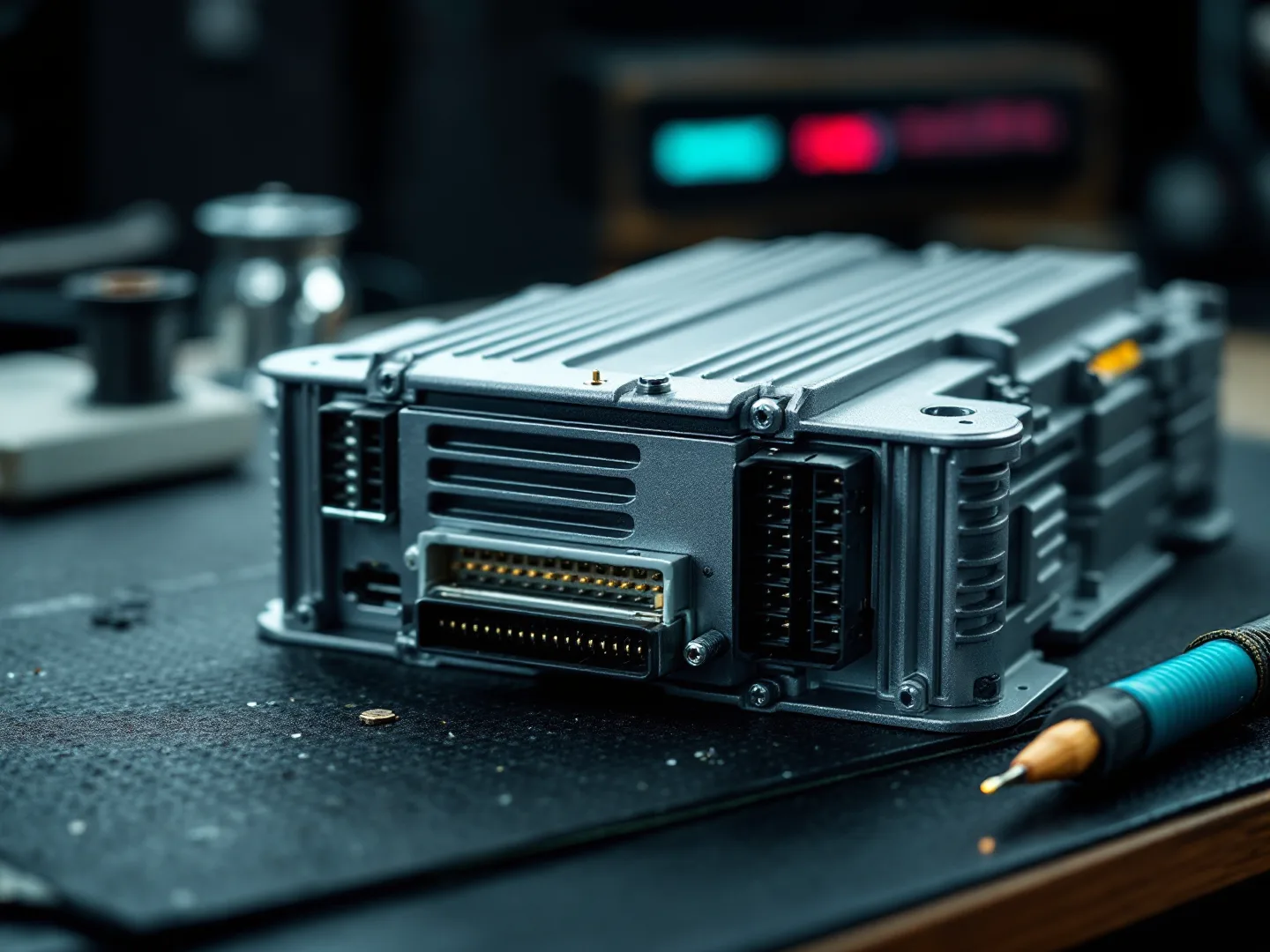
Ford 6.7L Powerstroke PCM Repair — Powertrain Control Module (2011-2016)
Dead PCM, no communication, or a 6.7 Powerstroke that cranks and will not fuel? We repair the powertrain control module at board level and return your original.
Sending several modules? Add them all — one box, one return-shipping charge.
2011-2016 Ford Super Duty 6.7L Powerstroke powertrain control module — F-250 / F-350 / F-450 / F-550
Ford 6.7 Powerstroke PCM Repair: the short answer
Ford 6.7 Powerstroke PCM repair is a mail-in, board-level repair of the powertrain control module fitted to 2011-2016 Ford Super Duty F-250, F-350, F-450 and F-550 trucks with the 6.7L Powerstroke diesel. It addresses dead modules, loss of communication, crank-no-start conditions where no fuel is commanded, and internal control-module faults. Auto Module Lab repairs your original at our Arlington, Texas bench for $395 flat, typically in 3-5 business days, preserving your calibration, and ships it back anywhere in the United States.
How It Works
Three simple steps. Hundreds of mail-in jobs completed for shops, locksmiths, and DIY pros.
Pay & Get Address
Click "Order Now", pay securely online. We email shipping address + instructions within minutes.
Ship Your Module
Pack per the instructions and ship to Arlington. USPS goes to our PO Box; UPS and FedEx must use the street address. Your prepaid inbound label arrives by email — shipping to us costs you nothing.
Get It Back
The bench work typically takes 3–5 business days after your module arrives. Ships back at the return speed you chose at checkout — standard to overnight. Tracking emailed.
What You Get
- Your original PCM opened, inspected and tested on the bench
- Board-level repair of supply sections, driver stages and failed joints
- Your calibration preserved through the repair where the work touches memory
- Communication and outputs verified before it ships back
- Thermal cycling for intermittent faults that only appear warm
- A straight answer first if the board is beyond economical repair
Compatibility
Confirm your part matches one of the variants below before ordering. Not sure? Text us a photo and we'll verify.
Compatibility on this platform is scoped narrowly on purpose. We list the 2011-2016 Super Duty 6.7L PCM because that is what we bench, and we confirm your specific module from its label before you ship rather than publishing an interchange table that could send you the wrong way. Text us a photo of the PCM label with your VIN and we will verify it, free. If you have a 2017 or later truck, ask first — we would rather tell you no than take a module we cannot properly service.
Engine
Applications
Module
Ask before shipping
Will This Fix My Problem?
Honest answer: here's exactly what this service fixes — and what it doesn't.
Fixes:
- A dead PCM — no communication, no start, nothing on the bus
- Loss of communication with a scan tool where power and grounds check out
- Crank-no-start with no fuel being commanded
- Repeated module resets or shutdowns while driving
- Internal control-module codes (P0601, P0606) that return after a reflash
- Intermittent faults that follow underhood temperature
Won't fix:
- Injector, high-pressure fuel pump and fuel-supply faults
- Wiring, connector and ground faults upstream of the module
- Failed sensors feeding bad data to a healthy PCM
- Turbo, EGR-hardware and aftertreatment mechanical faults, including DPF loading
- A board damaged beyond economical repair — assessed and reported before any charge
- Emissions defeat of any kind. We do not offer DPF, EGR or DEF deletes and will not modify a PCM to disable emissions equipment.
Before you order
You diagnose, we service the module.
We don't have your car and we don't diagnose it. Order once you or your mechanic have confirmed this module is the cause. If the work is completed and the car still has the same symptom because of another fault, the work is still done — a bench re-test under warranty is free.
A clone copies what is in your module.
We transfer the data as we read it. If another shop or tool already worked on the module — an unfinished clone, a tune, a delete — that data can come across too. Tell us before you ship.
What "plug-and-play" means.
No dealer programming should be needed when your original data is intact, the donor matches your module (same type, hardware and software family) and the rest of the car works. It isn't a promise that the car will start or run.
What we repair on this module
Board-level faults, not symptoms. These are the specific failures our bench process targets.
Codes that commonly lead here
What each code means, and what it does not prove on its own.
A stored code is evidence, not a verdict. Every code below can also be set by wiring, connectors, grounds, power supply, or the component the module is trying to drive. Rule those out before you ship anything — or text us the codes and freeze-frame and we will tell you honestly whether the module is even a suspect.
| Code | Meaning | What it does not prove |
|---|---|---|
| U0100 | Lost communication with the ECM/PCM. | Set by harness damage, corroded connectors, poor grounds or loss of module power as readily as by a failed module. Prove power and bus integrity first. |
| P0601 | Internal control module memory checksum error. | Points inside the module, but also follows an interrupted programming session or a battery event mid-flash. Tell us if the truck was recently reflashed or had a tuner on it. |
| P0602 | Control module programming error. | Often a programming-process problem rather than failed hardware. Worth attempting a correct reflash before condemning the module. |
| P0606 | ECM/PCM processor fault. | A strong internal-fault indicator, though unstable charging-system voltage can produce it. Check batteries, both of them, and the grounds. |
Lost communication with the ECM/PCM.
Does not prove: Set by harness damage, corroded connectors, poor grounds or loss of module power as readily as by a failed module. Prove power and bus integrity first.
Internal control module memory checksum error.
Does not prove: Points inside the module, but also follows an interrupted programming session or a battery event mid-flash. Tell us if the truck was recently reflashed or had a tuner on it.
Control module programming error.
Does not prove: Often a programming-process problem rather than failed hardware. Worth attempting a correct reflash before condemning the module.
ECM/PCM processor fault.
Does not prove: A strong internal-fault indicator, though unstable charging-system voltage can produce it. Check batteries, both of them, and the grounds.
Our bench process
What happens between your module arriving and it going back in the box.
- 1
Intake and visual inspection
Intake and visual inspection
Your module is logged against your order, photographed as received, and opened. We look for the things that decide whether a repair is even sensible: liquid ingress, corrosion tracking, previous repair attempts, physical damage to the connector or housing, and burnt or lifted components.
- 2
Power-up and communication test
Power-up and communication test
The module is powered on a bench harness and we confirm whether it comes up and communicates at all. A module that will not respond and one that responds but misbehaves are two different faults, and this is the step that separates them.
- 3
Fault localisation under load
Fault localisation under load
We test the sections that actually fail on these modules rather than guessing from the code you arrived with — supply rails, driver outputs, and the circuits feeding them, measured with the module doing work rather than sitting idle. Intermittent faults get thermal cycling, because a joint that reads fine cold is exactly the joint that opens hot.
- 4
Component-level repair
Component-level repair
Failed components are replaced and weak or cracked joints reworked. We repair the board you sent — this is not a swap-and-return. If a fault traces to something beyond economical repair, work stops here and you hear about it before anything is charged.
- 5
Data preservation and verification
Data preservation and verification
Where the repair touches memory or requires a programming step, your existing calibration and learned data are read first and restored afterwards, so the module goes back configured to your truck rather than blank.
- 6
Bench verification and return
Bench verification and return
The repaired module is retested on the bench, including the specific function that failed, and thermally cycled again before it is signed off. It ships back in protective packaging with tracking, at the return speed you chose at checkout.
Why repair your original?
The case for keeping the module that is already married to your vehicle.
It is already married to your truck
Your module carries your VIN, your calibration, and the values it has learned over its life. Repairing it keeps every one of those. A donor module carries someone else's, which is why used units so often need a programming session before the truck will run properly — an extra step, an extra cost, and an extra thing to go wrong.
A used module is the same age as yours
The realistic alternative to repairing a fifteen-year-old module is a fifteen-year-old module out of another truck, with an unknown service history and the same components approaching the same end of life. Repairing yours targets the part that actually failed instead of rolling the dice on someone else's.
The failure is usually smaller than the part
These modules do not generally fail as a whole. They fail at a driver, a supply section, or a set of joints — a repairable area on an otherwise sound board. Replacing the entire module to fix that is the most expensive way to solve a small problem.
You find out before you commit
We inspect and test before we repair, and if a board is beyond economical recovery we tell you rather than doing the work anyway. You are never charged for a repair we cannot deliver, which is not a promise a salvage-yard module comes with.
Repair vs used vs replacement
Four ways out of this failure, compared honestly.
| Path | What you actually pay for | Programming needed | Your data & tune | Main risk |
|---|---|---|---|---|
| Repair your original (this service) | Bench diagnosis and board-level repair of the module you already own. One flat price, one shipment each way. | None in most cases — it is still your module, still married to your truck. | Retained. VIN, calibration and learned values stay where they are. | A board damaged beyond economical repair. We assess first and tell you before charging. |
| Used / salvage module | A cheaper part up front, plus whatever it takes to make it work with your truck. | Usually yes — a donor module carries another VIN and another calibration. | Lost. You inherit the donor truck's configuration. | You are buying an unknown module of the same age and duty cycle. It can fail the same way, sometimes immediately. |
| Remanufactured unit | A rebuilt exchange unit, typically with a core charge and return of your original. | Usually yes, depending on how the reman was prepared. | Depends entirely on the supplier — ask before you buy. | Quality varies widely between remanufacturers, and your original is gone once the core ships. |
| New module through a dealer | A new part, dealer programming labour, and usually a tow if the truck will not run. | Yes — dealer setup and configuration to your VIN. | Configured fresh to your VIN by the dealer. | The highest-cost path, and dealer scheduling controls your downtime. |
- What you actually pay for
- Bench diagnosis and board-level repair of the module you already own. One flat price, one shipment each way.
- Programming needed
- None in most cases — it is still your module, still married to your truck.
- Your data & tune
- Retained. VIN, calibration and learned values stay where they are.
- Main risk
- A board damaged beyond economical repair. We assess first and tell you before charging.
- What you actually pay for
- A cheaper part up front, plus whatever it takes to make it work with your truck.
- Programming needed
- Usually yes — a donor module carries another VIN and another calibration.
- Your data & tune
- Lost. You inherit the donor truck's configuration.
- Main risk
- You are buying an unknown module of the same age and duty cycle. It can fail the same way, sometimes immediately.
- What you actually pay for
- A rebuilt exchange unit, typically with a core charge and return of your original.
- Programming needed
- Usually yes, depending on how the reman was prepared.
- Your data & tune
- Depends entirely on the supplier — ask before you buy.
- Main risk
- Quality varies widely between remanufacturers, and your original is gone once the core ships.
- What you actually pay for
- A new part, dealer programming labour, and usually a tow if the truck will not run.
- Programming needed
- Yes — dealer setup and configuration to your VIN.
- Your data & tune
- Configured fresh to your VIN by the dealer.
- Main risk
- The highest-cost path, and dealer scheduling controls your downtime.
We deliberately do not publish dealer or reman dollar figures — those move constantly and vary by region, and a made-up number would be worse than none. Call your dealer for a current quote and compare it against the flat price above.
If the truck has been tuned, tell us before you ship
Aftermarket tuning is common on this platform and it changes the picture in ways that matter to a bench repair. A module carrying a non-factory calibration, or one that was interrupted partway through a flash, can present exactly like failed hardware — internal control-module codes, refusal to communicate, a module that will not take a reflash. Sometimes that is a genuine hardware failure and sometimes it is a software state. Telling us up front what has been on the truck costs you nothing and makes the diagnosis faster and more honest. To be clear about the boundary: we service the hardware and restore correct operation, and we do not install, remove or supply emissions-defeat calibrations.
Have a 6.0 instead? See the FICM serviceShipping Instructions
These details are also emailed to you the moment your payment clears.
Ship the PCM only — no harness, no brackets. Include your codes, whether the truck communicates at all, and any history of tuning or an interrupted reflash. Return shipping is selected and paid at checkout — Standard $29.95, UPS 2-Day $54.95, or UPS overnight $94.95. Ship to PO Box 120241, Arlington TX 76012 (USPS) or 1009 Oakwood Ln # 120241, Arlington TX 76012 (UPS/FedEx).
What to include in your box
- Your 6.7 Powerstroke PCM (module only)
- A note with stored codes, communication status, and any tuning or reflash history
- Your VIN and model year
- A printed order confirmation
- Your name, return address, and a phone number we can text
Ship to
Auto Module Lab
If shipping USPS
PO Box 120241
Arlington, TX 76012
If shipping UPS or FedEx
1009 Oakwood Ln # 120241
Arlington, TX 76012
Your prepaid inbound label (already addressed) arrives by email the moment you order; the return label is bought when your module reaches the bench and ships on the speed you chose at checkout.
Need to perform this job remotely?
Get an Auto Module Lab Remote Programming Kit and have our technicians program supported vehicles from your shop — the car stays on your lift and nothing gets posted.
Buy the interface once — program with us anytime. Supported procedures vary by vehicle, module, OEM software and security requirements.
Frequently Asked
Still have a question? Text us — replies in minutes.
Which model years do you actually cover?
The truck cranks but will not start. Is the PCM the problem?
My truck has been tuned. Does that matter?
Will you delete the DPF, EGR or DEF system?
Does my calibration survive the repair?
Does the module need programming when it comes back?
What if you cannot repair the board?
How long will the truck be down?
Do you have a shop near me?
Is there a warranty?
Can a fleet send several modules at once?
Related Services
Other bench services for the same brand or use case.
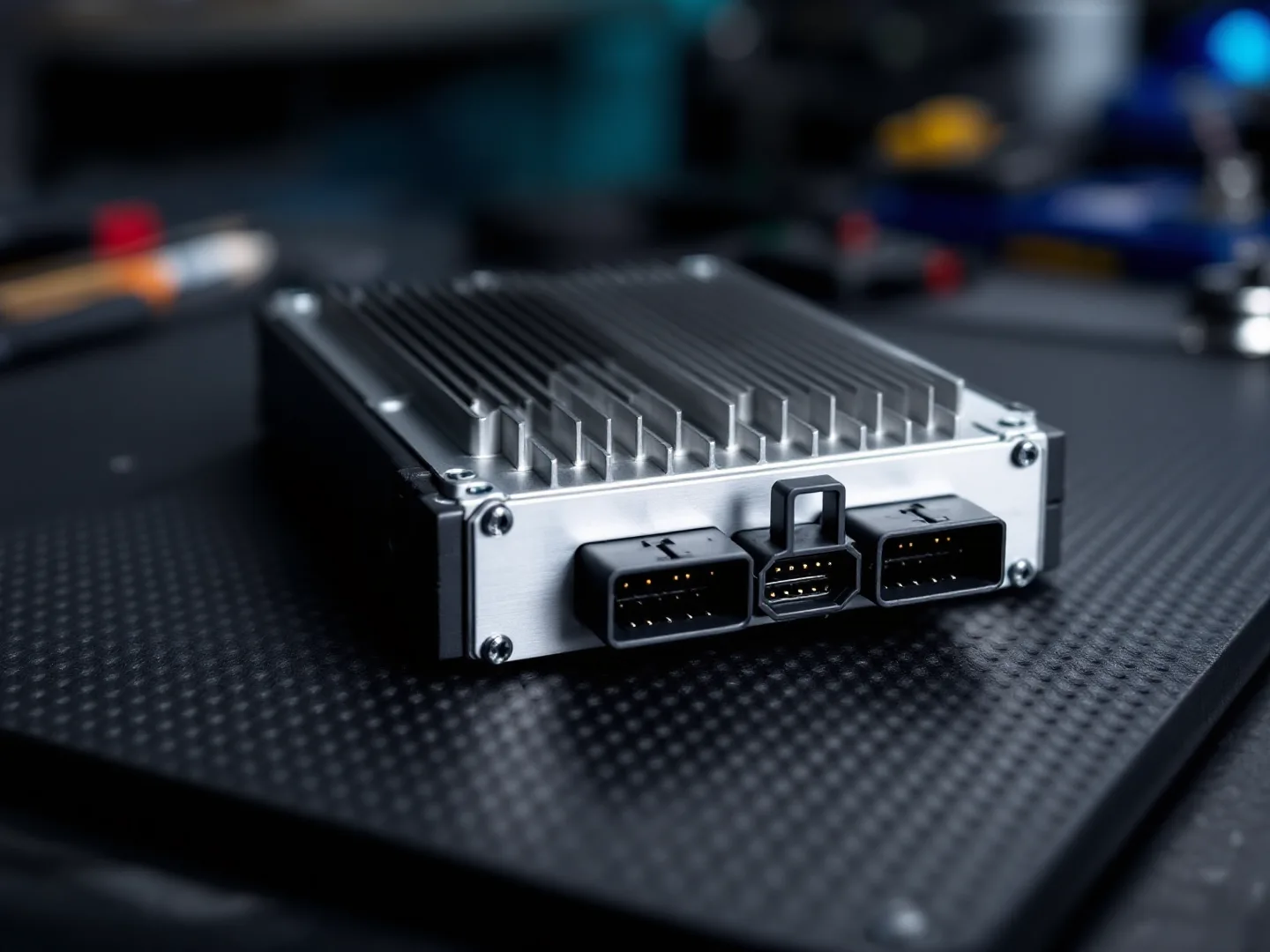
Ford PATS Delete (1996+)
Ford theft light flashing with no matched keys left? We disable PATS at the PCM level — the engine runs without transponder authentication.
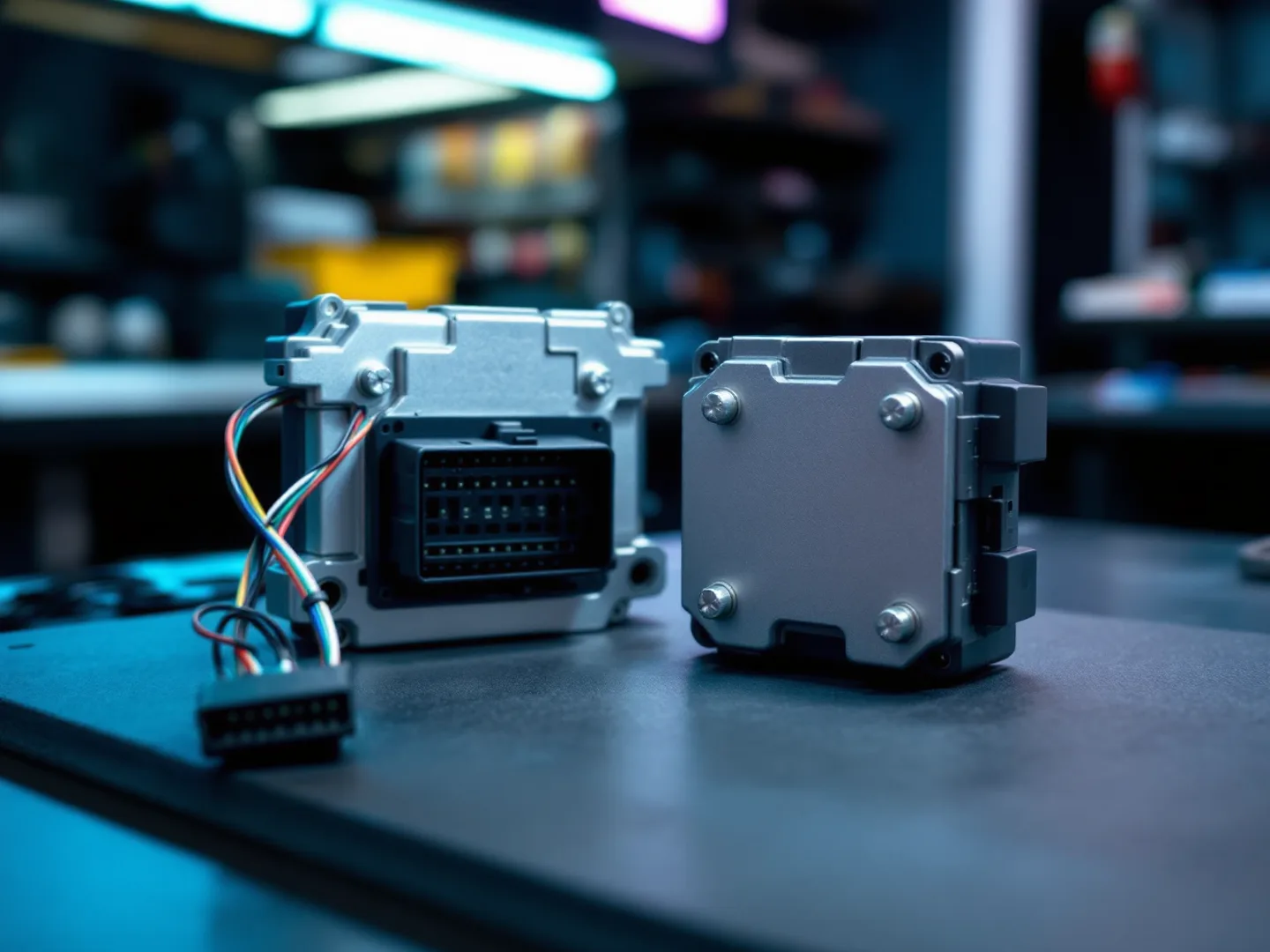
Ford PCM Clone / VIN Transfer
Used Ford PCM that cranks but won't start? We clone your original onto it — VIN, PATS security, and strategy carried over so it installs plug-and-play.
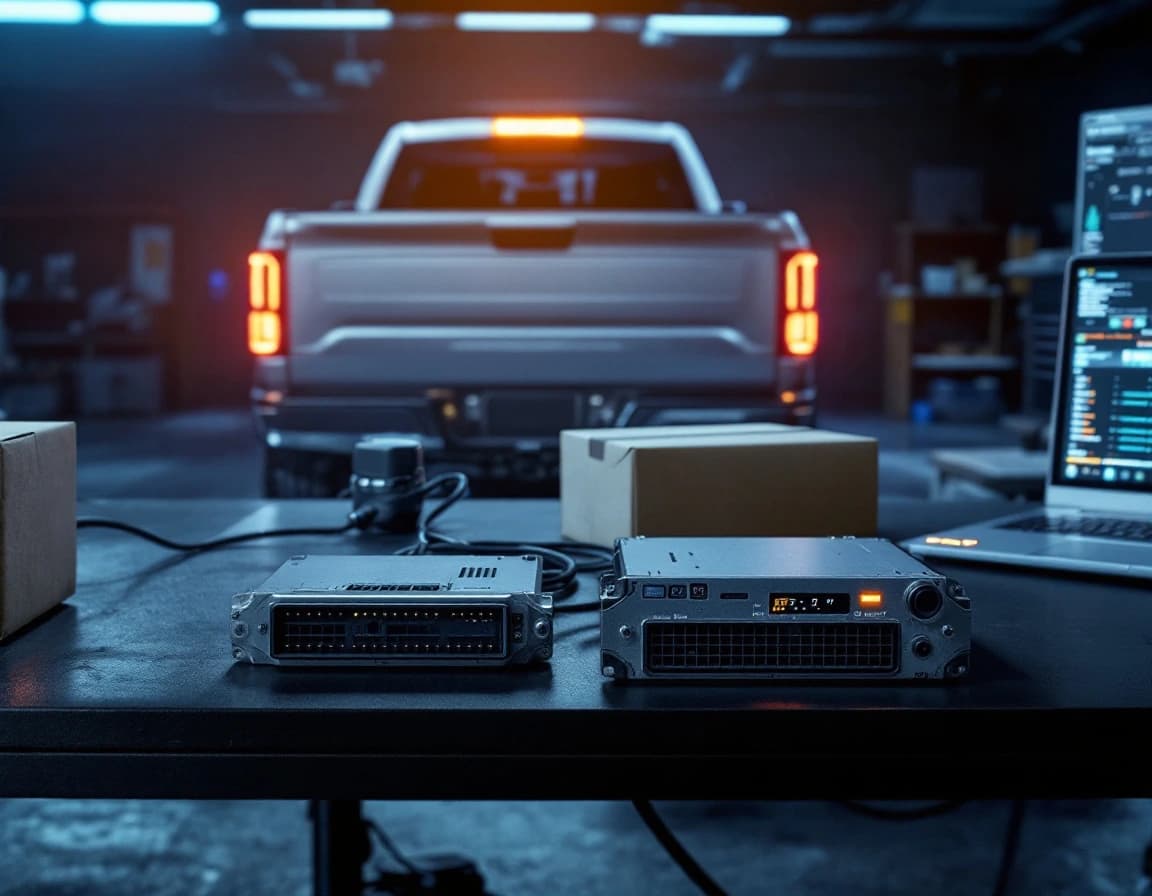
Ford EEC-V PCM Clone / Programming
Dead PCM on a 1996–2004 Ford, Mustang, F-150, Ranger, or Crown Vic? Mail in your original plus a hardware-matched donor and we transfer the data on the bench — calibration, VIN, and PATS data where supported. Cloning and programming where supported, verified by service number first.
Where we serve Ford 6.7 Powerstroke PCM Repair
Mail-in means nationwide — we accept modules from all 50 states and DC from our Arlington, Texas lab. These states have their own shipping-and-transit page for this service:
14 state guides
Ready to ship?
$395 flat, typical 3-5 business day bench turnaround. Pay now, get the shipping address by email, drop it in the mail. Your module is typically back on your bench in one to two weeks.